AITA for Refusing to Let My Stepmom Into the Delivery Room?

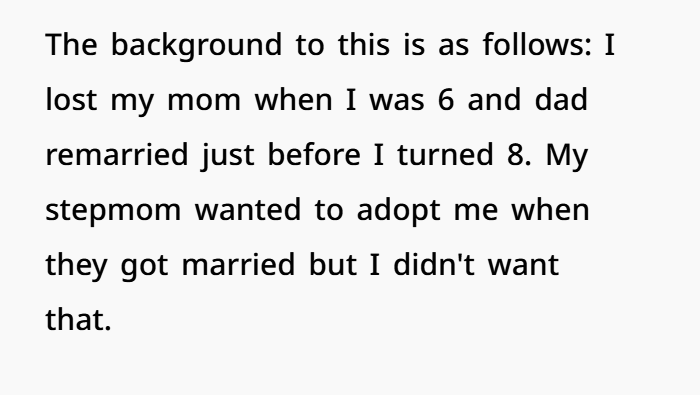
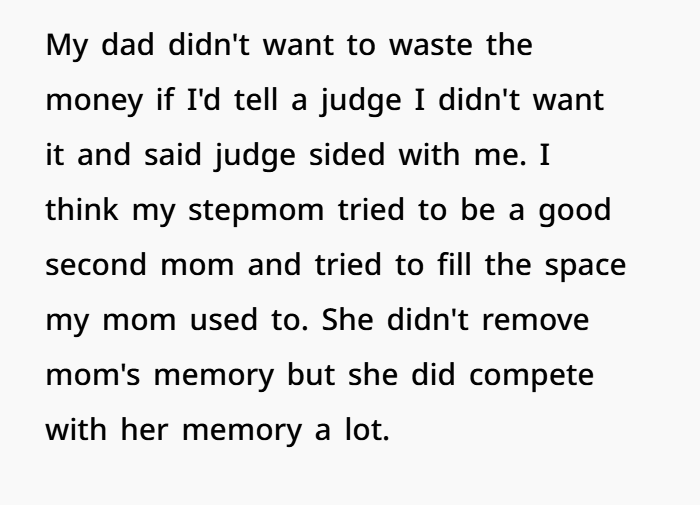
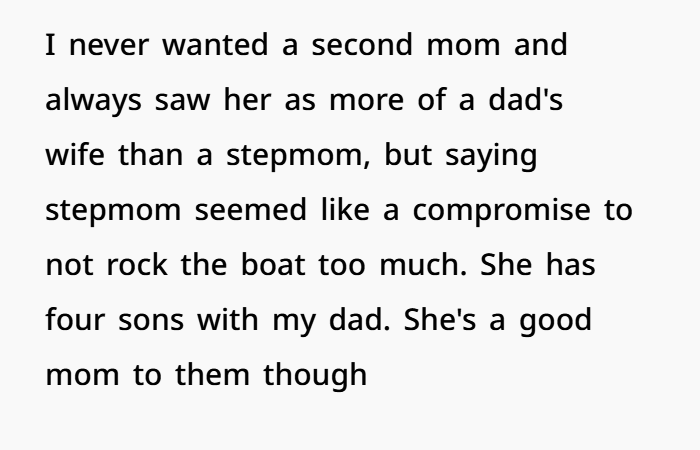
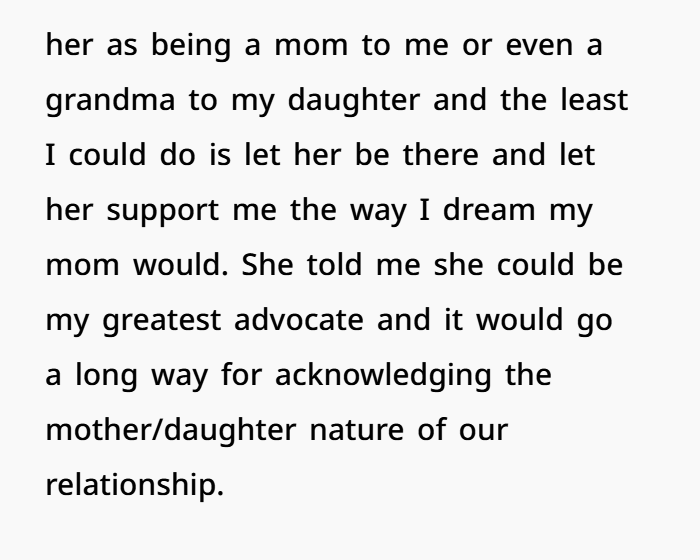
Losing a parent during childhood can have a lasting impact on a person’s emotions and family relationships. In this story, a woman shared that she lost her mother when she was only six years old. After her father remarried, her stepmother tried to build a caring relationship with her and become a positive part of her life. However, the woman said she never developed the same mother-daughter bond she had imagined.
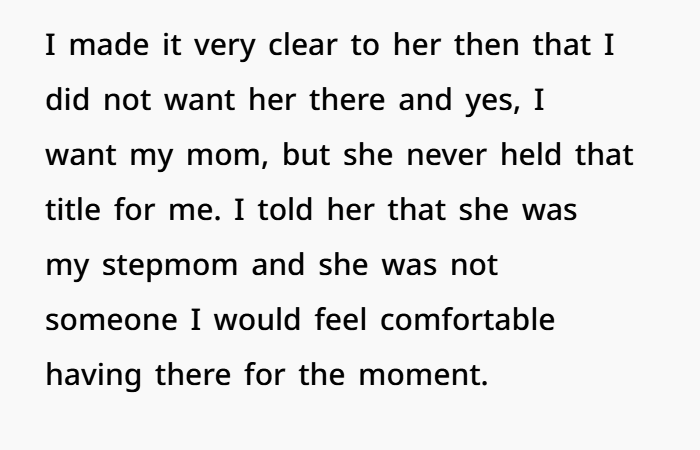
She respected her stepmother as her father’s wife and as the mother of her younger brothers. Over the years, they maintained a relationship, but she always felt there was an emotional difference between a biological parent and a step-parent. This was something the family rarely discussed openly.
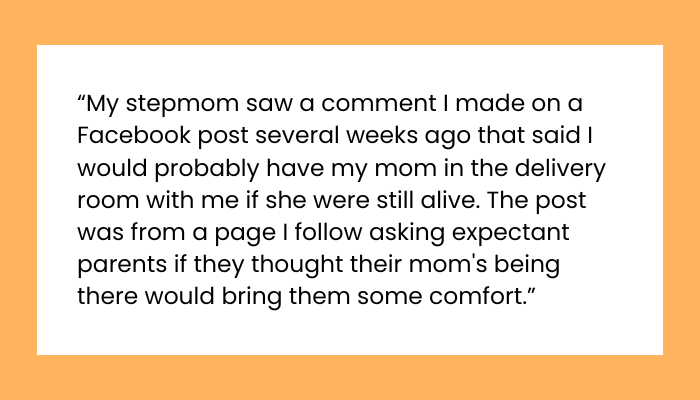
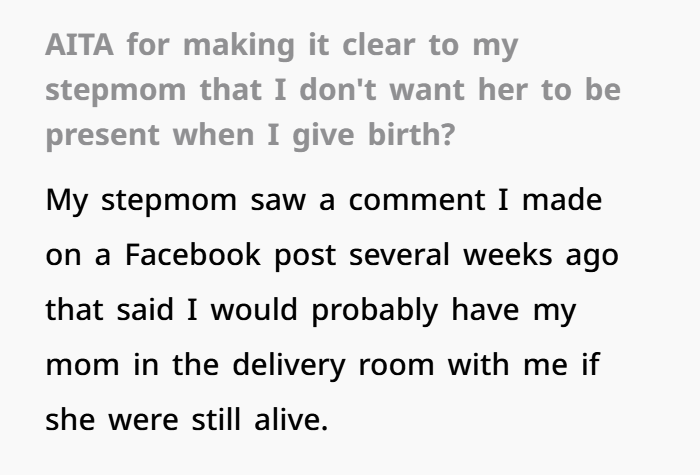
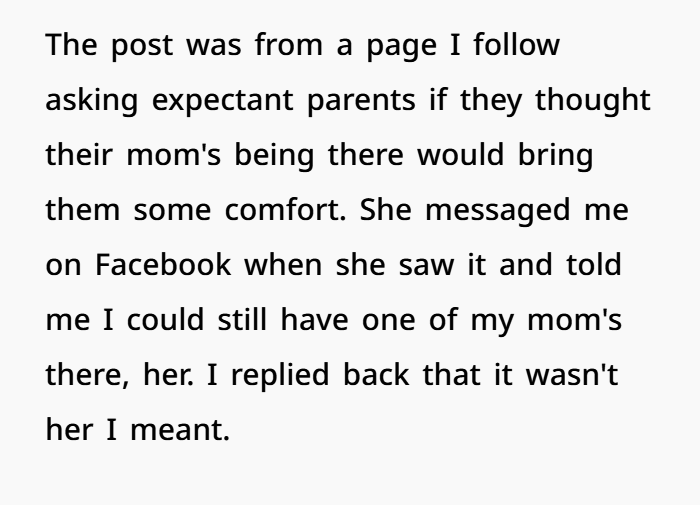
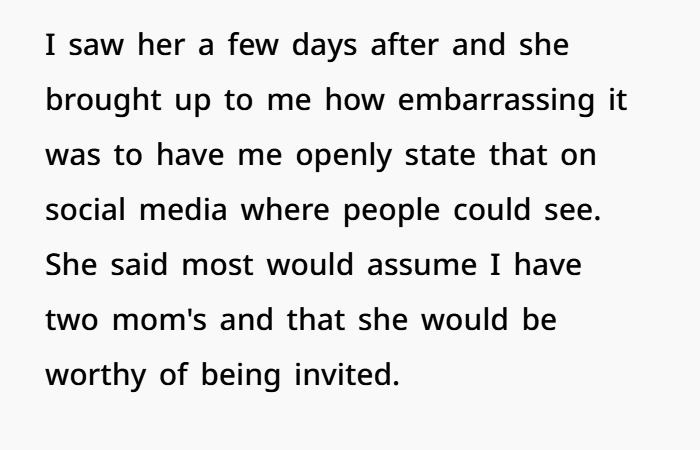
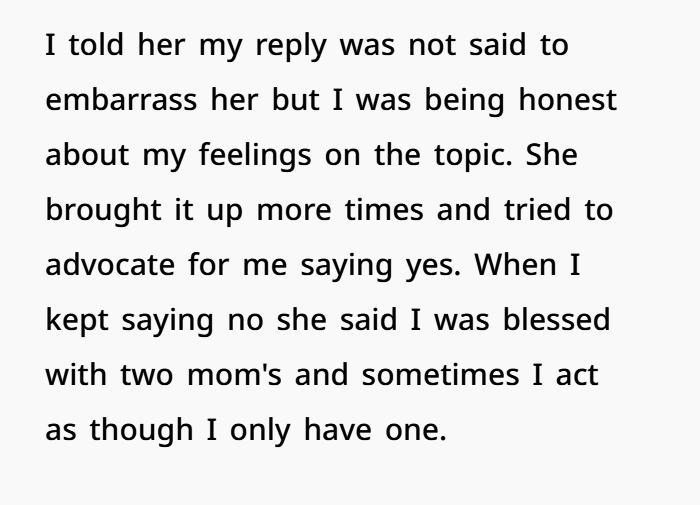
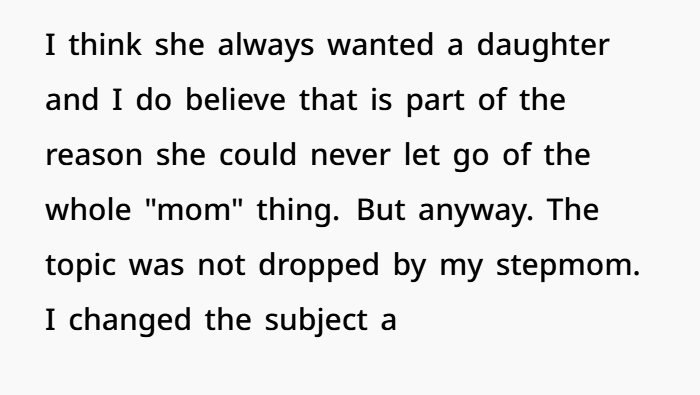
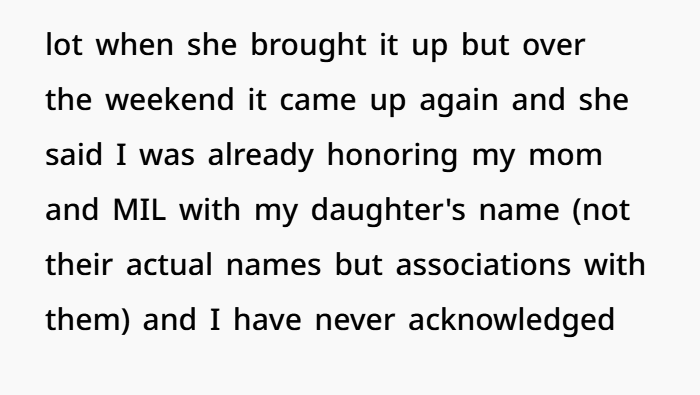
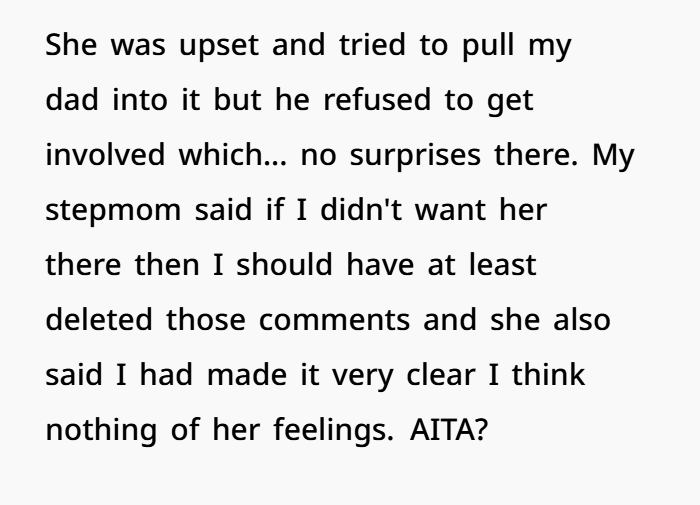
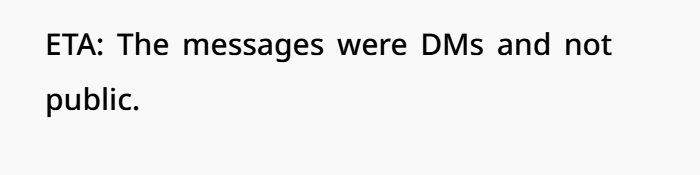
The situation became difficult after the woman shared a social media post about wishing her late mother could be with her during childbirth. Her stepmother saw the post and felt hurt because she wanted to be included in that important moment. After that, conversations about the pregnancy and delivery became more emotional and created tension between them.
Eventually, the woman explained that she wanted her own mother’s memory to be part of her childbirth experience and that she did not feel comfortable having her stepmother in the delivery room. The situation created stress for the family, but it also showed the importance of personal boundaries, grief, and honest communication. Family relationships can be complicated, and people may need time and understanding to handle deep emotions and different expectations.
A Birth Room Conflict Revealed Deeper Issues About Family, Love, and Boundaries
Some family conflicts are about one single moment.
Others are connected to years of emotions, misunderstandings, and unresolved feelings.
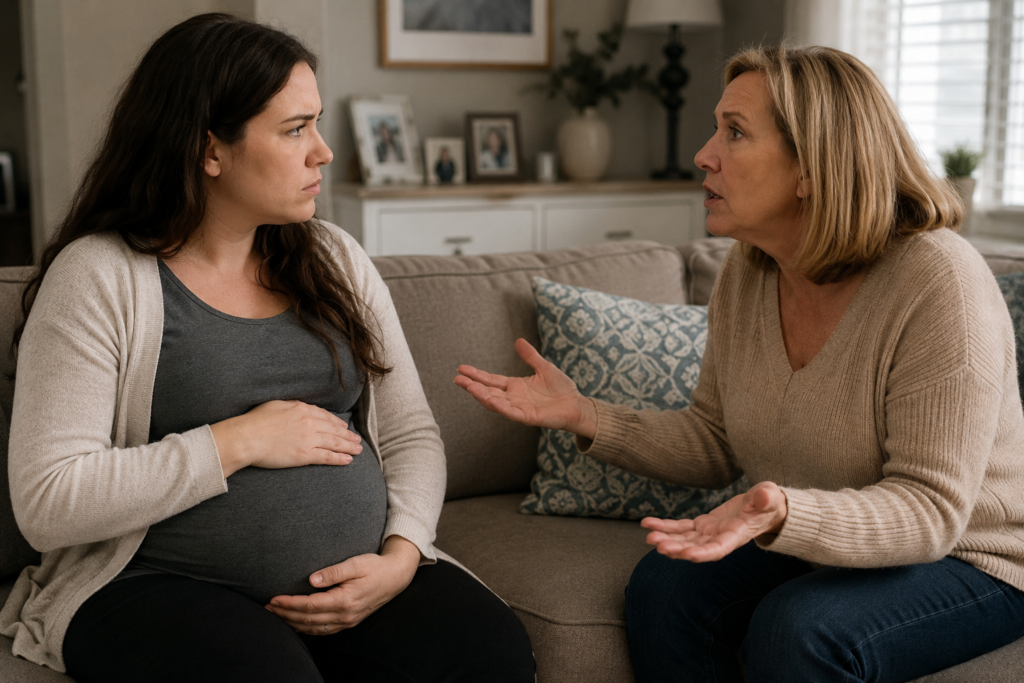
This story became popular because it involved a very personal situation: a stepmother wanting to be part of a birth experience and a daughter setting a boundary about who she wanted with her during labor.
But the real issue was much deeper than the delivery room.
It was about family roles, grief, emotional connections, and understanding that love cannot always be forced.
The Difference Between Care and Emotional Connection
According to the story, the daughter never promised her stepmother that she would replace her biological mother.
From childhood, she respected her stepmother and appreciated the role she played, but she did not see her as her mother.
She did not use the title “mom” and kept an emotional connection with her late biological mother.
This can be difficult for some blended families to understand.
A stepparent can provide:
- Love
- Support
- Guidance
- Stability
- Care
But emotional bonds develop differently for every person.
Sometimes a close parent-child relationship grows naturally.
Sometimes it does not happen in the same way, even when both people try.
Why the Delivery Room Is a Sensitive Space
Childbirth is one of the most personal experiences in a person’s life.
During labor, the mother should feel:
- Safe
- Comfortable
- Supported
- Emotionally calm
The people present during delivery should be chosen based on what makes the mother feel secure.
A birth room is not the place to solve family disagreements or prove emotional relationships.
It is a medical and emotional experience focused on the person giving birth.
That is why many healthcare professionals encourage expecting parents to create clear birth plans and choose their support people carefully.
A Stepmother’s Feelings Can Also Be Real
The stepmother’s emotions in this situation are also understandable.
According to the story, she spent many years helping raise the daughter and hoped they would eventually have a closer mother-daughter relationship.
She may have imagined being included in important life moments, including marriage, pregnancy, and childbirth.
For her, being present at the birth may have represented acceptance and belonging.
However, wanting a closer relationship and having that relationship naturally are two different things.
Why Pressure Can Damage Relationships
The biggest problem was not simply that the stepmother wanted to be included.
It was that the daughter felt pressured after expressing her wishes.
When someone says no about a deeply personal decision, continuing to argue or persuade them can create more distance.
This is especially true during major life events such as:
- Pregnancy
- Childbirth
- Weddings
- Medical situations
Healthy relationships require respect for personal boundaries.
A person can feel hurt by a boundary while still respecting it.
Missing a Parent Who Passed Away
The daughter’s feelings about her late mother were also an important part of the story.
Losing a parent can create a lifelong emotional connection.
Major life events often bring those feelings back.
Pregnancy and childbirth can make people think deeply about:
- Their childhood
- Their parents
- Family memories
- The person they wish could be there
Wanting to remember and honor a deceased parent does not automatically mean rejecting another important person.
Grief and love can exist alongside other relationships.
The Importance of Communication in Blended Families
Blended families can be beautiful, but they can also have unique challenges.
People may have different ideas about:
- Family roles
- Parenting
- Emotional connections
- Expectations
Open communication can help prevent misunderstandings.
Important conversations may include:
- What role does each person have?
- What boundaries feel comfortable?
- What expectations are realistic?
- How can everyone feel respected?
When Expectations Do Not Match Reality
One difficult truth about relationships is that effort does not always create the exact connection someone hopes for.
A stepparent may give years of love and support, but the child may still maintain a different emotional connection with their biological parent.
That does not mean the stepparent failed.
It simply means human relationships are complicated.
Love is not measured only by titles.
It can also exist through kindness, respect, and shared experiences.
The Role of the Other Parent
The father’s role also became part of the discussion.
In blended families, parents often need to help guide difficult conversations.
Avoiding emotional issues for too long can allow small problems to become bigger.
Parents can support healthier family relationships by:
- Listening to everyone involved
- Encouraging respectful conversations
- Helping create realistic expectations
Setting Healthy Family Boundaries
Boundaries are an important part of healthy relationships.
They help people communicate their needs clearly.
Examples of healthy boundaries include:
- Choosing who is present during medical events
- Respecting personal decisions
- Allowing people to express grief
- Accepting different family roles
Boundaries are not always easy, but they can protect relationships when handled with respect.
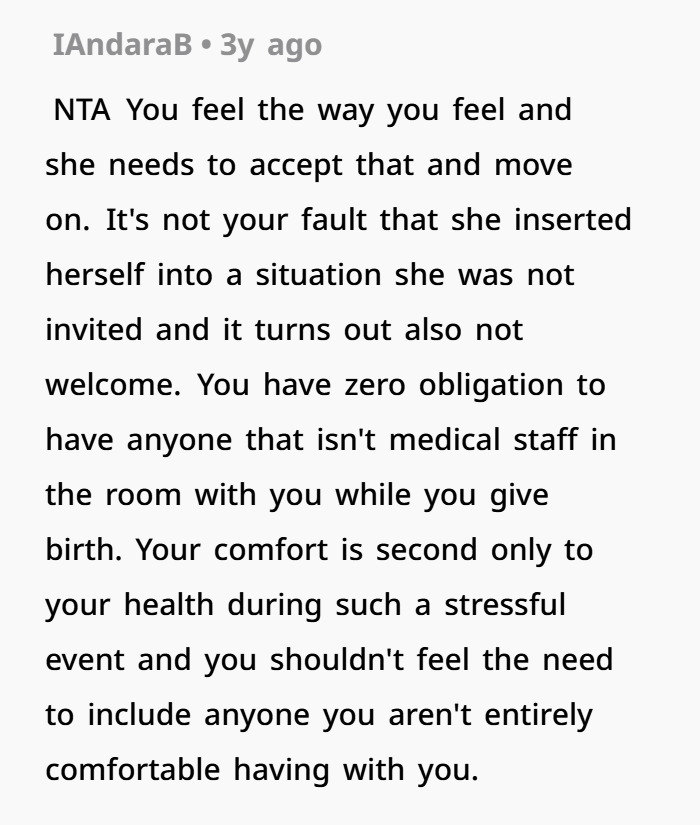
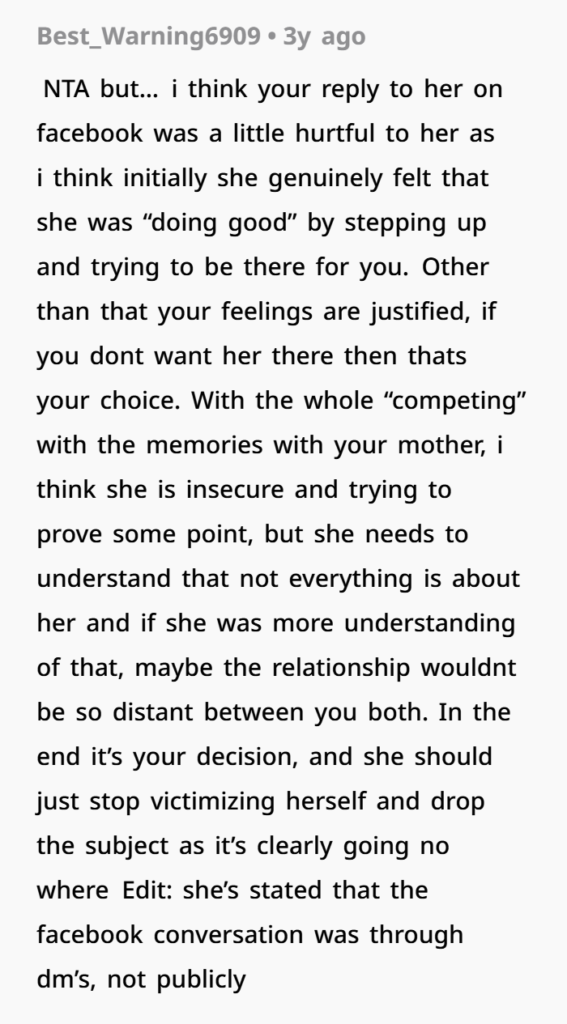
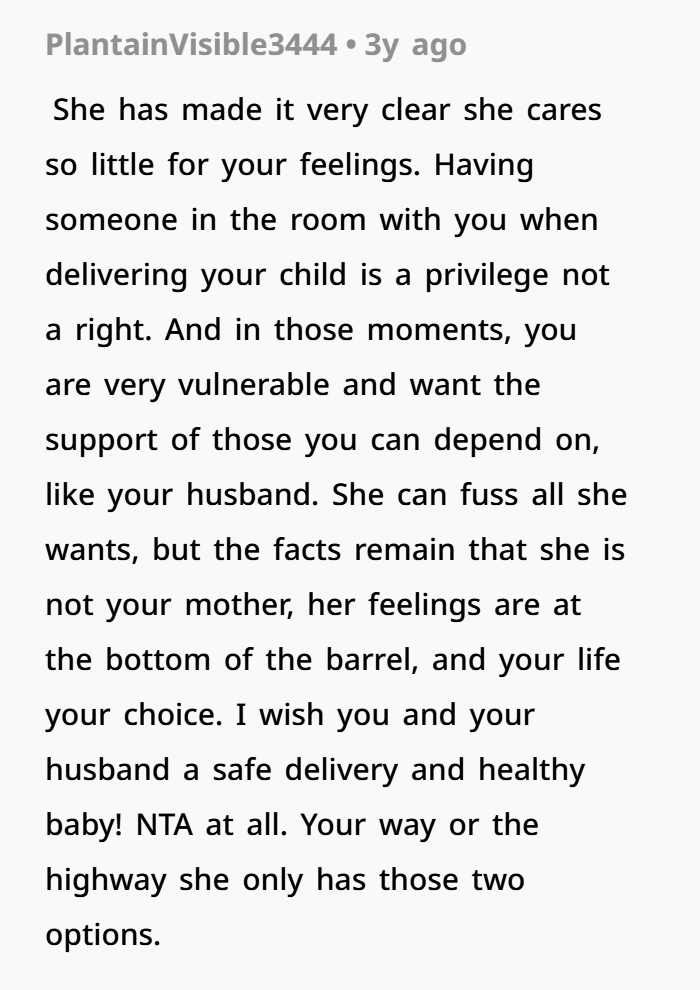
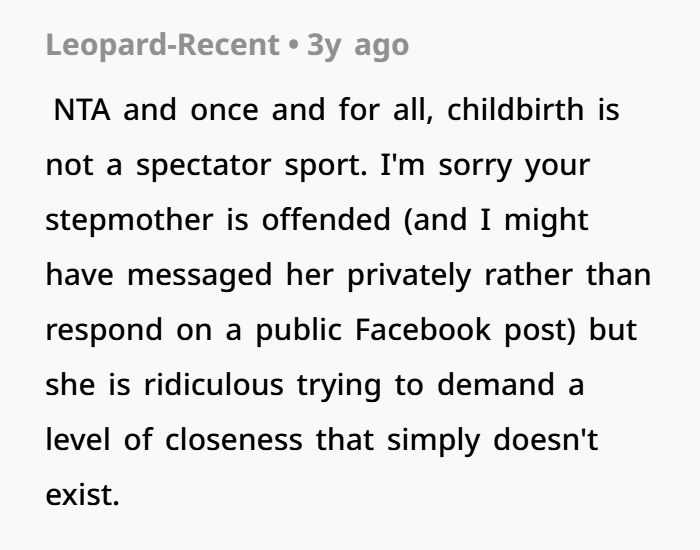
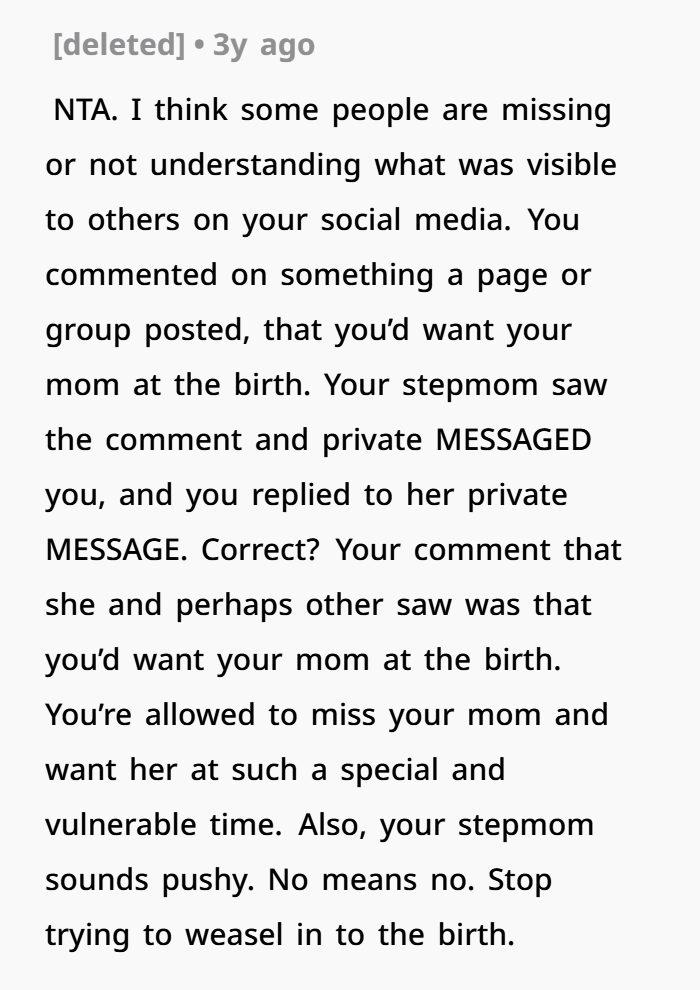
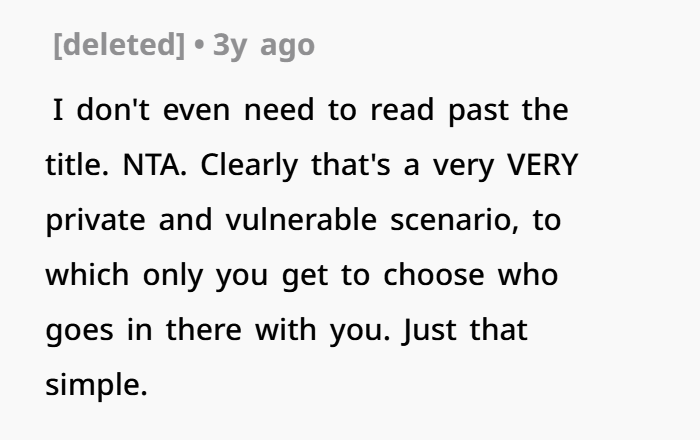
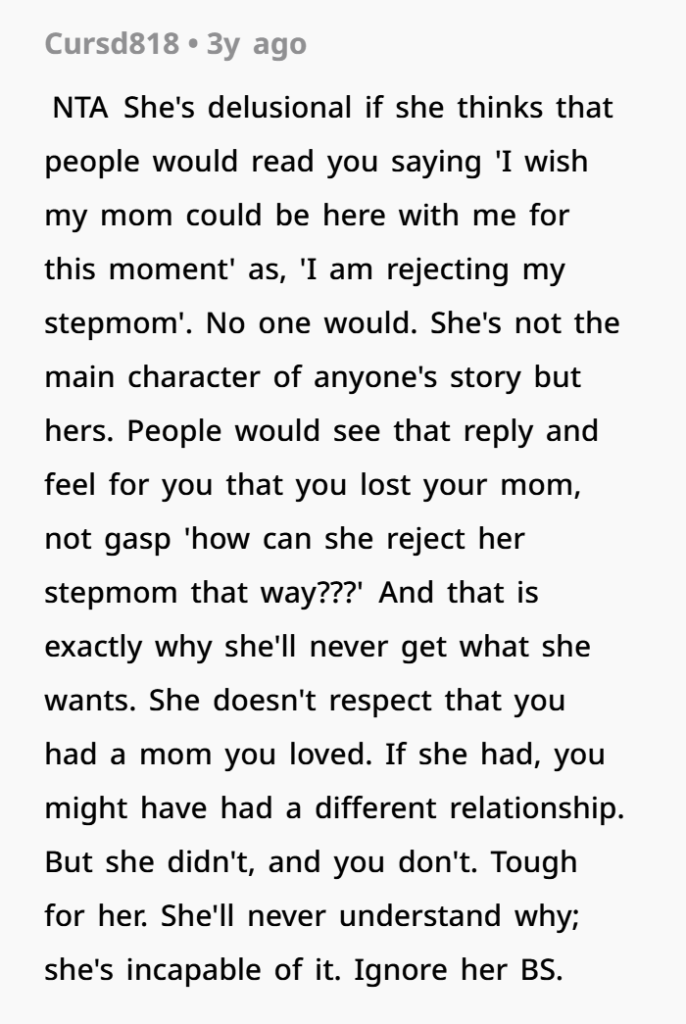
Netizens immediately sided with the pregnant woman, pointing out that the stepmother wasn’t respecting her wishes
Final Thoughts
This story was never only about who should be in a delivery room.
It was about love, grief, family expectations, and emotional boundaries.
The stepmother’s feelings may have been genuine, and the daughter’s need for comfort and control during childbirth was also valid.
The healthiest relationships happen when people can care about each other while also respecting each other’s limits.
Sometimes loving someone means accepting the relationship as it is, not forcing it to become something different.