Boundaries or Bitterness? Refusing to Host My Husband’s Son

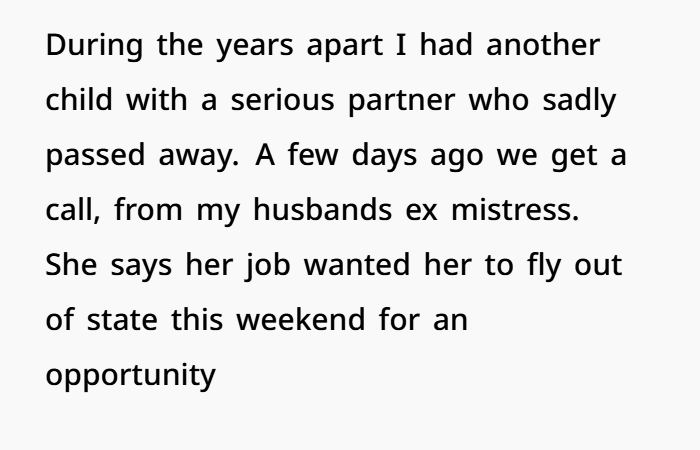
A woman shared a difficult situation involving her marriage, past hurt, and family challenges. She explained that she married young and had a child with her husband, but their relationship ended after he had an affair that resulted in another child. The experience was very painful, and the couple spent several years living separate lives.
After some time apart, they decided to rebuild their relationship. They hoped that time, personal growth, and better communication would help them move forward. They eventually reunited and spent the next several years raising their child together, along with another child from a different relationship.
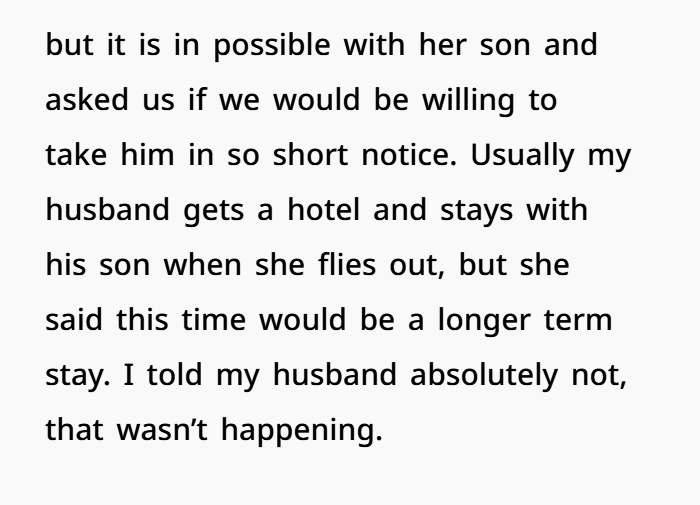
For a while, their family life became more stable. However, an old issue returned when the woman who had been involved in the affair contacted the husband. She asked if he could care for their son for a longer period while she traveled for work. In the past, the husband had usually handled these visits differently, but this request created a new challenge.
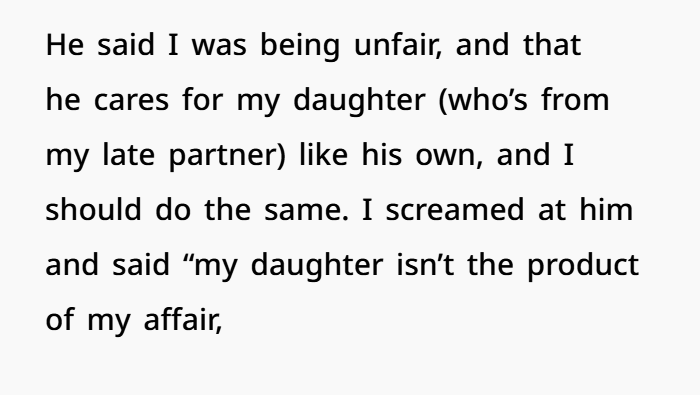
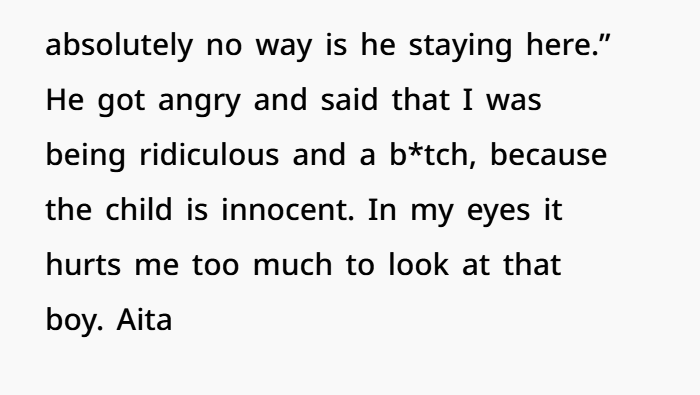
The wife did not feel comfortable with the arrangement because it brought back painful memories from the past. She felt that agreeing to it would reopen emotional wounds she had worked hard to heal. Her husband, however, saw the situation differently. He believed he had a responsibility to support his child and felt it was unfair because he accepted her child as part of the family.
The disagreement became emotional, and both partners struggled to understand each other’s feelings. Now they are trying to deal with old pain, parenting responsibilities, and the future of their relationship. The situation shows how difficult it can be to rebuild trust after betrayal and why honest communication and emotional support are important in blended families.

When Infidelity, Blended Families, and Boundaries Collide
This situation is difficult because it involves many painful things at the same time:
- A past affair
- Broken trust
- A child from that relationship
- Marriage problems
- Blended family challenges
It is not a simple “right or wrong” situation.
Both people have understandable feelings, but both also have things they need to think about.
The Affair Still Affects The Relationship
Even if a couple gets back together after cheating, the pain does not always disappear completely.
Some couples go through marriage counseling or infidelity recovery therapy after betrayal. They may rebuild trust, but certain reminders can still bring back difficult emotions.
Those reminders can be:
- The person involved in the affair
- A child connected to that time
- Memories from when the relationship was broken
Time can help, but it does not always erase the hurt.
In this situation, the affair was not just something that happened in the past. The child from that affair is now part of the family situation.
That can bring up old feelings again.
Why Bringing The Child Home Feels So Difficult
For many people, home is their safe place.
It is where they relax, feel comfortable, and leave stress behind.
So when someone asks you to bring a painful reminder of the past into your home for a long period of time, it can feel overwhelming.
Your reaction is not only about the child staying there.
It is connected to:
- The original betrayal
- The emotional pain from that time
- Feeling hurt by your partner’s choices
- The fear of reliving old wounds
That is why the reaction may feel stronger than the current situation alone.
Your Husband Sees The Situation Differently
Your husband may be looking at this from a parenting perspective.
To him, this is his child.
The child did not choose the situation. The child did not cause the affair. The child simply exists and needs care.
Many parents feel a responsibility to support their children, no matter how complicated the circumstances are.
Your husband may also feel that he accepted your child from a previous relationship, so you should accept his child too.
From his point of view, that may feel fair.
However, the two situations are emotionally different.
Your child became part of his life after your relationship was already established.
His child is connected to a time when your marriage was damaged.
That difference matters.
The Child Is Not Responsible
This is one of the most important points.
The child is innocent.
He did not choose how he was born.
He did not choose the decisions adults made.
He did not cause the pain between the adults.
Your feelings about the affair are understandable.
But it is important to separate the child from the actions of the adults.
A child should not carry the blame for something they had no control over.
The Difference Between Boundaries and Control
You have the right to have boundaries.
For example:
- “I am not comfortable having him stay in our home.”
- “This situation is emotionally too difficult for me.”
- “I need another solution.”
Those are valid feelings.
But there is also a difference between setting a boundary and controlling your partner’s role as a parent.
Your husband may still want to be present for his child.
The question becomes:
How can he do that while also respecting your emotional needs?
Finding A Middle Ground
Right now, both sides seem stuck in extreme positions.
You may feel:
“I cannot accept this at all.”
Your husband may feel:
“You are refusing to accept my child.”
But there may be other options.
For example:
- Your husband could spend time with his child outside the home.
- The child could visit for shorter periods first.
- The family could slowly build comfort over time.
- You could discuss the situation with a marriage counselor.
A compromise does not mean ignoring your pain.
It means finding a solution where everyone’s needs are considered.
The Bigger Challenge After Infidelity
Many couples struggle with the same question after cheating:
“How does the family move forward after everything that happened?”
When a child is involved, this becomes even harder.
Some couples decide the child becomes fully included in family life.
Others create different boundaries.
There is no single answer that works for everyone.
The important thing is that both partners talk openly and agree on what the future looks like.
Your Feelings Matter, But So Do Your Actions
You are not wrong for feeling hurt.
Your emotions come from a real place.
However, the way those emotions are expressed matters.
Anger, yelling, or blaming the child can make healing much harder.
At the same time, your husband should not ignore your pain or act like you should simply “get over it.”
Your feelings deserve to be heard too.
Moving Forward
This situation is really about two things happening at once:
- Old emotional pain from betrayal
- A current responsibility to a child
Both need attention.
A helpful next step may be:
- Marriage counseling focused on infidelity recovery
- Support for blended family challenges
- Honest conversations about boundaries
- A plan that protects both the child and the relationship
The goal is not to decide who wins.
The goal is to create a healthier future where nobody is forced to ignore their feelings and the child is treated with care and respect.
Because this situation is not only about the past.
It is about what kind of family everyone wants to build going forward.
The Comments Are In