Women Shouldn’t Need a Psychology Degree Just to Get the Bare Minimum From Their Partners

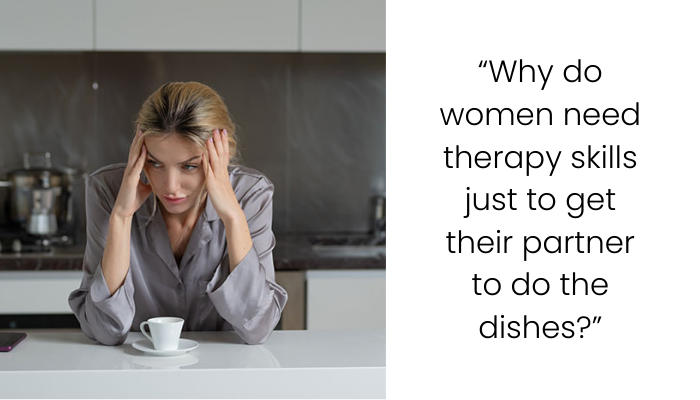
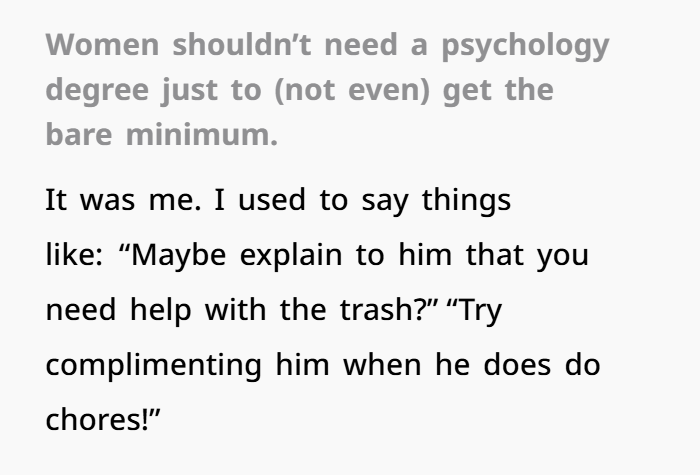
This story is about a person who changed the way they think about relationships and shared responsibilities. At first, she believed that better communication could solve most problems. She thought that if people explained their feelings clearly, asked politely, and gave their partners time to improve, things would naturally become more balanced.
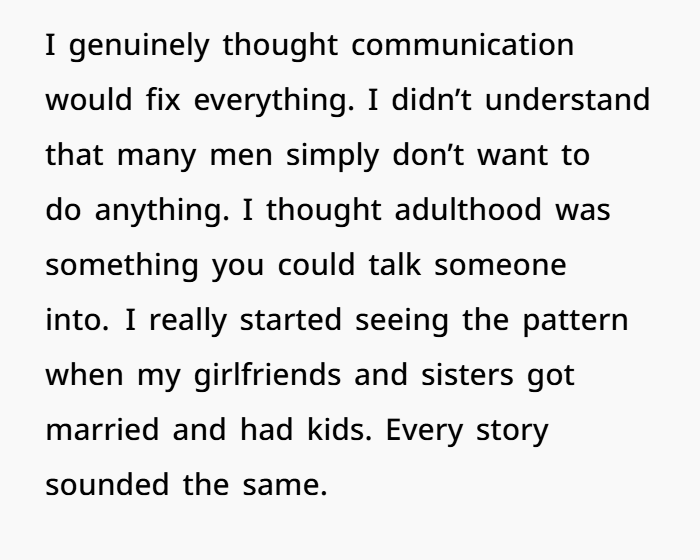
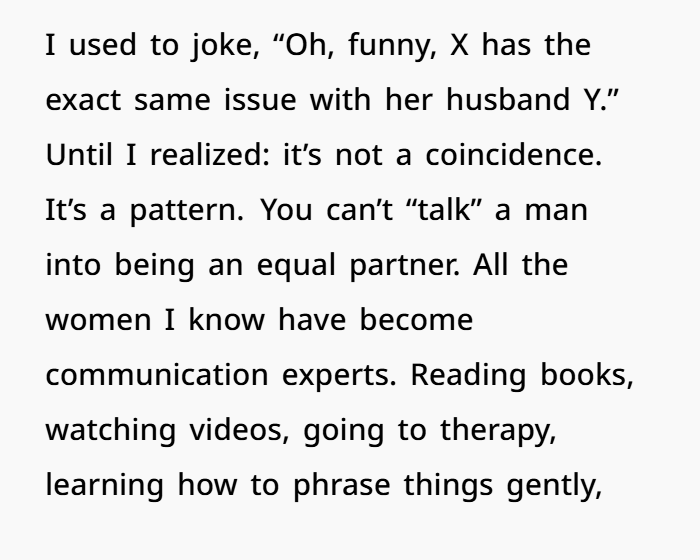
Over time, she noticed that many people had similar experiences. Friends, family members, and coworkers shared stories about feeling responsible for most household tasks, planning, and emotional support in their relationships. They felt they were carrying a large part of the mental load while their partners were not always equally involved.
The discussion focuses on the importance of teamwork, respect, and shared responsibility in healthy relationships. A strong partnership should include both people helping with daily tasks, making decisions together, and supporting each other emotionally.
The main message is that communication is important, but actions matter too. Long-term relationship success depends on both partners being willing to take responsibility, understand each other’s needs, and create a fair balance at home.
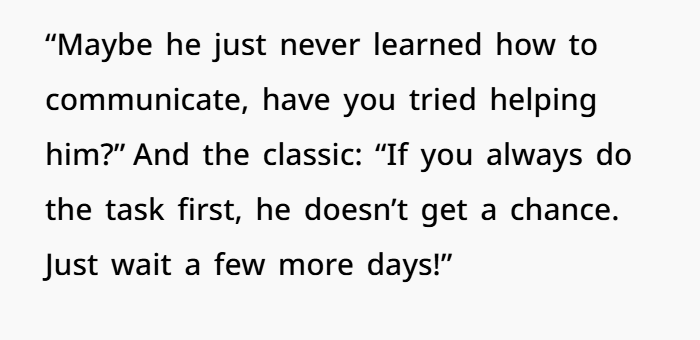
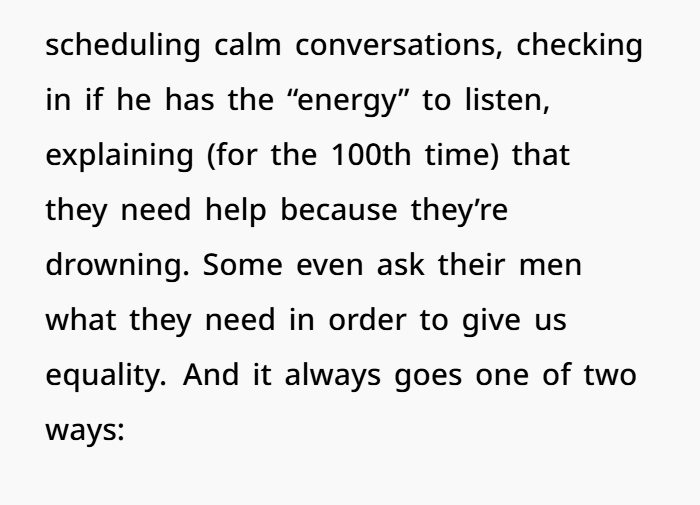
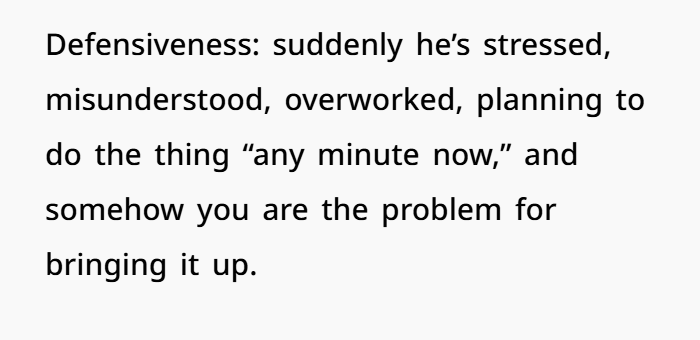
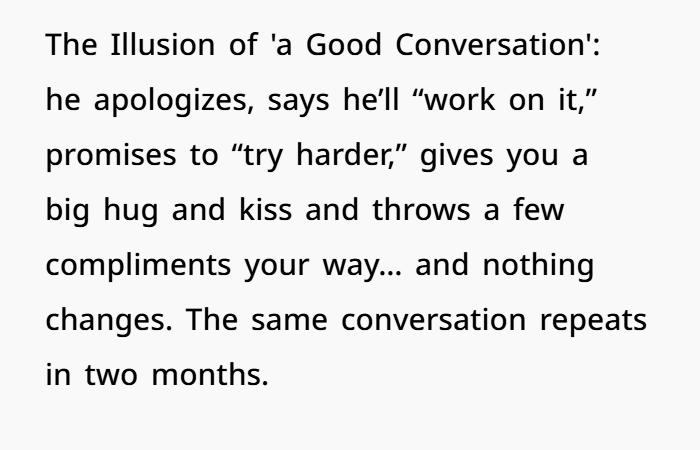
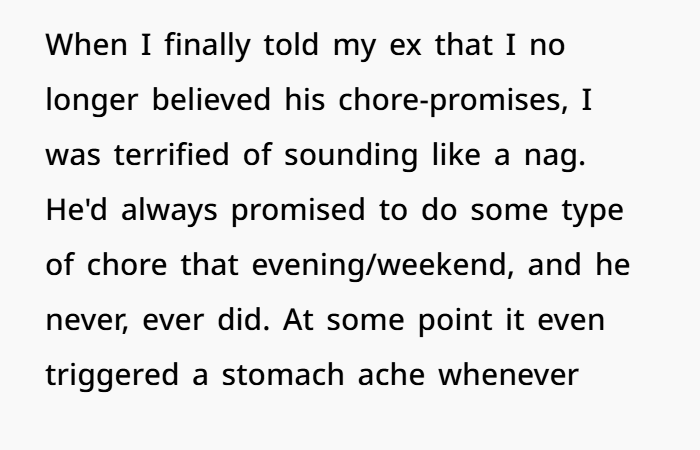
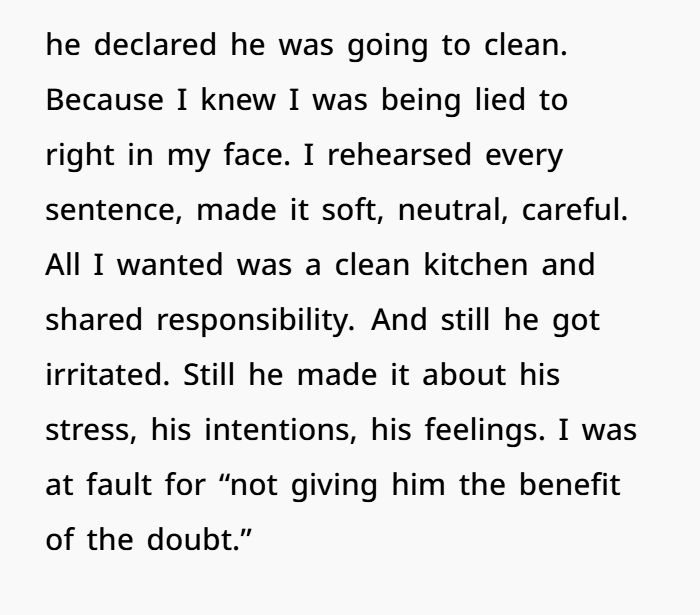
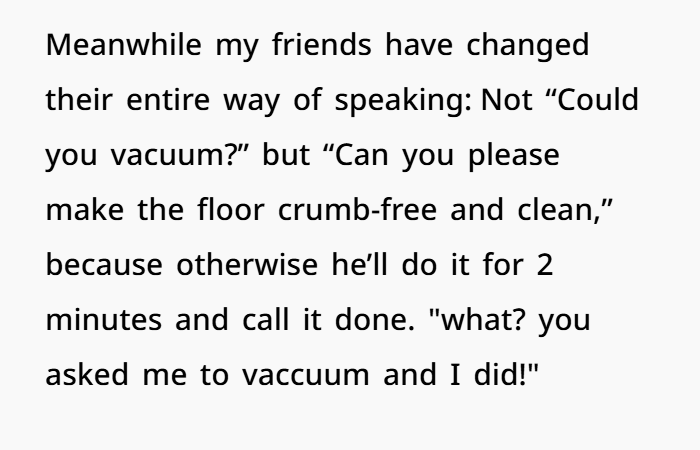
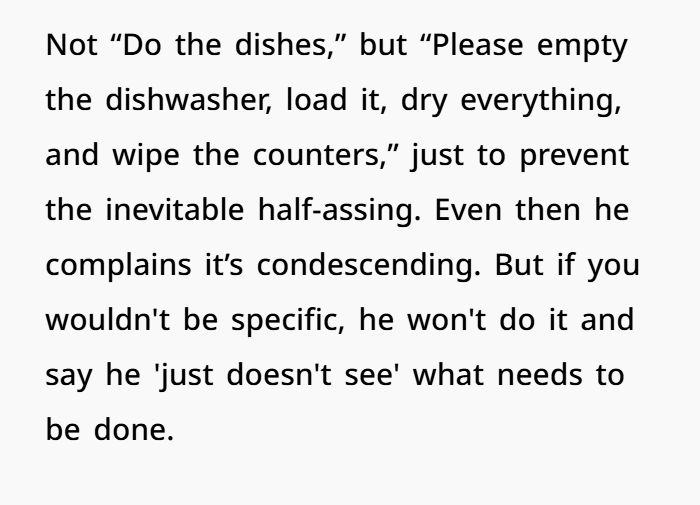
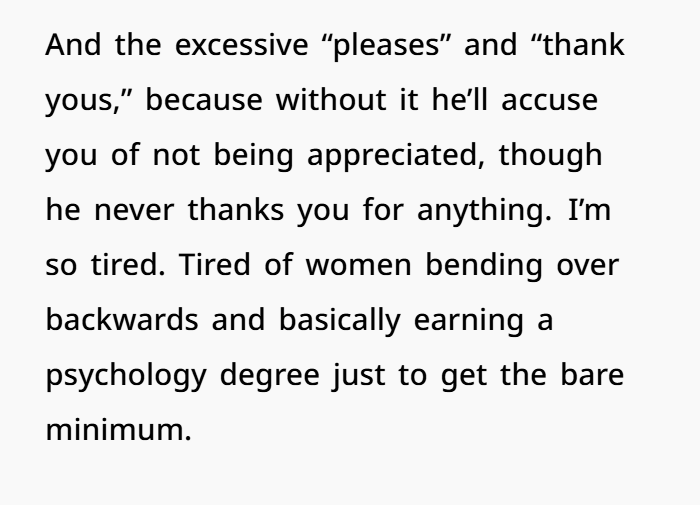
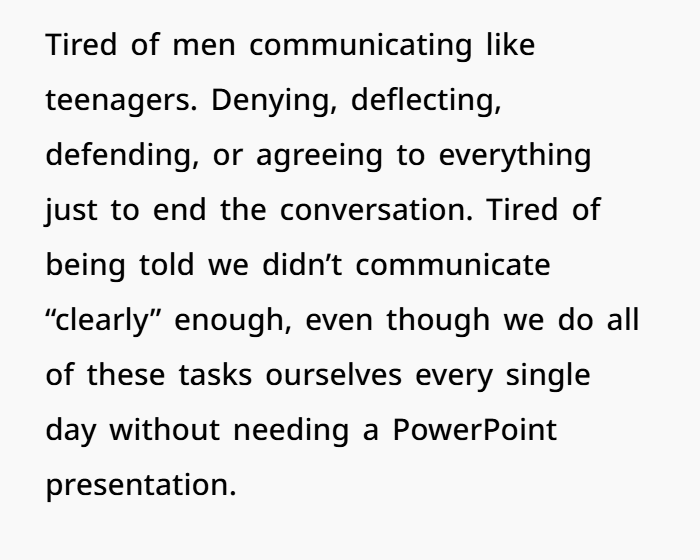
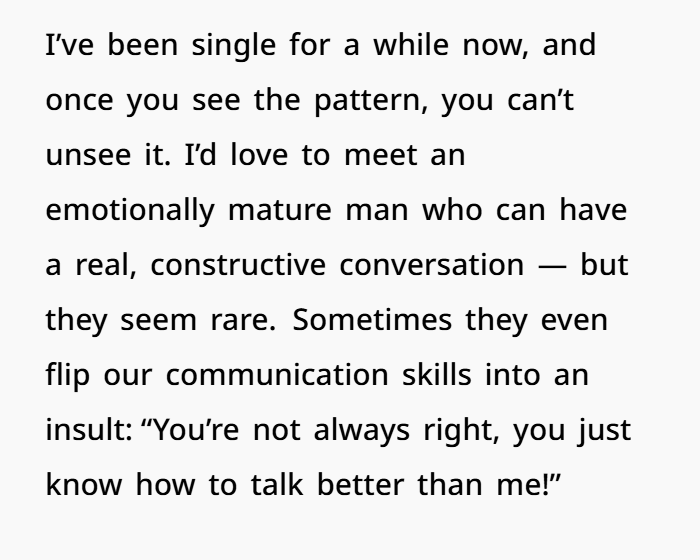
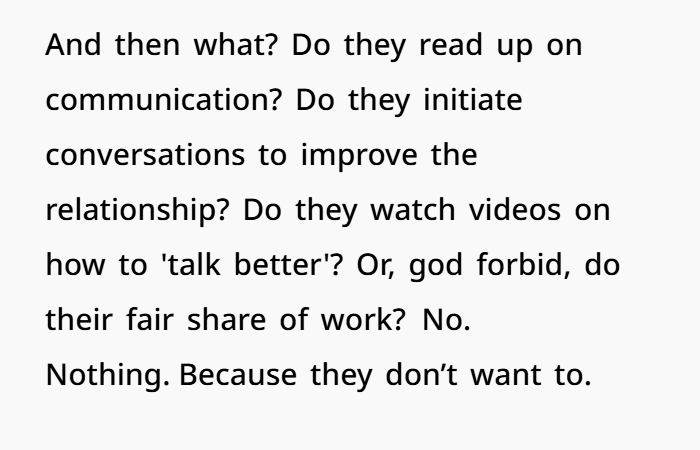
This woman wrote about these challenges in a lengthy post, pointing out the male traits she finds problematic
The Mental Load In Relationships: Why One Partner Feels Like They Do Everything
Many couples struggle with sharing responsibilities at home.
The problem is not always about who washes dishes or takes out the trash.
Often, the bigger issue is the invisible work that keeps a home running.
This is called the mental load.
It is the responsibility of remembering, planning, organizing, and making sure everything gets done.
For many people, especially in relationships where household tasks are not shared equally, carrying the mental load can become exhausting.
What Is The Mental Load?
The mental load is all the thinking that happens behind daily life.
It includes things like:
- Remembering appointments
- Planning meals
- Knowing when household items need replacing
- Organizing family schedules
- Keeping track of important dates
- Noticing problems before they become bigger issues
It is not only about doing chores.
It is about being the person who has to think about the chores before they happen.
For example, buying toilet paper is a task.
Remembering that the toilet paper is almost finished, adding it to the shopping list, and making sure someone buys it is part of the mental load.
Over time, carrying this responsibility alone can make someone feel tired and unsupported.
Communication Is Important, But Actions Matter Too
Many people believe the solution to household problems is simply better communication.
Communication does help.
Talking openly about expectations, responsibilities, and feelings is important.
However, there is another important part: willingness to take responsibility.
A common relationship problem happens when one person always has to ask, remind, or explain.
They may start feeling less like a partner and more like a manager.
For example, phrases like:
- “You should have reminded me.”
- “I didn’t know what you wanted.”
- “You do it better.”
- “You never asked.”
can create frustration when they happen repeatedly.
Sometimes the issue is not a lack of information.
Sometimes it is a lack of taking initiative.
Sharing Chores Means Sharing Responsibility
There is a difference between helping and being responsible.
Helping means someone waits for instructions.
Sharing responsibility means someone notices what needs to be done and takes action.
For example:
Helping:
“Tell me what I should clean.”
Sharing responsibility:
“I noticed the kitchen needs cleaning, so I handled it.”
A healthy partnership means both people contribute without one person having to manage everything.
Emotional Maturity Is Important In Relationships
A strong relationship requires more than love.
It also requires emotional maturity.
This includes:
- Listening without becoming defensive
- Accepting feedback
- Keeping promises
- Caring about your partner’s needs
- Taking responsibility for mistakes
Everyone makes mistakes.
The important thing is whether someone is willing to learn and improve.
A person does not need to be perfect.
But both partners should be willing to grow.
How Resentment Builds Over Time
When one person constantly carries more responsibility, resentment can slowly grow.
The person carrying the mental load may start feeling:
- Unappreciated
- Exhausted
- Alone
- Frustrated
The other person may feel criticized or believe they are already doing enough.
This creates a cycle where both people feel unhappy.
Small daily problems can become bigger relationship issues when they are ignored for too long.
Why Some People Understand Things Better After Being Alone
Sometimes people only realize how much responsibility they carried after leaving a relationship.
When someone no longer has to manage another person’s schedule, habits, or responsibilities, they may notice how much energy they were spending.
They may feel more peaceful because they are only responsible for themselves.
This can help people understand what they truly want in a future relationship.
Many people want a partner who shares responsibilities naturally, not someone they have to constantly remind.
Wanting A Fair Partnership Is Not Asking Too Much
Some people worry that asking for more help makes them demanding.
But wanting a balanced relationship is normal.
Most people are not asking for perfection.
They are asking for basic partnership.
That can include:
- Sharing household responsibilities
- Communicating respectfully
- Taking initiative
- Respecting each other’s time
- Supporting each other emotionally
These are healthy relationship expectations.
How Couples Can Improve The Mental Load Balance
If a couple wants to create a healthier balance, they can try:
Have An Honest Conversation
Talk about what each person handles daily.
Sometimes one partner does not realize how much invisible work the other person is doing.
Divide Responsibilities Clearly
Instead of one person managing everything, both people can own specific tasks.
Avoid Keeping Score
The goal is teamwork, not competition.
Appreciate Each Other
Feeling valued can make a big difference in a relationship.
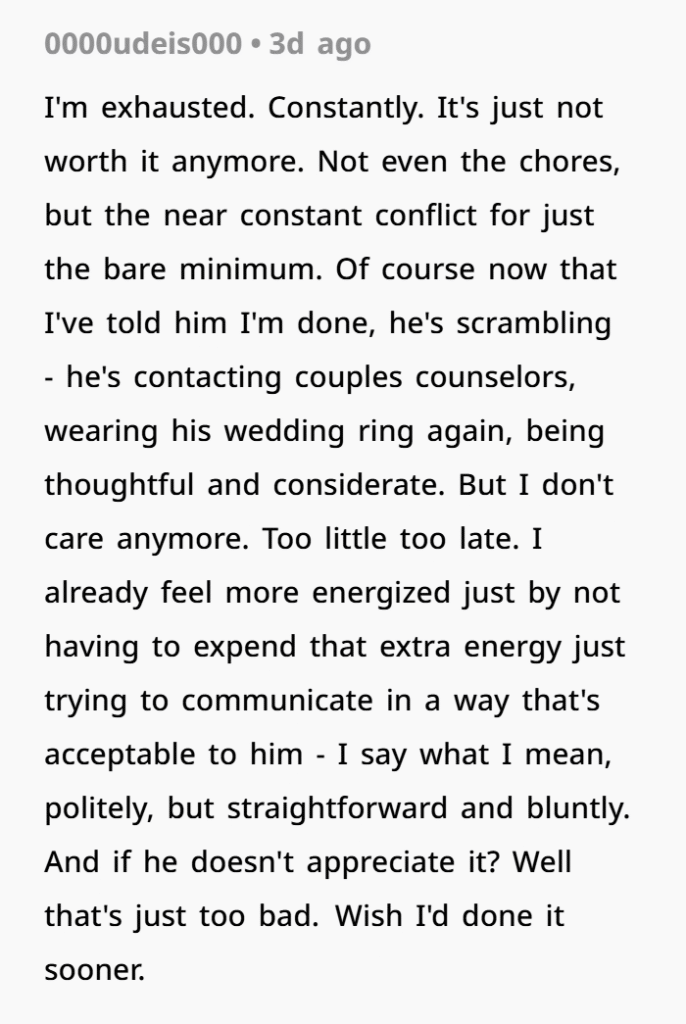
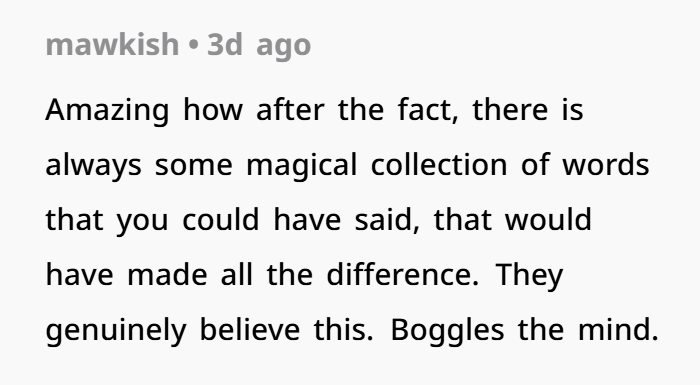
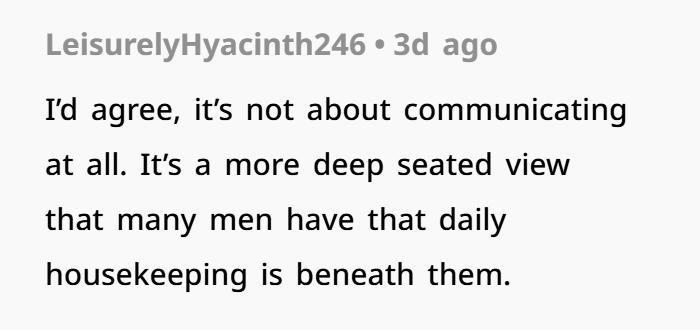
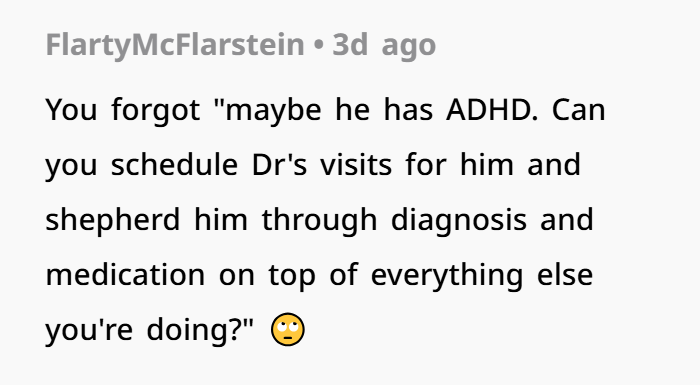
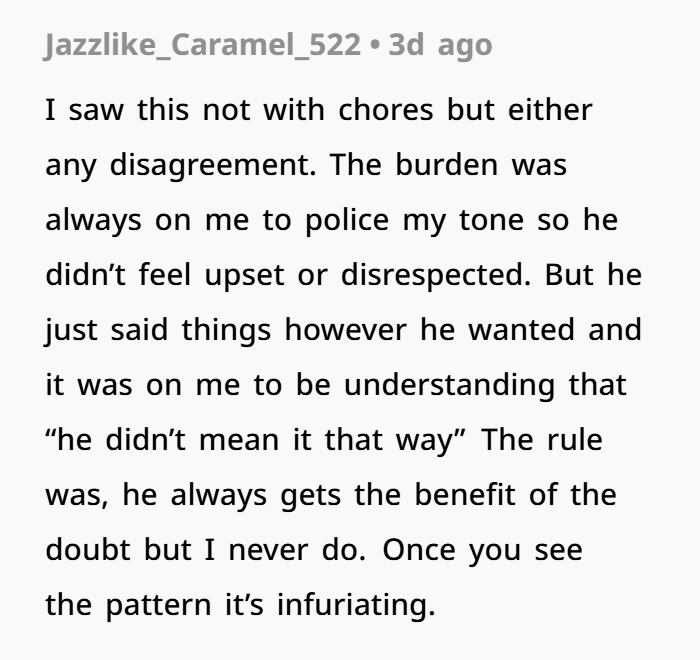
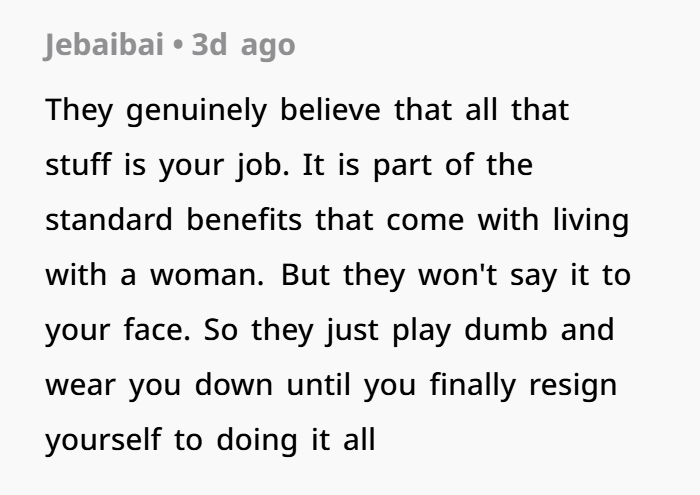
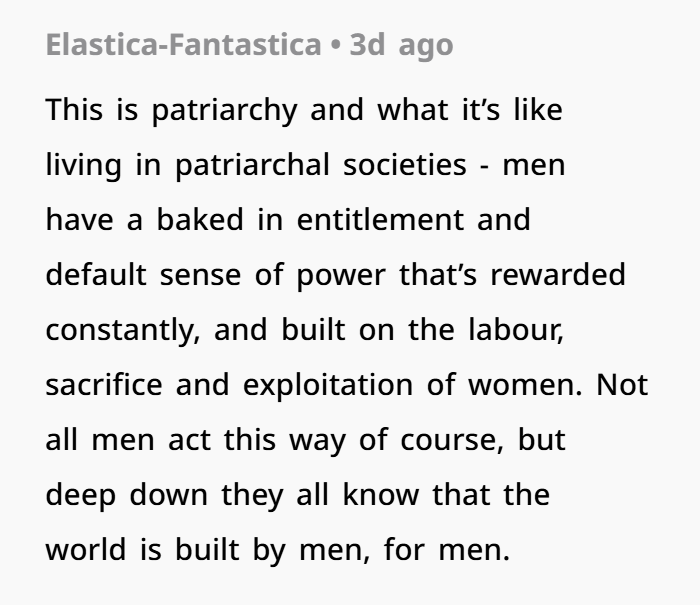
Many people in the comments sympathized with her and shared similar experiences

Final Thoughts
A healthy relationship is not about one person doing everything and the other person occasionally helping.
It is about two people working together.
The mental load can be difficult because much of it is invisible.
Recognizing it is the first step toward creating a more balanced relationship.
Everyone deserves a partnership where they feel supported, respected, and valued.