AITA for Skipping My Adopted Daughter’s Wedding After She Invited the Mother Who Treated Her Like Garbage?

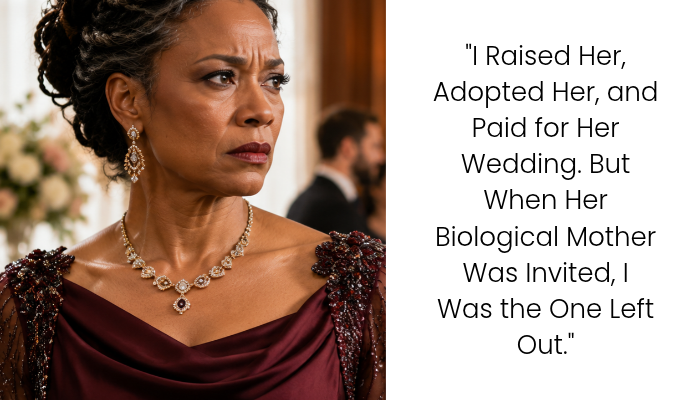
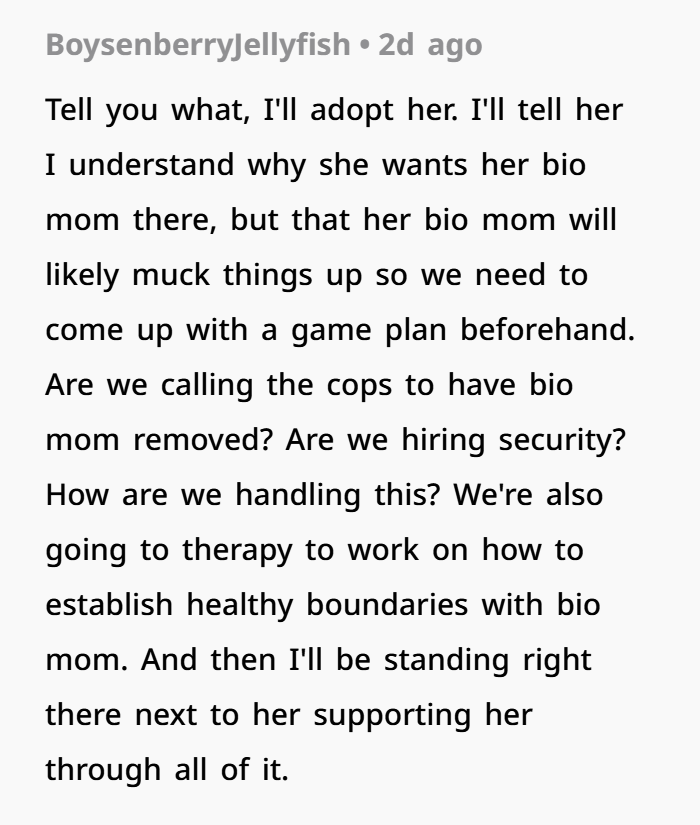
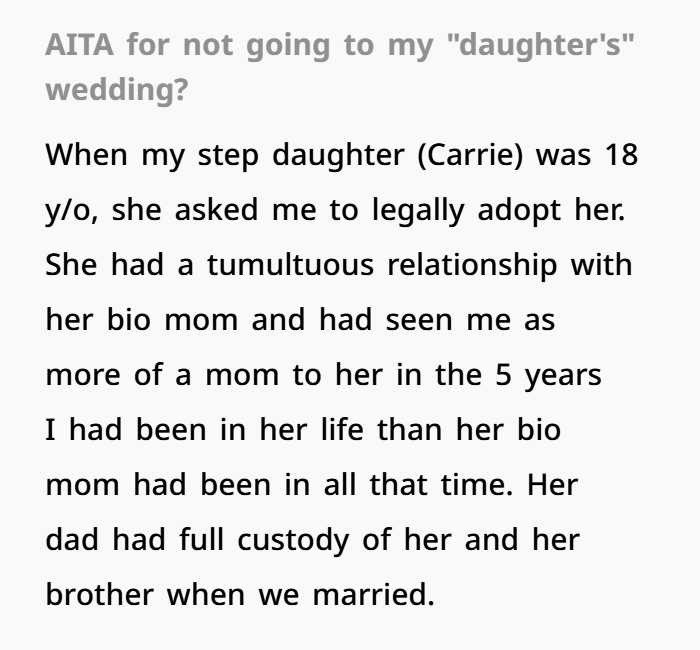
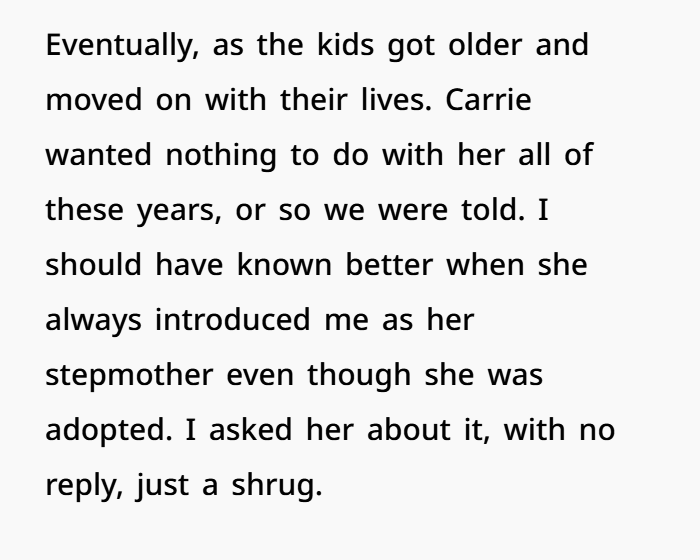
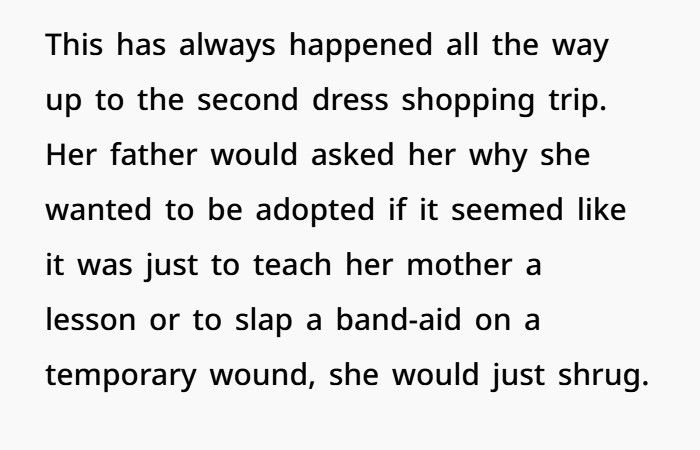
A woman who spent years loving and raising her stepdaughter is now unsure whether she made the right decision by staying away from her wedding. Her stepdaughter, Carrie, had asked to be legally adopted when she turned 18. By then, her stepmother had been an important part of her life for five years. Carrie had experienced many problems with her biological mother and often felt that she was not getting the care and attention she needed. Her stepmother gave her a stable home, love, and the support she had been looking for.
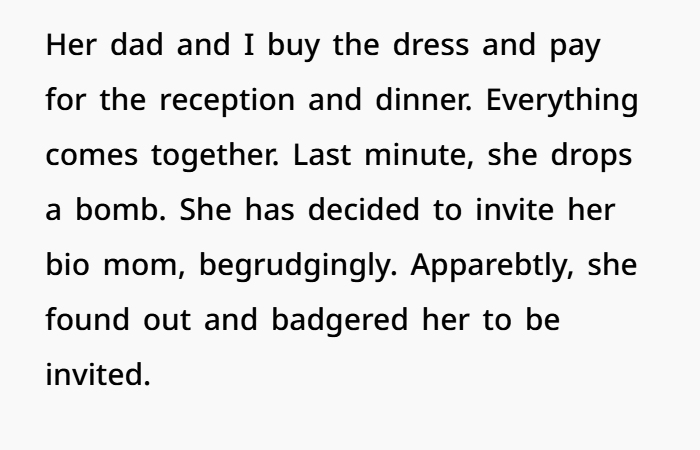
The adoption was completed after Carrie finished high school. Everyone believed it was the start of a stronger family bond. Her father and adoptive mother continued helping her with college and other important parts of her life. When Carrie announced her engagement, they were happy to help with wedding costs. They even offered financial support for her wedding dress, reception, and dinner. However, the situation changed when Carrie decided to invite her biological mother to the wedding.
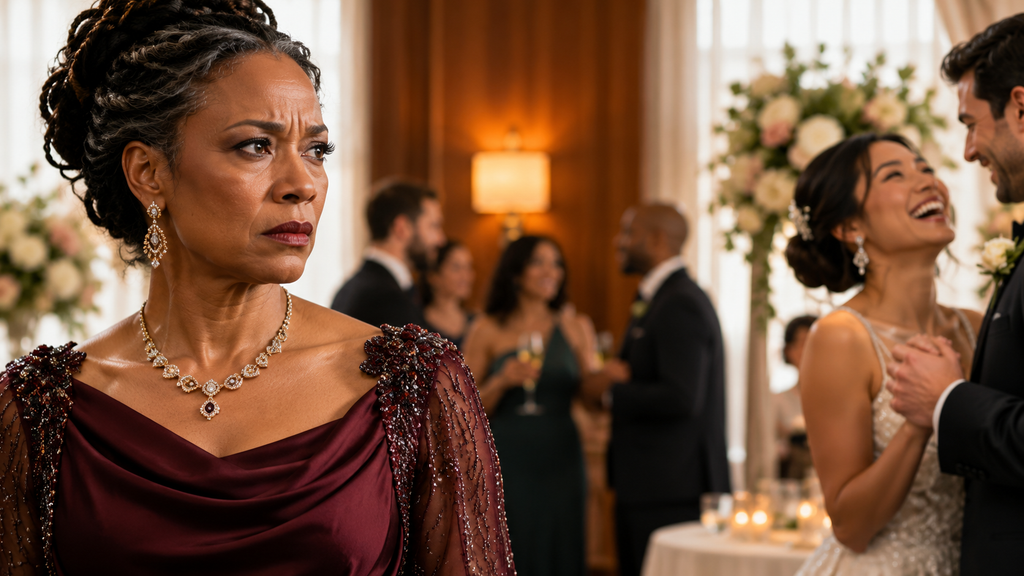
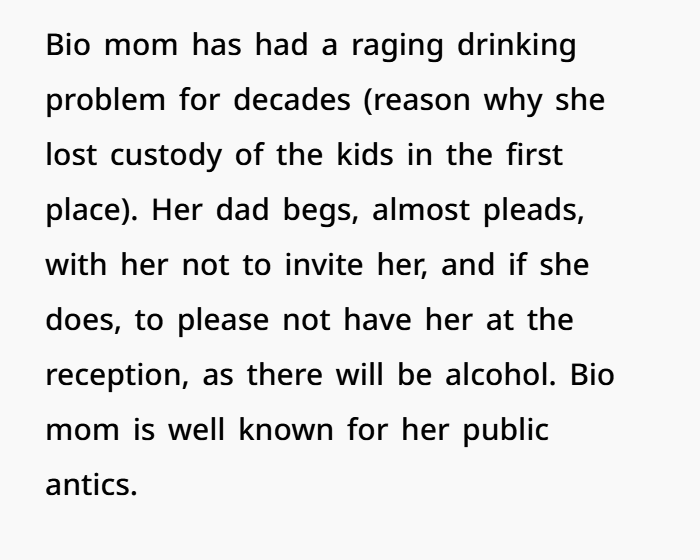
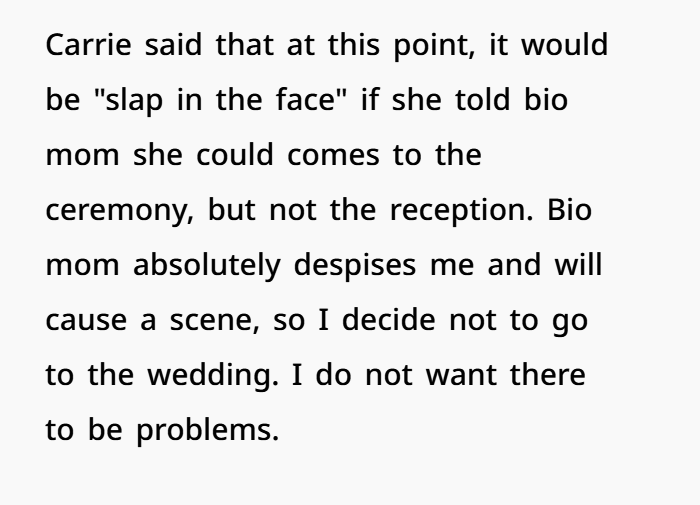
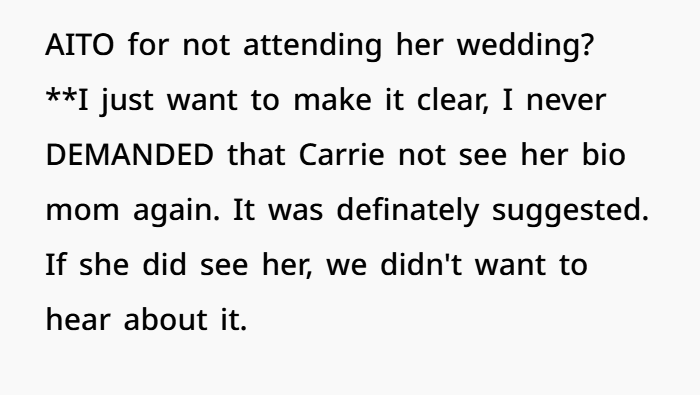
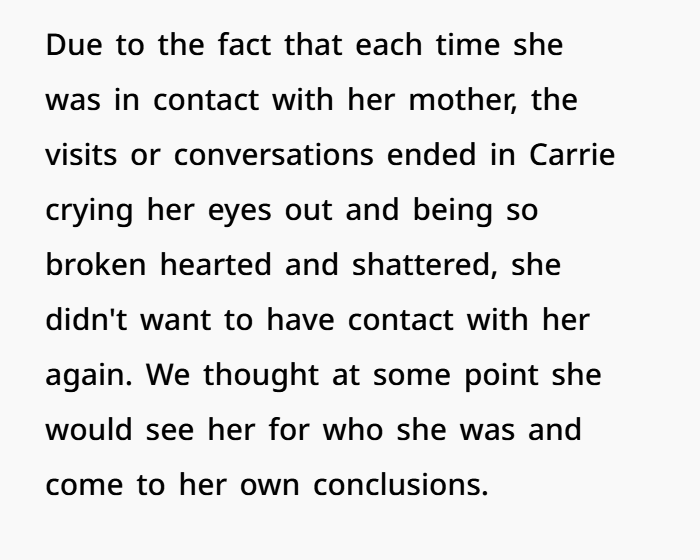
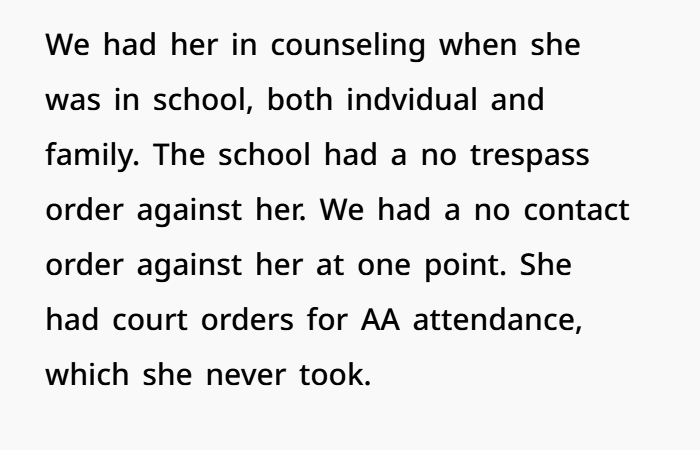
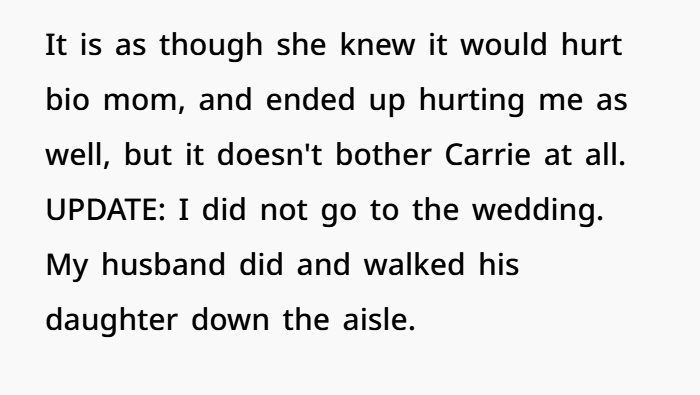
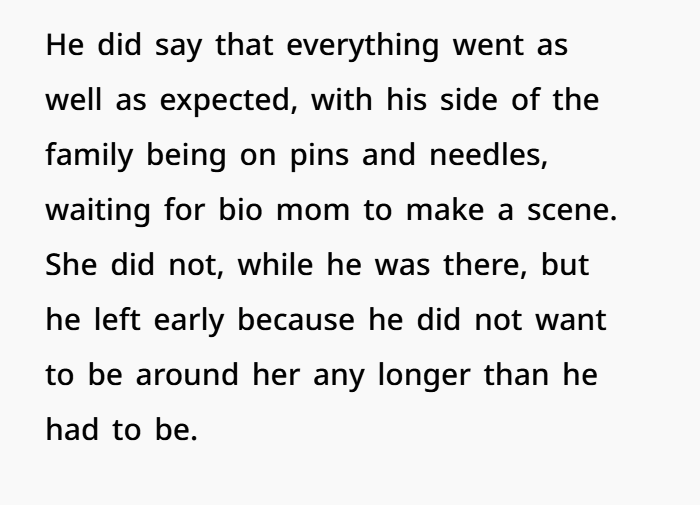
Her biological mother’s past behavior made the family concerned. She had struggled with alcohol-related problems and had caused emotional stress in the past. Carrie’s father was especially worried because alcohol would be available at the reception. Her adoptive mother also feared that the wedding could become an uncomfortable family situation. Feeling hurt and overlooked, she decided not to attend. Her husband still went to the wedding and walked Carrie down the aisle.
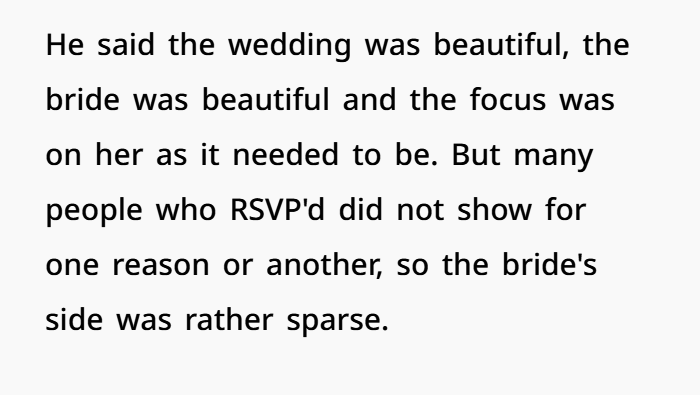
After the wedding, the woman shared that everything had gone well and there had been no major problems. Her husband was present throughout the celebration, but she still felt upset about some things she heard and saw. One detail that stayed with her was how Carrie’s biological mother repeatedly tried to appear in pictures with the bride and groom. This brought back memories of earlier family struggles. Now, she is questioning whether the adoption and all the years of support mean the same to Carrie as they do to her. It is a difficult reminder that family relationships, emotional support, and blended family life can sometimes be more complicated than expected.



Adoption and Blended Families: Understanding Love, Family, and Emotional Challenges
One of the biggest challenges in this story is the difference between being a legal parent and being a parent emotionally. Adoption is a big commitment. It often comes from love and the wish to give a child a safe and happy home.
For adoptive parents, adoption can make an existing family relationship official. It can also show their long-term commitment to raising and caring for a child.
However, adoption does not mean a person forgets their biological parents. They may still have memories, questions, and feelings about their birth family. This can be especially difficult when their relationship with a biological parent has not always been easy.
That is why adoption and blended family relationships can sometimes be complicated.
Children May Still Want a Relationship With Their Biological Parents
Children who grow up with adoptive parents may still want love and attention from their biological parents.
Even when a biological parent has made mistakes, a child may continue hoping for a better relationship. They may want their parent to change or wish that things could have been different.
These feelings can continue even after a child becomes an adult.
Carrie’s decision to stay in contact with her biological mother does not automatically mean she loves her adoptive mother any less. However, the way she handled the wedding situation understandably hurt her adoptive mother.
People can have different feelings about their parents. Someone may love their adoptive parent while still wanting a connection with their biological family.
Children should have the freedom to understand their family history without feeling forced to choose between the people they love.
Why Personal Boundaries Matter in Family Relationships
The adoptive mother explained that she had advised Carrie to stop talking to her biological mother because their conversations often left Carrie upset.
She may have given this advice because she wanted to protect Carrie from more emotional pain.
However, asking an adult child to completely stop talking to a biological parent can create more stress.
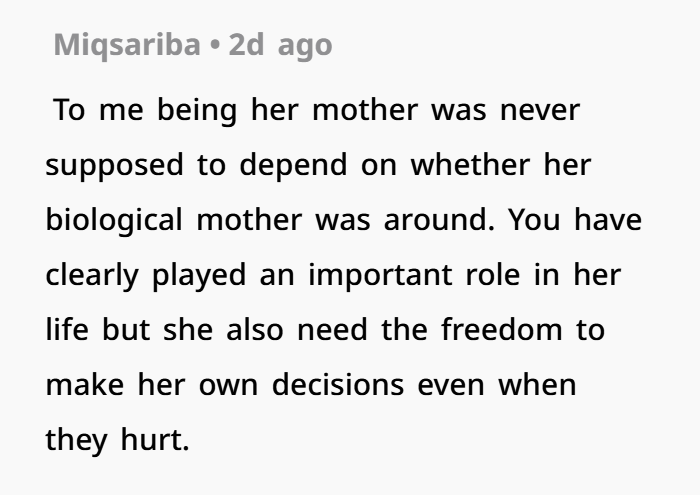
Carrie is an adult and has the right to decide who she wants in her life.
There is a difference between setting personal boundaries and making decisions for someone else.
The adoptive mother can decide what kind of behavior she is willing to accept. She can also choose to limit contact if certain situations affect her emotional health.
At the same time, she can respect Carrie’s choice to maintain a relationship with her biological mother.
Healthy family relationships need trust, respect, and honest communication. Everyone should be able to share their feelings without feeling controlled.
How Alcohol Addiction Can Affect Family Relationships
Another important part of this story is the biological mother’s reported history of alcohol addiction.
Alcohol use disorder is a medical condition that can affect a person’s health and family life. It can also create stress and trust problems between family members.
When a family has experienced problems related to alcohol use, it is understandable that they may feel worried about future gatherings.
However, having a history of addiction does not mean someone will always behave badly. With proper treatment, medical care, and support, recovery is possible.
In this story, the family’s concerns were based on previous experiences. Since alcohol would be available at the wedding, they wanted to discuss possible problems before the event.
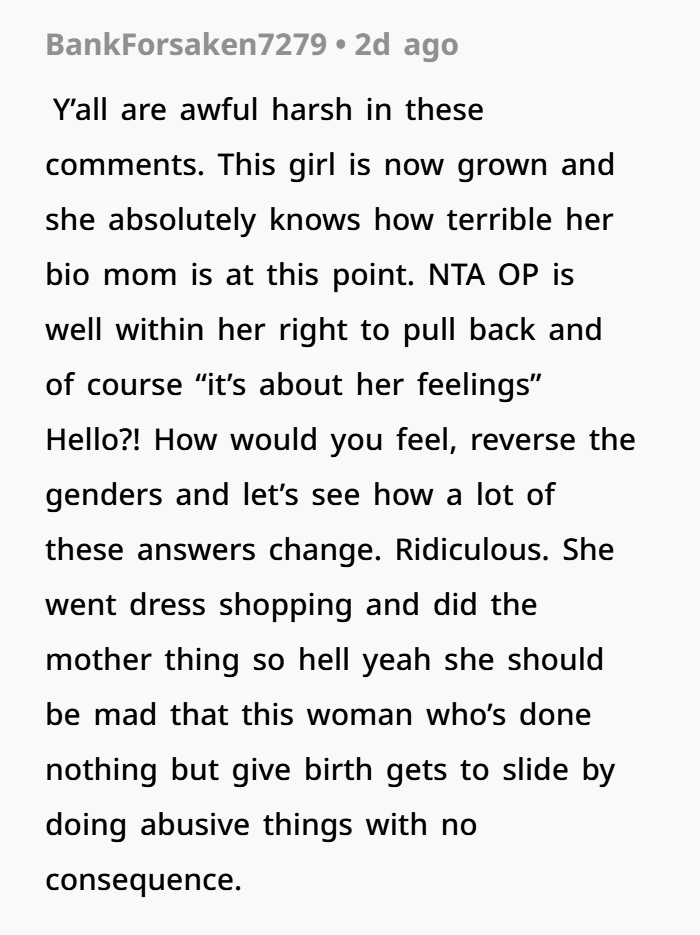
Carrie had the right to decide whom she wanted to invite. Her father and adoptive mother also had the right to decide whether they felt comfortable attending.
Both sides had their own feelings and concerns. A calm discussion could have helped everyone understand each other better.
Small Things Can Create Big Feelings Over Time
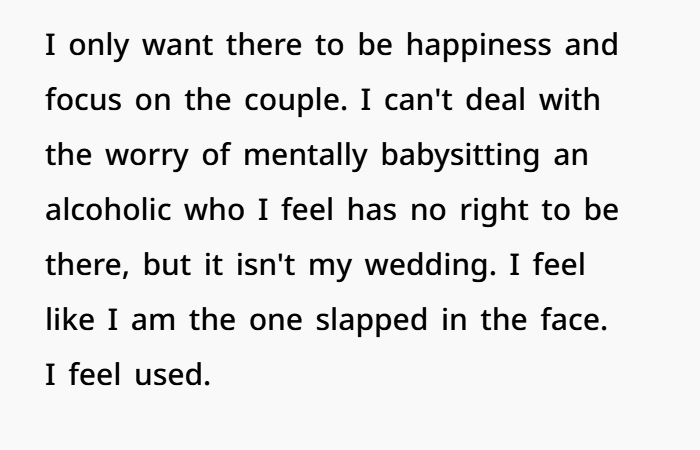
The adoptive mother’s update shows that her disappointment was not only about the wedding.
She remembered receiving a small rock with the words “you rock” written on it for Christmas. She also mentioned that Carrie regularly bought Mother’s Day gifts for her boyfriend’s mother and stepmother.
These things may seem small, but they clearly meant something to her.
When someone spends years raising and caring for a child, they may hope to feel loved and appreciated in return.
Sometimes, small actions can become painful reminders when a person already feels left out or forgotten.
However, everyone shows love in different ways. Some people give gifts, while others show their feelings through time, attention, and everyday acts of kindness.
Instead of keeping these feelings inside, family members should try to talk openly about what is bothering them.
Good communication can prevent small misunderstandings from turning into bigger family problems.
Family Conflicts Can Affect Important Events Like Weddings
A wedding is supposed to be a happy day for the couple and their loved ones.
But when family relationships are already difficult, these events can become stressful.
In this story, some relatives were worried about possible problems involving the biological mother. Although she reportedly did not create a major scene while Carrie’s father was present, her attempts to appear in photographs with the couple suggest that some tension remained.
Carrie’s father still attended the wedding and walked his daughter down the aisle.
This was important because it showed that he wanted to maintain his relationship with Carrie, even if he did not agree with every decision surrounding the wedding.
Family members do not always have to agree with each other. They can still love and support one another.
Sometimes, respecting another person’s choices is more helpful than trying to control every situation.
Adoption Does Not Always Mean Everyone Feels the Same Way
The biggest question in this story is whether Carrie and her adoptive mother understood their relationship in the same way.
The adoptive mother may have seen Carrie as her own daughter after years of love, care, and support.
Carrie may have viewed adoption differently. Perhaps it gave her a more stable family life while she still wanted to stay connected to her biological mother.
It is possible for both people to have real feelings, even when they do not agree.
Legal adoption creates a permanent parent-child relationship. However, building a close emotional connection also takes time, trust, and effort.
Family counseling may help both sides talk about their feelings and understand each other’s expectations. A qualified family counselor can help them discuss past experiences, personal boundaries, and ways to improve their relationship.
Love and Respect Are Important in Every Family
Being a parent is about more than legal documents or the number of years spent raising a child.
It also means understanding that children grow up and become adults with their own feelings, opinions, and decisions.
Adoptive parents deserve love and appreciation for the care they provide. At the same time, adult children should have the freedom to understand their past and decide what kind of relationship they want with their biological family.
Both sides should respect each other’s feelings.
The adoptive mother may feel hurt because she expected a closer relationship. Carrie may not fully understand how her decisions affected her adoptive mother.
A calm and honest conversation could help them understand each other better.
In the end, strong family relationships are built through love, patience, trust, and respect. Adoption can bring people together, but keeping those relationships strong takes understanding and effort from everyone.
See The Comments Below