A Coworker Kept Stealing Office Lunches… So One Employee Set a Spicy Trap That Got Them Fired

Workplace problems can sometimes start with small issues but become frustrating over time. One common office complaint is when someone takes another person’s food from the shared office refrigerator. In this story, an employee said a coworker repeatedly ate meals that were clearly labeled with other employees’ names. Each time, the coworker apologized and said they did not notice the labels.
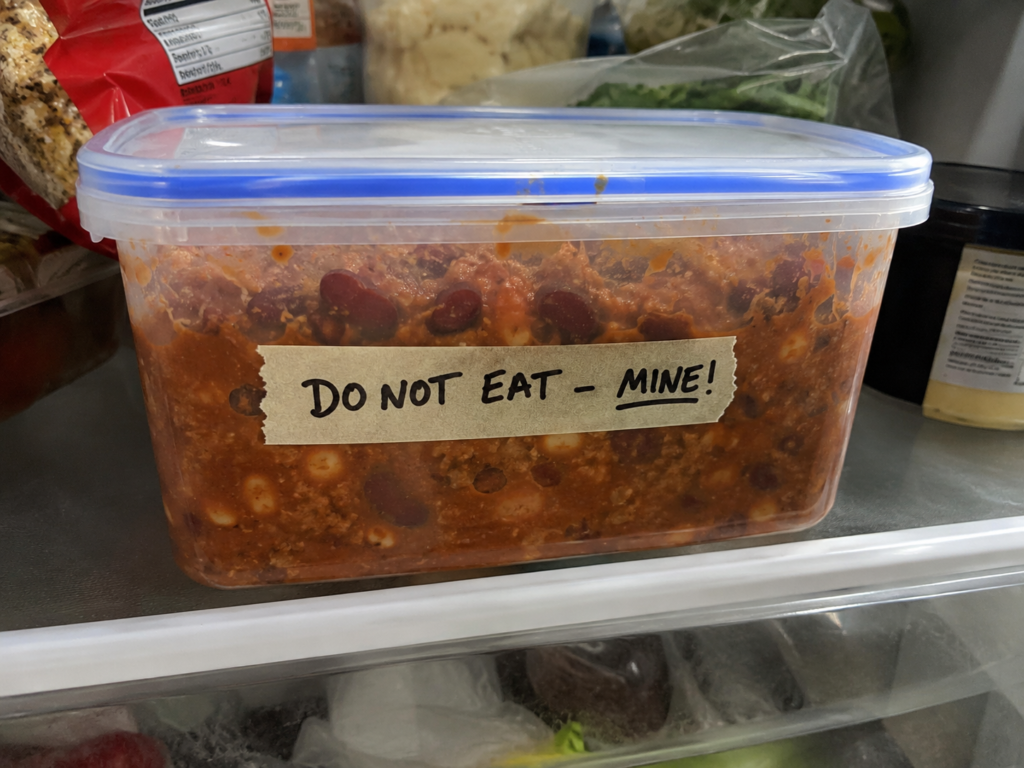
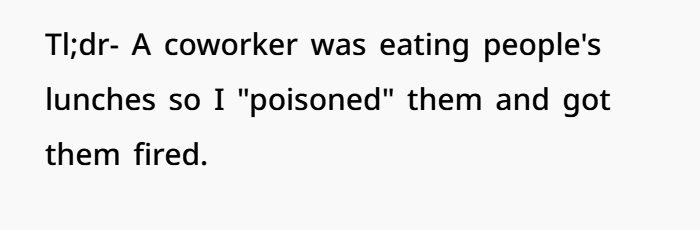
Because the incidents did not happen every day, management did not treat the situation as a serious workplace issue. However, after losing several homemade lunches over many months, one employee decided to handle the problem differently. They prepared a homemade chili that included very spicy peppers because they personally enjoyed strong flavors.
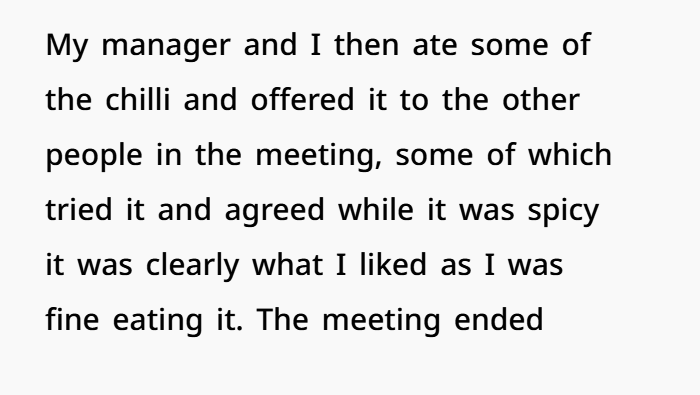
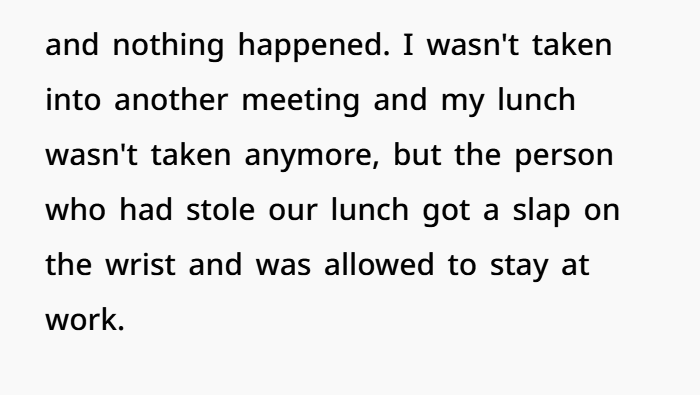
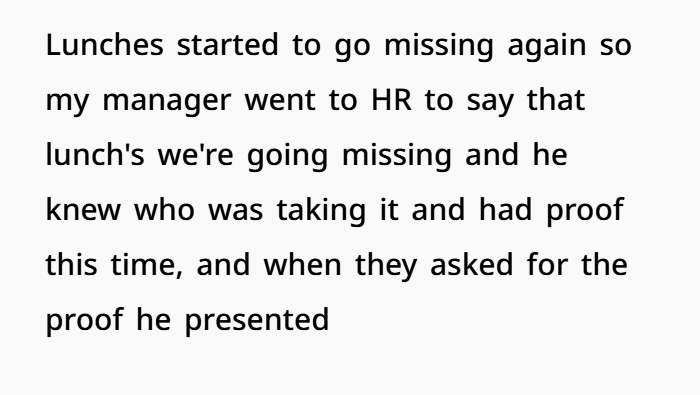
The employee brought the chili to work during the week, and the meal was taken again. According to the story, the coworker who ate it became very uncomfortable because the food was much spicier than expected and had to leave work early. The situation then reached the human resources department, where the employee was questioned about whether the meal was meant to harm someone.
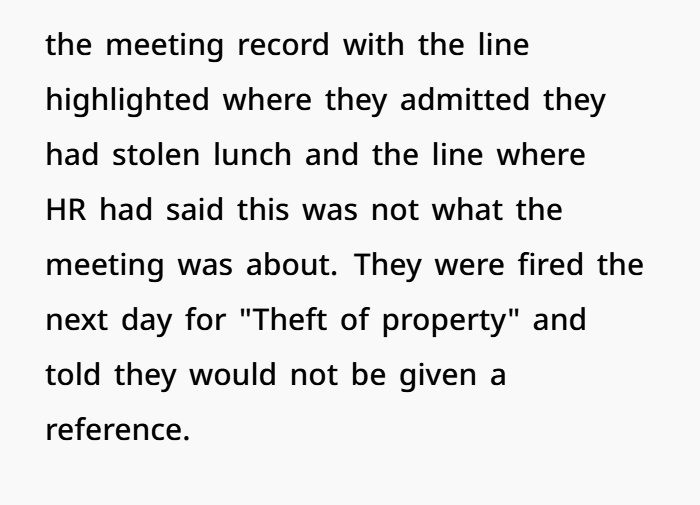
During the discussion, the employee explained that the spicy chili was something they actually liked and regularly ate themselves. They showed that the food was prepared for personal enjoyment, not to hurt anyone. The investigation also brought more attention to the larger issue of employees taking food that did not belong to them.
The situation became a reminder about workplace respect, communication, and following basic office rules. Shared spaces work best when everyone respects other people’s belongings and takes responsibility for their actions.
A Workplace Lunch Story That Shows Why Boundaries and HR Policies Matter
At first, this workplace story sounds funny.
Someone keeps taking lunches from the office fridge. Another employee brings extremely spicy ghost pepper chili. The lunch thief eats it, and the internet sees it as a perfect example of workplace karma.
But behind the humor, there is a bigger discussion about office rules, employee behavior, HR policies, and how companies handle workplace conflicts.
When a Lunch Problem Becomes a Workplace Issue
Many people see stolen lunches as a small office problem.
But for employees, it can feel much bigger.
A lunch is not just food. It may represent:
- Money spent on groceries
- Time spent preparing meals
- Personal health choices
- Meal planning
- Daily routines
When someone repeatedly takes another person’s food, it can create frustration and damage trust between coworkers.
Small workplace issues can become serious when employees feel their concerns are being ignored.
Why the Spicy Chili Changed the Situation
One important detail in this story was that the employee who made the chili also ate the same food themselves.
That detail became important during the workplace discussion.
There is a major difference between bringing food you personally enjoy and intentionally creating something harmful for another person.
Ghost peppers are extremely spicy, but they are still a normal food ingredient. Many restaurants sell ghost pepper sauces, meals, and spicy food challenges.
However, workplace safety is always important. Employees should avoid creating situations where another person could be harmed, even as a joke.
The Importance of Intent in Workplace Investigations
When companies investigate workplace problems, they usually look at several things:
- What happened
- Why it happened
- Whether company policies were broken
- Whether there was harmful intent
- How employees responded afterward
In situations involving food, health concerns, or possible employee harm, HR departments usually take the issue seriously because companies have responsibilities related to workplace safety and employee well-being.
Workplace Rules and Employee Responsibility
The lunch theft was the main issue that created the conflict.
If an employee repeatedly takes food that does not belong to them, it can become a workplace conduct problem.
Employees are expected to respect:
- Personal property
- Coworker boundaries
- Company policies
- Professional behavior
Taking something from another employee without permission can damage workplace relationships and create an uncomfortable environment.
Why HR Policies Matter
Many workplace conflicts become worse when problems are ignored for too long.
Good HR practices help companies handle issues before they grow.
A strong workplace conflict resolution process may include:
- Listening to employee concerns
- Reviewing evidence
- Speaking with everyone involved
- Creating clear expectations
- Taking fair action
When employees feel supported, workplace trust usually improves.
The Role of Good Management
Managers play an important role in workplace culture.
A good manager does not only focus on rules. They also consider:
- Employee concerns
- Team relationships
- Fair treatment
- Productivity
- Long-term solutions
Small problems can become major issues when employees believe management is not listening.
Effective leadership means addressing problems early instead of waiting until they become bigger.
Why Office Conflicts Can Escalate
Many workplace problems start small.
First, someone feels annoyed.
Then they feel ignored.
Over time, frustration builds.
Eventually, people may react emotionally because they feel nothing is changing.
This is why professional communication and proper workplace channels are important.
Employees should feel comfortable reporting concerns instead of trying to solve serious conflicts themselves.
The Bigger Lesson About Workplace Culture
This story became popular because many workers understand the frustration of feeling disrespected at work.
A healthy workplace depends on:
- Respect between coworkers
- Clear company policies
- Fair management
- Open communication
- Employee accountability
Even small issues, like food being taken from a shared office refrigerator, can affect employee morale when they happen repeatedly.
The Difference Between Humor and Responsibility
Many people enjoyed the funny side of the story, but there is also an important lesson.
Workplace problems are usually better solved through communication, HR support, and clear boundaries.
Creative reactions may seem satisfying in the moment, but professional solutions are usually the safest option for everyone involved.
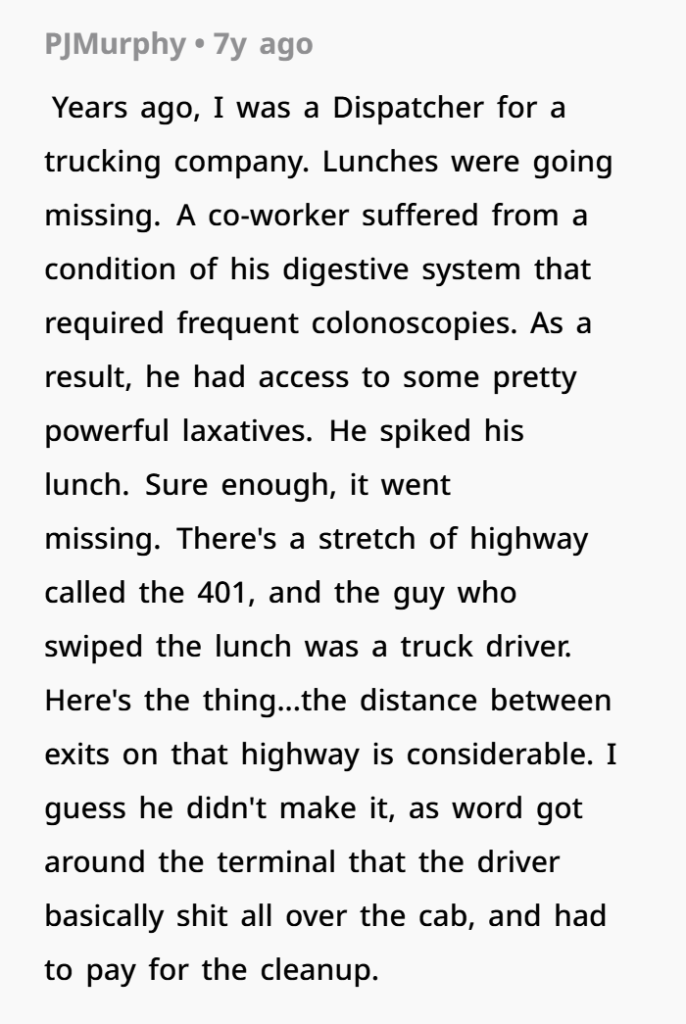
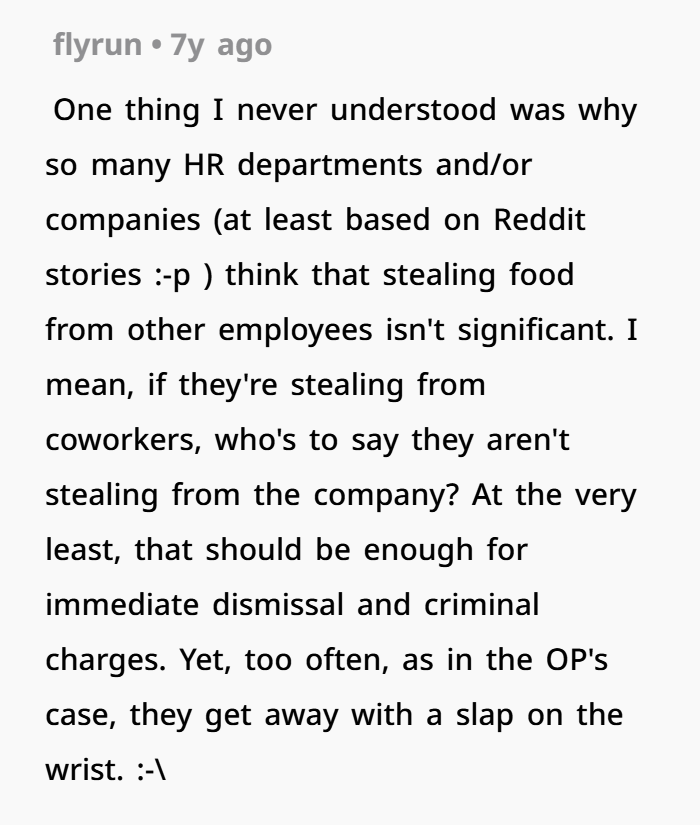
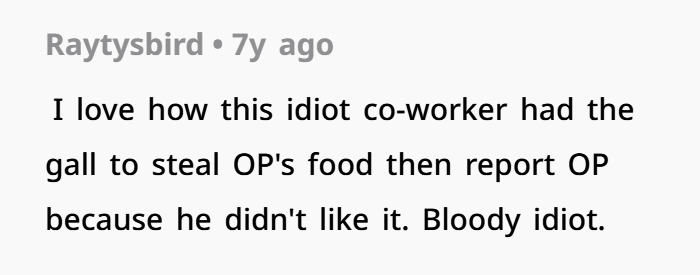
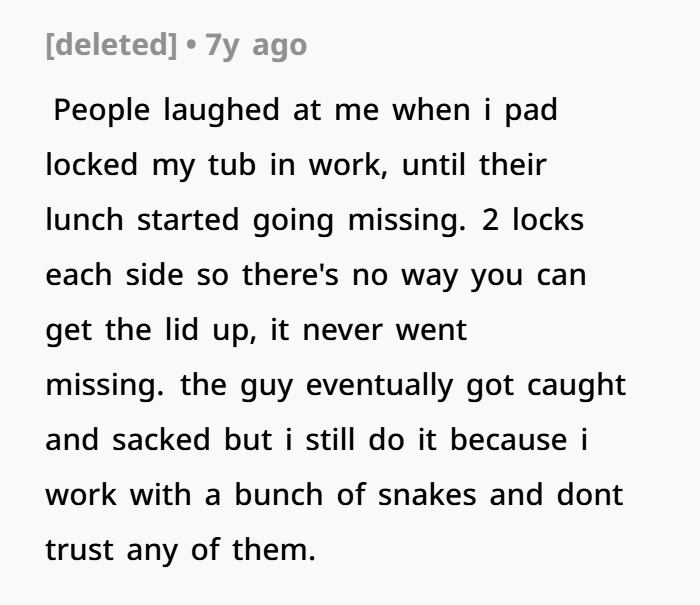
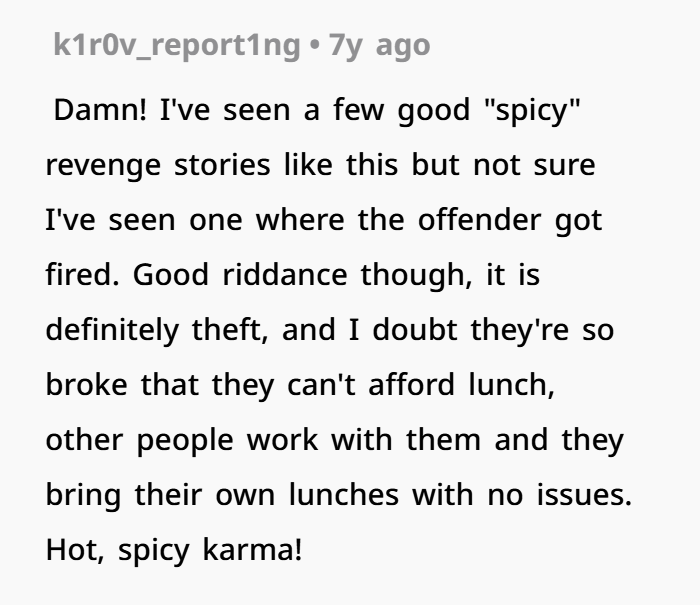
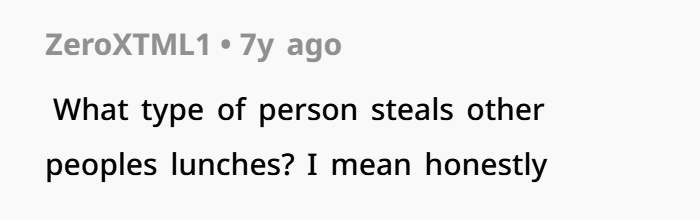
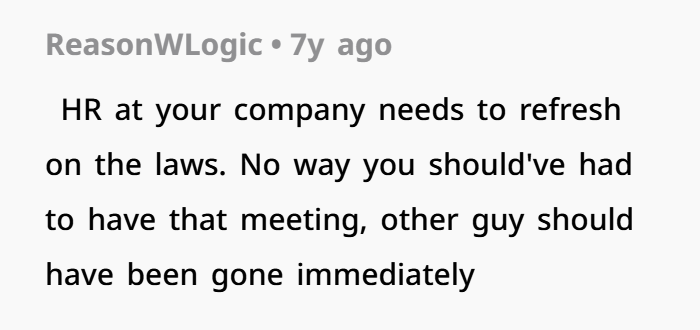
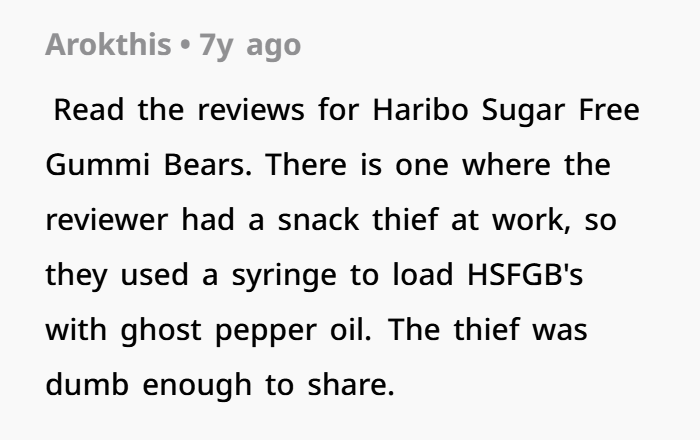
Netizens were strongly critical of HR systems, with many calling for stricter consequences and clearer accountability in workplace theft cases
Final Thoughts
The real lesson from this office story is simple:
Respect other people’s belongings, communicate problems clearly, and do not ignore repeated workplace issues.
A lunch may seem like a small thing, but repeated disrespect can create bigger problems inside a team.
Strong workplace culture is built when employees and managers work together to create an environment based on trust, responsibility, and respect.