Family Drama Explodes After I Refuse to Pay for My Niece’s Step-Siblings

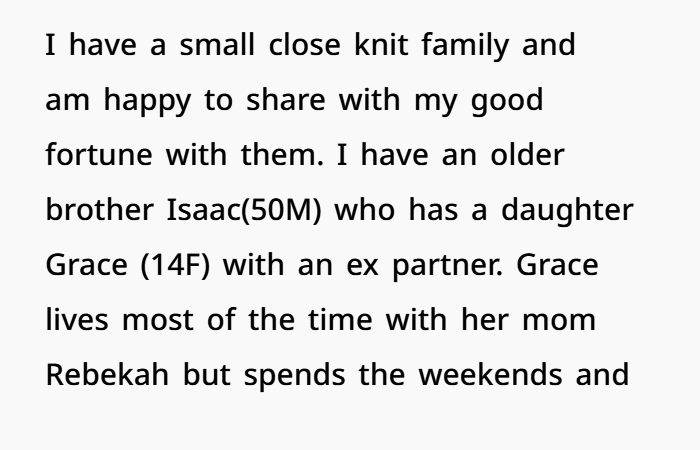
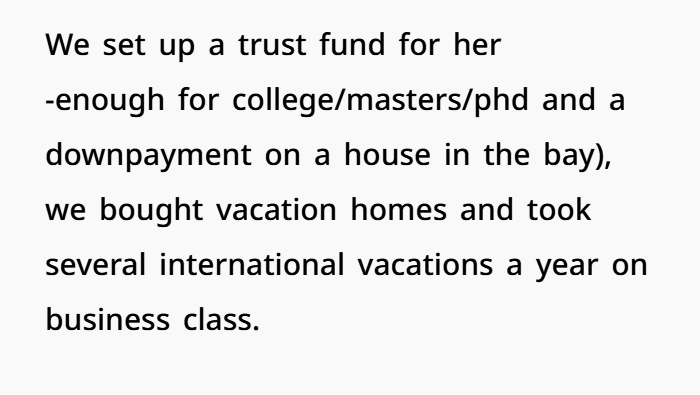
So here’s the situation. A 40-year-old woman hit financial freedom early by joining a tech startup that later turned into a unicorn company. Basically, smart investment + equity payout = she’s set for life. She’s been generous too, especially with her niece Grace—they’re super close. Over the years, she and her husband covered private school fees, took her on luxury vacations, and even built a solid trust fund for future education, real estate, and long-term financial planning. Grace’s parents always appreciated it, no issues there, everything was smooth.
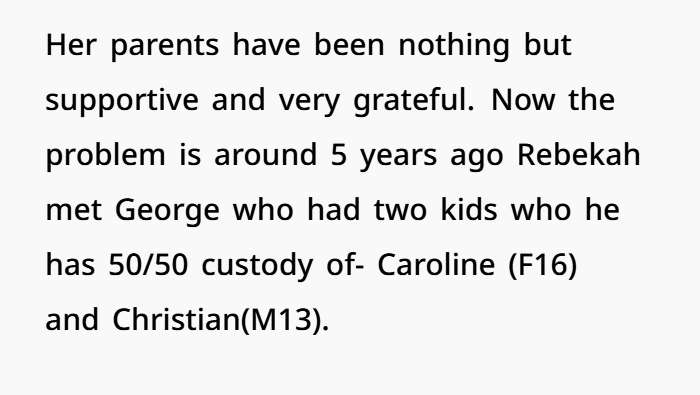
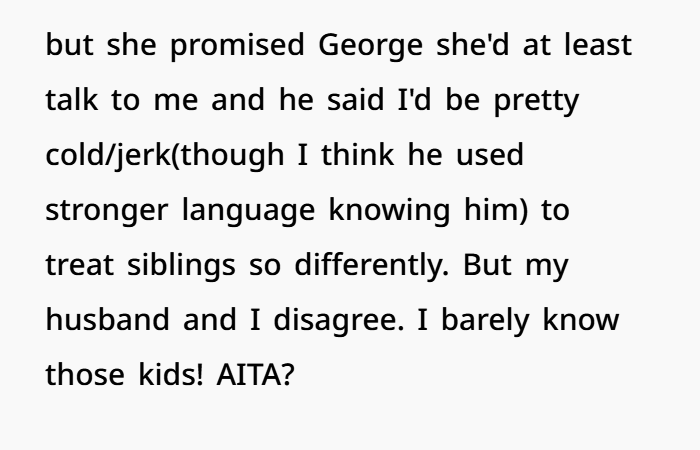
Then things shifted. Grace’s mom remarried a guy named George who has two kids. Their lifestyle is way more modest—think public school, tight budget, basic holidays. Over time, the difference became obvious, and yeah, it started creating tension. Now George is pushing this idea of “financial fairness,” basically asking the aunt to extend her wealth management support to his kids too. Grace’s mom feels stuck, kinda awkward, but still brought it up. The aunt, though, isn’t buying it—she barely knows those kids and doesn’t see why she should fund them. Now she’s wondering… is setting that boundary wrong, or just smart financial decision-making?








Let’s be real—this situation feels awkward, but not because the aunt messed up. It’s awkward cuz wealth gaps inside families tend to expose hidden tension. Stuff that was always there, just never said out loud. Money just makes it obvious.
First, let’s talk about obligation vs generosity. Big difference. The aunt chose to support Grace. That came from a real bond—years of connection, time spent together, emotional closeness. This isn’t random charity or some tax-saving donation strategy, it’s targeted family support. And honestly, this is super common in high-net-worth families and wealth management circles. When people do estate planning or set up trust funds, they usually base it on relationships, not just “everyone gets equal.” That’s how real life works.
Now look at the step-siblings. The aunt barely knows them. No shared memories, no emotional investment, no real role in their lives. From a legal standpoint and even basic financial planning logic, she has zero obligation here. Even in blended families, extended relatives aren’t expected to suddenly fund stepkids unless they personally choose to build that bond. There’s no automatic financial responsibility just because of marriage.
So yeah, George asking for equal financial support? That’s not just a simple request—it kinda leans into entitlement. It’s like expecting access to someone else’s wealth portfolio without having any real connection. That’s where things start crossing the line.
Let’s break that down a bit more.
George’s argument is rooted in “fairness,” but what he’s really asking for is forced equality. And here’s the thing—fair doesn’t always mean equal. In fact, in family psychology, there’s a well-known distinction:
- Equality = everyone gets the same
- Equity = people get what aligns with their situation/relationship
The aunt is operating on equity. George is demanding equality.
And that disconnect is exactly where the conflict is coming from.
There’s a deeper angle here—blended family psychology. Studies show step-sibling relationships can struggle when there’s a visible difference in lifestyle or financial support. It creates comparison, jealousy, and sometimes insecurity. And at 16 and 13, Caroline and Christian are in that exact stage where this stuff hits harder.
But let’s be clear—the aunt isn’t the one who created this imbalance. This situation comes from the family structure and financial reality set by the adults.
George and Rebekah chose to form this blended household. And with that comes the job of managing expectations between kids from different backgrounds. Family systems research makes it pretty clear—parents are supposed to guide those conversations, set boundaries, and help kids understand differences. That responsibility doesn’t fall on an aunt.
So when George says the aunt is being unfair or cold, he’s kinda redirecting the issue. Instead of dealing with his kids’ emotions directly, he’s trying to “fix” the gap by asking for outside financial help. That’s not sustainable, and honestly, not realistic either.
Now let’s talk numbers, cuz this isn’t small change. Private schooling at around $60k a year, international trips, trust funds, future housing investments—this is high-level financial planning. It’s not casual spending. What the aunt did for Grace is more like structured wealth transfer, something you’d see in estate planning or long-term investment strategy.
If she extends that same level of support to two more kids, we’re talking potentially millions in future commitment. That’s a huge financial decision, not something you just agree to in the moment.
There’s also a legal and financial risk angle here. When someone starts giving consistent financial support, it can create unspoken expectations over time. In some cases, it even leads to dependency issues or disputes later. That’s why wealth management advisors often suggest setting clear limits when it comes to large financial gifts or ongoing support—especially outside your direct family plan.
Now let’s talk about Grace, because she’s kinda at the center of all this.
Kids in her situation can experience “wealth guilt.” Basically, feeling uncomfortable or guilty for having more than others close to them. If her stepfamily keeps highlighting the difference, she might feel pressure to downplay her life or give things up just to avoid conflict. That’s not fair to her. She didn’t create this situation. She’s just receiving support from someone who cares about her and has the financial ability.
Taking that support away—or even scaling it back—doesn’t fix the tension. It just shifts it into something else, like resentment or confusion.
And honestly, even if the aunt agreed to help a little, it probably wouldn’t stop there. Studies in behavioral finance show that once boundaries are pushed once, future requests usually grow. It starts small—school fees, maybe. Then turns into travel, college funding, maybe even long-term investments. It keeps expanding.
That’s exactly why financial boundaries matter. Especially in high-income situations where the stakes are bigger.
Now, could there be a softer approach? Yeah, maybe. If the aunt wants to build a relationship with the step-siblings, she could include them in small ways—like occasional gifts or inviting them to join certain experiences. But that has to be her decision, not something forced on her.
Because the moment generosity feels like an obligation, it loses its meaning.
And looking at Rebekah—she seems aware of all this. She even admits it’s not really the aunt’s responsibility. That says a lot. It shows this isn’t a shared demand—it’s mostly coming from George. And in a lot of blended families, these kinds of conflicts usually connect to deeper disagreements between partners, especially around finances and parenting expectations.
So in reality, this isn’t just about the aunt at all. It’s about:
- A blended family struggling with inequality
- A parent trying to “fix” it externally
- And teenagers reacting to visible differences
The aunt just happens to be the easiest target.
Top Comments From Readers








No—you’re not the AH here.
You’ve been generous, consistent, and supportive within the bounds of your relationship. You’re not obligated to extend that to people you barely know, especially at that scale.
It’s not your job to equalize someone else’s household. Boundaries don’t make you cold—they make things clear.