Wife Cheated After 20 Years… So I Left Her With NOTHING

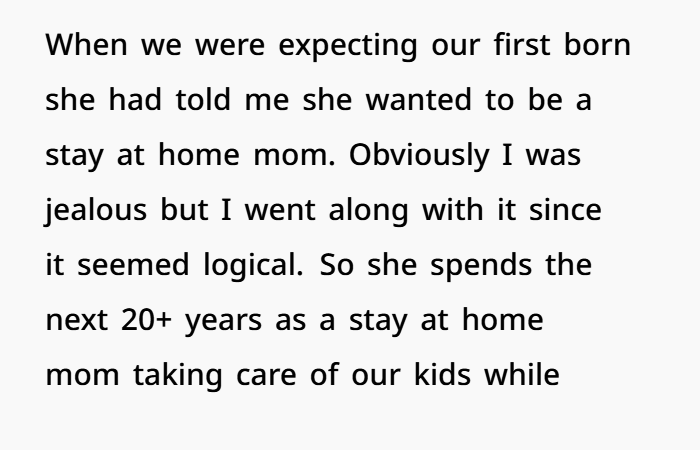
A man shared the story of how his long-term marriage ended and became a difficult financial and legal situation. He explained that he met his wife when he was already financially secure. Together, they built a family, and his wife stayed home to raise their three children for more than 20 years while he focused on work, investments, and managing their finances.
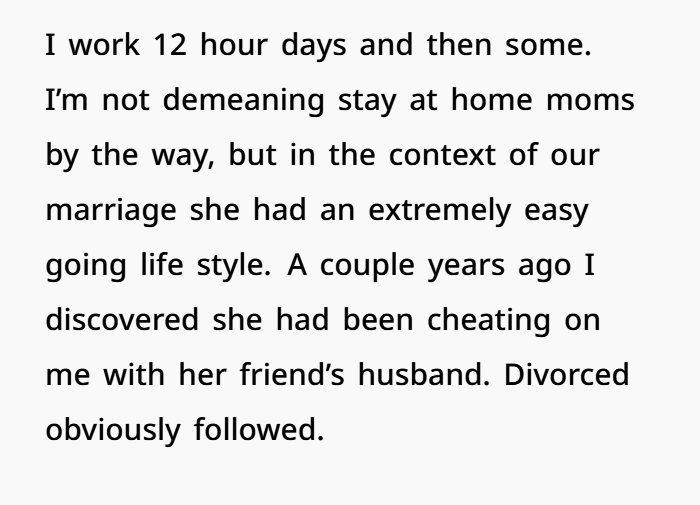
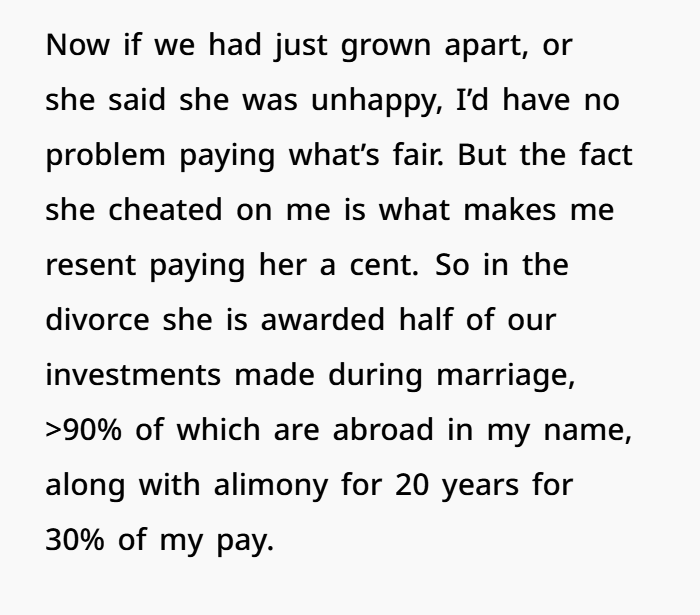
The situation changed when he discovered that his wife had been unfaithful. The couple eventually decided to divorce, but the separation became a major disagreement over money and assets. Even though he felt deeply hurt by the betrayal, the divorce process still included decisions about property division and spousal support.
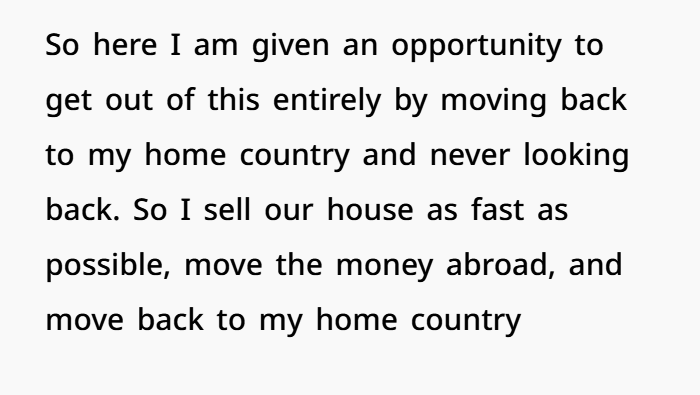
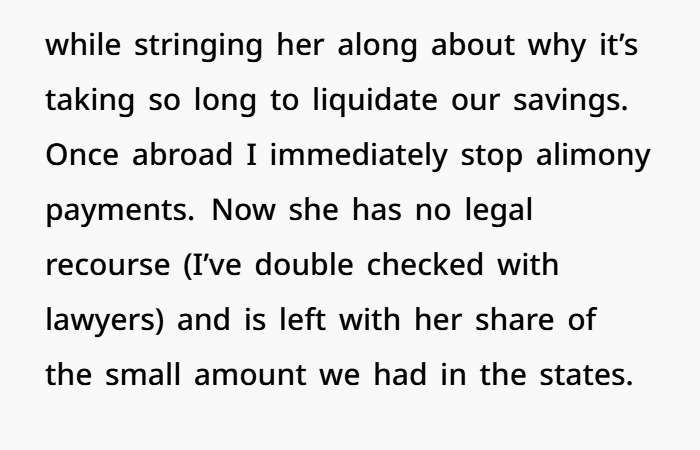
The man said he struggled to understand why he was still responsible for financial support after the marriage ended. He believed his wife’s actions should have changed the way the situation was handled. Wanting to protect his finances, he made decisions about his assets and moved away from the system where the support payments were being enforced.
His choices created more conflict. Some people believed he was trying to regain control over his own finances, while others felt he handled the situation unfairly. The story highlights how complicated divorce can become when emotions, family responsibilities, financial planning, and legal decisions all come together.


Divorce, Money, and Responsibility: When Legal Choices Create Bigger Problems
This situation is about more than just money.
It involves divorce, financial decisions, trust, fairness, and the emotional damage that can happen after a marriage ends.
The difficult part is that something can be legally possible but still feel morally wrong to many people.
Let’s look at the different sides of this situation.
Does Cheating Mean Someone Loses Financial Rights?
When someone is cheated on, the pain can be extremely deep.
Infidelity can create feelings of:
- Anger
- Betrayal
- Humiliation
- Loss of trust
- Feeling like years of effort were wasted
Because of that, many people think:
“If someone cheats, they should get nothing in the divorce.”
That feeling is understandable.
However, divorce laws in many places do not work that way.
Many courts focus on financial issues, not punishment. Marriage is often treated as a partnership where both people contribute in different ways.
One person may earn money.
The other person may:
- Raise children
- Manage the home
- Support the family lifestyle
- Help the other partner focus on their career
These contributions are often considered valuable.
That is why a spouse may still receive things like:
- A share of marital property
- Retirement assets
- Spousal support or alimony
Even if they made serious mistakes during the marriage.
Being a Stay-at-Home Parent Is Still Work
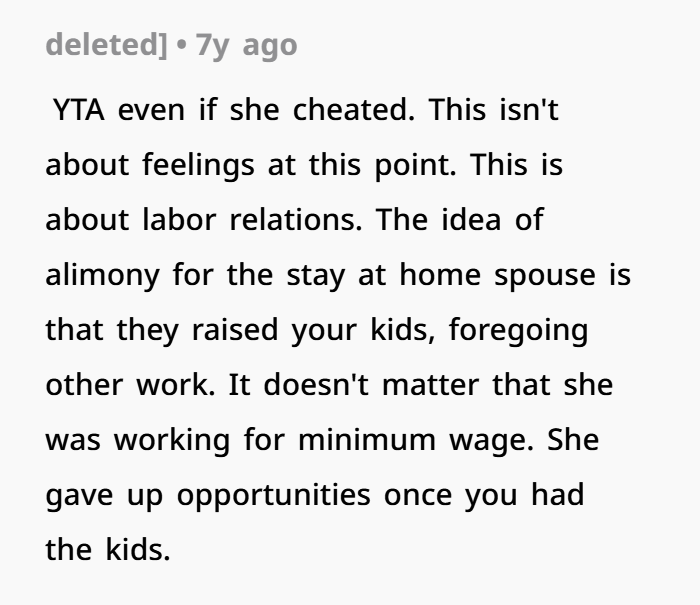
One part of this situation is the idea that your ex-wife had an “easy life” because she stayed home.
This is where many people have different opinions.
Some people believe earning money is the only major contribution in a marriage.
But managing a home and raising children also requires time, effort, and responsibility.
Stay-at-home parents often handle:
- Childcare
- School needs
- Household planning
- Daily responsibilities
- Family organization
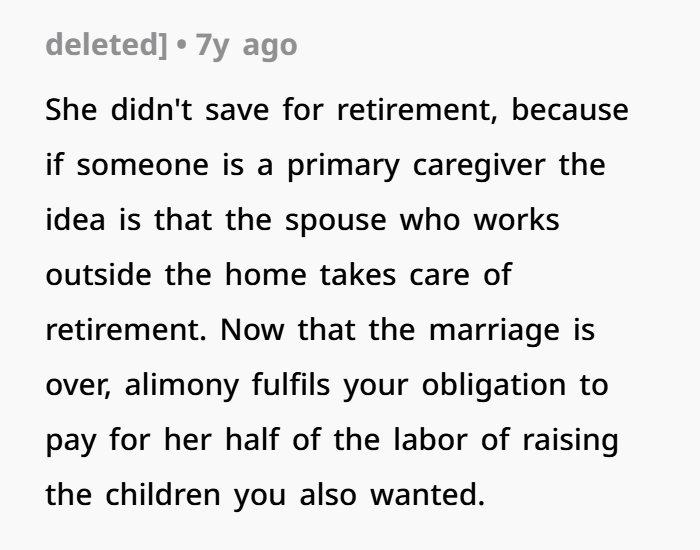
Many financial experts and family law professionals recognize that these roles have economic value.
A person’s career growth can also be supported by the partner who manages the home.
That does not excuse cheating.
Infidelity is still harmful.
But divorce decisions usually consider the entire marriage, not only one person’s worst action.
If someone leaves the workforce for many years, they may have fewer job opportunities and lower earning potential later.
That is one reason courts may consider alimony.
It is usually not seen as a reward.
It is often meant to address the financial imbalance created during a long marriage.
Was Moving Assets a Smart Financial Decision?
The biggest controversy in this story is what happened after the divorce decision.
You:
- Sold property quickly
- Moved money
- Changed your financial situation
- Stopped making payments
From a financial planning perspective, protecting assets can be a normal concern.
Many people use tools like:
- Estate planning
- Asset protection strategies
- Investment planning
- Tax planning
But timing and purpose matter.
There is a big difference between protecting assets before a problem happens and moving assets after a court decision has already been made.
When someone changes their finances to avoid an existing obligation, many people may see that as unfair.
Depending on local laws, actions like hiding assets or avoiding court-ordered payments can create serious legal problems.
A person should always get advice from a qualified divorce attorney or financial professional before making major decisions.
Is This About Justice or Revenge?
This is where emotions become complicated.
Your thoughts may be:
“She hurt me.”
“She broke our marriage.”
“She does not deserve my money.”
Those feelings are understandable after betrayal.
But other people may look at the situation differently.
They may ask:
“Is this about fairness?”
or
“Is this about making sure she suffers?”
Those two things are not always the same.
Wanting a fair divorce settlement is different from trying to punish someone after the relationship ends.
How Does This Affect the Children?
The children are often the people most affected by divorce conflict.
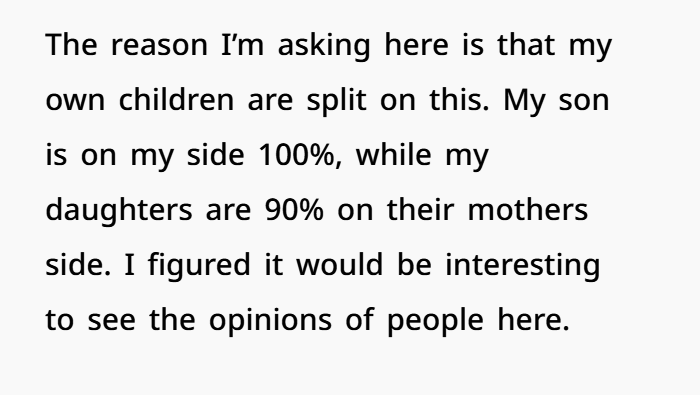
In this situation, the children have different opinions.
One child supports you.
Others support their mother.
This can happen because children often see divorce situations through emotions, not only facts.
They may understand that cheating happened.
But they may also focus on what happened afterward.
They may think:
“Did my parent handle this fairly?”
“Did one person go too far?”
Family relationships are often shaped not only by why a marriage ended, but also by how both people behave after the separation.
The Long-Term Cost of Conflict
Right now, it may feel like the situation worked in your favor.
You protected your money.
You avoided payments.
You moved forward.
But there can still be long-term consequences.
These may include:
- Damaged relationships with children
- Family tension
- Ongoing anger
- Future legal problems
- A reputation for handling conflict unfairly
Sometimes winning a financial battle does not mean winning emotionally.
Holding onto anger can keep a person connected to the pain they are trying to escape.
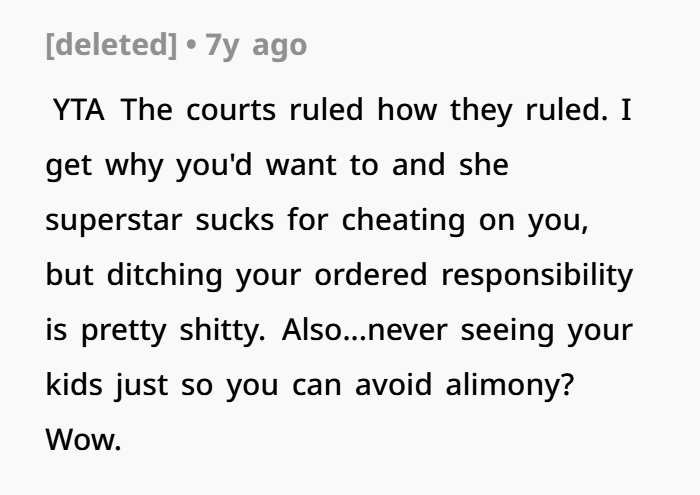
See The Comments Below




Final Thoughts
Your anger after being cheated on is understandable.
Being betrayed after many years of marriage can change how someone sees everything.
However, there is a difference between protecting yourself and avoiding responsibility.
A fair divorce process is meant to balance the contributions, needs, and circumstances of both people.
The biggest question is not only:
“Was this legally possible?”
It is also:
“Was this the right thing to do?”
Moving forward after divorce often requires more than financial decisions.
It requires honesty, responsibility, and thinking about the long-term impact on everyone involved, especially the children.