AITAH for Calling Out My Ex-Husband’s Wife After She Mom-Shamed Me Over Frozen Vegetables?

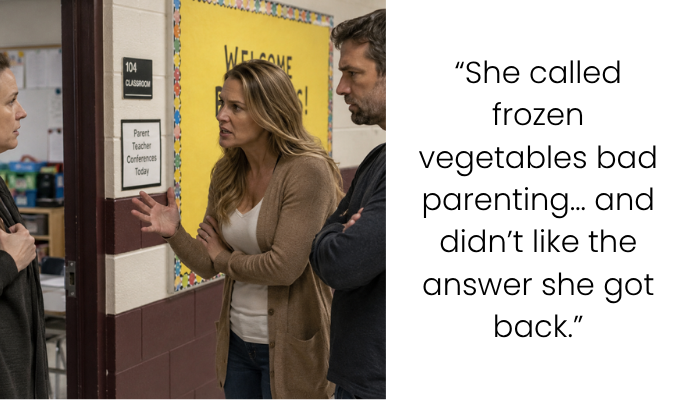
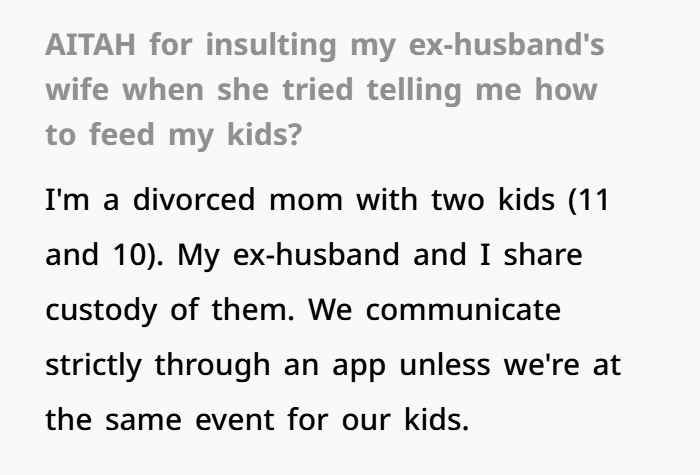
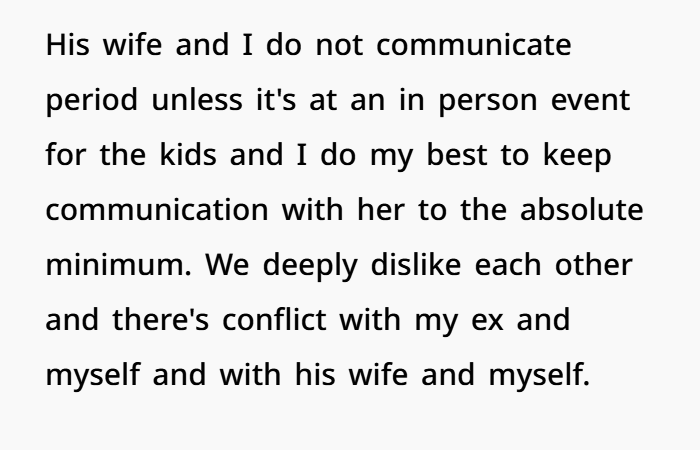
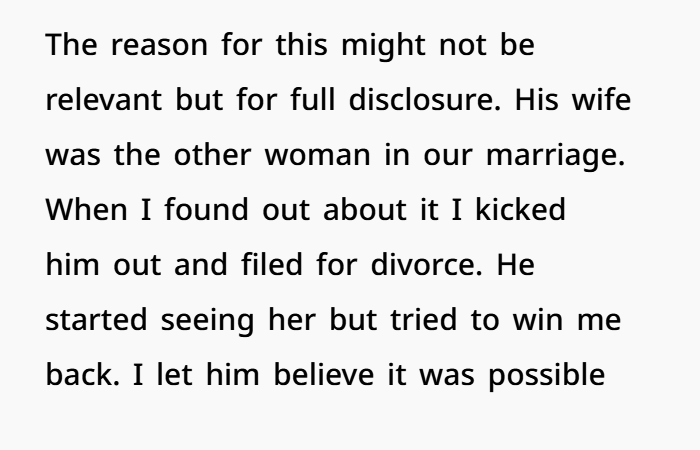
Divorce and co-parenting can be challenging, especially when parents and new partners have different opinions about raising children. In this story, a mother shared her experience dealing with her ex-husband’s wife, who was involved in the relationship that ended her marriage. Because of their history, conversations between them often became uncomfortable and stressful.
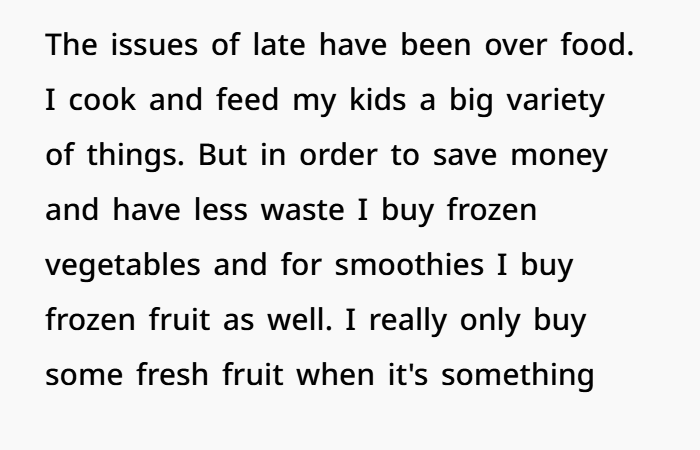
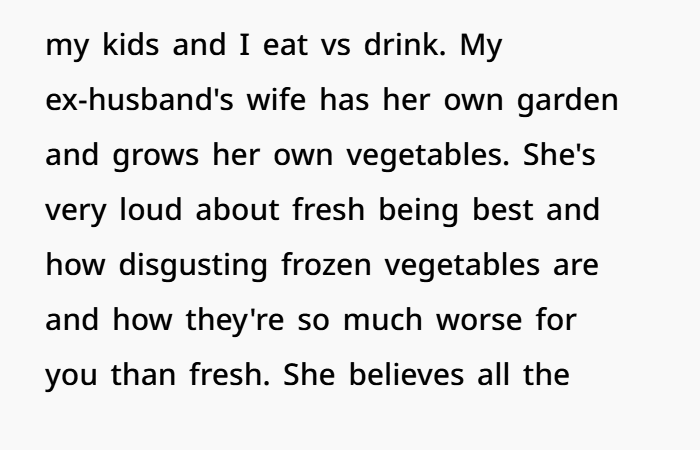
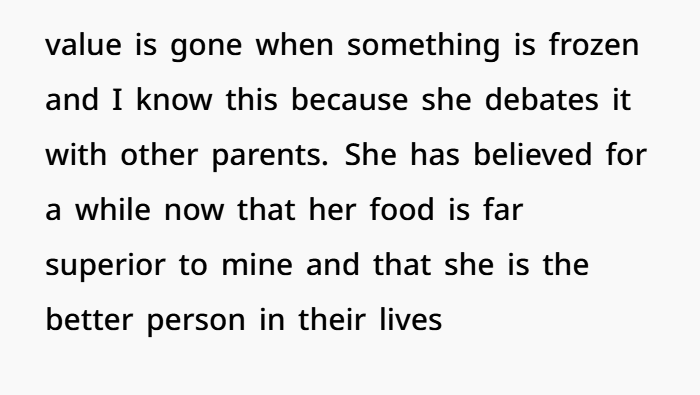
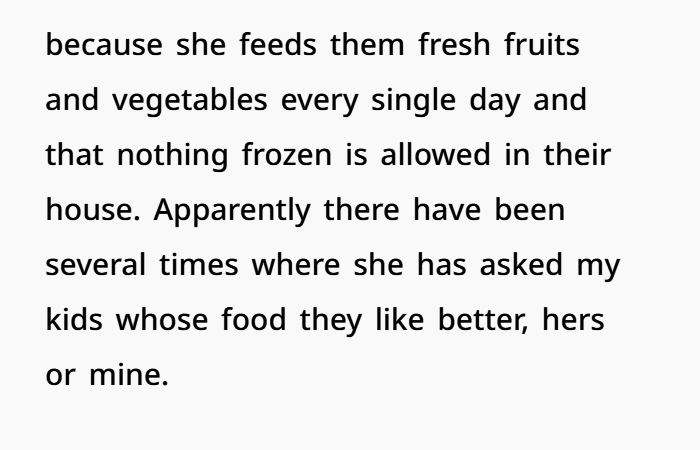
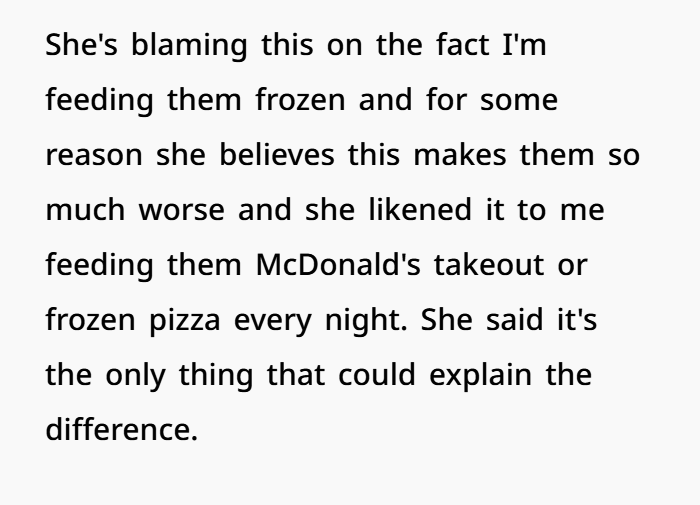
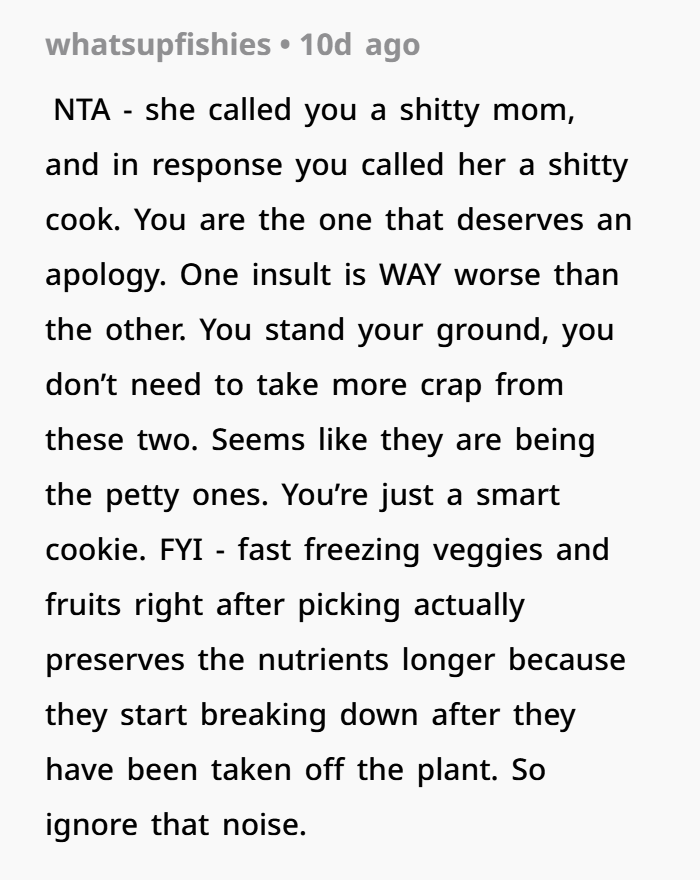
The latest disagreement started with a simple topic: food. The discussion was about using frozen vegetables for meals, but it quickly became a bigger argument. The ex-husband’s wife said frozen foods were unhealthy and shared strong opinions about nutrition and parenting. She also suggested that the mother needed to do more for her children.
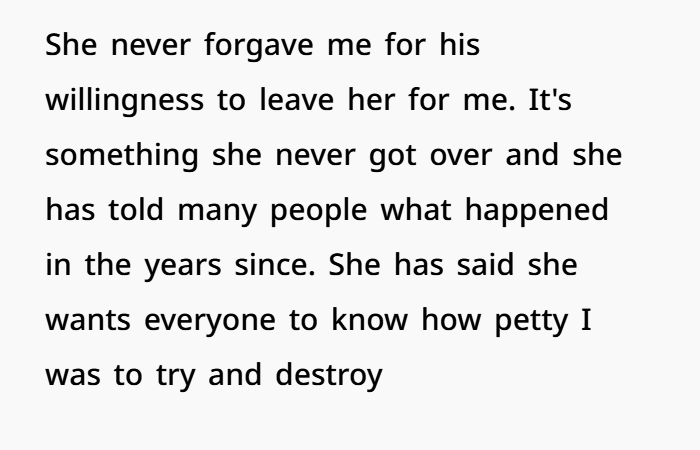
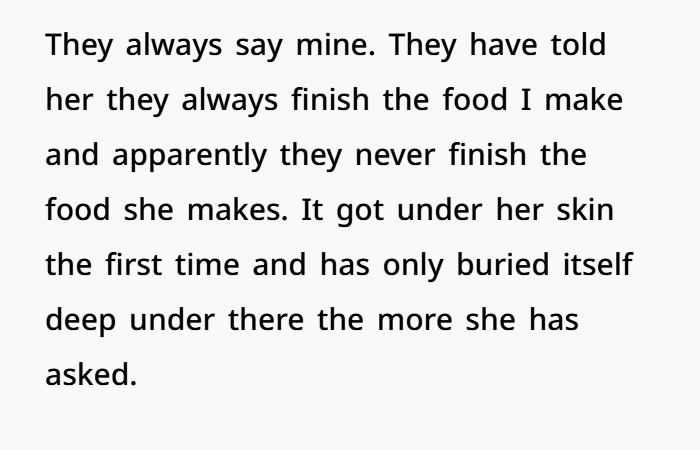
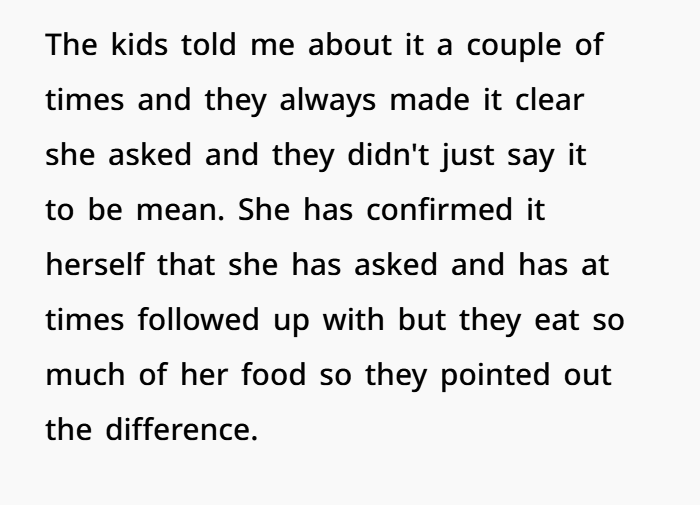
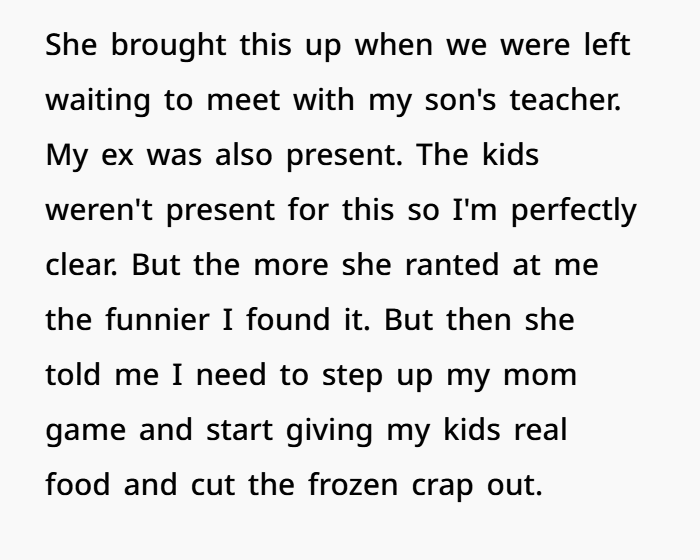
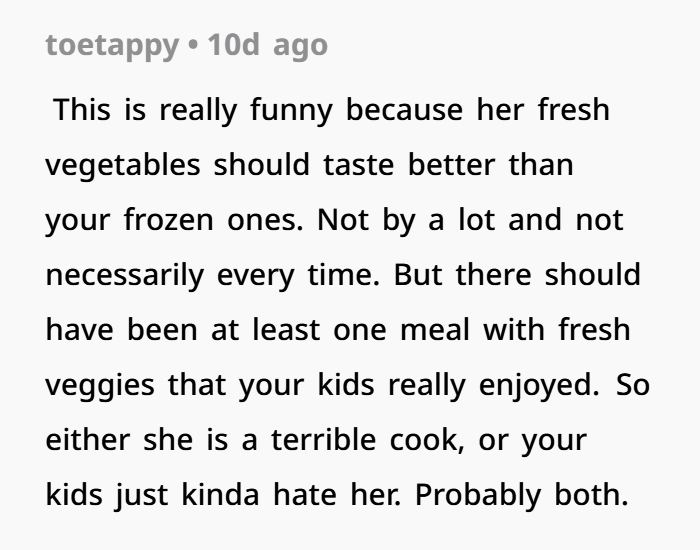
The mother felt that the conversation was not really about food. She believed it was connected to deeper issues, including past hurt, trust problems, and ongoing tension between them. She also felt uncomfortable because the children were sometimes asked to compare the meals prepared by both women, which created more pressure and conflict.
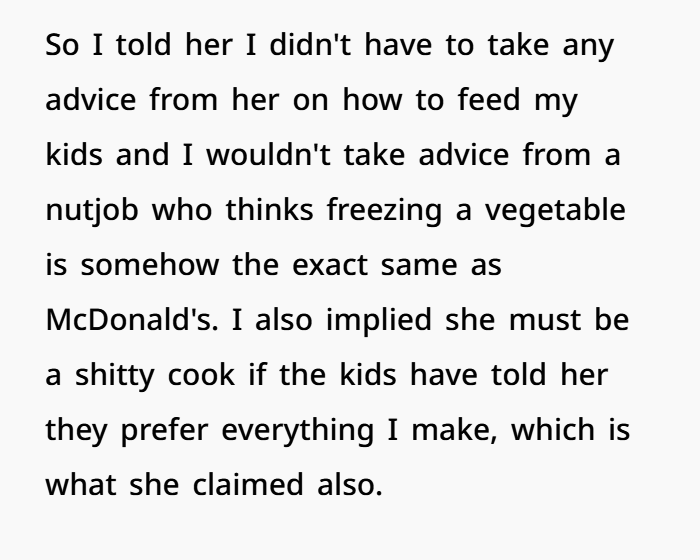
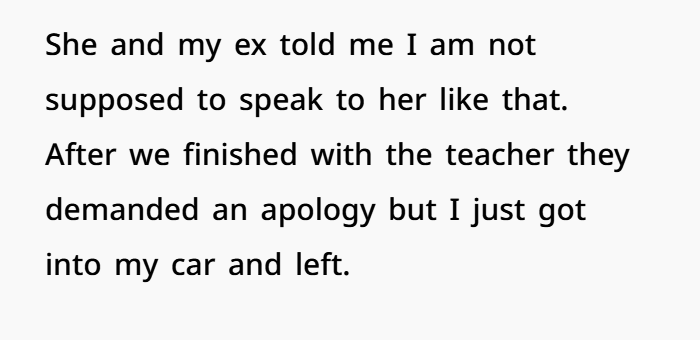
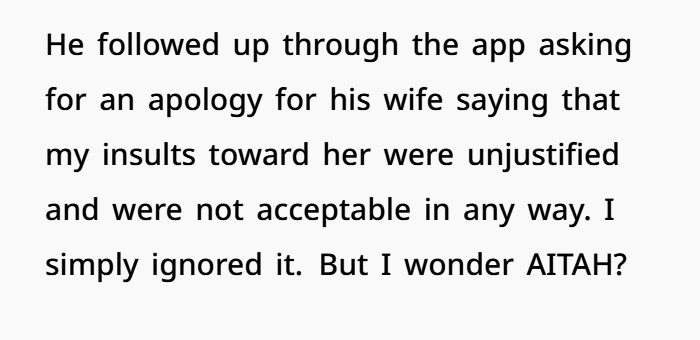
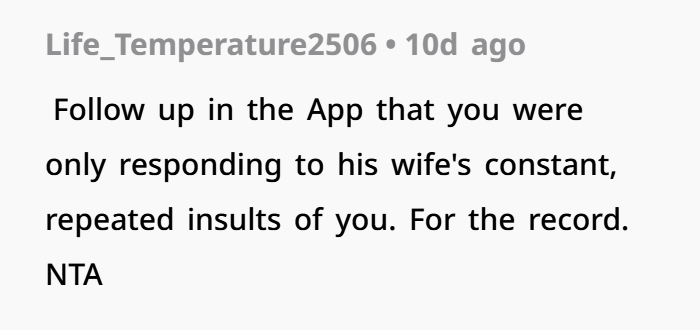
Eventually, the disagreement became more personal, and the mother responded angrily. She felt she was defending herself after feeling judged for a long time. Her ex-husband and his wife wanted an apology, but she believed she was only reacting to repeated criticism.
The situation shows how important respectful communication is in co-parenting relationships. When multiple adults are involved in raising children, focusing on the children’s needs, setting healthy boundaries, and avoiding unnecessary comparisons can help create a more peaceful family environment.


The Real Issue Was Never Frozen Vegetables: It Was About Parenting, Respect, and Family Conflict
At first glance, this situation may look like a simple disagreement about food.
Frozen vegetables. Healthy meals. Cooking habits.
But when you look deeper, it seems like the real problem was not about vegetables at all. It was about old emotions, parenting differences, and the challenges that can happen when families change after divorce.
Many co-parents and blended families experience disagreements about routines, discipline, education, and food choices. These disagreements can become emotional because parenting is closely connected to personal values and identity.
When Food Choices Become a Bigger Argument
Healthy eating is important for children, but families can have different ways of creating balanced meals.
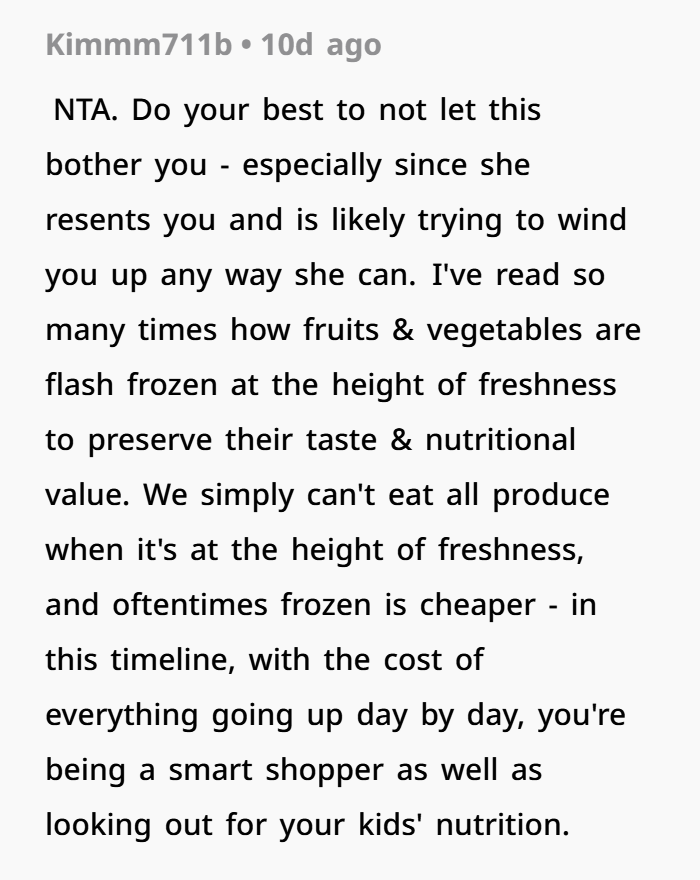
Some parents prefer fresh ingredients from local markets. Others use frozen fruits and vegetables because they are affordable, convenient, and easy to store.
Both approaches can be part of a healthy lifestyle.
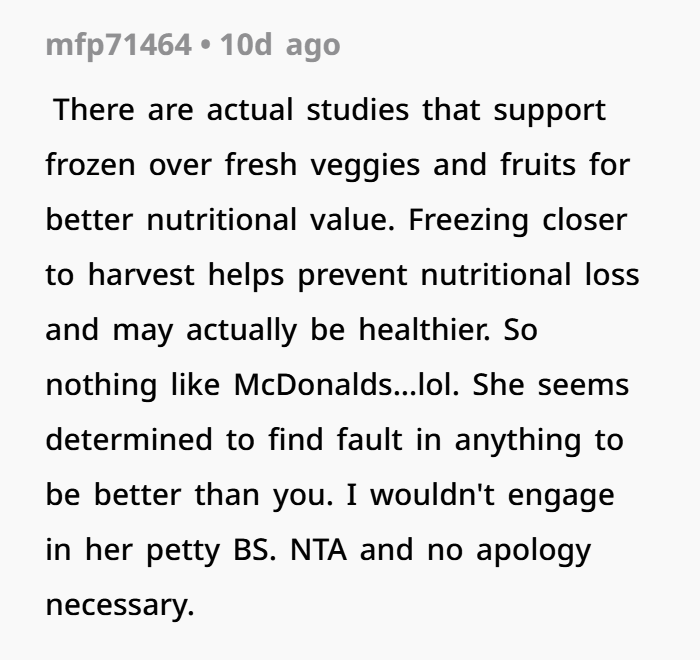
Registered dietitians often explain that frozen vegetables can still provide important nutrients. Many frozen vegetables are picked and frozen quickly, which helps preserve vitamins and minerals. They are also a practical option for busy families who want to include more vegetables in everyday meals.
For many households, frozen produce is a smart choice because it:
- Reduces food waste
- Saves money on groceries
- Makes meal preparation easier
- Helps families create quick healthy meals
Choosing frozen food does not automatically mean someone is making unhealthy choices.
The Problem With Comparing Parents
One of the biggest concerns in situations like this is when children become part of adult disagreements.
Asking children to decide which parent cooks better or which home is better can create unnecessary pressure. Children should not feel responsible for choosing sides between parents.
Family counselors often recommend that parents focus on cooperation instead of competition.
Healthy co-parenting means:
- Respecting different parenting styles
- Keeping children away from adult conflicts
- Supporting children’s relationship with both parents
- Communicating calmly about important decisions
Children need emotional security more than they need parents to prove who is “better.”
Why Parenting Criticism Can Feel So Personal
Parenting is deeply personal.
When someone criticizes a parent’s choices, it can feel like an attack on their love and dedication toward their children.
There is a big difference between offering helpful advice and making someone feel judged.
A conversation about nutrition, meal planning, or healthy habits can be positive when it comes from a place of support. But constant criticism can create stress and damage family relationships.
This is why respectful communication is so important in blended families.
The Pressure to Be a “Perfect Parent”
Modern parents often face huge pressure.
Social media has created unrealistic ideas about what parenting should look like. Many people feel pressure to provide:
- Perfect homemade meals
- Expensive organic products
- Strict routines
- Constant educational activities
- A picture-perfect family lifestyle
But real families do not work like social media posts.
Most parents are simply trying to provide safe, healthy, and loving homes while managing work, finances, and everyday responsibilities.
Affordable healthy meals are still healthy meals.
The Role of Money and Real-Life Family Budgets
Food costs have increased for many families, making grocery budgeting more important than ever.
Smart meal planning often includes finding affordable ways to provide good nutrition.
Frozen fruits and vegetables are popular because they are usually less expensive than some fresh options and can be stored for longer periods.
For families trying to manage their household budget, choosing affordable ingredients is not a sign of poor parenting. It is often a practical decision.
Financial wellness and family health often go together. Parents need realistic solutions that fit their lifestyle.
Blended Families Need Extra Understanding
Blended families can have unique challenges.
When new partners become part of a child’s life, everyone may need time to adjust. Different parenting styles can sometimes create tension.
The goal should not be to replace another parent or compete with them.
The healthiest blended families usually focus on:
- Respect
- Patience
- Clear boundaries
- Open communication
- Putting children’s needs first
Children benefit most when adults work together instead of against each other.
What Children Really Need
Most children are not thinking about whether a meal was made with fresh or frozen ingredients.
They usually care about how they feel during family moments.
They remember:
- Feeling loved
- Feeling safe
- Spending time together
- Being listened to
- Having positive routines
Food is often connected with memories and emotions. A simple meal can feel special because of the person sharing it, the conversation around the table, and the comfort of home.
Top Comments From Readers


The Bigger Lesson
This disagreement may appear to be about frozen vegetables, but the deeper issue is communication and respect.
Families will always have different opinions about nutrition, parenting, and daily routines. The important thing is how those differences are handled.
Healthy families are not built on being perfect. They are built on understanding, kindness, and focusing on what children truly need.
At the end of the day, a child’s well-being comes from more than the food on their plate. It comes from feeling supported, cared for, and loved.