I Came Home to Find My MIL Had Rearranged My Entire House

For many people, a messy home may simply look like a place that needs cleaning. But for one woman, her home was connected to her emotions, routines, and sense of comfort. After spending 18 months completing a difficult degree program and preparing for major exams, she was already feeling exhausted and overwhelmed. She had been working hard to rebuild her daily habits and create a home routine that helped improve her confidence and mental well-being.
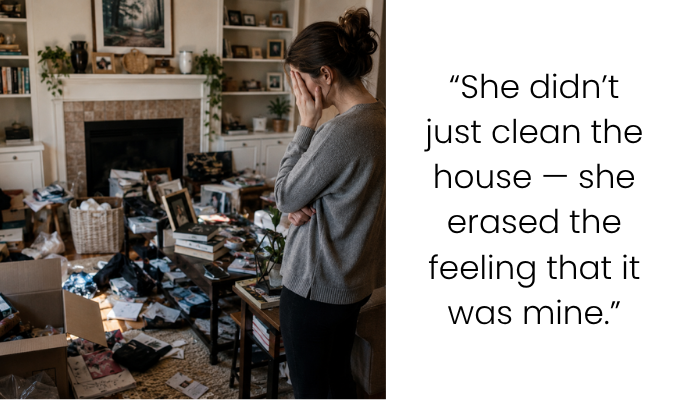
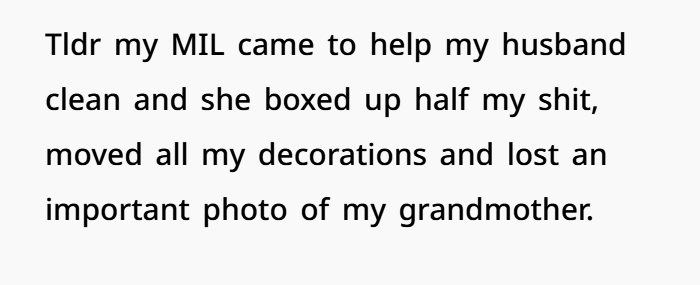
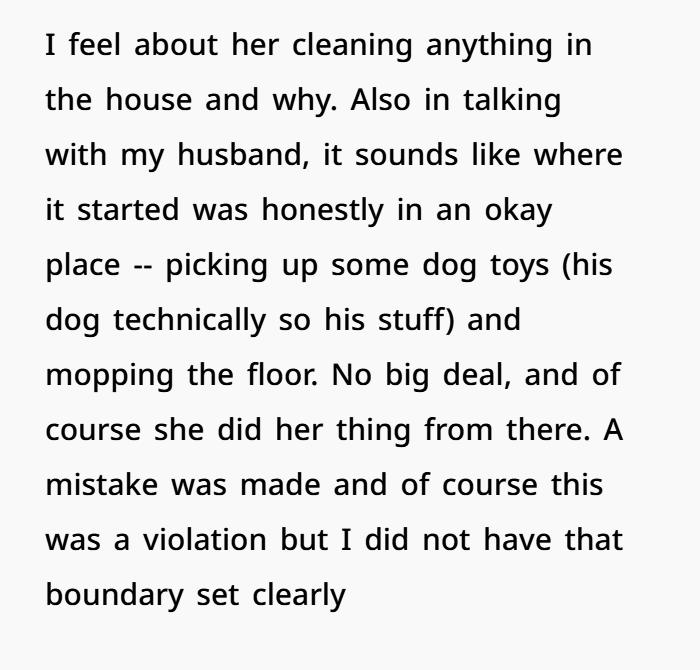
She started using simple organization tools, cleaning routines, and small daily goals to feel more in control of her life. These little steps helped her feel better after a stressful period. However, when she returned home one day, she found that her husband and mother-in-law had made many changes without asking her first. They moved furniture, changed the rooms, packed away personal items, moved important belongings, and removed things they thought were unnecessary.
During the process, a special family photo of her grandmother went missing. This made the situation even more painful because the item had emotional value that could not be replaced. Instead of feeling relaxed in her own space, she suddenly felt uncomfortable and disconnected from the home she had worked hard to organize.
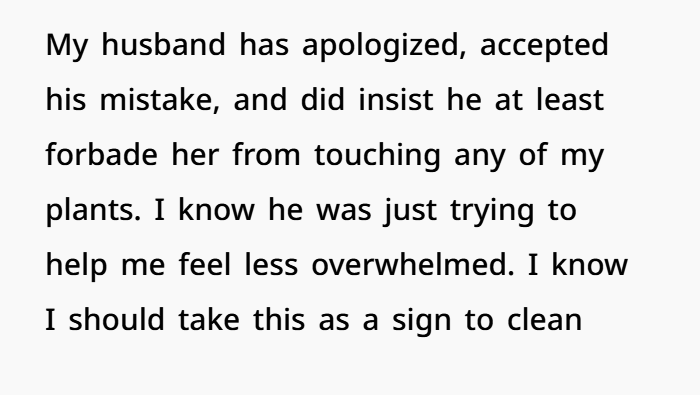
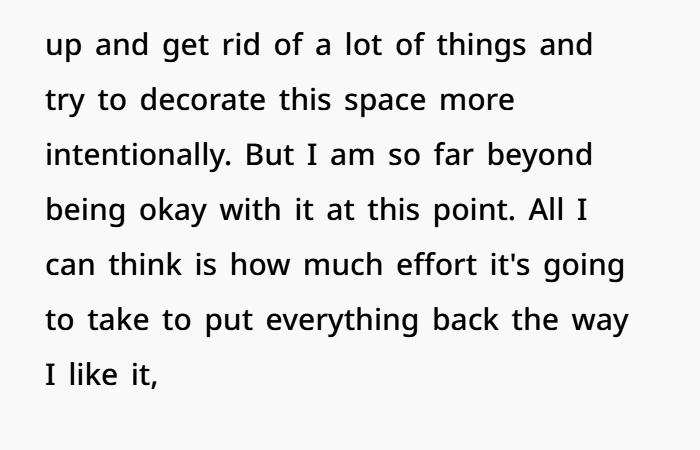
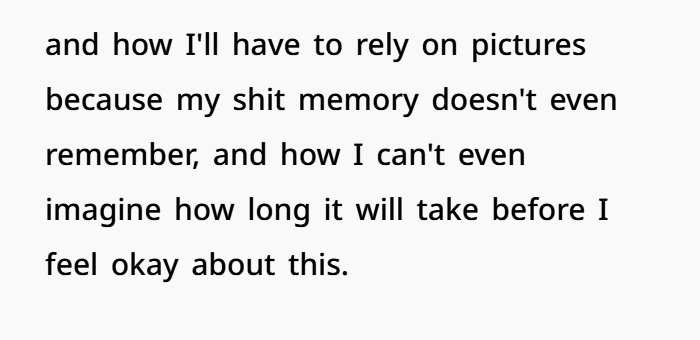
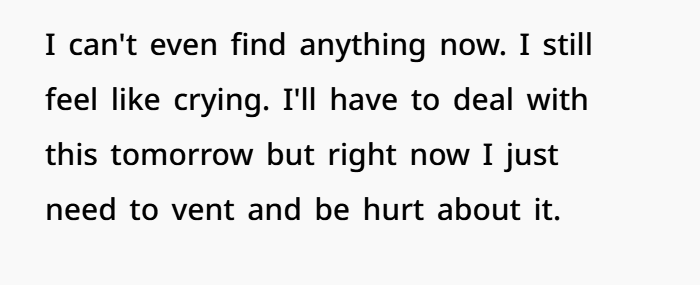
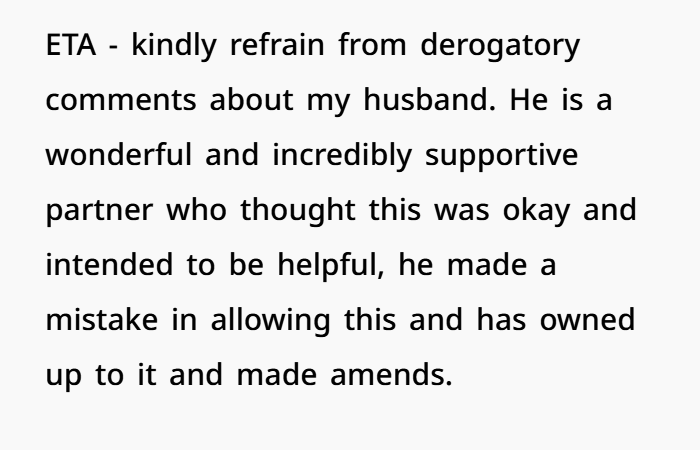
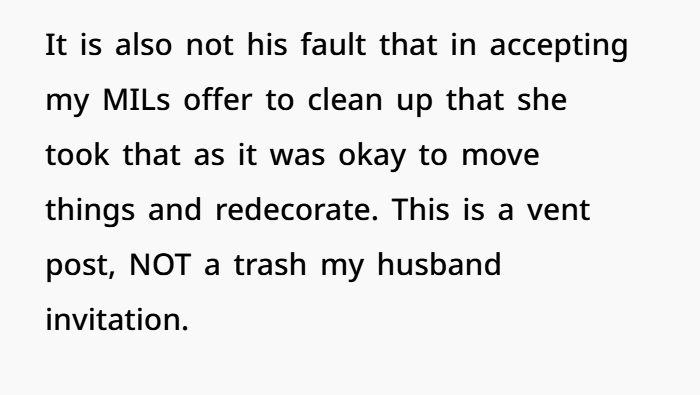
The main issue was not about cleaning or decorating. It was about personal boundaries, respect, and feeling heard. Her husband apologized and explained that he wanted to help reduce her stress, and her mother-in-law may have believed she was doing something thoughtful. However, the experience still hurt because changes were made without her permission. This situation shows why communication, emotional support, and respecting someone’s personal space are important in any relationship.

When Helping Goes Too Far: Why Home Boundaries Matter
For some people, cleaning and organizing a home feels like a simple way to help.
But for others, their home is a very personal space.
It is not only about furniture, books, decorations, or storage.
A home can represent comfort, memories, identity, and a sense of control.
That is why this story feels emotional for many people.
The problem was not just that things were moved around.
The deeper issue was that someone changed a personal space without asking first.
Why Home Organization Can Feel Personal
Many people underestimate how emotional a home can be.
A person’s belongings often have meaning. Books, photos, decorations, and small items can represent memories, hobbies, family history, and important moments.
So when someone enters that space and changes everything, it may not feel like help.
It may feel like losing control over a place that should feel safe.
This is especially true for people who already feel stressed, overwhelmed, or insecure about keeping their home organized.
If someone already worries about being judged for their home, a major cleanup by another person can make those feelings stronger.
Helping Without Permission Can Create Stress
Many family members organize homes because they truly want to help.
They may think:
“I am making life easier.”
“I am reducing stress.”
“I am doing something kind.”
Their intention may be positive.
However, help can become uncomfortable when it happens without asking.
There is a big difference between:
“Would you like help organizing this room?”
and
“I decided how your room should be organized.”
A person’s belongings and personal systems are their own choices.
Respecting that boundary is important in healthy family relationships.
Why Personal Items Matter
During the cleanup, several personal things were moved or changed.
Items like medications, decorations, books, and family photos can carry emotional meaning.
Some things may look unimportant to another person but have deep value to the owner.
A family photo, for example, may represent memories that cannot be replaced.
A book collection may represent someone’s interests, personality, and comfort.
A decoration may remind someone of an important time in their life.
Removing or hiding these items without understanding their meaning can feel upsetting.
Privacy Around Health and Personal Needs
The situation involving medication also shows why privacy matters.
Many people use medication or other forms of support for different health needs.
This can include:
- Mental health treatment
- Anxiety support
- Sleep support
- Medical conditions
- Other personal health needs
There should never be shame around getting help for health concerns.
However, many people still feel uncomfortable when private parts of their life are suddenly exposed.
Having someone discover personal items while cleaning can create feelings of embarrassment or stress.
The Emotional Impact of Losing Sentimental Items
The missing photo was likely the most painful part of the situation.
For one person, it might look like an old picture.
For another person, it could represent family history, memories, and emotional connections.
Sentimental items often cannot be replaced because their value comes from the memories attached to them.
That is why losing something meaningful can feel much bigger than the item itself.
It is not only about the object.
It is about what that object represents.
The Importance of Clear Family Boundaries
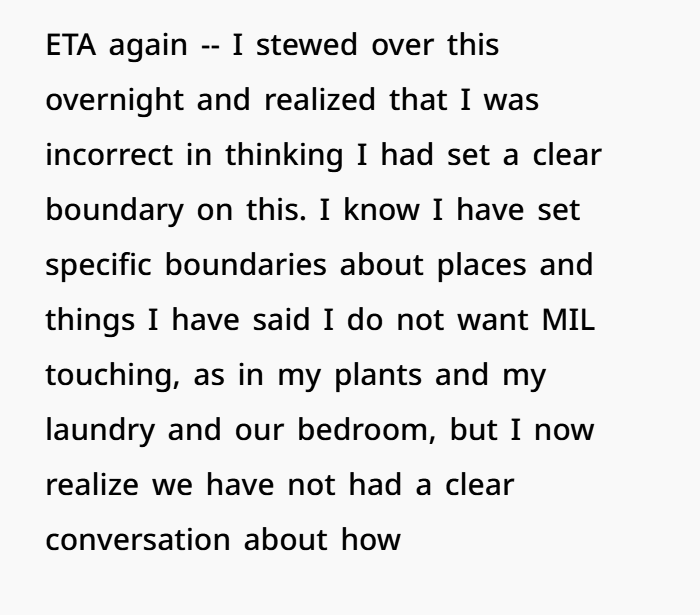
One positive part of this situation is that it created an important conversation about boundaries.
Sometimes people assume others understand their limits, but those boundaries may only exist in their own mind.
A person may think:
“Everyone knows not to move my things.”
Another person may think:
“I am helping by making everything better.”
Both people can have different expectations.
This is why clear communication is important.
Healthy boundaries are easier to respect when they are openly discussed.
Understanding Different Views of Cleanliness
People have different ideas about organization.
Some people enjoy minimal spaces with very few items visible.
Others feel comfortable in a home filled with books, collections, decorations, and personal belongings.
Neither style is automatically wrong.
A home should support the people who live there.
For some people, a simple and empty space feels peaceful.
For others, familiar items create comfort and emotional connection.
Good home organization is not only about appearance.
It is about creating a space that works for the person living there.
The Role of Stress and Mental Wellbeing
Stress can make situations feel even more intense.
When someone is already dealing with emotional pressure, a sudden change in their environment can feel overwhelming.
A home often provides a sense of stability.
When that space changes unexpectedly, it can affect emotional wellbeing.
This is why small actions can sometimes create strong reactions.
The reaction is not always only about what happened in that moment.
It can also connect to past stress, insecurity, or feeling overwhelmed.
A Situation That Can Be Fixed With Communication
The good thing about this situation is that it does not necessarily mean the family relationship is damaged forever.
The people involved may not have had bad intentions.
The family member who organized the home may have wanted to be helpful.
The partner may have wanted to reduce stress.
The homeowner may have felt overwhelmed because her personal space changed suddenly.
The solution is understanding each other better.
A simple conversation about boundaries can prevent future problems.
Before organizing someone’s home, it is better to ask.
Before changing personal items, it is better to check.
Respect and communication can make family relationships stronger.
A Home Is More Than a Physical Space
A home is not just a place where people keep their belongings.
For many people, it is where they feel safe, comfortable, and relaxed.
It is where they recharge after stressful days.
That is why personal space deserves respect.
Helping someone is a kind gesture, but the best help is the kind that makes the person feel supported, not judged.
Sometimes the most meaningful way to help is simply asking:
“How can I support you?”
Because true care is not about taking control.
It is about understanding what someone actually needs.
See The Comments Below