AITA for Refusing to Give Up My Bed for a Guest? Family Boundaries Get Messy

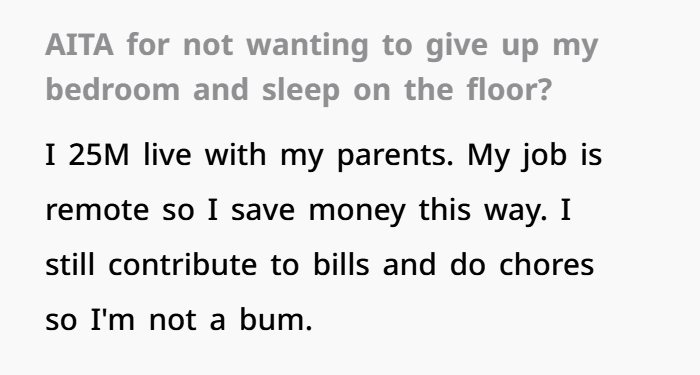
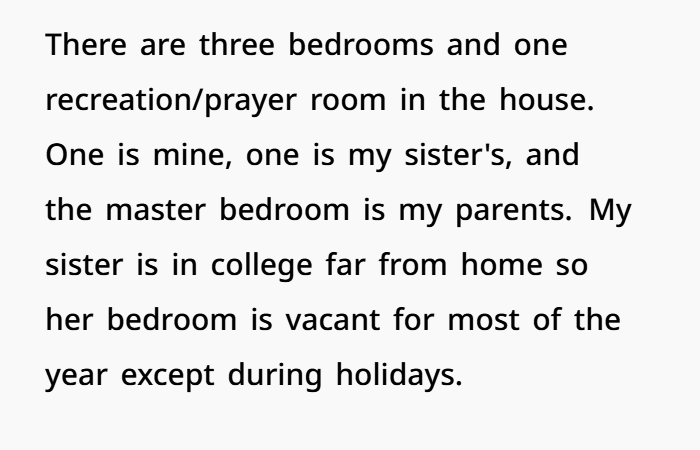
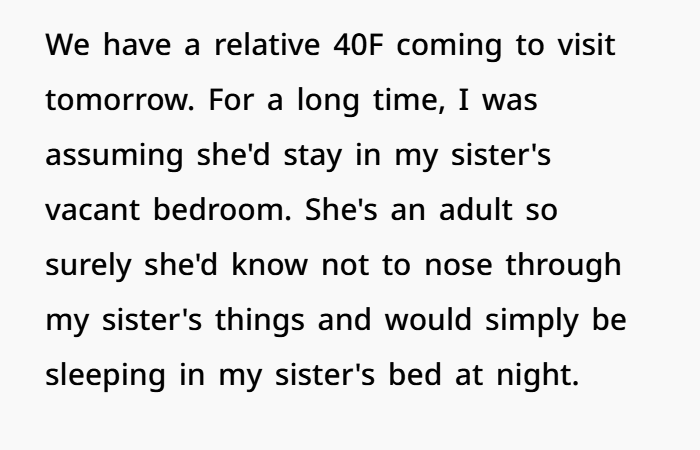
Living with parents as an adult can be a practical choice, especially today when remote work and work-from-home jobs are common. A 25-year-old man lives with his parents, earns his own income, helps with household expenses, and supports his family with daily tasks. He is not depending on them without helping, and everyone in the house has their own private room, so the arrangement works well.
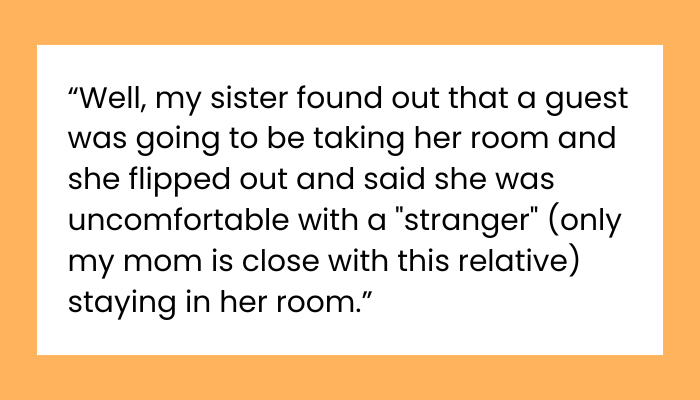
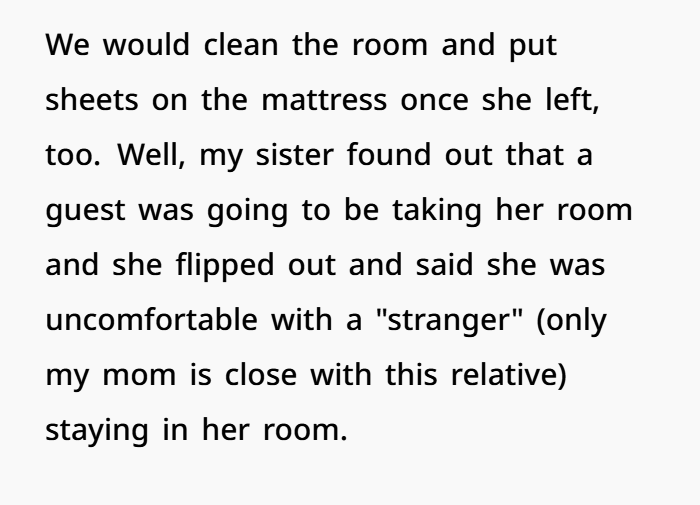
The situation changes when a family guest needs a place to stay. The easiest solution seems to be using the sister’s room because she is away at college. However, the sister does not agree with this idea. She wants to keep her room private and does not feel comfortable with someone else using her personal space, even for a short time.
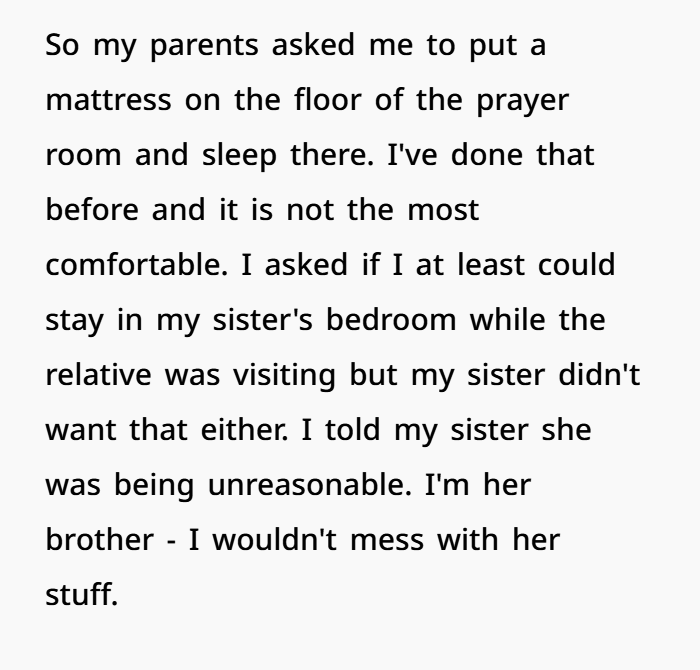
The parents want to avoid an argument, so they suggest another solution. They ask the son to give up his room and sleep on a mattress in the prayer room while the guest stays in his bedroom. He feels uncomfortable with this idea because he also values his privacy and comfort in his own home.
Now he is trying to decide what is fair. Should he accept the temporary change to help the family, or should he explain why his own space and needs also matter? Situations like this often involve family communication, personal boundaries, and finding a balance that respects everyone in the home.

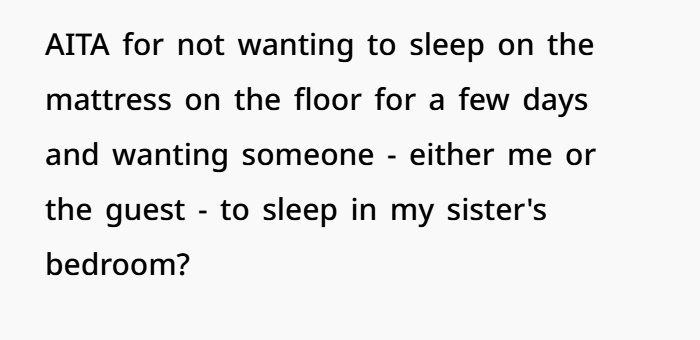
Is It Fair to Ask Someone to Sleep on the Floor When There Is an Empty Room?
At first, this situation may seem like it is only about a bed.
But when you look deeper, it is really about something bigger: personal boundaries, family expectations, fairness, and respect inside a shared home.
Small family disagreements often become bigger because they are connected to emotions and personal values.
Let’s look at both sides.
The Real Problem Is About Personal Boundaries
The main issue is not only the bed.
The bigger issue is that the sister does not want anyone using her room.
Some people may think:
“The room is empty most of the time, so why not let someone stay there?”
But personal boundaries are different for everyone.
For some people, their bedroom is not just a place to sleep. It is their private space where they keep their belongings, relax, and feel comfortable.
Having control over your personal environment can create a feeling of safety and peace.
Even if someone promises they will not touch anything, the person may still feel uncomfortable.
Feelings do not always follow logic.
However, there is also another side.
Personal boundaries are important, but they should also be balanced with fairness toward others.
When one person’s preference creates a major problem for everyone else, families may need to have an honest conversation about compromise.
The Brother’s Side: Is He Asking Too Much?
From the brother’s point of view, the situation may feel unfair.
He is not simply staying there without helping.
He contributes financially, works, and supports the household.
That means his comfort and needs also matter.
Being asked to give up his bed and sleep on the floor, even temporarily, may make him feel like he is less important than other people in the home.
Good sleep is also important.
Poor sleep can affect:
- Work performance
- Concentration
- Mood
- Mental wellness
- Daily energy
This can be especially difficult for someone who works from home or has a job that requires focus and productivity.
His frustration may not only be about the mattress.
It may be about feeling respected and valued in the household.
The Parents’ Role in the Situation
The parents are also part of the problem.
Many parents try to avoid conflict by asking the more flexible person to adjust.
It may seem like the easiest solution:
“Just let him sleep somewhere else this time.”
But avoiding conflict does not always create fairness.
Over time, this can lead to problems.
One person may feel that their needs are always ignored.
Another person may learn that refusing to compromise always works.
Healthy family relationships usually require communication, listening, and finding solutions that consider everyone.
Hospitality and Family Expectations
In many families and cultures, guests are treated with great importance.
People may believe guests should receive the best room, the best food, and the most comfort.
Hospitality is an important value for many households.
However, a good question to ask is:
“Should helping a guest mean making another family member uncomfortable?”
Temporary adjustments are normal in family life.
But when there is an unused room available, some people may feel that using that space is a practical solution.
The goal should be finding a balance between being welcoming and respecting people who already live in the home.
Privacy vs Practical Solutions
This situation is really about finding a balance between privacy and practicality.
The sister has a right to want privacy.
At the same time, families often need to share resources and adjust when circumstances change.
This is especially common today with:
- Rising housing costs
- Shared living arrangements
- Multigenerational homes
- Family members living together longer
When people share a home, clear communication becomes important.
Possible solutions could include:
- Setting rules before someone uses the room
- Moving personal belongings
- Using locked storage for private items
- Agreeing on a short-term arrangement
Compromise does not mean ignoring someone’s feelings. It means finding a solution that respects everyone.
Who Has Control Over Shared Spaces?
Another important part of this issue is ownership and control.
If the parents own the home, they may have the final decision.
But family homes are emotional spaces.
People often feel attached to their rooms because they represent privacy, independence, and personal comfort.
This can create disagreements when family members have different ideas about what is “fair.”
Clear household expectations can prevent many conflicts.
Everyone should understand:
- What spaces are private
- What spaces are shared
- How decisions are made
- What happens when guests visit
Was Anyone Completely Wrong?
The answer is not completely simple.
The sister’s desire for privacy is understandable.
The brother’s frustration about losing his sleeping space is also understandable.
The parents may be trying to keep peace, but the solution may not feel fair if only one person has to sacrifice.
A better solution would involve everyone discussing the situation and finding a compromise.
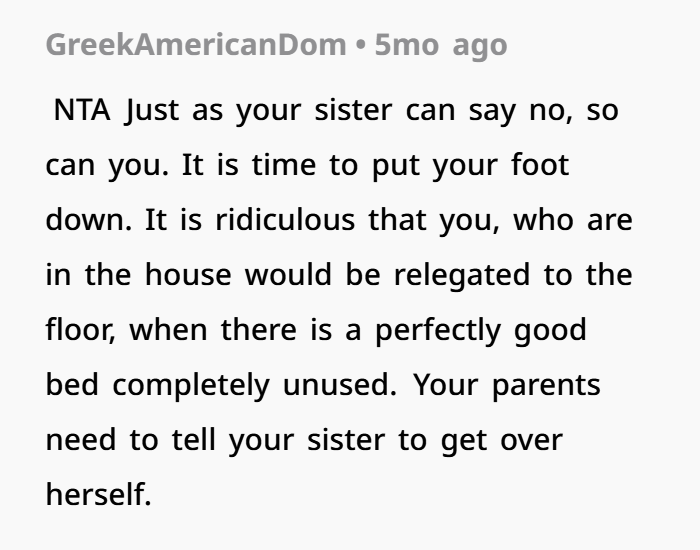
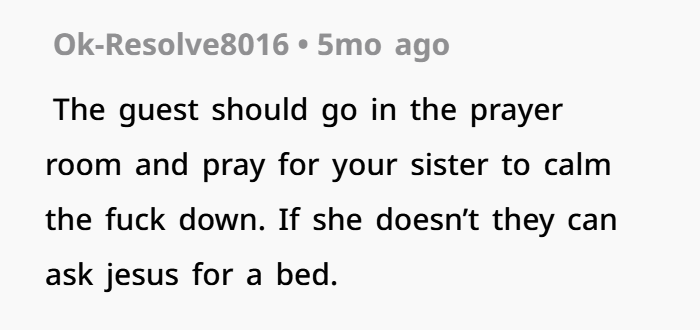
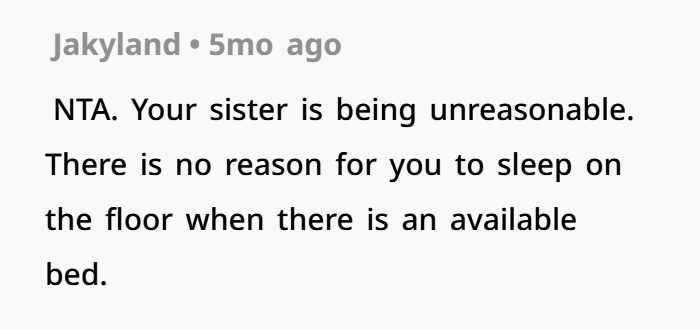
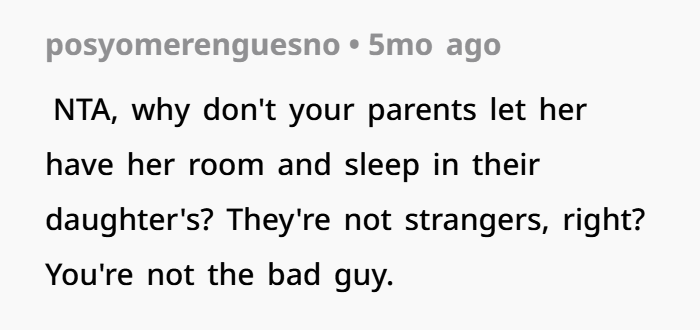
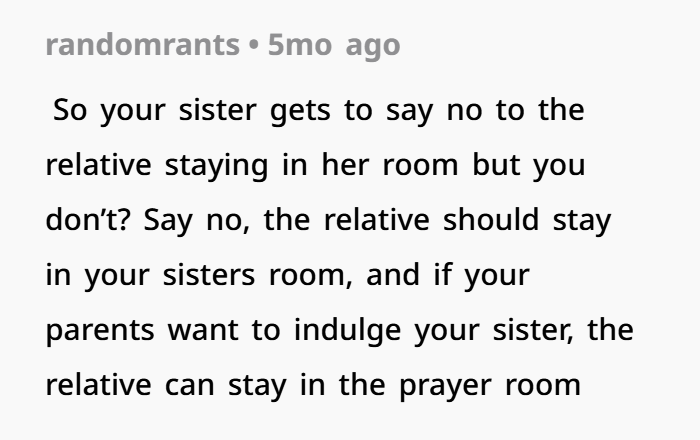
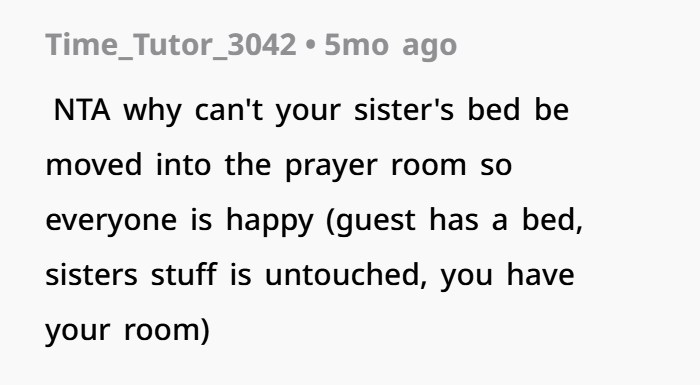
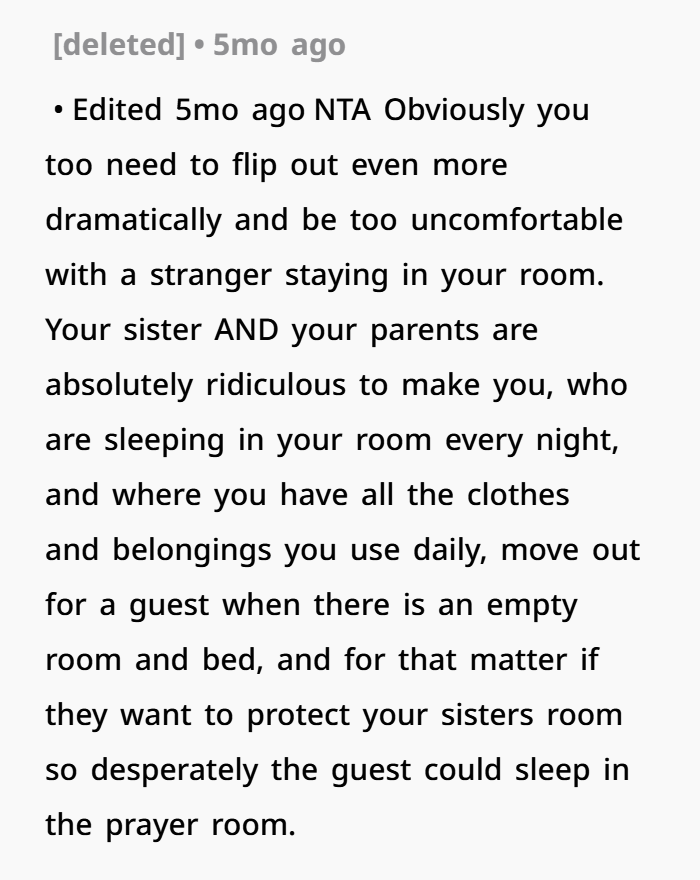
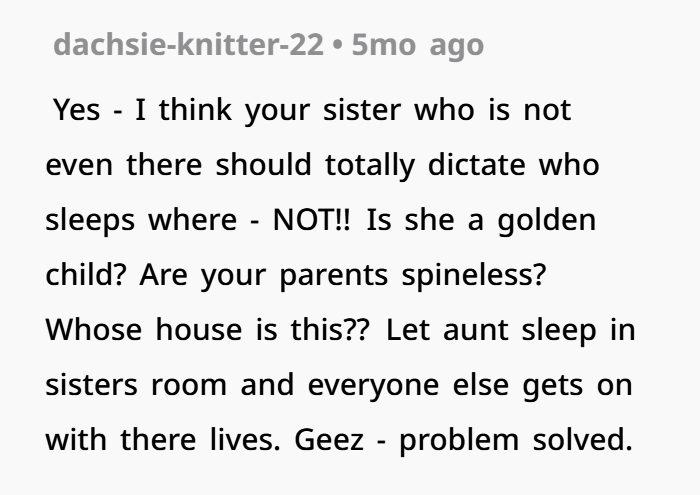
The Comments Are In
Final Thoughts
This situation is not really about one bed.
It is about respect, communication, and how families handle disagreements.
Personal boundaries matter, but so do fairness and consideration for others.
A healthy home environment comes from understanding each other’s needs and finding solutions that work for everyone.
When families communicate openly, small problems are less likely to turn into bigger conflicts.