After Catching My Daughter Cheating, I Taught Her a Tough Lesson—AITA?


You are 17 years old, and having a 37-year-old houseguest who does not respect your privacy can feel very uncomfortable. Everyone deserves to have personal space, especially at home. Your brother-in-law has been entering your room without asking, looking through your belongings, and ignoring your concerns. These actions are not just frustrating—they are clear signs that your personal boundaries are not being respected.
When you found him using your phone without permission, it was understandable that you felt upset. A phone contains private information like messages, photos, social media accounts, and personal details. Digital privacy is important, and accessing someone’s device without their approval is a serious matter. Trust and respect are important parts of any relationship, whether it is between family members or house guests.
The way he responded also made the situation more difficult. Instead of apologizing or understanding why you were upset, he focused on accusing you of posting about him online. This shifted attention away from his own actions. In healthy communication, people should be able to talk about concerns, respect boundaries, and take responsibility when they make mistakes.
Your frustration came after dealing with repeated privacy issues, so it is normal to feel overwhelmed. Taking back your phone and speaking up happened because you felt your personal space was being ignored. Moving forward, it may help to have a calm conversation with a trusted family member about setting clear boundaries, protecting your personal information, and creating a safer and more respectful home environment.

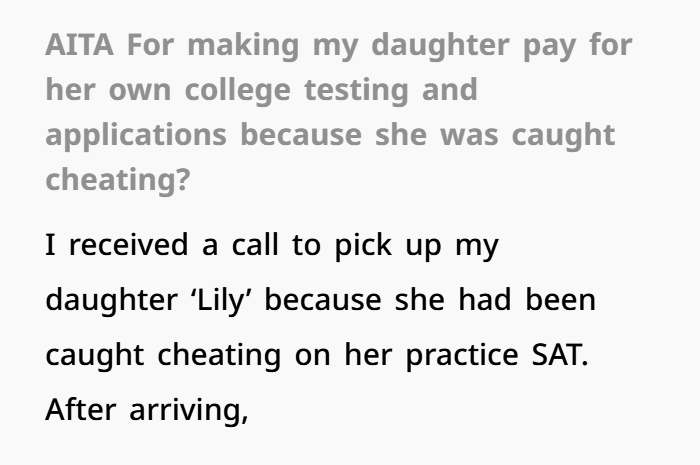
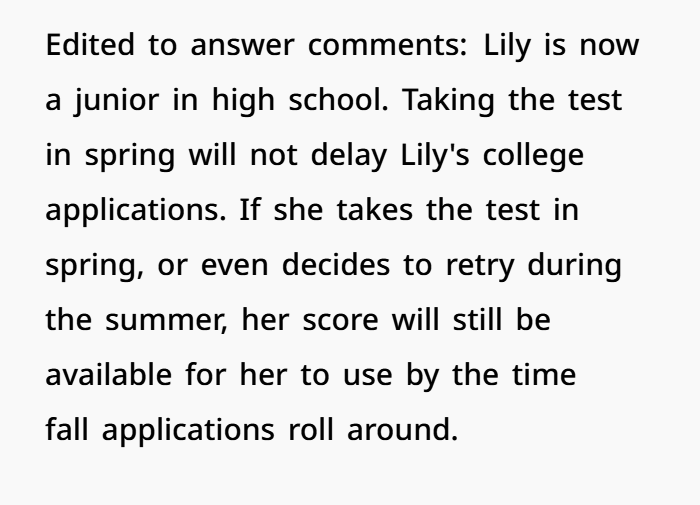

Was the Parent Too Strict for Making Their Teen Pay for SAT and College Costs?
Parenting decisions are rarely simple, especially when they involve school, college, money, and a teenager’s future.
This situation is not only about one mistake. It brings up bigger questions about academic honesty, teen responsibility, peer pressure, and how parents should teach important life lessons.
There are different ways to look at this situation, and both sides have valid points.
Why Cheating Is a Serious Issue
Cheating on a test is not just a small mistake.
Academic honesty is an important part of education. Schools, colleges, and universities care about whether students are responsible and trustworthy.
For students preparing for college admissions, academic integrity can matter a lot. Problems with cheating can sometimes affect college applications, scholarships, and future opportunities.
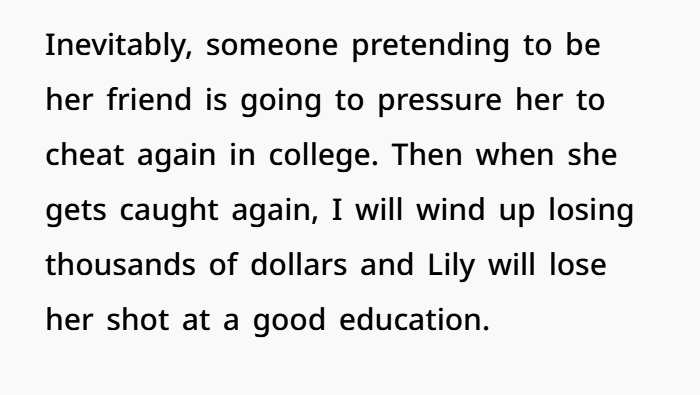
Even when it happens during a practice test, parents may worry that it could become a bigger habit if it is ignored.
Many parents think about the long-term effects:
- Will my child learn from this mistake?
- Will they make better choices when they are alone?
- Are they prepared for college responsibility?
These are normal concerns.
The Impact of Peer Pressure on Teen Decisions
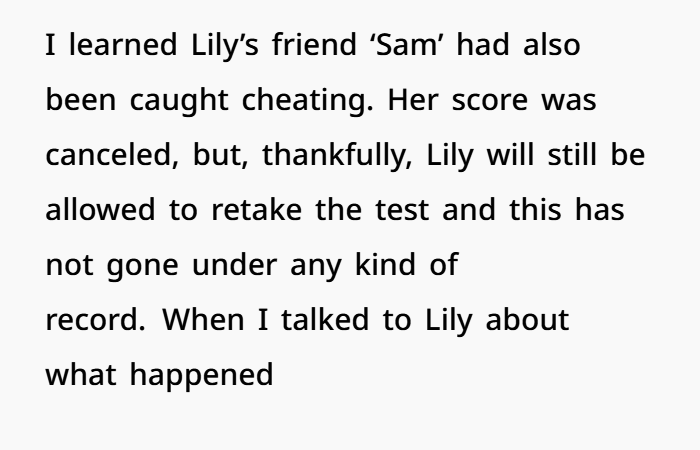
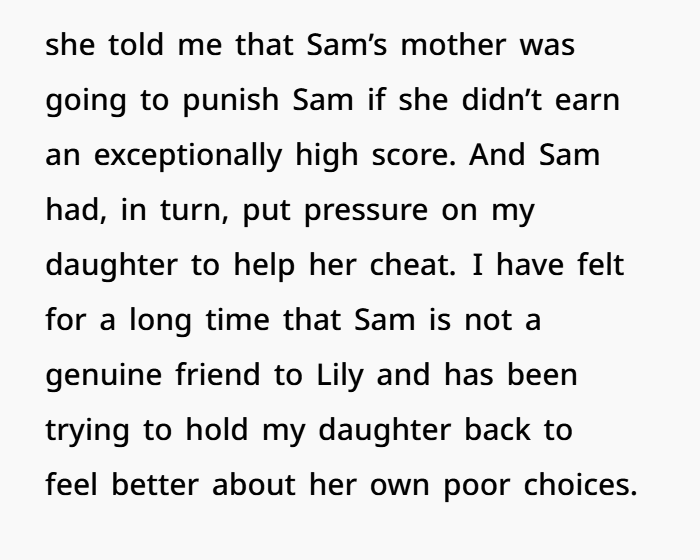
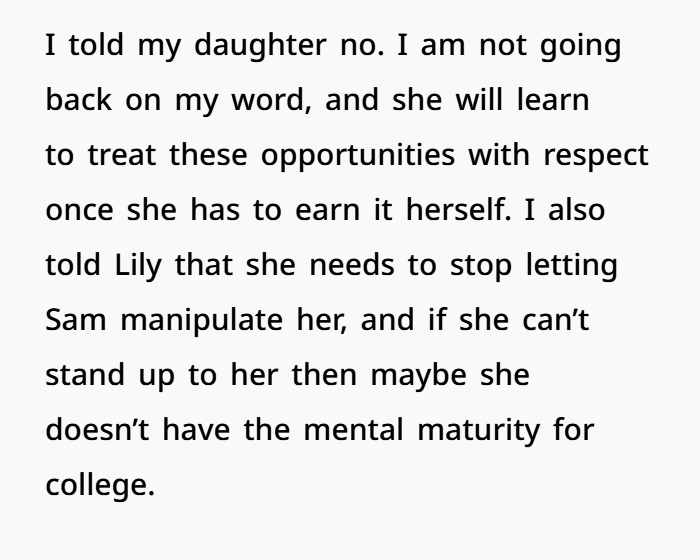
Lily explained that her friend Sam influenced her decision.
This is another important part of the story because peer pressure can strongly affect teenagers.
During the teenage years, many young people want to fit in, please their friends, or avoid feeling left out. Sometimes this can lead them to make choices they normally would not make.
Understanding peer pressure does not mean excusing the behavior.
Lily is still responsible for her own decision. However, understanding why it happened can help parents teach better decision-making skills.
Instead of only asking, “Why did you do this?” parents can also ask:
“What made you feel like this was your only option?”
That conversation can help teenagers learn how to handle difficult situations in the future.
The Parent Had Already Shared Concerns
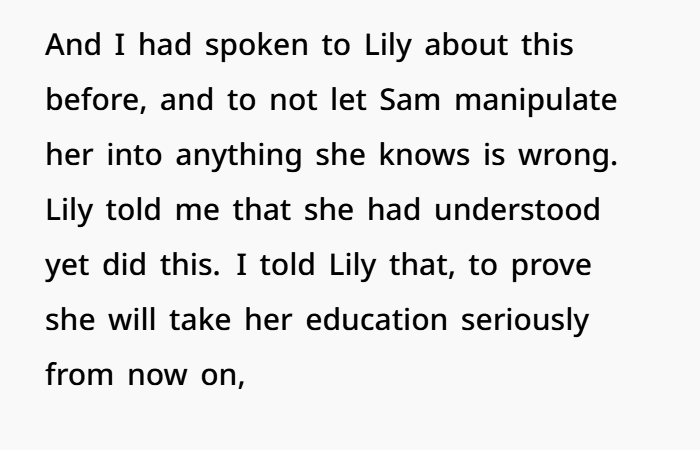
One detail that stands out is that Lily’s parent had already warned her about being careful around this friendship.
Because of that, the situation feels more serious to the parent.
From their point of view, this was not only about one test. It was about trust and judgment.
Parents often worry about whether their children can make responsible choices when they are away from home.
This is especially important before college, where students usually have more freedom and independence.
Is Making Lily Pay for Costs a Good Lesson?
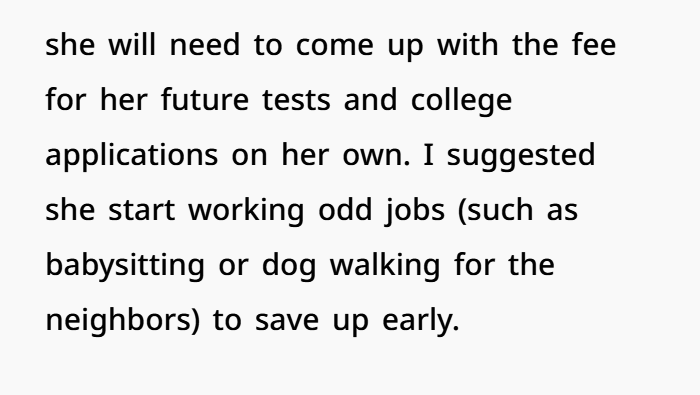
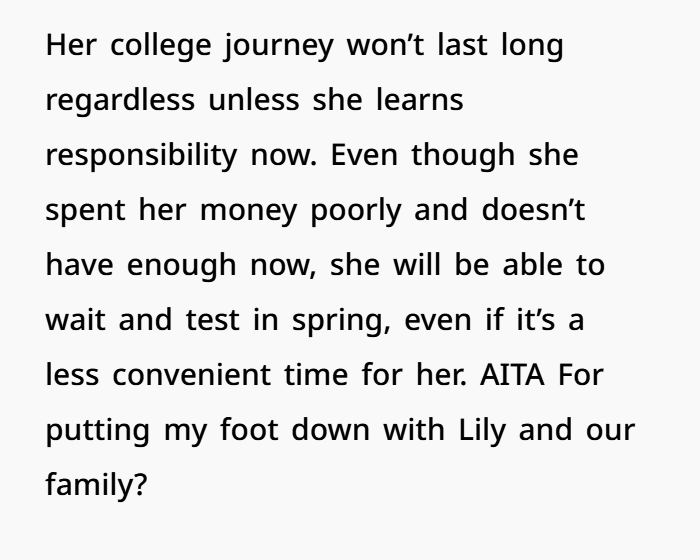
The parent decided that Lily should pay for her own SAT registration fees and college application costs.
Some people may see this as a strong punishment, while others may see it as a lesson about responsibility.
There can be value in teaching teenagers about money management.
Learning about:
- Budgeting
- Saving money
- Understanding expenses
- Planning for education costs
can help students become more prepared for adult life.
College costs can be overwhelming, and financial literacy is an important skill for young adults.
When teenagers understand that choices have real consequences, they may become more thoughtful about future decisions.
But Timing Matters Too
There is another side to consider.
College admissions can be stressful and competitive. SAT dates, application deadlines, scholarships, and financial aid opportunities often follow strict timelines.
Missing an important test date can reduce a student’s options.
Many students take standardized tests more than once to improve their scores. Having enough time to prepare and retake exams can be helpful during the college planning process.
This creates an important question:
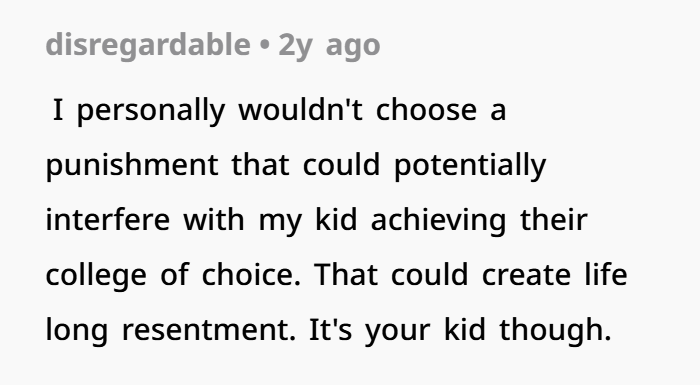
Should a lesson about responsibility affect a student’s future opportunities?
That is where many parents may disagree.
Finding the Right Balance Between Discipline and Support
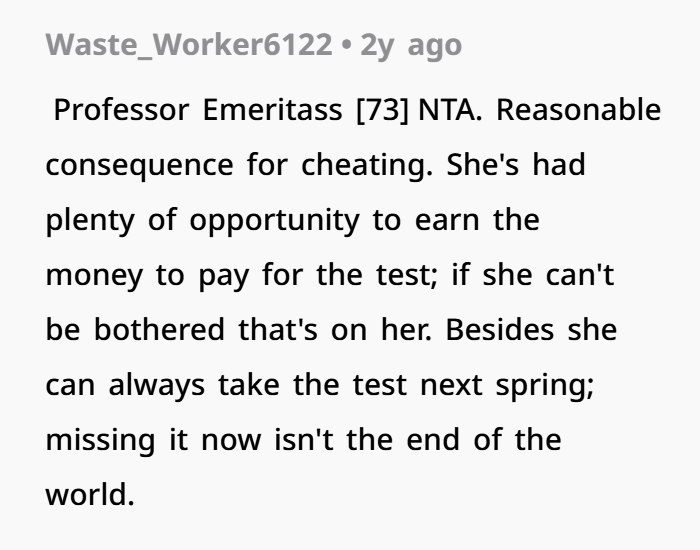
Some people believe the consequence is fair because Lily needs to understand the seriousness of her actions.
Others may feel the punishment is too extreme, especially because she admitted what happened and did not hide the truth.
Admitting a mistake is also a sign of responsibility.
A good parenting approach often involves both accountability and support.
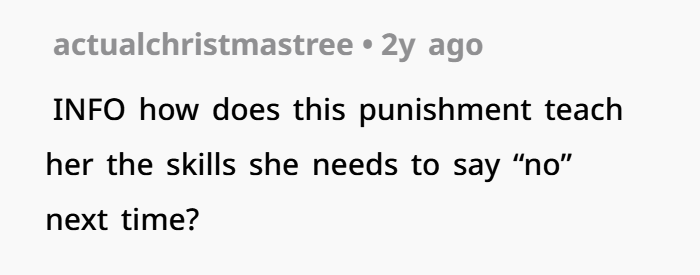
Teenagers need to understand that actions have consequences, but they also need guidance on how to improve.
Too little discipline may send the message that mistakes do not matter.
Too much punishment may create stress, fear, or frustration.
The goal should be helping a teenager grow.
What About Family Members Offering Financial Help?
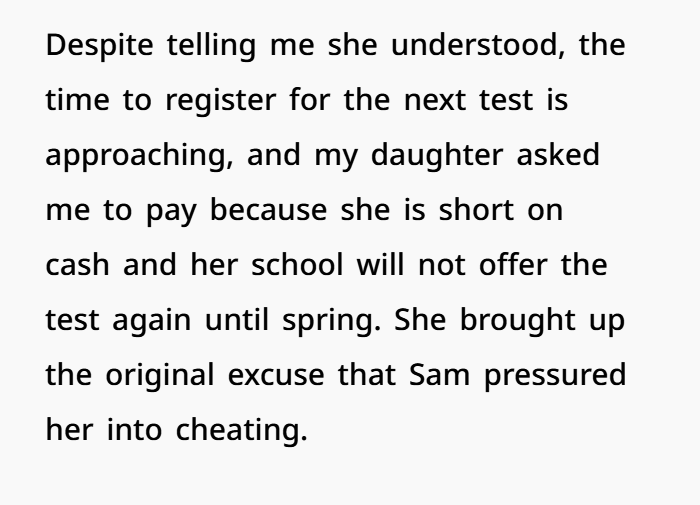
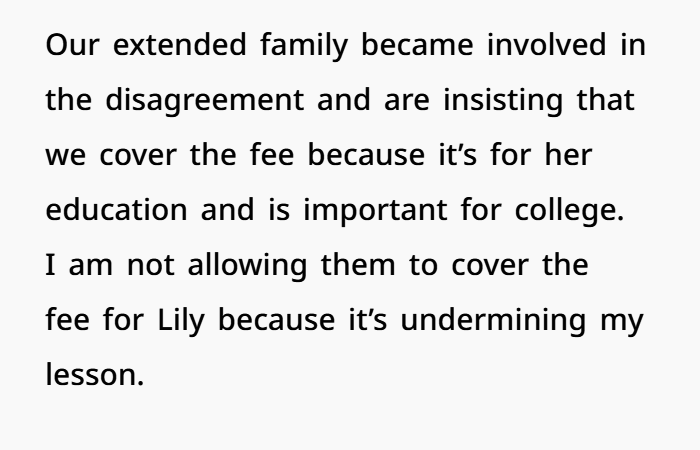
Another difficult part of the situation is whether relatives should help pay the costs.
The parent may feel that accepting help removes the lesson.
If Lily has to earn the money herself, she may better understand the value of education expenses.
However, some people may argue that family support can also be helpful.
College preparation is already stressful. If financial help allows a student to keep important opportunities open, some families may see that as a practical choice.
There is no single answer that works for every family.
Teaching Teens to Be Ready for College Life
College readiness is about more than grades.
Students also need skills like:
- Making independent decisions
- Managing money
- Handling peer pressure
- Solving problems
- Taking responsibility for mistakes
College gives young adults more freedom, and they need the ability to make good choices without constant supervision.
However, becoming responsible takes time.
Teenagers usually learn through a combination of guidance, mistakes, and experience.
A Possible Middle Ground
A balanced solution could be sharing the responsibility.
For example, Lily could pay part of the SAT fees or application costs while the parent helps with the rest.
This approach still teaches:
- Accountability
- Financial responsibility
- The importance of education
while also protecting important college opportunities.
Many families use this type of approach when teaching teenagers about money and future planning.
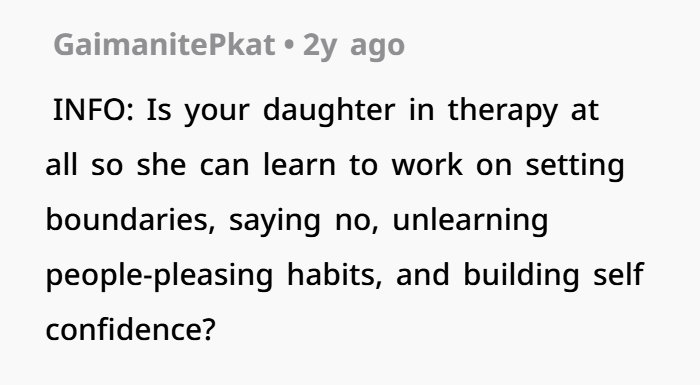
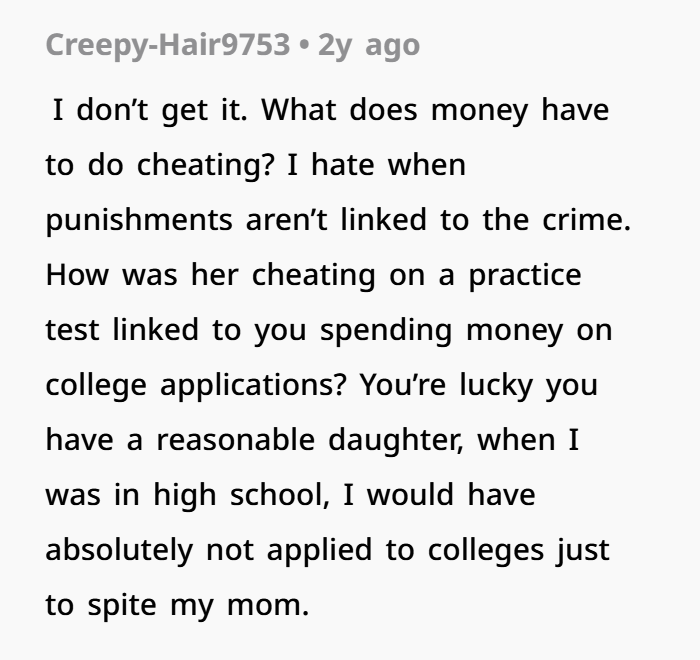
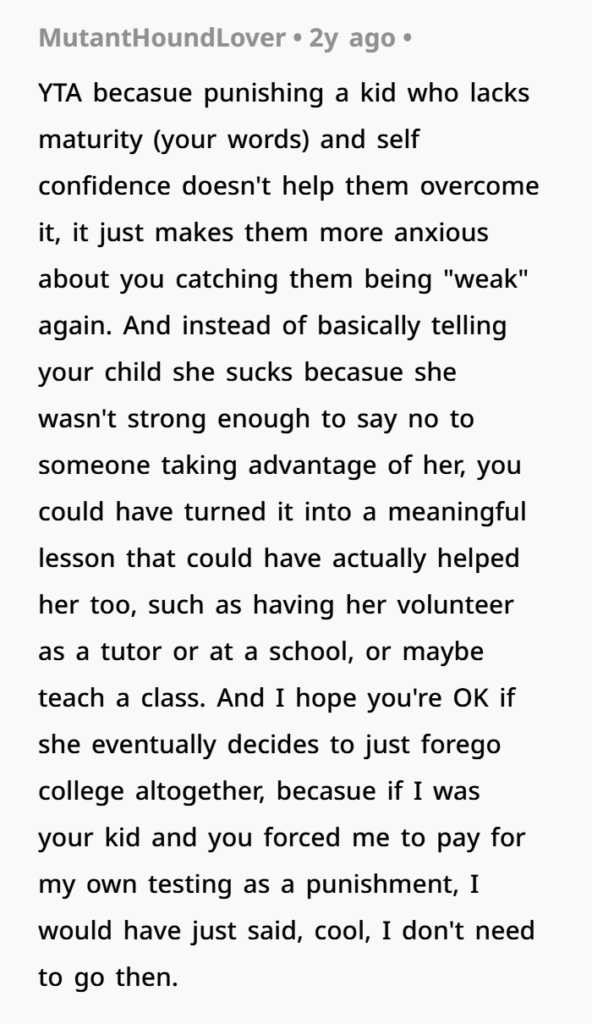
Comments From The Community






Final Thoughts
This situation is not only about SAT fees or college applications.
It is about raising a young person who understands honesty, responsibility, and the impact of their choices.
The parent is right that cheating should be taken seriously. Academic integrity matters, and teenagers need to learn that decisions have consequences.
At the same time, the way parents respond also matters.
The best lessons usually come from a balance of discipline, communication, and support.
Helping a teenager learn from a mistake is not about making life harder for them. It is about preparing them for adulthood with confidence and better decision-making skills.