“You Don’t Have Kids Anyway” — Entitled Cousin Tried Dumping 4 Children on Couple’s Luxury Vacation


Family disagreements can sometimes start from small conversations and become much bigger problems. In this story, a couple who decided not to have children planned a special anniversary dinner with family. During the evening, they talked about their upcoming vacation to Melbourne, Australia. When the boyfriend’s cousin heard about their travel plans, her attitude suddenly changed because she became interested in their holiday.
The cousin often criticized the couple’s decision to have a childfree lifestyle and focus on their own goals and financial planning. However, after hearing about their luxury vacation, she seemed more interested in enjoying the opportunities that came with their choices. The situation became uncomfortable when the couple realized that her interest was not just about celebrating their anniversary.
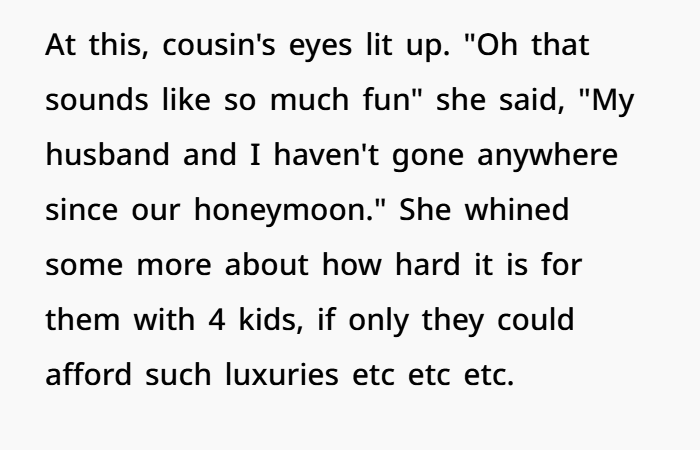
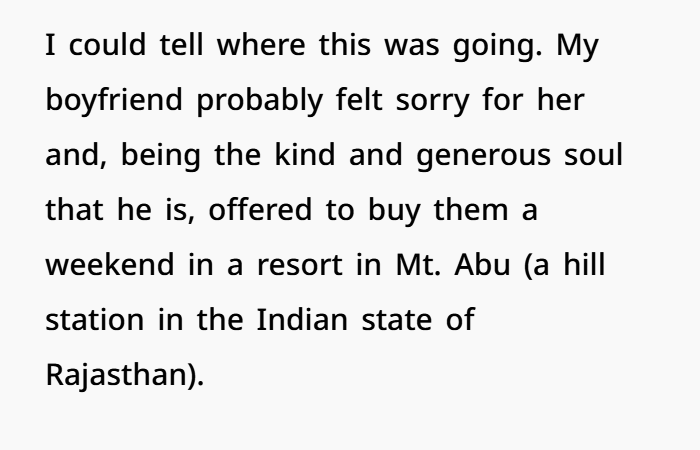
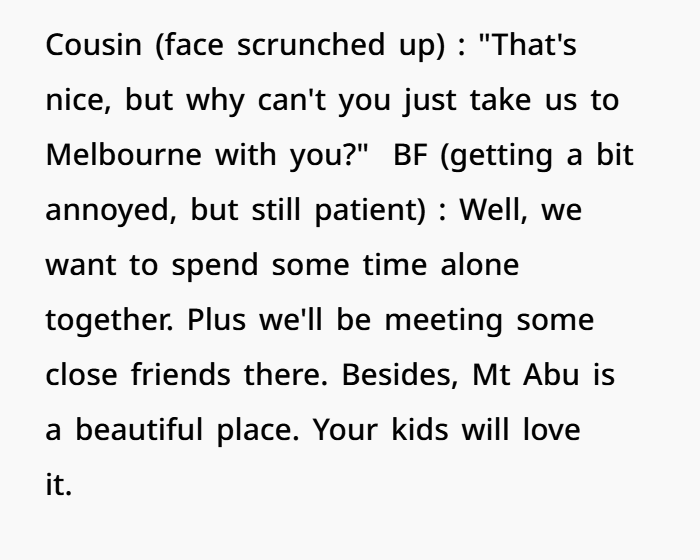
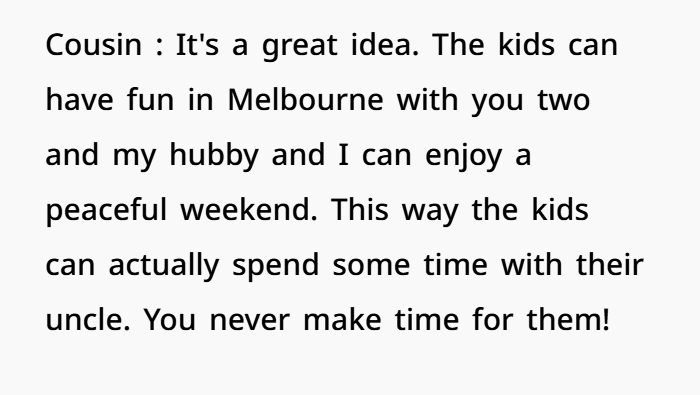
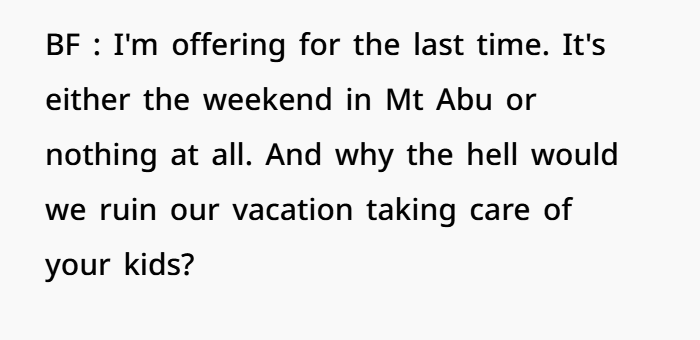
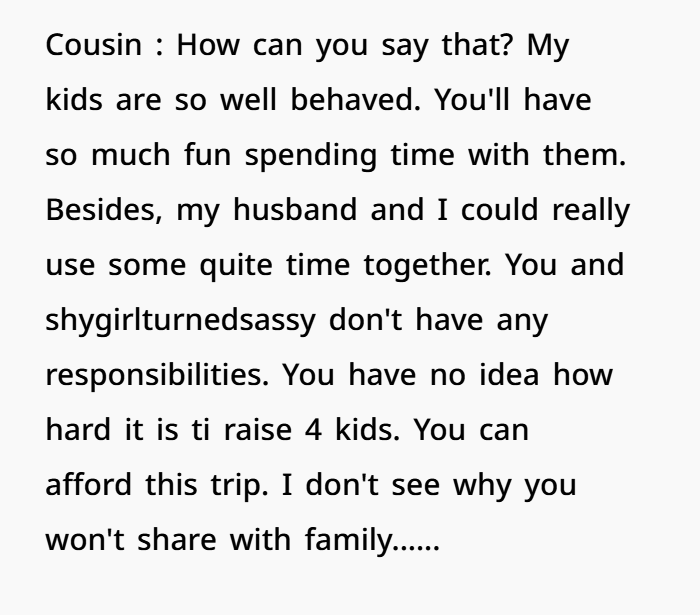
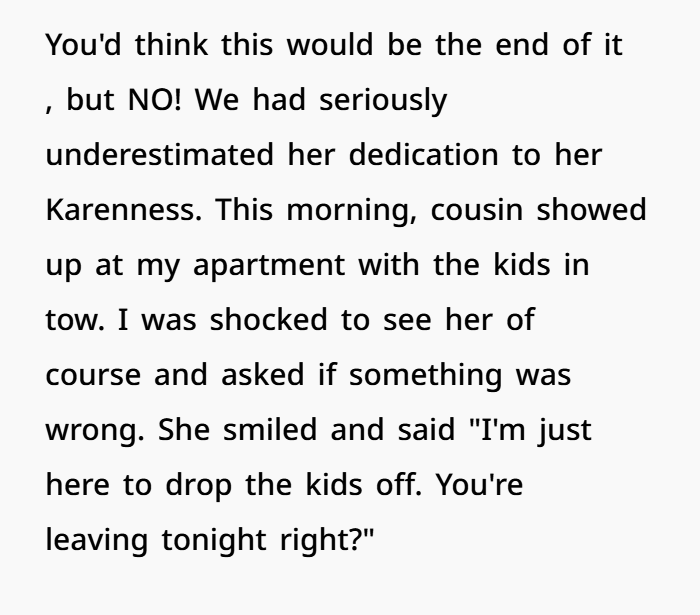
Trying to be helpful, the boyfriend offered to pay for a vacation for the cousin and her husband. It was meant to be a kind gesture and give them time to relax together. Instead of accepting the offer, the cousin asked for something completely different. She wanted the couple to take all four of her children on their Melbourne trip so she and her husband could enjoy a child-free vacation.
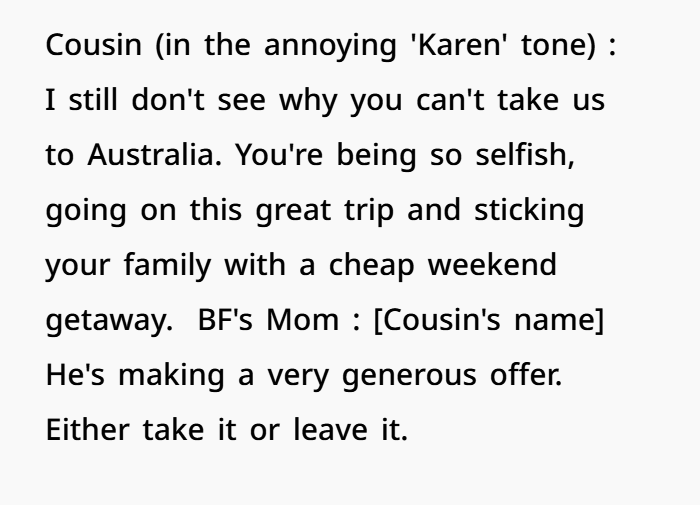
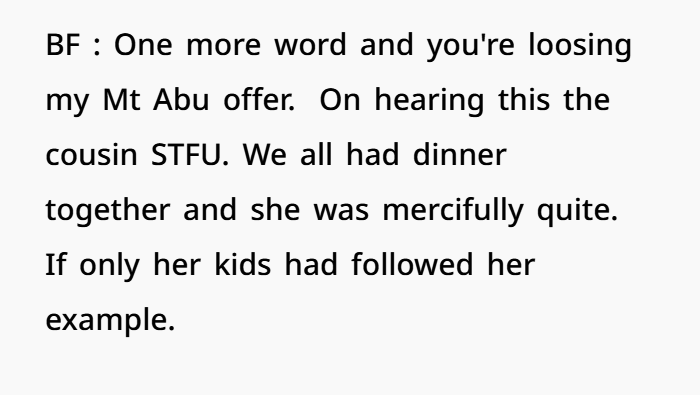
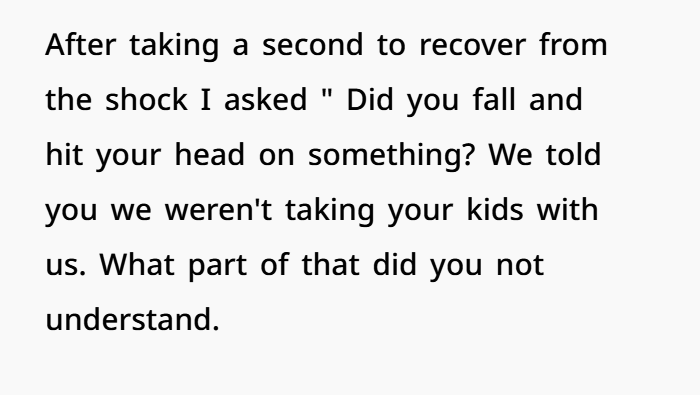
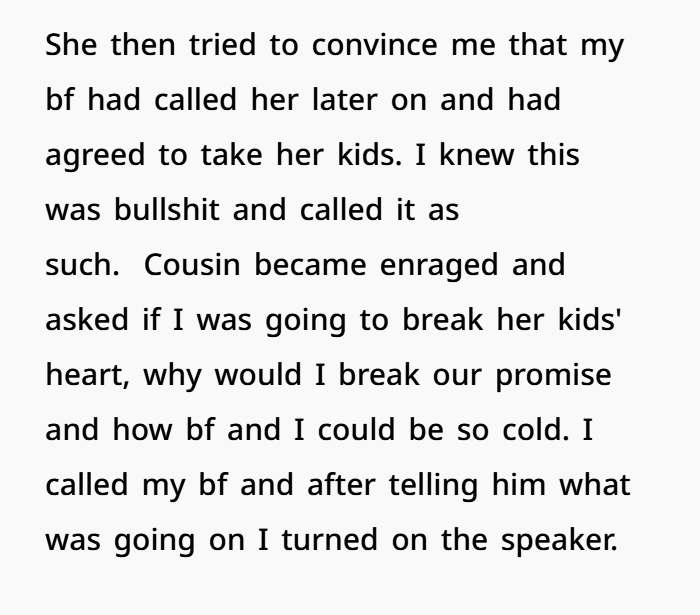
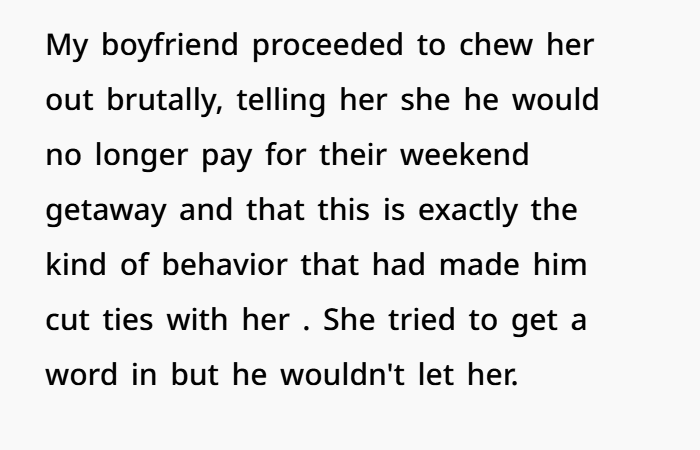
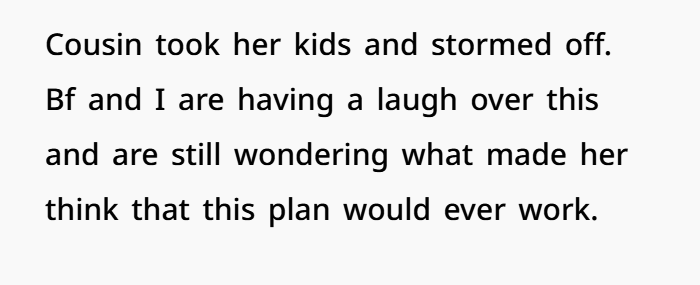
The couple did not agree because they had planned their trip for themselves and were not prepared to take responsibility for four children during their holiday. The cousin continued to pressure them, but they stood by their decision. The situation became a lesson about personal boundaries, family expectations, and respecting other people’s time, money, and travel plans. Healthy family relationships require understanding, communication, and respect from everyone involved.


When Family Expectations Go Too Far: A Story About Boundaries, Parenting, and Respect
A vacation usually means rest, fun, and time to relax.
But sometimes family disagreements can turn a simple vacation plan into a much bigger issue.
This story became popular because it showed a common family problem: what happens when someone expects relatives to take responsibility for choices they made themselves.
The situation involved a childfree couple, their cousin, and a disagreement about a luxury vacation. The main issue was not really the trip. It was about personal boundaries, family expectations, and respecting each other’s life choices.
Different Life Choices Do Not Mean Different Value
Some people choose to have children, while others choose a childfree lifestyle.
Both choices are personal decisions.
Parents often experience many rewarding moments while raising children, but parenting also comes with responsibilities, expenses, and less personal freedom. Childfree adults may have more flexibility with travel, finances, and personal time.
Problems can happen when one group starts judging the other.
In this story, the cousin often criticized the couple for not having children. She suggested they were missing an important part of life.
However, judging someone’s lifestyle choices can create unnecessary family tension.
Everyone has different goals, priorities, and circumstances.
When Help Turns Into Expectation
Helping family members can be a wonderful thing.
Many relatives support each other with childcare, financial help, and emotional support during difficult times.
However, there is a difference between asking for help and expecting someone else to solve your problems.
According to the story, the cousin wanted the couple to take care of her four children during their vacation.
The reason was not an emergency or a serious family situation.
She wanted time away with her husband.
Wanting a break from parenting is understandable. Many parents experience stress and burnout and need time to recharge.
However, expecting another person to completely change their own vacation plans is a different matter.
A Generous Offer Was Not Enough
The couple’s response was more generous than many people would expect.
Instead of simply refusing, the boyfriend offered to pay for a relaxing weekend trip for the cousin and her husband.
It was a thoughtful solution that would allow the parents to enjoy time together without affecting the couple’s own vacation.
However, the cousin did not see the offer as kindness.
She compared it to the couple’s luxury Melbourne vacation and felt it was not enough.
This is where the conflict became bigger.
Sometimes people can become focused on what they want and overlook the effort someone else is making.
The Problem With Family Entitlement
Family relationships can become difficult when someone starts believing they automatically deserve another person’s time, money, or resources.
This can happen in many situations:
- Relatives expecting free childcare
- Family members pressuring others for financial support
- People feeling entitled to someone else’s free time
- Comparing lifestyles and personal choices
Healthy family relationships require respect on both sides.
Being related to someone does not mean you are entitled to control their decisions.
Why Boundaries Are Important
Setting boundaries with family members can feel uncomfortable, but it is often necessary for healthy relationships.
Examples of healthy boundaries include:
- Saying no when a request is unreasonable
- Respecting other people’s plans
- Avoiding guilt-based pressure
- Understanding that everyone has different responsibilities
Boundaries are not about being unkind.
They are about creating relationships where everyone feels respected.
The Challenge of Parenting Burnout
Parenting can be exhausting.
Many parents need support, rest, and personal time. Asking for help is completely normal.
However, support works best when it is based on mutual agreement.
Family members should not feel pressured to provide childcare, money, or time simply because they have a different lifestyle.
A person without children is not automatically available to help with childcare.
A person with more financial freedom is not automatically responsible for paying for someone else’s choices.
Respecting Personal Decisions
One important lesson from this story is that people make different decisions about their lives.
Some people prioritize:
- Raising children
- Career goals
- Travel
- Financial independence
- Personal hobbies
- Quiet family life
None of these choices make someone better or worse than another person.
Respect is important in every relationship.
Handling Family Conflict in a Healthy Way
When family disagreements happen, calm communication usually works better than guilt or pressure.
A healthier approach is to:
- Clearly explain your feelings
- Listen to the other person’s concerns
- Avoid personal attacks
- Respect each other’s limits
- Find solutions that work for everyone
Family relationships become stronger when people understand that support should come from kindness, not obligation.
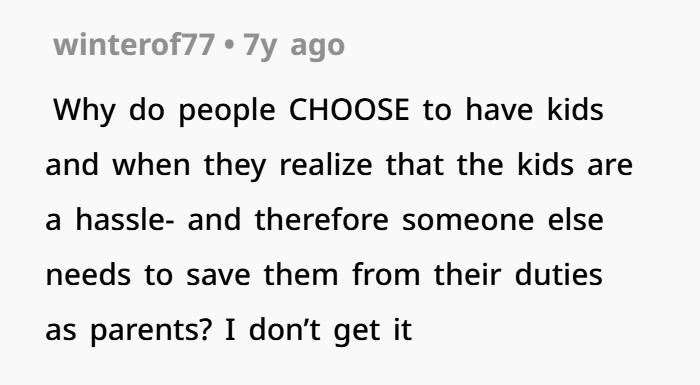
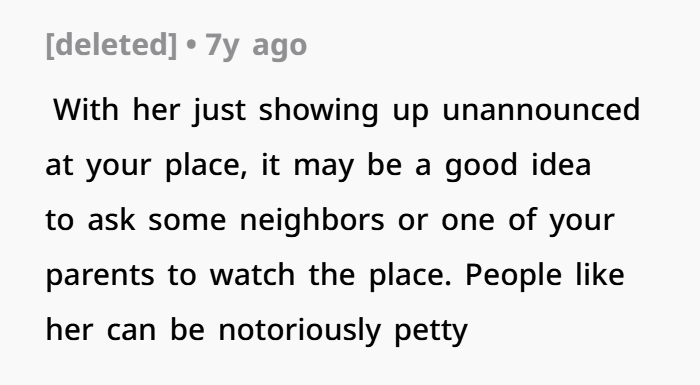
See The Comments Below






Final Thoughts
This story was never only about a vacation.
The bigger issue was about expectations, respect, and personal boundaries.
Parents deserve support, but relatives also deserve the freedom to make their own choices.
A healthy family relationship is built when people help each other willingly, communicate honestly, and respect each other’s lives.
Sometimes saying “no” is not a sign of being selfish.
Sometimes it is simply a way of protecting a healthy relationship.