Entitled Gifting or Smart Wishlist? My SIL’s Pricey Christmas Demands Sparked Family Drama

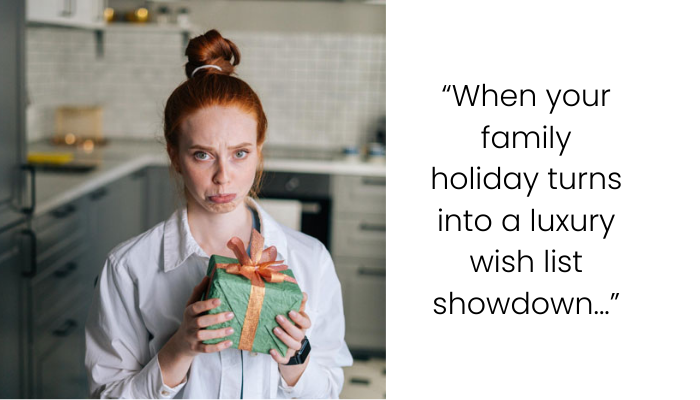
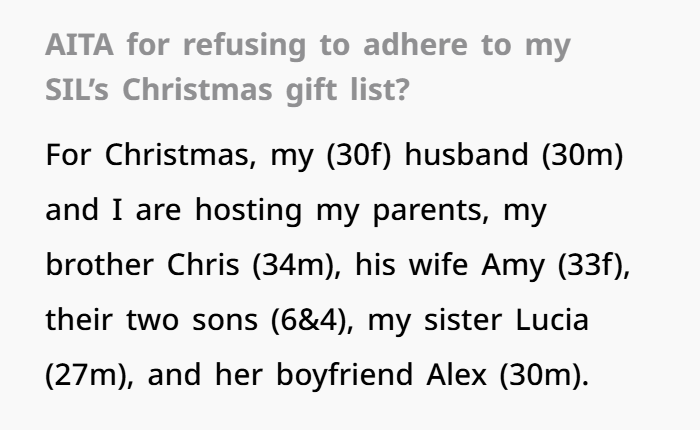
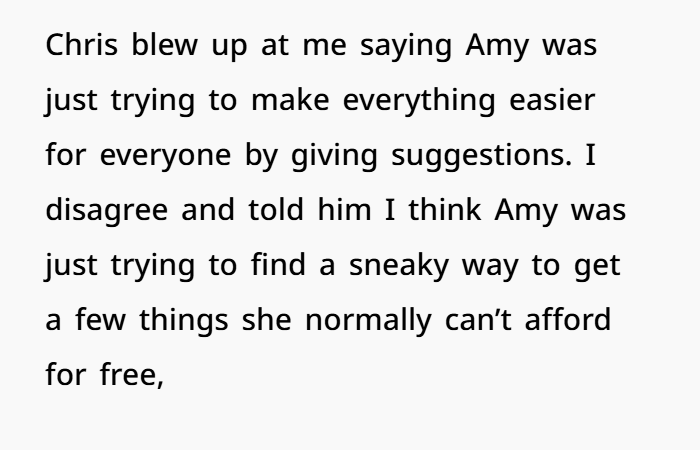
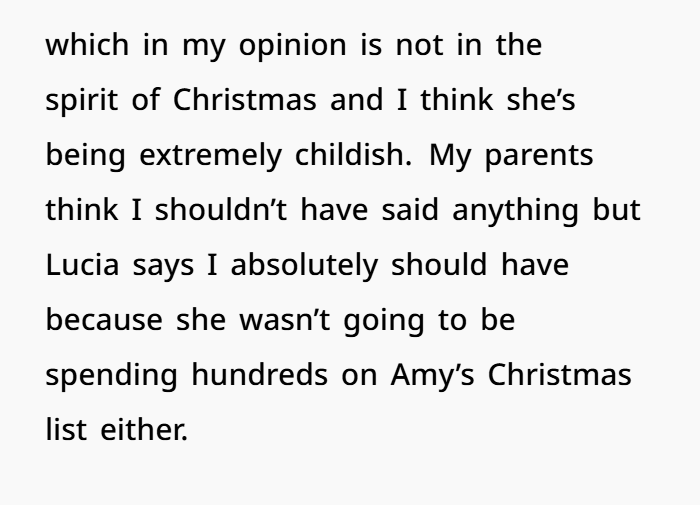
A 30-year-old woman and her husband planned to host Christmas for their extended family, but the holiday gathering became stressful because of a disagreement about gifts. Her sister-in-law, Amy, sent a message to the whole family with a detailed Christmas gift list. The list included expensive items like designer bags, luxury perfumes, and high-priced clothing. She also made it clear that she only wanted gifts from that list.
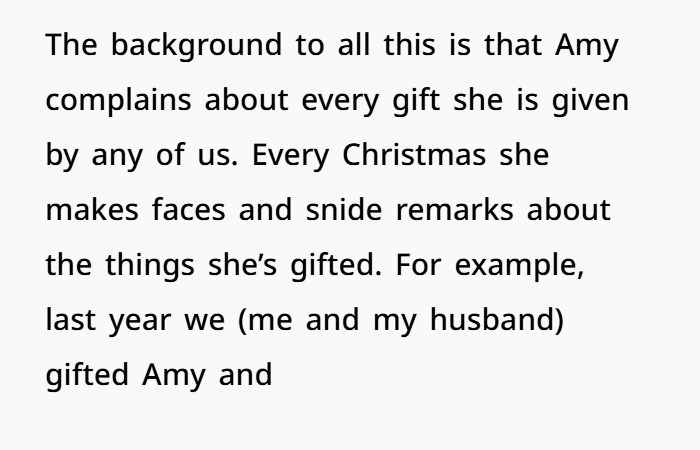
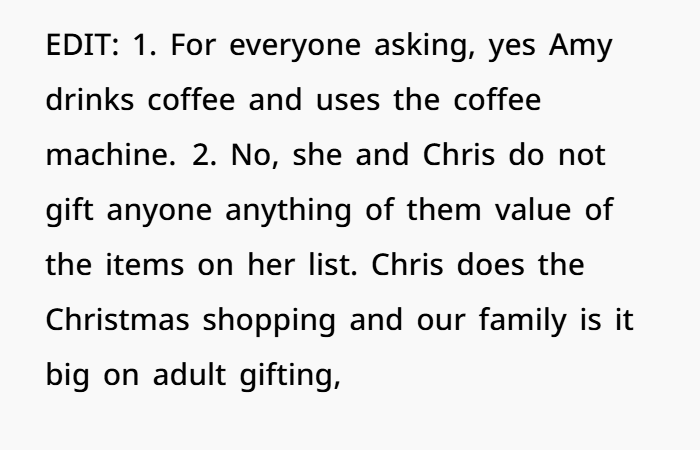
This was not the first time Amy had caused tension over gifts. The year before, the family gave her a premium coffee machine as a group gift, but she did not seem happy with it. Instead of showing appreciation, she made comments that suggested the gift was not good enough.
This year, the woman decided not to buy anything from Amy’s list. She told Amy that she would choose a different gift and even joked that she could help her contact a luxury brand store if she wanted something specific. Her response created more conflict within the family.
Amy’s husband, Chris, defended his wife and said the gift list was only meant to make shopping easier for everyone. However, the family remained divided over whether the list was helpful or unreasonable. The situation raised questions about holiday expectations, gift-giving, and the importance of showing gratitude and respect in family relationships.
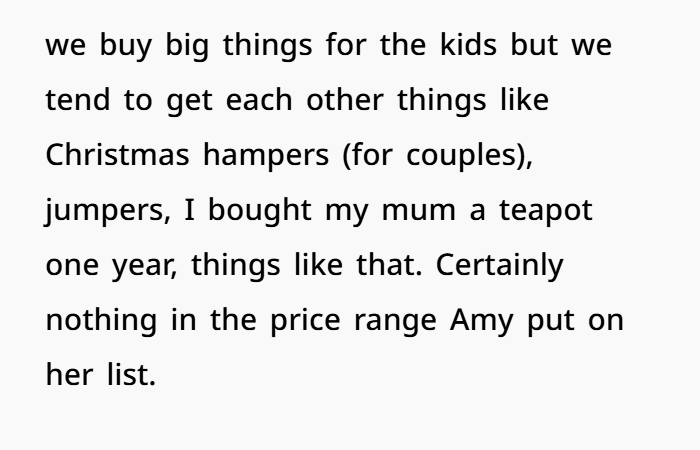
The poster explained that her sister-in-law, Amy, always complained about the gifts she was given and even made faces when she got things she didn’t like
My Family Was Upset About My Holiday Gift List — Where Is The Line?
The holiday season is supposed to be about spending time with family, showing appreciation, and creating happy memories.
But sometimes, gifts can create stress instead.
Different families have different ideas about holiday spending. Some people enjoy buying expensive presents, while others prefer simple and meaningful gifts.
Problems can happen when expectations become too high or when people feel pressured to spend more than they can afford.
This story brings up important questions about gift etiquette, family boundaries, and financial expectations.
Holiday Gifts Should Be About Thoughtfulness
Giving gifts is usually a way to show someone you care.
A thoughtful gift does not have to be expensive. It can be something small that shows you understand the person’s interests, needs, or personality.
For many families, holiday traditions include simple gifts like:
- Homemade treats
- Books
- Cozy clothing
- Personal items
- Family keepsakes
The value of a gift is not only measured by its price.
The meaning behind it often matters more.
When gifts become focused only on expensive brands or luxury items, some people may feel that the holiday spirit has been replaced by pressure.
A Wishlist Is Helpful, But Expectations Matter
There is nothing wrong with making a holiday wishlist.
Many people create wishlists because they want to avoid receiving things they will not use. A list can make shopping easier for family members.
However, there is a difference between sharing ideas and making demands.
A helpful wishlist might say:
“Here are some things I like if you need ideas.”
A demanding wishlist may make people feel like they have no choice.
A good gift list should consider different budgets and comfort levels.
Including items at different price points allows everyone to participate without feeling stressed.
When Gift Expectations Become Unfair
The biggest concern in this situation is not the wishlist itself.
The problem is the feeling that family members are expected to buy expensive items while receiving less expensive gifts in return.
Gift-giving does not have to be perfectly equal, but it should feel balanced.
When one person expects luxury gifts but does not show the same level of effort toward others, it can create frustration.
Over time, people may start feeling like the relationship is focused more on what they can provide rather than the connection they share.
Money And Family Can Be A Difficult Combination
Holiday spending can be stressful because families often have different financial situations.
One person may be comfortable spending hundreds of dollars on gifts.
Another person may be managing bills, saving money, or trying to stay within a small budget.
Neither situation makes someone a bad person.
The important thing is respecting everyone’s financial limits.
No one should feel guilty for saying:
“I cannot afford that.”
Setting a holiday budget is a healthy way for families to avoid misunderstandings.
Healthy Family Boundaries During The Holidays
Family relationships can sometimes make it difficult to speak honestly.
People may avoid conversations because they do not want conflict.
But clear communication can prevent bigger problems.
Families can create healthier holiday traditions by discussing:
- Gift budgets
- Spending limits
- Expectations
- Alternative gift ideas
A simple conversation before the holidays can prevent stress later.
Was It Wrong To Say Something?
In situations like this, emotions can become strong.
If someone feels pressured for a long time, their response may come out with frustration.
Ideally, conversations about money and gifts should happen calmly.
Instead of criticizing someone’s choices, it can help to explain how the situation feels.
For example:
“I love celebrating together, but I feel uncomfortable with expensive gift expectations. Can we agree on a budget that works for everyone?”
This keeps the focus on solving the problem instead of blaming someone.
Expensive Gifts Do Not Always Create Better Relationships
Many people assume that more expensive gifts show more love.
But relationships are usually built through:
- Time together
- Kindness
- Support
- Understanding
- Shared memories
A thoughtful gift that shows someone was paying attention can often mean more than an expensive item.
The best holiday memories usually come from the people and experiences, not the price tags.
How Families Can Handle Gift Expectations Better
If your family struggles with holiday gift pressure, these ideas may help:
Create A Family Gift Budget
Agree on a spending limit before shopping begins.
This helps everyone feel comfortable.
Share A Flexible Wishlist
A wishlist should provide ideas, not rules.
Respect Different Financial Situations
Not everyone has the same income or priorities.
Focus On Connection
Remember that holidays are about relationships, not competition.
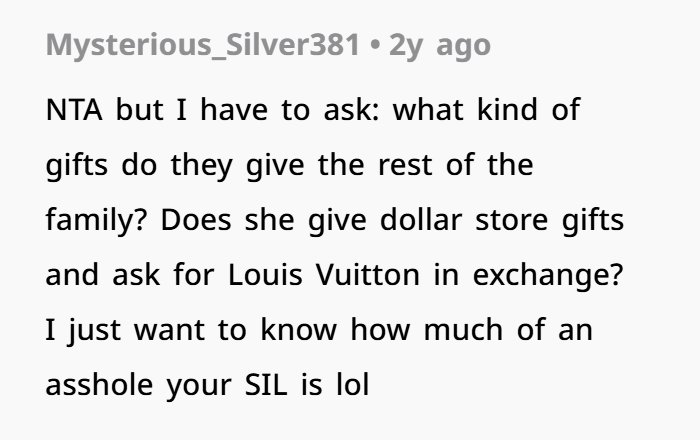
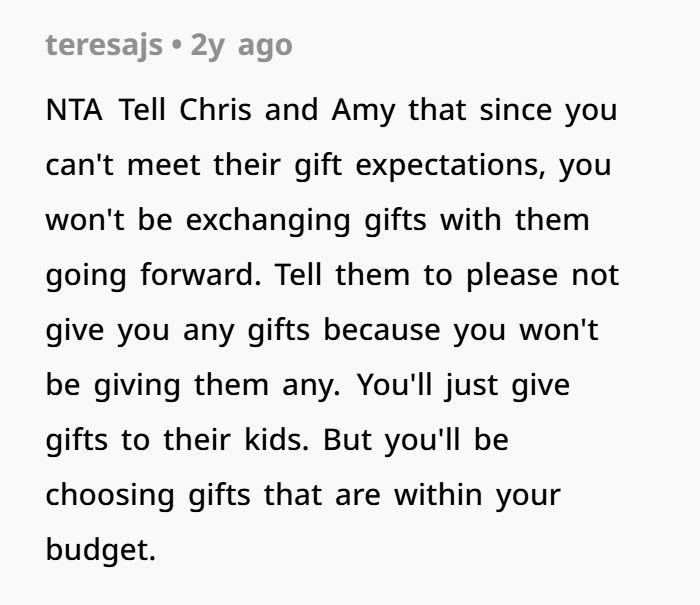
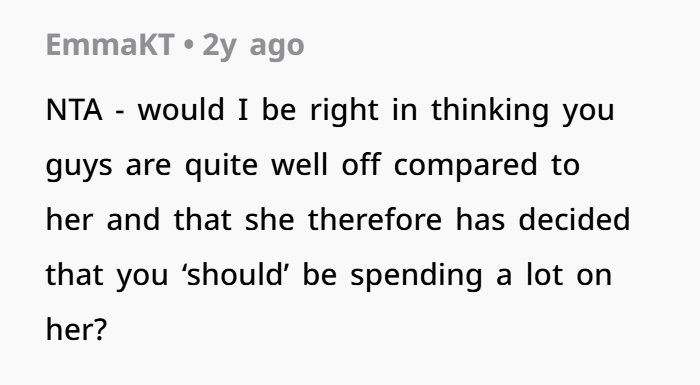
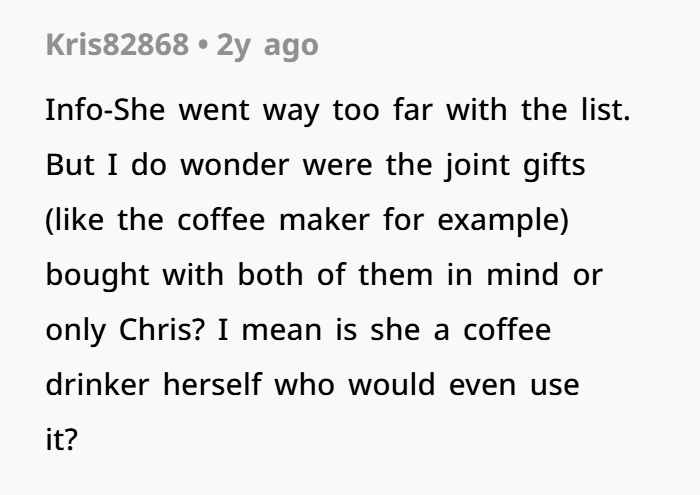
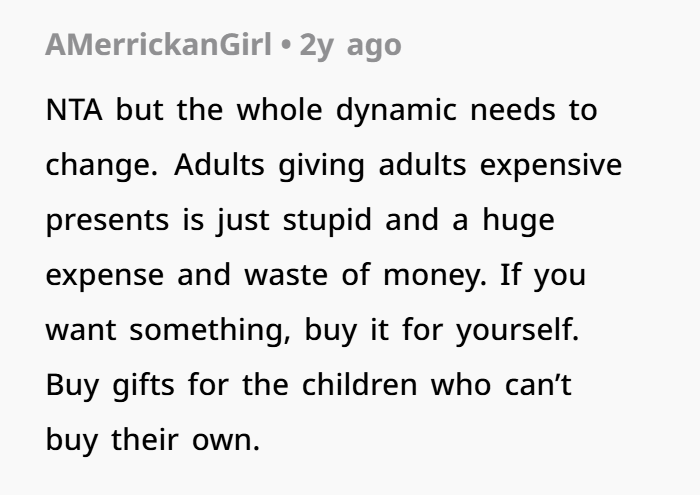
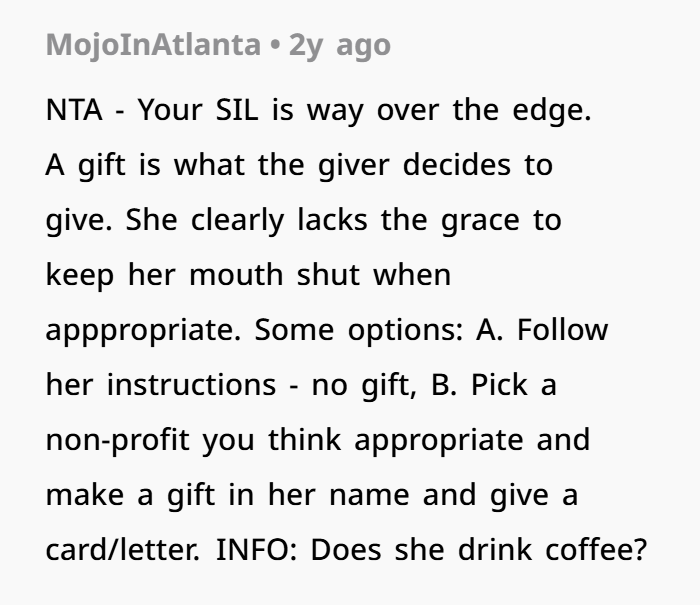
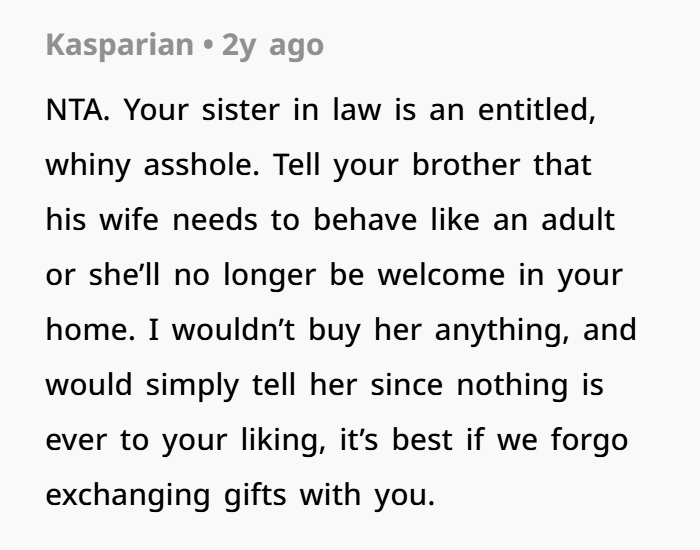
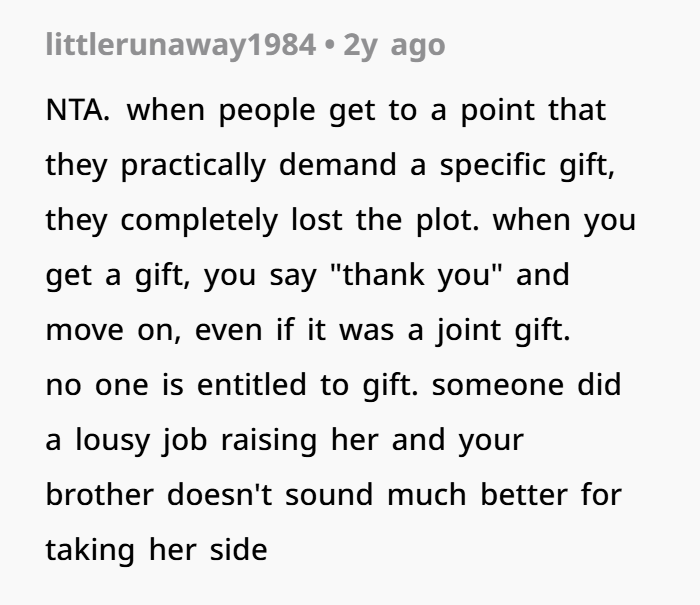
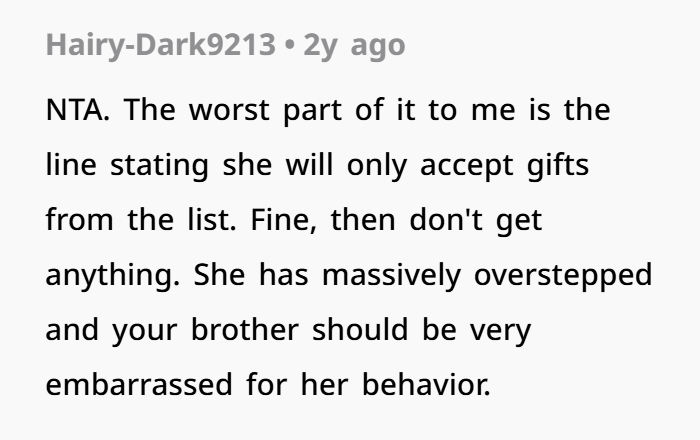
Folks were annoyed by Amy’s entitlement and told the poster not to give in to her demands
Final Thoughts
Holiday gifts should bring people closer, not create stress or resentment.
It is okay to enjoy nice things, and it is also okay to prefer simple gifts.
The most important part of gift-giving is respect.
Healthy family relationships are built on understanding each other’s boundaries, financial situations, and personal choices.
A meaningful holiday is not created by expensive presents.
It is created by kindness, appreciation, and the time people spend together.