My Teen Son Has Two Boyfriends… I Froze. AITA?


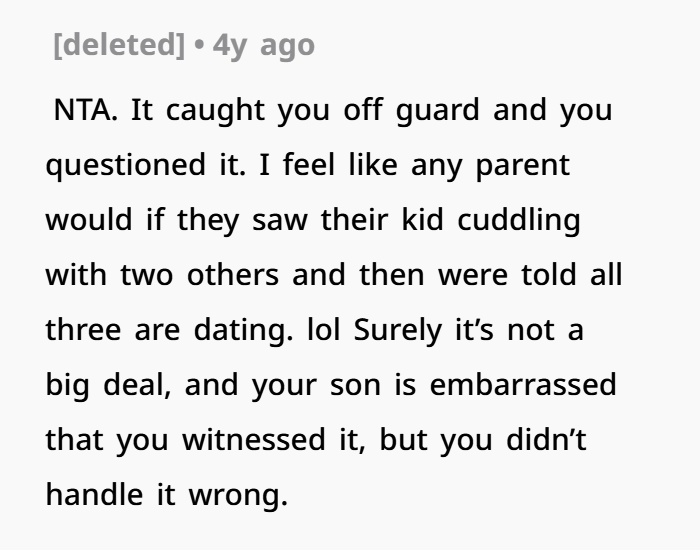
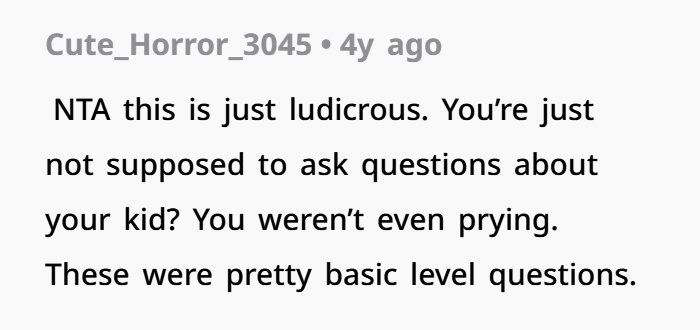
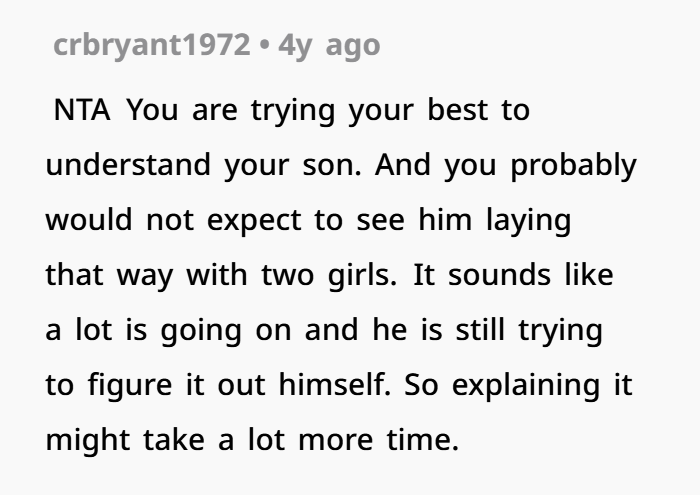
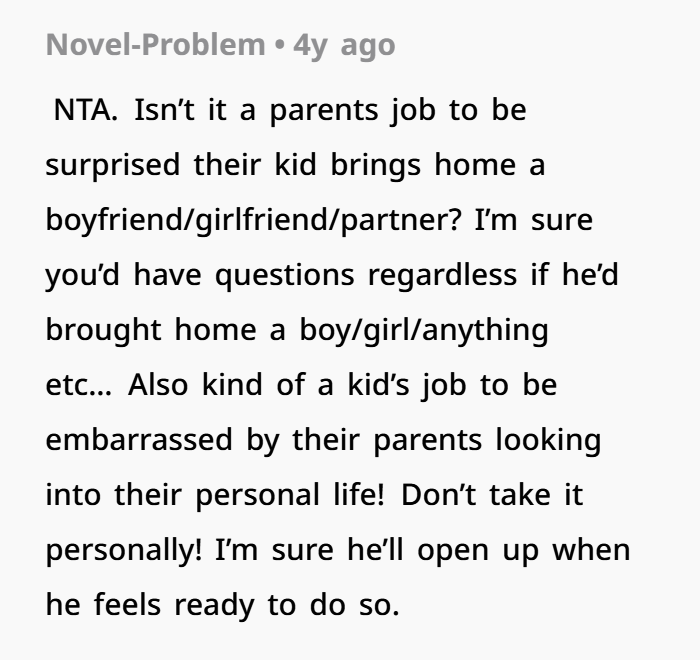
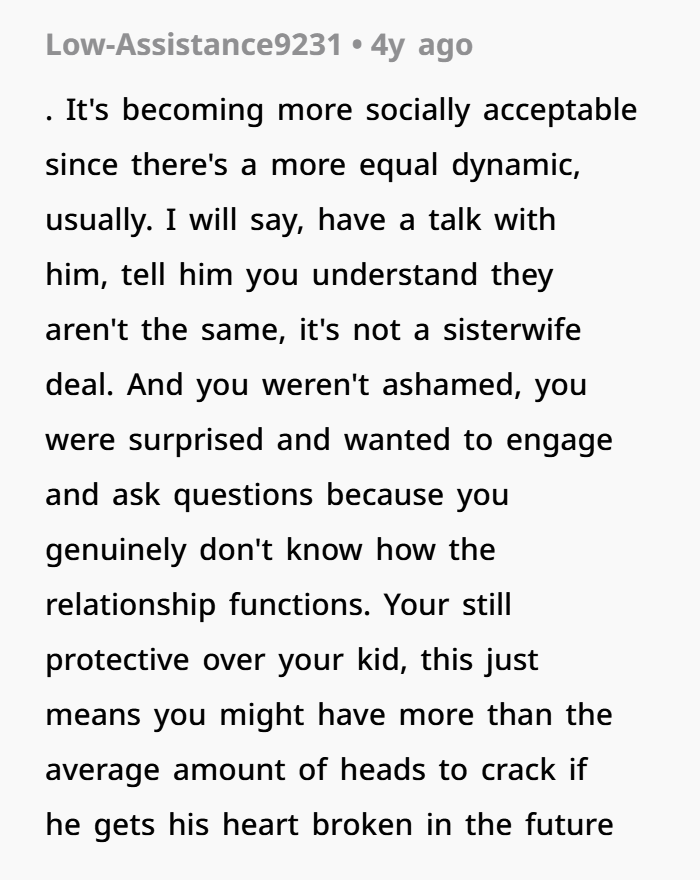
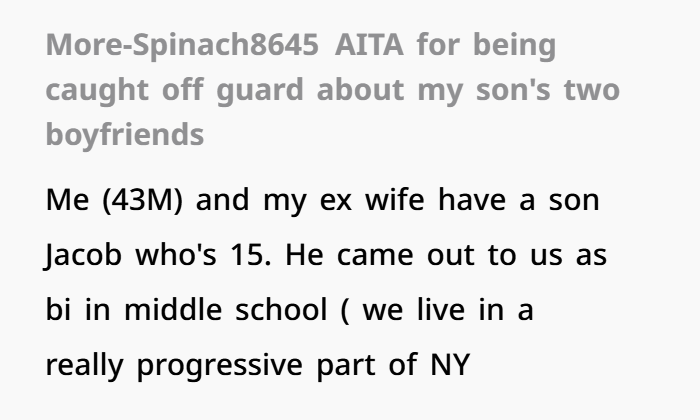
A 43-year-old father shared a difficult moment involving his teenage son and a change in his relationship life. He is raising his 15-year-old son, Jacob, who came out as bisexual a few years earlier. The father said he supported his son and accepted his identity without making it a problem.
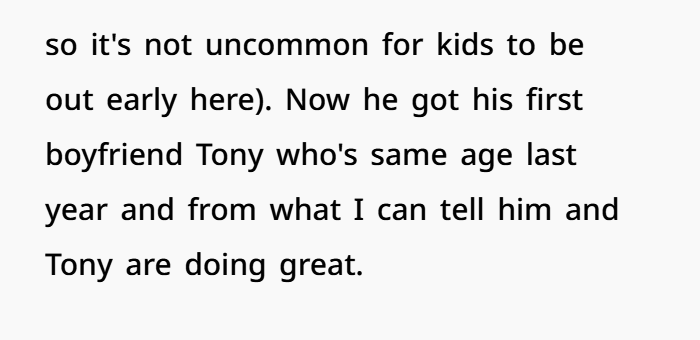
Jacob was previously dating a boy named Tony, and everything seemed normal. Later, another boy named Clark started spending more time with Jacob. At first, the father thought they were simply friends or teammates. However, one day he saw Jacob and Clark sharing a kiss, which surprised him.
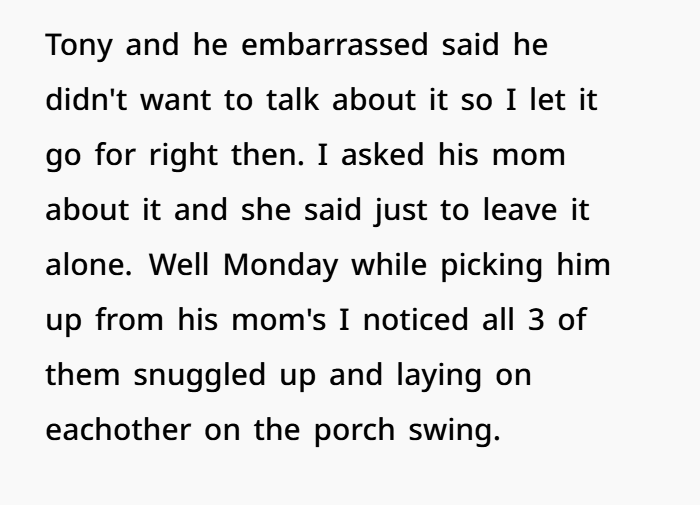
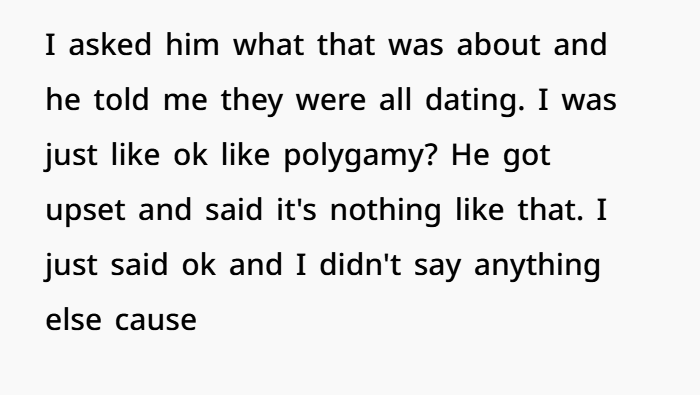
The father tried to understand what was happening and asked about Tony, but Jacob avoided the conversation at first. Later, the father learned that Jacob, Tony, and Clark were all involved in a relationship together. Jacob explained that it was a mutual relationship where everyone was aware and involved.
The father did not react with anger, but he felt confused and unsure how to respond. He became quiet because he needed time to process the situation. His ex-wife felt that he did not handle the moment well, while Jacob felt that his father was judging him.
The situation shows how parents and teenagers can sometimes face new and unexpected conversations about relationships. Open communication, patience, and a willingness to understand each other can help families handle difficult moments in a healthy way.




How Parents Can Support Teens Through Big Conversations
Parenting today can feel challenging because children are growing up in a world that changes quickly. Many parents find themselves having conversations about identity, relationships, emotions, and personal choices that they never expected.
Topics like teen relationships, supporting LGBTQ teens, and understanding different relationship styles can feel unfamiliar. It is normal for parents to need time to process new information.
What matters most is how parents respond.
A First Reaction Does Not Define a Parent
When parents hear something unexpected, they may feel surprised, confused, or unsure about what to say.
In difficult moments, some people react with anger or try to immediately control the situation. They may punish, criticize, or avoid the conversation completely.
But taking a moment to process is different from rejecting a child.
A parent can feel uncomfortable and still love and support their child. Learning something new often takes time, especially when it involves a topic a person does not fully understand.
Understanding Your Child’s Feelings
In this situation, the parent was already accepting of their child being bisexual. The bigger surprise was learning about their child’s relationship situation.
For many adults, different relationship structures can be difficult to understand because they are less familiar. Many people have questions about how these relationships work, what boundaries look like, and how people communicate.
Learning about a topic before forming an opinion can help reduce fear and confusion.
A key part of healthy relationships is communication, honesty, and respect between everyone involved.
Why Age Matters in Teen Relationships
One important factor in this situation is that the child is 15 years old.
Teen years are a time of learning about emotions, communication, trust, and personal boundaries. Even traditional teenage relationships can sometimes feel complicated.
When relationships become more complex, teenagers may need extra guidance around:
- Healthy communication
- Respecting personal boundaries
- Handling emotions
- Understanding feelings
- Making safe choices
A parent’s concern often comes from wanting to protect their child’s emotional well-being.
The goal is not simply to judge a relationship. The goal is to make sure a teenager feels respected, safe, and supported.
How a Teen May Feel After Opening Up
For many teenagers, sharing personal information with parents takes courage.
A teen may worry about being misunderstood, judged, or treated differently afterward.
Even if a parent does not say anything negative, a quiet reaction, uncomfortable expression, or sudden distance can sometimes feel like disapproval.
From the parent’s perspective, they may simply be trying to process unexpected information.
Both things can be true:
- The parent may need time to understand.
- The teenager may need reassurance that they are still loved and accepted.
This is why communication after the first reaction is so important.
How Parents Can Restart the Conversation
If a first conversation did not go perfectly, parents can always try again.
A simple conversation can make a big difference.
A parent might say:
“I realize I seemed surprised when you told me. I was trying to understand everything. I care about you and I want to learn more about how you feel.”
This type of conversation shows love and keeps the connection strong.
Ask Questions With Care
Parents do not need to have all the answers immediately.
Instead of judging, they can ask respectful questions to better understand their teenager.
Helpful questions may include:
- How do you feel about this relationship?
- How do you communicate with each other?
- Do you feel respected and comfortable?
- How do you handle disagreements?
- Are there clear boundaries everyone understands?
The purpose is not to investigate or criticize. The purpose is to show care and support.
Creating Healthy Boundaries as a Parent
Supporting a teenager does not mean ignoring the responsibilities of parenting.
Parents can still set age-appropriate rules and talk about:
- Emotional readiness
- Personal safety
- Respect
- Healthy communication
- Responsible choices
These conversations are important for all teenagers, regardless of their relationship style or identity.
Good parenting includes both acceptance and guidance.
Learning Helps Build Understanding
When something feels unfamiliar, learning more about it can help.
Parents do not need to understand everything immediately. They also do not need to pretend they have no questions.
Taking time to learn about different experiences, relationship topics, and teen development can help parents respond with more confidence.
Understanding does not always happen instantly. Sometimes it grows through honest conversations.
The Importance of Keeping Trust Strong
The biggest positive sign in this situation is that the teenager trusted a parent enough to share something personal.
That trust is valuable.
A parent’s first reaction may not always be perfect. Everyone has moments where they need time to process.
What matters most is what happens next.
A caring parent listens, communicates, and continues building a safe relationship with their child.
Being a good parent does not mean knowing exactly what to say every time.
It means being willing to learn, repair conversations, and show your child that love and support remain strong.
Readers Shared Their Thoughts