Not Invited, But Expected to Pay? The Wedding Gift Drama That Split a Family


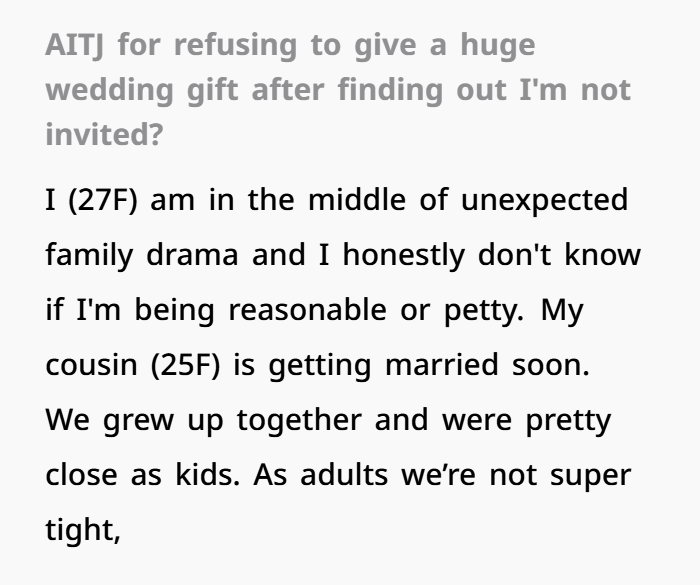
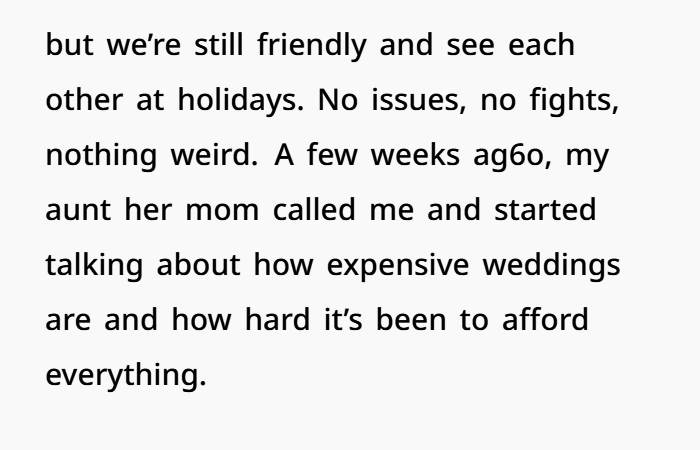
A 27-year-old woman was surprised when her aunt called to talk about her cousin’s upcoming wedding. At first, the conversation seemed normal. They talked about the wedding plans and the excitement around the special day.
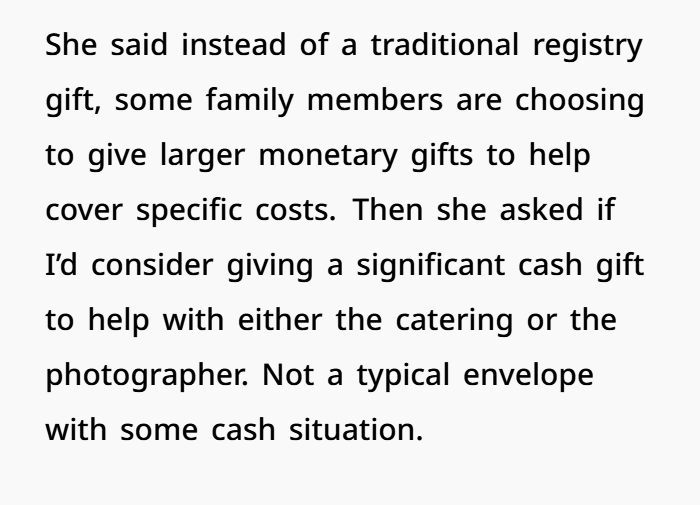
However, the conversation soon changed to money. Her aunt explained that some family members were giving large cash gifts to help pay for expensive wedding costs, such as catering, photography, and the event venue. These were not small gifts but thousands of dollars to support the wedding budget.
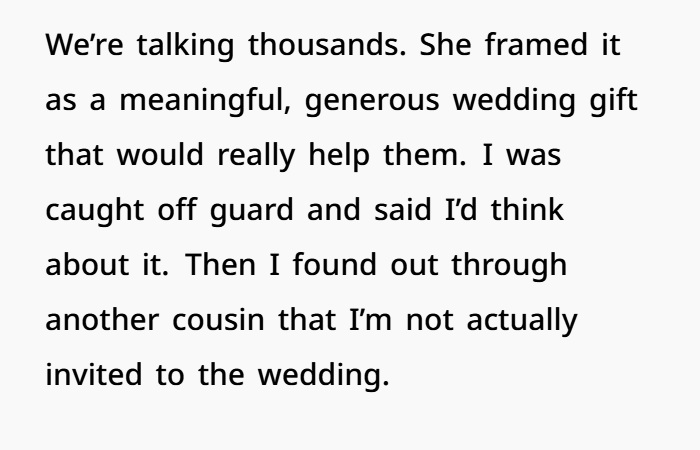
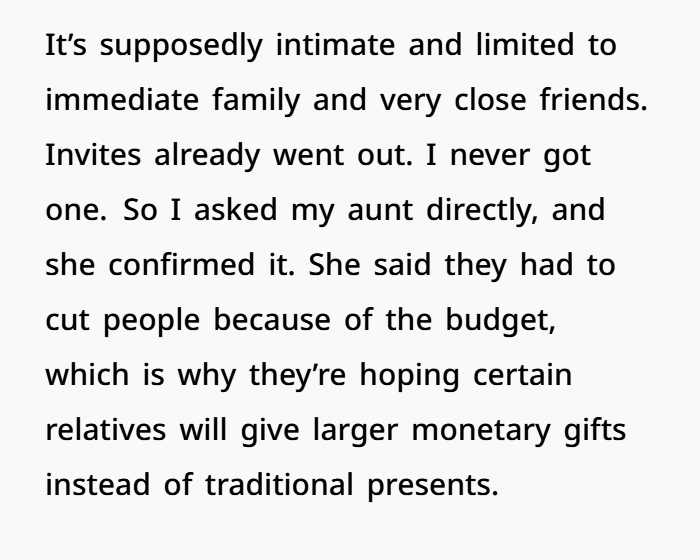
The woman did not promise to give money. She simply said she would think about it. Later, she discovered something that upset her — she was not invited to the wedding. The couple had chosen to have a small wedding with only close family and friends, and invitations had already been sent.
When she asked her aunt about it, she was told that she was not on the guest list because of the limited wedding size and budget. This confused her because the family was also asking relatives to contribute money toward the event.
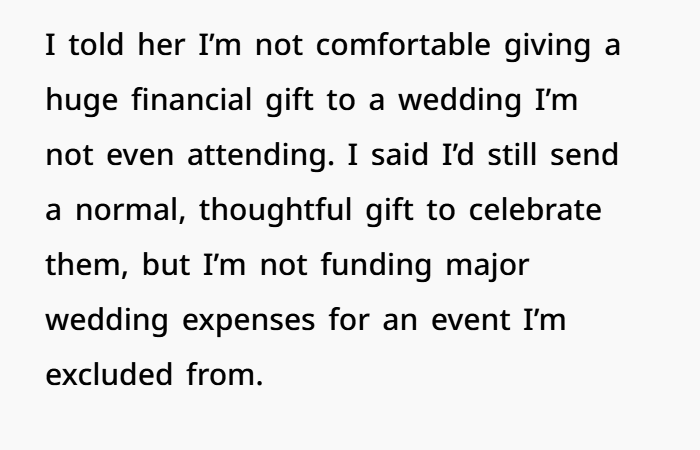
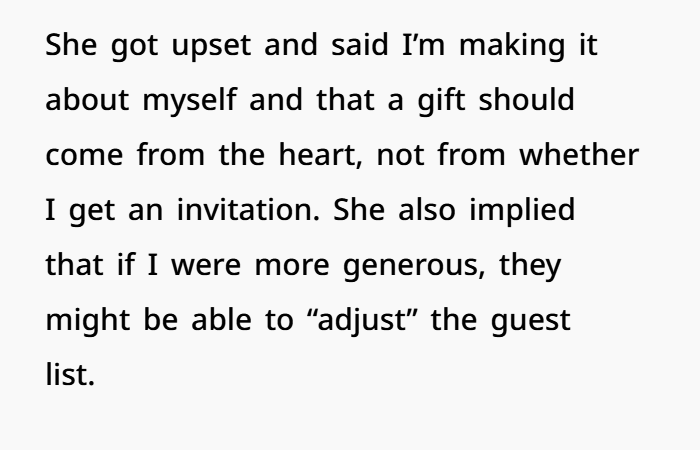
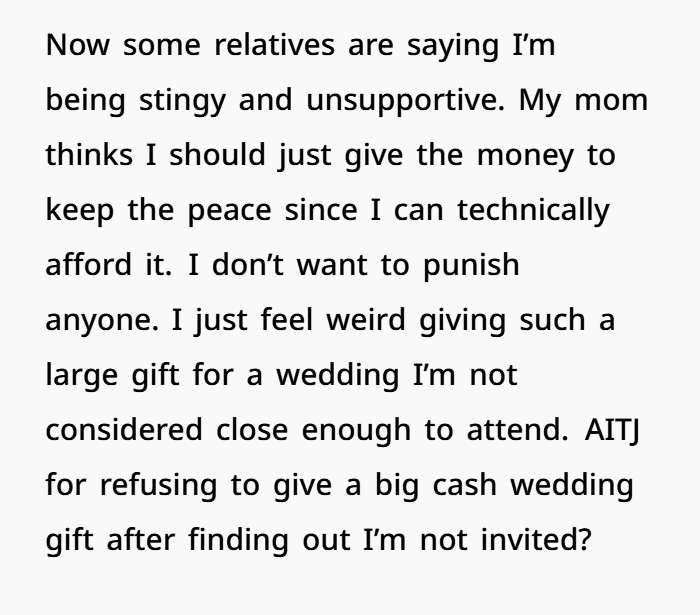
The woman decided not to give a large financial gift for a wedding she was not invited to attend. After that, some relatives called her selfish and accused her of not supporting the couple.
Now she is wondering if she made the right choice by setting a financial boundary. Family celebrations can sometimes create difficult conversations about money, expectations, and fairness. Clear communication and respect are important when asking family members for financial support.
The author was asked by her aunt to contribute thousands of dollars toward her cousin’s wedding expenses, instead of giving a traditional gift
Wedding Money Requests: Understanding Gifts, Family Pressure, and Financial Boundaries
Weddings can be beautiful celebrations, but they can also create difficult conversations about money.
Today, many weddings are expensive. Couples may spend a lot on venues, food, photography, decorations, and entertainment.
Because of rising wedding costs, some families may look for extra financial help from relatives.
But there is an important difference between accepting a gift and expecting someone to help pay for a wedding.
A Wedding Gift Is Not a Bill
A wedding gift is meant to be a kind gesture.
People give gifts because they want to celebrate a couple’s new beginning.
A gift is not:
- An admission fee
- A payment for attending
- A requirement for family members
- A way to earn an invitation
Wedding etiquette has traditionally viewed gifts as optional. The purpose of a wedding invitation is to welcome someone to share an important moment.
A person should not feel pressured to give money just because they are related to the couple.
The Difference Between a Gift and a Financial Request
In this situation, the main issue was not the wedding itself.
The issue was asking someone for a large amount of money while also not inviting them to the event.
Small weddings and limited guest lists are common.
Many couples reduce the number of guests because of:
- Budget limits
- Venue size
- Personal preferences
- A desire for a smaller celebration
That choice is completely understandable.
However, asking someone to contribute thousands of dollars to an event they will not attend can feel very different from receiving a normal wedding gift.
It may start to feel less like a celebration and more like a financial request.
Why Money and Family Can Become Complicated
Family relationships often make money conversations harder.
People may feel pressure because they do not want to disappoint relatives.
Sometimes family members believe helping financially is a sign of love or support.
But financial help should always be voluntary.
A person’s money choices are personal. Having the ability to pay does not mean someone is responsible for paying.
The Importance of Financial Boundaries
Good financial planning involves making thoughtful choices about money.
Many financial experts recommend focusing on goals such as:
- Building emergency savings
- Paying down debt
- Planning for retirement
- Protecting future financial security
Spending thousands of dollars on a wedding is a personal choice.
A person may choose to spend that money on:
- Investments
- Home expenses
- Education
- Family needs
- Long-term financial goals
Being financially responsible does not mean someone is selfish.
When Requests Create Emotional Pressure
Sometimes money requests come with emotional messages.
For example, saying:
“If you cared more, you would help.”
or:
“A gift should come from the heart.”
may sound harmless, but it can create pressure.
It can make someone feel guilty for saying no.
Healthy relationships allow people to make financial decisions without being judged.
Love and generosity should come from a genuine choice, not from fear or guilt.
The Problem With Trading Money for an Invitation
An invitation to a wedding should be based on wanting someone there.
It should not feel like something a person can buy.
When someone suggests that a larger financial contribution could change the guest list, it can create an uncomfortable situation.
It changes the meaning of the relationship.
Instead of feeling like a family celebration, it may feel like a business arrangement.
Family Expectations and Conflict
Some families avoid conflict by asking one person to “just help” or “keep the peace.”
However, avoiding conflict does not always solve the problem.
Sometimes it only creates hidden frustration.
A person may agree to something they do not want to do, then feel angry or resentful later.
Clear boundaries can actually create healthier relationships.
Is It Wrong to Give a Smaller Gift?
Not at all.
A thoughtful gift does not have to be expensive.
Someone who is not invited to a wedding may still choose to send congratulations or a small present.
That can be a kind and respectful gesture.
But there is a big difference between giving from the heart and being expected to cover major wedding expenses.
Why Saying No Can Be Healthy
In this situation, the person did not attack the couple or criticize their wedding plans.
They simply explained that they were not comfortable paying a large amount for an event they were not attending.
That is a reasonable financial boundary.
Sometimes people react negatively when they are not used to hearing “no.”
But another person’s disappointment does not automatically mean your boundary is wrong.
The Bigger Lesson About Family and Money
Money can create complicated emotions in families.
When one relative is seen as financially successful, people may start expecting more help from them.
Without clear boundaries, one request can lead to another.
Today it may be a wedding.
Later it could be another major expense.
Learning to communicate financial limits early can prevent bigger problems in the future.
Final Thoughts
Weddings are important milestones, but they should not create unfair financial pressure.
A wedding gift should be given freely, not because someone feels forced.
Family support is valuable, but healthy relationships also require respect for personal choices and financial boundaries.
A person can love their family and still say no to a request that does not feel right.
Setting a respectful financial boundary is not being selfish.
It is a part of creating healthier relationships built on honesty and mutual respect.
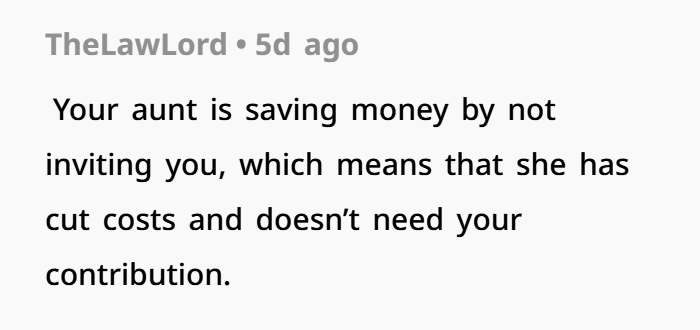
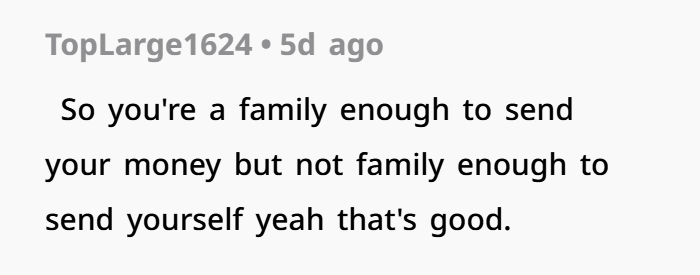
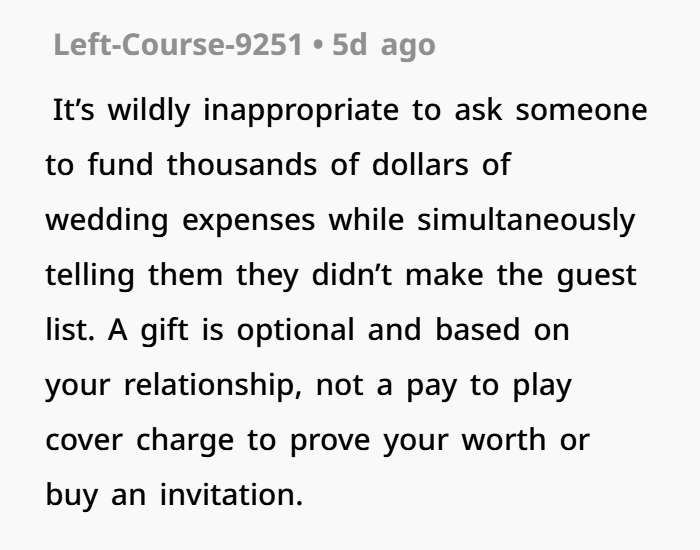
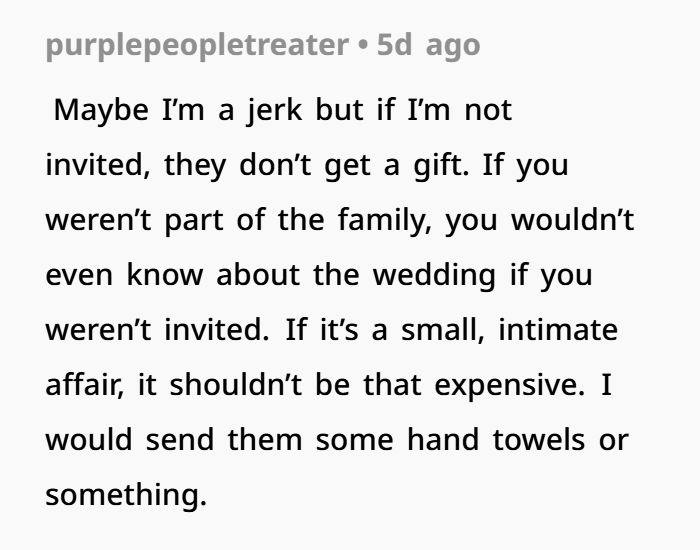
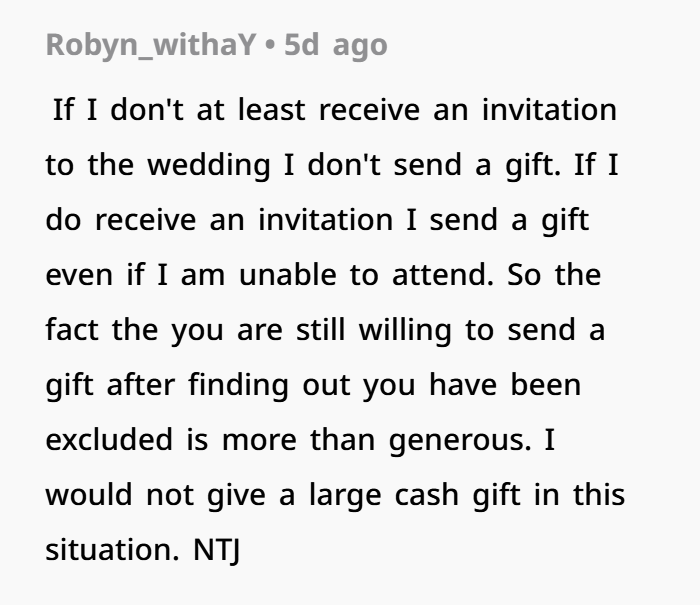
Netizens called the request “wildly inappropriate”, stressing that a wedding gift is optional and rooted in genuine connection