AITA for Banning My Fiancé’s Ex From Our Wedding After He Asked Her to Help Choose His Suit?

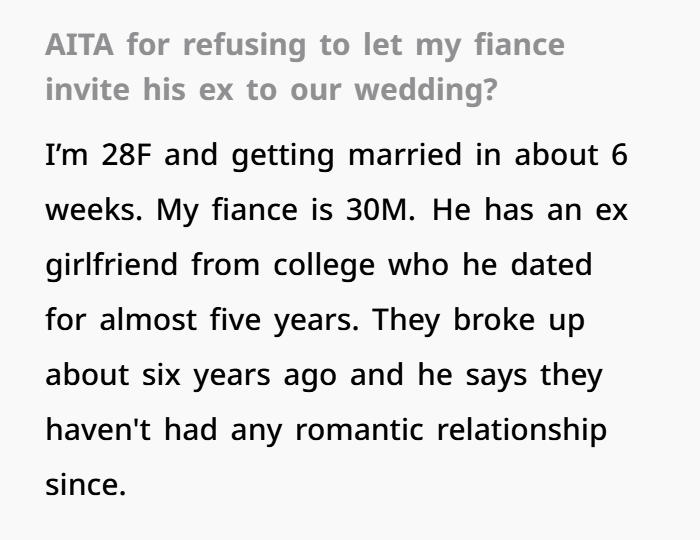
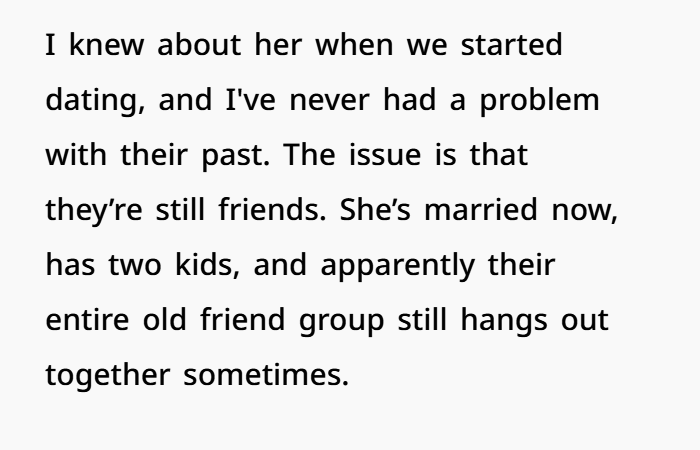
A 28-year-old bride-to-be was looking forward to her wedding, which was only six weeks away. Her fiancé, 30, had been in a long relationship with his college girlfriend before they met. They dated for almost five years and broke up six years ago. Even after the breakup, they remained friends through their college social group. The ex-girlfriend was now married and had two children. She had always been friendly toward the bride, so there had never been a major problem between them. The bride was comfortable inviting the woman and her husband to the wedding.
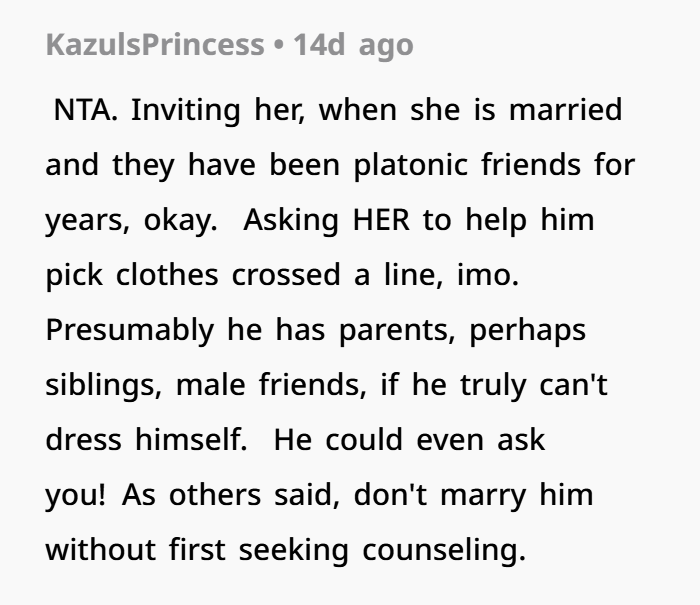
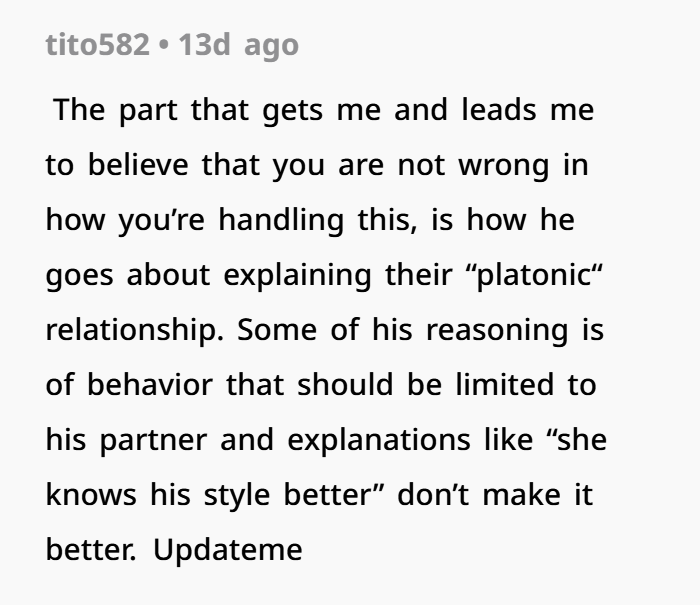
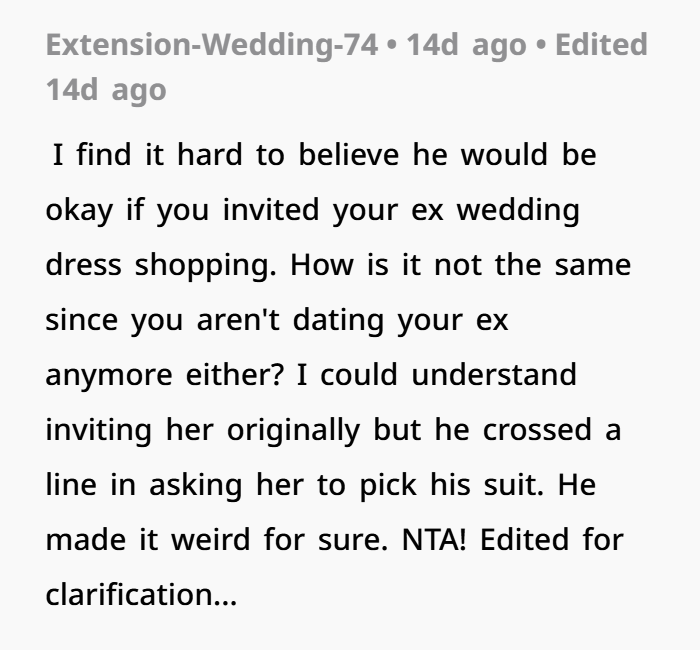
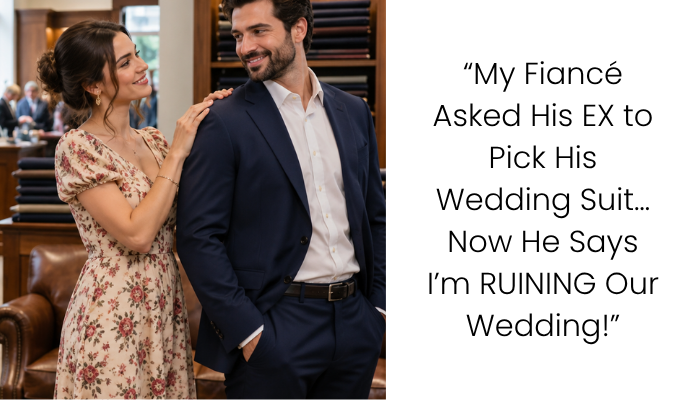
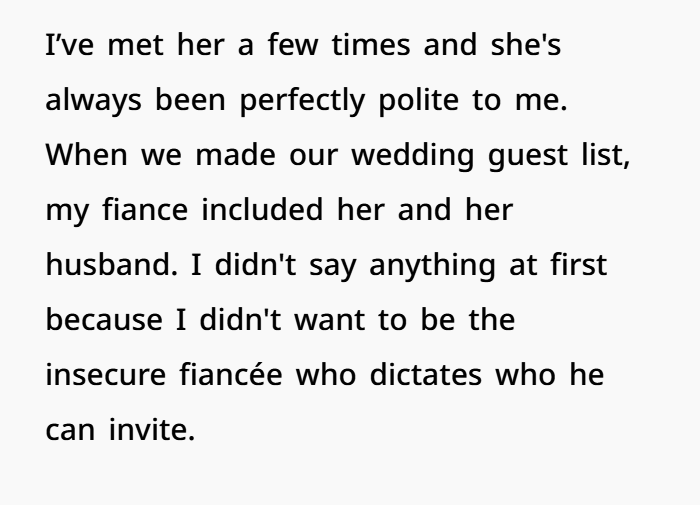
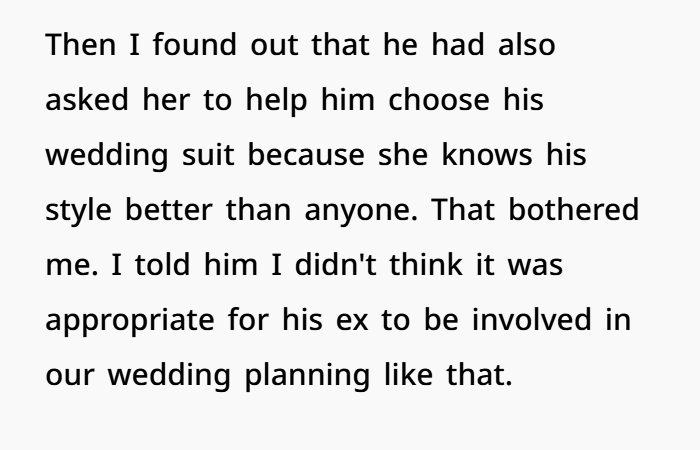
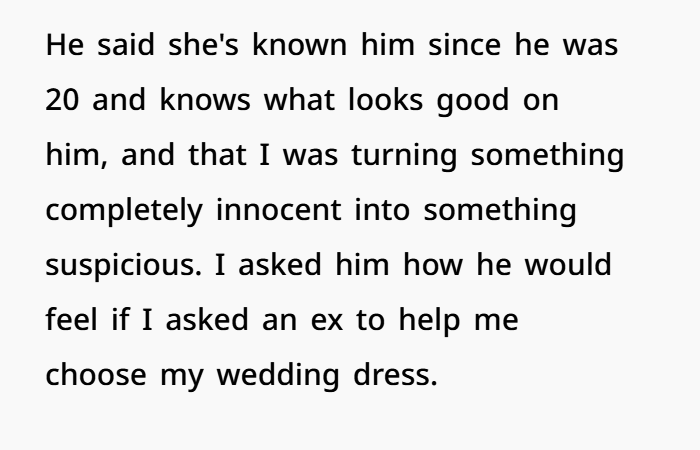
That changed when she discovered that her fiancé had asked his ex for help choosing his wedding suit. He said she understood his personal style because she had known him since his college years. He thought asking for advice about wedding fashion was harmless. His bride did not agree. She felt that shopping for wedding clothes was a meaningful part of preparing for marriage and that involving a former girlfriend was unnecessary. To explain her feelings, she asked how he would react if she went wedding dress shopping with an ex-boyfriend. He admitted that it would feel odd, but he still believed his own friendship was different.
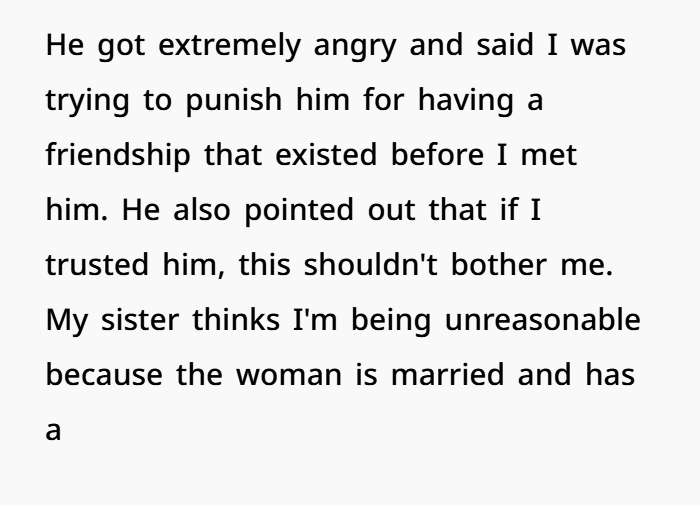
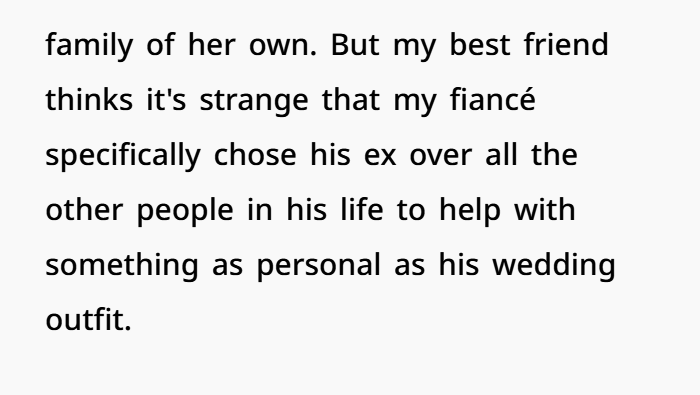
The bride became more upset and told her fiancé that she did not want his ex to attend their wedding anymore. He argued that she was being unfair to someone who had been part of his life for many years. Her sister agreed with him and felt the bride should not worry about a woman who was already married with children. Her best friend, however, thought the groom could have asked a family member or another friend for help with his wedding suit. The situation turned a simple disagreement about wedding attire into a bigger conversation about marriage expectations, trust, and personal boundaries.
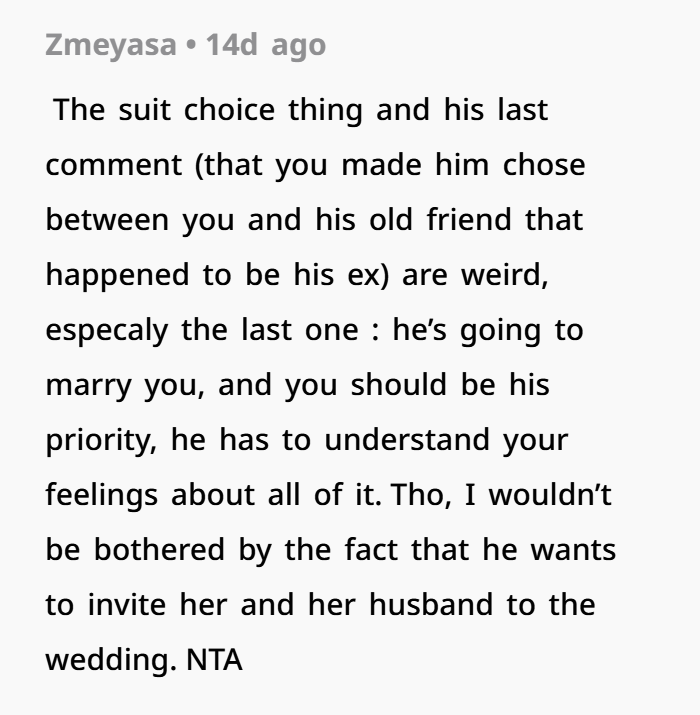
Eventually, the fiancé said he would take his ex off the wedding guest list if his bride truly wanted that. Still, he warned that he would not forget being placed in such a difficult position. The bride now felt torn between standing up for her feelings and protecting her future marriage. She wanted their wedding day to be happy, but she also worried about starting married life with unresolved problems. Was she being unreasonable for wanting his ex excluded, or should her fiancé have been more careful about involving a former partner in their wedding preparations?



Bride Wants Fiancé’s Ex-Girlfriend Uninvited After Learning She Helped Him Pick His Wedding Suit
A bride-to-be was okay with her fiancé inviting his ex-girlfriend to their wedding. But that changed when she found out he had asked the woman to help choose his wedding suit.
The bride felt hurt and uncomfortable.
Her fiancé said there was nothing romantic about it. His ex was an old friend who knew his style, and he simply wanted her opinion.
But the bride saw things differently.
She asked him to remove his ex-girlfriend from the wedding guest list.
He said he would do it if she insisted. However, he also told her that he would never forget being made to choose between his future wife and one of his oldest friends.
Now, with only six weeks left before their wedding, the couple is struggling to agree on what should happen next.
The Groom Has Been Friends With His Ex for Years
According to the bride, her fiancé and his former girlfriend broke up six years ago.
They stayed friends after the relationship ended.
They also share a group of friends from college, so they have remained part of each other’s lives.
The ex-girlfriend is now married and has children.
The groom says their friendship is completely platonic. He does not see her as a romantic partner.
There is nothing in the story that suggests otherwise.
Some people stop speaking to their exes after a breakup. Others remain friends because they have known each other for a long time.
Neither choice is automatically wrong.
But when someone is preparing to get married, friendships with former partners can sometimes raise questions about personal boundaries.
The bride had accepted the friendship until the wedding suit became part of the picture.
The Bride Was Fine With the Wedding Invitation at First
The bride did not originally object to the ex-girlfriend attending the wedding.
The woman had been invited with her husband.
She was also part of the groom’s longtime friend group.
According to the bride, the ex had always been polite to her.
There was no mention of rude behavior, flirting, or attempts to interfere with the couple’s relationship.
That is an important detail.
The bride was not reacting to a history of disrespect.
Her feelings changed because of something her fiancé decided to do.
He asked his former girlfriend to help choose his wedding suit.
For the bride, that made the friendship feel a little too involved in their wedding.
Why the Wedding Suit Made Her Uncomfortable
Choosing wedding clothes can feel like a special moment.
Some couples shop together. Others ask family members or close friends for advice.
There is no single right way to choose a wedding outfit.
The groom said he asked his ex because she understood his style.
He believed she could help him find a suit that looked good.
To him, it was a simple favor between friends.
But the bride felt differently.
She thought choosing wedding clothes was a personal part of preparing for marriage.
Knowing that her fiancé had asked someone he once dated to help him made her feel left out.
That does not mean the groom had romantic intentions.
Friends often give each other fashion advice.
Still, it would have helped if the couple had talked about the decision beforehand.
A short conversation could have prevented a much bigger argument.
She Asked How He Would Feel If the Roles Were Reversed
During their disagreement, the bride asked her fiancé a simple question.
Would he be comfortable if she asked an ex-boyfriend to help choose her wedding dress?
He admitted that he would probably find it strange.
That answer upset her even more.
She felt he was expecting her to accept something that would bother him if she did the same thing.
The groom argued that his situation was different because his friendship with his ex was completely platonic.
But that explanation did not make the bride feel better.
This is where the couple’s communication started to break down.
The groom did not have to agree that asking his ex for help was wrong.
But he could have understood why his fiancée found it uncomfortable.
Likewise, the bride could have listened to his explanation without assuming the friendship was inappropriate.
Both needed to understand the other’s point of view.
Can You Stay Friends With an Ex After Getting Married?
Yes, many people remain friends with former partners after moving into new relationships.
A past romance does not always mean there are still romantic feelings.
People may stay friends because they share a social circle, have similar interests, or have known each other for years.
In this story, the groom and his ex have been friends for a long time.
She is also married and has a family.
Those details support the possibility that their friendship is simply a friendship.
However, every couple has different comfort levels.
Some people are comfortable with their partners spending time with former romantic partners.
Others prefer certain limits.
What matters most is that both partners talk openly about their expectations.
Problems often begin when one person assumes something is fine while the other feels uncomfortable.
Why the Bride Wants the Ex Removed From the Wedding
After learning about the suit shopping, the bride decided she did not want the ex-girlfriend at the wedding.
She told her fiancé that having the woman there would make her uncomfortable.
The groom disagreed.
He felt his ex had done nothing wrong.
And based on the bride’s account, he had a point.
The woman had always been respectful.
She was invited to attend with her husband.
There was no evidence that she had tried to create problems between the couple.
The groom was the one who asked her to help choose his suit.
That makes the bride’s demand more complicated.
She was upset about her fiancé’s choice, but the ex-girlfriend would be the one losing her invitation.
Being uninvited could hurt the woman’s feelings and damage a longtime friendship.
It could also create tension within their shared group of friends.
Is Uninviting Someone a Boundary or an Ultimatum?
Personal boundaries are important in relationships.
People should be able to say when something makes them uncomfortable.
But there is a difference between explaining a boundary and demanding that someone else make a major change.
For example, the bride could ask her fiancé not to involve his ex in any more personal wedding preparations.
That would address the specific action that bothered her.
Asking him to remove the woman from the guest list is a bigger request.
It affects his friendship and the wedding itself.
Both partners deserve a say in who attends their wedding.
But they also need to make decisions together.
If one person feels forced to agree, the argument may end without the problem being solved.
A good boundary should help create understanding, not turn every disagreement into a test of loyalty.
The Groom Thinks This Is About Trust
The groom believes his fiancée should trust him.
He says his friendship with his ex is innocent.
From his point of view, asking an old friend for help choosing a suit was not a big deal.
He may feel that his bride is questioning his loyalty.
But trust does not mean partners will never disagree.
Someone can trust their partner and still feel uncomfortable about a particular situation.
The bride may believe her fiancé is faithful while feeling that involving his ex in wedding planning was insensitive.
The groom may love his fiancée while believing that removing an old friend from the wedding is unfair.
Both feelings deserve attention.
Healthy relationship communication means being able to discuss uncomfortable topics without immediately blaming the other person.
The goal should be to understand the concern, not simply prove who is right.
The Ex-Girlfriend Has Not Done Anything Wrong
One of the clearest details in the story is that the ex-girlfriend has not been accused of inappropriate behavior.
The bride described her as polite.
She did not say the woman had flirted with the groom or tried to interfere with their engagement.
The ex was simply part of his social circle.
She was also invited to the wedding with her husband.
That matters because the argument began with the groom’s decision.
If the bride feels he crossed a boundary, that is something they should discuss as a couple.
Removing the ex-girlfriend may not solve the real issue.
Instead, it could create another problem.
The groom might feel that he had to give up a friendship to keep the peace.
And the bride might still feel that her original concern was never understood.
His Warning About Never Forgetting Made the Argument Worse
The groom eventually said he would uninvite his ex if his fiancée insisted.
But he added that he would never forget being forced to choose between her and one of his oldest friends.
That statement was serious.
From his point of view, the request may feel unfair.
He may worry that similar demands will happen again after they are married.
From the bride’s point of view, his reaction may make her feel that he cares more about protecting his ex than understanding her feelings.
Neither person seems satisfied.
If the groom uninvites his friend only because he feels pressured, he may remain upset.
If the bride allows the woman to attend without feeling heard, she may still be uncomfortable.
That is why the couple needs more than a quick decision about the guest list.
They need a real conversation about what they expect from each other.
Wedding Planning Stress May Be Making Things Harder
The couple’s wedding is only six weeks away.
That means they may already be dealing with many last-minute details.
Wedding planning can involve decisions about the venue, guest seating, catering, photography, and clothing.
There may also be pressure to stay within the wedding budget.
Even small disagreements can feel bigger when people are tired or stressed.
But this argument is not really about the cost of a wedding suit.
It is about trust and personal boundaries.
Those issues will still matter after the wedding day.
The couple needs to find a way to discuss them calmly.
A wedding is an important celebration, but the marriage that follows is even more important.
Could Premarital Counseling Help?
Premarital counseling can help couples talk about important issues before getting married.
It is not only for people who are having major relationship problems.
Some couples use it to discuss communication, family expectations, finances, and friendships.
In this situation, relationship counseling could help the bride and groom understand each other’s concerns.
The bride could explain why involving an ex in wedding preparations felt uncomfortable.
The groom could explain why keeping his longtime friendships matters to him.
A counselor could help them discuss fair expectations that apply to both partners.
They might also talk about how they want to handle friendships with former partners after marriage.
Counseling does not guarantee that every disagreement will disappear.
But it can provide a more structured way to discuss difficult topics.
That may be useful when a couple keeps having the same argument without finding a solution.
What Would a Fair Compromise Look Like?
A reasonable compromise could separate the ex-girlfriend’s role in wedding planning from her invitation.
The bride could ask that the ex no longer help with personal wedding decisions.
The groom could agree to discuss those plans with his fiancée before involving other people.
At the same time, the bride could reconsider removing the woman from the guest list.
The ex could attend with her husband as an ordinary guest.
That would allow the groom to keep his friendship without giving the woman a special role in the wedding.
The couple could also agree on boundaries for future interactions with former partners.
Those expectations should be fair to both people.
The goal should not be for one person to win.
It should be to find an arrangement both can accept without feeling ignored or pressured.
Who Is Wrong in This Situation?
The bride is not wrong for feeling uncomfortable.
Learning that her fiancé asked his ex-girlfriend to help choose his wedding suit could understandably hurt her feelings.
The groom should have taken those feelings seriously.
His admission that he would find a similar situation strange makes his response harder to defend.
However, the bride may be going too far by demanding that the ex be removed from the wedding.
The woman has apparently done nothing inappropriate.
She has been respectful and is part of the groom’s longtime friend group.
Uninviting her could create unnecessary hurt without solving the couple’s disagreement.
Both the bride and groom have room to handle the situation better.
The Likely Reddit Verdict: ESH
Based on the details provided, a reasonable Reddit-style verdict would be ESH (Everyone Sucks Here), although this appears to be a disagreement rather than deliberate cruelty.
The groom should have shown more understanding when his bride explained why she was upset.
He could have acknowledged her feelings while still explaining that his friendship was innocent.
The bride, meanwhile, could have focused on setting limits around wedding planning instead of asking for the ex to be removed entirely.
The ex-girlfriend does not appear to have done anything wrong.
The couple’s biggest challenge is finding a way to communicate without turning the disagreement into a choice between love and friendship.
Final Thoughts
This disagreement began with a wedding suit.
But it quickly became a bigger argument about trust, friendships, and respect.
The bride felt uncomfortable when her fiancé asked his ex-girlfriend to help choose his wedding clothes.
The groom believed it was a harmless favor between old friends.
Neither person seems to have fully understood the other’s feelings.
The bride deserves to be heard, but the groom should not automatically have to give up a longtime friendship over one disagreement.
A fair compromise may be to keep the ex out of further wedding planning while allowing her to attend as a guest.
More importantly, the couple should agree on boundaries they both understand before getting married.
The wedding is only six weeks away.
How they handle disagreements afterward will matter for much longer.
What do you think? Was the bride right to ask her fiancé to uninvite his ex, or should they find a compromise?
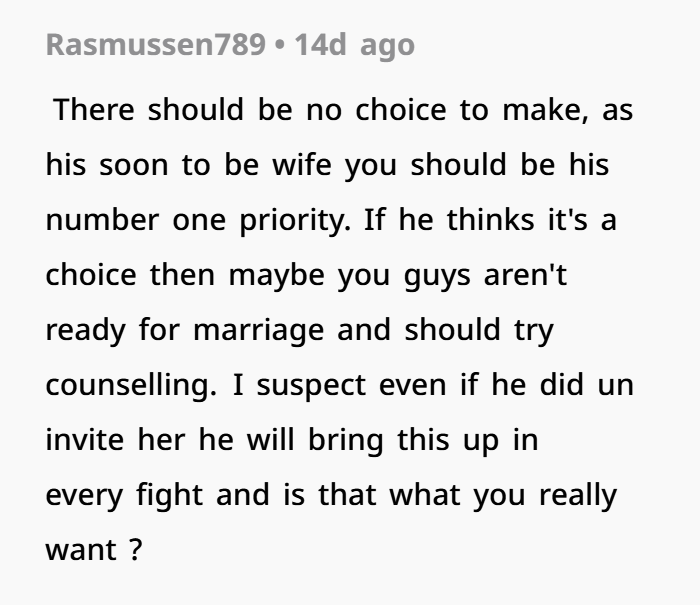
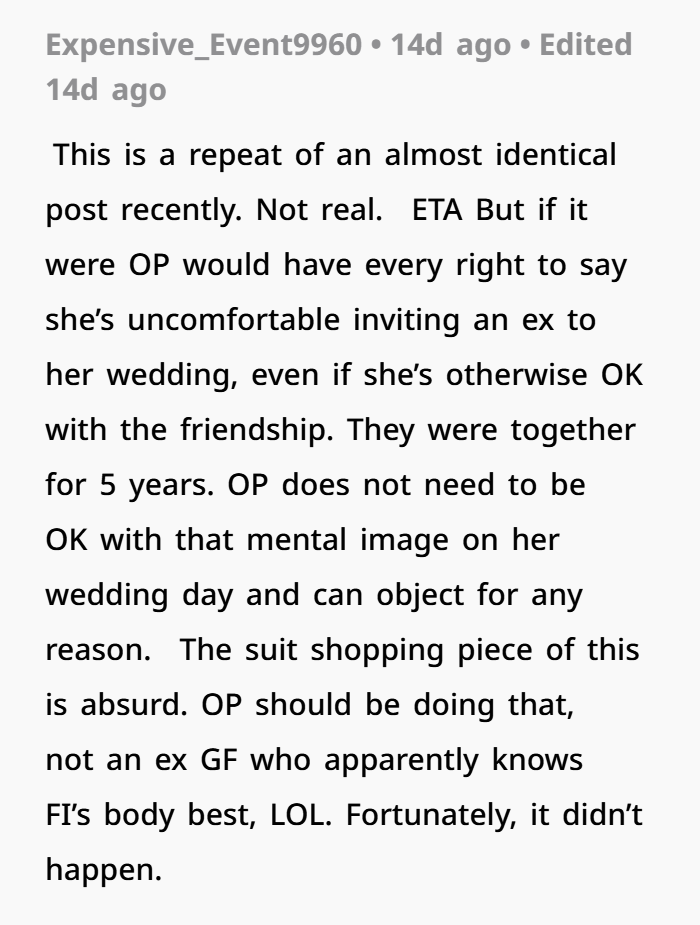
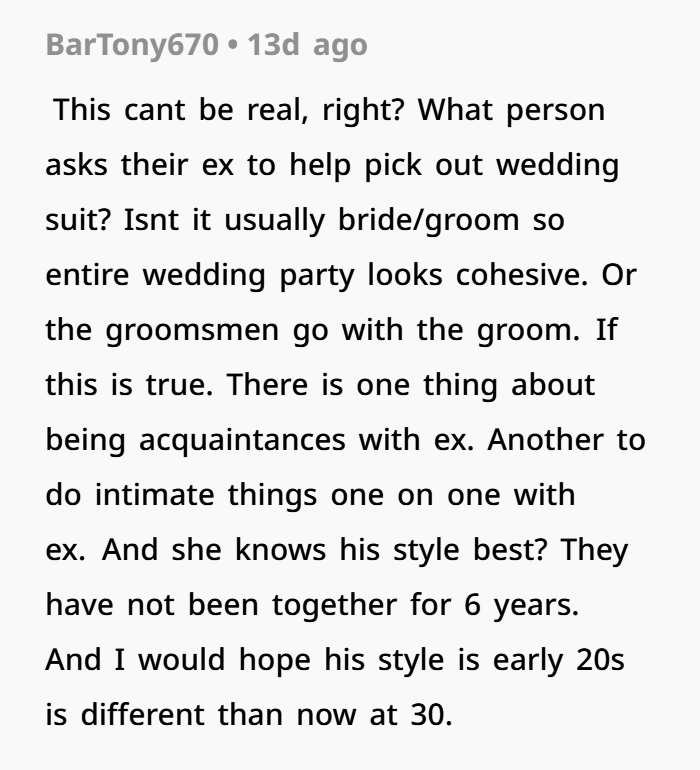
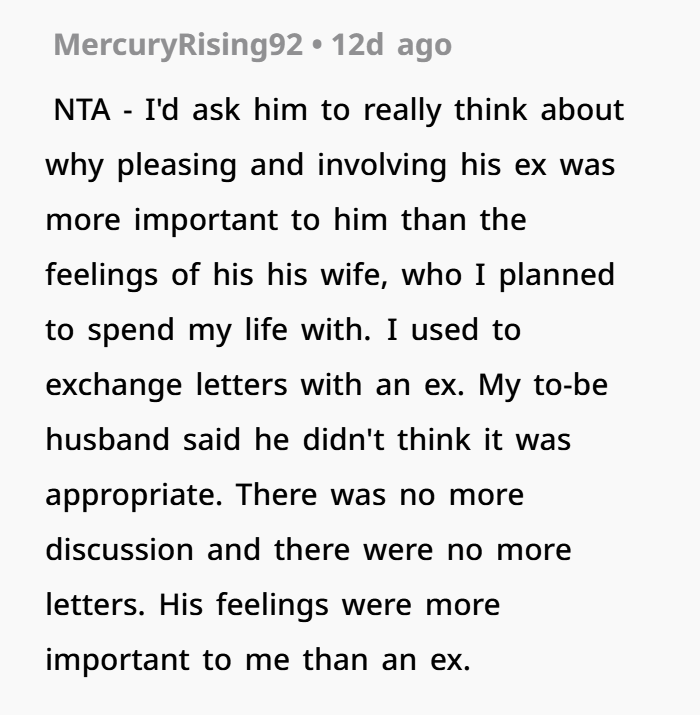
Comments From The Community