My Ex-Wife Wants Her New Husband to Adopt Our 17-Year-Old Son for Dental Insurance—And Gave Me Just Two Hours to Agree


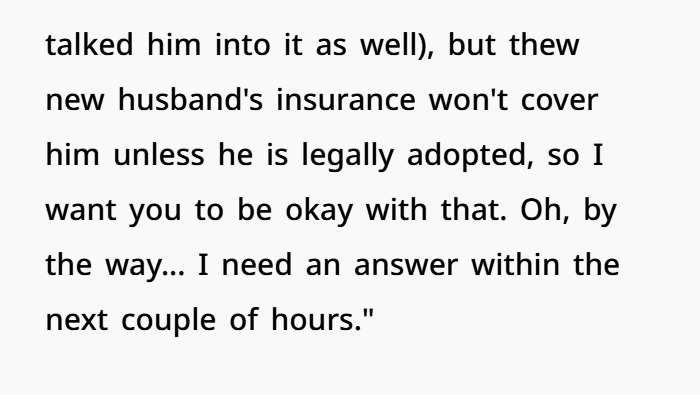
A 46-year-old father was caught off guard when his ex-wife called with an unusual request. She wanted her new husband to legally adopt their 17-year-old son. The father was surprised because he had only just found out that she was already married. She explained that their son needed costly dental care and claimed the stepfather’s health insurance would not cover the bills unless the adoption was completed. She wanted him to make a decision that same day. The father felt that something involving his son’s future should not be rushed.
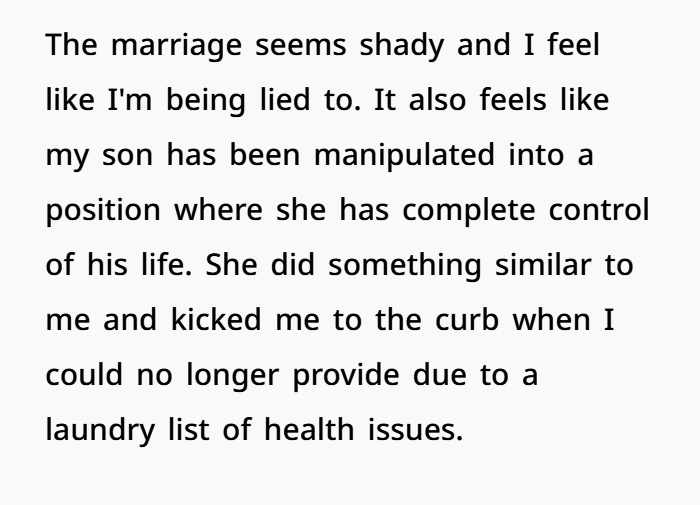
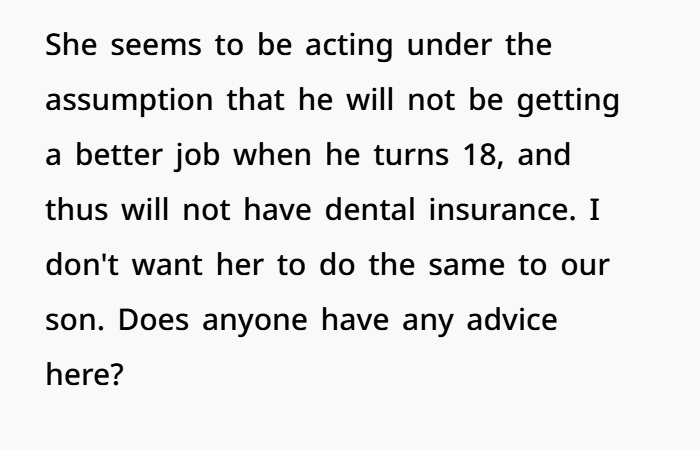
He already had concerns about his son’s living situation. Before moving with his mother, the teenager had been doing very well in school and was on track to become valedictorian. After the move, his mother switched him to homeschooling, and he began working at a hotel with her. The father worried about his son’s education and long-term opportunities. He also described past disagreements with his ex-wife and said he sometimes felt left out of important family decisions. These experiences made it harder for him to trust the sudden adoption request.
The timing also raised questions. About six months earlier, his ex-wife had been planning to marry a different person. After that relationship ended, she met and married her current husband. Now she wanted him to become their son’s legal parent. The teenager seemed to agree with the plan, but his father wanted to make sure he understood the possible effects. He knew that adoption could change legal parental rights and responsibilities. He also wondered whether the family had explored other dental insurance options or ways to pay for the treatment without changing the boy’s legal family status.
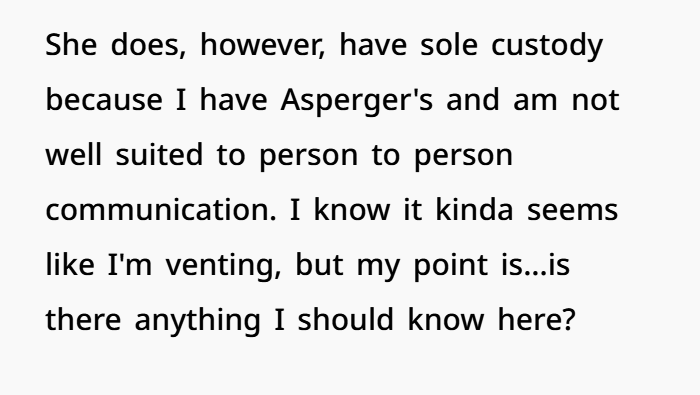
The father said his ex-wife had sole custody and that his autism diagnosis had made some forms of communication difficult in the past. He was afraid of losing his legal connection to his son by agreeing too quickly. At the same time, he did not want to prevent his child from receiving necessary dental treatment. He wanted clear information about health insurance benefits, family law, adoption requirements, and parental consent before making a decision. With only a few hours left to respond, he wondered whether he should agree for his son’s sake or insist on more time to understand the legal consequences.




Dad Says His Ex-Wife Gave Him Two Hours to Let Her New Husband Adopt Their Son for Dental Insurance
A father was caught off guard when his ex-wife called with a surprising request.
She wanted her new husband to adopt their 17-year-old son.
According to her, the adoption would help their son get dental insurance through his stepfather’s employer.
But the father was worried about what he might lose if he agreed.
He also said his ex-wife gave him just two hours to make up his mind.
He wanted his son to receive the dental care he needed. But he was not comfortable making a major legal decision without understanding what it meant.
The situation left him with a difficult question: Should he agree to the adoption for the sake of dental coverage, or should he protect his parental rights until he knows more?
The Adoption Request Came as a Surprise
The father explained that his ex-wife had recently married another man.
Not long afterward, she contacted him about their son’s dental needs.
She said her new husband had insurance benefits that could help pay for treatment.
But there was a condition.
She claimed her husband would need to legally adopt the teenager before the insurance would cover him.
The father did not understand why that was necessary.
After all, his son already had a biological father.
He also knew that adoption was not simply a way to add someone to a health insurance policy.
It could change the family’s legal relationships.
The father wanted to help his son, but he was afraid of agreeing to something he could not easily undo.
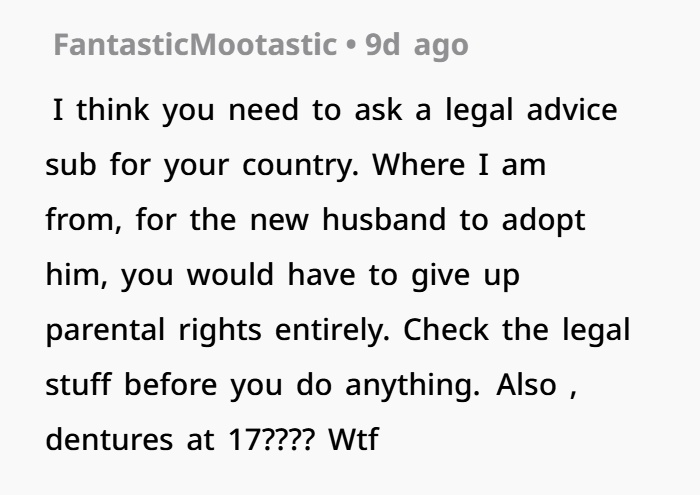
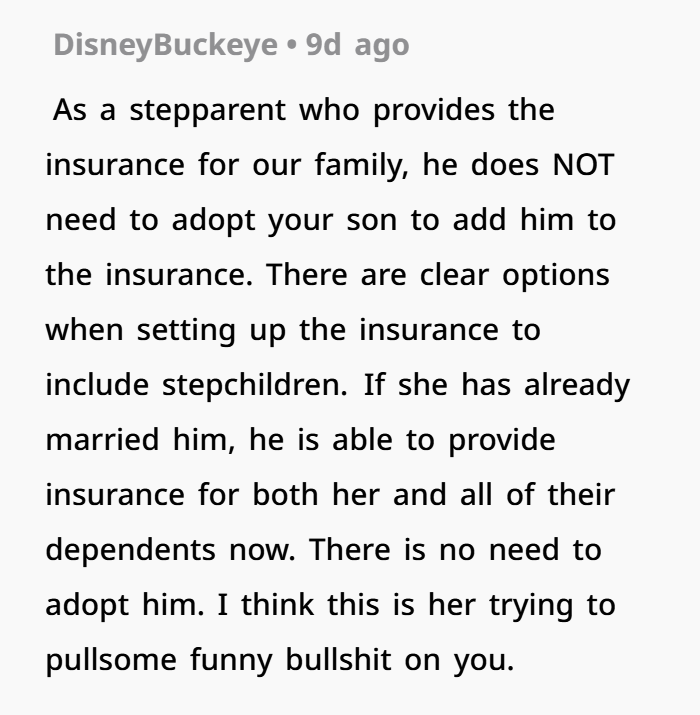
Does a Stepfather Need to Adopt a Child for Dental Insurance?
Not always.
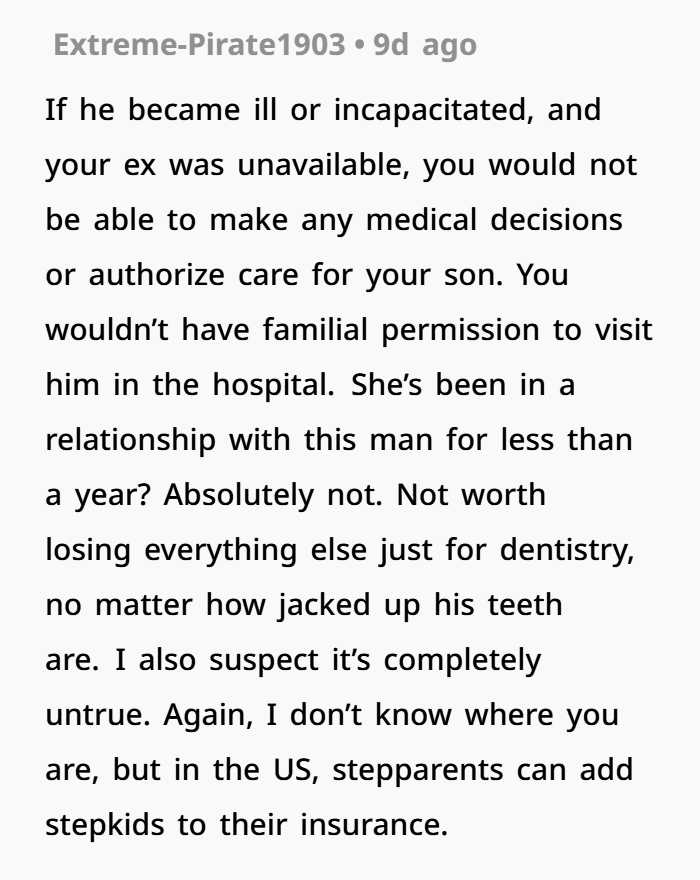
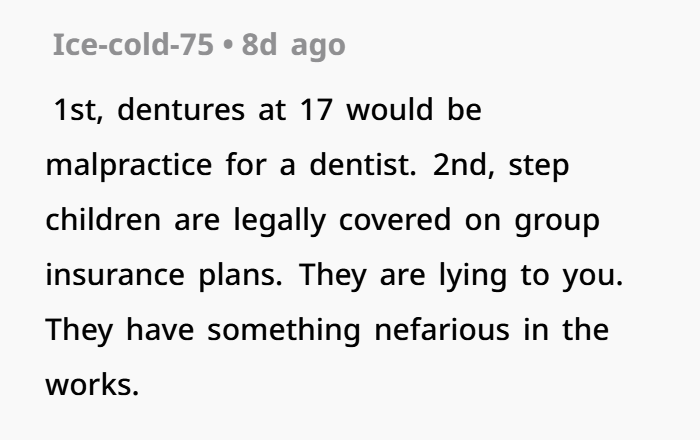
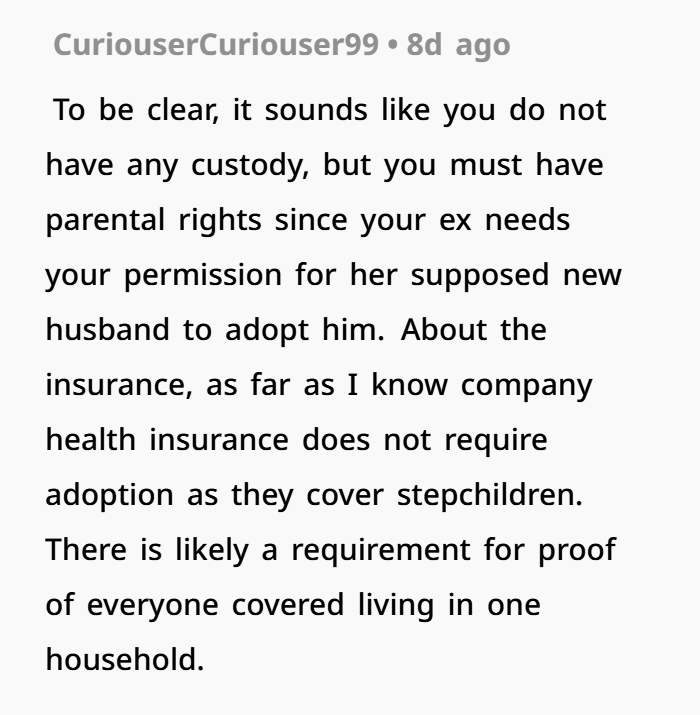
In the United States, many employer-sponsored health insurance plans allow employees to add eligible stepchildren as dependents.
This means some children can receive coverage through a stepparent without being legally adopted.
However, dental insurance policies do not all follow the same rules.
A plan may have its own requirements for dependent coverage.
That is why the family should check the actual policy before making any decisions.
The stepfather could contact his employer’s human resources department or insurance benefits administrator.
He could ask whether his stepchild qualifies for dental coverage and what documents are required.
The insurance company could also explain whether there are enrollment deadlines or other restrictions.
If the teenager is already eligible, adoption may not be needed to obtain the benefits.
If the plan has different rules, the family should ask for those requirements in writing.
The important point is simple: The family should confirm the insurance rules instead of assuming adoption is the only option.
Why the Two-Hour Deadline Worried the Father
The father said his ex-wife wanted an answer within just two hours.
That made the situation even more stressful.
A decision about legal adoption can affect a family for many years.
It deserves more time than a rushed phone call.
There may have been a reason for the urgency.
Perhaps an insurance enrollment deadline was approaching, or the mother was worried about getting dental treatment started.
But the original account does not explain why the adoption decision had to happen that day.
The father would be reasonable to ask for more information.
He could request copies of the proposed adoption papers, the insurance rules, and the dental treatment plan.
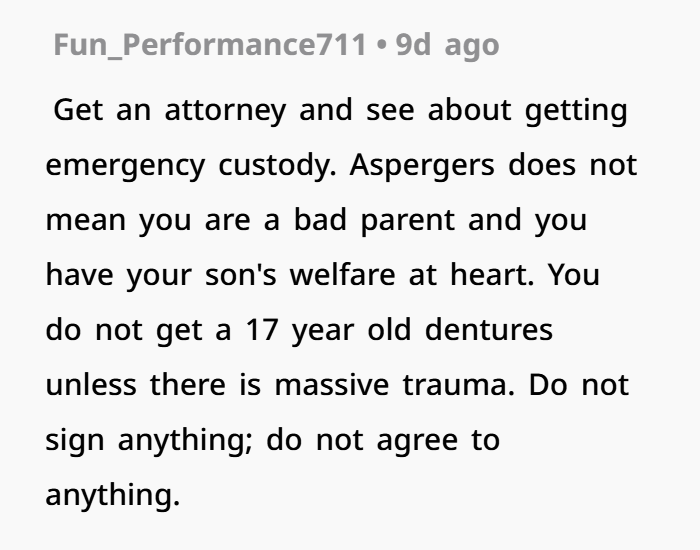
He could also speak with a family law attorney before signing anything.
A deadline set by another person does not automatically mean he has to agree without understanding the consequences.
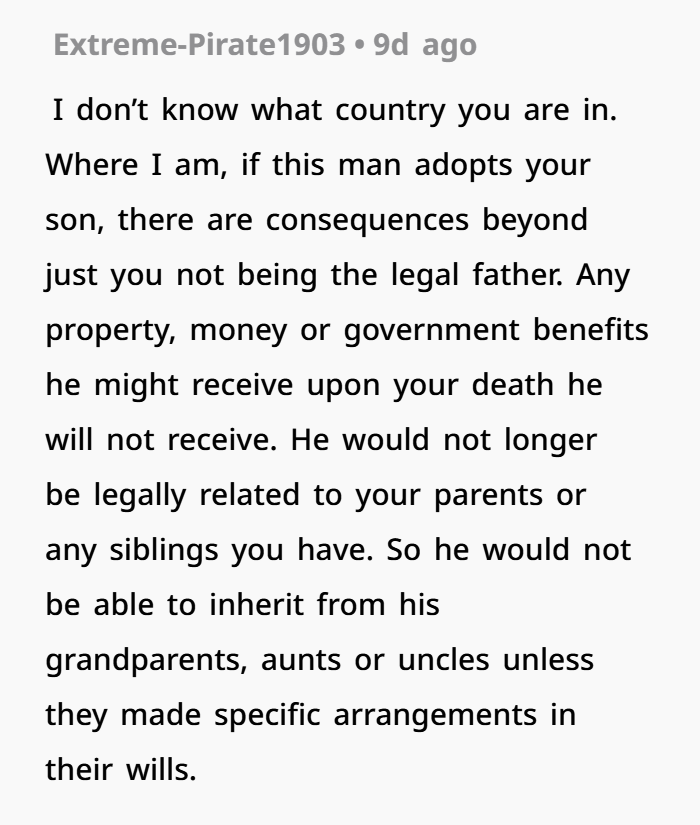
What Could the Father Lose Through Stepparent Adoption?
This is the part of the story that makes the request especially serious.
In many U.S. states, stepparent adoption creates a permanent legal relationship between a child and the adopting stepparent.
It can also end the legal rights of the other biological parent.
The exact outcome depends on state law and the family’s circumstances.
For the father, this could mean changes to his legal role in his son’s life.
Certain rights involving parental decisions, responsibilities, and inheritance may be affected.
And adoption is not normally a temporary arrangement.
If the mother and her new husband later separate, the adoption does not automatically end.
That is why the father should not treat the request as ordinary insurance paperwork.
He needs to understand what legal rights he may be giving up.
An independent family law attorney could review the documents and explain the possible consequences.
The Mother Has Sole Custody, but Does That Settle Everything?
The father said his ex-wife has sole custody of their son.
He seemed worried that this gave her the power to make major decisions without him.
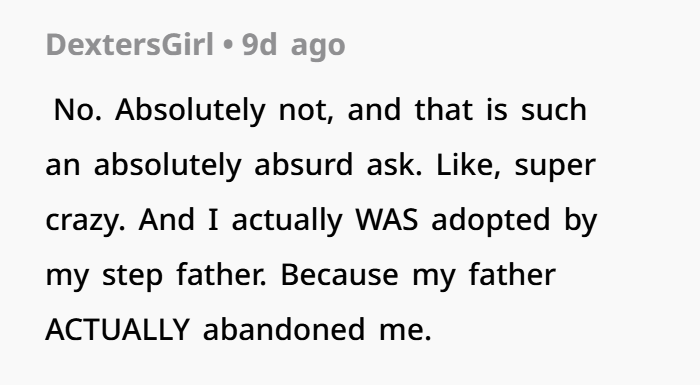
But custody and legal parenthood are not always the same thing.
A parent may not have custody and still have certain parental rights.
In many states, a stepparent adoption normally requires consent from the child’s other legal parent.
There are exceptions, including situations where a court has already ended parental rights or where state law allows adoption without consent under specific conditions.
The original story does not provide enough information to know which rules apply.
The father would need to review his custody order and any other court documents.
That would help him understand whether his approval is required.
The mother’s custody arrangement alone does not prove that she can complete the adoption without his consent.
His Autism Diagnosis Should Not Be Used to Make Assumptions
The father also shared that he has Asperger’s syndrome, a term previously used for a diagnosis now generally included under autism spectrum disorder.
He appeared concerned about how his condition might affect his ability to deal with the situation.
But having autism does not automatically remove someone’s parental rights.
A disability alone should not be treated as proof that a person cannot parent.
If the father finds fast conversations difficult, he could ask to communicate by email or text.
That would give him time to read the information carefully.
It would also create a written record of the request.
He could then ask a lawyer to help him understand any legal terms or documents.
There is nothing wrong with asking for clear communication when an important family decision is involved.
Their Son Is 17 and Says He Supports the Adoption
The teenager’s opinion is an important part of the story.
According to the father, his son wants the adoption to happen.
At 17, he is old enough to have meaningful views about his family and future.
He may like his stepfather.
He may believe adoption will help him receive dental treatment.
Or he may have other reasons for supporting the idea.
The father worried that his son might not understand everything the adoption could change.
That concern is worth exploring.
But it would also be unfair to assume the teenager has no opinion of his own.
Many states require older children to consent to adoption, although the exact age and rules vary.
A teenager’s consent does not necessarily replace consent required from a legal parent.
The father could speak privately with his son and ask what he understands about the decision.
A neutral legal professional could also explain the possible effects.
The goal should be to help the teenager make an informed choice, not to pressure him toward either parent.
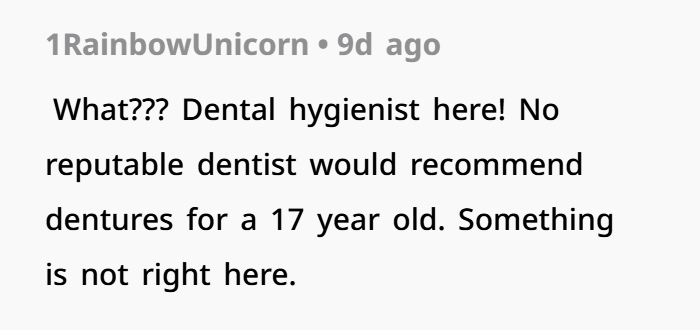
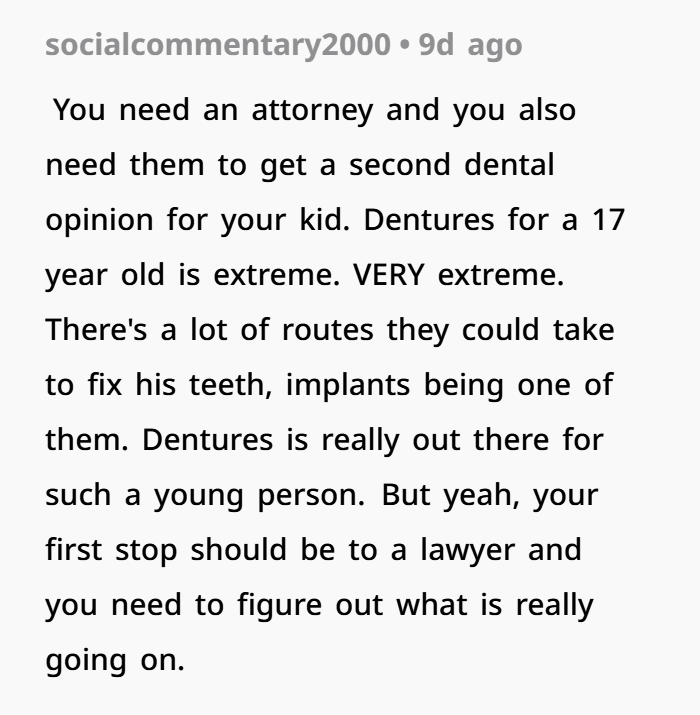
Why Is the Mother Considering Dentures for a Teenager?
The father was also concerned about his son’s dental treatment.
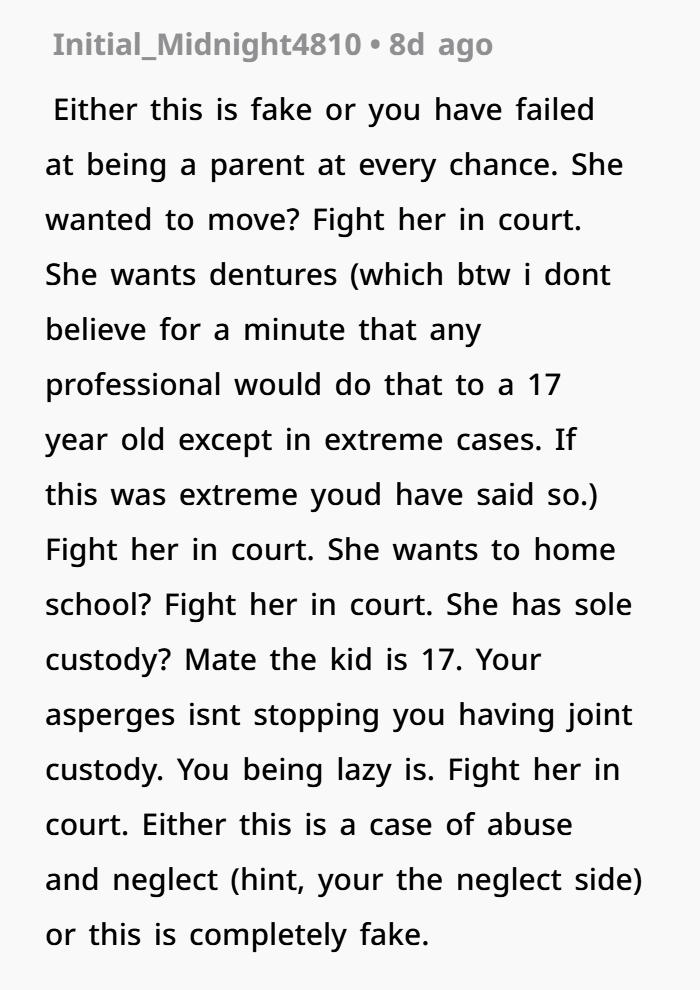
He said his ex-wife wanted the 17-year-old to get dentures.
That sounded unusual to him.
While dentures are more common among older adults, younger people sometimes need them too.
A teenager may need replacement teeth because of dental disease, an injury, missing teeth, or another medical condition.
However, the story does not explain what dental problems the boy has.
It also does not say whether he has already lost teeth or whether a dentist is recommending tooth removal.
Those details are important.
Before moving forward, the family should understand the diagnosis and treatment options.
A qualified dentist can explain why dentures are being considered.
If the treatment involves permanent changes, a second dental opinion may be useful.
The teenager should also understand the treatment, possible alternatives, and future care needs.
His dental health should be handled as a medical question, separate from the adoption decision.
Could There Be Other Ways to Pay for Dental Treatment?
Dental care can place a real financial burden on families.
The cost of dentures and related treatment depends on the patient’s needs, the dental clinic, and the location.
Even with dental insurance, some expenses may not be fully covered.
Policies can have annual limits, deductibles, waiting periods, and other restrictions.
Before agreeing to adoption, the family could request a written estimate from the dentist.
They could also ask the insurer which treatments are covered and what the family would need to pay.
If the stepfather’s plan cannot cover the teenager, there may be other options.
Depending on the family’s location and eligibility, these could include dental payment plans, public health coverage, community dental clinics, or financial assistance programs.
Some dental offices may also offer financing arrangements, though the terms and total cost should be reviewed carefully.
The family should compare the available choices before assuming that adoption is necessary.
The priority is getting the teenager appropriate dental care without making an uninformed legal decision.
The Father Was Also Concerned About School
The adoption request was not the only thing troubling the father.
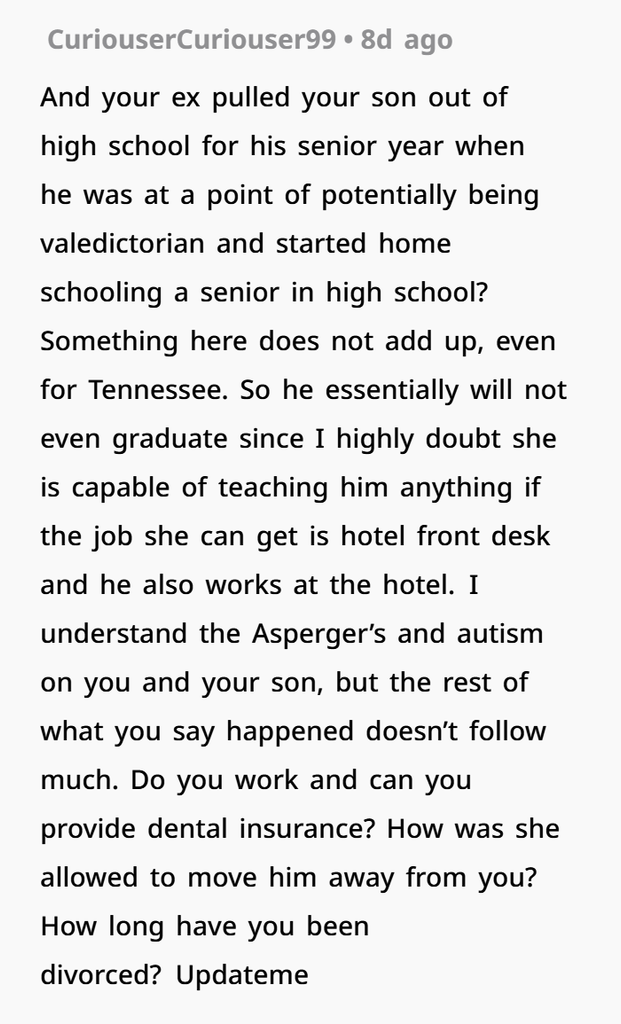
He said his son had previously been an excellent student.
According to his account, the teenager had been on track to graduate as valedictorian.
But after his mother moved, the boy began homeschooling.
He also started working at a hotel with her.
The father worried that these changes might affect his education and future opportunities.
Those are understandable questions.
However, homeschooling is not automatically a bad choice.
Many students complete their education successfully at home.
A part-time job can also help a teenager learn useful skills.
What matters is whether the boy is meeting his education requirements and whether his work follows local rules.
The father could ask his son about graduation, college plans, job interests, and long-term goals.
That conversation may be more helpful than assuming the changes are harmful.
The Mother’s Private Marriage Added to the Confusion
The father also described his ex-wife’s recent relationship changes.
He said she had been planning to marry someone else about six months earlier.
That relationship ended.
She later met another man and married him privately.
According to the story, the couple planned to have a public wedding celebration later.
The father found the timing surprising.
He was especially uncomfortable with the idea that the new husband might soon become his son’s legal parent.
Still, a private marriage is not proof that anything improper happened.
Some couples legally marry before holding a larger ceremony.
The father’s concerns may explain why he wants more information, but they do not prove the mother has bad intentions.
The most useful approach is to focus on facts that can be checked.
Those include the insurance policy, adoption paperwork, dental diagnosis, and custody order.
What Should the Father Do Before Giving an Answer?
The father has several reasonable steps available.
He could begin by asking for the stepfather’s dental insurance details.
That would help establish whether adoption is truly required for dependent coverage.
Next, he could request the proposed adoption paperwork and have it reviewed by a family law attorney.
He should also review his current custody order so he understands his legal position.
For the dental issue, he could ask for the treatment plan and estimated costs.
Finally, he could have a calm conversation with his son.
The teenager’s needs and wishes should be part of the decision.
Because the boy is nearly 18, the father should also ask an attorney how the rules may change when his son becomes an adult.
Some states allow adult adoption under different consent rules.
Understanding those differences could help the family plan more carefully.
The Likely Reddit Verdict: NTA
Based on the information shared, the father would likely receive an NTA (Not the A-Hole) verdict for refusing to make a rushed decision.
He is not wrong for wanting his son to receive dental care.
He is also not wrong for wanting to protect his legal relationship with his child.
The mother may genuinely believe adoption is the best way to obtain insurance benefits.
But the story does not establish that it is required.
Until the family checks the policy, there is no clear reason to treat adoption as the only solution.
The father should be able to ask questions, seek legal advice, and understand the consequences before agreeing.
That is a reasonable response to a major family decision.
Final Thoughts
This situation began with a request for dental insurance coverage.
But it quickly became a much bigger question about family relationships and parental rights.
A father was asked to let his ex-wife’s new husband adopt their 17-year-old son.
He was told the adoption would help pay for dental treatment.
He was also reportedly given only two hours to decide.
Supporting a child’s healthcare should not require a parent to make a permanent legal decision without understanding it first.
The father can care about his son’s dental needs while asking for proof that adoption is necessary.
He can also respect his teenager’s wishes while making sure everyone understands the possible legal consequences.
Before anyone signs adoption papers, the family should review the insurance rules, discuss the dental treatment, and get advice from a qualified family law attorney.
What do you think? Should the father consider the adoption if it helps with dental coverage, or should the family look for another way to pay for treatment?
See The Comments Below