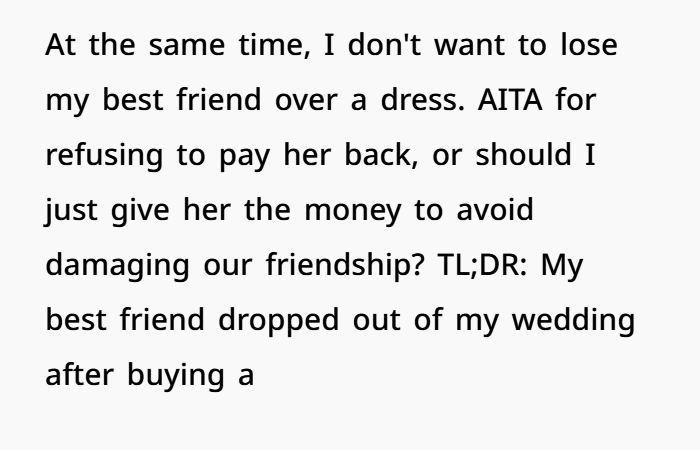
AITA for Refusing to Reimburse My Best Friend $240 After She Quit Being My Bridesmaid?

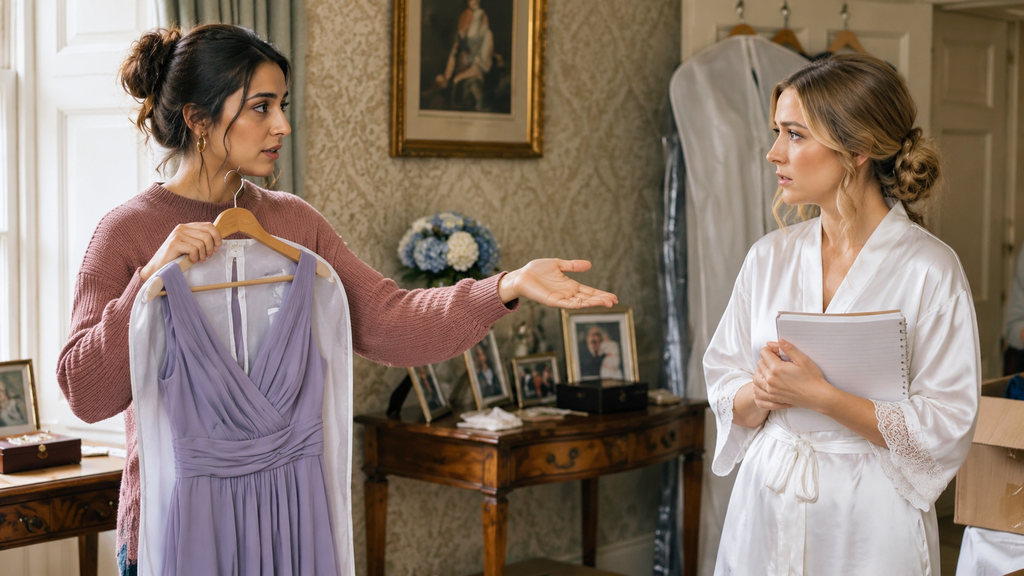
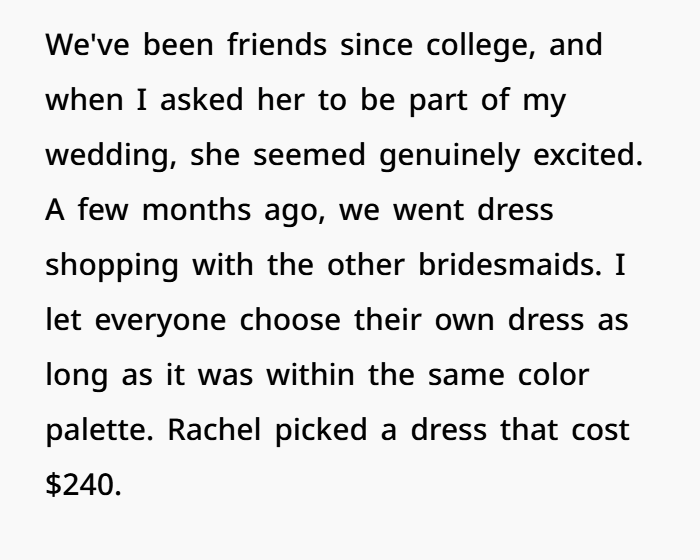
A bride is wondering if she made the wrong choice after refusing to give her best friend $240 for a bridesmaid dress. The 27-year-old woman is getting married soon and had invited her college friend Rachel to join her wedding party. Rachel was excited and agreed to be a bridesmaid. Instead of making everyone wear the same outfit, the bride allowed her friends to pick their own dresses as long as they followed the wedding color theme. Rachel chose a $240 dress, even though the bride had recommended a cheaper one. The bride knew Rachel was watching her spending and thought an affordable option would be better. Still, Rachel bought the dress she wanted.
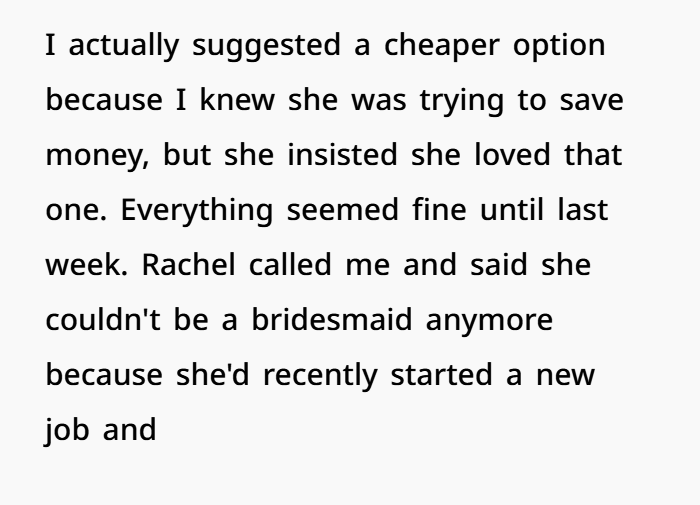
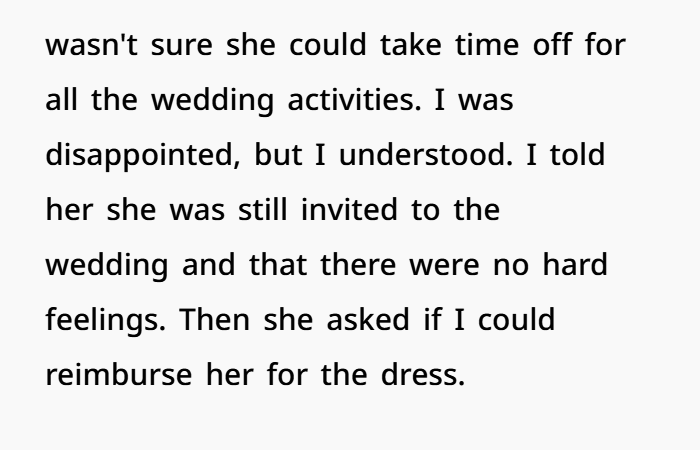
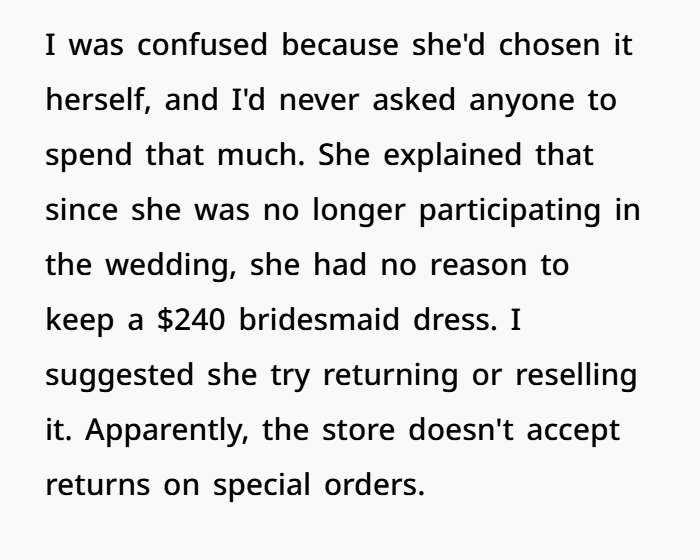
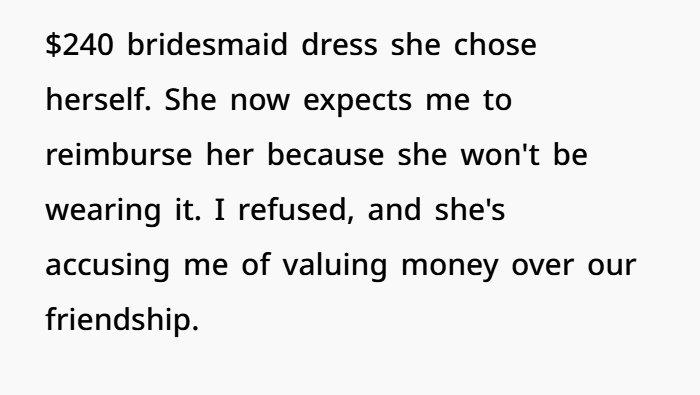
With just three months left before the wedding, Rachel suddenly said she could not be a bridesmaid anymore. She had started a new job and was worried about taking time off for wedding events. The bride was sad but did not argue with her. She told Rachel she understood and would love to have her attend as a guest. A few days later, Rachel asked the bride to refund the money she had spent on her dress. She felt it was unfair to pay $240 for something she would no longer wear in the ceremony. The bride disagreed because Rachel had made the purchase herself. She suggested returning or reselling it, but Rachel explained that the dress was specially ordered and could not be returned.
The problem did not end there. Rachel said she had already spent money on the engagement party and given her time to help with wedding planning. She felt disappointed that she was losing money after trying to support her friend. Soon, another friend told the bride that Rachel was upset and had been discussing the situation with others. Rachel reportedly believed the bride cared more about $240 than their friendship. The bride was surprised because she had tried to be understanding when Rachel stepped down. She and her fiancé were also paying for most of their wedding expenses, including the costs of planning their big day. Although she could afford the dress, she did not want to add another expense to their wedding budget.
Now the bride is facing a difficult decision. She wants to keep her friendship with Rachel, but she also believes people should be responsible for their own purchases. From her point of view, Rachel chose an expensive dress even after being offered a cheaper option. Rachel, on the other hand, feels she should not have to pay for an outfit she bought only to support her friend. The disagreement has left both women feeling hurt, with the wedding getting closer every day. Should the bride cover the $240 to avoid more problems, or is Rachel asking too much by expecting her friend to pay for the dress?
Bride Refuses to Pay $240 for Bridesmaid Dress After Her Friend Drops Out of the Wedding
A bride is facing an unexpected problem with one of her closest friends, and it all comes down to a $240 bridesmaid dress.
Her friend Rachel agreed to be a bridesmaid and bought a dress for the wedding. But after starting a new job, Rachel decided she could no longer be part of the wedding party.
The bride understood and told Rachel she was still welcome to attend as a guest.
That should have been the end of it.
Instead, Rachel asked the bride to pay her back for the dress.
The bride refused because Rachel had chosen the dress herself. She had even suggested a cheaper one before Rachel made the purchase.
Now the two friends are arguing about money, and their friendship may be at risk.
The question is simple: Should a bride pay for a bridesmaid dress when her friend decides to drop out?
Who Is Supposed to Pay for Bridesmaid Dresses?
In the United States, bridesmaids usually pay for their own dresses.
This is a common wedding tradition, although every family and culture may handle things differently.
Wedding etiquette resources such as The Knot and the Emily Post Institute explain that bridesmaids are generally expected to cover their own outfits unless the couple offers to pay.
The cost may include the dress, shoes, accessories, and alterations.
Some brides also ask their bridesmaids to pay for professional hair and makeup.
That is why it is important to talk about wedding expenses before agreeing to be part of a wedding party.
In this situation, the bride tried to keep things flexible.
She did not ask every bridesmaid to wear the same expensive dress.
Instead, she allowed them to choose their own dresses as long as they stayed within a certain color palette.
This gave everyone a chance to find something that suited their style and budget.
Rachel chose a dress that cost $240.
The bride suggested a less expensive option, but Rachel liked the more costly dress.
That choice is an important part of the disagreement.
Why Rachel Decided to Step Down as a Bridesmaid
Rachel originally agreed to be part of the wedding.
She had already helped with wedding planning and spent money on some of the celebrations.
But then she started a new job.
A new job can make it difficult to take time off, especially during the first few months.
Rachel was unsure whether she could manage her work schedule and bridesmaid responsibilities.
She eventually decided to step down.
The bride did not argue with her.
She understood that work responsibilities can change plans.
She also made it clear that Rachel was still invited to the wedding as a guest.
That was a kind response.
But Rachel had already bought her dress.
The store would not accept a return, so she was left with an outfit she no longer needed for its original purpose.
That is when she asked the bride for $240.
Why Rachel Wants the Bride to Pay Her Back
Rachel spent $240 because she planned to be a bridesmaid.
Now that she is no longer taking part, she feels that the money has gone to waste.
For someone starting a new job, losing that amount can be frustrating.
She may also have other expenses to manage.
Rachel believes the bride should reimburse her because the dress was purchased for the wedding.
But the bride sees things differently.
She did not ask Rachel to leave the wedding party.
She did not require a $240 dress.
And she did not promise to pay for the dress if Rachel’s plans changed.
From the bride’s point of view, she is being asked to cover a purchase she never chose.
Both women are disappointed, but for different reasons.
Rachel is upset about losing money.
The bride is upset about being asked to pay an unexpected expense.
Why Being a Bridesmaid Can Get Expensive
Being asked to join a wedding party can feel exciting.
But the costs can add up quickly.
A bridesmaid may need to pay for a dress, shoes, alterations, travel, hotel stays, and wedding events.
There may also be costs for a bridal shower, bachelorette party, and gifts.
Even when each expense seems small, the total can become difficult to manage.
This is why wedding budget planning matters for everyone involved.
Couples should try to explain expected costs early.
Bridesmaids should also feel comfortable discussing their personal budgets.
Not everyone can afford expensive wedding outfits or several days of travel.
In this story, the bride tried to make the dress shopping easier by allowing different styles.
She also suggested a cheaper dress to Rachel.
That makes it harder to argue that the bride forced Rachel into an expensive purchase.
Does Dropping Out Mean Someone Else Should Cover the Cost?
Plans change all the time.
People start new jobs, move to different cities, or face unexpected personal responsibilities.
Sometimes those changes mean they cannot attend an event they originally planned for.
But when someone has already spent money, deciding who should cover the loss can be difficult.
In this case, Rachel chose to leave the wedding party.
The bride did not remove her.
That difference matters.
If the bride had asked Rachel to buy a particular dress and then removed her from the wedding, Rachel might have a stronger reason to request reimbursement.
But that is not what happened.
Rachel made the decision because of her work situation.
The bride accepted it.
There was also no mention of an agreement that the bride would reimburse anyone who stepped down.
So while Rachel’s disappointment makes sense, the bride does not appear to have a clear responsibility to pay for the dress.
Why Losing $240 Feels So Frustrating
Nobody likes spending money on something they cannot use.
Rachel bought the dress for a special occasion.
Now she may have no reason to wear it.
In personal finance, money that has already been spent and cannot be recovered is called a sunk cost.
For example, imagine buying an outfit for a party and then finding out you cannot attend.
The money has already been spent.
You may feel disappointed, but that does not automatically make the party organizer responsible for the purchase.
Rachel’s situation is similar.
She made the purchase when she expected to be a bridesmaid.
Her plans later changed.
The dress may still have some value, even if she cannot return it.
She could try selling it or saving it for another formal event.
That may not solve everything, but it could help her recover some of the money.
Why Rachel Brought Up the Engagement Party
The disagreement became more personal when Rachel mentioned how much she had already done for the wedding.
She had helped with planning and contributed to the engagement party.
She may feel that her time and effort have not been appreciated enough.
This suggests that her frustration may not be only about the dress.
She may be thinking about everything she has contributed.
Planning wedding events takes time.
It can also involve shopping, organizing guests, arranging decorations, and spending money.
Those efforts deserve appreciation.
But helping a friend does not automatically mean that friend owes you money later.
The bride may have seen Rachel’s help as something close friends do for each other.
Rachel may now feel that she has given more than she received.
That difference in expectations can create tension.
A simple thank-you may not solve the financial disagreement, but it could help Rachel feel heard.
Should Past Wedding Help Count Toward the Dress?
Rachel’s previous help matters.
She supported the bride during an important time.
But there is a difference between appreciating someone’s kindness and being required to pay them back.
Unless the women had an agreement about reimbursement, helping with wedding planning does not automatically make the bride responsible for the dress.
Rachel can explain that she feels disappointed or unappreciated.
That is a fair conversation to have.
But using earlier acts of friendship as a reason to demand $240 could make the disagreement worse.
The bride can thank Rachel for her contributions while still saying she cannot accept responsibility for the purchase.
Both things can be true.
Rachel may have been a supportive friend.
And the bride may still have a reasonable reason to refuse reimbursement.
Is the Bride Legally Required to Pay for the Dress?
In general, the legal responsibility for a purchase depends on who bought the item and whether someone else agreed to pay for it.
If Rachel purchased the dress from a retailer using her own money, she would usually be responsible for that transaction.
Buying the dress for a friend’s wedding does not automatically mean the bride must reimburse her.
The store’s no-return policy also does not automatically transfer the cost to the bride.
However, the answer could be different if the bride had promised to pay for the dress or made another enforceable agreement.
The story does not mention such a promise.
This is why it is helpful to discuss wedding expenses before purchases are made.
Clear expectations can prevent misunderstandings later.
The bride may still choose to help Rachel, but that would be a personal decision rather than an automatic legal requirement.
Could Rachel Sell Her Bridesmaid Dress Online?
Before expecting the bride to pay the full $240, Rachel could look for ways to recover part of the cost.
Many people shop for secondhand formalwear to save money.
Online resale marketplaces can be useful for selling bridesmaid dresses, evening gowns, and other special occasion outfits.
If Rachel’s dress is still new and has not been altered, she may have a better chance of finding a buyer.
She could include clear photos, the dress size, color, brand, and original price in the listing.
She could also ask whether another bridesmaid or wedding guest is interested.
The bride might be willing to help share the listing.
This could be a practical compromise.
Rachel may not recover the full $240, but getting some money back could make the situation easier.
It would also avoid placing the entire expense on the bride.
Is $240 Worth Damaging a College Friendship?
The bride and Rachel have been friends since college.
That means their relationship has lasted through many important moments.
Now they are having a disagreement over one dress.
The bride has said she can afford to pay Rachel.
However, she and her fiancé are already covering most of their wedding expenses.
An extra $240 may not be impossible to pay, but that does not mean she feels responsible for it.
Rachel may see things differently.
She may believe that a close friend should help her when plans change.
This is where money and friendship can become difficult to separate.
If the bride pays only to stop the argument, she may feel resentful later.
If Rachel continues to demand the money, the bride may feel that their friendship is being measured by a dollar amount.
Neither outcome is ideal.
A calm conversation may be more helpful than simply handing over money.
Both women need to understand what the other is feeling.
Why Talking to Mutual Friends May Make Things Worse
The bride later heard that Rachel had been discussing the disagreement with mutual friends.
According to another friend, Rachel suggested that the bride cared more about $240 than their friendship.
That is a difficult thing to hear.
But the bride received the information through someone else.
She may not know Rachel’s exact words or the full conversation.
Rachel may have simply been sharing her frustration.
Still, involving mutual friends can make a private disagreement harder to fix.
People may start taking sides.
The bride may feel judged.
Rachel may feel even more upset after hearing other opinions.
A direct conversation would probably be better.
The two friends could talk about the dress, the money, and their feelings without bringing everyone else into the disagreement.
What Would Be a Fair Solution?
There may be a way to handle this without ending the friendship.
The bride could start by acknowledging that Rachel is disappointed.
Losing $240 on a dress she cannot return is frustrating.
She could also thank Rachel for the time and effort she spent helping with the wedding.
Then she could explain why she does not feel responsible for the dress.
Rachel chose it herself and later decided to step down.
The bride did not create either decision.
As a practical solution, the bride could offer to help Rachel sell the dress.
She could also choose to contribute a small amount if she genuinely wants to help.
But she should not feel forced to pay simply to prove she values the friendship.
Rachel, meanwhile, could recognize that wedding plans sometimes change and that personal purchases come with financial risks.
A fair solution should consider both women’s feelings without placing all the responsibility on one person.
How Brides Can Avoid Similar Money Problems
Wedding planning can become stressful when people are unsure about costs.
That is why open communication matters from the beginning.
Before bridesmaids buy their outfits, couples can share an estimated budget.
They can also explain whether dresses, alterations, hair, makeup, and travel expenses will be covered.
Allowing bridesmaids to choose affordable dresses is another helpful option.
It is also smart to check return policies before ordering formalwear.
Some special-order dresses cannot be returned, even if they have not been worn.
Bridesmaids should consider their work schedules and other commitments before making expensive purchases.
No one can predict every change.
But discussing money early can prevent many uncomfortable situations later.
Final Thoughts: Should the Bride Pay Rachel $240?
This disagreement is about more than a bridesmaid dress.
Rachel spent $240 on an outfit she may never wear.
She also helped with wedding planning and the engagement party.
It makes sense that she feels disappointed.
But the bride did not require Rachel to buy an expensive dress.
She suggested a cheaper option and allowed Rachel to choose her own outfit.
When Rachel stepped down because of her new job, the bride accepted the decision and still invited her to the wedding.
Based on those details, the bride does not appear to have a clear obligation to reimburse Rachel.
Helping her resell the dress could be a reasonable compromise.
More importantly, both women may need to talk honestly about why they feel hurt.
A strong friendship should leave room for kindness, appreciation, and financial boundaries.
What do you think? Should the bride pay the $240 to protect the friendship, or should Rachel accept the cost of the dress she chose herself?
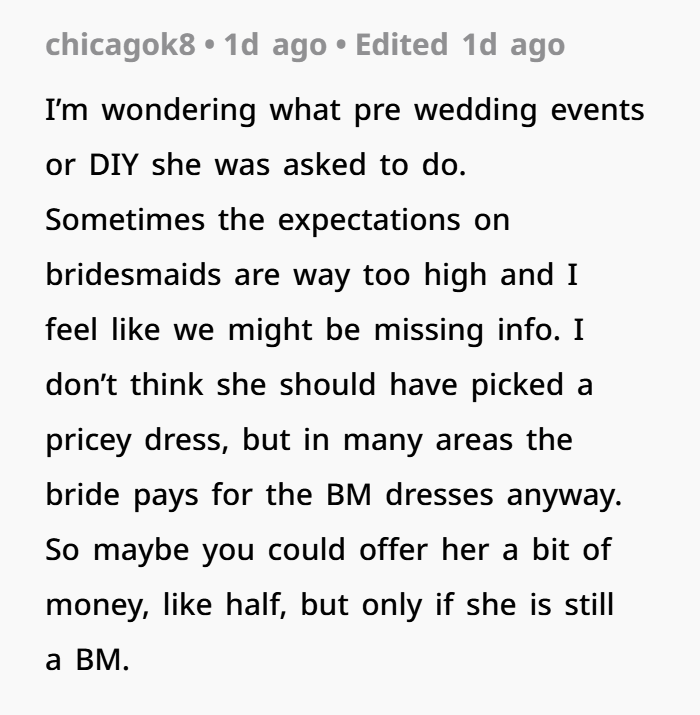
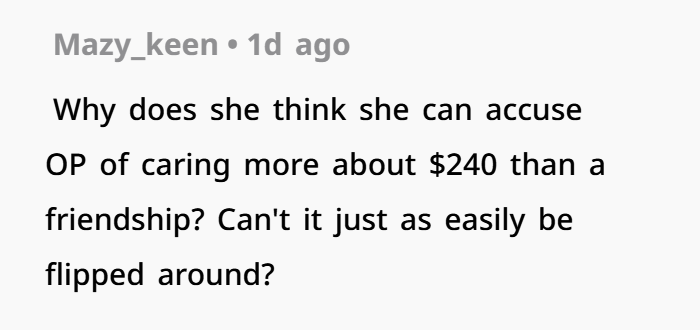
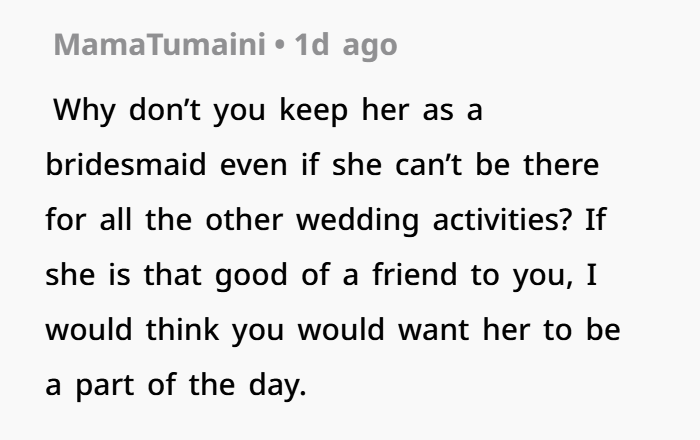
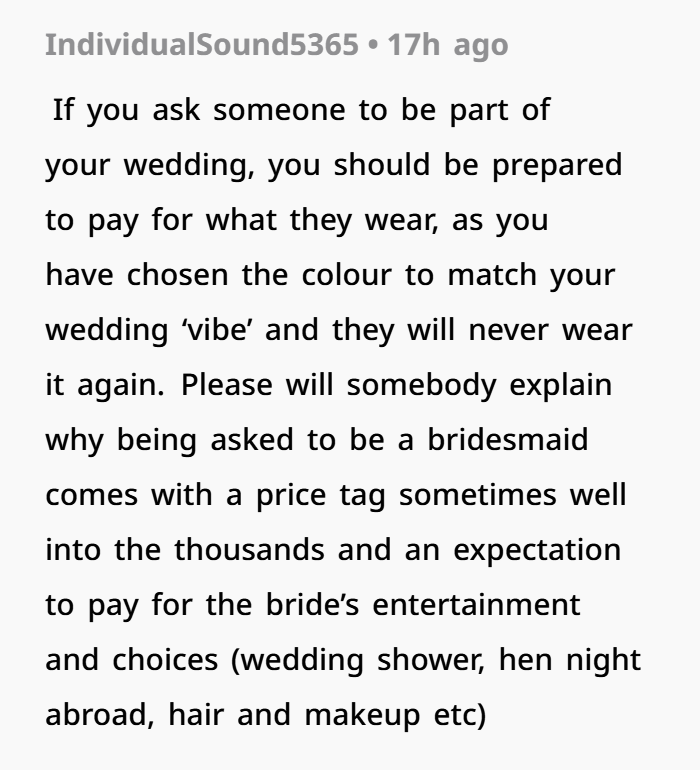
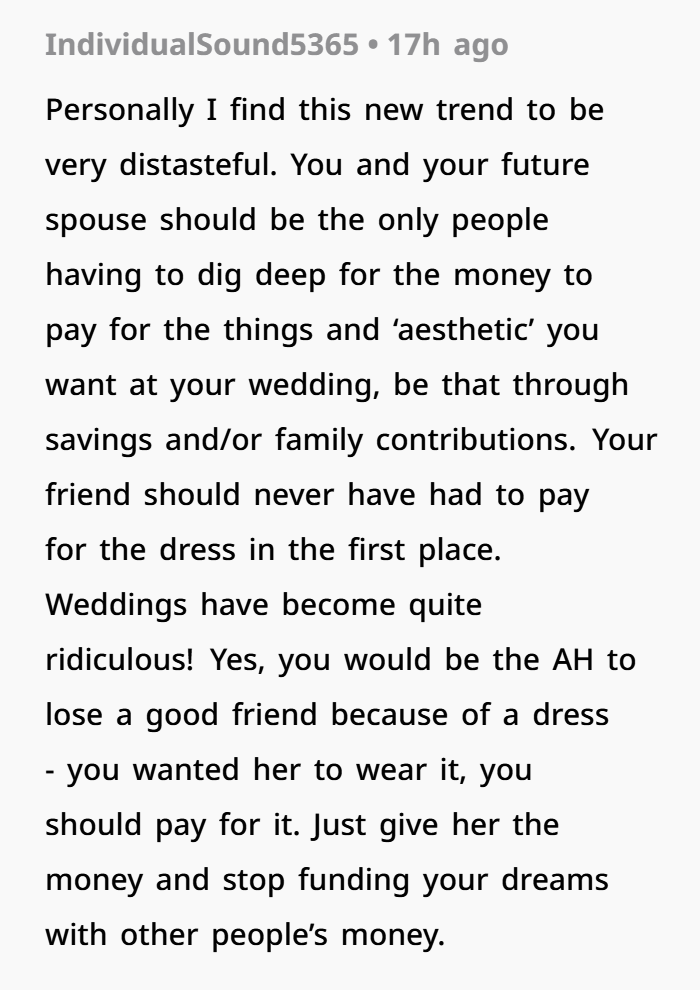
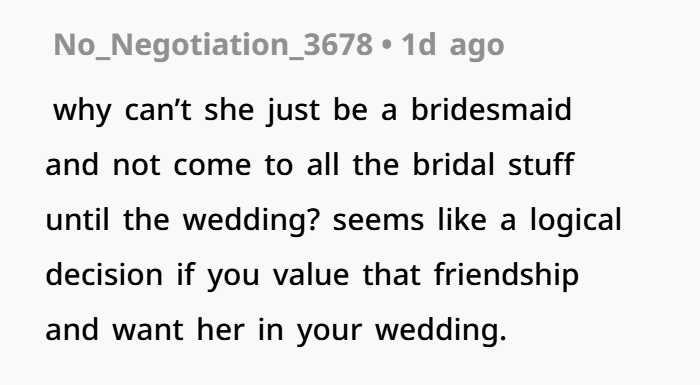
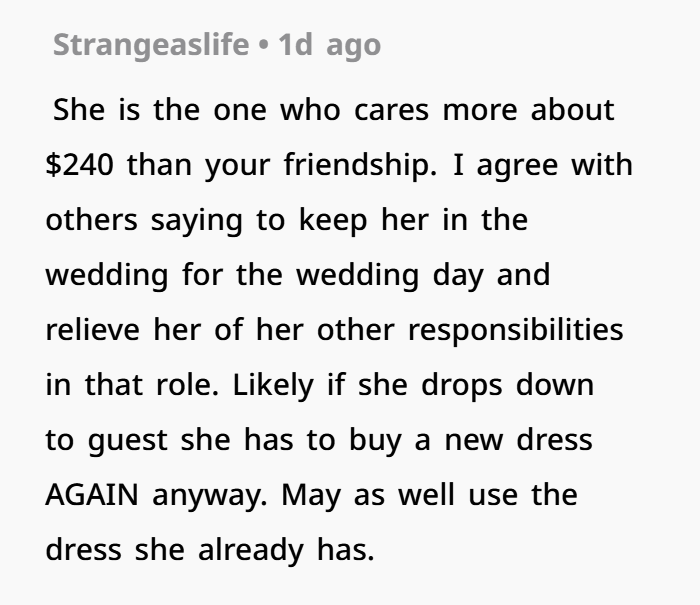
The Most Honest Comments