AITA for Helping My Cousin Prepare Filipino Dishes to Prove Her MIL Wrong at Thanksgiving?

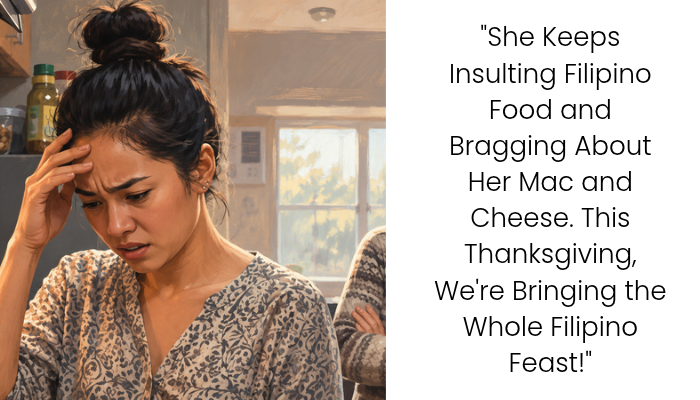
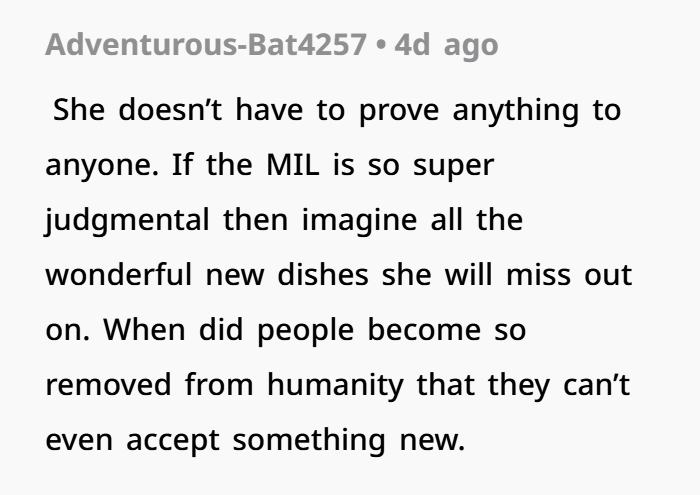
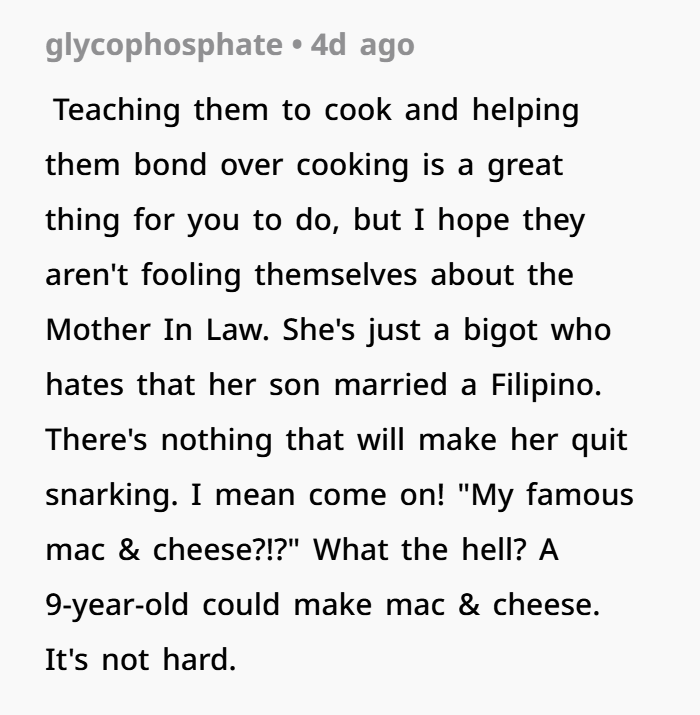
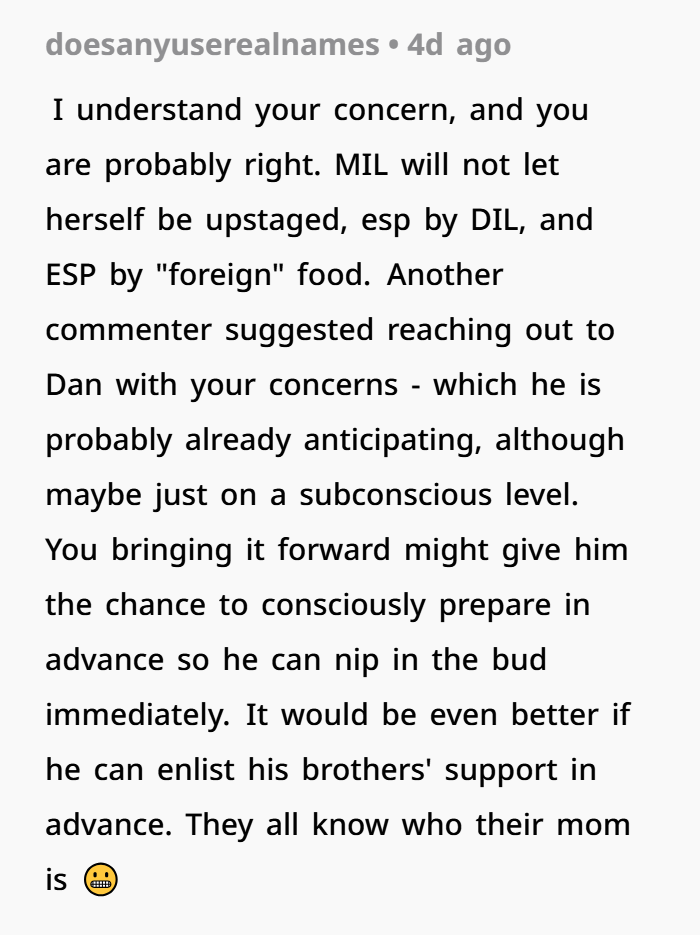
A 25-year-old woman is concerned that her plan to help her cousin Lea may lead to some tension during Thanksgiving dinner. Lea, 30, recently married Dan, 35, and moved from the Philippines to the United States. She enjoys preparing Filipino food and wants to improve her cooking skills by learning traditional family recipes. However, her mother-in-law, Karen, often makes negative comments about Lea and Dan’s cooking. Karen takes great pride in her own kitchen skills, especially her well-known mac and cheese. She has also made dismissive remarks about Filipino cuisine. While Dan usually supports his wife, Lea prefers to avoid family arguments and keep their relationship peaceful.
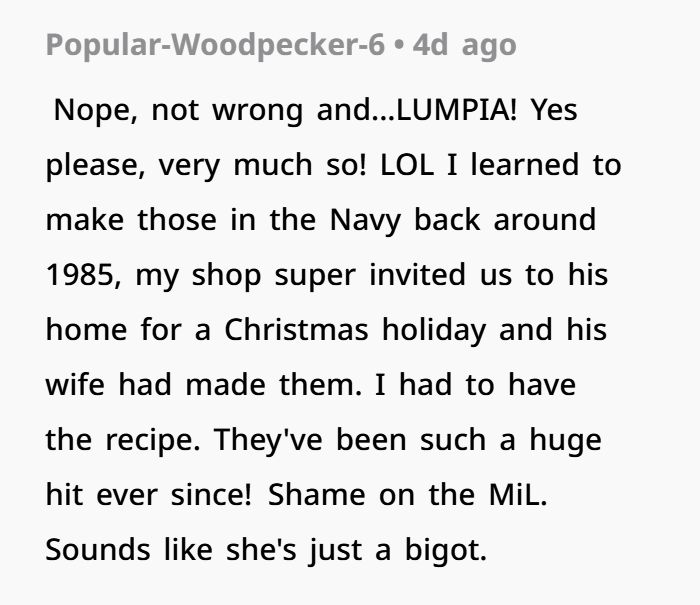
With Thanksgiving approaching, Dan decides to introduce his family to traditional Filipino cooking. He believes sharing homemade dishes could be a fun way to celebrate Lea’s culture and bring everyone together. He asks his cousin-in-law to teach him and Lea some popular Filipino recipes. She agrees and spends four weeks helping them through evening video calls. Their special holiday menu includes lechon kawali, pancit bihon, lumpiang shanghai, and mango graham float. These cooking sessions give the couple a chance to learn new cooking techniques, explore traditional recipes, and enjoy spending time together in the kitchen.
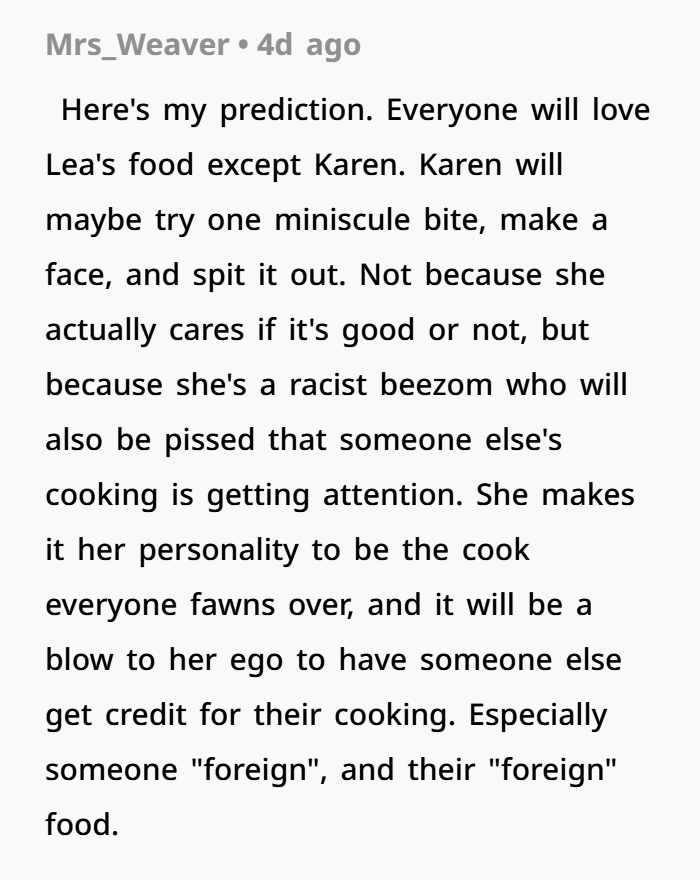
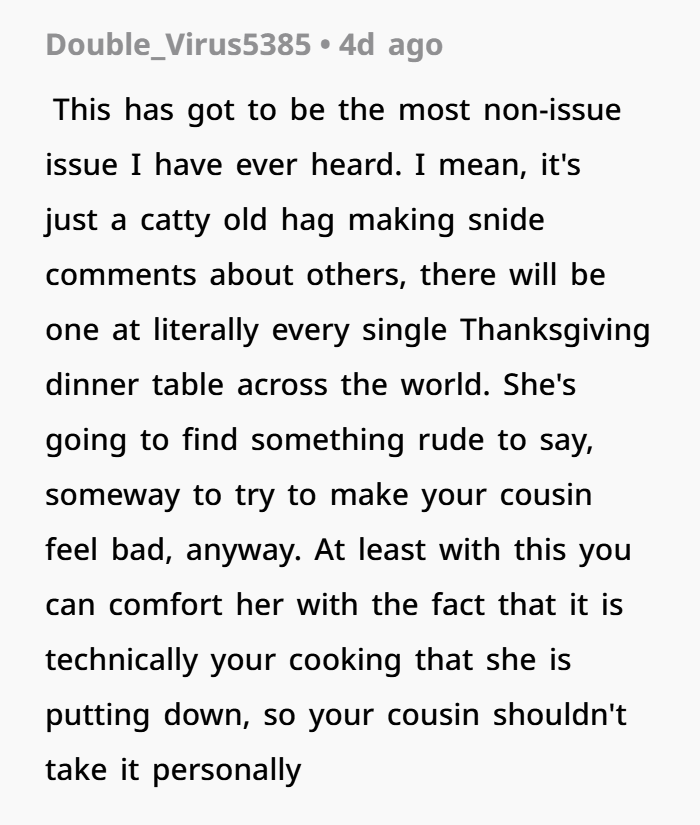
However, the woman starts worrying about how Karen might react to the Thanksgiving food. Karen has a history of making comments about other people’s cooking and often talks about her own recipes. The woman fears that she may turn the family dinner into a competition or make unfair comparisons between Filipino dishes and her usual holiday meals. She does not want Lea to feel uncomfortable after spending so much time learning and preparing a special menu for the family.
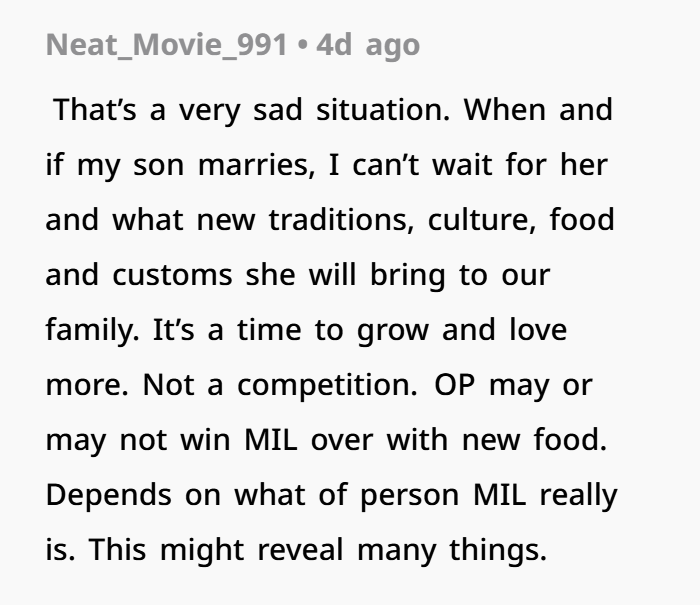
The original plan was meant to celebrate Filipino food, family traditions, and the joy of cooking together. The woman wanted to help Lea feel confident in the kitchen while giving the family a chance to enjoy something different for Thanksgiving. Now she is questioning whether the idea was helpful or if it could create unnecessary family tension. She hopes the gathering will be a positive experience where everyone respects different food traditions and appreciates the effort that goes into preparing a homemade holiday meal. After all, Thanksgiving is a wonderful opportunity to enjoy good food, create family memories, and learn about each other’s cultures.
My recommendation fo

How Food and Cultural Differences Can Affect Family Relationships
Food has a special place in family life. It connects people to their childhood memories, cultural traditions, and family history.
For many families, preparing traditional meals is also a way to celebrate their background and pass recipes from one generation to another.
But what happens when family members have different food traditions and do not respect each other’s choices?
In multicultural families, these differences can sometimes lead to uncomfortable situations.
Sharing traditional dishes during Thanksgiving should be a happy experience. However, negative comments about someone’s cultural food can turn a family gathering into a stressful event.
This story highlights the importance of cultural respect, family support, and healthy communication.
1. Why Traditional Food Matters to Cultural Identity
Traditional food is an important part of cultural identity.
Many people grow up eating special dishes prepared by their parents and grandparents. These meals become connected to family memories, celebrations, and important life events.
For immigrants, cooking traditional food can also help them stay connected to their home country.
Filipino cuisine is full of dishes that bring families together.
Some popular examples include:
- Lumpiang Shanghai: Small Filipino spring rolls often served at parties and family gatherings.
- Pancit Bihon: A noodle dish commonly prepared for celebrations and special occasions.
- Lechon Kawali: Crispy fried pork belly that is often enjoyed during family meals.
These dishes are more than everyday recipes for many Filipino families. They can represent family traditions and special memories.
For Lea, preparing Filipino food for Thanksgiving is a chance to introduce her husband’s relatives to her culture.
It is also a way to share something meaningful about her background.
Karen’s negative comments make the situation difficult because they go beyond personal food preferences.
Someone may not enjoy a particular dish, but that does not make an entire cuisine less valuable.
Respecting different food traditions is an important part of building strong family relationships.
2. How Different Cultures Shape Family Life
Marriage often brings two different family backgrounds together.
Each partner may have grown up with different holiday traditions, family recipes, and ideas about cooking and hospitality.
Learning about these differences can help couples build stronger relationships.
However, problems can happen when one family expects everyone to follow the same traditions.
For immigrants, cultural identity can be especially meaningful.
Psychologist John W. Berry’s research on acculturation explores how people adjust to a new society while maintaining connections to their original culture.
This helps explain why people may continue celebrating traditional holidays, preparing familiar meals, and sharing their native language with family members.
For Lea, cooking Filipino dishes is one way to maintain that connection.
Dan’s willingness to learn her recipes is also important.
He is not expecting his wife to leave her traditions behind. Instead, he is taking an interest in her culture and helping her share it with his family.
This kind of support can make a big difference in multicultural marriages.
3. Thanksgiving Food Should Be About Family and Sharing
Thanksgiving is usually a time to enjoy good food, spend time with loved ones, and appreciate the people around us.
Many families have favorite Thanksgiving recipes that they prepare every year.
Some enjoy traditional side dishes, while others like adding new recipes to the holiday menu.
There is nothing wrong with being proud of a family recipe.
However, a holiday dinner should not become a competition between family members.
Karen often talks about her famous mac and cheese and seems to enjoy being known for her cooking.
But Lea and Dan do not need to compete with her.
Their Filipino dishes do not have to be better than her recipe to deserve a place on the Thanksgiving table.
In fact, adding different foods can make a holiday meal more interesting.
It gives family members an opportunity to try new flavors and learn about another culture.
Good Thanksgiving meal planning should focus on variety, sharing, and enjoying time together.
4. How Family Criticism Can Affect Emotional Well-Being
Repeated negative comments can make family gatherings uncomfortable.
This is especially true when someone criticizes something that is connected to another person’s culture or family history.
Lea seems to know that Karen does not appreciate her cooking. She usually avoids arguments because she wants to keep the peace.
That is understandable.
Nobody wants to spend a holiday arguing with relatives.
However, avoiding every difficult conversation can sometimes allow the same behavior to continue.
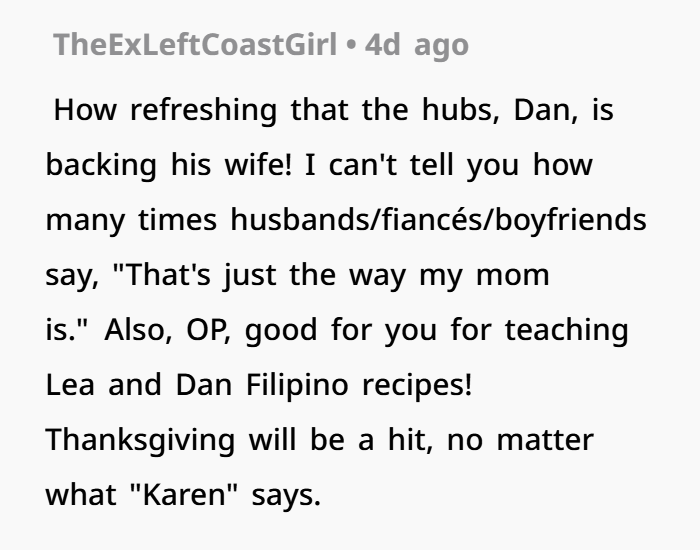
Dan can help by supporting his wife and calmly addressing disrespectful comments.
He does not need to create an argument or make anyone feel uncomfortable.
He can simply explain that everyone is allowed to have different food preferences, but making negative comments about another culture is not appropriate.
A respectful family environment should allow everyone to share their traditions without feeling embarrassed.
5. Should You Share Your Culture With People Who May Not Appreciate It?
The original poster has spent several weeks helping Lea and Dan prepare Filipino recipes.
She wants them to feel confident and enjoy sharing their food with the family.
At the same time, she worries that Karen may react negatively.
This is a reasonable concern.
Preparing homemade food takes planning, time, and effort. It is natural to hope that people will appreciate it.
But one important thing to remember is that nobody can control another person’s opinion.
Lea and Dan know the family situation. They have decided to prepare these dishes because sharing Filipino food matters to them.
The original poster can support them by helping with recipes, cooking tips, and meal preparation.
She can also remind them that the purpose of the meal is to enjoy Thanksgiving, not to win someone’s approval.
A positive attitude can make the experience much more enjoyable.
6. The Importance of Supporting Your Partner’s Culture
A strong marriage is built on understanding, respect, and support.
Partners do not need to share the same background or enjoy all the same foods.
What matters is being open to learning about each other’s traditions.
Small actions can make a difference.
For example, learning a family recipe, joining a cultural celebration, or showing interest in traditional holiday meals can help a partner feel appreciated.
Dan’s involvement in learning Filipino cooking is a good example.
He is showing interest in something that matters to Lea.
This is also a helpful way to introduce cultural traditions to other family members.
When couples support each other’s backgrounds, they can create new family traditions that include both cultures.
Final Thoughts
Food can be a wonderful way to bring different cultures together.
A Thanksgiving dinner that includes Filipino dishes alongside familiar family recipes can give everyone a chance to enjoy something new.
Lea and Dan should not feel that they have to prove their cooking skills or defend their cultural background.
Their effort to share traditional food is meaningful on its own.
Karen may or may not enjoy the dishes, and that is her personal choice.
But everyone should be able to share their traditions without facing unnecessary criticism.
The best family gatherings are not about whose food is better. They are about sharing traditions, respecting differences, and making everyone feel welcome.
People Couldn’t Stay Silent