“‘Give Us a Biological Grandchild, and It Better Be Male!’ – When Family Expectations Hurt the Innocent”

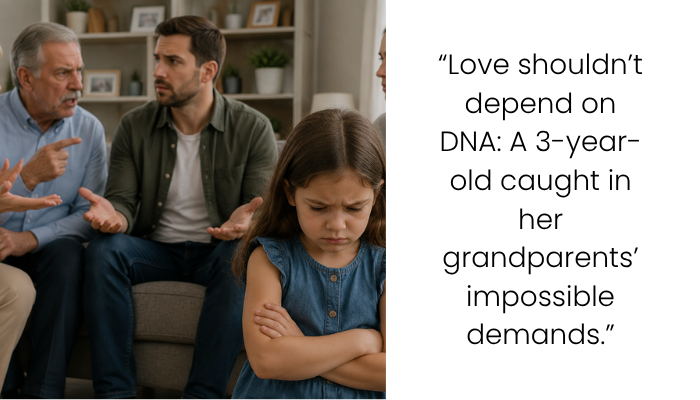
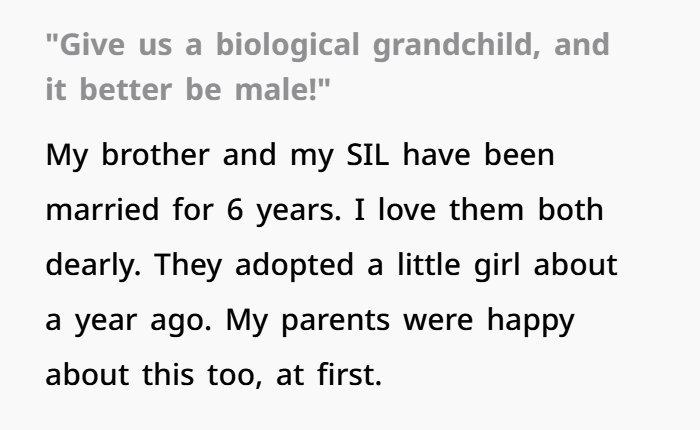
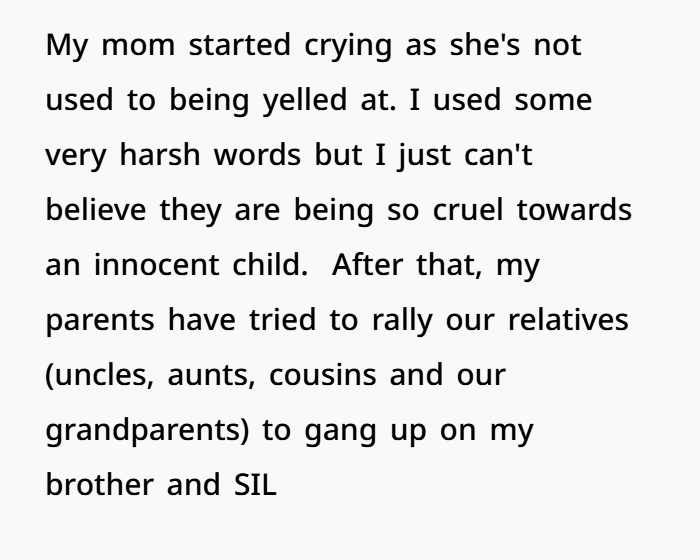
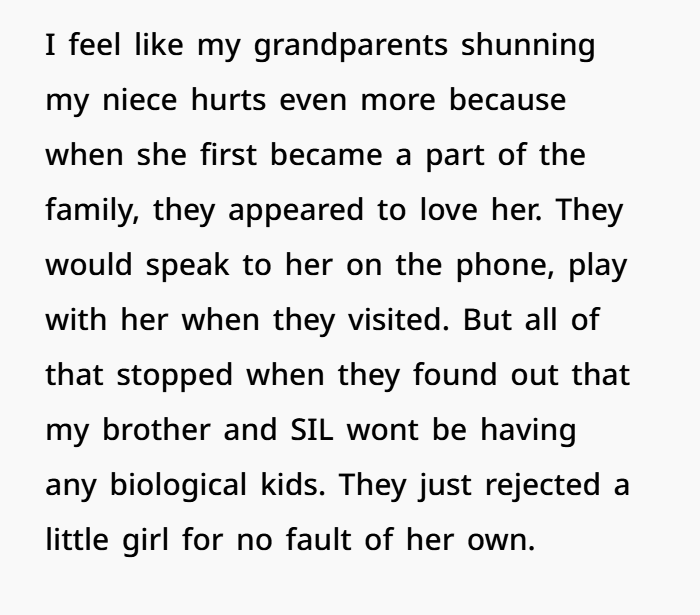
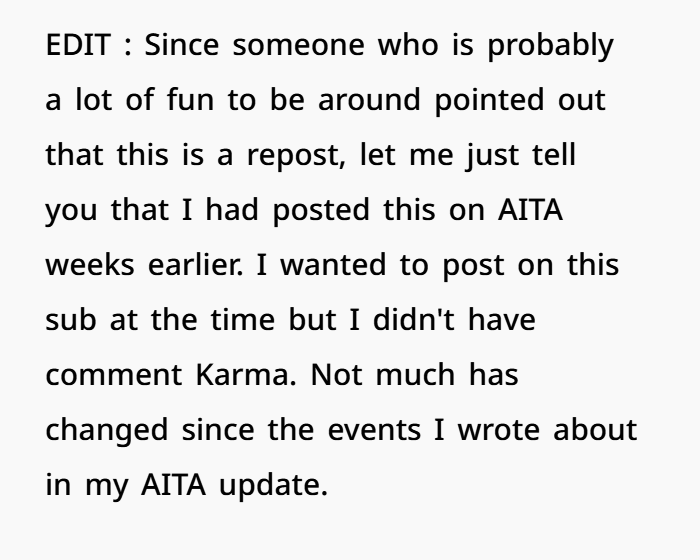
A family disagreement started after a couple decided not to have biological children after adopting a young girl. At first, everyone in the family was happy about the adoption. However, when the couple shared their decision about their future family plans, some relatives reacted negatively.
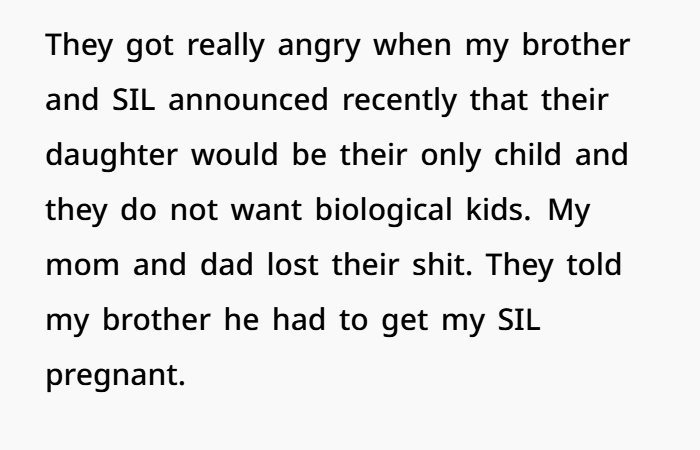
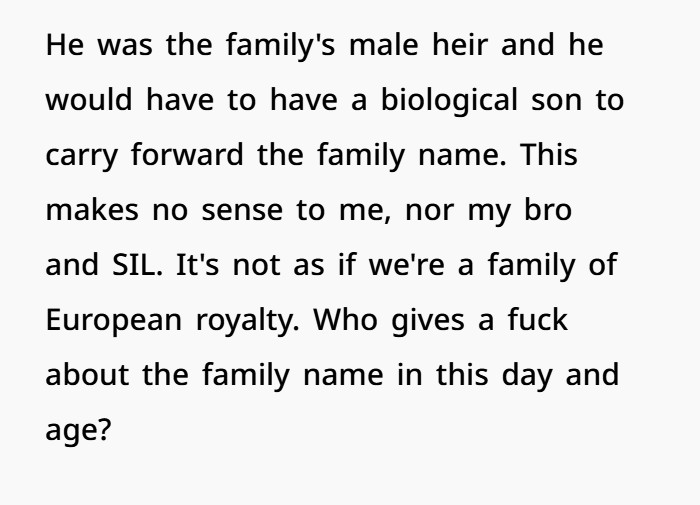
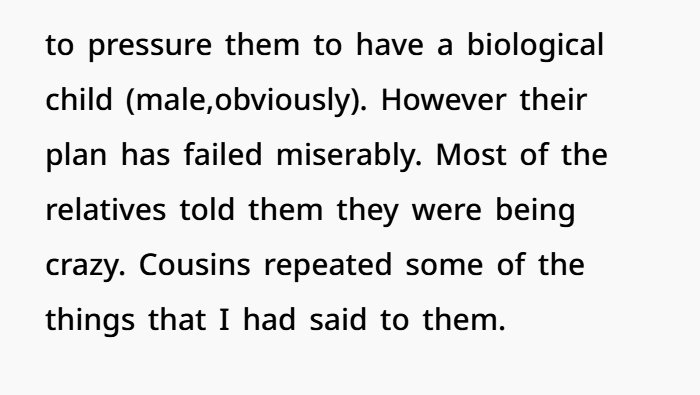
The parents of the couple became upset and pressured their son to have a biological child. They believed having a son was important and even suggested ending the marriage if his wife did not agree. Their comments caused a lot of stress and hurt within the family.
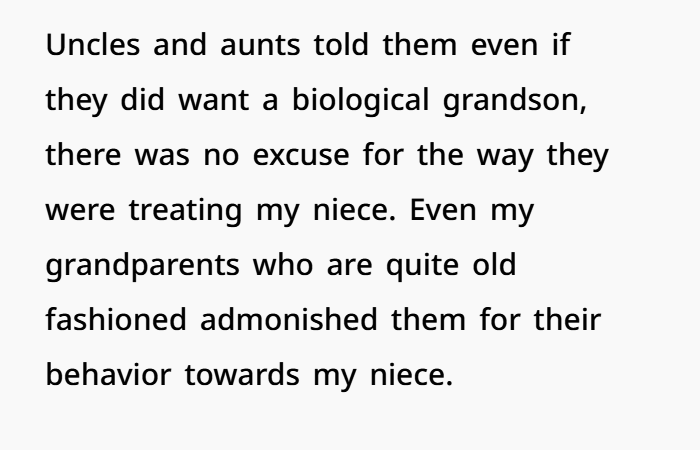
The situation became more painful when the grandparents started spending less time with their adopted granddaughter. Other family members felt that the child was being treated unfairly because of adult disagreements.
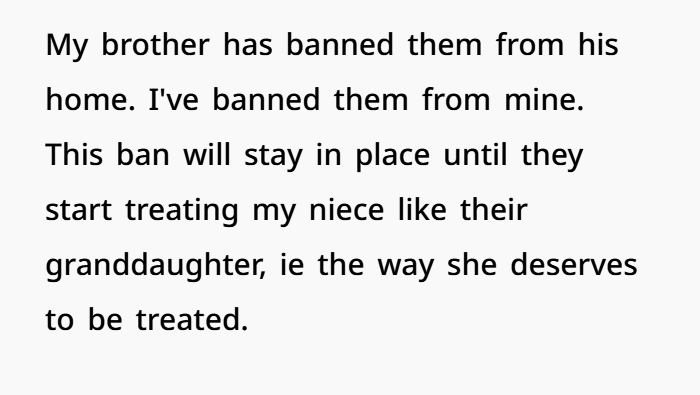
One relative decided to speak up and explain how harmful the behavior was. After the conflict continued, the siblings chose to create distance and set boundaries until the child could be treated with love and respect.
This story shows why family relationships, adoption support, and emotional well-being are important. Every child deserves care and acceptance, and healthy families are built through respect, understanding, and unconditional support.

When Family Expectations Hurt: Adoption, Boundaries, and Protecting Children
Family relationships can be complicated, especially when different generations have different beliefs about what a family should look like.
Sometimes, old traditions and expectations can create conflict between parents, grandparents, and children.
One difficult situation that some families face is when grandparents place pressure on parents to have a biological child, especially when they already have an adopted child.
This type of conflict is not really about having a grandchild. It is about expectations, acceptance, and whether every child in the family is treated with love and respect.
The Pressure to Have a Biological Child
In some families, there is still a strong belief that having a biological child is more important than adoption.
Some people connect family names, traditions, or inheritance with having a biological child, especially a son.
These ideas often come from older family traditions.
However, modern families are built in many different ways. A child does not need to share the same DNA to be loved, valued, and considered part of the family.
Parenting experts and family counselors often explain that love, care, and emotional support are what create strong family bonds.
Putting pressure on couples to have a specific type of child can create unnecessary stress and harm relationships.
Adoption Is a Real and Loving Family Choice
Adoption is a meaningful way to build a family.
An adopted child is not less important or less loved than a biological child.
Children need:
- Love
- Attention
- Security
- Support
- A feeling of belonging
These things help children grow into confident and emotionally healthy adults.
When a child feels accepted by their family, they develop stronger emotional connections and trust.
The most important part of parenting is not biology. It is the care and commitment a child receives every day.
Why Ignoring a Child Can Be Harmful
The most concerning part of this situation is how adult disagreements can affect a child.
A young child does not understand family conflicts the way adults do.
If a child suddenly receives less attention, fewer visits, or less affection, they may feel confused or rejected.
Children need consistency. They need to know they are valued and loved.
Family conflicts should never become a reason for a child to lose emotional support.
Protecting children from adult disagreements is an important part of healthy parenting.
Emotional Pressure and Family Guilt
Another common issue in difficult family situations is guilt.
Sometimes relatives may say things like:
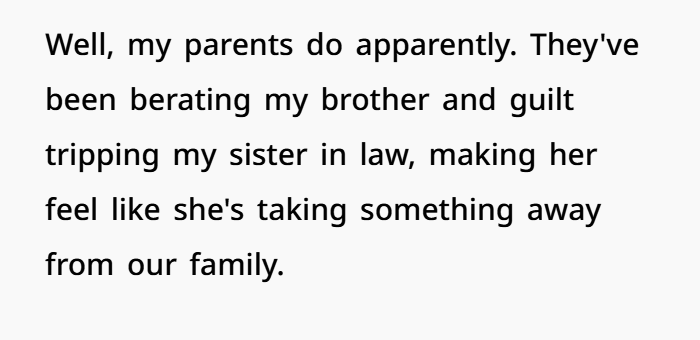
“You are taking something away from the family.”
Statements like this can create emotional pressure and make people feel guilty for making personal choices.
Parents have the right to make decisions about their own family.
Choosing adoption, deciding not to have more children, or creating a different family path are personal decisions.
Healthy family relationships require respect, not pressure.
Setting Boundaries With Difficult Family Members
Standing up to family members can be very difficult.
Many people avoid setting boundaries because they fear conflict or hurting someone’s feelings.
However, boundaries can be necessary when someone’s behavior is causing emotional harm.
Healthy family boundaries may include:
- Limiting negative conversations
- Protecting children from harmful situations
- Clearly communicating expectations
- Creating distance when needed
Boundaries are not about punishment.
They are about creating a safe and respectful environment for everyone.
The Importance of Family Support
One positive part of this situation is that other relatives recognized the problem and supported the parents.
Having supportive family members can make a big difference during difficult times.
A strong support system can help parents feel less alone and provide a healthier environment for children.
Family members do not always have to agree on everything, but they should agree that children deserve love and respect.
Generational Differences About Family
Many family conflicts happen because different generations have different beliefs.
Older generations may have grown up with ideas about family name, tradition, and biology that are different from modern views.
While traditions can be meaningful, they should not prevent families from accepting and loving children equally.
A strong family is not created by shared genetics alone.
It is created through kindness, commitment, and emotional connection.
Protecting Children From Adult Conflicts
Children should not be placed in the middle of family disagreements.
When adults have disagreements, they should try to handle them away from children.
A child should never feel responsible for adult problems.
Parenting experts often recommend focusing on the child’s emotional needs first.
The question should always be:
“What is best for the child?”
The Importance of Acceptance in Adoption
Adoption can sometimes come with unfair misunderstandings.
Some people still believe biological connections are more important than emotional bonds.
However, many adoptive families show that love and commitment create strong lifelong relationships.
Grandparents, relatives, and family friends can build beautiful relationships with adopted children when they offer:
- Time
- Attention
- Encouragement
- Unconditional support
Children remember how they are treated, not whether they share someone’s DNA.
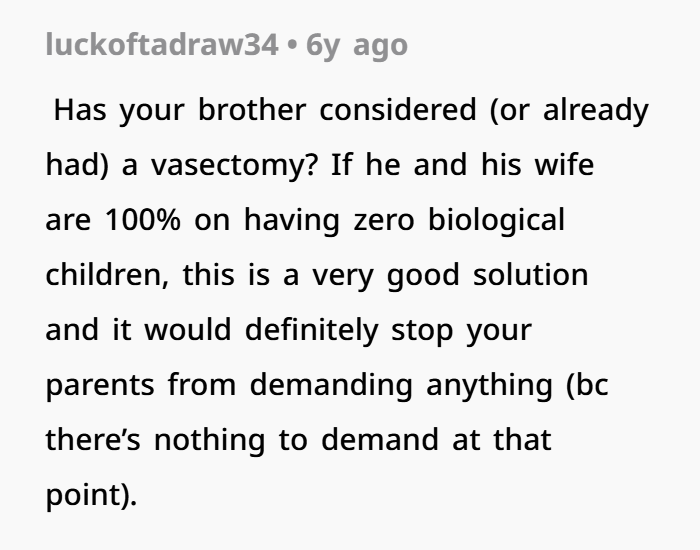
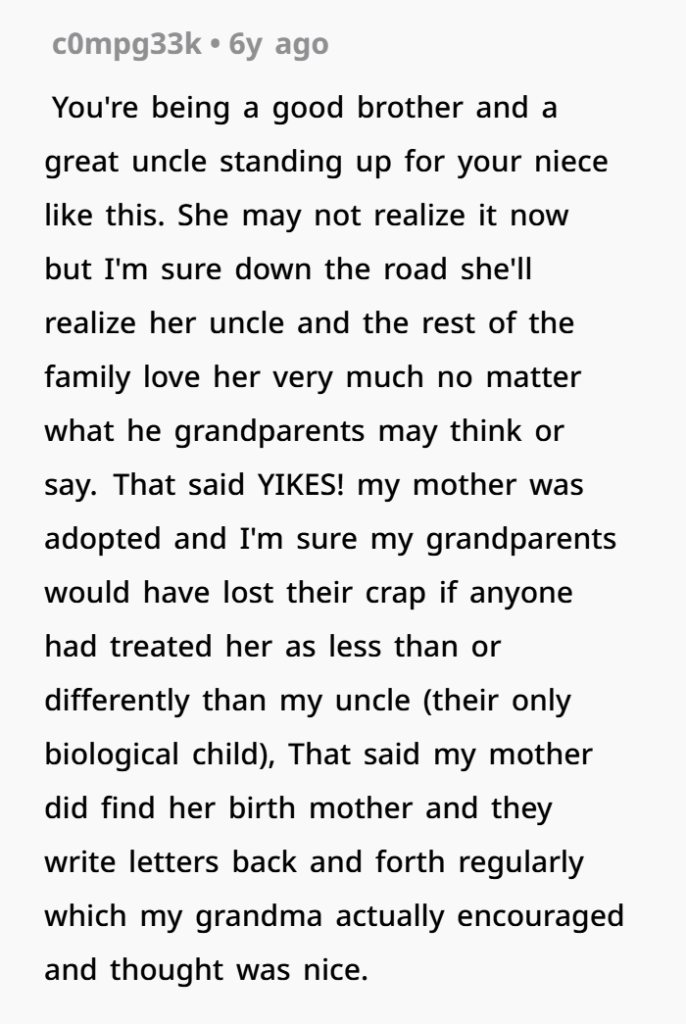
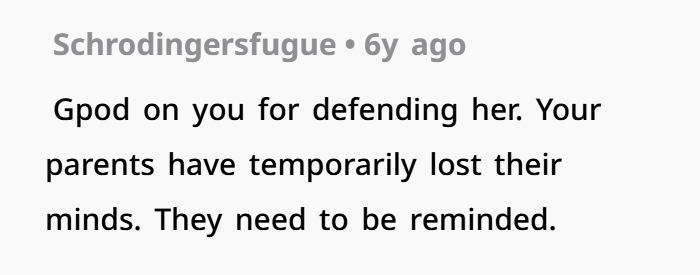
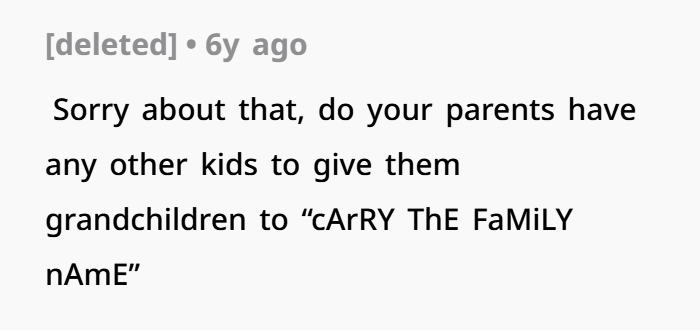
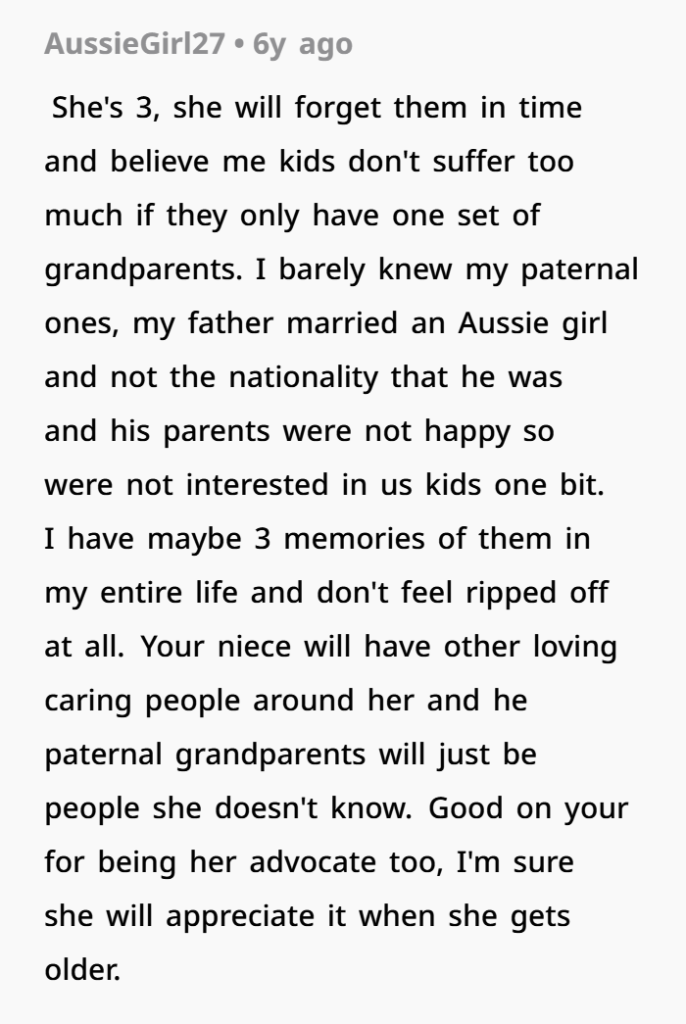
See The Comments Below




Final Thoughts
This type of family conflict shows how harmful unrealistic expectations can become.
Pressuring parents to have a biological child or treating an adopted child differently can damage relationships and hurt children emotionally.
Families are strongest when they are built on love, respect, and acceptance.
Setting boundaries with relatives is not always easy, but sometimes it is necessary to protect children and maintain emotional health.
A family is not defined only by biology. It is defined by the people who show up, care, and provide love every day.