Wife Wants Me to Quit After I Rejected a Coworker’s Affair — But I Refused

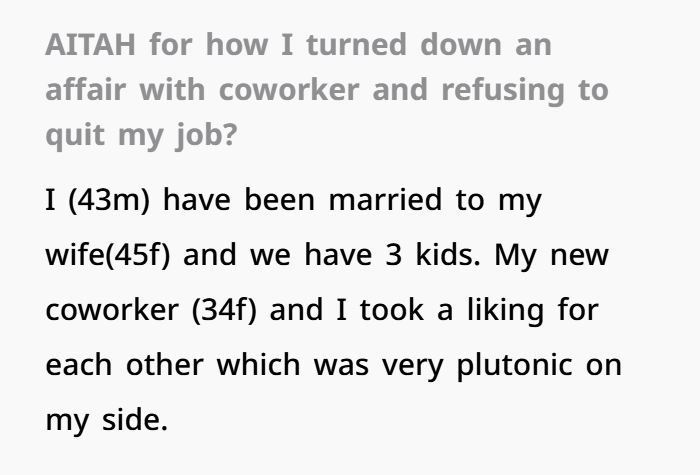
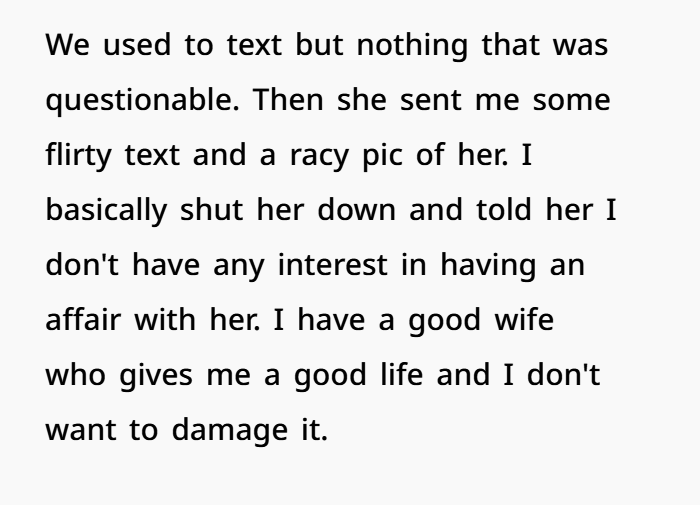
Not every relationship problem starts with cheating. Sometimes, trust issues can begin when one person feels that a friendship has crossed a boundary. In this situation, a 43-year-old husband and father of three became involved in a difficult situation after becoming close friends with a coworker. He said their relationship was only a friendship, and they often talked and joked through messages. However, the situation changed when the coworker sent messages that felt too personal and included a flirty photo.
The husband said he did not want to risk his marriage or family. He stopped the conversation from going further and made it clear that he wanted to respect his relationship. Believing that honesty was the best choice, he decided to tell his wife about what happened. However, the conversation created more problems between them instead of solving the issue.
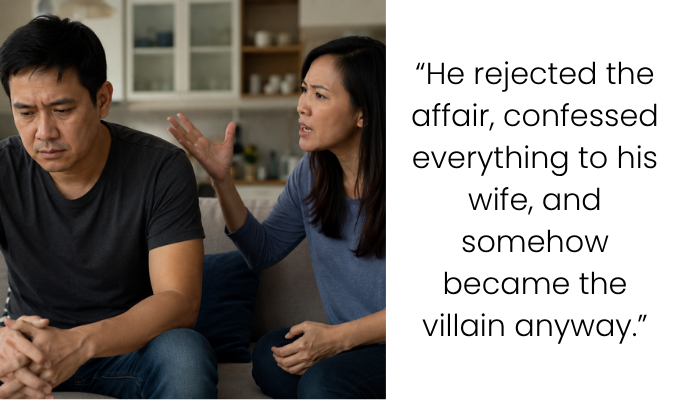
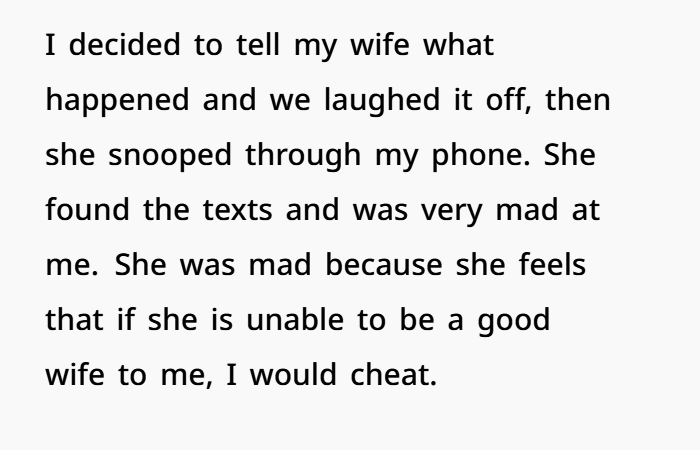
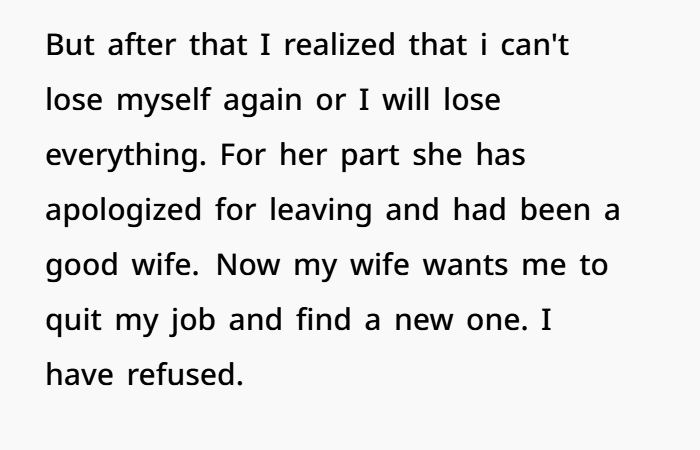
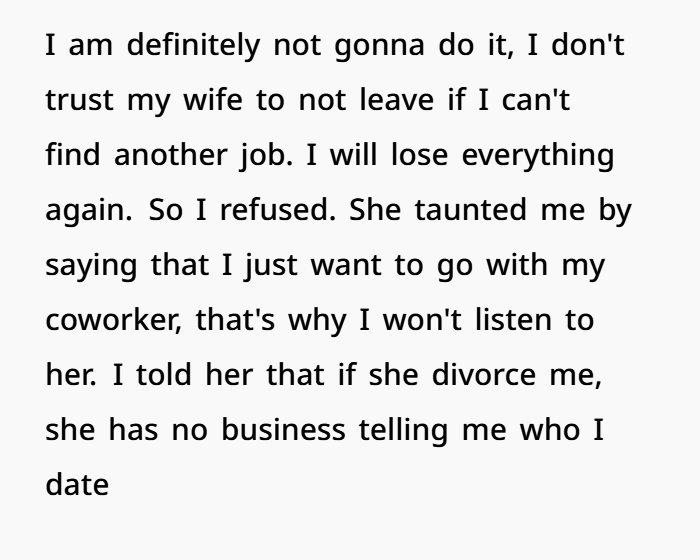
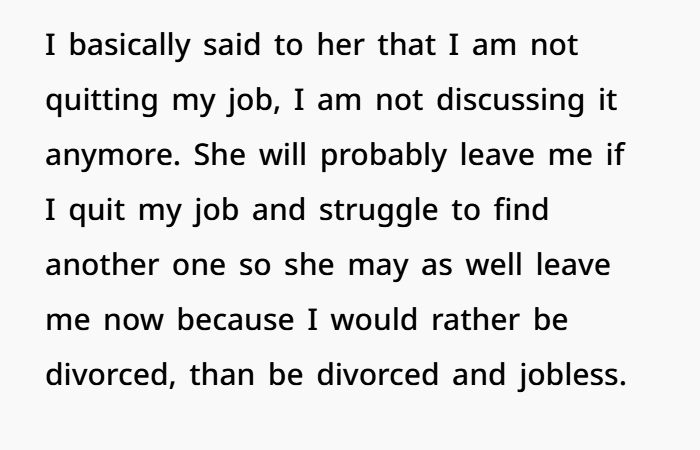
His wife became upset after learning about the messages and looked through his phone. She later asked him to leave his job because she felt the workplace friendship created a threat to their marriage. The husband disagreed because his career was important for their financial stability and family security.
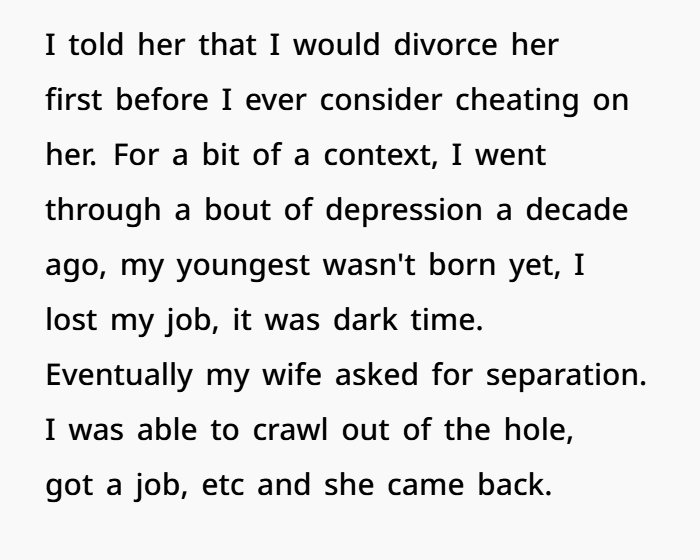
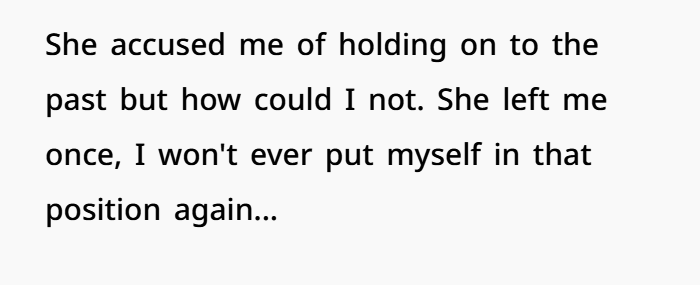
The disagreement also brought back painful memories from the past. Years earlier, the husband had gone through a difficult period involving depression and losing his job. During that time, his wife had asked for a separation, which left a lasting emotional impact on him. Although they repaired their relationship later, he still worries about losing his stability again. Now their conflict is about more than a coworker. It involves marriage trust, communication, emotional healing, financial security, and finding a healthy way to rebuild their relationship.

A Workplace Situation Revealed Deeper Marriage Problems About Trust and Communication
Sometimes a relationship problem is not really about the event that starts the argument.
Sometimes one situation simply reveals problems that have been hidden for years.
This story about a husband, his coworker, and his wife became a big discussion online because it involved many common relationship challenges, including trust issues, workplace boundaries, emotional stress, financial concerns, and communication problems in marriage.
At first, the situation seemed simple.
A married man received attention from a female coworker. He rejected it, told his wife what happened, and tried to be honest about the situation.
Many people would think that honesty should solve the problem.
However, the real issue was much deeper.
The Same Situation Can Feel Different to Each Partner
The husband and wife viewed the situation in very different ways.
From the husband’s perspective, he believed he handled the situation correctly.
He did not encourage the messages. He did not hide conversations. He did not continue a secret relationship. Instead, he told his wife about what happened.
For him, being honest was a way to protect his marriage and show commitment to his family.
Many marriage counselors and relationship experts highlight the importance of honesty and transparency when couples face trust concerns.
However, his wife experienced the situation differently.
For her, the issue may not only be what happened.
It may also be about what could have happened.
Why Emotional Trust Matters in Relationships
When a partner receives romantic attention from someone else, it can create many emotions.
A person may feel:
- Hurt
- Worried
- Insecure
- Confused
- Afraid about the future
Even if no affair happens, the situation can still create questions.
A spouse may wonder:
Was the friendship becoming too close?
Were there emotional boundaries that should have been clearer?
Could something bigger happen in the future?
These feelings are common when trust feels threatened.
Relationship problems are not always about facts alone. They are often connected to personal experiences, fears, and previous emotional pain.
The Past Can Affect Present Relationship Conflicts
The history between this couple made the situation more complicated.
Years earlier, the husband experienced a difficult period involving depression, unemployment, and financial struggles.
Money problems and mental health challenges can create serious stress inside a marriage. Financial pressure can affect communication, emotional connection, and overall relationship satisfaction.
During that difficult time, his wife asked for a separation.
Although the couple later stayed together, experiences like that can leave emotional memories behind.
For the wife, that chapter may feel like something they already moved past.
For the husband, it may still represent a painful period when he felt unstable and uncertain about his future.
Why Leaving the Job Felt Like a Bigger Issue
The wife wanted him to leave the workplace because she felt uncomfortable with the coworker situation.
From her point of view, changing jobs may have seemed like a way to protect the marriage and rebuild trust.
Many couples create stronger boundaries after situations involving inappropriate messages or workplace relationship concerns. These boundaries may include limiting unnecessary communication, changing work arrangements, or having more open conversations about expectations.
However, the husband saw the situation differently.
For him, leaving his job was not just about changing workplaces.
It represented losing financial security.
With a family, children, and regular expenses, leaving a stable job without another opportunity available could feel extremely stressful.
Finding new employment can take time, especially depending on a person’s career field and the job market.
The Real Problem Was Trust
The biggest issue in this marriage was not only the coworker.
The deeper problem was trust.
The wife worried that her husband did not fully understand why the situation hurt her.
The husband worried that his wife might leave again during another difficult period.
Both fears came from their own experiences.
When trust becomes damaged, people sometimes react based on old fears instead of only focusing on the current situation.
That can make small problems feel much bigger.
Why Communication Is Important After Relationship Problems
Many couples face difficult moments, but the way they communicate can make a major difference.
Instead of only arguing about the coworker or the job, this couple may need to discuss the deeper questions:
- Do we trust each other?
- Do we feel emotionally safe in this marriage?
- Have we fully healed from past problems?
- How can we handle future challenges together?
These conversations are not always easy, but they can help rebuild connection.
Marriage counseling or relationship therapy can also help couples work through unresolved issues in a healthy way.
Rebuilding Trust Takes Time
Getting back together after separation does not automatically remove all emotional pain.
Many couples successfully rebuild their relationships after difficult periods, but healing requires honest conversations and consistent effort.
Old wounds can return during stressful situations if they were never fully addressed.
That appears to be the bigger challenge in this story.
The coworker situation simply brought those feelings back to the surface.
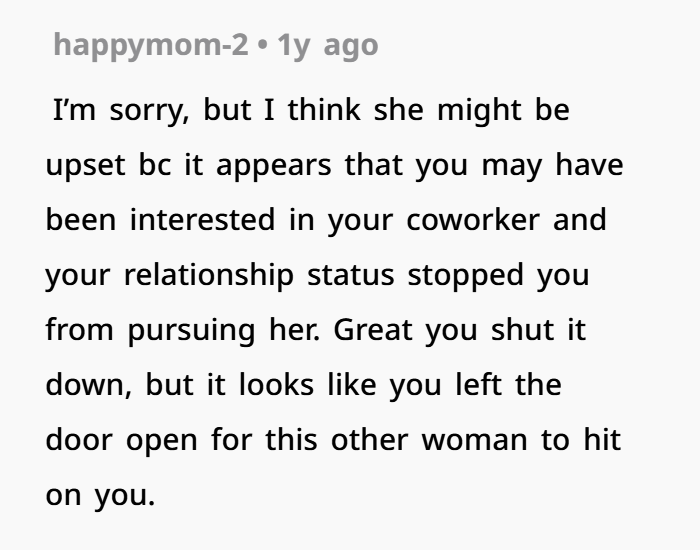
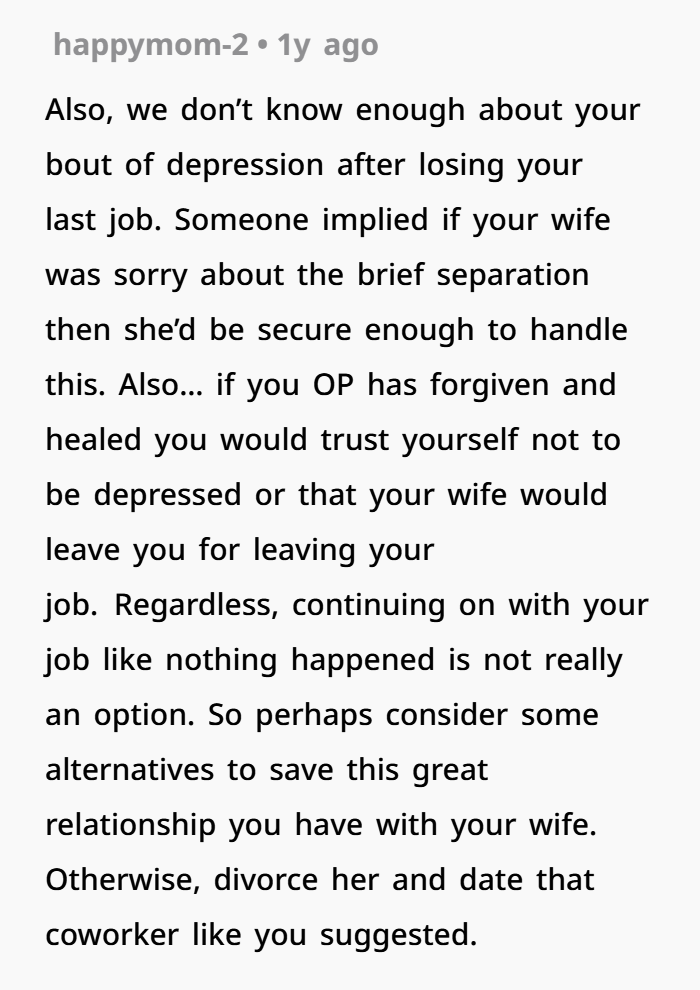
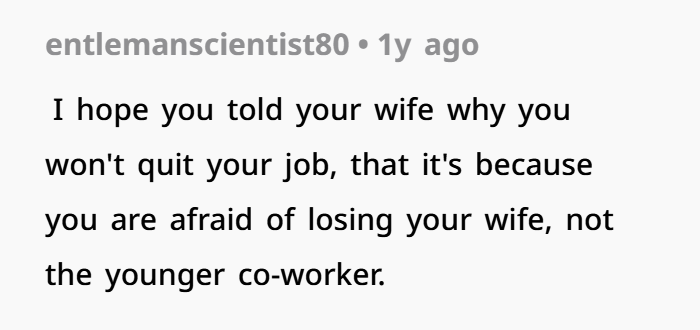
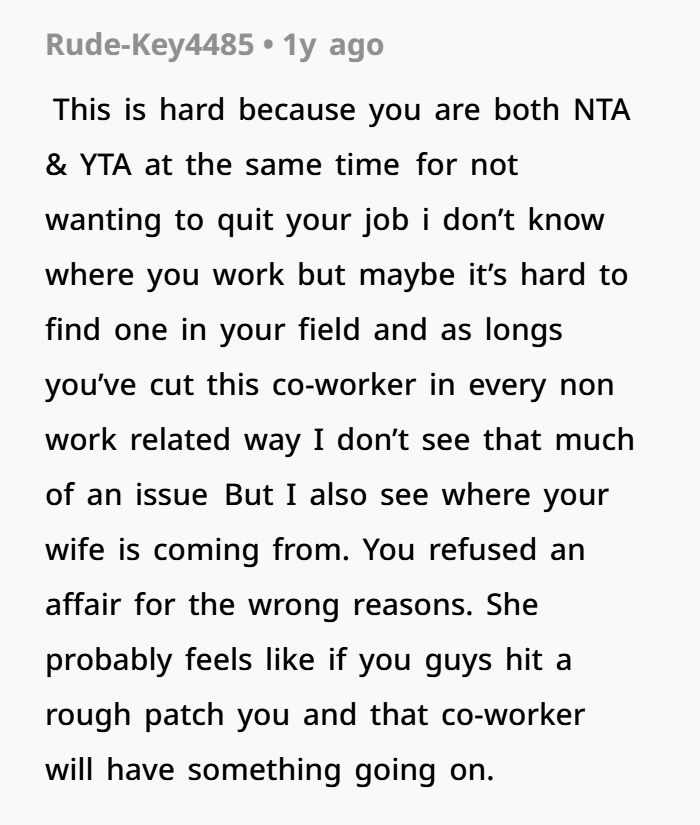
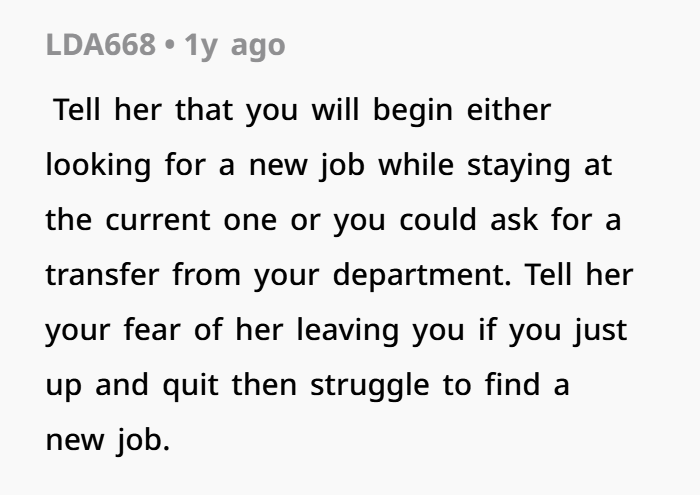
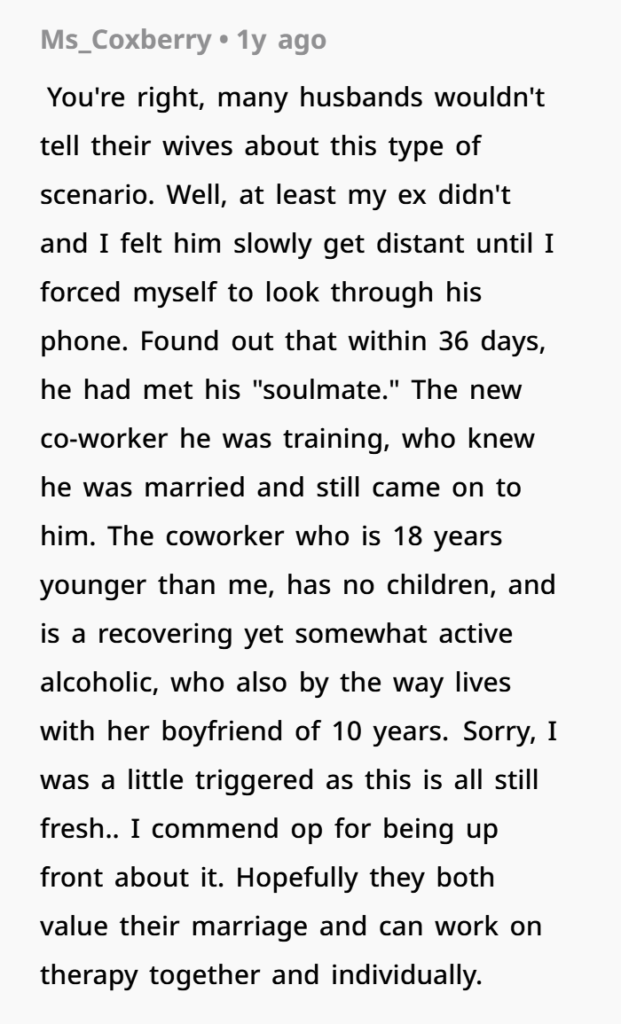
The Comments Are In


Final Thoughts
This story is not only about a workplace friendship or inappropriate messages.
It is about trust, emotional security, financial stress, and the challenges couples face when trying to rebuild after painful experiences.
The coworker may no longer be part of their lives someday, but the relationship issues underneath still need attention.
A strong marriage is built through honesty, respect, communication, and the ability to face difficult moments as a team.
Sometimes the biggest relationship problems are not caused by one event. They come from years of emotions that were never fully discussed.