He Said “It’s Just a Dress” – And I Can’t Unhear It

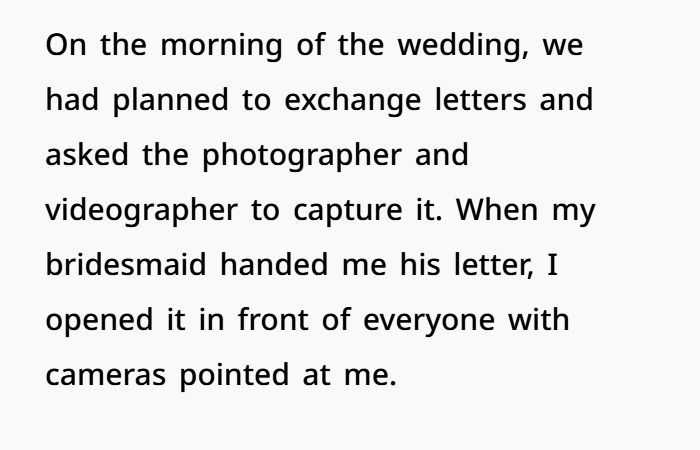
A woman shared her feelings after finally receiving her professional wedding photos months after her big day. Like many brides, she was excited to see the memories captured from such an important event. She explained that she is not naturally comfortable being the center of attention and does not always feel confident in front of a camera. However, with support from her photographer, she relaxed and ended up liking many of the photos.
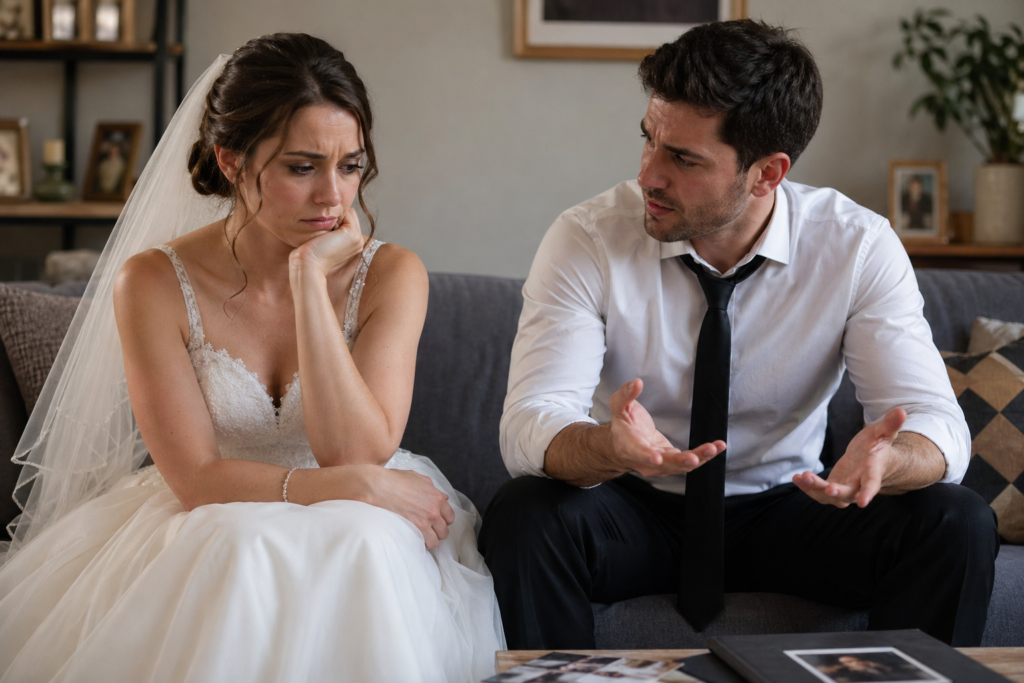
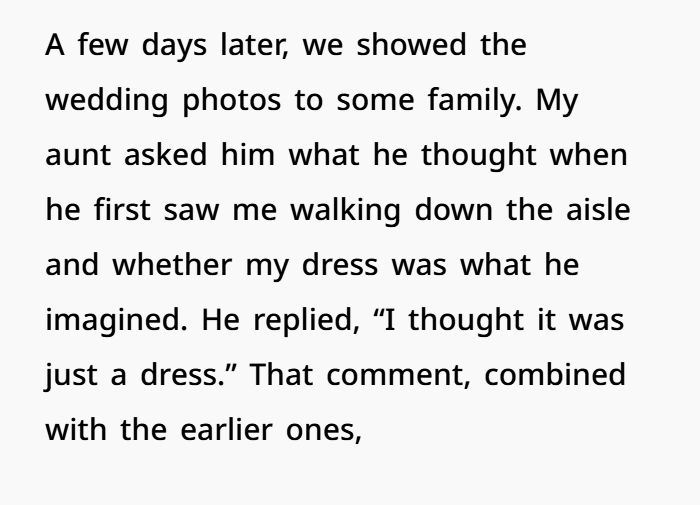
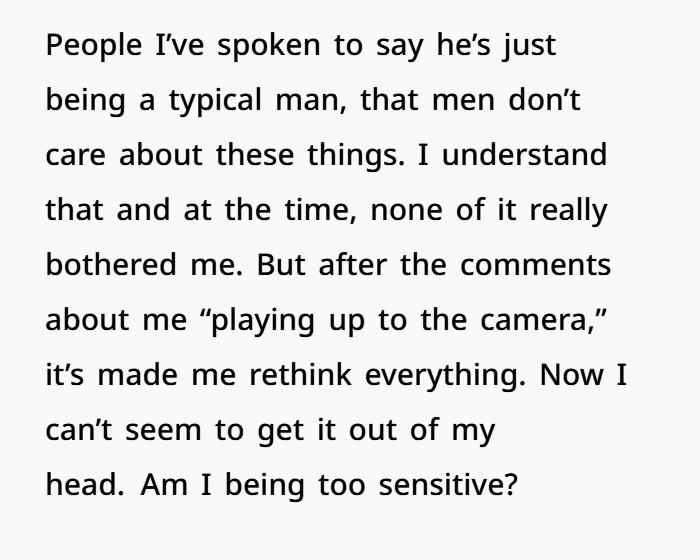
Because she is usually very hard on herself, being happy with the pictures felt special. She looked forward to sharing the memories with her husband and hoped they would enjoy the moments together. However, when they looked through the wedding gallery, his reaction hurt her feelings. Instead of focusing on the happy memories, he commented that there were many pictures of her and suggested that she was trying too hard for the camera.
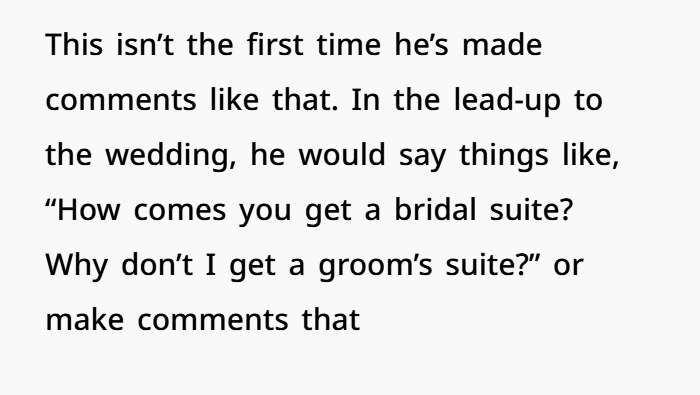
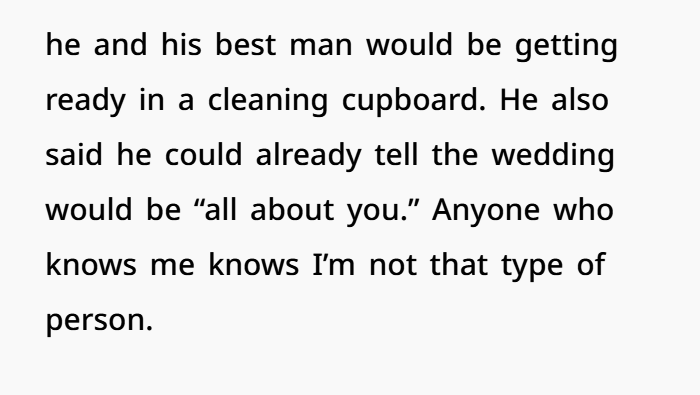
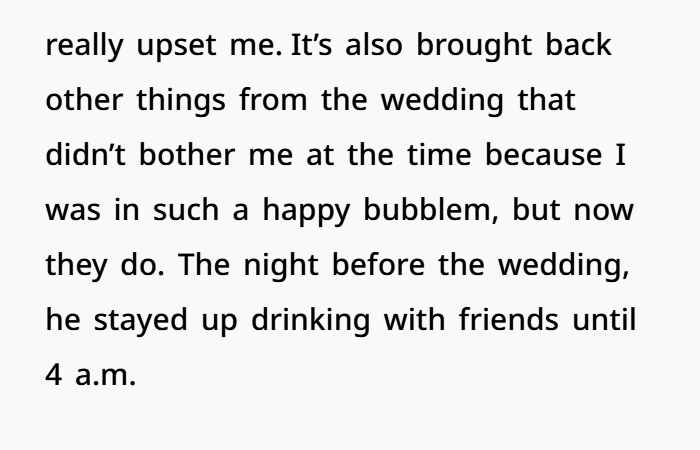
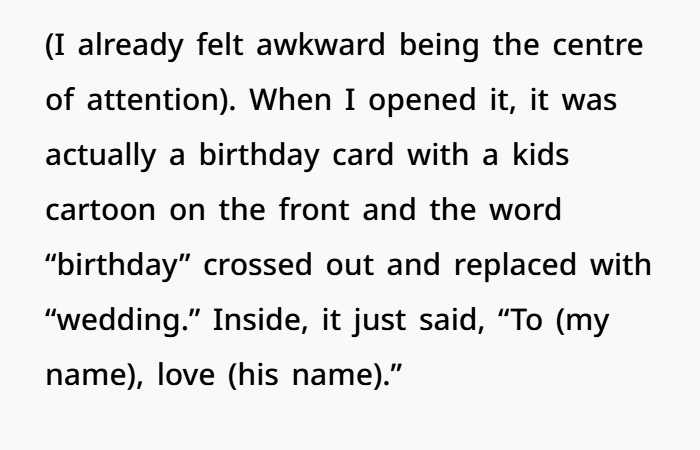
She said this comment was not the only thing that bothered her. Before the wedding, she noticed other moments that made her question how excited and involved he really was. She felt that some of his comments about the wedding being focused on her made it seem like he viewed the celebration negatively. She was also disappointed by some of the small gestures that she hoped would feel more meaningful, such as his wedding message to her.
Now, months into their marriage, she is thinking about these moments again and wondering what they mean. She is trying to understand whether she is being too sensitive or whether these experiences show deeper issues in the relationship, such as poor communication, emotional distance, or a lack of support. Her story highlights why kindness, appreciation, and emotional connection are important parts of a healthy marriage.
When Small Comments Create Big Problems in a Marriage
People often say things like:
“That is just how some people are.”
But small comments and behaviors can have a bigger effect on relationships than many people realize.
A marriage is not only damaged by huge fights.
Sometimes, it is the small moments that slowly affect trust, emotional connection, and closeness.
Why Emotional Support Matters in Relationships
Healthy relationships are built on feeling understood and valued.
When one partner shares something important, they are often looking for connection.
For example, looking at wedding photos together is not only about pictures.
It can be about:
- Remembering a special day
- Sharing emotions
- Feeling close
- Celebrating a life milestone
If one person responds with criticism or jokes instead of interest, the other person may feel rejected.
When Jokes Hurt Instead of Connect
Sometimes people say something as a joke without realizing the impact.
A comment like:
“You really liked being in front of the camera.”
may sound harmless to one person.
But to the other person, it may feel like criticism.
The timing matters.
If someone is sharing a meaningful memory, a negative comment can feel more painful because the moment is already emotional.
Wedding Photos Are Not Just About One Person
Some people believe wedding photos focus too much on the bride.
However, professional wedding photography usually includes many different types of photos.
Wedding photographers often take:
- Individual portraits
- Couple photos
- Family pictures
- Wedding party photos
- Special moments from the day
Bridal portraits are common because many couples spend time and money preparing details like:
- The dress
- Hair and makeup
- Flowers
- Accessories
These photos are part of the wedding experience.
It does not mean one person is trying to take all the attention.
Sometimes Insecurity Shows Up as Criticism
In relationships, people do not always express their true feelings directly.
Sometimes insecurity or feeling left out can appear as:
- Sarcasm
- Jokes
- Criticism
- Emotional distance
For example, someone may feel:
“I was not important during this event.”
But instead of saying that honestly, they may make a negative comment.
Understanding the feeling behind the behavior can help couples communicate better.
Weddings Can Be Stressful for Both Partners
A wedding is usually a happy event, but it can also bring stress.
Couples often deal with:
- Financial pressure
- Family expectations
- Planning responsibilities
- Big life changes
- Emotional pressure
Stress affects people differently.
Some people talk more.
Others become quiet, distant, or use humor to avoid uncomfortable emotions.
Stress can explain behavior, but it does not mean hurtful comments should be ignored.
Thoughtful Gestures Matter
Small gestures often have emotional meaning in relationships.
A letter, a card, or a personal message before a wedding may seem simple, but it can represent love and effort.
The important thing is not the price.
It is the feeling behind it.
When one person puts effort into a meaningful moment and the other person seems careless, it can create disappointment.
People usually want to feel noticed by their partner.
Emotional Connection Requires Attention
A strong relationship requires emotional awareness.
This means noticing:
- Your partner’s feelings
- Important moments
- Their needs
- Their efforts
When someone feels unseen for a long time, small events can become more painful.
The problem is usually not one comment.
It is the feeling that the comment represents a larger pattern.
Why Some Feelings Appear Later
Sometimes people do not fully process emotions during major life events.
A wedding day can be overwhelming.
There may be:
- Excitement
- Stress
- Many people around
- Strong emotions
After everything becomes calm, people may start thinking about moments that felt uncomfortable.
This does not mean they are creating problems.
It can simply mean they finally have time to understand their feelings.
Is It Intentional Hurt or Emotional Immaturity?
There is an important difference.
Some people intentionally try to hurt their partner.
Others may struggle with:
- Expressing emotions
- Giving compliments
- Understanding emotional needs
- Communicating during stressful moments
Knowing the difference matters.
A person may not have bad intentions, but they may still need to improve how they communicate.
How Couples Can Improve Communication
Many relationship problems improve when couples learn to talk openly.
Helpful conversations can include:
- “This comment hurt me because…”
- “I wanted to feel supported in that moment.”
- “What were you feeling when you said that?”
Couples counseling can also help partners understand each other better.
Professional support can help couples focus on the real issue instead of arguing only about one moment.
The Bigger Lesson
A healthy marriage is not about never making mistakes.
Everyone says the wrong thing sometimes.
What matters is:
- Taking responsibility
- Listening
- Showing appreciation
- Learning from mistakes
Small moments can either create distance or bring couples closer.
The strongest relationships are built when both people make an effort to understand each other and create emotional safety.
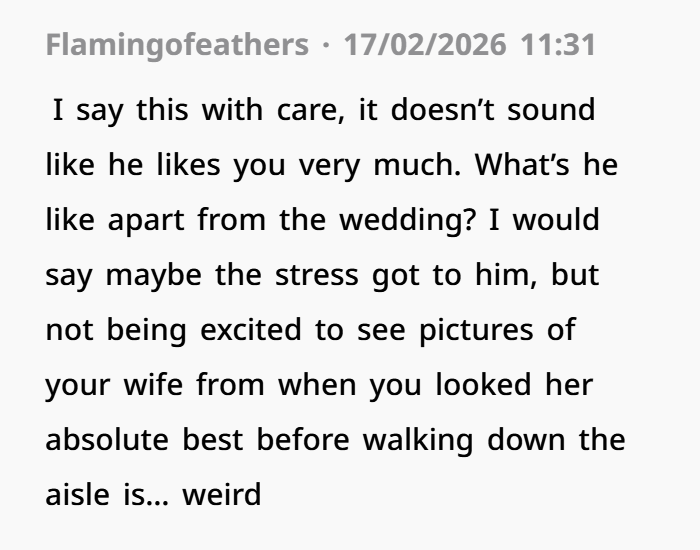
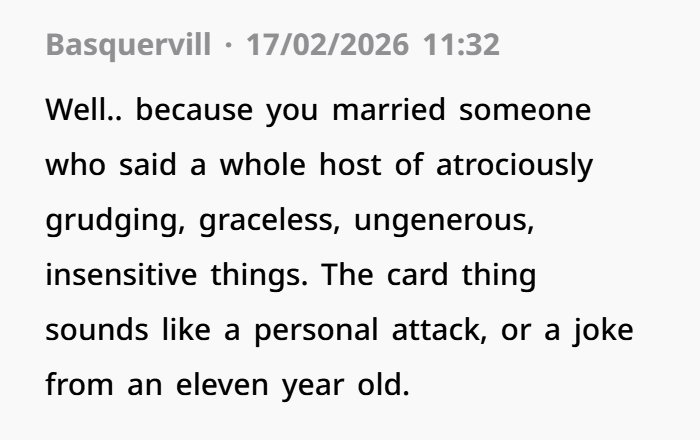
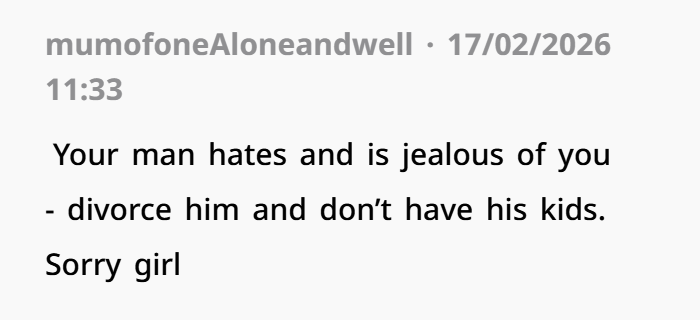
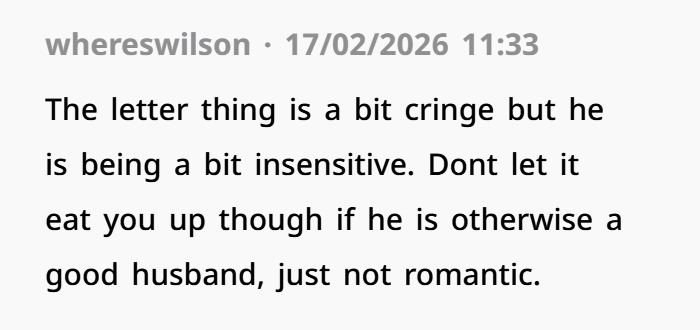
Netizens reassured her that she wasn’t too sensitive and pointed out that the man seems to simply not like his wife too much