I Exposed My Sister at My Wedding After She Slept With My Fiancé… Now My Family Says I Went Too Far

This story begins like a relationship many people hope to have. Two people grew up together, became close friends, and later started a romantic relationship. They built a life together, lived in the same home, traveled, adopted cats, and created daily routines as a couple. From the outside, their relationship looked strong and stable.
He believed they had a healthy relationship because they rarely argued. When problems happened, they usually worked through them together. He felt secure and trusted that their relationship would continue for many years.
However, things suddenly changed one night. Her behavior became different. She stopped answering calls, gave unclear messages, and turned off her location. These small changes made him feel that something was wrong. Later, he discovered that she had not been where she said she was and that she had been spending time with another person.
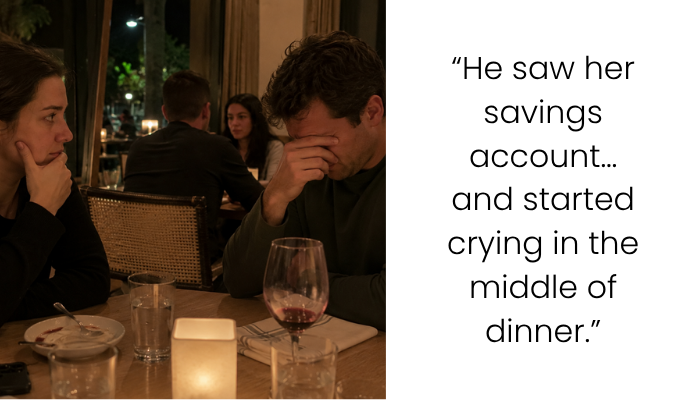
She explained that she had been unhappy in the relationship for some time but stayed because of financial reasons. This information was very painful for him because he felt their relationship had not been honest. The situation became even more difficult when communication broke down, she blocked him, and there was a disagreement about personal belongings, including their cat.
Now the situation is about more than a breakup. It involves broken trust, emotional stress, and a disagreement that may require legal advice. When long-term relationships end, clear communication and respect for each person’s rights can help both people handle the situation in a healthier way.
When Family Betrayal Creates Long-Term Pain: Understanding Hurt, Forgiveness, and Healing
Some family situations are difficult because they involve many emotions at the same time.
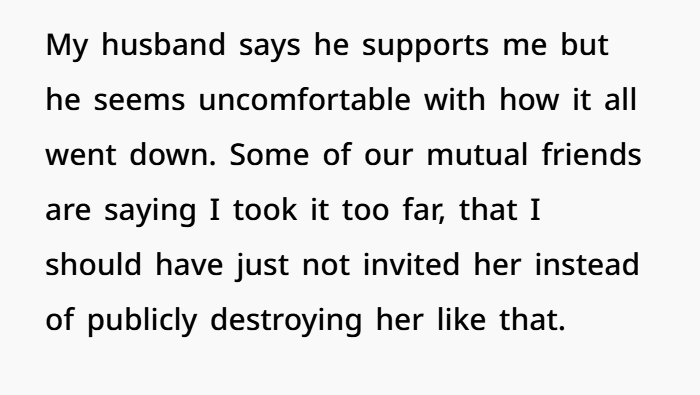
From the outside, it may look like revenge or a public argument.
But underneath, there can be years of pain, broken trust, family pressure, and feelings that were never properly addressed.
This is not only about one event.
It is about what happens when emotional wounds are ignored for a long time.
When Betrayal Comes From Two People You Trust
Cheating can already be a deeply painful experience.
But when the betrayal involves someone close to you, such as a family member, the emotional impact can feel even stronger.
A person may feel like they lost trust in more than one relationship at the same time.
They may start questioning:
- Who can I trust?
- Why did this happen?
- How could people close to me do this?
These feelings are common after a major betrayal.
The pain is not only about what happened. It is also about losing the feeling of safety and trust that existed before.
When People Stay Quiet After Being Hurt
After discovering the betrayal, she chose not to react immediately.
She canceled plans, created distance, and stopped communicating.
From the outside, this may look like strength and control.
However, staying quiet does not always mean someone has healed.
Sometimes people push their emotions aside because they do not know how to handle the pain.
Anger, sadness, and disappointment can remain hidden for years if they are never properly processed.
Emotional healing often requires facing those feelings instead of simply avoiding them.
The Role of Family Pressure
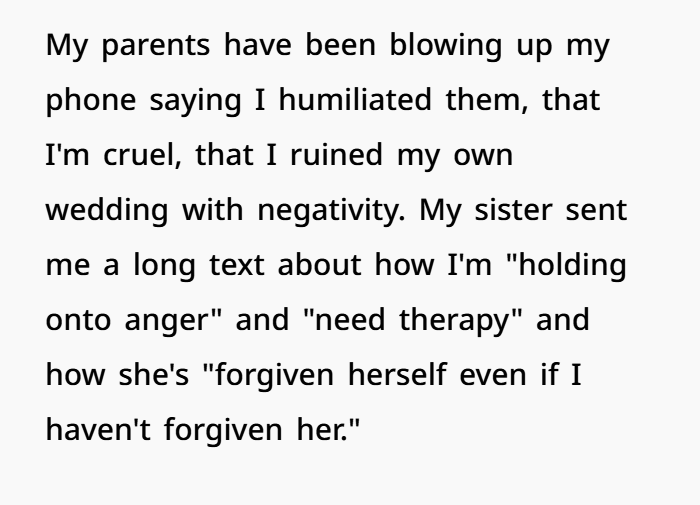
The response from family members also played an important role.
Instead of focusing only on the hurt person’s emotions, the family appeared more focused on keeping peace and maintaining the relationship.
In some families, there can be pressure to forgive quickly because people want everyone to stay connected.
However, forgiveness cannot be forced.
Real healing usually happens when there is:
- Honest communication
- Acknowledgment of harm
- Responsibility for actions
- Time to rebuild trust
When forgiveness becomes something expected instead of something freely chosen, it can create more resentment.
Starting a New Chapter Without Healing the Old One
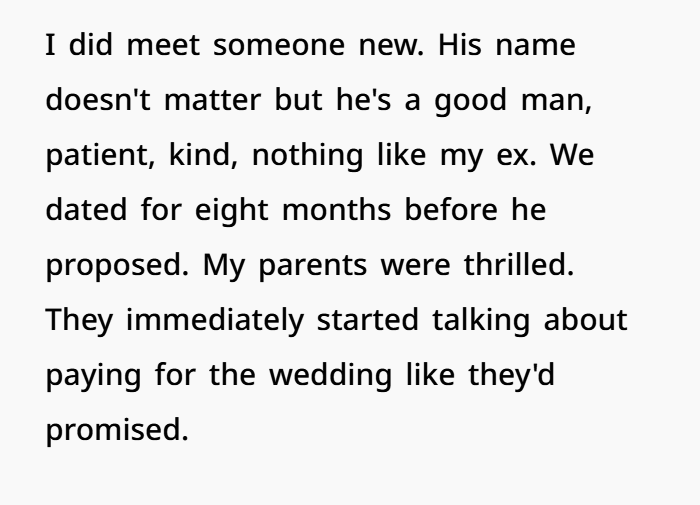
Later, she entered a healthier relationship with someone supportive and caring.
That shows personal growth.
She was able to move forward and create a new life.
However, moving forward does not always mean old emotional wounds are completely healed.
Sometimes painful experiences stay hidden until something reminds us of them.
A major event, a person, or a situation can bring those old feelings back.
Why the Wedding Became an Emotional Trigger
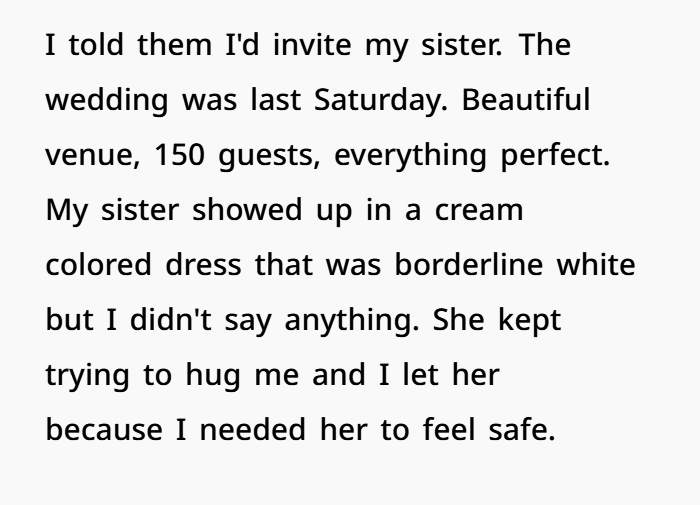
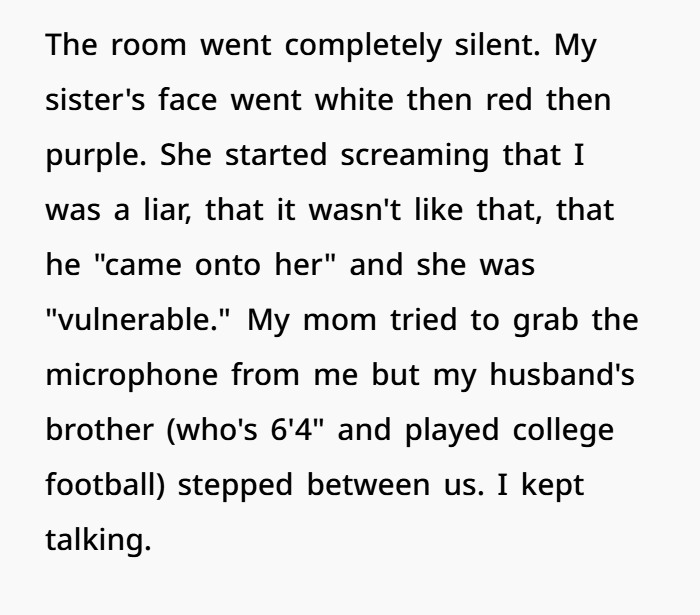
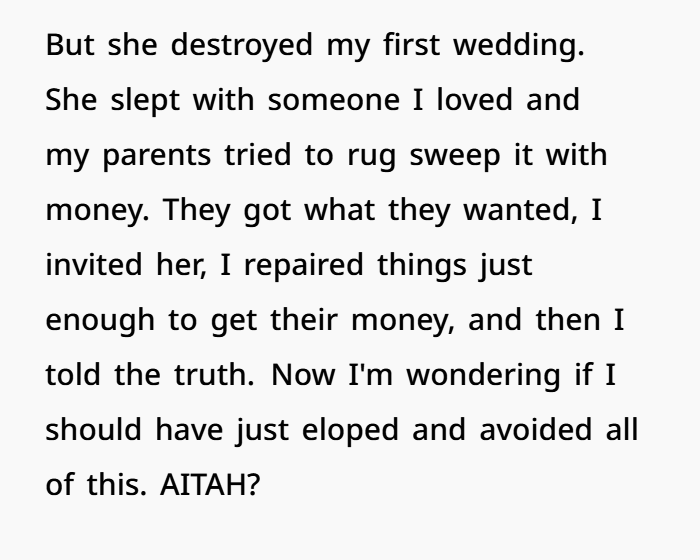
When the wedding day arrived and her sister acted as if everything was normal, it may have brought back years of unresolved emotions.
From her perspective, the issue had never truly been repaired.
There was no meaningful apology, no clear accountability, and no real conversation about the damage caused.
That can make a person feel like their pain was ignored.
The wedding may have become the moment where all those emotions finally came out.
Speaking Out Publicly: Healing or Revenge?
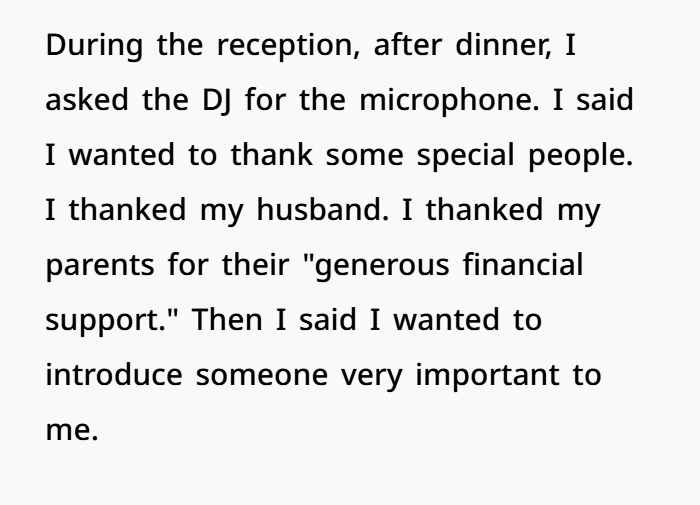
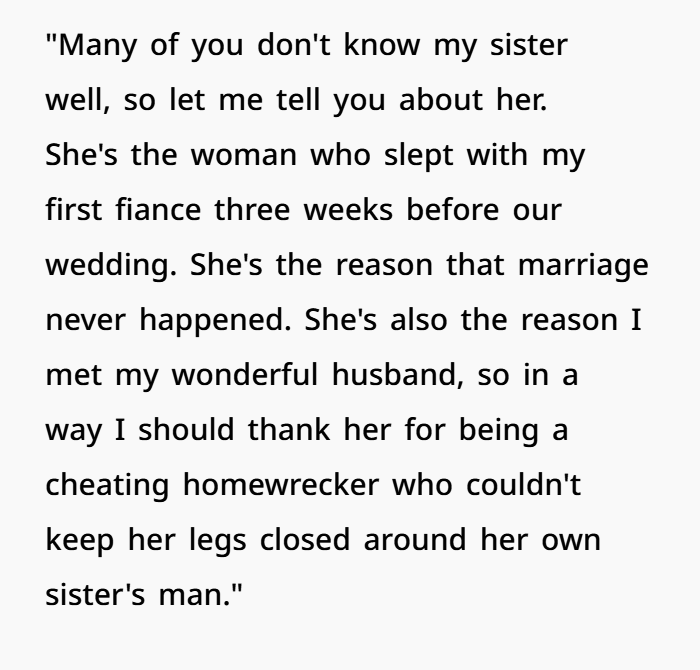
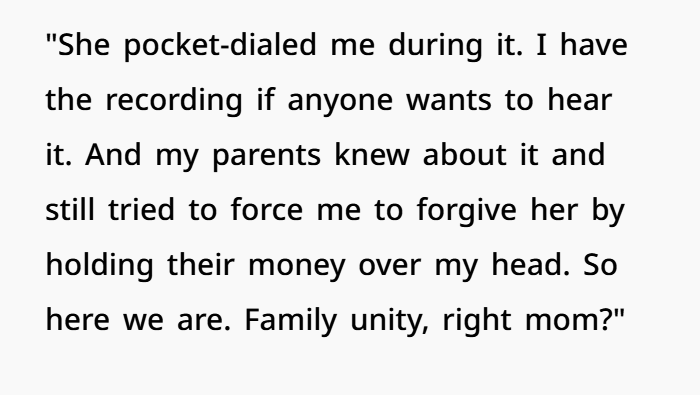
The speech at the wedding was clearly an emotional moment.
It was planned, and she chose a public place to share her experience.
For some people, speaking the truth after years of silence can feel like taking back their voice.
They may feel they are finally being heard.
However, public confrontation can also create new problems.
A wedding is usually meant to celebrate love and a new beginning. Bringing a serious family conflict into that environment can change the mood and affect everyone involved.
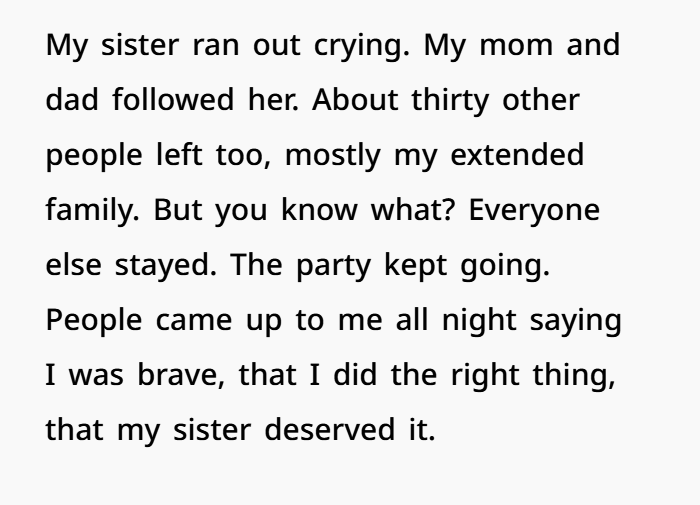
This is why people may have different opinions about what happened.
Some people may see it as honesty and emotional release.
Others may see it as a painful issue being handled in a public way.
Both reactions can exist.
Understanding the Sister’s Response
When someone is confronted about past actions, they may respond with denial, explanations, or attempts to reduce responsibility.
Sometimes people say they have already forgiven themselves, but self-forgiveness is different from repairing harm with another person.
True accountability includes understanding how your actions affected someone else.
Without accountability, trust becomes difficult to rebuild.
Why Unresolved Problems Come Back
One important lesson from this situation is that unresolved problems rarely disappear on their own.
When people avoid difficult conversations, the emotions often remain.
The hurt person may continue carrying pain.
The person who caused harm may avoid responsibility.
The family may try to ignore the conflict.
But the problem can continue underneath the surface.
Eventually, those feelings may come out in unexpected ways.
Finding a Healthier Way Forward
This situation is complicated because there are different truths involved.
Her pain was real.
The betrayal was serious.
Wanting acknowledgment and honesty is understandable.
At the same time, the way someone expresses their pain can affect others and create new challenges.
Healthy conflict resolution usually focuses on:
- Honest conversations
- Clear boundaries
- Respectful communication
- Taking responsibility
- Finding a path toward healing
The Bigger Lesson About Family Relationships
Family conflicts involving betrayal are rarely simple.
People can be hurt and still make choices that create more problems.
Someone can deserve understanding while also needing to consider the impact of their actions.
The most important question is not only:
“Who was right?”
It is also:
“What choice creates the most healing moving forward?”
Sometimes telling the truth is necessary.
But true healing often requires more than truth.
It requires understanding, accountability, and a willingness to rebuild trust.
See The Comments Below