AITA for Refusing to Help My Dad’s Affair Partner During Her Risky Pregnancy?

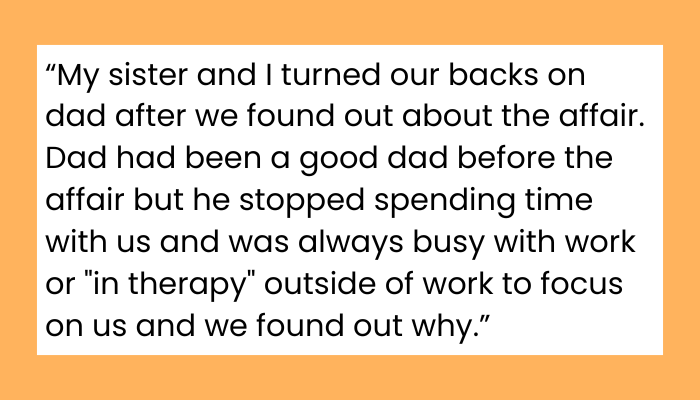
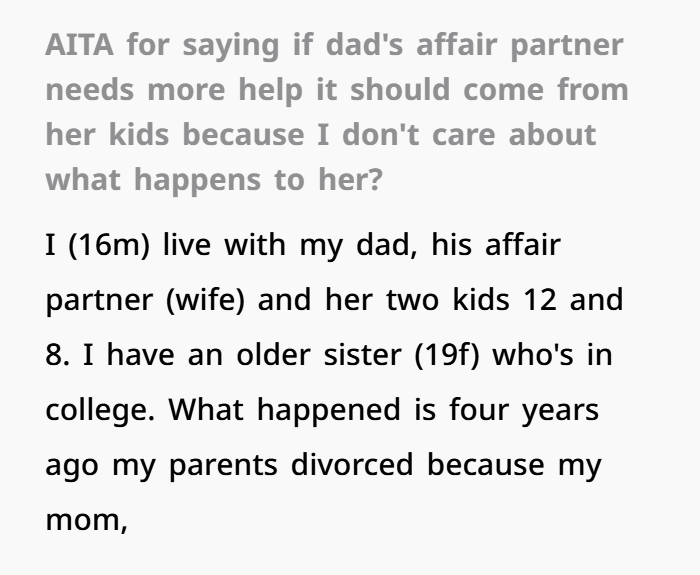
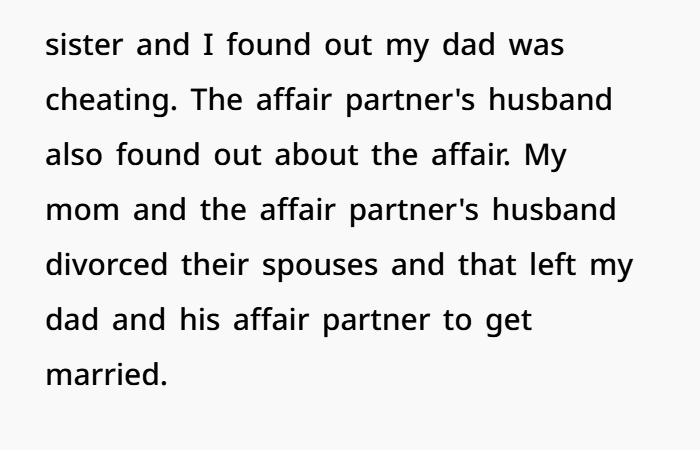
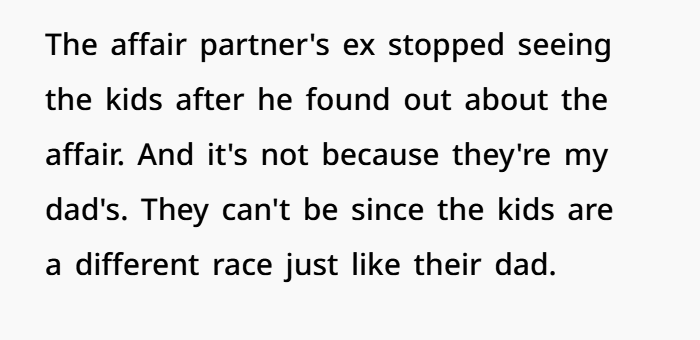
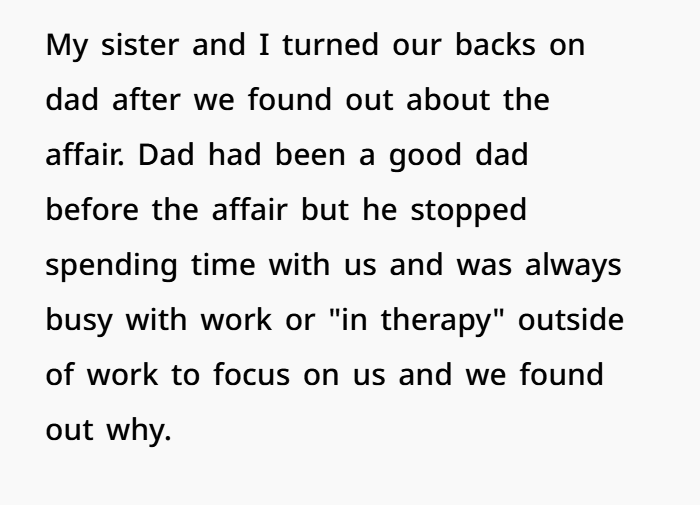
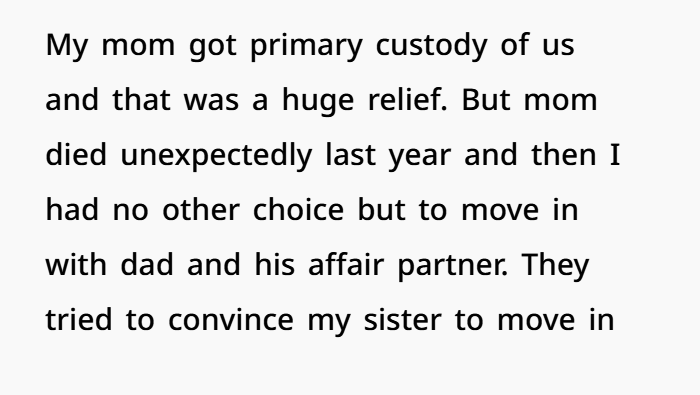
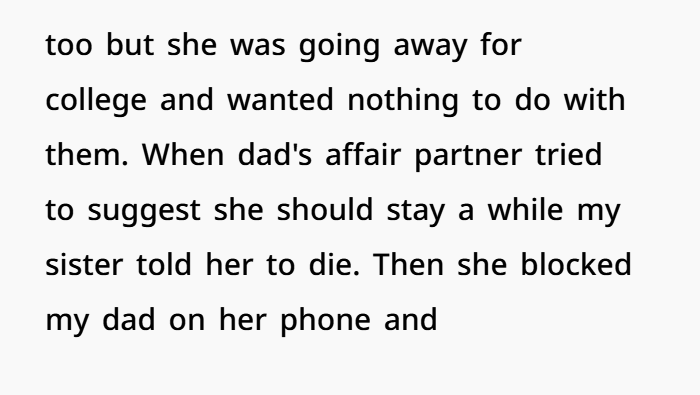
A 16-year-old boy shared a difficult family situation that changed his life. A few years earlier, his parents’ marriage ended after his father had an affair. The divorce affected the entire family, and his mother became the main caregiver. Later, his mother passed away unexpectedly, leaving him with no choice but to move in with his father and his father’s new wife.
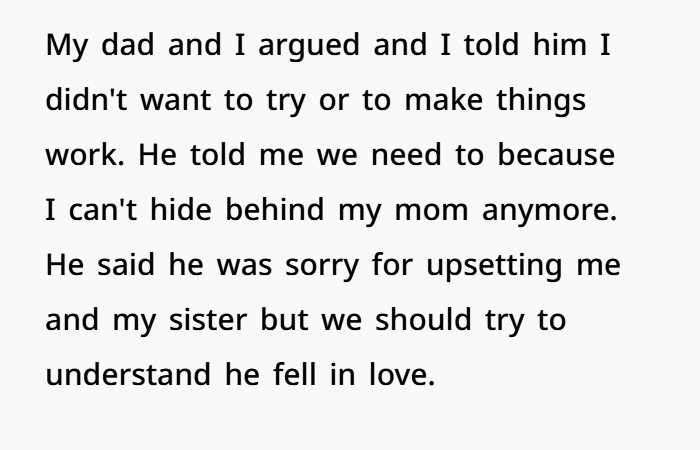
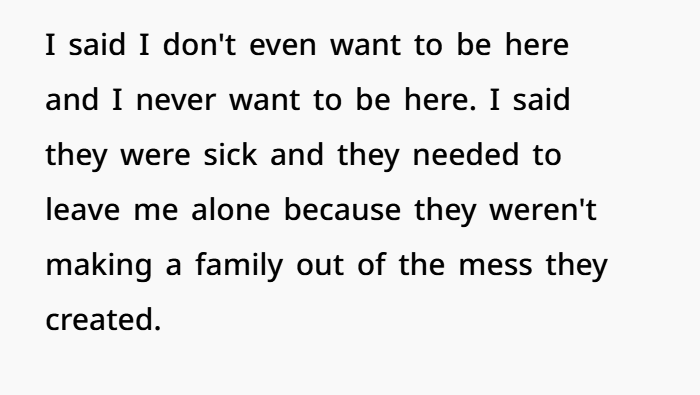
The teenager said living in that home has been very difficult. He does not feel comfortable around his father’s wife and struggles to see the house as a real home. He believes the family changes happened because of choices made by adults, and he has found it hard to move past the hurt.
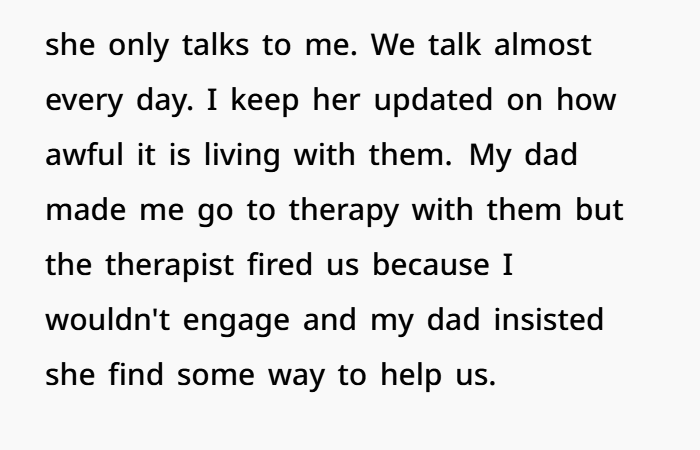
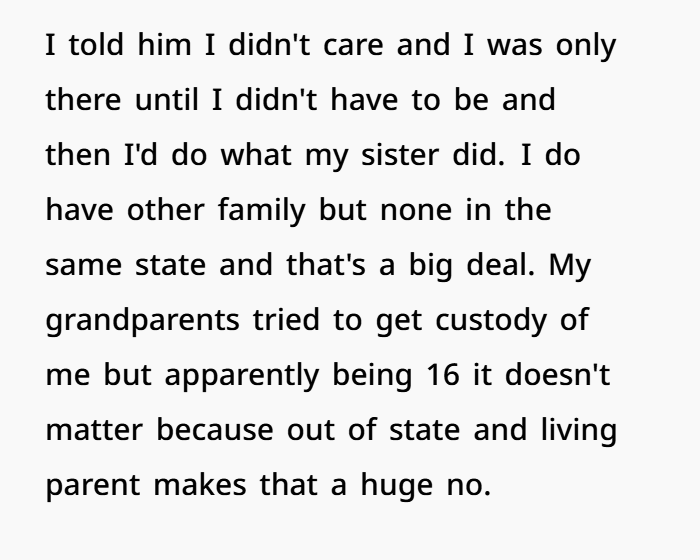
His older sister decided to leave the situation, and he is also waiting until he is old enough to make his own choices. He said family conversations and counseling have not helped him feel better, and he has become emotionally distant from everyone around him.
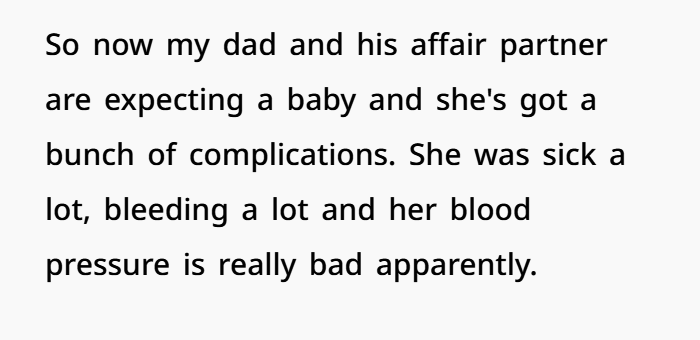
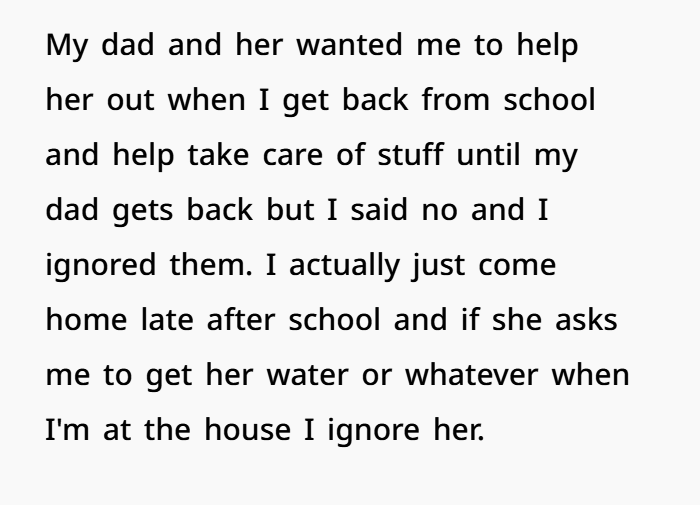
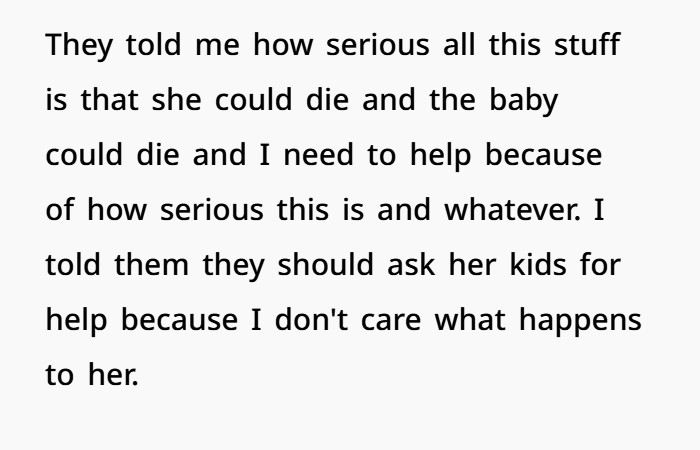
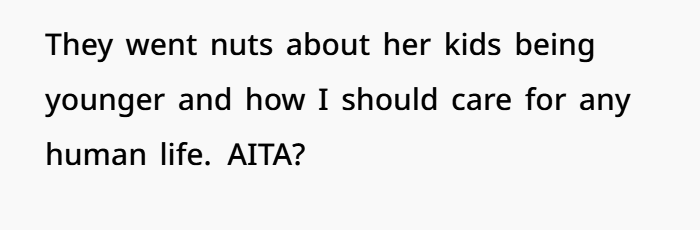
The situation became more complicated when his father’s wife became pregnant and experienced health problems. His family expected him to help more at home, but he refused because of the anger and pain he still feels from the past. His reaction caused more conflict in the household.
This story shows how deeply family conflicts can affect children and teenagers. Difficult situations like divorce, loss, and major family changes can create strong emotions that take time to process. Open communication, emotional support, and professional guidance can sometimes help families work through painful experiences.

Dealing With Family Betrayal, Loss, and Difficult Emotions as a Teen
This situation is complicated because it involves many painful things at the same time:
- A parent’s betrayal
- Losing a parent
- Family changes
- Feeling forced to accept a new situation
- Trying to handle strong emotions
Many people in situations like this look for family counseling, grief support, or mental health advice because these feelings can be very difficult to understand.
When A Parent Cheats, It Can Affect The Whole Family
When a parent cheats, it does not only hurt the marriage.
It can also hurt the children.
Many kids feel like their safe world has changed. They may feel angry, confused, or betrayed. Even if the parent says it was a mistake, children often experience it as a major loss of trust.
It can feel like:
- “My family is not the same anymore.”
- “Someone I trusted hurt us.”
- “Why did this happen?”
Those feelings are normal.
Losing Your Mom Made Everything Harder
Losing a parent is already one of the hardest experiences someone can go through.
Grief can last for a long time. People often need support from family, friends, grief counselors, or mental health professionals while they process the loss.
But in this situation, you were also dealing with another painful change at the same time.
You lost your mom and then had to live with the parent who caused you emotional pain and the person connected to that pain.
That is a lot for anyone, especially a teenager.
Your Dad May See Things Differently
From your dad’s point of view, he may be trying to rebuild a family.
He may believe that:
- Therapy can help
- Everyone spending time together will make things better
- The family should move forward
His intentions may not be completely bad.
However, emotions do not work like a switch.
You cannot force yourself to suddenly trust someone or feel close to someone just because another person wants that.
Healing takes time.
Forced Family Bonding Usually Does Not Work
When someone has been hurt, being pressured to act like everything is normal can make things worse.
Instead of feeling closer, they may feel more distant.
The more someone says:
“You need to accept this.”
The more the hurt person may think:
“You do not understand how much this affected me.”
A healthy relationship needs patience, honesty, and respect for feelings.
The Pregnancy Situation Makes Things More Complicated
Now there is another difficult situation.
Your dad and his wife are asking you to help because of the pregnancy.
In many families, helping during a difficult time would be seen as normal.
But your situation is different.
You do not feel emotionally connected to her.
To you, she represents a painful part of your family history.
So when they ask you to help, it may not feel like helping family. It may feel like being asked to care about someone who is connected to your hurt.
That explains why you feel angry.
But Words Matter Too
Your feelings are understandable.
Feeling angry, hurt, or even emotionally numb after betrayal and loss is normal.
However, there is a difference between saying:
“I do not feel comfortable helping her.”
and saying:
“I do not care what happens to her.”
The first one is a boundary.
The second one can cause more pain and damage relationships further.
You are allowed to protect yourself without saying things that may hurt you later.
You Do Not Have To Pretend Everything Is Fine
You do not have to suddenly forgive your dad.
You do not have to act like the past never happened.
You do not have to force a close relationship before you are ready.
But you can choose how you respond.
You can say:
- “I am not ready to help in that way.”
- “I need space.”
- “I am still dealing with what happened.”
Those are honest boundaries.
Think About Your Future Relationship With Your Dad
Right now, you are living in a situation where you may not have full control.
You are still young, and your living situation depends on adults.
But in the future, you will have more independence and more choices about your relationships.
The way you handle this time can affect how you feel about yourself later.
Acting only from anger can sometimes create more pain in the future.
That does not mean your anger is wrong.
It means your future self also matters.
Remember The Younger Kids Too
There may be other children in the home who are also struggling.
They did not cause any of this.
They may also feel confused, hurt, or scared about the family changes.
Family conflict affects everyone in the home.
That does not mean you have to ignore your own pain. It just means everyone is dealing with something difficult.
Finding A Healthier Balance
A healthier approach may look like this:
Set Clear Boundaries
You can say you are not comfortable helping directly.
Avoid Words You Cannot Take Back
Strong emotions pass, but hurtful words can stay with people for years.
Focus On Your Own Healing
Talk to trusted people, write your feelings down, or consider mental health support if you feel overwhelmed.
Give Yourself Time
You do not have to solve your entire family situation right now.
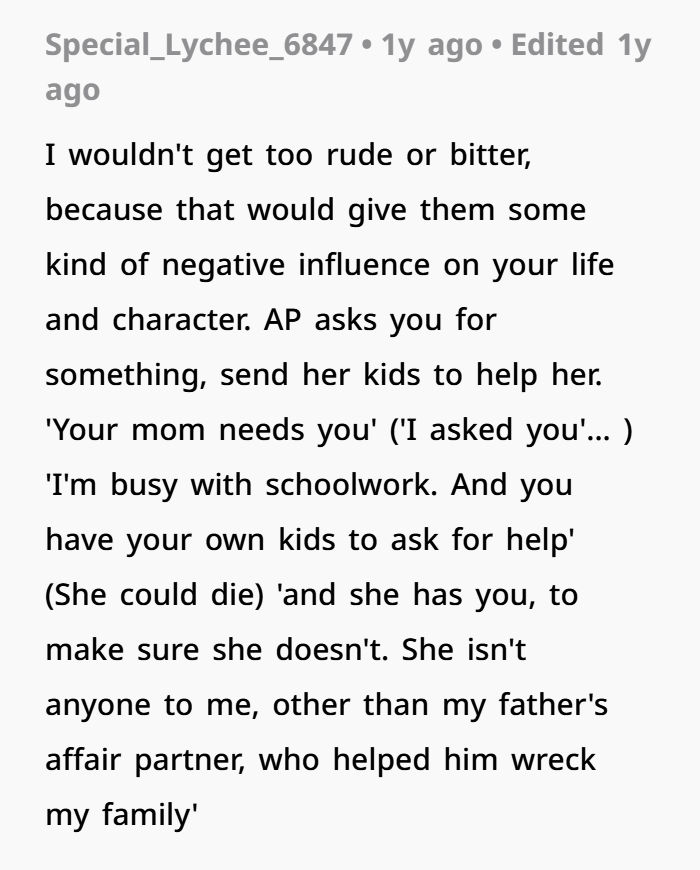
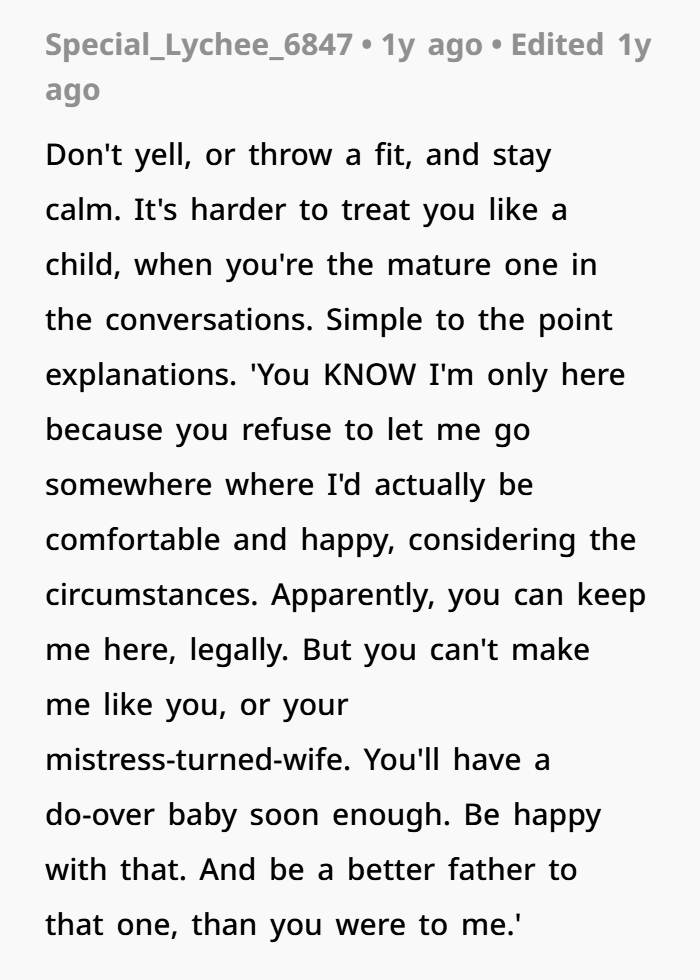
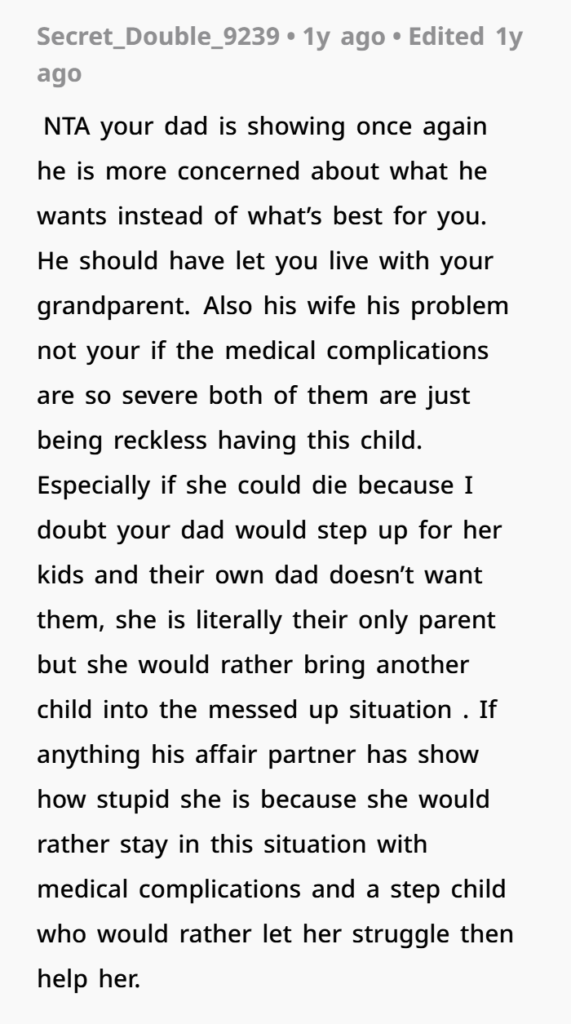
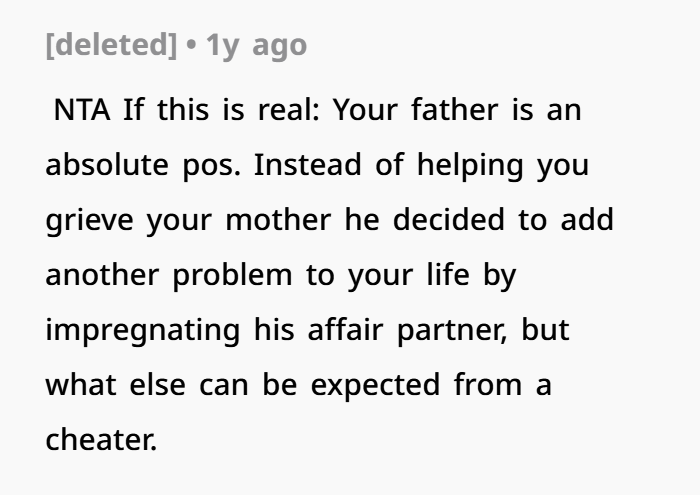
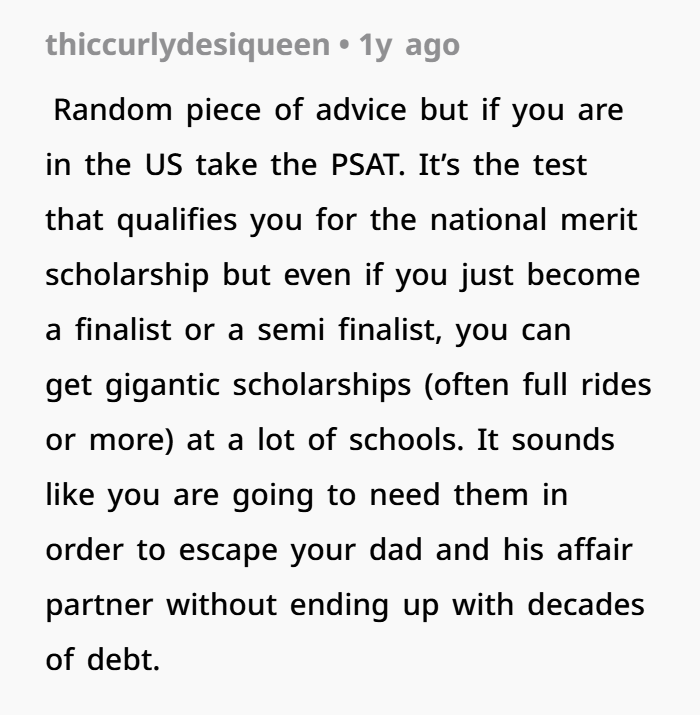
Top Comments From Readers


Final Thoughts
This is not just about being “right” or “wrong.”
It is about a teenager trying to handle betrayal, grief, and a family situation that changed without their choice.
Your feelings make sense.
Being hurt does not make you a bad person.
But learning how to handle those feelings in a healthy way will help protect your future, your peace, and your relationships.
You have been through a lot for someone who is only 16, and it is okay to need time to process it.