I Stopped Being the Office Cheerleader After My Boss Punished Me for Listening to a Coworker

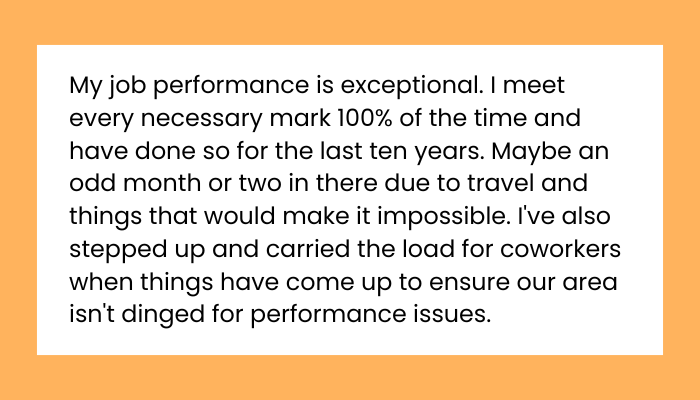
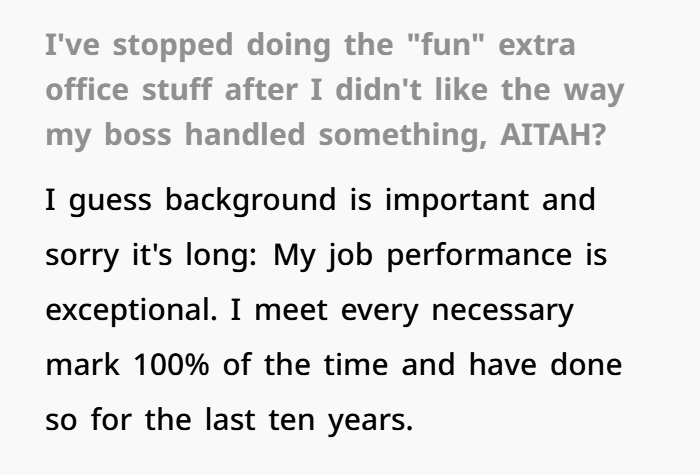
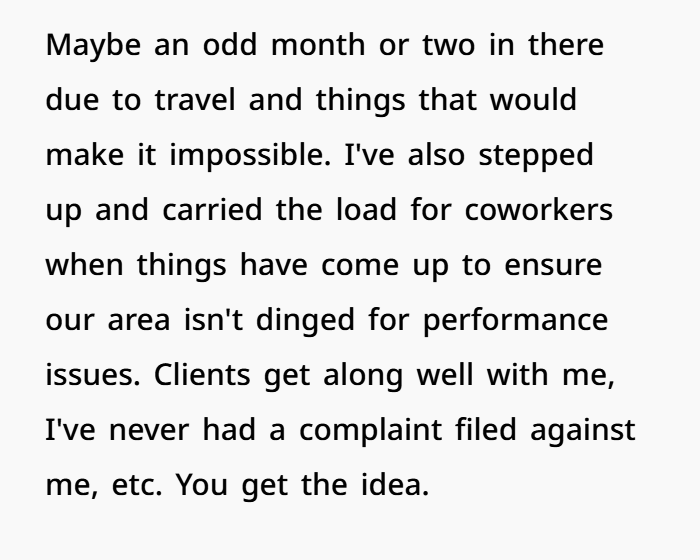
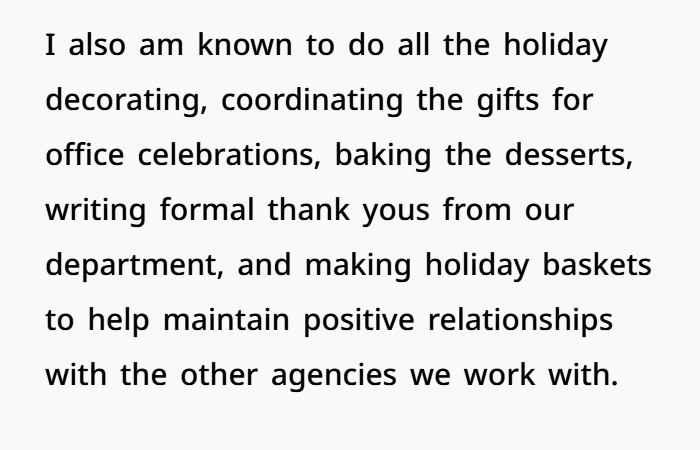
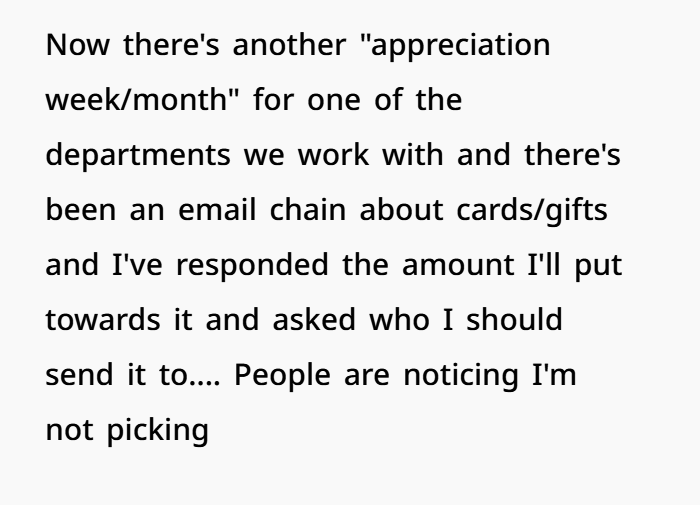
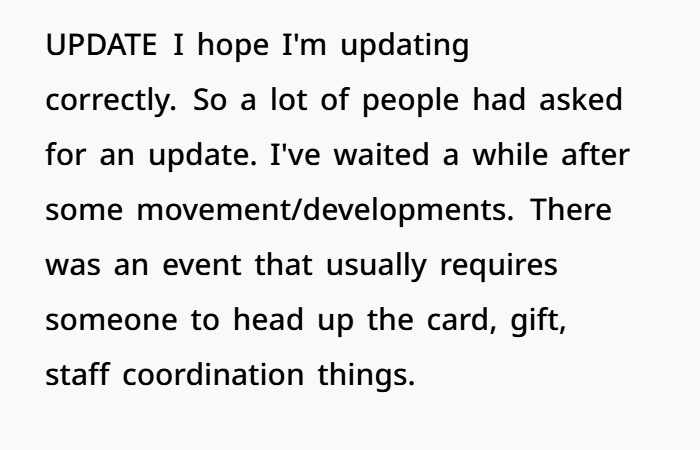
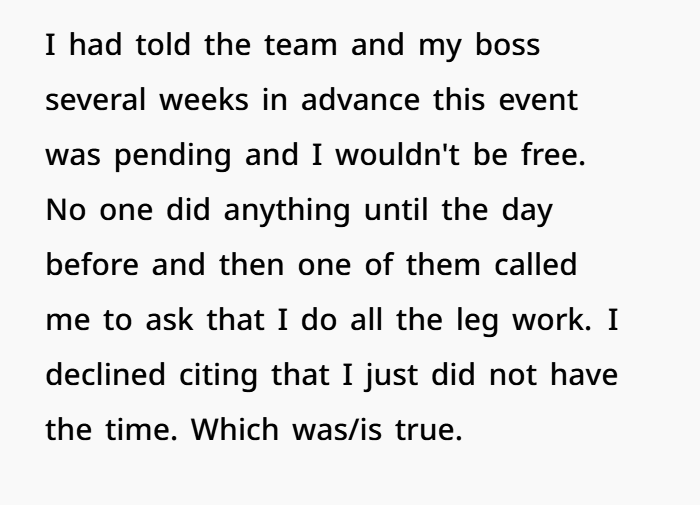
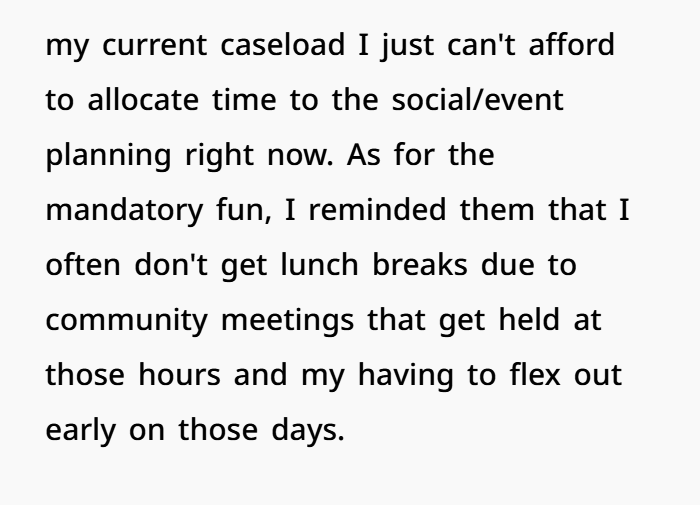
A worker shared a story about feeling unappreciated after many years of dedication at their job. For more than a decade, they worked hard, received good performance reviews, and helped make the workplace better. They also took care of many extra tasks, such as organizing office events, preparing gifts, decorating for holidays, and helping build positive relationships with other teams.
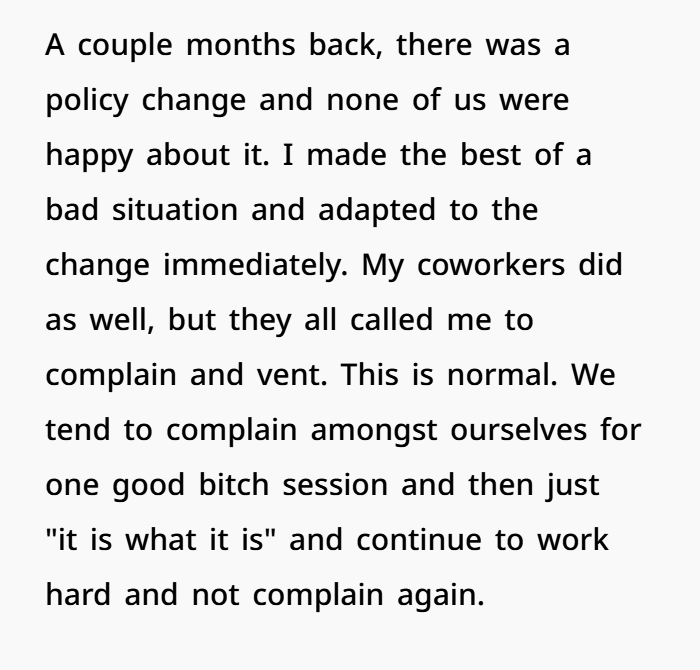
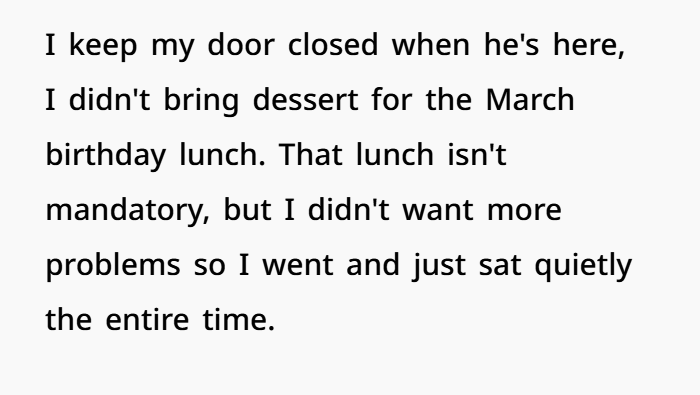
When the company introduced a major policy change, the employee tried to adjust and even supported coworkers who were having trouble with the transition. They believed that helping others and keeping a positive workplace environment was part of being a good team member.
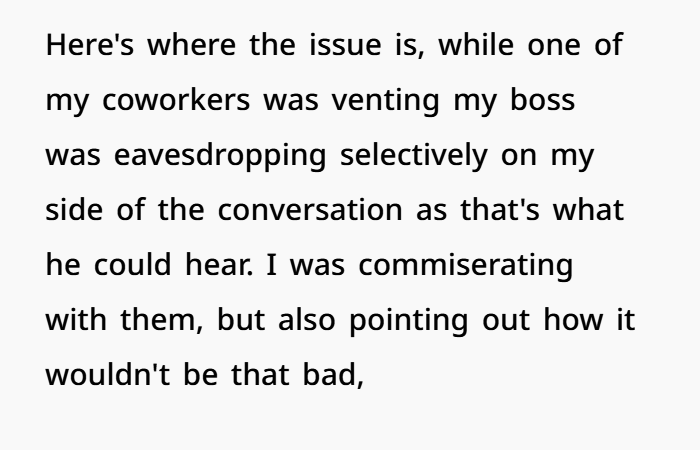
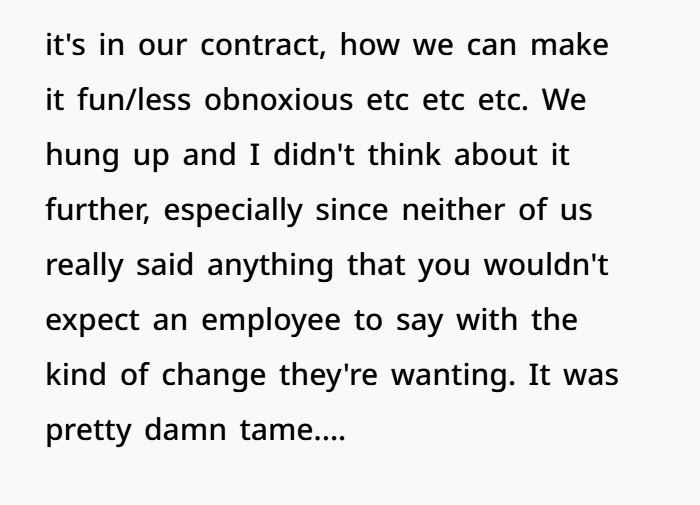
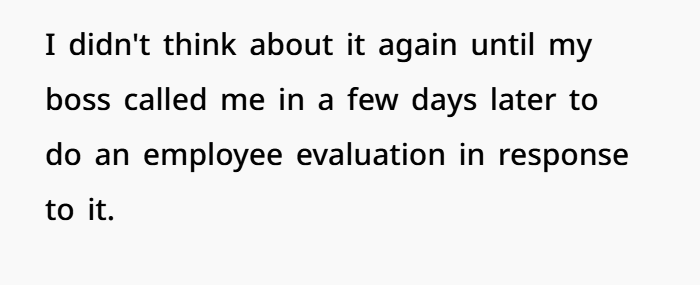
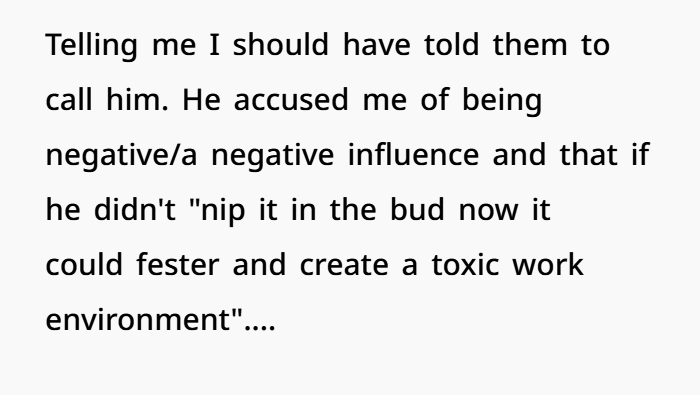
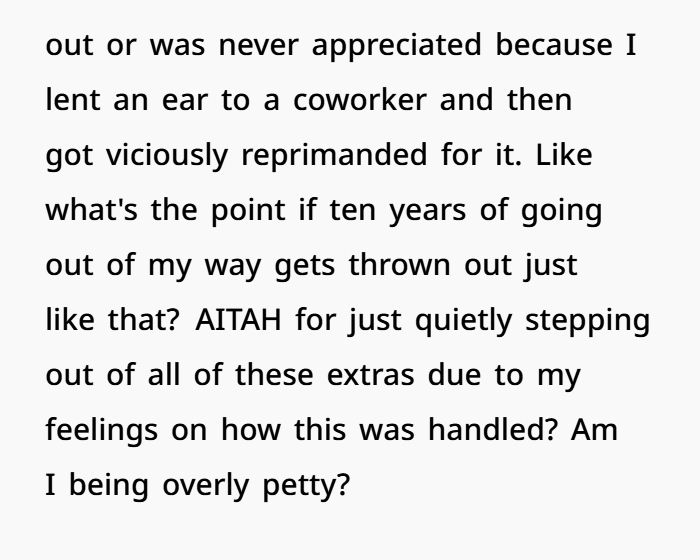
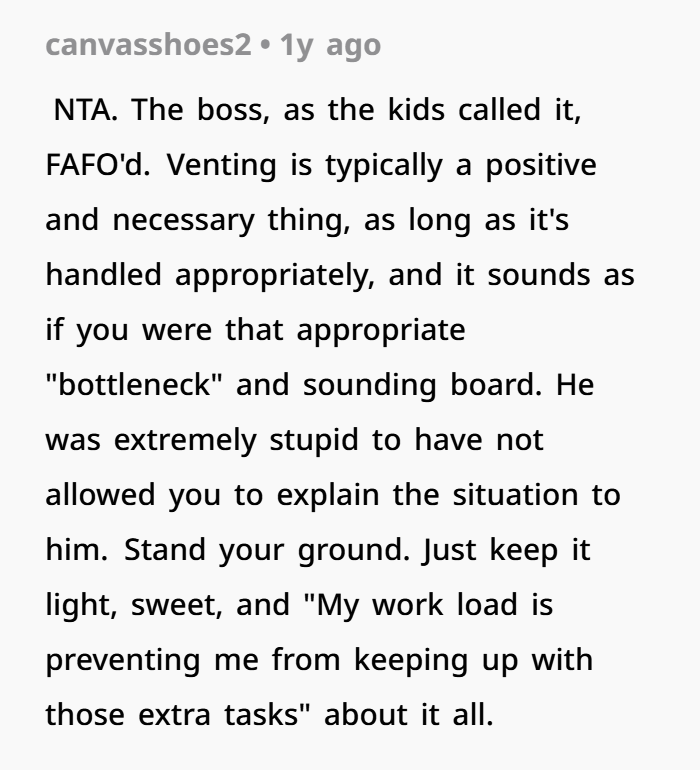
Later, a manager overheard part of a private conversation between the employee and a coworker. The employee was trying to discuss concerns and help others handle the changes, but management misunderstood the conversation and viewed it as negative feedback about company decisions.
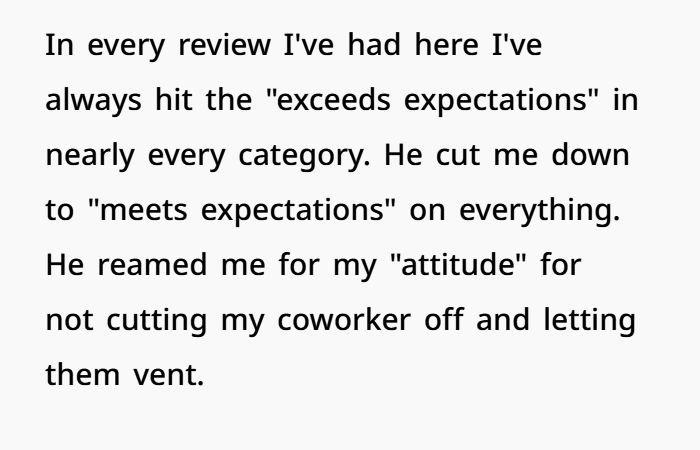
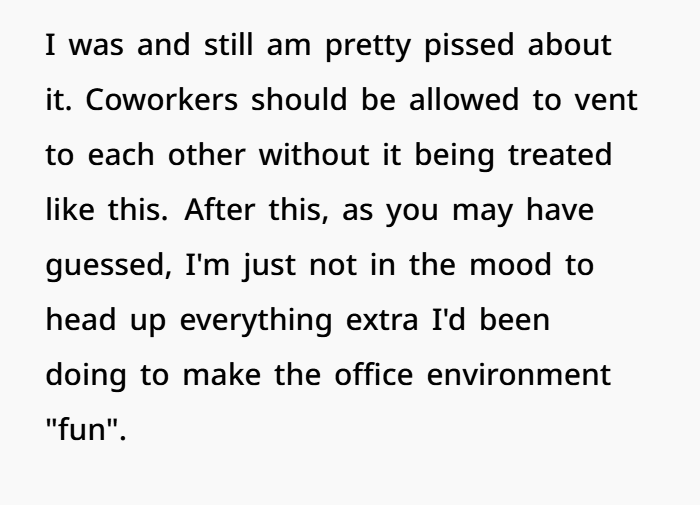
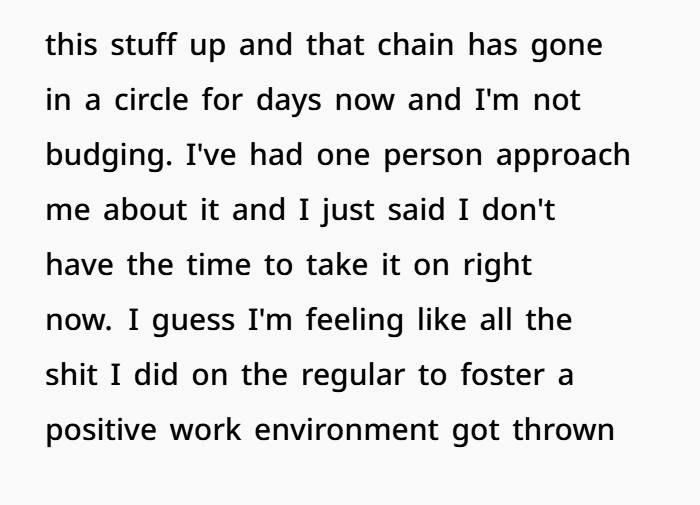
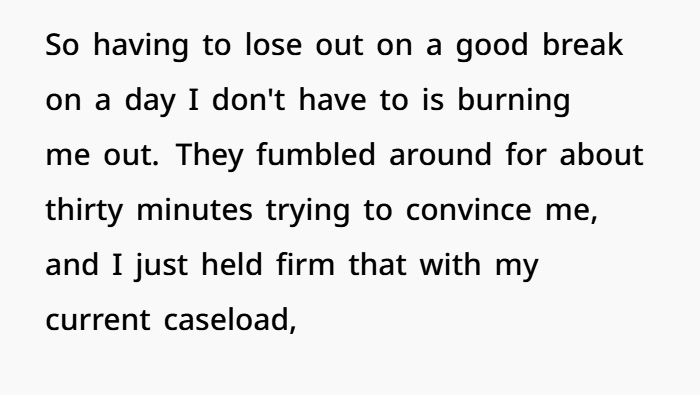
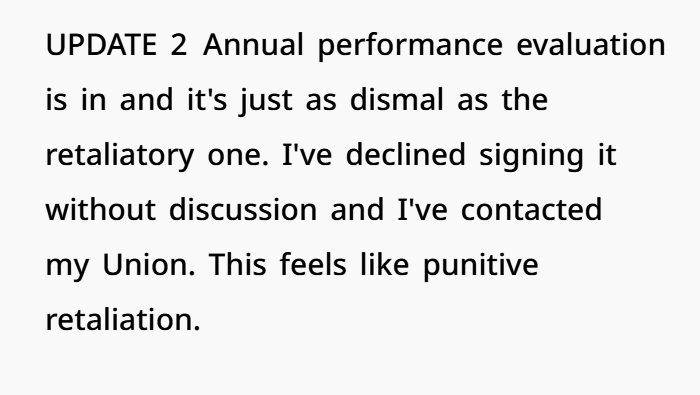
After that, the employee noticed a change in how their work was viewed. Their performance rating was lowered from “exceeds expectations” to “meets expectations,” which felt disappointing after years of strong results and extra effort. The employee decided to stop taking on unpaid tasks outside their official role.
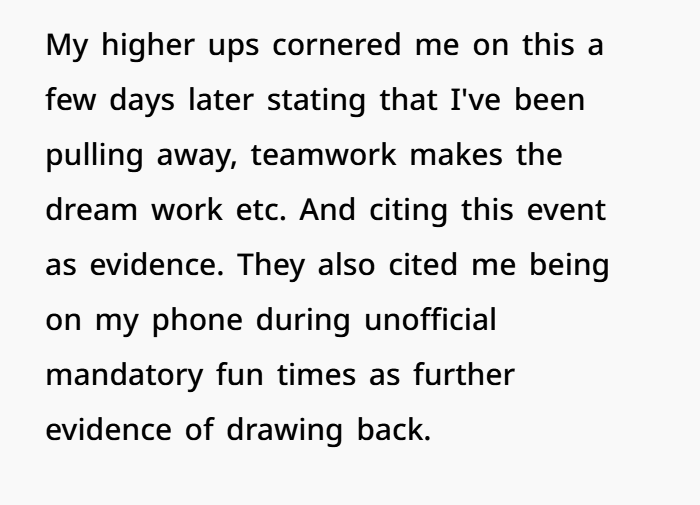
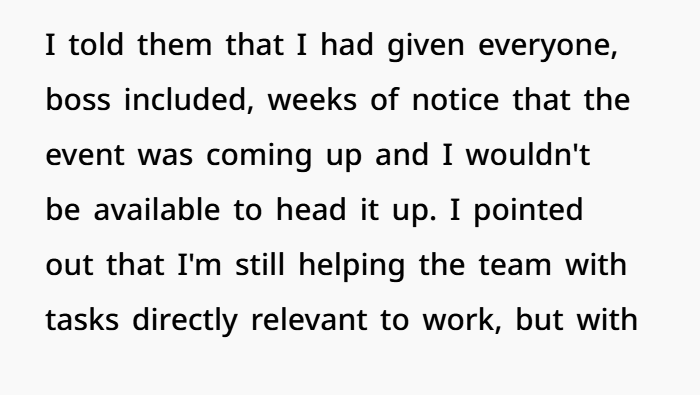
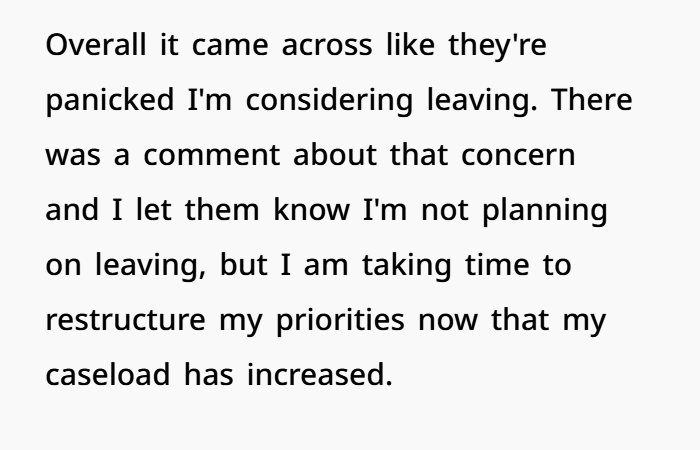
Over time, this created more tension at work. Management questioned the change in the employee’s involvement, and the situation eventually led to a formal workplace complaint. The story highlights the importance of employee recognition, fair performance reviews, clear communication, and a healthy workplace culture.

When Going Above and Beyond at Work Becomes an Expectation
Many employees take pride in doing more than what is required at work. They help coworkers, support company culture, and do extra tasks because they care about their workplace.
But sometimes, extra effort can slowly turn into an unpaid expectation.
There is a big difference between being a helpful employee and being expected to handle responsibilities that are not part of your official job duties.
This difference can create workplace stress, burnout, and frustration.
When Extra Effort Becomes Normal
Many workplaces have someone who always goes the extra mile.
This person may:
- Organize office celebrations
- Remember employee birthdays
- Plan appreciation events
- Help improve workplace morale
- Support coworkers during stressful times
- Volunteer for extra projects
At first, this effort is usually appreciated.
People thank them.
Managers notice their dedication.
Coworkers enjoy the support.
However, over time, something can change.
The extra work may stop being viewed as a generous choice and start being treated as a normal responsibility.
That is when problems can begin.
The Difference Between Job Duties and Extra Contributions
Employees are usually hired to complete specific responsibilities listed in their role.
Helping create a positive workplace culture can be valuable, but it is not always part of someone’s official position.
Tasks like organizing events, planning office activities, or managing employee morale require time and energy.
They are a form of additional contribution.
When employees choose to do these things, it should be recognized and appreciated.
When people feel pressured to continue doing unpaid extra work, it can lead to stress and employee burnout.
A Workplace Conversation Can Be Misunderstood
In this situation, the employee was not refusing to do their actual job.
They were still completing their work, supporting coworkers, and maintaining professional relationships.
The issue started after a conversation with a coworker about a stressful workplace policy change.
Employees often discuss workplace changes with each other. They ask questions, share concerns, and try to understand new expectations.
That type of communication is common in many organizations.
However, sometimes managers may hear only part of a conversation and misunderstand the situation.
Without full context, a normal discussion can be seen as negativity or resistance.
Why Performance Reviews Matter
Performance evaluations are important because they can affect:
- Salary increases
- Promotions
- Career development opportunities
- Professional reputation
When an employee receives positive reviews for many years and then suddenly receives lower ratings, it can feel confusing and discouraging.
This is especially true if the employee believes their actual job performance has not changed.
In this case, the employee felt that the criticism was not about their work results but about their attitude and participation in workplace activities.
These types of evaluations can sometimes feel unclear because they involve opinions that are harder to measure.
Clear performance expectations help employees understand how they are being evaluated.
Setting Professional Boundaries at Work
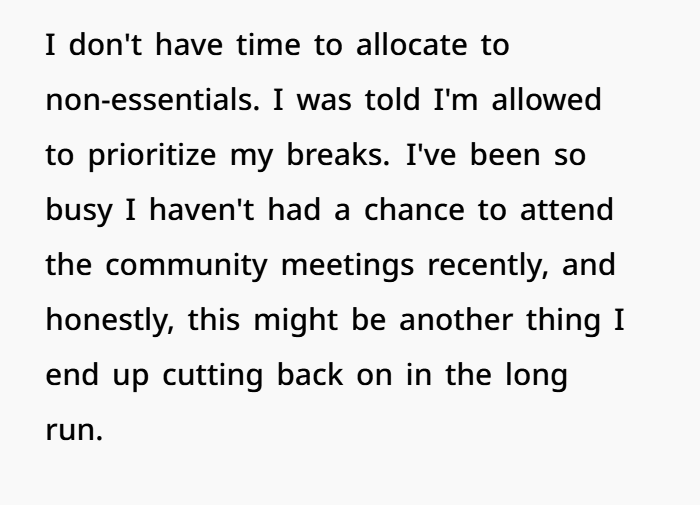
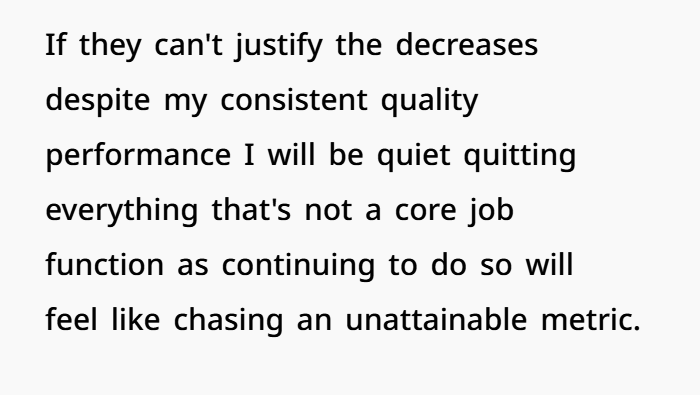
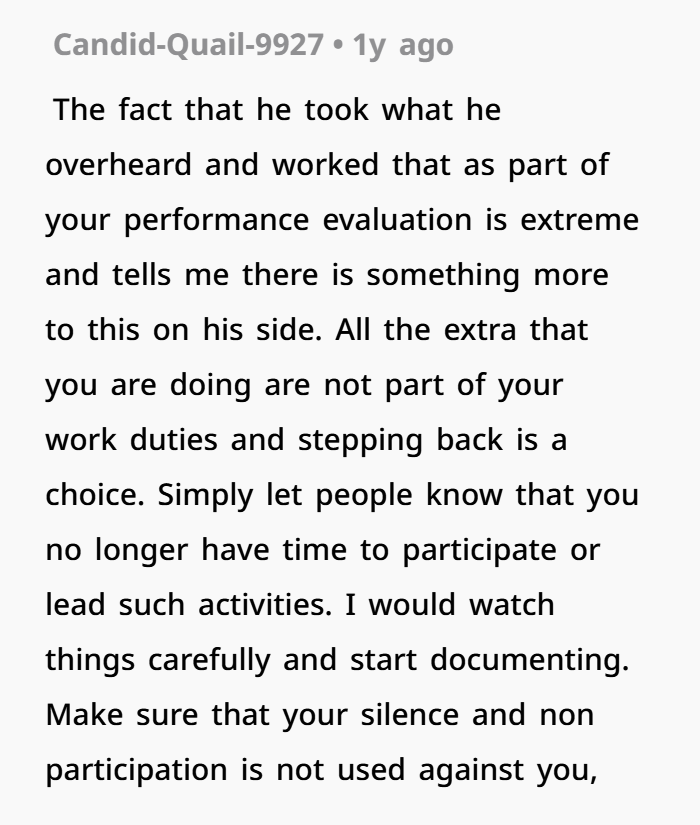
After feeling unappreciated, the employee decided to stop volunteering for extra activities.
They did not stop working.
They did not refuse their assigned responsibilities.
They simply stopped taking on additional tasks outside their role.
This is an example of setting professional boundaries.
Many employees experience a similar situation where they give extra time and energy until they reach a point of exhaustion.
Taking a step back can be a way to protect work-life balance and prevent burnout.
Understanding the “Quiet Quitting” Conversation
The term “quiet quitting” became popular when employees started focusing only on their official job responsibilities.
Despite the name, it does not mean someone is leaving their job.
It usually means an employee is no longer volunteering for extra work that is not required.
Many workers are happy to contribute more when they feel respected and valued.
But when employees feel their efforts are ignored or criticized, they may decide to focus only on their main duties.
This can be a sign of reduced employee engagement.
When Organizations Depend on One Person
A common workplace problem happens when a company depends too heavily on one employee to handle extra responsibilities.
For example:
- One person always organizes events
- One person always supports team morale
- One person always solves last-minute problems
This may work for a while.
But when that person steps back, the organization may realize those responsibilities were never properly assigned.
Important workplace tasks should have clear ownership.
Companies benefit when responsibilities are shared fairly among team members.
Burnout and Employee Well-Being
Burnout is a growing concern in modern workplaces.
Employees who constantly give extra effort without enough recognition or support may eventually feel exhausted.
They may lose motivation, feel disconnected, or struggle with job satisfaction.
Taking breaks and maintaining healthy boundaries are important parts of employee well-being.
A healthy workplace should encourage productivity while also respecting employees’ personal limits.
The Importance of Fair Leadership
Good leadership requires clear communication, fair expectations, and trust.
Employees want to know that their hard work is recognized.
They also want confidence that performance reviews are based on their actual work and not personal opinions.
If employees believe they are being judged unfairly, workplace trust can decline.
This can affect employee motivation, teamwork, and company culture.
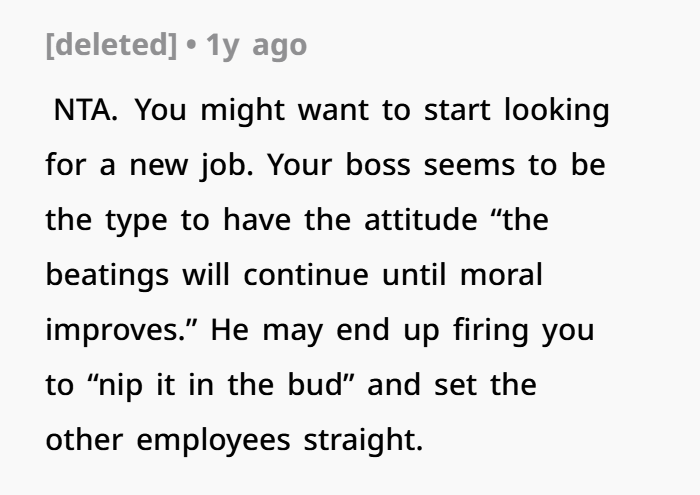
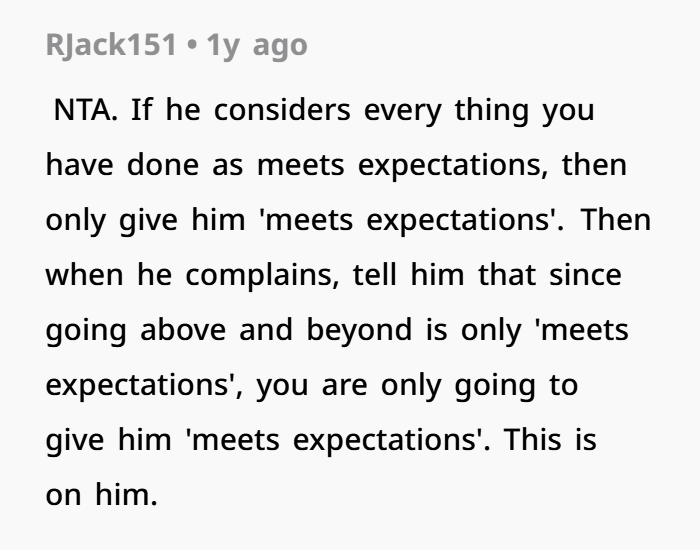
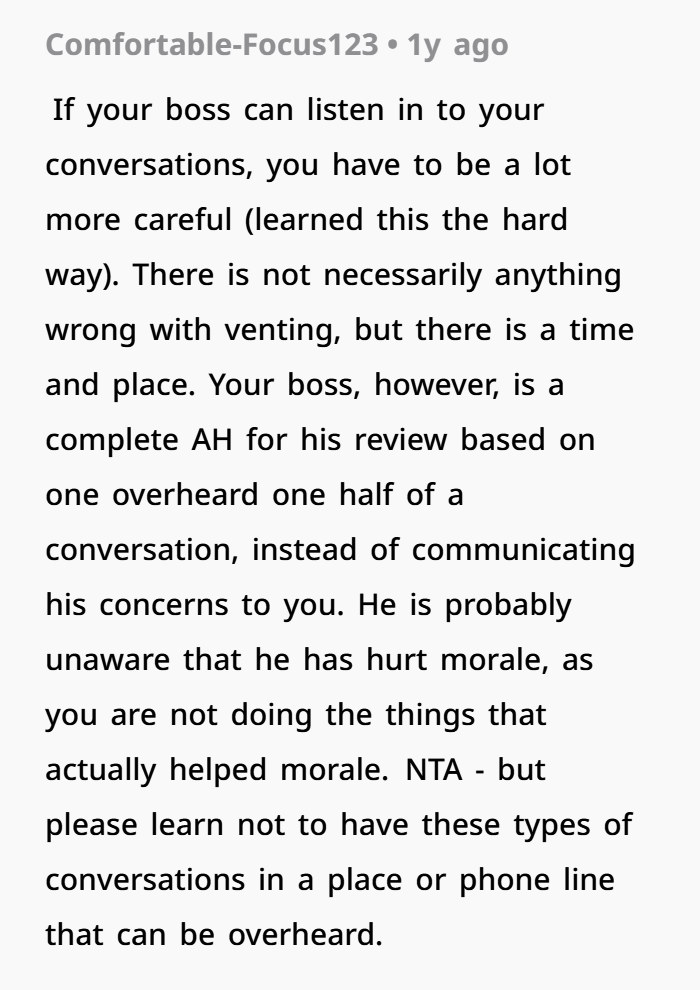
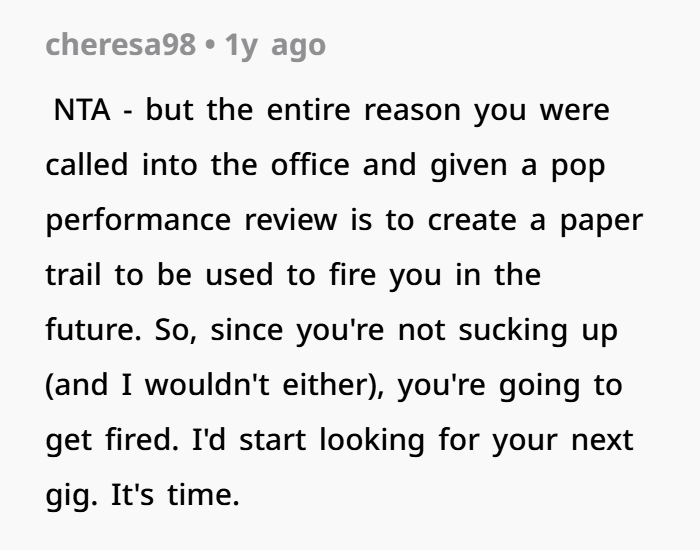
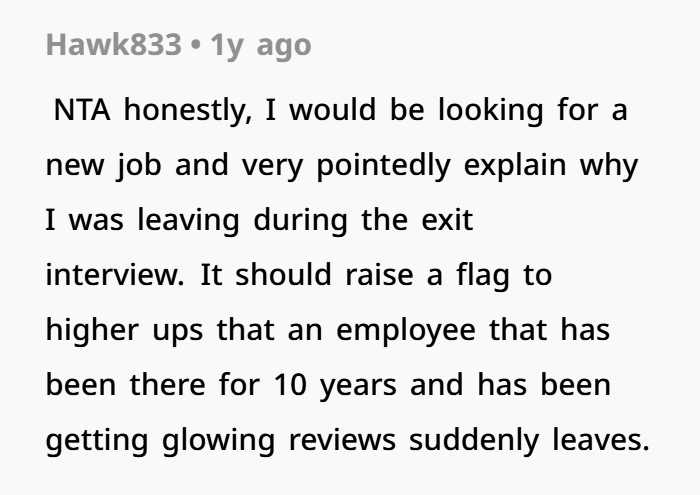
The Comments Are In
Final Thoughts
This situation is not simply about office events or extra tasks.
It is about recognition, expectations, and workplace boundaries.
An employee can care about their job and still decide not to continue unpaid responsibilities outside their role.
Going above and beyond can be a wonderful quality, but it should come from appreciation and choice, not pressure.
Strong workplace culture is built when employees feel respected, managers communicate clearly, and extra efforts are valued instead of automatically expected.