AITA for snapping at my ex’s wife over my daughter and cheerleading?

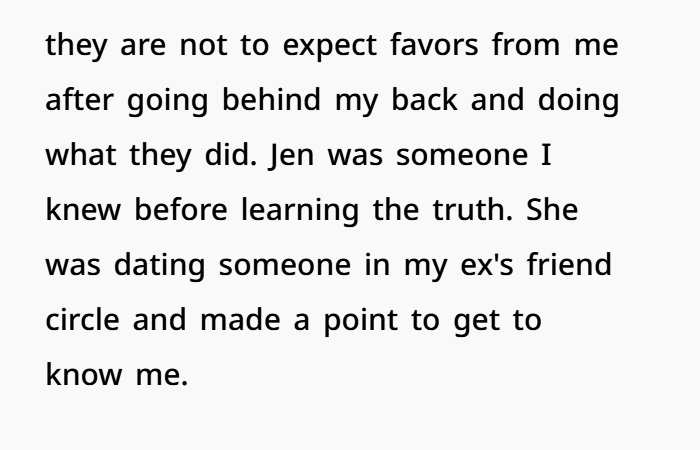
A woman shared her experience dealing with a difficult co-parenting situation after a high-conflict divorce. She explained that she and her ex-husband have children together, but their marriage ended after he was unfaithful with another woman named Jen. After the divorce, the woman became the main caregiver for their children, while her ex-husband had limited parenting time because of his work schedule.
The woman said that her ex-husband and Jen often tried to become more involved in her children’s lives in ways that made her uncomfortable. She felt they were pushing Jen into a role similar to a second parent before the children were ready. Because of this, she focused on setting clear boundaries and keeping communication about the children respectful.
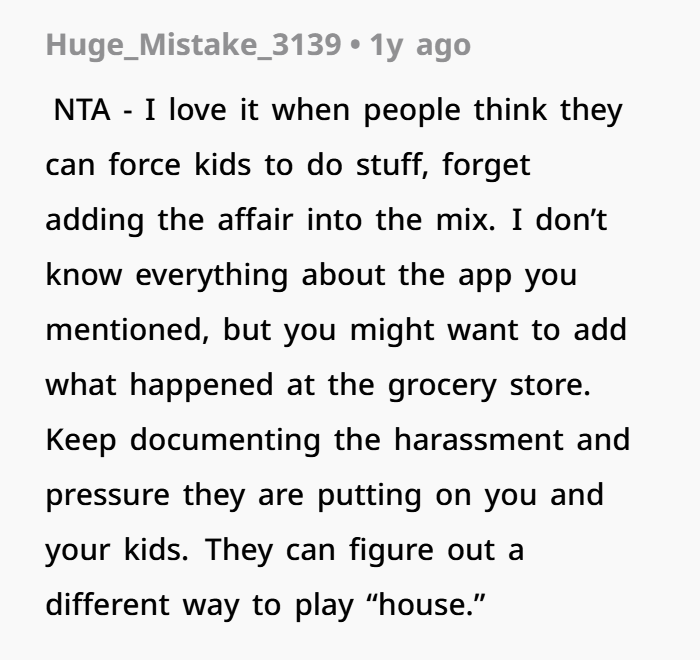
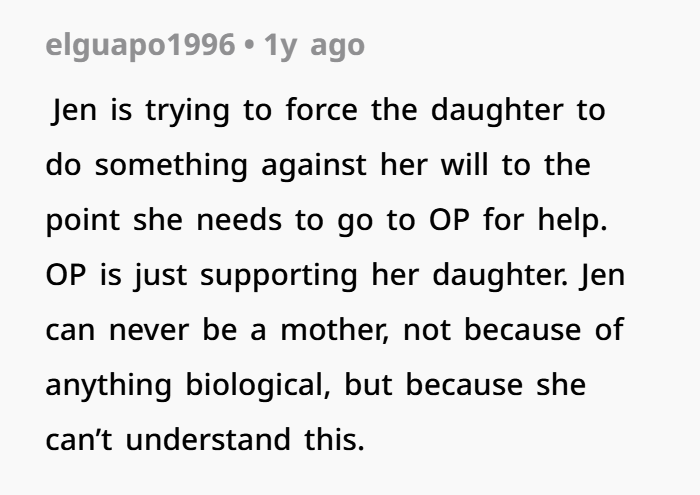
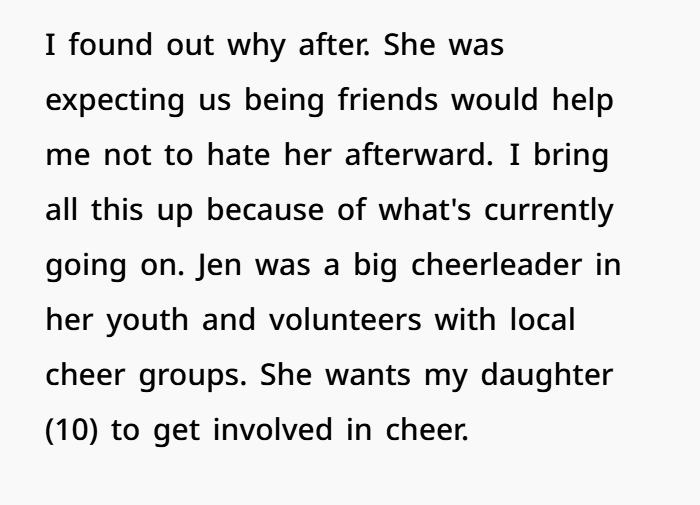
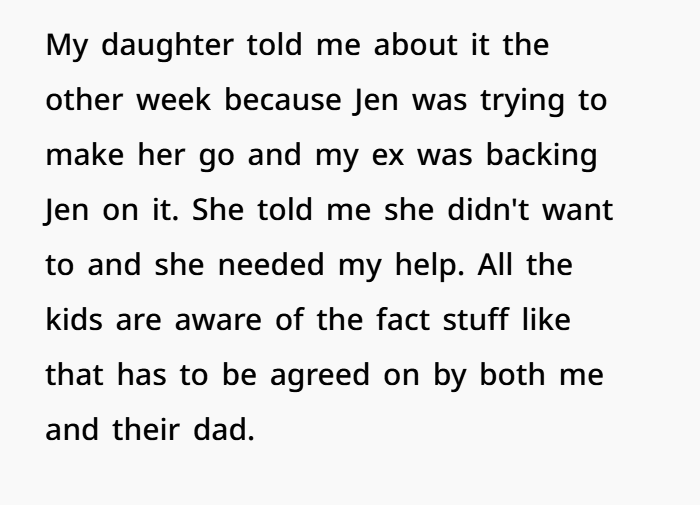
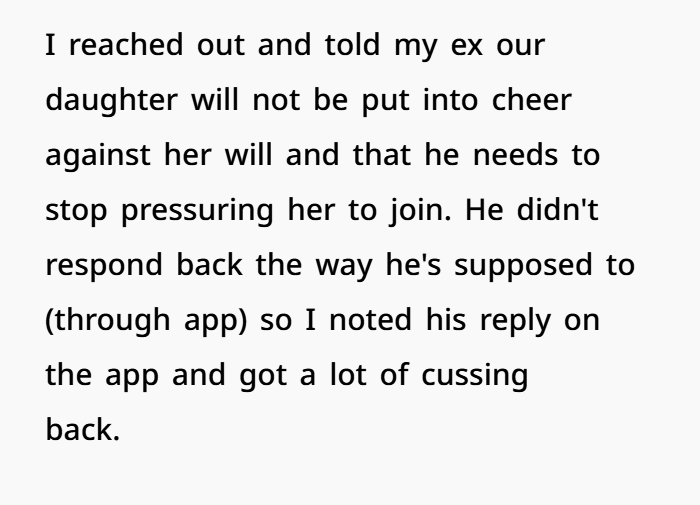
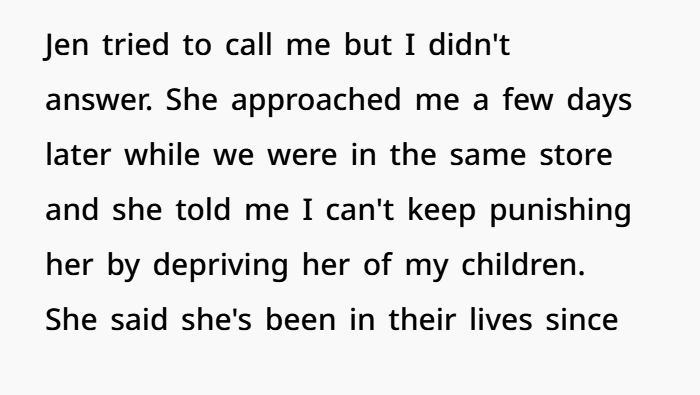
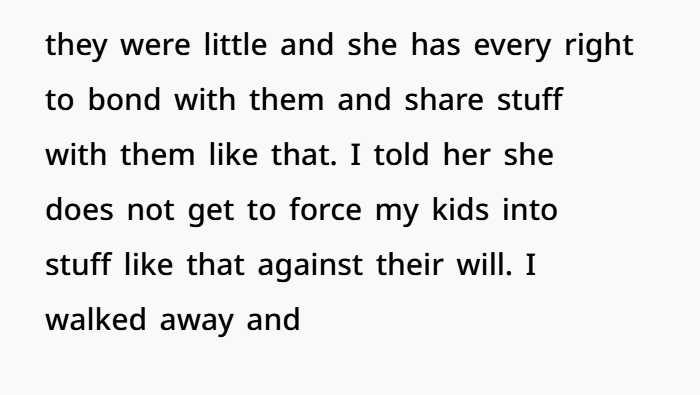
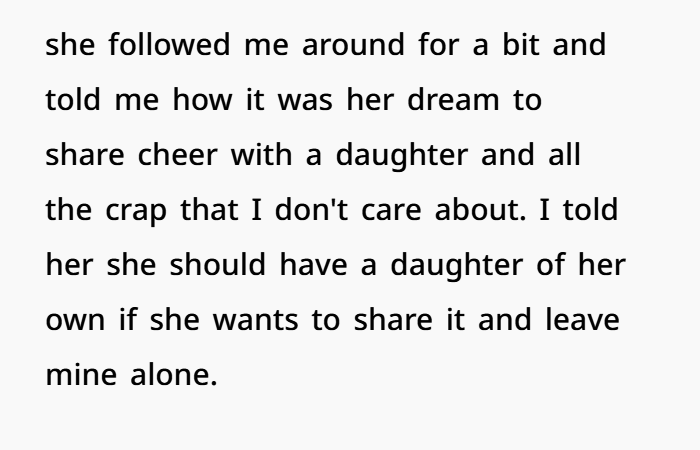
The latest disagreement involved their 10-year-old daughter. Jen wanted the girl to join cheerleading, but the child was not interested. The daughter told her mother that she did not want to continue with the activity and asked for help. The mother supported her child’s choice and asked her ex-husband to respect their daughter’s feelings instead of forcing the activity.
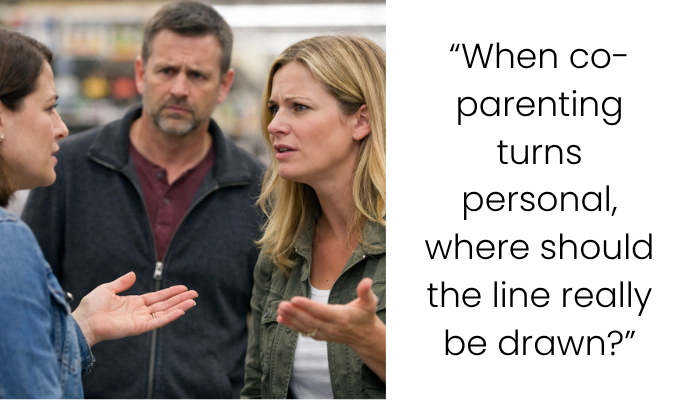
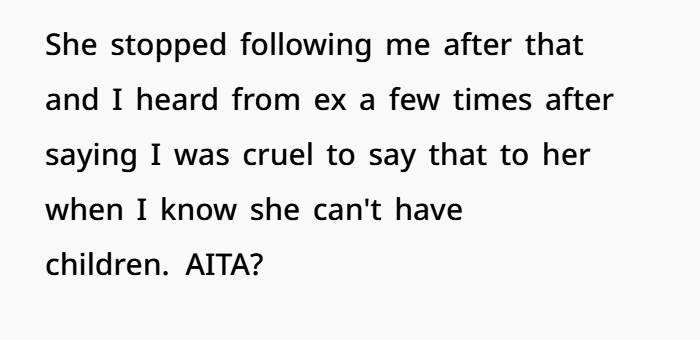
The situation became more stressful when Jen confronted the mother in public and accused her of preventing a closer relationship. The conversation became emotional, and the mother made a comment about Jen wanting that type of connection but not having her own child. She later faced criticism for the comment because of Jen’s past fertility struggles.
The family is now dealing with hurt feelings, parenting disagreements, and questions about boundaries in a blended family. This story shows why co-parenting requires communication, respect, and a focus on children’s emotional well-being. Allowing children to have a voice in their interests and activities can also help them feel supported and understood.


Step-Parent Boundaries, Co-Parenting, and Protecting a Child’s Choices
Family situations can become complicated when divorce, new partners, and parenting decisions all come together.
Many conflicts between parents and step-parents are not really about one activity or one disagreement. They are often connected to deeper issues like communication problems, personal boundaries, and different ideas about what is best for a child.
The most important question in these situations should always be:
What is best for the child?
The Difference Between Parenting and Step-Parent Support
Step-parents can play a positive role in a child’s life. They can offer support, kindness, and encouragement.
However, there is a difference between being supportive and making important decisions that belong to the child’s parents.
In many co-parenting situations, major decisions about a child’s activities, education, and personal choices are handled by the child’s legal parents according to their custody agreement.
A step-parent can share opinions, but the child’s feelings and the parenting plan should remain important parts of the conversation.
Listening to a Child’s Feelings
In this situation, the child clearly said she did not want to participate in cheerleading.
That matters.
Children should have a voice in activities they take part in. While parents can encourage children to try new things, forcing a child into an activity they strongly dislike can create negative feelings.
When children feel pressured, they may experience:
- Stress
- Frustration
- Loss of confidence
- Resentment toward the activity
- Distance from the adult applying pressure
A child’s interests and comfort level should be considered when making decisions.
When Adult Feelings Affect Parenting Choices
Jen’s feelings about infertility are important and deserve compassion.
Struggling with infertility can bring sadness, disappointment, and emotional pain. Many people experience a deep sense of loss when they are unable to have biological children.
However, personal pain does not automatically create parental rights over another person’s child.
Wanting a close bond with a step-child can be a positive thing. But that relationship should grow naturally through trust and respect.
A child should not feel responsible for helping an adult heal from personal struggles.
Healthy Step-Parent Relationships Need Balance
A strong step-parent relationship usually develops over time.
The best relationships are built through:
- Respect
- Patience
- Understanding
- Trust
- Open communication
Problems can happen when an adult’s wishes become more important than the child’s feelings.
A step-parent’s role is not to replace a biological parent. It is to become a supportive person in the child’s life.
Handling Conflict During Co-Parenting
Arguments between parents and step-parents can become emotional quickly, especially when there are unresolved issues from the past.
Following someone, continuing an argument after they have tried to leave, or turning a disagreement into a public confrontation usually makes the situation worse.
Good conflict resolution requires:
- Calm communication
- Respectful conversations
- Clear boundaries
- Keeping the child’s needs as the main focus
When emotions become too strong, taking space can prevent a situation from becoming more damaging.
When Words Go Too Far
During the argument, the comment about “having your own daughter” became the most painful part of the situation.
It is understandable that someone may say something harsh when they feel pushed, ignored, or frustrated.
However, infertility is a deeply personal and emotional topic. Using someone’s personal struggle during an argument can cause serious hurt.
Two things can be true at the same time:
A parent can be right to protect their child’s choices.
And they can still regret the way they expressed their feelings.
Being upset does not always make hurtful words helpful.
The Importance of Custody Agreements and Communication
Co-parenting works best when everyone follows clear communication rules.
If parents have a custody agreement, decisions about the child should usually be handled according to that agreement.
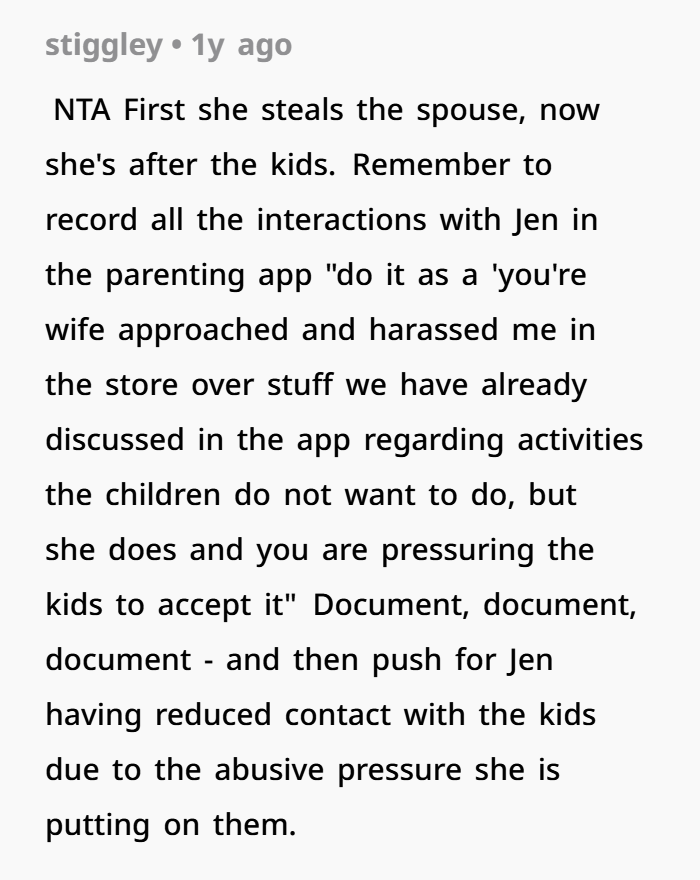
Keeping records of important conversations can be helpful in high-conflict co-parenting situations. Written communication can reduce misunderstandings and create a clear history of discussions.
The goal should not be winning an argument.
The goal should be creating stability for the child.
The Role of the Other Parent
The child’s other parent also has an important responsibility.
A healthy co-parenting relationship requires both parents to communicate and make decisions together.
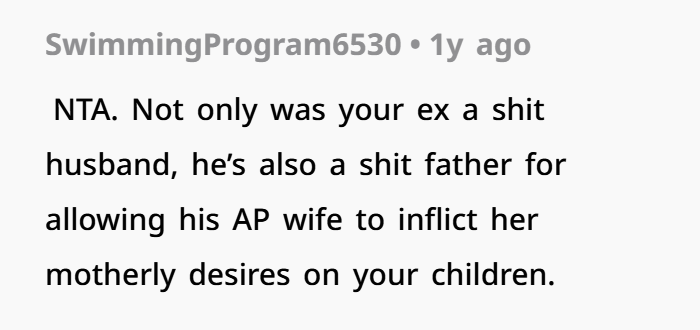
When one parent allows a new partner to take over important parenting decisions, it can create more conflict and make the other parent feel excluded.
New relationships should be handled carefully so they support the child instead of creating more tension.
Finding a Better Way Forward
This situation is not only about cheerleading.
It is about bigger questions:
- What role should a step-parent have?
- How should parents handle disagreements?
- How can adults protect a child’s emotional well-being?
Supporting a child does not mean ignoring other people’s feelings. It means creating healthy boundaries while treating everyone with respect.
A parent can stand up for their child and still communicate with kindness.
The biggest lesson is that children should never feel caught between adults. Their comfort, voice, and emotional health should always come first.
The Comments Are In