My Mom Says Her Cheating Didn’t Affect Us—I Disagreed. AITA?

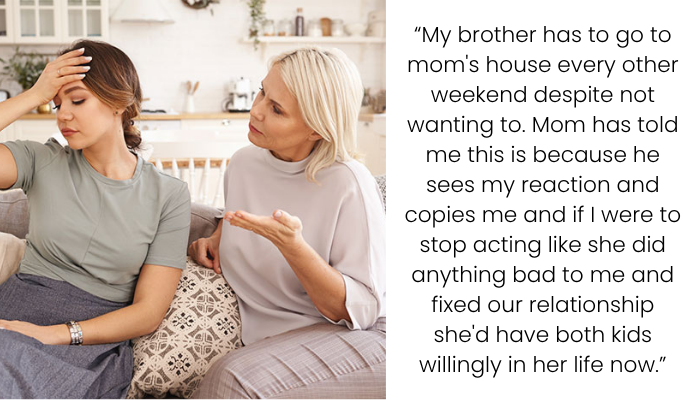
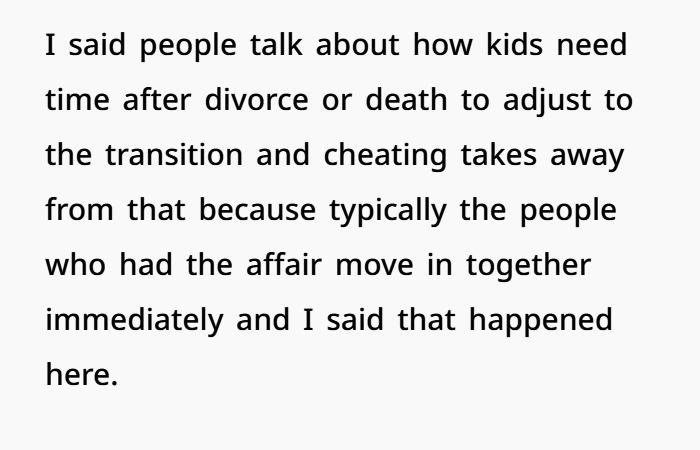
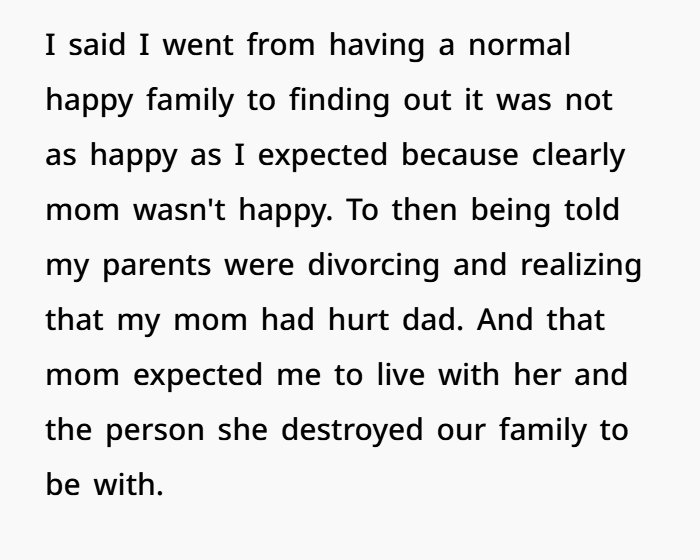
This situation is difficult because it is not only about a relationship ending. It is also about how one parent’s choices can affect the entire family. A 16-year-old girl saw her family change after her mother had an affair and started a new relationship. One day, life felt normal, and soon after, there was a divorce and a new person in the family’s life. For a teenager, this kind of sudden change can be very confusing and painful.
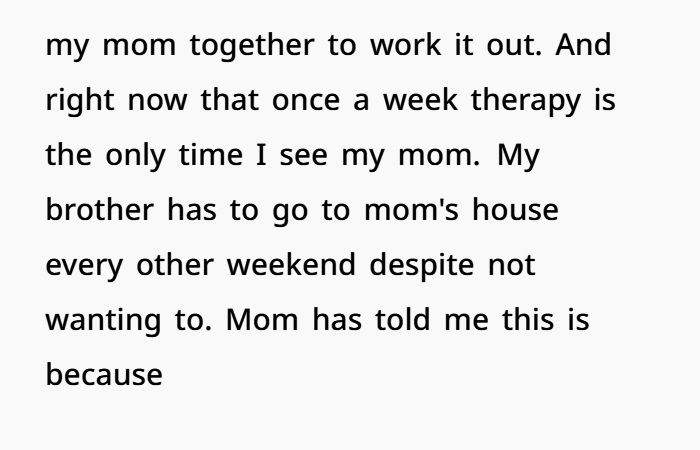
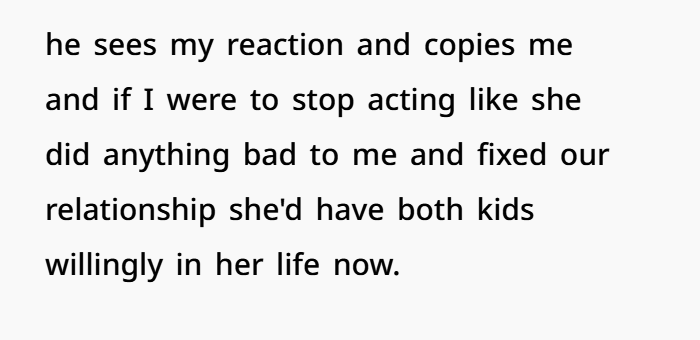
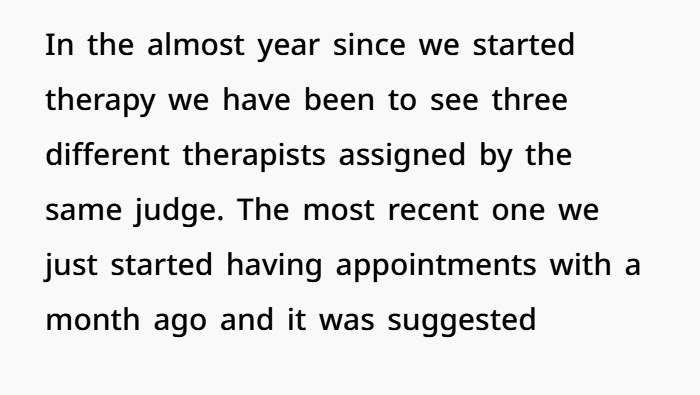
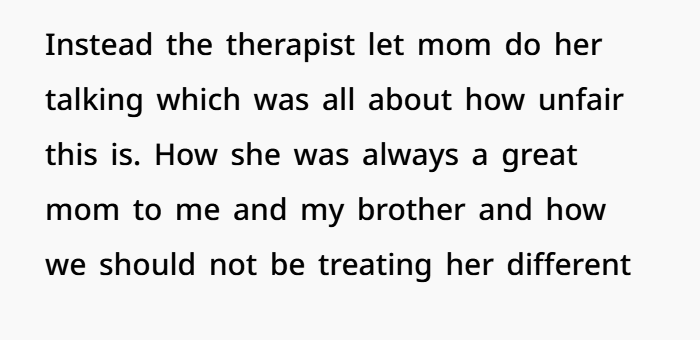
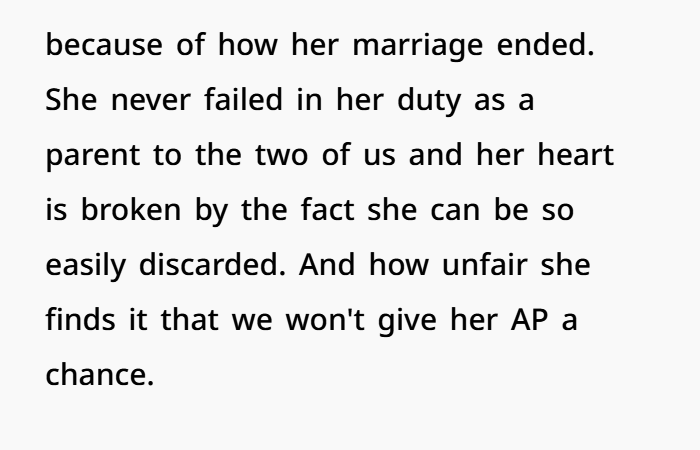
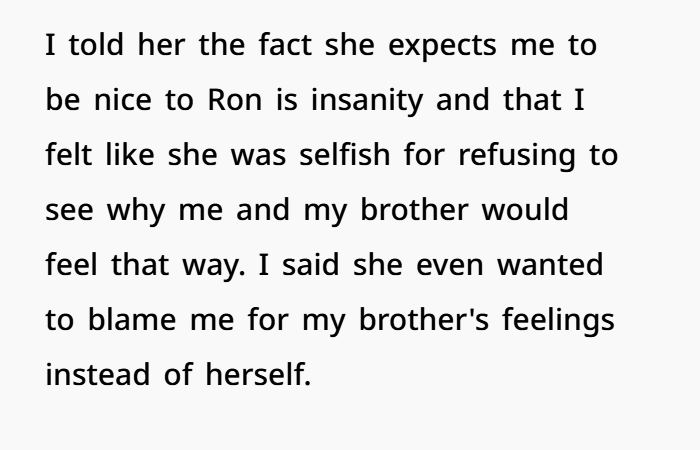
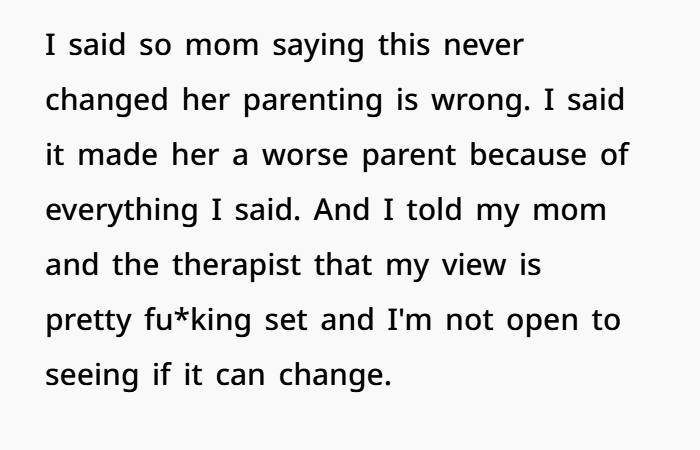
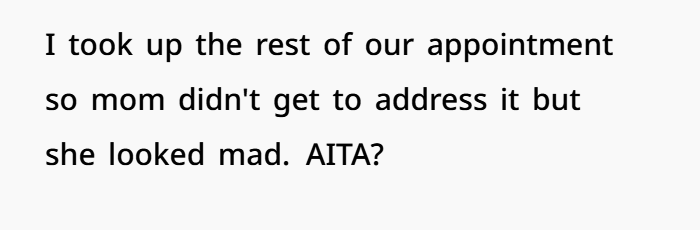
The mother tried to continue acting like everything was normal, but her daughter was struggling with feelings of anger and hurt. She found it hard to move forward and decided to keep some distance. She only attended counseling sessions because they were required. Over time, the sessions became frustrating because she felt her mother was not accepting responsibility for how her actions affected the family.
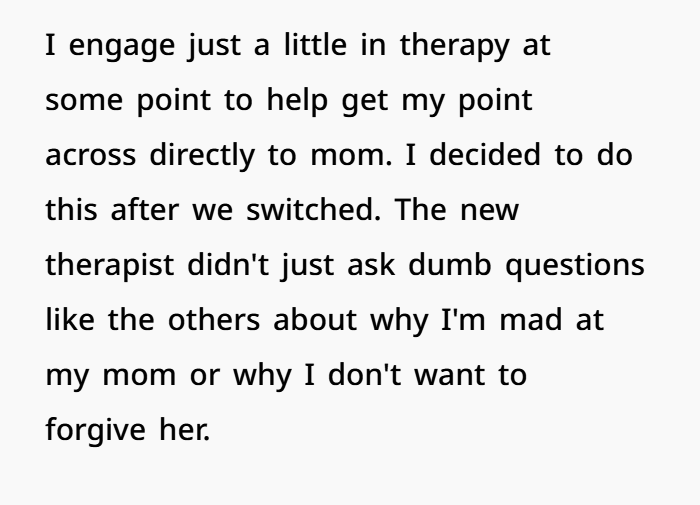
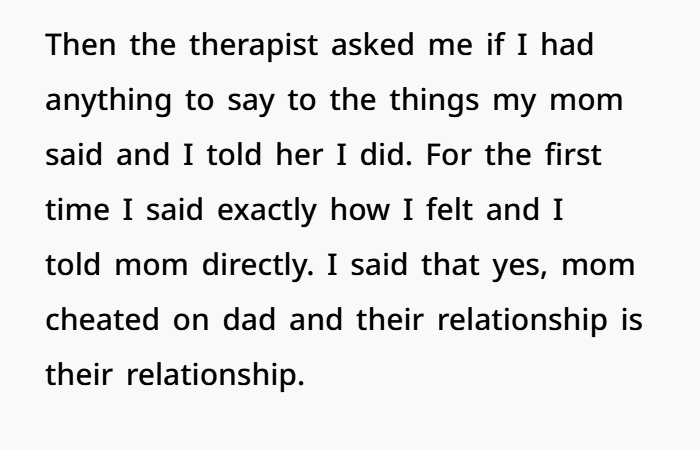
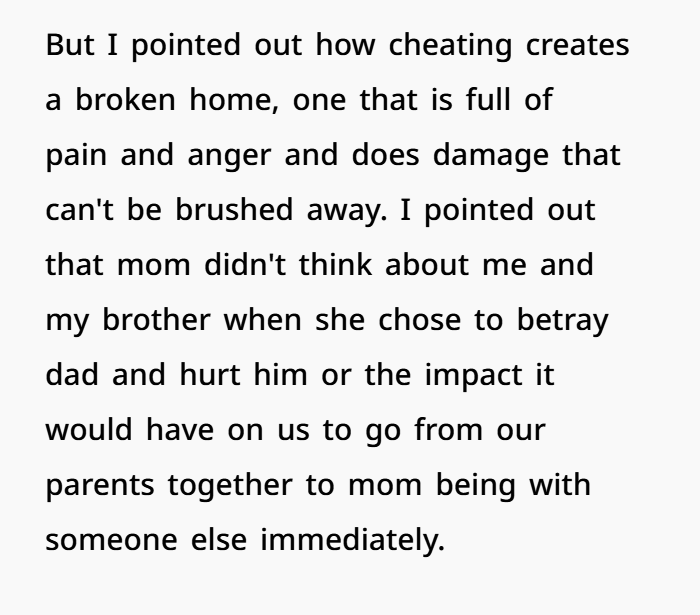
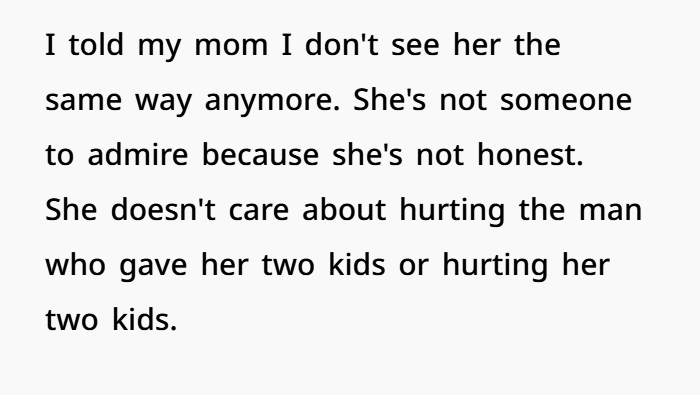
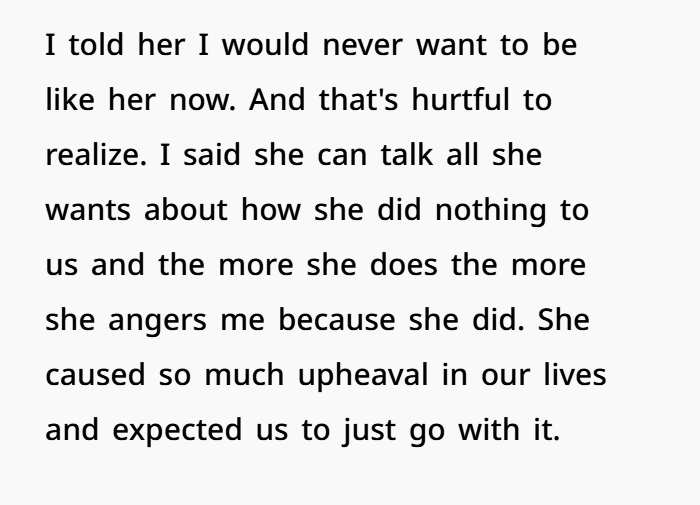
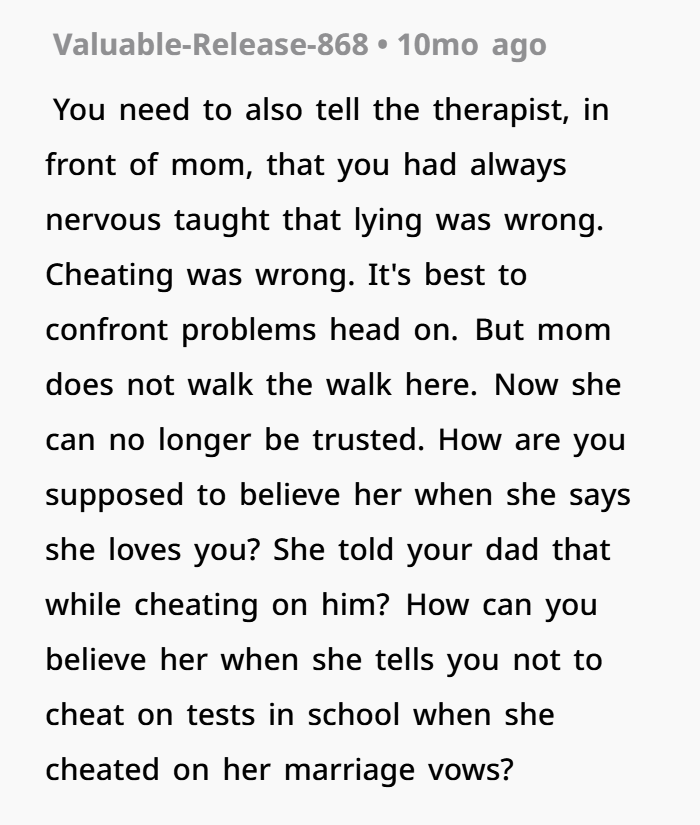
Later, the teenager started working with a new therapist and finally felt comfortable sharing her feelings. She talked about the affair, the divorce, and how the situation affected her and her brother. She explained that the choices made by her mother did not only impact the marriage but also changed the way she viewed her as a parent.
Family problems, divorce, and trust issues can create strong emotions for everyone involved. Teen counseling, family therapy, and open communication can help people understand their feelings and find healthier ways to handle difficult situations. The question now is whether the daughter’s words were too harsh or whether she simply needed a safe place to express the pain she had been carrying.

Can a Parent’s Relationship Choices Affect How Their Child Sees Them?
Family problems can become very complicated, especially when children feel caught in the middle.
A common question in situations like this is:
“Can what a parent does in their relationship affect how good of a parent they are?”
There is no simple answer.
A parent may believe that their relationship problems are separate from their role as a parent. They may think:
“I still cared for my children. I supported them. I was there for them.”
And those things do matter.
But family life is connected. Big changes between parents can affect children emotionally, even when the parents try to separate those issues from parenting.
How Relationship Problems Can Affect Children
When something serious happens in a family, it can change the entire home environment.
Children may notice:
- Changes in communication
- More stress at home
- Different family routines
- Emotional distance between family members
For teenagers especially, family changes can feel overwhelming.
Family therapy and mental health professionals often discuss how children are affected not only by what parents say directly to them, but also by the emotional environment around them.
A major family change can affect a child’s sense of trust, safety, and stability.
Why Sudden Changes Can Be Hard to Process
Divorce is already a major life change.
Many children need time to understand what is happening and adjust to a new family situation.
A slow transition can sometimes feel easier because people have time to process their emotions.
However, when a family changes suddenly, children may feel shocked or confused.
They may have questions like:
- “Why did this happen?”
- “Was my family not what I thought it was?”
- “Why do I have to accept these changes so quickly?”
These feelings do not mean a child is being difficult.
They are often a normal response to a stressful situation.
The Difference Between Intent and Impact
One of the biggest problems in family conflicts is that people often focus on different things.
One person may say:
“I never wanted to hurt you.”
The other person may say:
“But I was still hurt.”
Both statements can exist at the same time.
A parent may not intend to cause emotional pain, but their choices can still have an impact on their children.
Good communication requires understanding both sides:
- The parent’s intentions
- The child’s experience
Ignoring either side can make healing more difficult.
Expressing Feelings in Therapy
Therapy is meant to be a safe place where people can talk honestly about their emotions.
Sometimes painful feelings come out strongly.
A teenager who feels hurt may express anger, disappointment, or frustration.
That does not always mean they are trying to attack someone.
Often, it means they have been carrying those feelings for a long time.
Talking openly can be an important step in emotional healing.
When a Child Says “You Were Not a Good Parent”
Hearing those words can be extremely painful for a parent.
Being called a “bad parent” may feel like a rejection of everything they have done.
However, when a child says something like this, they may not be saying:
“You never did anything good.”
They may be trying to say:
“Your choices affected me, and I am still hurt.”
Sometimes family conflicts continue because one person is talking about the pain they experienced, while the other person is defending their intentions.
Finding a way to talk about both is important.
Different Children Can Have Different Feelings
In some families, siblings may react differently to the same situation.
One child may express anger.
Another may become quiet.
Another may seem unaffected.
These different reactions do not mean one person is right and another is wrong.
Everyone processes difficult experiences in their own way.
It is also important not to assume that one sibling’s feelings are only because of another sibling’s influence.
Children and teenagers can form their own opinions based on their own experiences.
Are Strong Feelings Wrong?
Having strong emotions after a painful family change is normal.
Feeling angry, disappointed, or hurt does not make someone a bad person.
However, communication style matters.
There is a difference between:
“I feel deeply hurt by what happened.”
and:
“You are completely a terrible person.”
The first focuses on personal feelings.
The second can make the other person defensive.
Learning healthy communication skills can help family members understand each other better.
Healing Takes Time
Emotional healing does not happen quickly.
Especially for teenagers, adjusting to major family changes can take time.
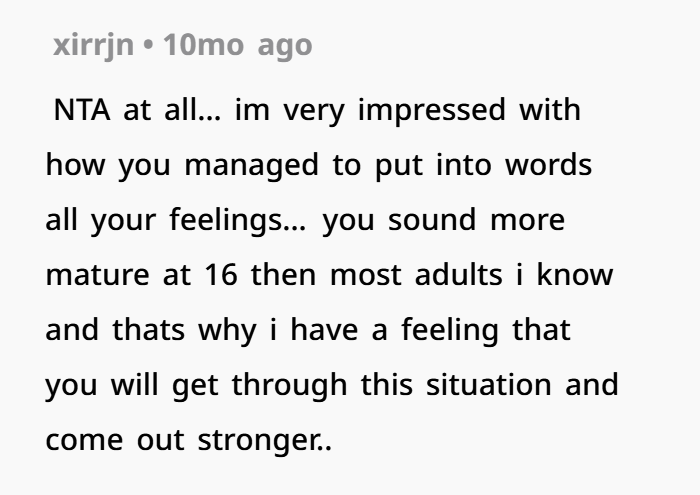
At 16, someone is still learning how to handle emotions, relationships, and difficult situations.
Expecting perfect reactions during a painful time is unrealistic.
What matters is creating space for honest conversations, support, and understanding.
Moving Forward
Family relationships can be complicated.
A parent can love their child and still make choices that hurt them.
A child can feel angry and still care about their parent.
Both things can be true.
The most helpful path forward usually involves:
- Honest communication
- Respectful boundaries
- Emotional support
- Family counseling when needed
- Time to rebuild trust
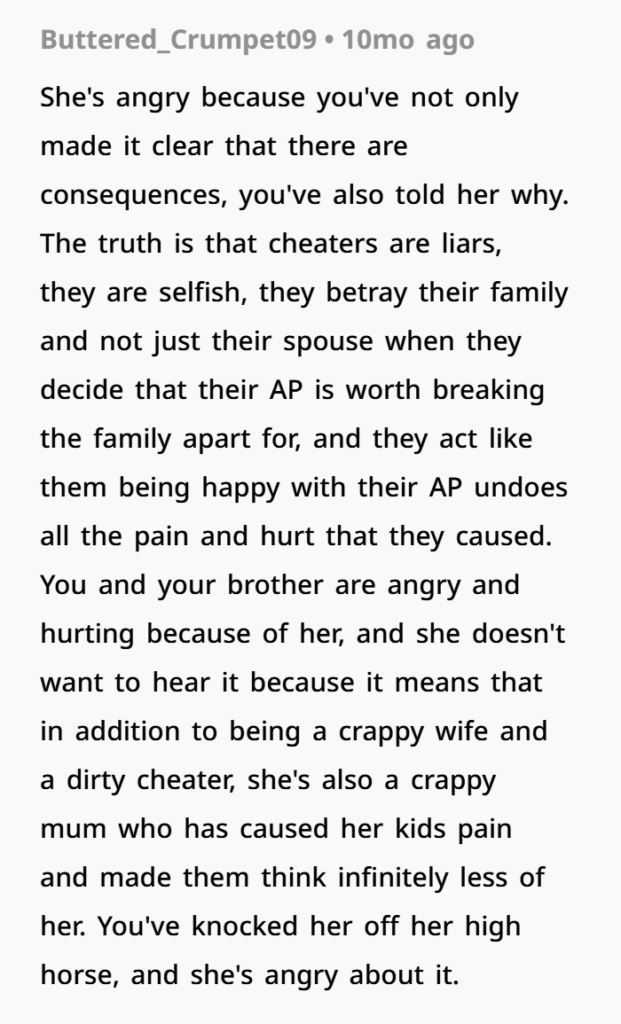
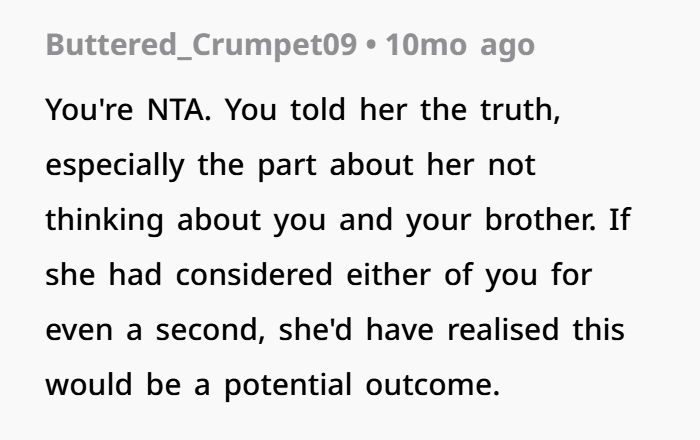
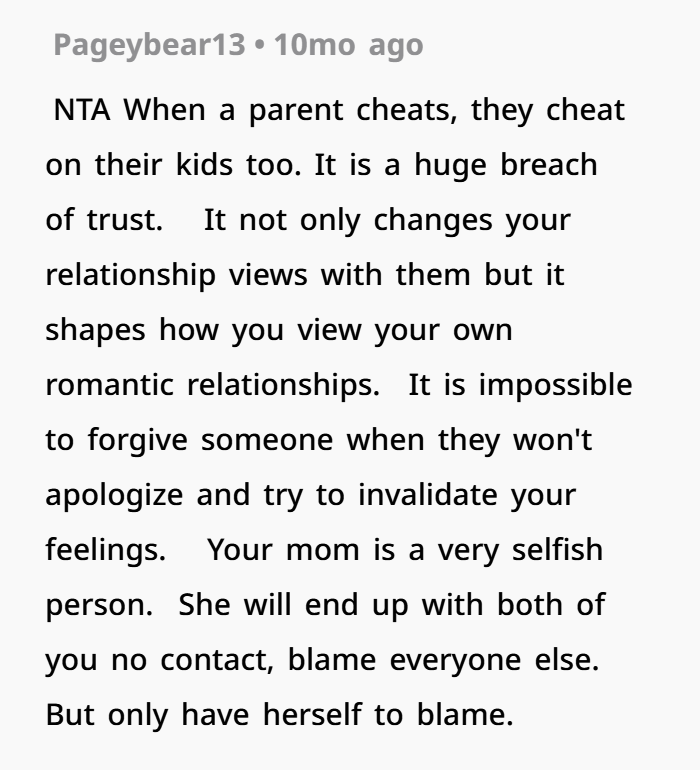
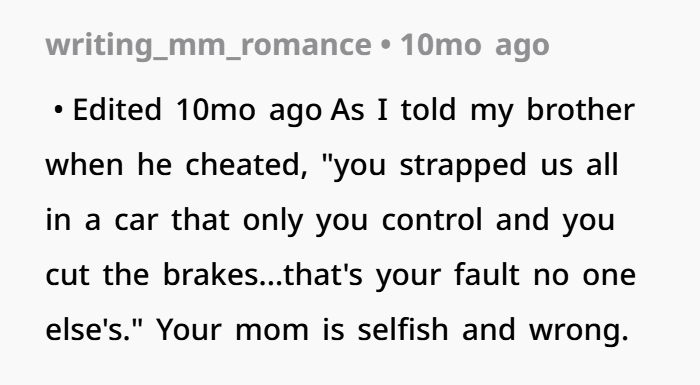
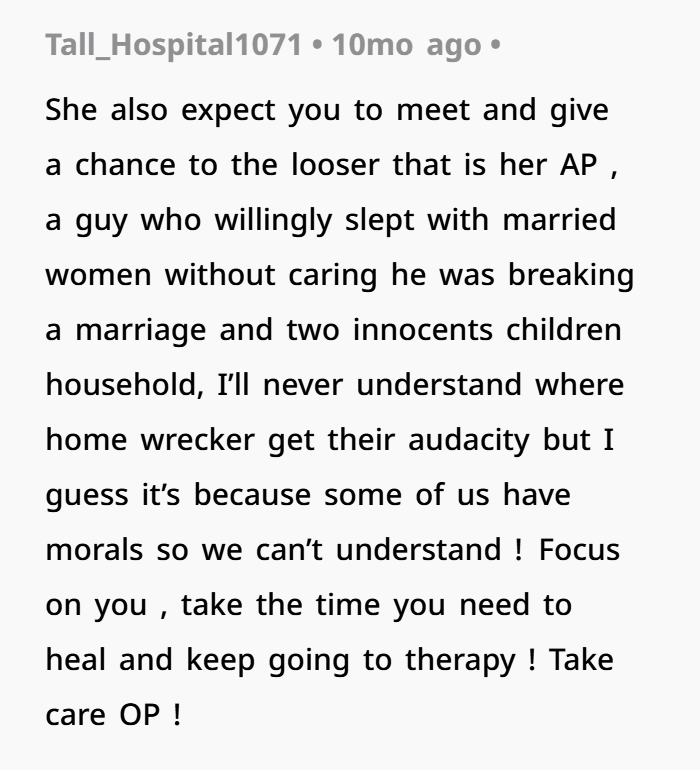
See The Comments Below





Final Thoughts
A parent’s choices can affect how their child feels about them.
Being a good parent is not only about providing food, shelter, or support. It is also about understanding how decisions affect a child’s emotional well-being.
At the same time, healing does not require anyone to ignore their feelings.
Healthy family relationships are built through honesty, patience, and a willingness to understand each other’s experiences.
When people feel heard and respected, healing becomes much more possible.