Man Keeps His Russian Skills Secret Until Dinner With Girlfriend’s Family Takes an Awkward Turn


Growing up in a multilingual family can feel completely normal when you experience it every day. But being able to speak two or more languages from a young age is a valuable skill.
Millions of people around the world speak more than one language. For many children, learning two languages is simply part of their family life. Being bilingual can help people communicate better and connect with different cultures.
But sometimes, knowing another language can lead to surprising situations.
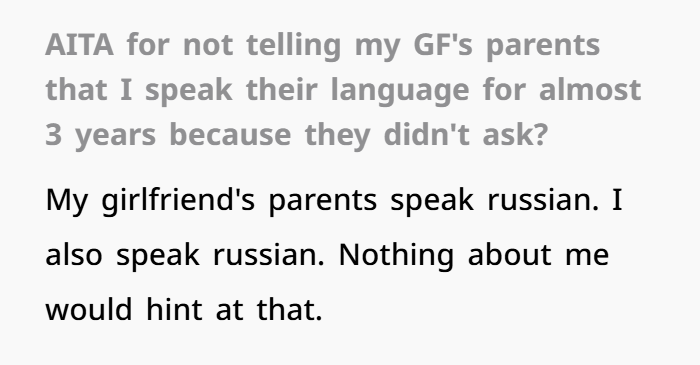
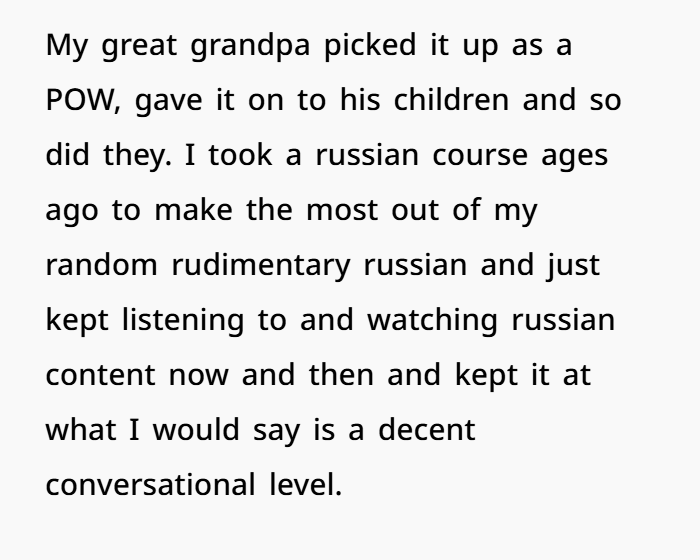
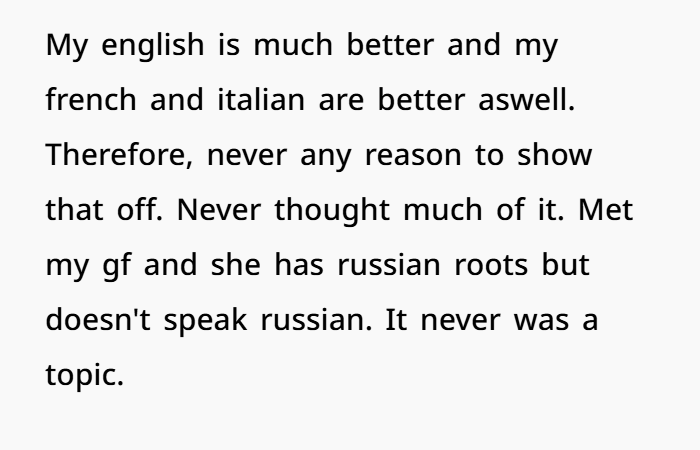
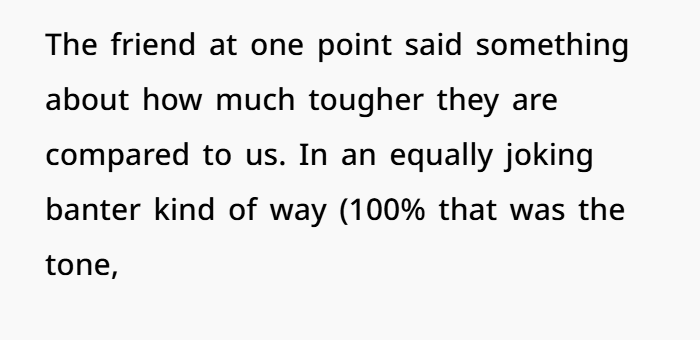
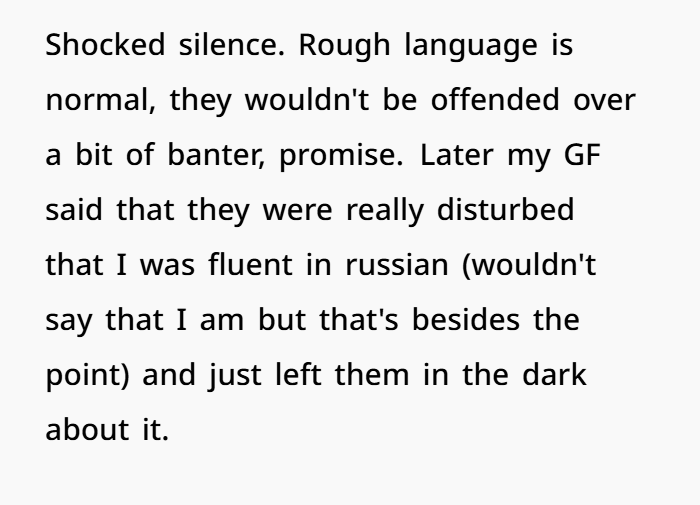
One man found himself in an uncomfortable moment after keeping his Russian-speaking ability a secret from his girlfriend’s family. They believed he only spoke one language, so they were shocked when he suddenly replied to them in fluent Russian.
The family started questioning why he never told them. They worried that he may have kept it secret so he could understand their private conversations without them knowing.
They asked him to explain himself and wanted an apology for not sharing this information earlier.
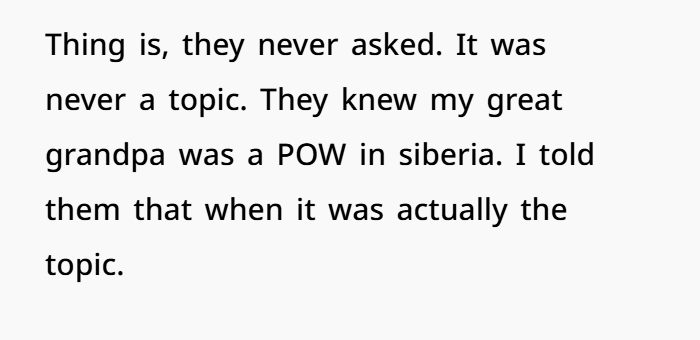
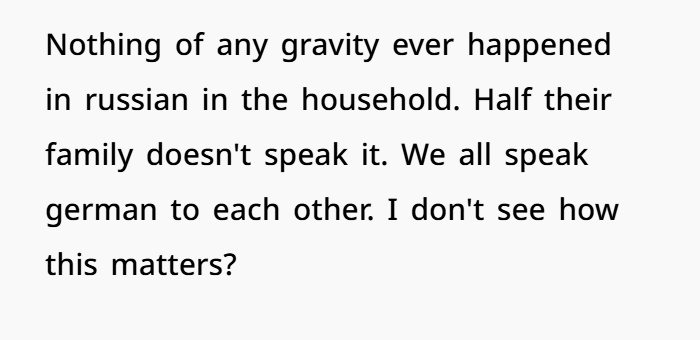
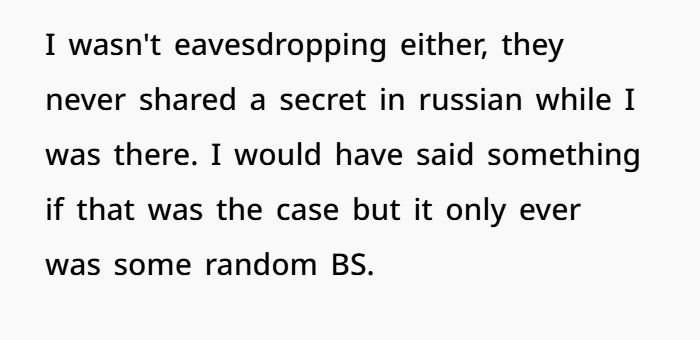
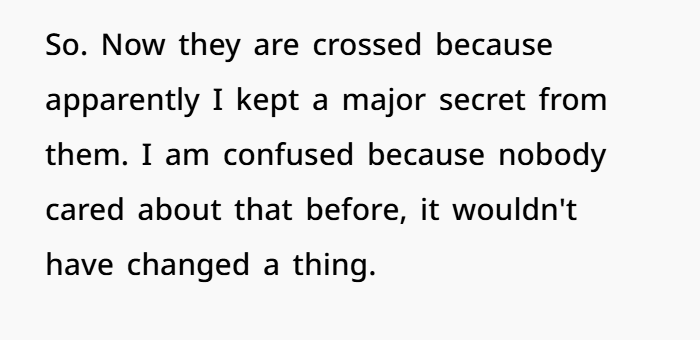
The man did not think he had done anything wrong. He felt that speaking another language was not a big deal and said he never intended to listen to their private talks.
Still, the situation left him unsure about what he should do next. He decided to share his story online and ask others for their opinions about the family misunderstanding and the importance of honesty in relationships.




In many parts of Europe, speaking more than one language is a normal part of family life. Some people grow up bilingual, while others learn a second or even third language at school.
A 2024 survey found that nearly 60% of people in the European Union can have a conversation in a language other than their first language. This shows how common multilingual communication has become.
In multilingual families, switching between languages during conversations is also very common. A 2025 study found that many families naturally change languages while talking in their daily lives.
This language switching, often called code-switching, is not usually done to hide secrets or talk about others. Experts say it often helps people feel connected to their culture, share traditions, and express ideas that may sound better in one language than another.
Researchers explain that using different languages can help strengthen a person’s sense of identity and connection with their community. A certain word, phrase, or saying from a person’s native language can carry special meaning and history.
However, speaking a shared language can also create a feeling of privacy. When only a few people understand a language, they may feel like they have a small private space where they can speak freely.
That is why the girlfriend’s family may have felt uncomfortable when they discovered the man understood Russian. They may have felt like a private space they trusted was suddenly opened to someone else.
Sociolinguist and author Janet Holmes describes this idea as an “interpretive frame.” It is the emotional space people create when they share a language with others.
In this situation, the boyfriend entered that space without the family expecting it. While he may not have meant any harm, the family may have felt surprised and upset because they believed their conversations were private.
See the comments to know what people said



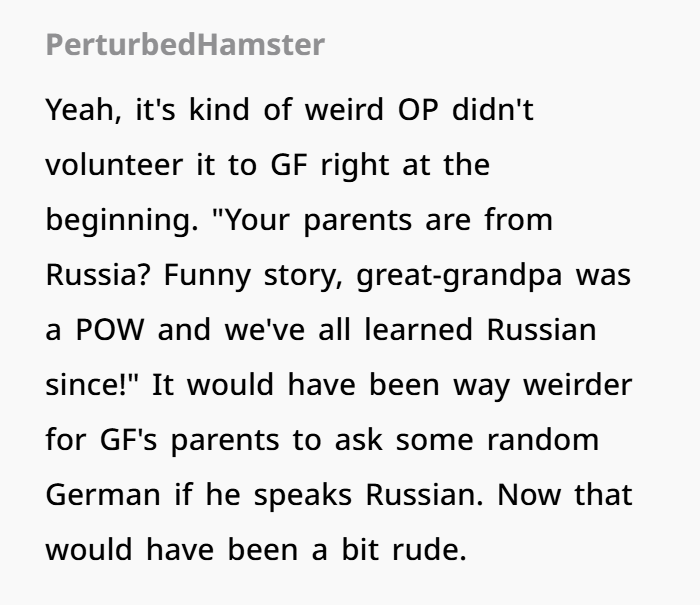


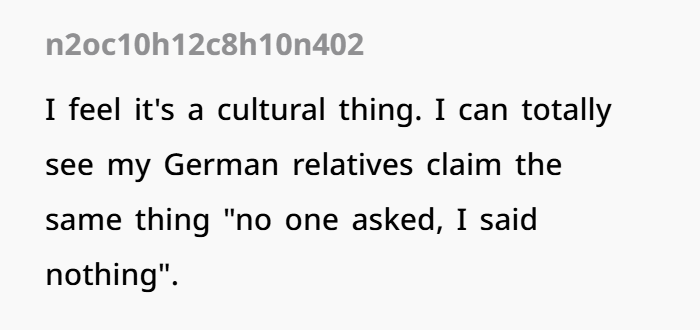
In the end, knowing another language is usually a valuable skill, not something to hide or feel guilty about. Speaking Russian, or any other language, can help people connect with different cultures and understand the world better.
However, trust is also an important part of any relationship. The family’s reaction likely came from feeling surprised and worried that their private conversations were not as private as they thought.
The situation shows that communication matters. If people are open about their language skills from the beginning, small misunderstandings like this can often be avoided.