When “I’ll Pay” Means “You Pay”: The Christmas Dim Sum That Burned Me

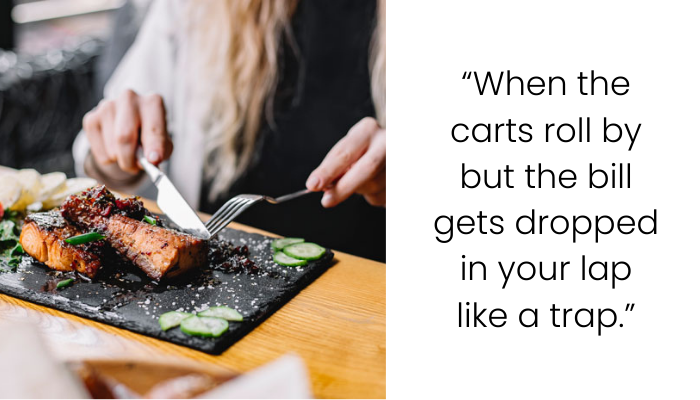
In 2013, a family planned to spend Christmas Day together by going out for dim sum. The group included a couple, the husband’s brother, his wife, their children, and the wife’s mother. Everyone thought it would be a fun and simple way to celebrate the holiday while allowing everyone to enjoy good food and time together.
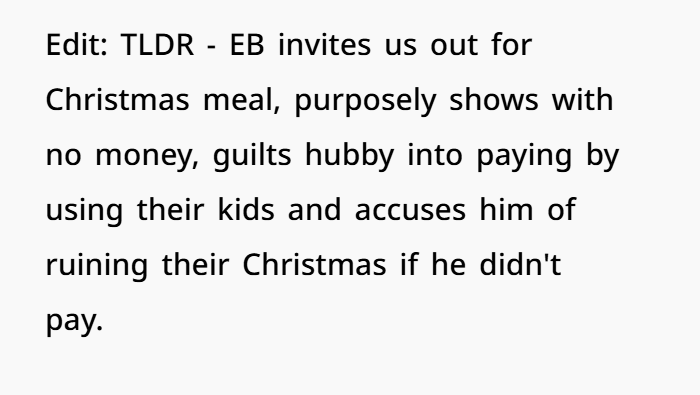
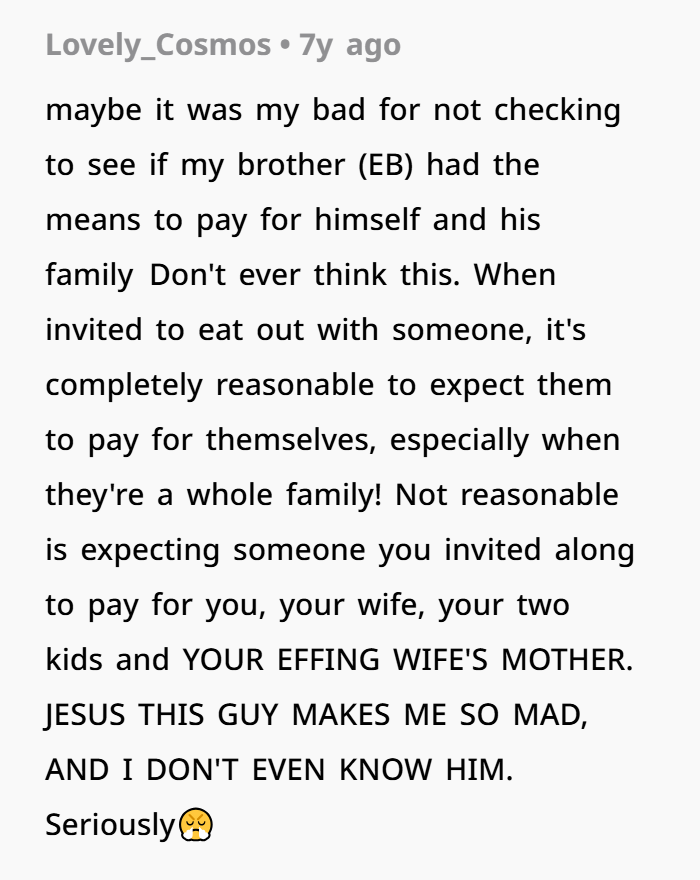
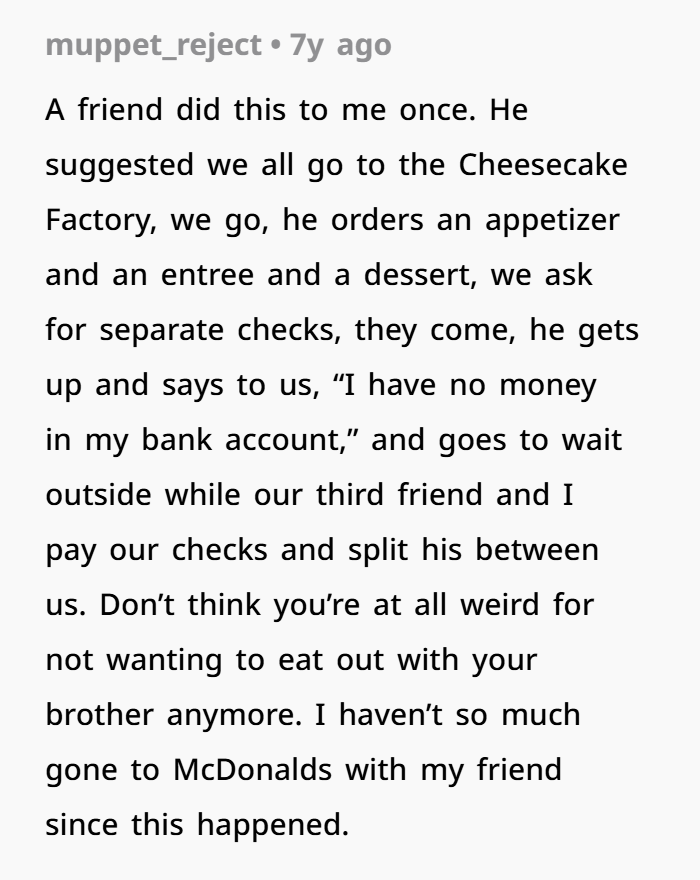
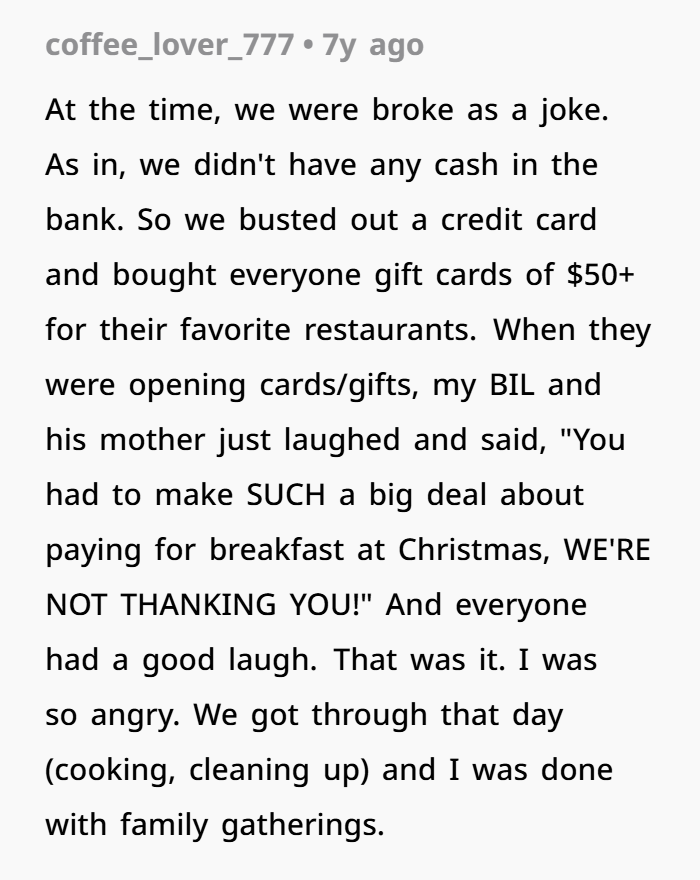
The plan was for each family to pay for their own share of the meal. However, when the bill arrived, the brother said he could not pay because he had no money available and his cards were already at their limit. His wife and mother-in-law then asked the husband to cover the entire bill, saying he had more money and that refusing would affect the children’s Christmas experience.
With the restaurant busy and the children waiting, the husband felt pressured and decided to pay for everyone. The brother only offered a small amount of money as a contribution, and the couple ended up covering the full cost of the meal.
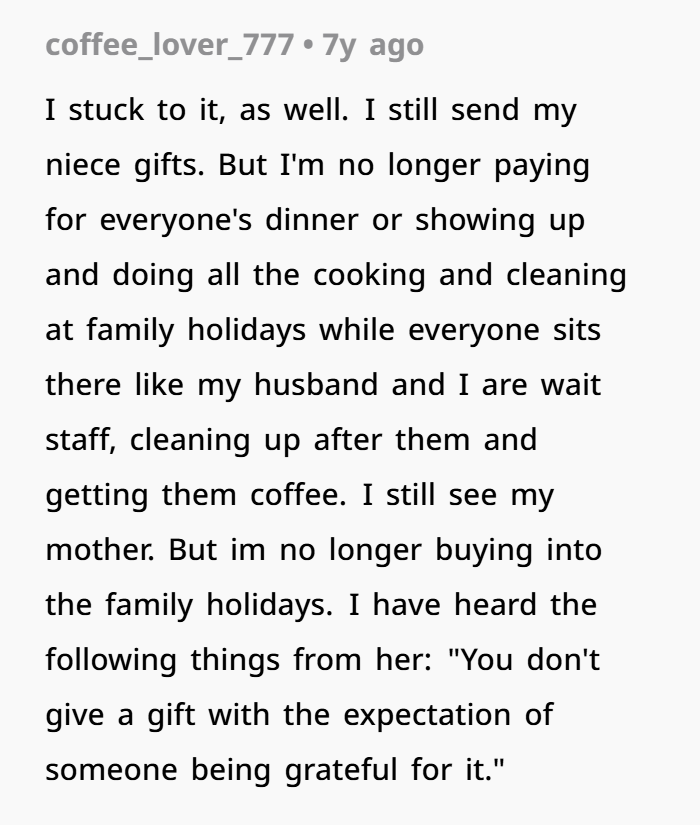
After that experience, the couple felt disappointed and uncomfortable accepting future dinner invitations from that side of the family. The situation showed how important clear financial expectations, honest communication, and respect are when making plans with family members.
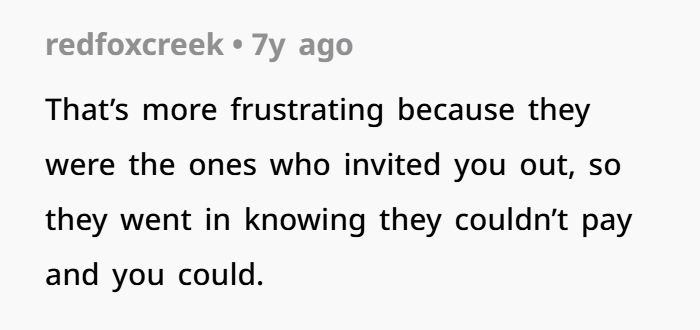
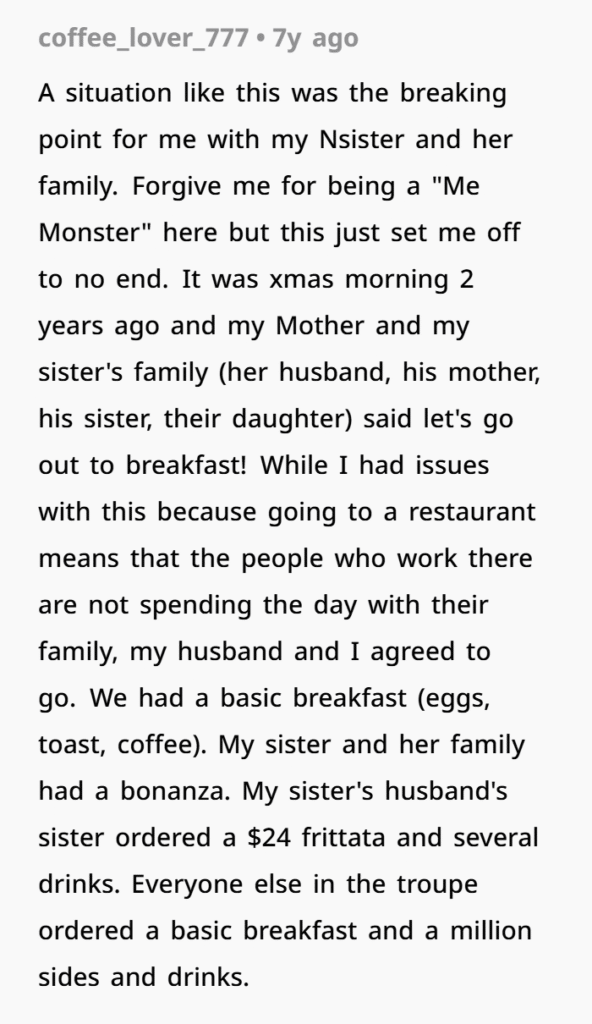
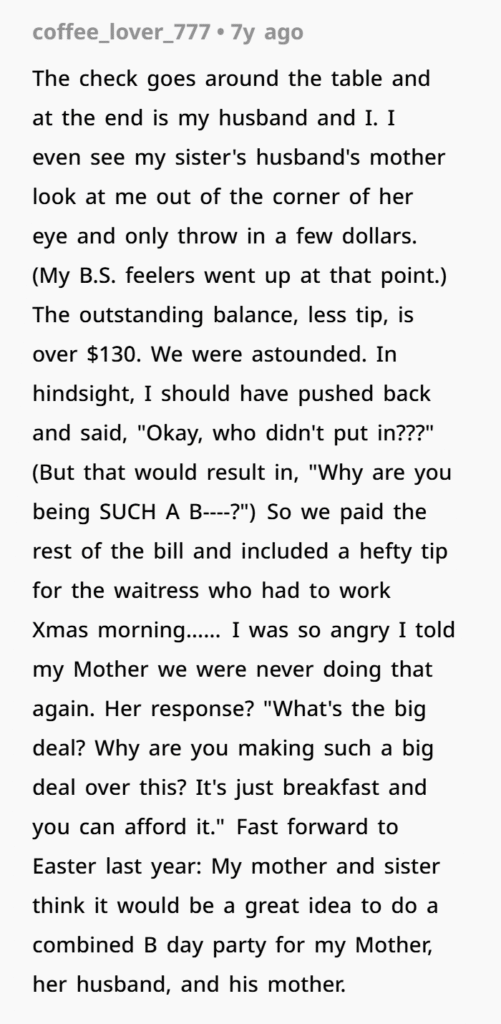
But one woman ended up realizing that her entitled relatives were perfectly happy make her husband foot the bill
My Family Expected Us To Pay Their Dinner Bill — Was It Wrong To Say No?
Helping family members during difficult times can feel like the right thing to do.
Most people want to support the people they love. They want to be kind, helpful, and understanding.
But there is a difference between helping someone because you want to and feeling pressured into helping because someone makes you feel guilty.
This situation is about family expectations, money boundaries, and how to recognize when kindness starts becoming unfair pressure.
Helping Family Should Not Feel Like An Obligation
Family support is important.
Sometimes people need help with money, transportation, or other challenges. Offering support during a difficult time can be a generous and caring choice.
However, healthy support should come with respect.
Problems start when someone assumes another person will pay without asking.
If people are going out for a meal, everyone should understand the plan before sitting down.
Will everyone pay for themselves?
Is one person inviting everyone?
Is the cost being shared?
Clear communication can prevent uncomfortable situations.
When Guilt Is Used To Get Help
The difficult part of this situation was not only the money.
It was the pressure that came afterward.
When someone uses phrases like:
“But it’s a holiday.”
“Think about the children.”
“You can afford it.”
they may be creating guilt instead of having an honest conversation.
Making someone feel like a bad person for saying no is not a healthy way to ask for help.
A person should be able to make financial decisions without feeling ashamed.
Kindness And Financial Boundaries Can Exist Together
Many people struggle with saying no to family because they worry about looking selfish.
But setting financial boundaries does not mean you do not care.
It means you understand your own limits.
Healthy financial boundaries may include:
- Agreeing on a budget before events
- Splitting bills fairly
- Discussing money openly
- Helping only when you truly choose to
A person can be generous without taking responsibility for everyone else’s expenses.
When Helping Turns Into Enabling
There is a difference between helping someone and constantly rescuing them.
Helping may look like:
- Offering support during a real emergency
- Giving a gift because you want to
- Lending money with clear expectations
Enabling may look like:
- Always paying because someone refuses to plan
- Covering expenses without discussion
- Allowing someone to avoid responsibility
When one person always solves another person’s money problems, it can create an unhealthy pattern.
The person receiving help may never learn how to manage the situation themselves.
The person giving help may eventually feel stressed, frustrated, or taken advantage of.
Family Money Problems Can Damage Relationships
Money is one of the most common sources of family conflict.
A single dinner bill may seem small, but the feelings behind it can become much bigger.
Someone may start thinking:
“Do they only invite us because they expect us to pay?”
“Are they appreciating us, or just using our generosity?”
Over time, these feelings can create resentment.
Family relationships work best when there is mutual respect.
A Better Way To Handle These Situations
The best solution is usually a clear conversation before problems happen.
For example:
“Let’s decide how we are handling the bill before we order.”
Or:
“We are happy to spend time together, but we will be paying for our own meal.”
This is not rude.
It is simply clear communication.
Talking about money ahead of time can prevent embarrassment and conflict later.
Saying No Does Not Make You A Bad Person
Some people believe that refusing to pay for family means you are uncaring.
That is not true.
Everyone has different financial situations and responsibilities.
A person can love their family and still say:
“I am not able to do that.”
“No, that does not work for my budget.”
“Let’s find another solution.”
Healthy relationships allow people to have boundaries.
What To Do If This Happens Again
If you experience a similar situation, try these steps:
Talk Before The Event
Make sure everyone understands the payment plan.
Avoid Emotional Arguments
Stay calm and focus on the practical issue.
Do Not Let Guilt Make Your Decisions
Helping should come from choice, not pressure.
Be Consistent With Your Boundaries
If you decide on a limit, continue following it.
Consistency helps others understand what to expect.
Readers wanted more info


Family should be a source of love and support, but that does not mean one person should always carry the financial responsibility.
Helping others is a wonderful thing.
But healthy generosity requires choice, respect, and balance.
You can care about your family while also protecting your finances and emotional well-being.
A good relationship is not built on guilt.
It is built on honesty, fairness, and mutual respect.