My Coworker Turned My Free Office Espresso Machine Into a Paid Coffee Shop


An employee brought a used espresso machine to a small office because the workplace coffee was not very good. They wanted to make the office more comfortable and let coworkers use the machine without charging them. It was meant to be a simple way to improve the daily coffee experience at work.
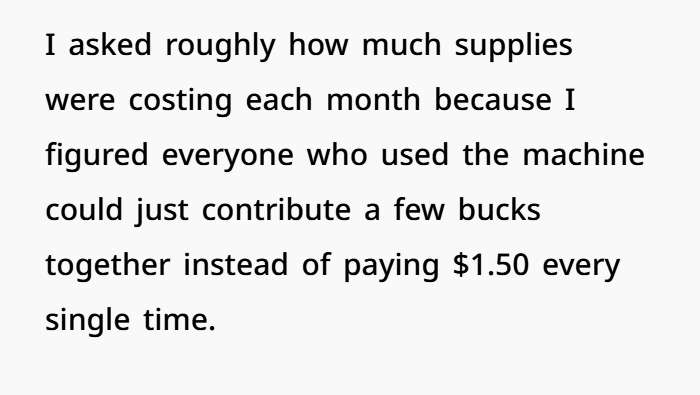
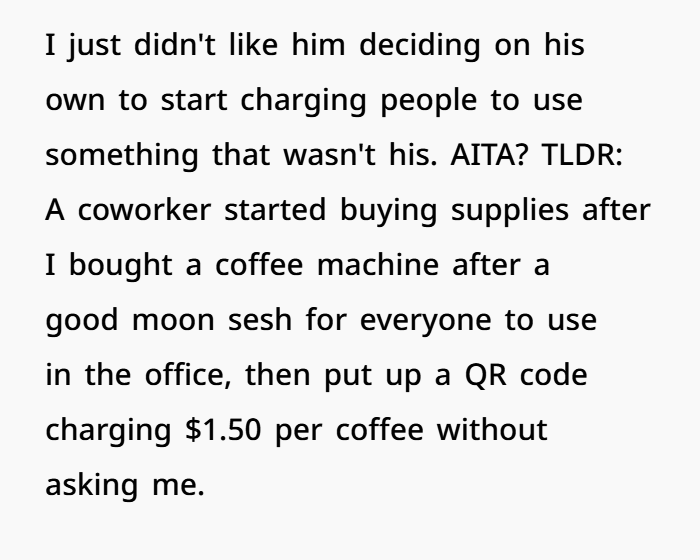
Later, another employee started taking care of the coffee supplies. They purchased quality coffee beans, oat milk, syrups, and other items to make better drinks. Many coworkers enjoyed the improved coffee options. However, the situation changed when the employee added a QR code payment option and started selling drinks for $1.50 each without talking about it with the person who owned the machine.
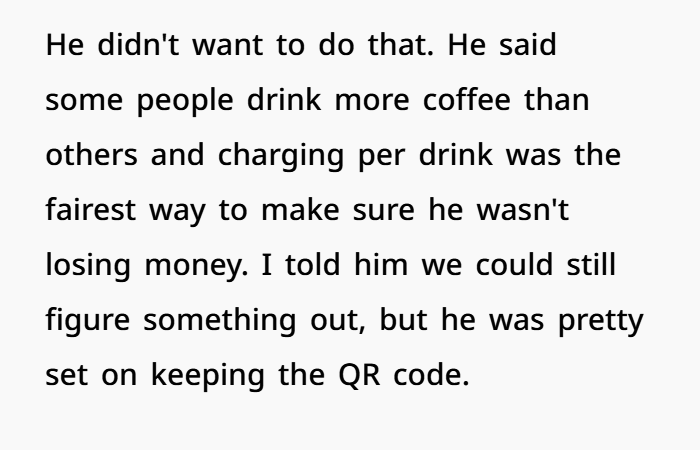
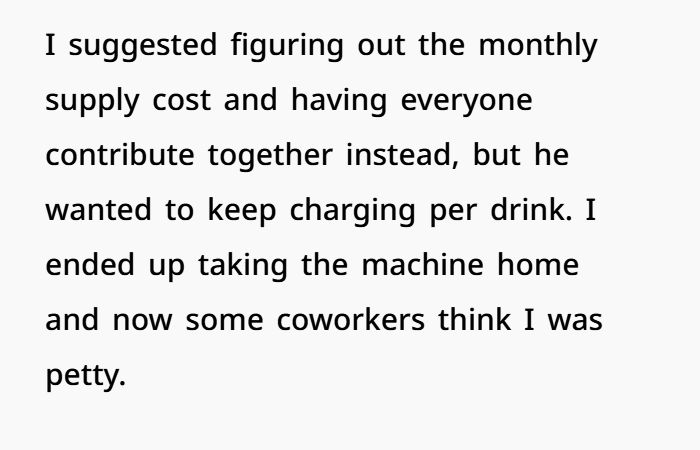
The owner of the espresso machine explained that the problem was not the cost of coffee ingredients. They were willing to share expenses for coffee supplies and maintenance. Their concern was about permission, ownership, and making changes to a shared office resource without agreement. The coworker felt that charging per cup was a practical way to manage the costs.
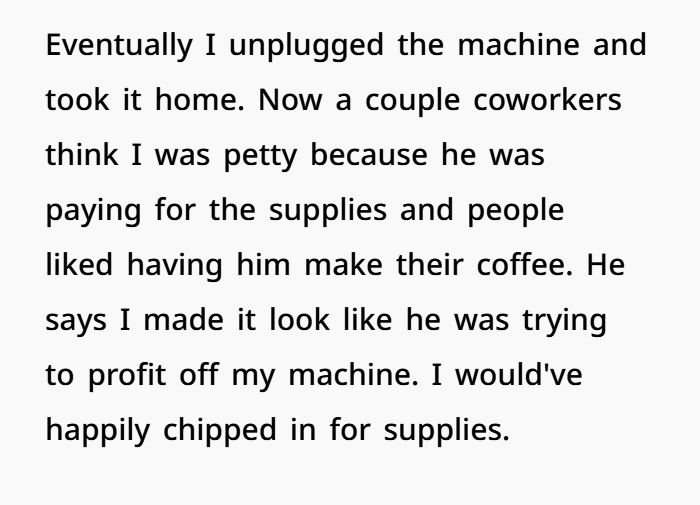
After several conversations, both employees were unable to find a solution that worked for everyone. The coworker had earned around $70 from the coffee payments. The machine owner eventually took the espresso machine home, which led to mixed reactions from the office team. The situation showed how important clear communication and shared expectations can be in workplace situations.

Workplace Shared Resources: Who Owns It and Who Makes the Rules?
In many workplaces, small problems can become bigger when rules are not clearly discussed. A common example is when someone brings a personal item to the office and allows others to use it. At first, everything feels simple and friendly. But over time, people may start having different ideas about who controls that item and how it should be managed.
This situation often happens with shared office items like coffee machines, kitchen supplies, office equipment, or other personal resources. The main issue is usually not the item itself, but the lack of clear communication.
When a Personal Item Becomes a Shared Resource
Imagine an employee brings a coffee machine to work. The machine belongs to that person, but coworkers are allowed to use it. Everyone understands that it is a friendly arrangement based on trust and respect.
Problems can appear when another coworker starts managing the coffee system without discussing changes with the owner.
For example, one coworker may start buying coffee supplies, cleaning the machine, and making drinks for others. Because they are putting in time and money, they may begin to feel responsible for the coffee setup.
At the same time, the person who bought the machine may feel that they still have the final say because they own the equipment.
This difference in expectations can create workplace conflict.
Understanding Ownership and Responsibility
There is an important difference between taking care of something and owning something.
A person who spends money on supplies or helps maintain an item is contributing to the resource. However, this does not always mean they have the right to make major decisions about it.
In a professional environment, ownership usually belongs to the person or company that purchased the item unless ownership was officially transferred.
For example, paying for coffee beans, filters, or maintenance does not automatically give someone the right to change how the machine is used. It simply means they helped support the shared resource.
This is why clear workplace policies and communication are important.
The Problem With Changing a Free Service Into a Paid One
Many shared workplace arrangements start as informal agreements. Employees may share snacks, drinks, tools, or equipment without thinking about rules.
However, problems can happen when someone changes the arrangement without approval.
A coffee setup that was originally free and casual may become a paid service if someone starts charging coworkers for each cup. While charging money may seem reasonable to cover expenses, it changes the original agreement.
There are different ways workplaces can handle shared costs:
Voluntary Contribution Model
Employees can choose to contribute money for supplies. This keeps the arrangement friendly and flexible.
Monthly Cost Sharing Model
Coworkers can agree to pay a small monthly amount to cover coffee, cleaning products, and maintenance costs.
Pay Per Use Model
Employees pay each time they use the service. This can work in some situations, especially when usage is different among employees.
However, any paid system should be agreed upon by everyone involved, especially the person who owns the equipment.
Why Communication Matters in the Workplace
Many workplace disagreements are not caused by bad intentions. Often, people simply have different expectations.
The coworker managing the coffee may have believed they were creating a fair system because they were paying for supplies. The machine owner may have felt uncomfortable because a personal belonging was being used to create a paid service.
Both sides may have had understandable reasons, but the missing step was communication.
Before changing any shared arrangement, employees should discuss:
- Who owns the item
- Who pays for supplies
- Who makes decisions
- What happens if costs increase
- Whether the company should become involved
Good communication helps maintain positive employee relationships and creates a healthier workplace culture.
Personal Property and Workplace Boundaries
In most situations, personal property remains owned by the person who purchased it. Helping maintain or improve an item does not usually mean someone gains ownership rights.
For example, if someone helps repair another person’s equipment or pays for some expenses, they may have contributed value, but that does not automatically allow them to control, rent, or sell that item.
The details can depend on local laws, workplace rules, and any agreements between people. However, the basic idea is simple: helping with something is different from owning it.
Finding a Fair Solution
The best way to avoid these problems is to create simple rules from the beginning.
Possible solutions include:
- Keeping a shared money jar for supplies
- Agreeing on a monthly contribution amount
- Asking the company to provide workplace benefits like coffee
- Allowing one person to manage supplies while respecting the owner’s decisions
- Creating clear office guidelines for personal items
When people respect both ownership and teamwork, shared resources can continue to benefit everyone.
The biggest lesson is that workplace sharing works best when expectations are clear. A small conversation early can prevent misunderstandings later and help create a respectful, professional environment for everyone.
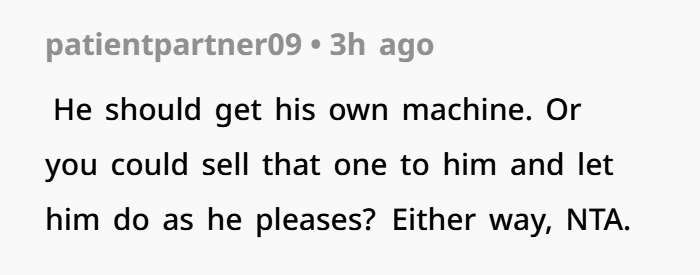
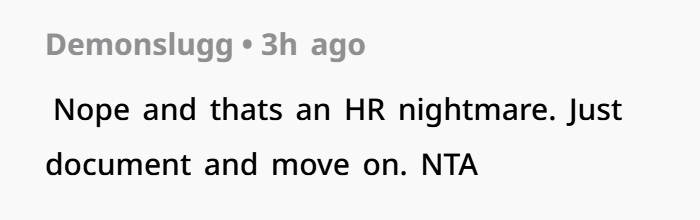
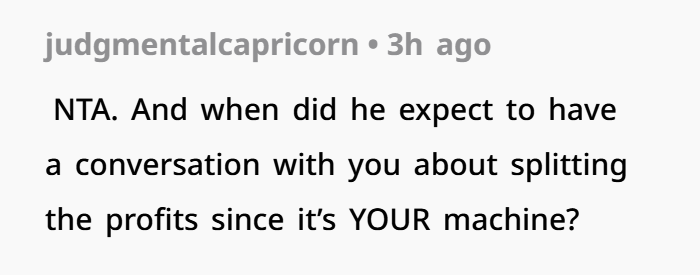
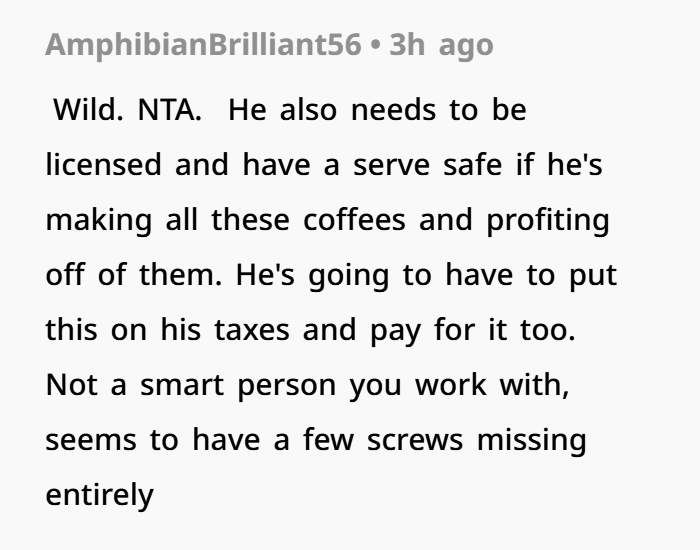
Readers Shared Their Thoughts