AITA for Calling Out My Mom for Turning My Sister’s Wedding Guestbook Into a Tribute to My Late Brother?


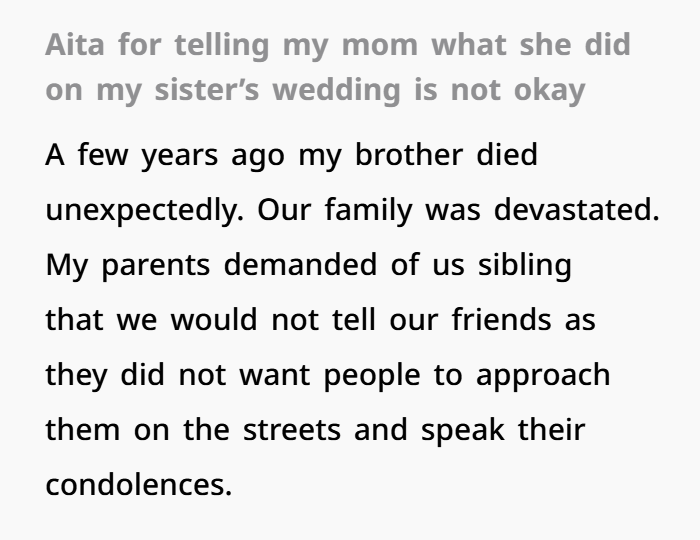
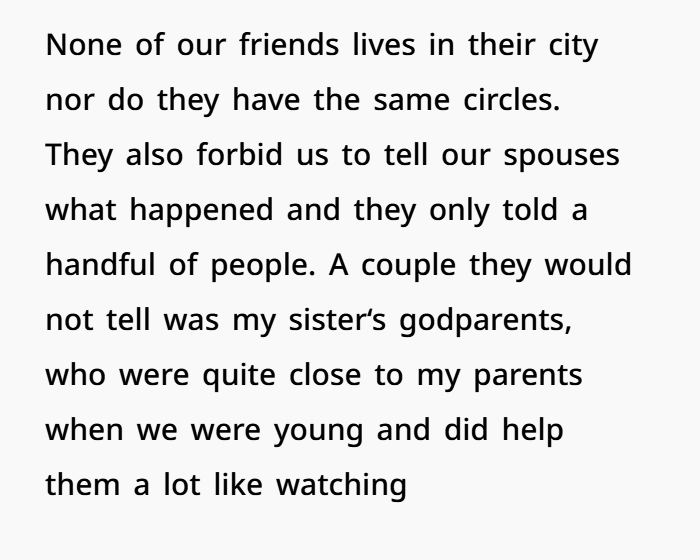
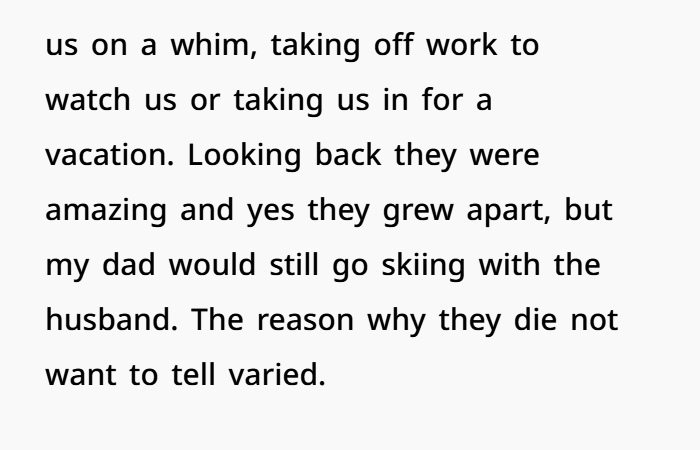
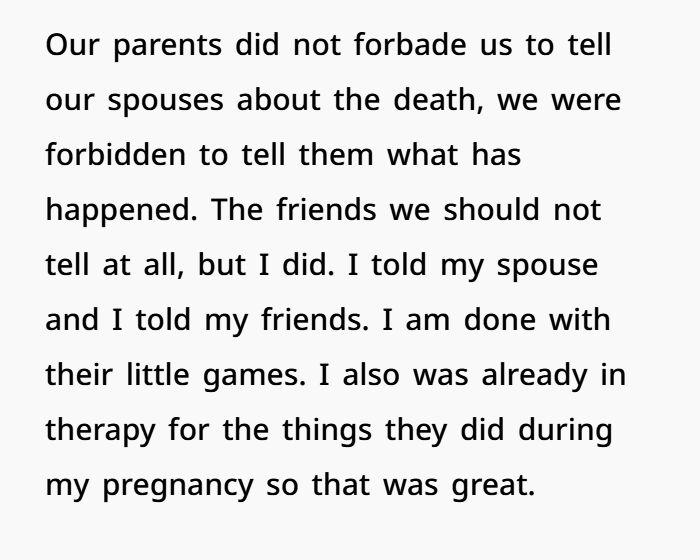
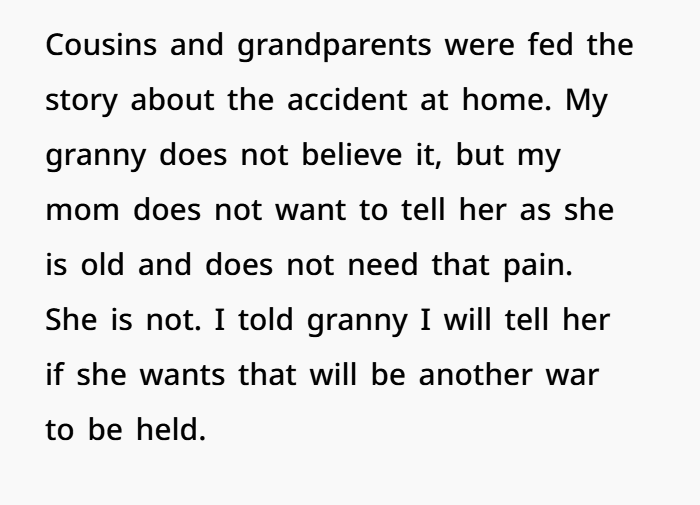
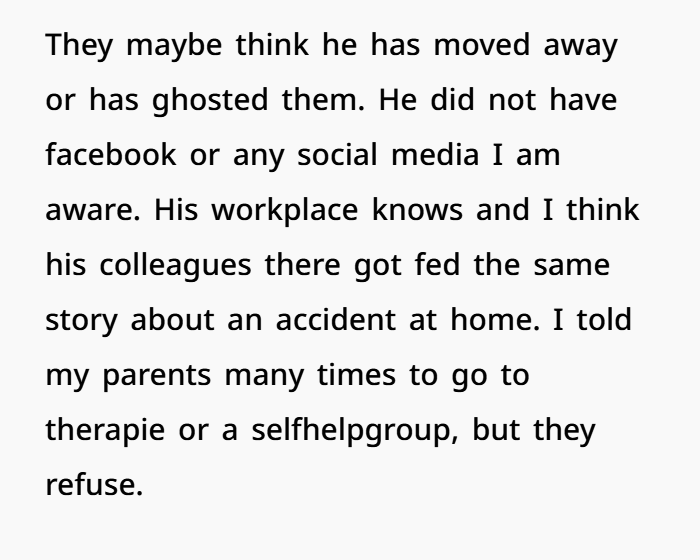
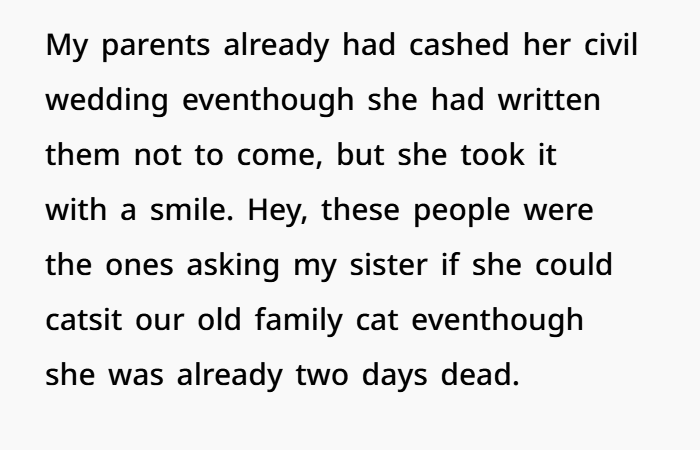
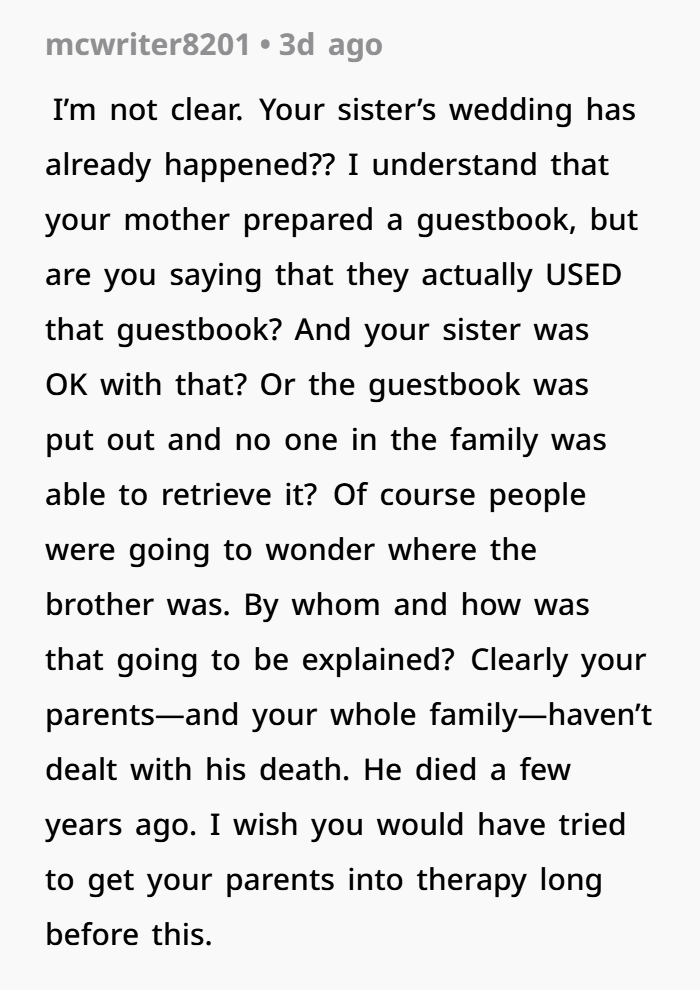
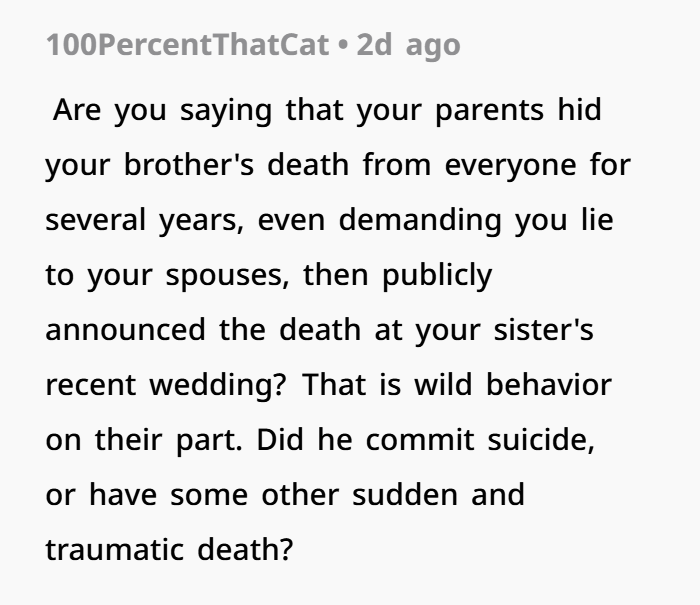
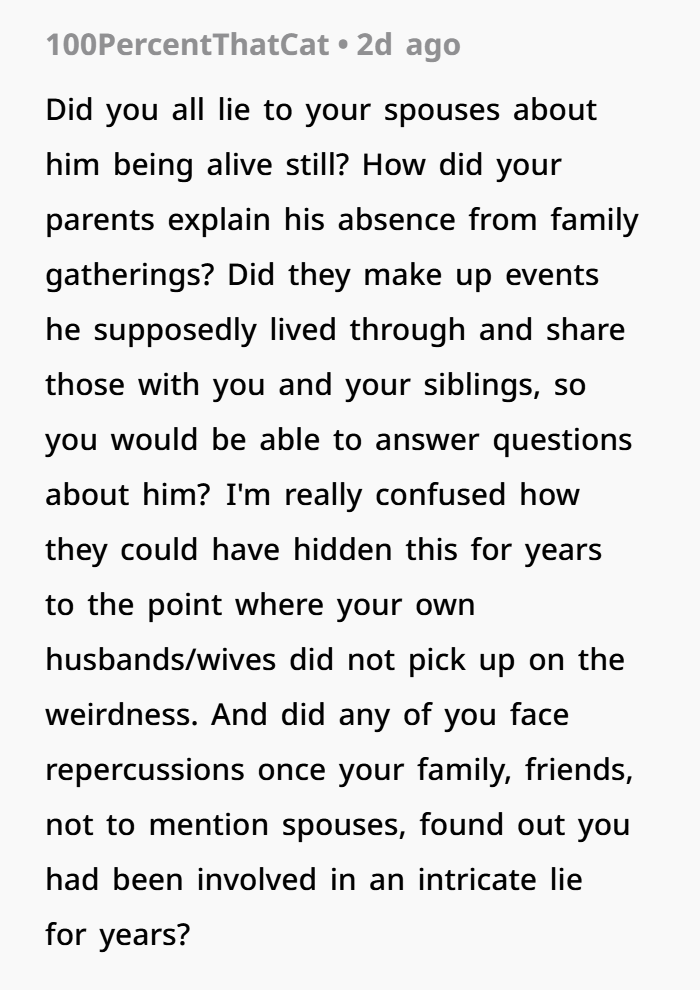
A woman found herself upset during her sister’s wedding because of a decision involving a memorial for her late brother. The family had lost him years earlier, but her parents decided not to share the news widely. They wanted to keep the situation private, but this choice caused misunderstandings among relatives and friends.
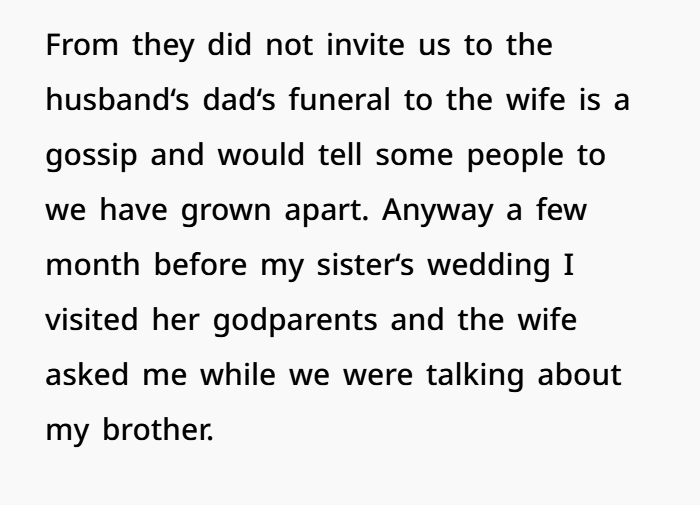
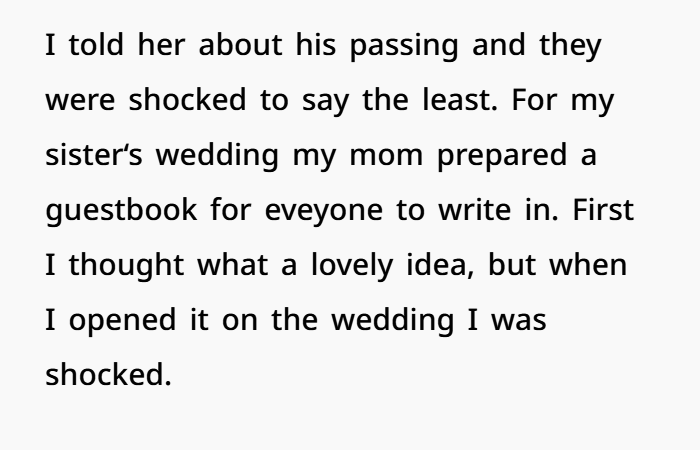
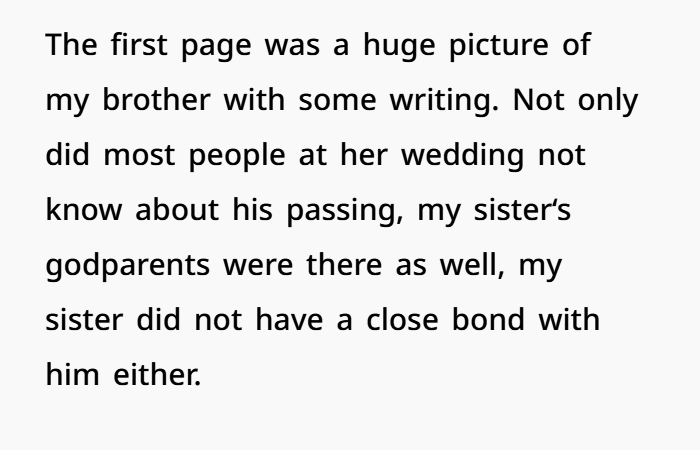
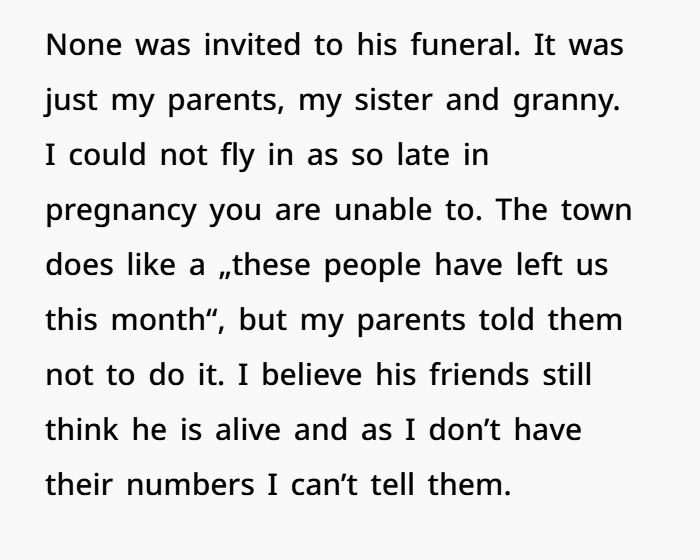
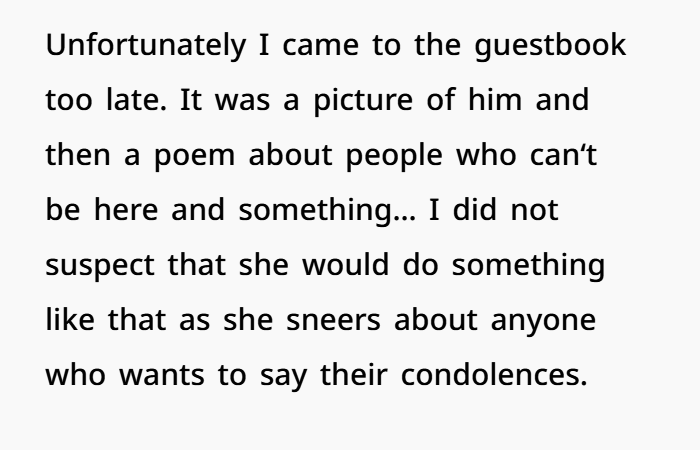
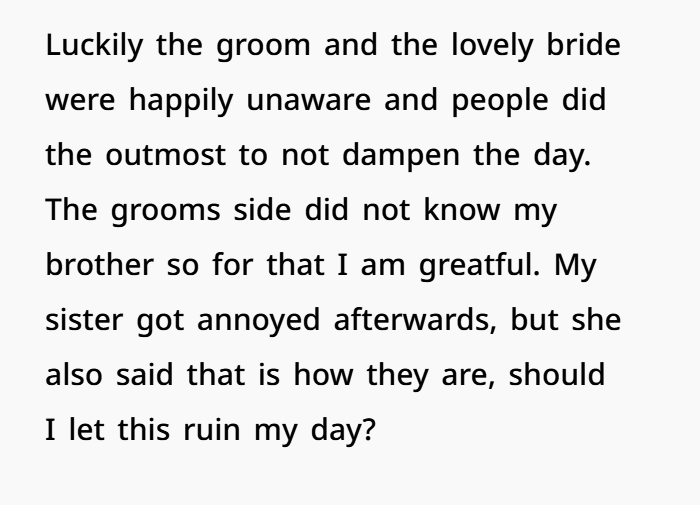
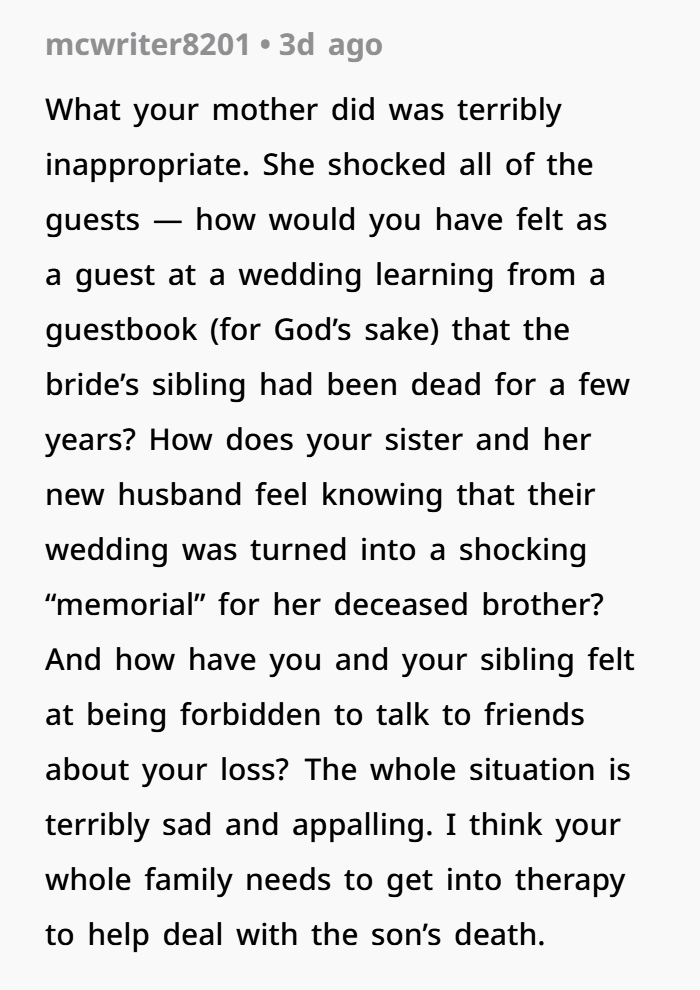
Before the wedding, the woman met people who had been important in her brother’s life. They were surprised to learn that he had passed away because they had never been told. At the wedding, she noticed that the guestbook opened with a photo of her brother and a message in his memory. She felt this was difficult for guests who were seeing the information for the first time.
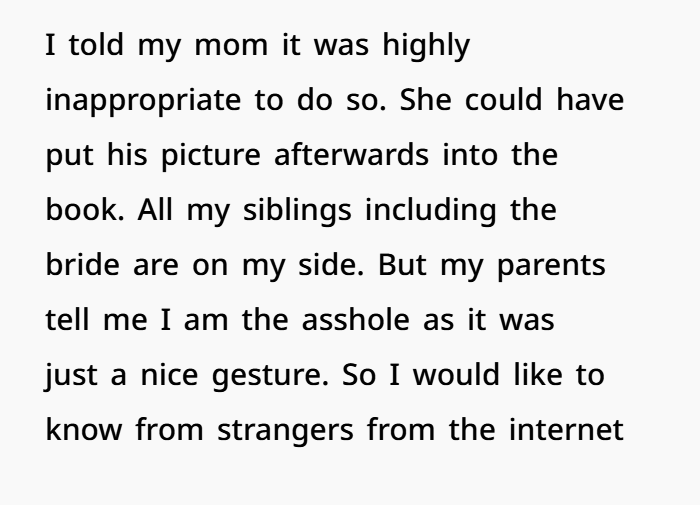
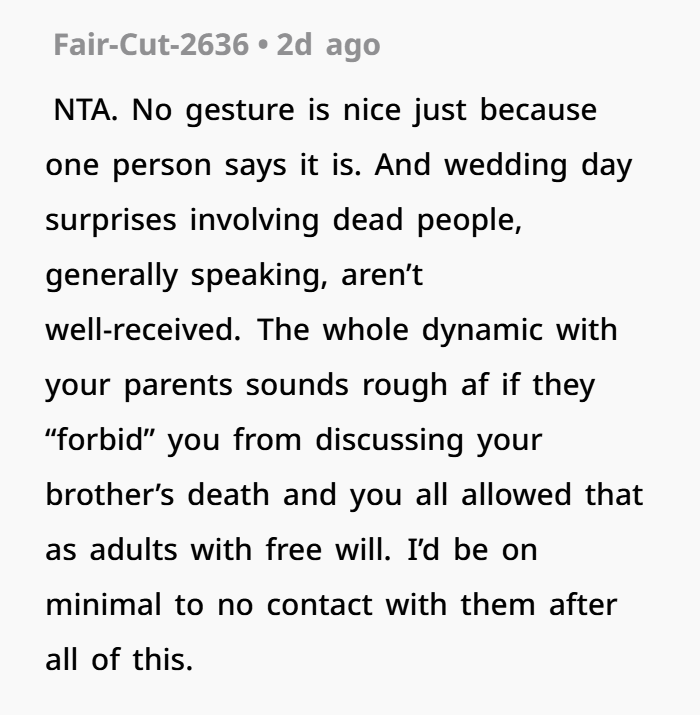
The woman believed the memorial was meaningful but felt the placement was not appropriate for a wedding keepsake. She thought it could have been added on a later page. Her family had different opinions, with some seeing it as a loving tribute and others feeling it brought attention to unresolved family pain.
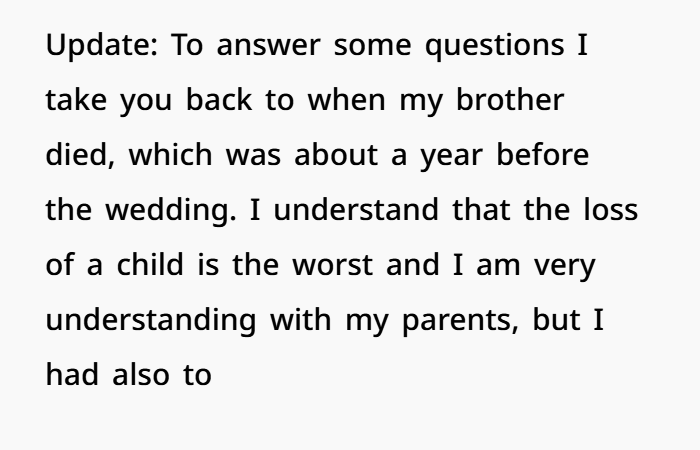
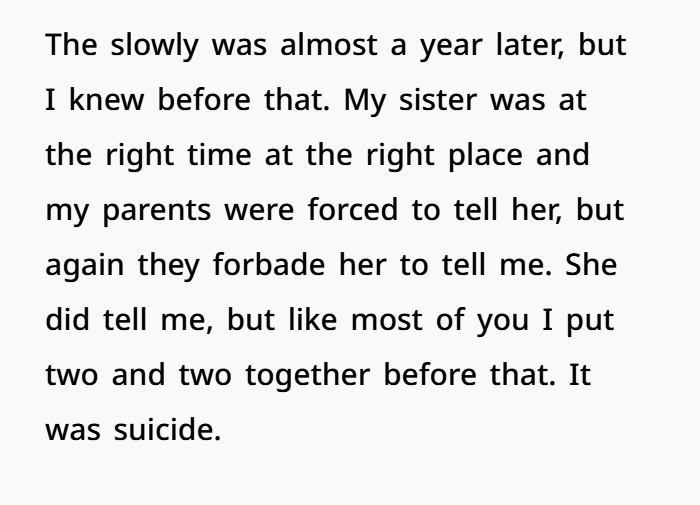
The story became more complicated when it was revealed that her brother’s death was a suicide. The family had been carrying grief and difficult emotions for years. The wedding disagreement was connected to bigger issues about loss, privacy, and how each person handles painful experiences. Clear communication and emotional support are important when families face challenging situations.

Grief, Family Secrets, and When Memorials Become Complicated
Losing someone close can be one of the most painful experiences a family can face. Everyone deals with grief in their own way, and there is no single way to handle sadness after a loss.
When a death happens suddenly or under difficult circumstances, families may experience many emotions. They may feel sadness, confusion, fear, anger, or guilt. They may also have questions about what information should be shared with others.
These situations can become even harder when family members have different ideas about privacy, communication, and how to remember the person who passed away.
Why Families Handle Grief Differently
Grief is a personal experience. Some people find comfort in talking about their feelings and sharing memories with others. Some people need quiet time and prefer to process their emotions privately.
Both ways of grieving are normal.
Problems can happen when family members have different needs but do not talk about them openly. One person may want to keep certain details private, while another person may feel that sharing helps them heal and feel supported.
Why Some Families Choose Privacy After a Loss
After a difficult loss, some families decide to keep certain information within the family. They may worry about judgment, unwanted questions, or painful conversations.
For some people, privacy feels like a way to protect themselves while they are dealing with strong emotions.
However, keeping information private can sometimes create new challenges. Other family members may feel left out, confused, or unable to fully process their own grief.
Honest and respectful communication can help families understand each other better during difficult times.
When Family Members Have Different Grief Needs
Every person experiences loss differently.
One family member may need time alone to heal. Another person may need support from friends and relatives or want to talk about their memories.
These different needs do not mean someone cares more or less. People simply have different ways of coping with emotional pain.
The problem often begins when one person’s way of handling grief is expected from everyone else.
When Memorials Become Difficult Decisions
Memorials are a meaningful way to honor someone who has passed away. They allow families and friends to remember important moments and celebrate a person’s life.
However, the timing and location of a memorial can be important.
For example, a wedding is usually a celebration focused on the couple and their future together. Adding a tribute to someone who has passed away during a wedding may create different feelings among guests.
Some people may find the tribute comforting, while others may feel that the moment needs more planning and discussion.
Many families choose different ways to remember loved ones, such as:
- Sharing memories privately
- Lighting a candle
- Creating a memory collection
- Having a special family moment
- Including a small tribute during an appropriate time
These choices can help families honor someone while respecting the purpose of an event.
How Unresolved Grief Can Affect Family Relationships
Sometimes disagreements about memorials are not only about one decision. They may be connected to deeper feelings that have been building over time.
A family member may feel ignored, excluded, or hurt because they were not included in important conversations.
After a painful loss, trust can become difficult if people feel their emotions and opinions were not considered.
Healing family relationships often requires patience, understanding, and open communication.
Respecting Different Ways of Remembering Loved Ones
Families can experience the same loss but have very different feelings about it.
One person may want to talk about the person who passed away often. Another person may prefer private memories.
Both approaches can be meaningful.
Remembering someone is about honoring their life and the impact they had. At the same time, families should consider the feelings and needs of everyone affected by the loss.
See The Comments Below
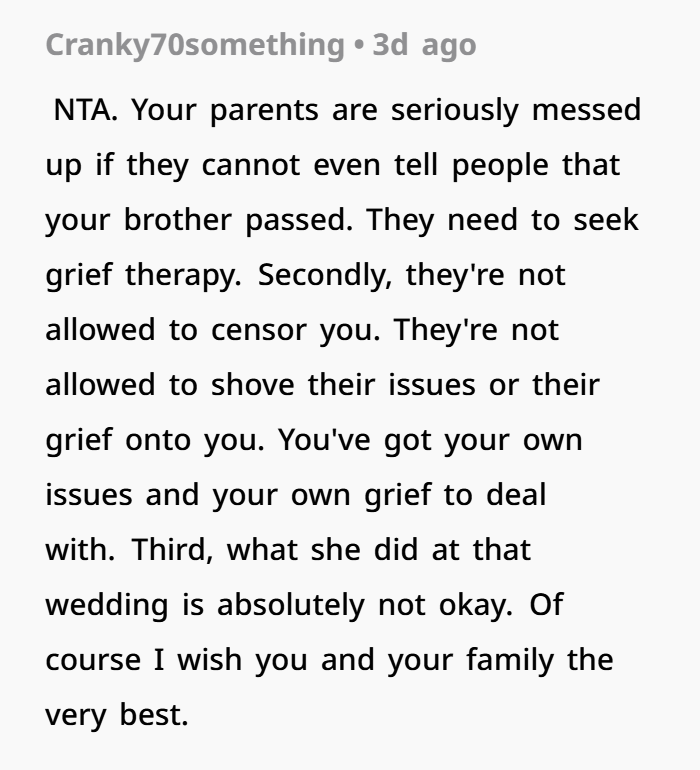
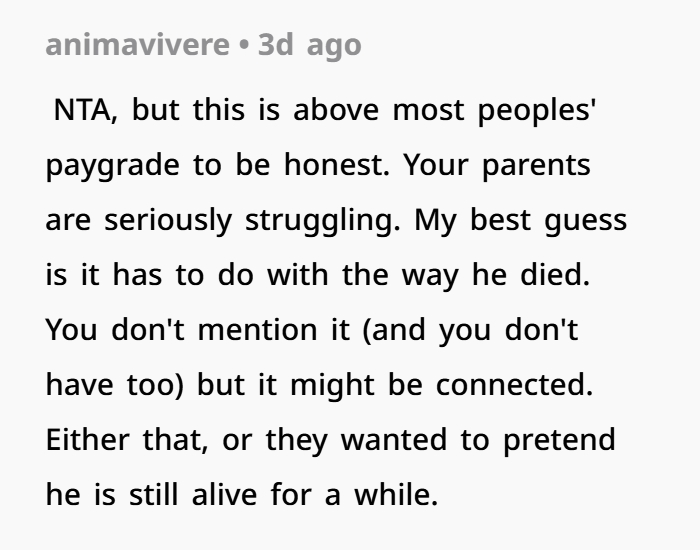
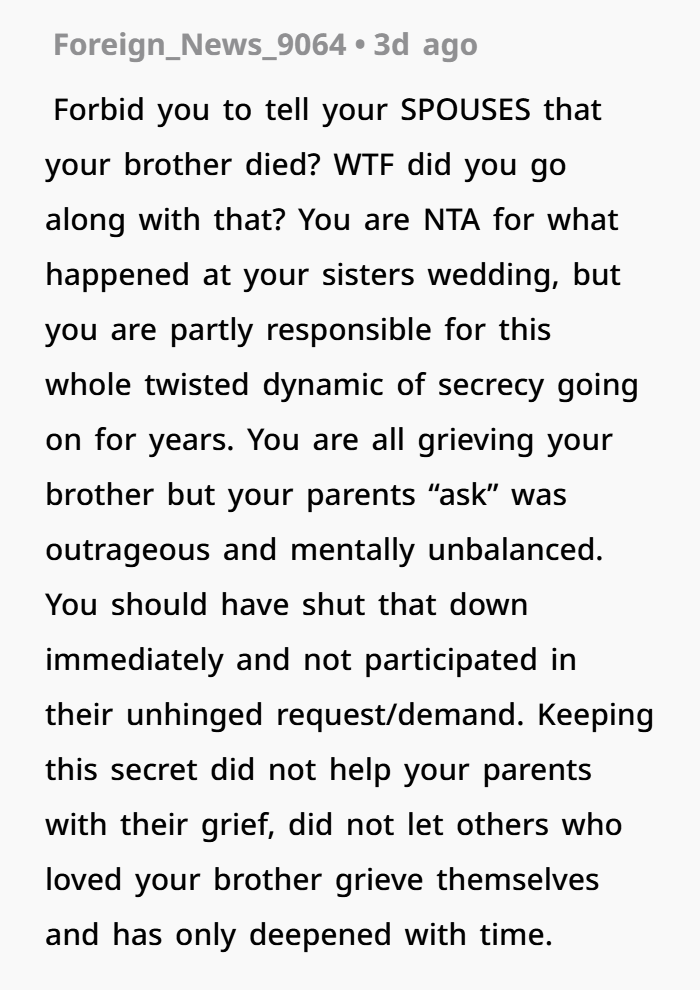
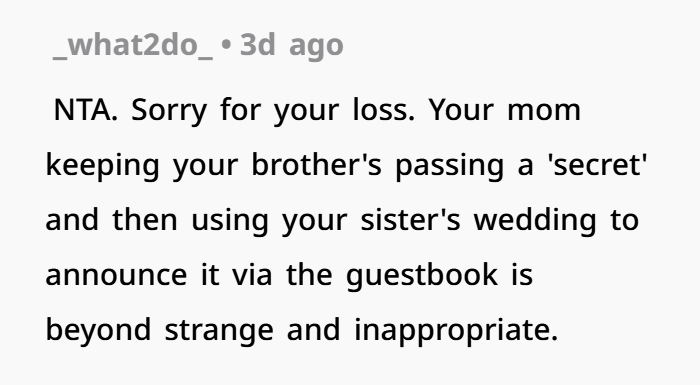
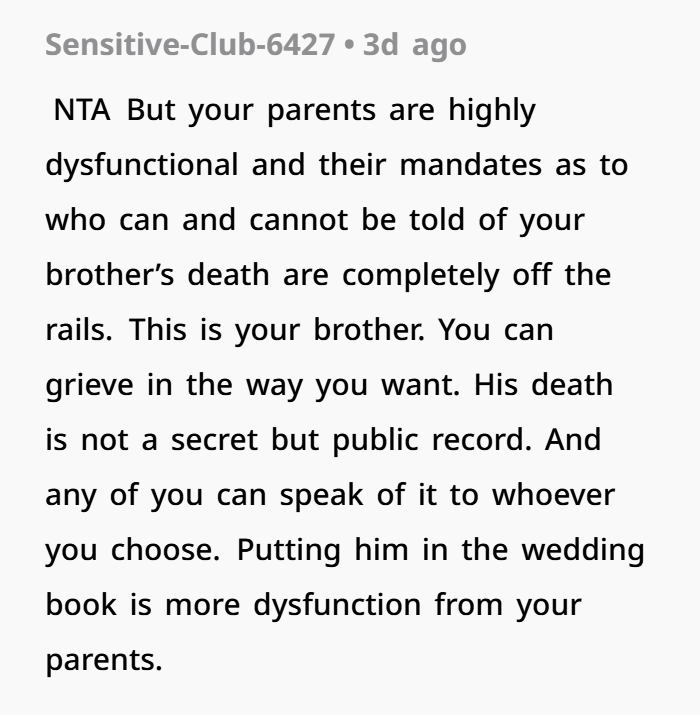
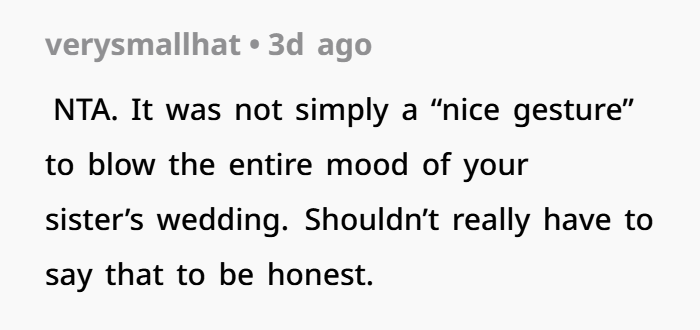
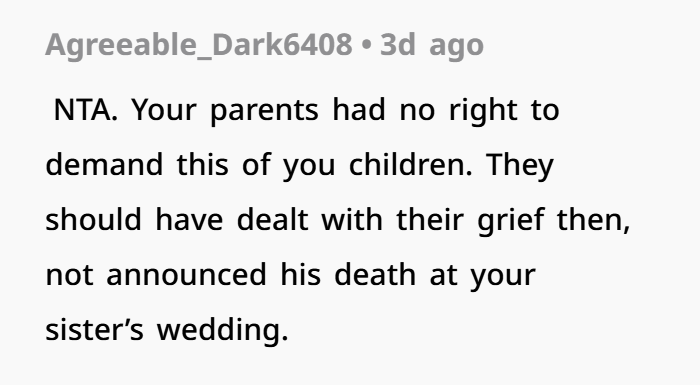
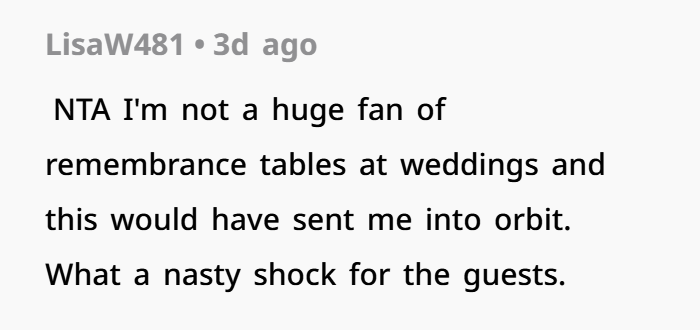
Grief can be complicated, especially when families are dealing with painful memories, different emotions, and different opinions about how to move forward.
Memorials can bring comfort and help keep someone’s memory alive, but they should be planned with care and respect.
The most helpful approach is often one that honors the person who passed away while also supporting the people who are still grieving.
With compassion, understanding, and honest communication, families can find healthier ways to remember loved ones and support each other through difficult moments.