AITA for Cutting Off My Cheating Dad… and Refusing to Accept His New Baby?
This situation hits hard, and not just because of cheating—it’s everything that came after. The OP, a 20-year-old college student, finds out his dad had an affair and now there’s a baby involved. By the time he learns the truth, his mom has already taken action—kicked the dad out and started the divorce process. Instead of owning up, the dad goes the other way. He keeps showing up, keeps pushing, even brings the baby along trying to “fix” things like nothing happened. That’s not just messy… that’s emotionally heavy. Stuff like this often comes up in family law cases and divorce settlement issues, especially when kids are involved.
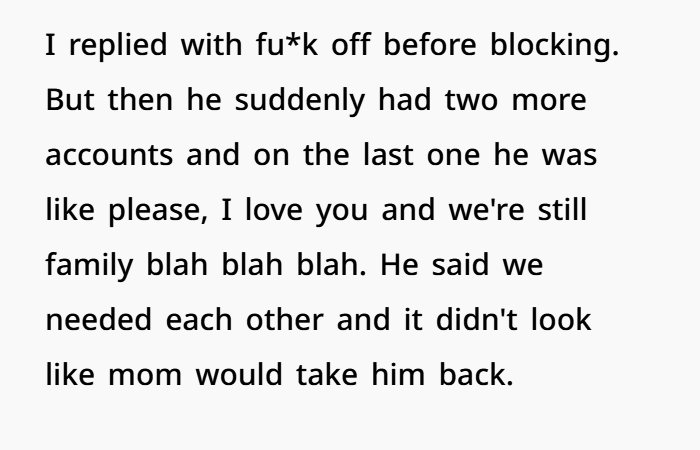
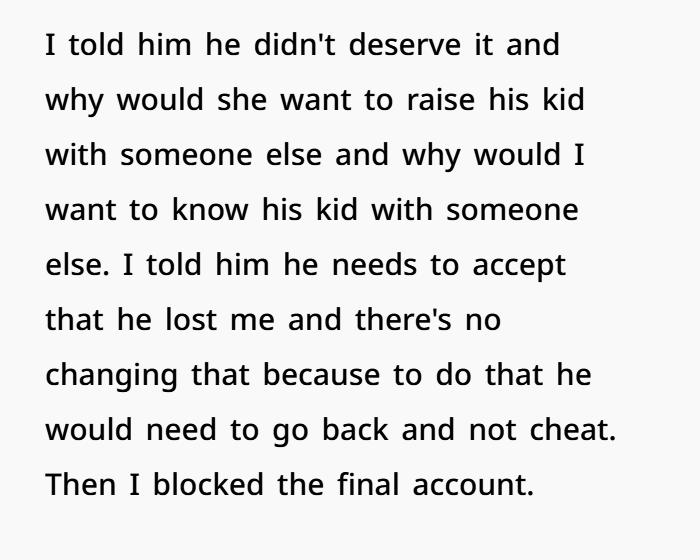
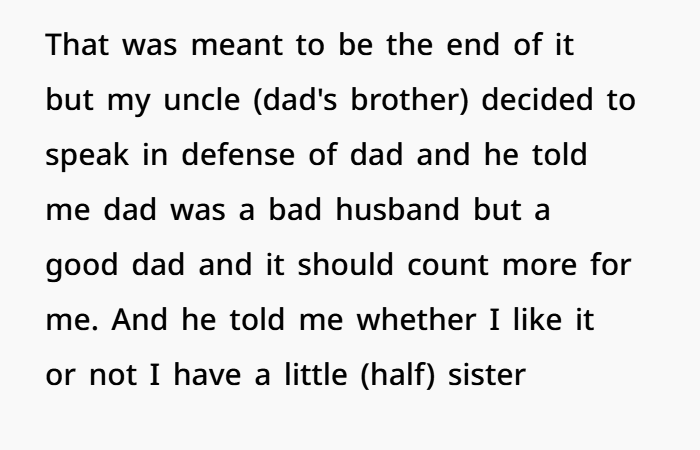
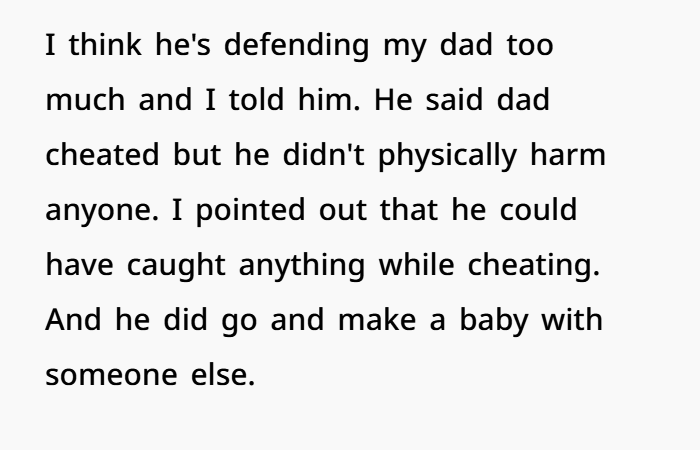
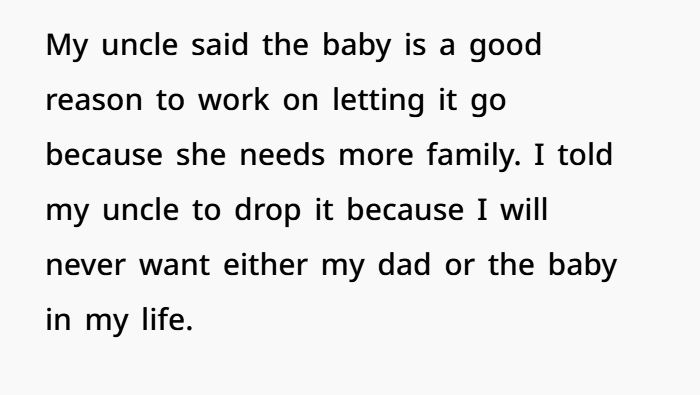
For OP, that was it. That was the line. He cuts his dad off completely—blocks him, no contact, just done. Even the fact that there’s a half-sister doesn’t change how he feels. When the dad keeps trying to reach out, OP shuts it down straight. No mixed signals. But then the pressure shifts. Extended family jumps in, especially the uncle, saying the dad might’ve failed as a husband but is still a father. That’s where things get complicated. Now OP is being labeled as cold or immature, when really he’s just protecting his mental health boundaries and emotional well-being. And honestly, this kind of situation is exactly what people talk about in family therapy and toxic family dynamics—because sometimes, peace comes from distance.

Honestly, this goes way beyond a normal family issue. This is what it looks like when trust gets destroyed at the core, and the person responsible doesn’t really take ownership. You see this kind of situation a lot in toxic family dynamics and mental health recovery conversations.
Let’s clear one thing up first—bad partner vs bad parent. The uncle keeps pushing this idea that the dad messed up as a husband but is still a good father. Sounds logical, but real life isn’t that simple.
Because actions overlap. When a father cheats, hides a second relationship, and ends up having another child—it doesn’t stay limited to the marriage. It impacts the whole family. Kids don’t see it as “their issue,” they feel the betrayal too. It creates emotional chaos, something often discussed in family psychology and trauma counseling.
And then comes the dad’s behavior after being exposed. This is where things really go wrong. If he had shown real regret, respected space, and tried to rebuild trust slowly, okay—different story. But instead, he pushed harder. Showing up uninvited, pressuring the mom, acting like things could go back to normal, even bringing the baby into it. That’s not remorse. That’s denial.
From a psychological point of view, this falls into entitlement behavior and lack of emotional maturity. He’s not asking how to repair the damage—he’s trying to control the outcome. And that difference? It says everything.
Now let’s talk about OP’s reaction—cutting him off completely.
A lot of people throw around the idea that “family is family” and that blood relationships should always be preserved. But modern psychology, especially in areas like family trauma and boundary-setting, doesn’t support that unconditional mindset anymore. There’s a growing recognition that sometimes the healthiest choice is no contact, especially when someone repeatedly violates boundaries or causes ongoing harm.
OP didn’t just react emotionally in the moment. He made a decision based on repeated behavior:
- The cheating itself
- The lack of accountability
- The harassment of his mom
- The refusal to respect boundaries
- The continued pressure to reconnect
That’s a pattern, not a one-time mistake.
Now, the most complicated part of this story: the baby.
This is usually the point where people say, “But the child is innocent.” And yeah, no one’s denying that. The half-sister didn’t choose any of this. But here’s the hard truth—innocence doesn’t automatically create a relationship.
Relationships are built, not owed. And for OP, that child is tied to a lot of pain—family breakdown, cheating, emotional stress, and everything his mom is still going through. Expecting him to just push all that aside and become a caring older brother overnight? That’s not realistic. Situations like this are often discussed in family counseling sessions and trauma support spaces.
Then there’s timing. OP is 20. He’s still processing everything. Healing isn’t instant, and it’s definitely not linear. Forcing a relationship before someone is ready usually backfires. Instead of connection, you get frustration and resentment. That’s a key idea in emotional wellness and therapy-based healing.
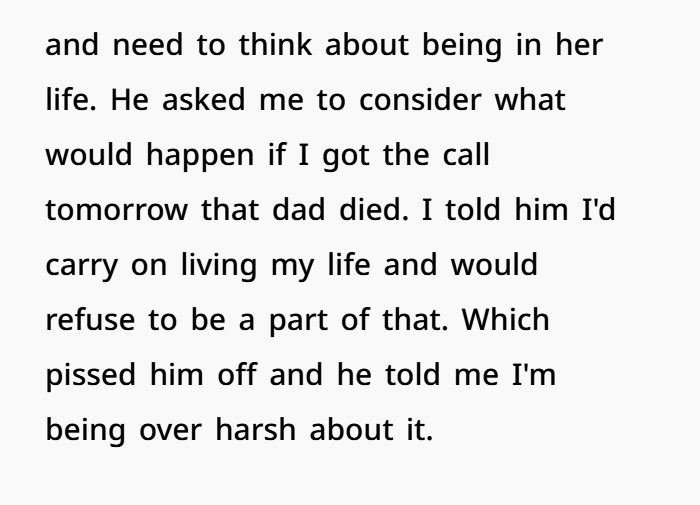
Now the uncle’s “what if he dies tomorrow” argument—that’s emotional pressure, plain and simple. It’s a way of creating guilt based on something that hasn’t even happened. But decisions about relationships should come from current reality, not imagined regret. This is a common topic in self-help psychology and boundary setting strategies.
And OP’s response—saying he’d just continue his life—might sound cold, but it’s honest. When a relationship is already emotionally disconnected, death doesn’t magically rebuild it. Not everyone reacts the same way, and that’s okay.
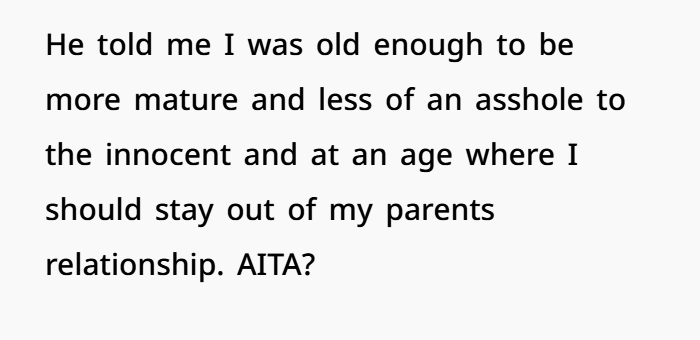
Also, the idea that OP should stay out of it? That doesn’t really work here. The dad’s actions didn’t stay private—they affected the whole family. OP’s life changed because of it. So yeah, he’s already involved whether he wants to be or not.
And saying “no physical harm was done” is way too narrow. Emotional harm is real. Mental stress, betrayal, instability—these leave long-term impact. Just because it’s not visible doesn’t mean it’s not serious.
Let’s also touch on something people don’t say out loud: forgiveness is optional.
There’s a lot of social pressure around forgiveness, especially in families. Like you’re expected to forgive no matter what. But the truth is—forgiveness is a personal choice, not something you owe anyone. And even if OP forgives someday, that doesn’t automatically mean reconnecting. Rebuilding trust and forgiving are not the same thing, and this comes up a lot in relationship counseling and emotional wellness discussions.
Right now, OP is choosing self-protection over forced bonding. And that’s not him being immature—that’s him having strong emotional boundaries and knowing what he can handle.
Could things change in the future? Sure, it’s possible. Time can change how people feel. Maybe years later, things won’t feel this intense. But that kind of shift can’t be forced. It has to happen on its own, without emotional pressure or guilt trips. That’s a big part of healing from family trauma.
At its core, this isn’t about whether OP is too harsh. It’s about whether he’s allowed to step back after being hurt. And yeah—he absolutely is.
Because when someone breaks your trust, disrespects your family, and avoids accountability… you don’t owe them continued access to your life. Sharing blood doesn’t override self-respect or mental health boundaries.
Readers’ Comments Speak Out
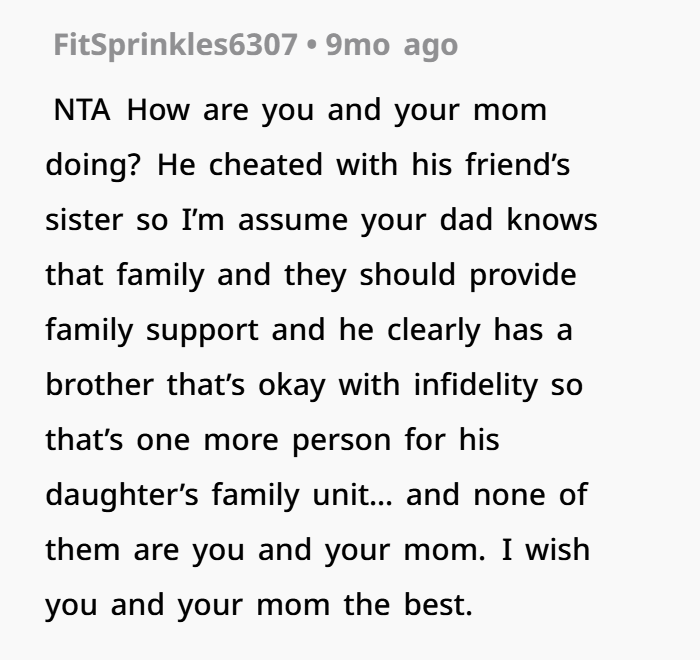
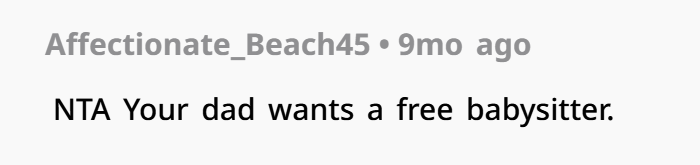
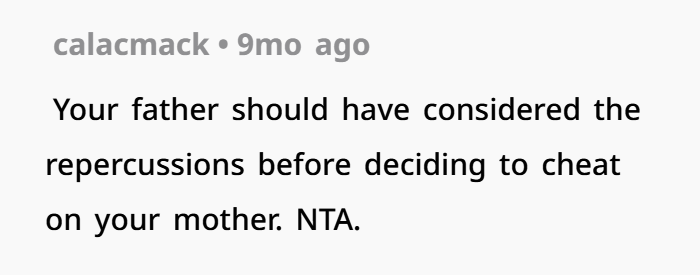
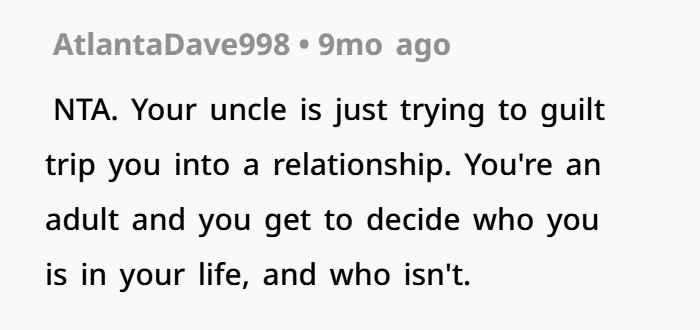
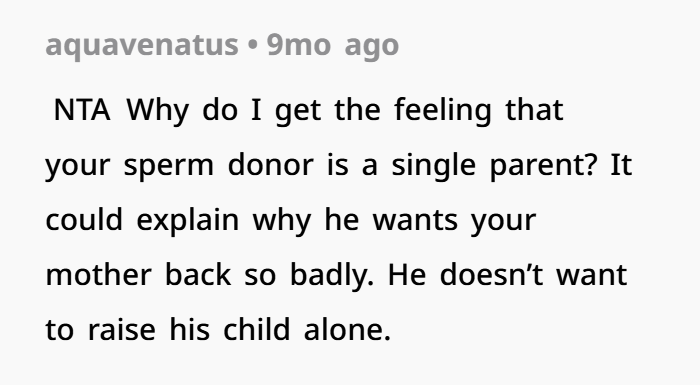
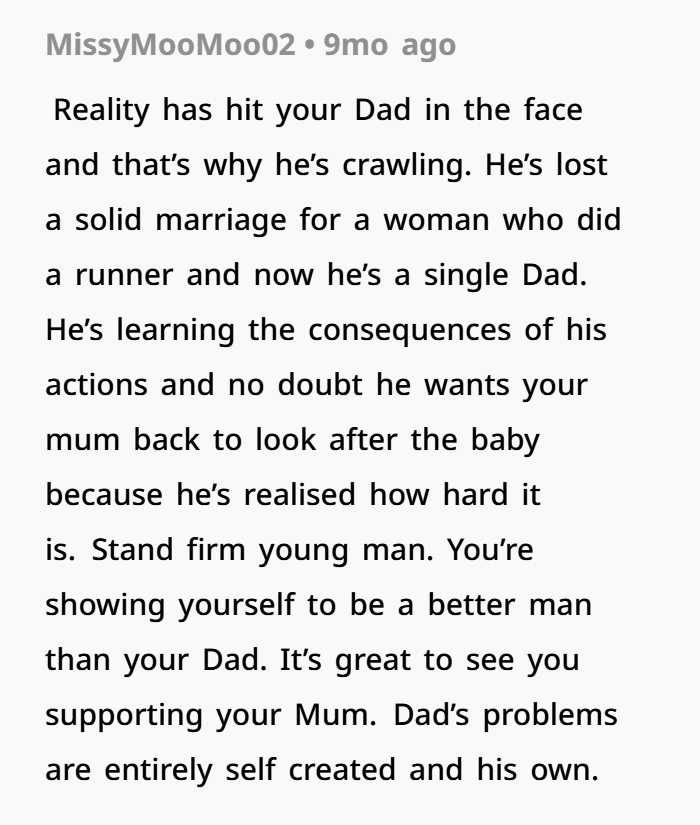
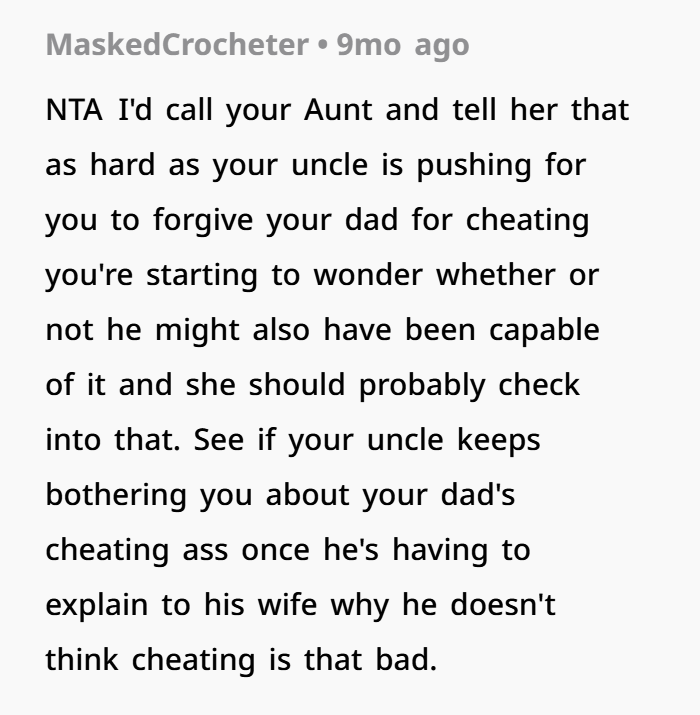
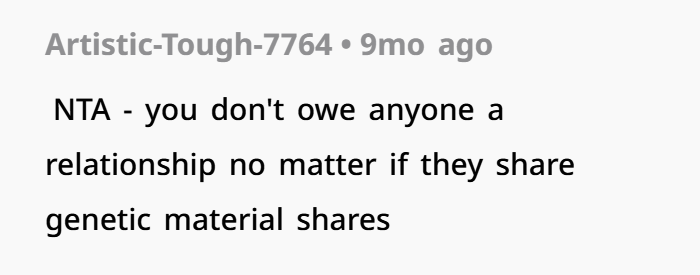
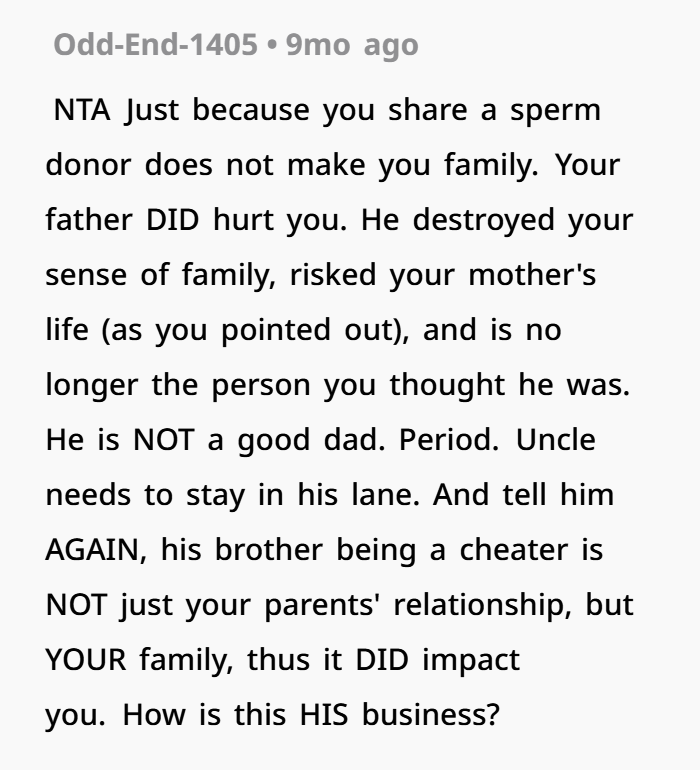
This leans strongly toward Not the A-hole.
You’re not punishing your dad—you’re responding to his choices. And you’re not rejecting the baby out of cruelty—you’re protecting yourself from what that situation represents right now.
People love to preach forgiveness when they’re not the ones dealing with the fallout. But boundaries? Those are yours to set.