AITA for Cutting Off My Cheating Dad… and Refusing to Accept His New Baby?

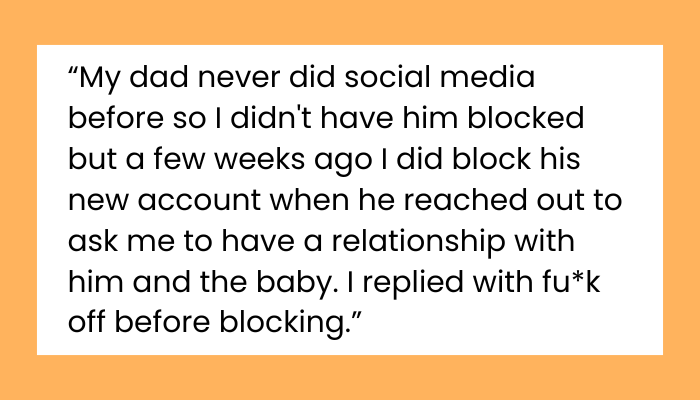
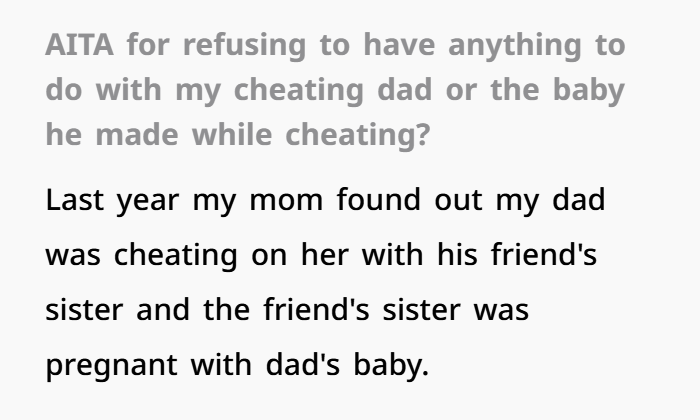
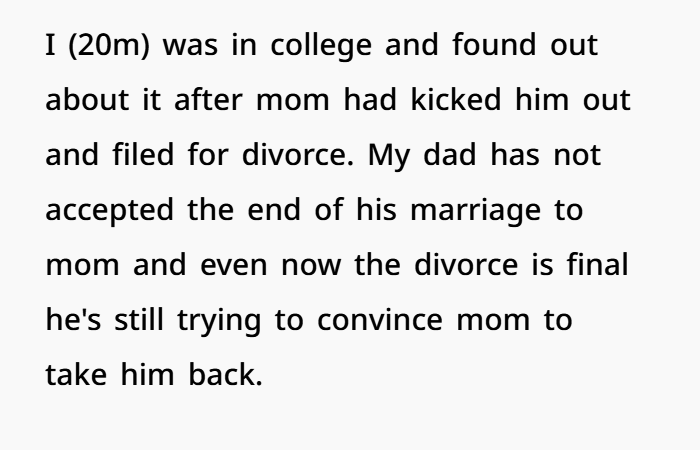
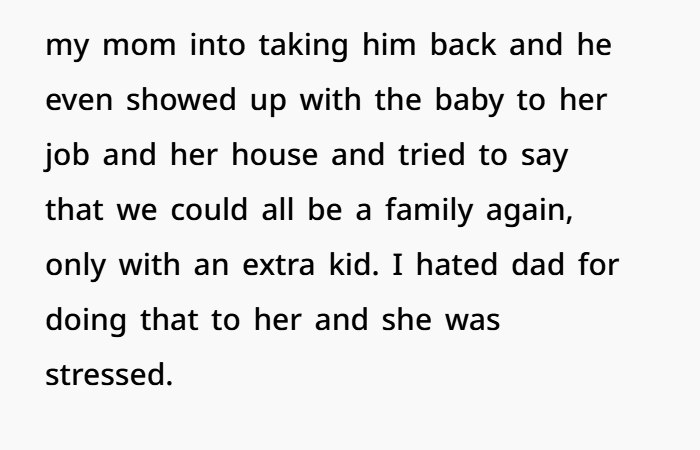
This situation is difficult because it involves more than just a broken marriage. A 20-year-old college student found out that his father had an affair and that a baby was involved. By the time he learned the truth, his mother had already asked his father to leave and had started the divorce process. Instead of accepting the situation, his father kept trying to come back and repair the relationship, even bringing the baby with him during some visits.
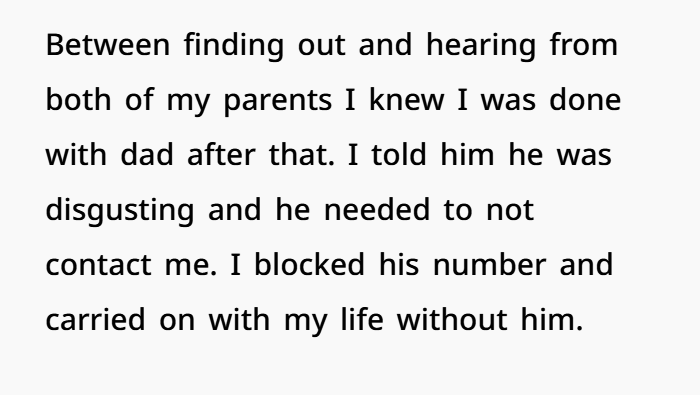
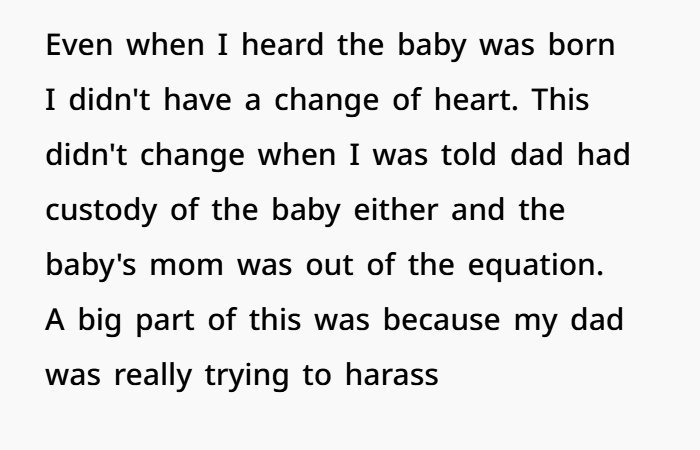
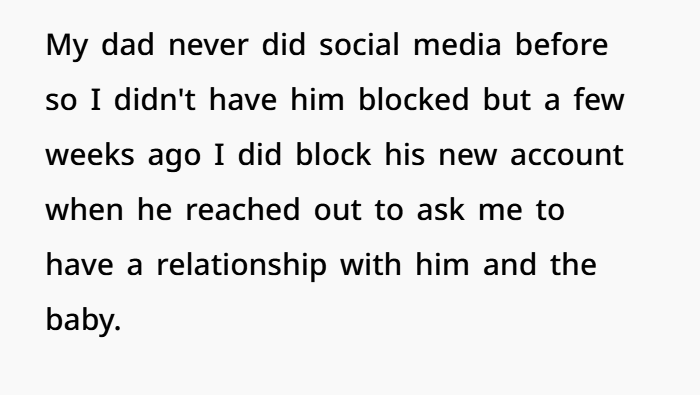
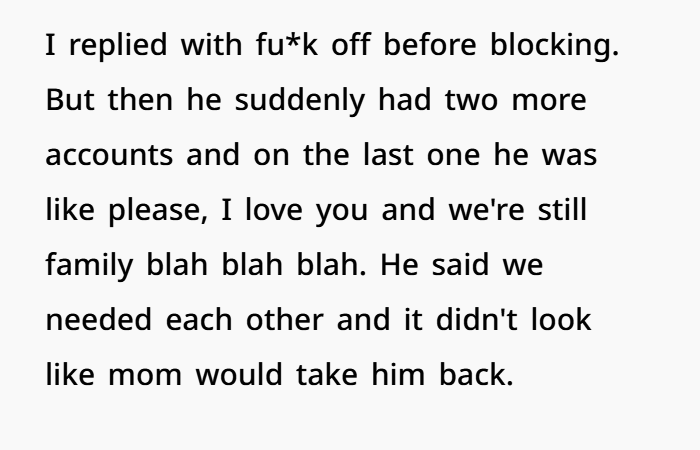
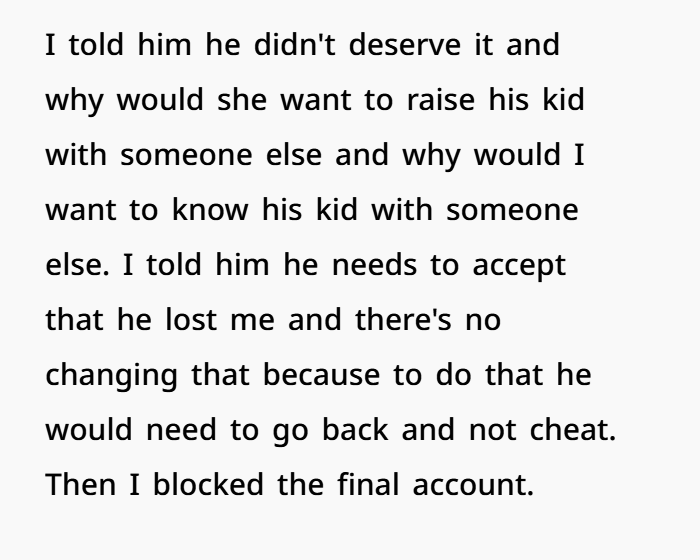
For the son, this became a very painful experience. He felt hurt and disappointed by his father’s choices, so he decided to stop communicating with him. He blocked his father and chose to have no contact. Even knowing he had a half-sibling did not change how he felt at that moment. He believed creating distance was necessary to protect his emotional health and personal boundaries.
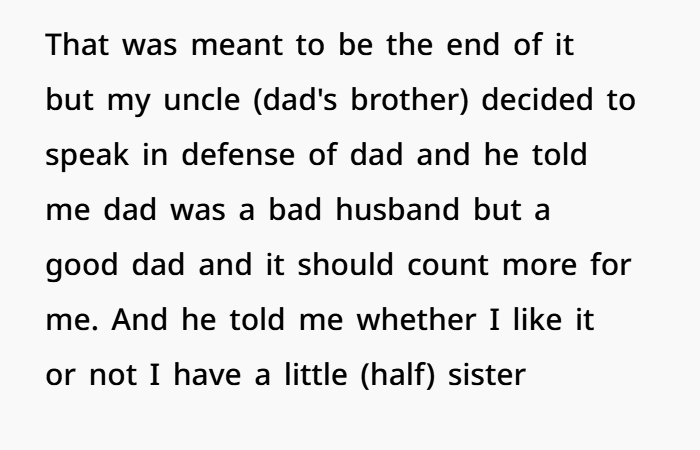
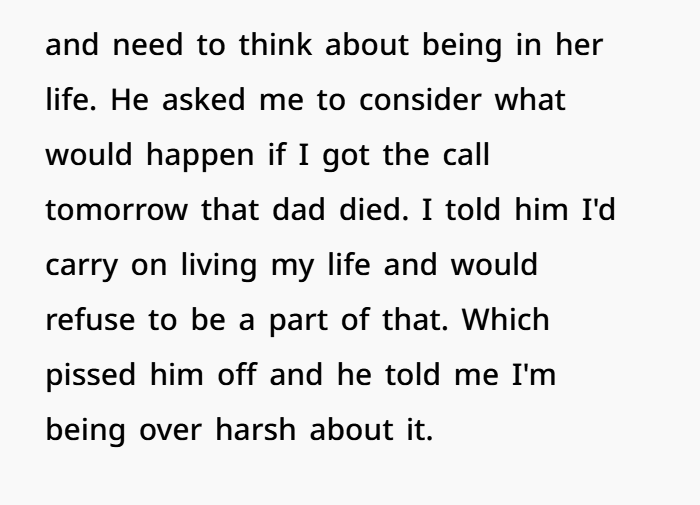
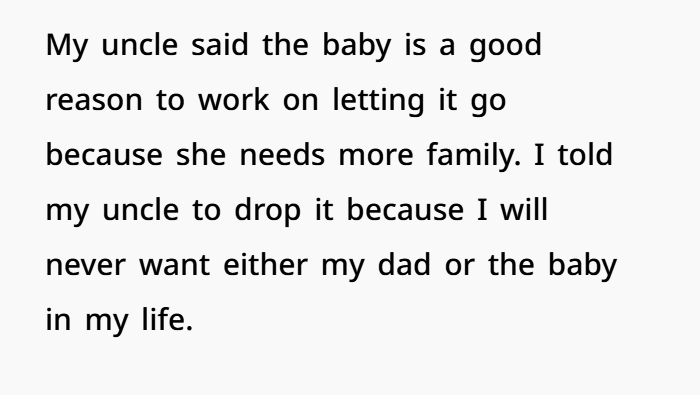
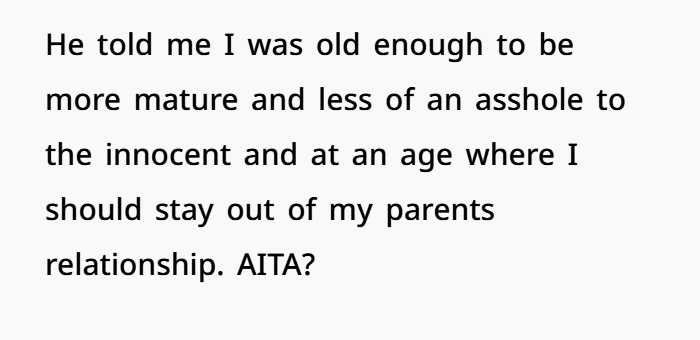
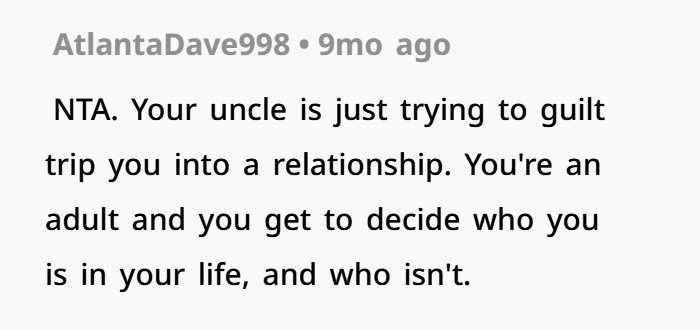
The situation became more complicated when other family members got involved. Some relatives, including his uncle, felt that his father may have made mistakes as a husband but was still his father. They encouraged him to keep some kind of relationship. However, the son felt that he needed time and space to process everything before making any decisions.
Family conflicts involving divorce, trust issues, and changing relationships can be very stressful for everyone involved. In situations like this, people often need support through healthy communication, family counseling, or professional guidance. Setting personal boundaries can be an important part of protecting mental well-being while dealing with difficult family changes.

When Family Trust Is Broken: Understanding Boundaries, Healing, and Moving Forward
Family problems can become very painful when trust is broken.
Sometimes an issue is not just about one mistake. It becomes about repeated actions, broken promises, and the emotional impact those choices have on everyone involved.
When a family member hurts others and does not take responsibility, rebuilding trust can become very difficult.
A Person Can Be a Parent and Still Cause Family Pain
One common argument in family conflicts is:
“They may have been a bad partner, but they are still a good parent.”
While this may sound simple, real family situations are often more complicated.
A person’s actions in one relationship can affect the entire family.
When someone hides important information, breaks trust, or creates major changes in the family structure, children may also feel the emotional impact.
Family psychology often discusses how major family conflicts can affect children’s feelings of safety, trust, and stability.
Children do not always see these situations as “adult problems.” They often experience the stress, confusion, and emotional changes around them.
The Importance of Taking Responsibility
After trust is damaged, what happens next matters a lot.
If someone shows genuine regret, respects other people’s feelings, and gives them time to heal, rebuilding trust may become possible.
But when someone avoids responsibility, ignores boundaries, or pressures others to move on quickly, the healing process becomes harder.
Real accountability means:
- Accepting the impact of your actions
- Listening to the people you hurt
- Respecting their feelings
- Making changes over time
It is not just about saying sorry. It is about showing through actions that things will be different.
Why Some People Choose Distance From Family Members
Many people believe that family relationships should always continue because “family is family.”
However, emotional health experts often recognize that healthy boundaries are important in every relationship.
Sometimes creating distance is not about hate or revenge.
It can be about protecting mental well-being and creating emotional safety.
A person may decide to step back because of:
- Repeated broken trust
- Lack of accountability
- Constant stress
- Ignored personal boundaries
- Emotional exhaustion
Every family situation is different, and people have different limits.
The Difference Between Forgiveness and Reconnecting
Forgiveness is often misunderstood.
Some people believe forgiving someone means everything must go back to normal.
That is not always true.
Forgiveness and rebuilding a relationship are two separate things.
A person can forgive someone while still choosing to keep healthy boundaries.
Rebuilding trust takes time. It usually requires honesty, respect, and consistent effort from both sides.
No one should feel forced to reconnect before they are emotionally ready.
What About Innocent Family Members?
Sometimes family conflicts involve children who had no control over the situation.
It is important to remember that children are innocent and should not be blamed for adult decisions.
However, creating a relationship takes time and emotional readiness.
A person may care about a child while also needing space to process difficult feelings connected to the situation.
Family relationships cannot always be created instantly. They usually grow through trust, time, and shared experiences.
Why Emotional Pain Should Not Be Ignored
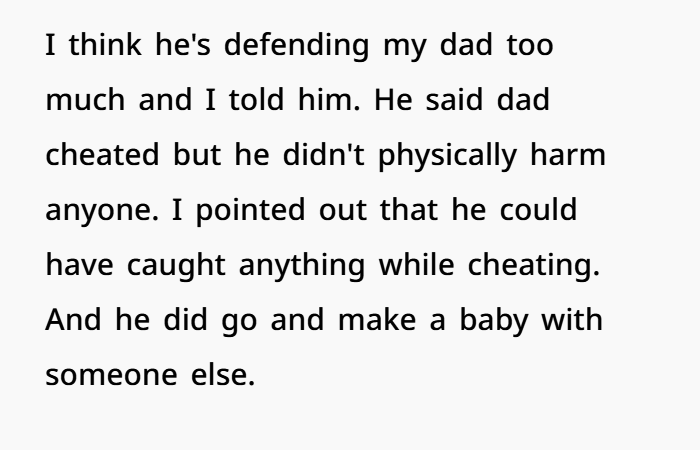
Some people believe only physical harm matters.
But emotional pain is also real.
Betrayal, family conflict, stress, and major life changes can affect mental health and emotional well-being.
People may experience:
- Anxiety
- Sadness
- Anger
- Confusion
- Difficulty trusting others
These feelings are valid and may require support from trusted people or mental health professionals.
Healing from family conflict is a process, not something that happens overnight.
Avoiding Guilt-Based Decisions
Sometimes people use statements like:
“What if something happens tomorrow?”
These situations can create pressure and guilt.
Thinking about future regrets is normal, but important relationship decisions should be based on the current reality.
Healthy relationships are built through respect and understanding, not fear or pressure.
A person should be able to make choices about relationships based on what feels emotionally healthy for them.
Why Setting Boundaries Is Not Always Wrong
Setting boundaries does not mean someone is cruel or uncaring.
Boundaries help people protect their emotional health and communicate what they can and cannot handle.
Examples of healthy boundaries include:
- Taking time away from a difficult relationship
- Limiting certain conversations
- Choosing when and how to communicate
- Asking for respect
Boundaries are not about punishing someone. They are about creating a healthier environment.
Can Family Relationships Change in the Future?
Yes, sometimes they can.
People change. Feelings change. Time can create opportunities for healing.
A relationship that feels impossible today may look different years later.
However, meaningful change cannot be forced.
It usually happens when people are willing to take responsibility, respect boundaries, and rebuild trust slowly.
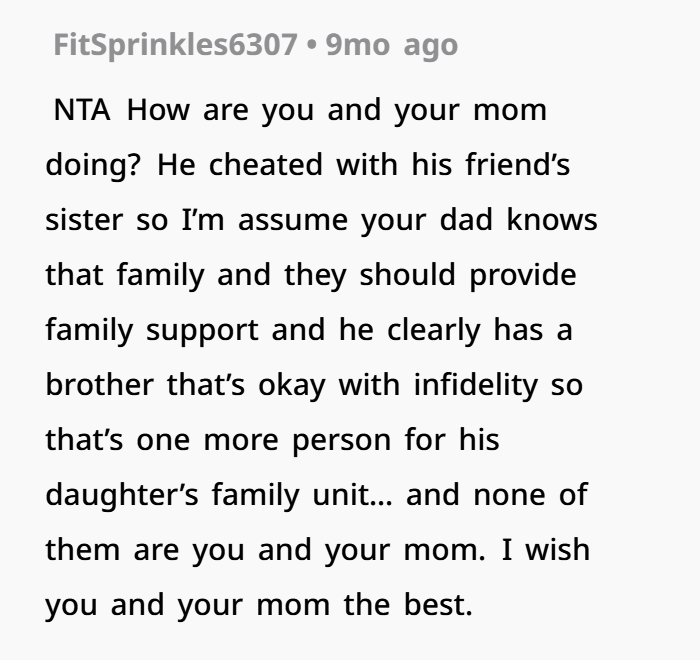
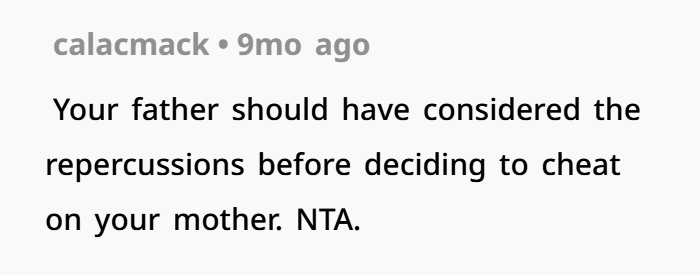
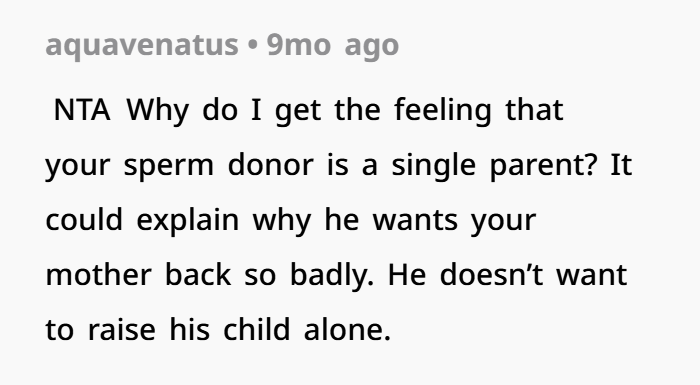
Readers’ Comments Speak Out





Final Thoughts
When family trust is broken, there is rarely a simple answer.
People may struggle with questions about forgiveness, responsibility, and whether they should stay connected.
The most important thing is finding a healthy balance between compassion and self-respect.
Protecting your mental health does not mean you do not care.
Sometimes stepping back is part of healing.
Strong family relationships are built on trust, honesty, respect, and emotional safety. When those things are missing, taking time to heal and create healthy boundaries can be an important step forward.