AITA for Refusing to Give Up My Bed for a Guest? Family Boundaries Get Messy
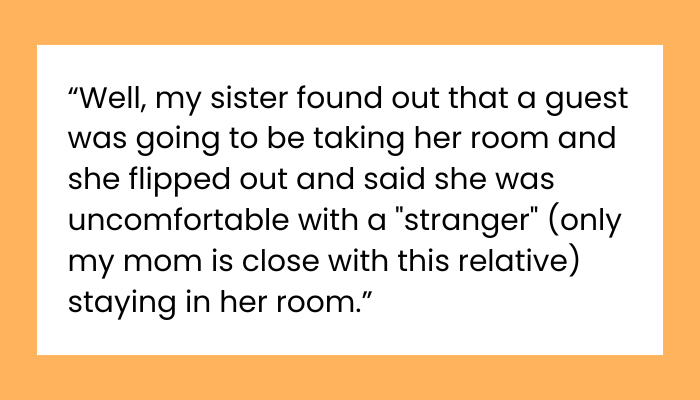
Living with your parents as an adult can actually be a smart financial decision, especially with remote jobs and work from home income becoming normal now. This 25-year-old guy is doing just that. He’s earning, contributing to household expenses, and helping out daily. So it’s not like he’s freeloading or anything. Everyone in the house has their own room too, so the setup works well. But then a guest comes over, and suddenly things aren’t so smooth. The obvious plan? Let the relative stay in the sister’s empty room since she’s away at college. Simple solution… or so it seemed.
The problem starts when the sister refuses. She’s not okay with anyone being in her room, even temporarily. She doesn’t like the idea of someone around her personal things. The parents don’t want conflict, so they come up with a quick fix. They tell the brother to give up his room and sleep in the prayer room on a mattress. Not exactly great, especially when you think about personal space rights and home comfort. He tries to suggest other options, but they brush him off. Now he’s left wondering — should he sacrifice his comfort for a few days, or is it fair to push back and stand up for himself?

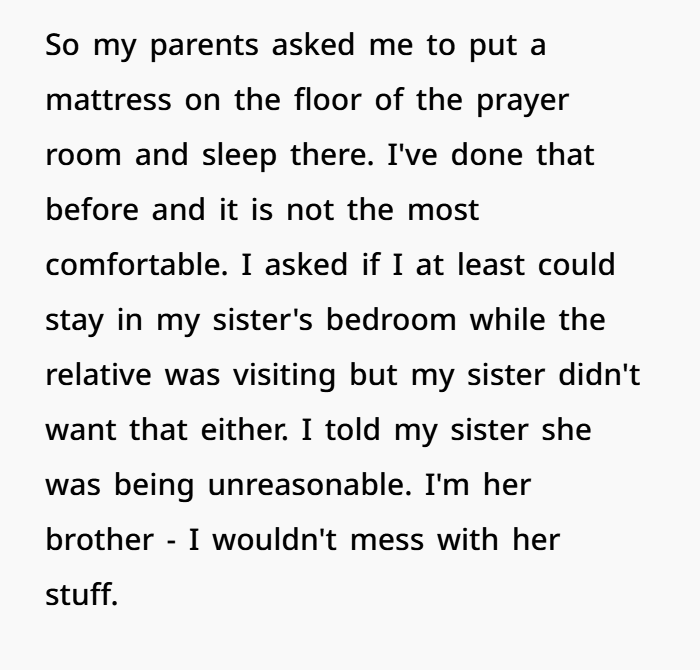
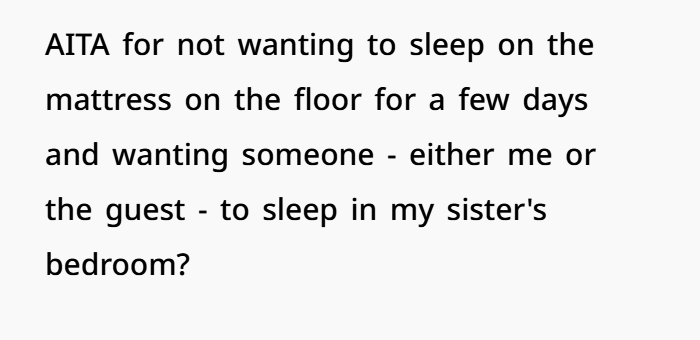
This situation might sound small at first. Just a bed. Just a few nights. But if you look closer, it actually touches on some pretty big issues—personal boundaries, family expectations, financial independence, and even mental comfort. And honestly, that’s why posts like this blow up online. People see themselves in it.
Let’s break it down.
1. The Real Issue Isn’t the Bed—It’s Boundaries
The real issue here is the sister saying no to anyone using her room. At first glance, it kinda feels off. The room is empty most of the time. The guest isn’t a stranger. And it’s not even permanent.
But yeah, personal boundaries aren’t the same for everyone.
Some people treat their room like just a sleeping spot. Others see it as their safe space. Their belongings, their privacy, their little world. This actually links to human psychology and territorial instincts. People like having control over their environment, it gives a sense of stability and mental comfort.
Even if the brother gives full assurance that he won’t touch anything, that doesn’t mean she’ll feel okay. Feelings don’t always match logic, and that’s just real life.
At the same time… there’s a limit to this.
Because when your need for privacy starts making things unfair for others, it stops being just about boundaries and starts looking more like controlling behavior.
And that’s usually the point where people online start calling it out.
2. The Brother’s Position: Reasonable or Stubborn?
Looking at it from the brother’s point of view, this situation feels off—and yeah, for good reason.
He’s not freeloading or anything. He’s earning, contributing to expenses, and helping out daily. That puts him in a different category. He’s basically part of a shared household cost setup, not just a dependent. Especially if he’s doing work from home jobs or earning steady income.
People often talk about tenant rights vs family expectations in cases like this (funny enough, it’s a high-paying legal keyword online). Even if there’s no official contract, the logic still applies—if you’re contributing, your space and comfort should matter too.
Being asked to leave your own bed and sleep on a mattress on the floor? Even if it’s temporary, it hits differently. It feels like your comfort comes second.
And yeah, sleep is a big deal. Poor sleep affects job performance, focus, mood, everything. For someone working remotely, a proper sleeping setup is part of maintaining work efficiency and even mental wellness.
So his pushback isn’t just him being difficult. It’s really about fairness, respect, and not being treated like his needs don’t matter.
3. The Parents’ Role: Peacekeeping or Avoiding Conflict?
Now let’s talk about the parents, because honestly… they’re a big part of this whole situation.
Instead of dealing with the real issue (the sister saying no), they went for the easier option—ask the more flexible kid to adjust. It’s quick, less drama, and feels like a fix.
This actually happens a lot. It’s known as conflict avoidance parenting, a pretty common topic in family counseling and even online therapy services.
Instead of addressing the person who’s upset, they shift things onto the one who’s more likely to say “okay fine.” Why? Simple—it’s easier in the moment.
But yeah, short-term peace can turn into long-term problems.
The brother starts feeling like his comfort doesn’t matter as much. The sister kinda learns that her boundaries won’t really be questioned. And the parents? They skip an uncomfortable talk, but at the cost of fairness and balance in the house.
This kind of pattern shows up in a lot of families and is often discussed in family therapy techniques and conflict resolution strategies.
4. The Guest Factor: Social Expectations vs Reality
There’s also a cultural and social angle here that you can’t ignore.
In a lot of cultures, guests come first. Like seriously first. You give them the best room, best food, best comfort. It’s tied to cultural values, hospitality norms, and even what people call traditional family ethics.
But here’s the real question:
Should guest hospitality come at the cost of someone else’s basic comfort?
Sleeping on the floor for a guest isn’t the worst thing ever, sure. But it’s not nothing either. Especially when there’s an empty room just sitting there, fully usable.
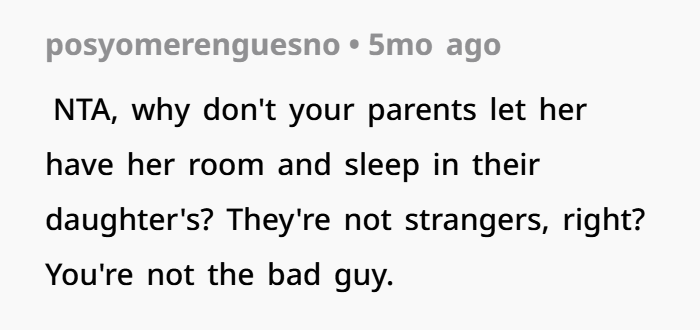
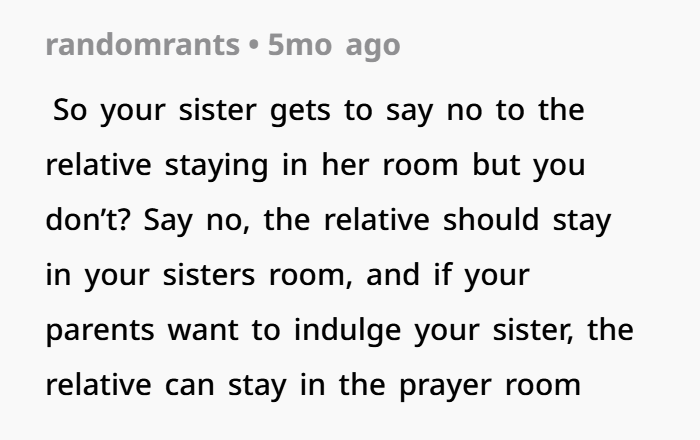
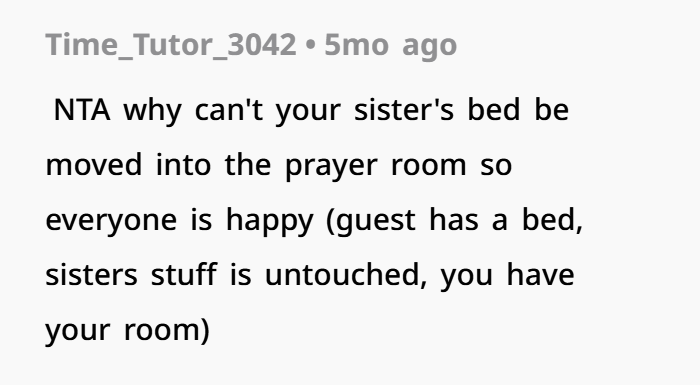
The brother even tried to meet in the middle. He said he’d take the sister’s room instead. That’s actually a smart compromise, something you’d hear in conflict resolution advice or even family mediation tips.
But nope, that got shut down too.
At that point, it stops looking like a simple space issue and starts feeling more like a strict boundary—or even a bit of a control thing.
5. Privacy vs Practicality: Where’s the Balance?
This whole situation really comes down to one thing:
Privacy vs practicality.
The sister wants to protect her space. That’s fair, no doubt.
But at the same time, the practical solution is right there—an empty room just sitting unused.
In real life, especially now with rising rent costs and more shared living arrangements, people have to adjust all the time. Whether it’s roommates, family setups, or even Airbnb rental income situations, this stuff comes up a lot.
And usually, the expectation is pretty simple:
If a room isn’t being used, it can be used temporarily—just with respect.
You can take precautions too. Lock drawers, move important stuff, set clear rules. That’s basic home security tips and personal property protection.
But a straight-up no, with zero compromise? That’s where it starts to feel a bit unreasonable.
6. Power Dynamics in Shared Living Spaces
There’s another layer to this—who really controls shared property?
On paper, the house belongs to the parents. So technically, they have full authority.
But in real life, it doesn’t feel that simple. Each person feels like their room is theirs. Their private space, their personal setup.
And boom—that’s where the gray area starts.
The sister is treating her room like she has complete control over it. The parents are respecting that, maybe more than they should. And the brother is left caught in between, dealing with the outcome.
This kind of situation is often talked about in family structure analysis and social behavior studies. It’s basically about informal power dynamics inside a home.
And yeah, conflict usually happens when these unspoken rules aren’t clear or shared by everyone.
7. So… Who’s Actually Being Unreasonable?
If you step back and look at everything:
- The sister’s discomfort is valid—but her refusal to compromise isn’t ideal.
- The parents are trying to keep peace—but doing it in a way that shifts the burden unfairly.
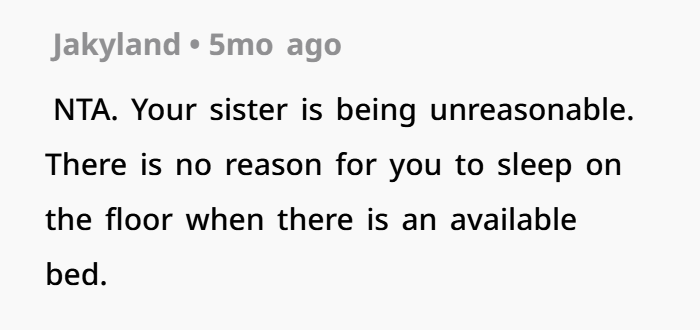
- The brother is asking for a reasonable alternative—and pushing back against discomfort.
That’s why most people would likely land on:
He’s not the a-hole.
Because he’s not refusing to help.
He’s refusing to be the only one making a sacrifice.
The Comments Are In
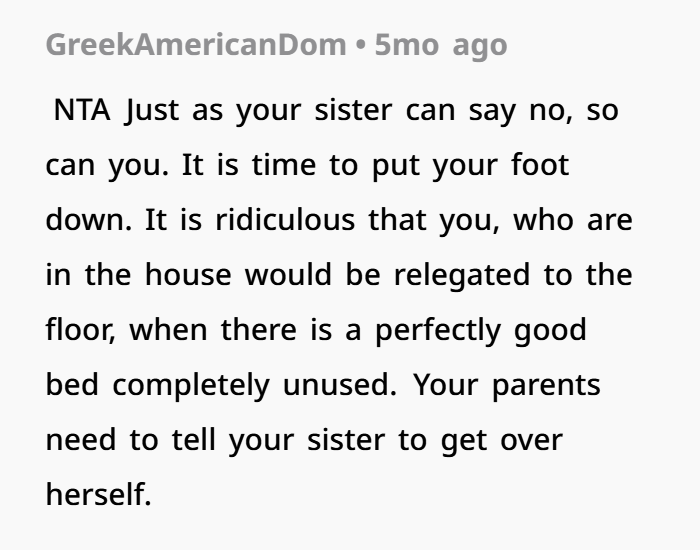
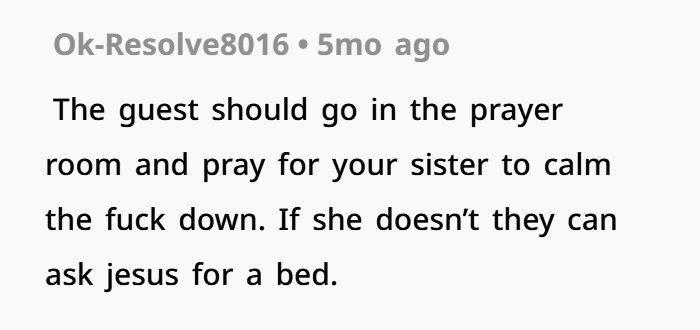
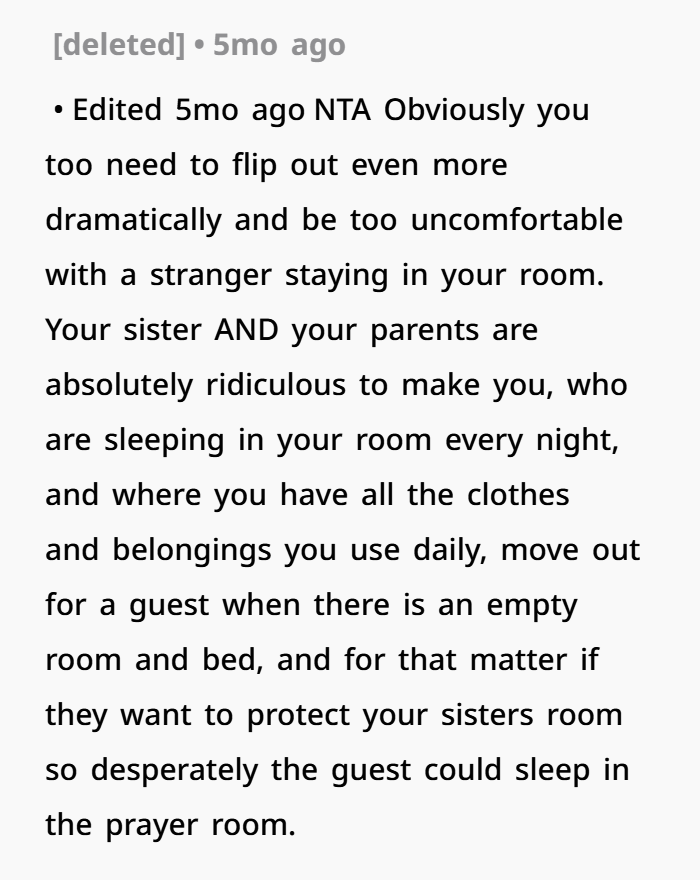
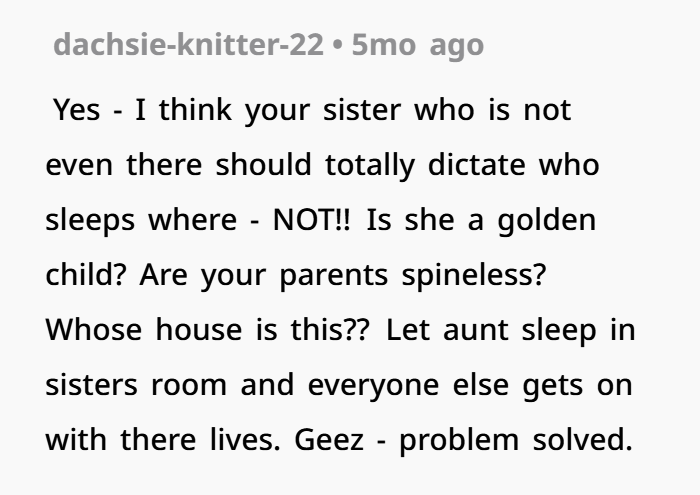
This isn’t really about a mattress on the floor.
It’s about how families handle fairness, respect, and boundaries when everyone’s needs collide.
And honestly, those situations are never simple.
But one thing’s clear—compromise should go both ways. Not just to the person who’s easiest to ask.