My In-Laws Threatened to Call CPS Because My House Isn’t “Up to Their Standards”

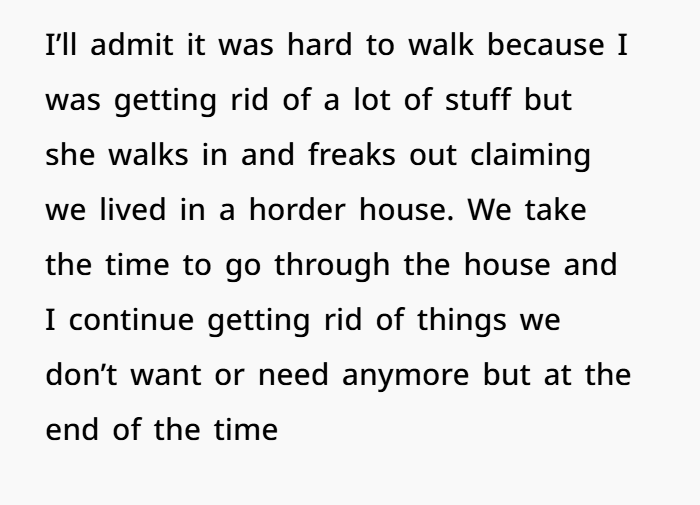
This story is about a new mother dealing with family stress, home expectations, and difficult circumstances. During her pregnancy, she was preparing for the baby by organizing the house. She had boxes, storage bins, and items ready to donate. The home looked messy because she was in the middle of cleaning and organizing, not because the house was unsafe.
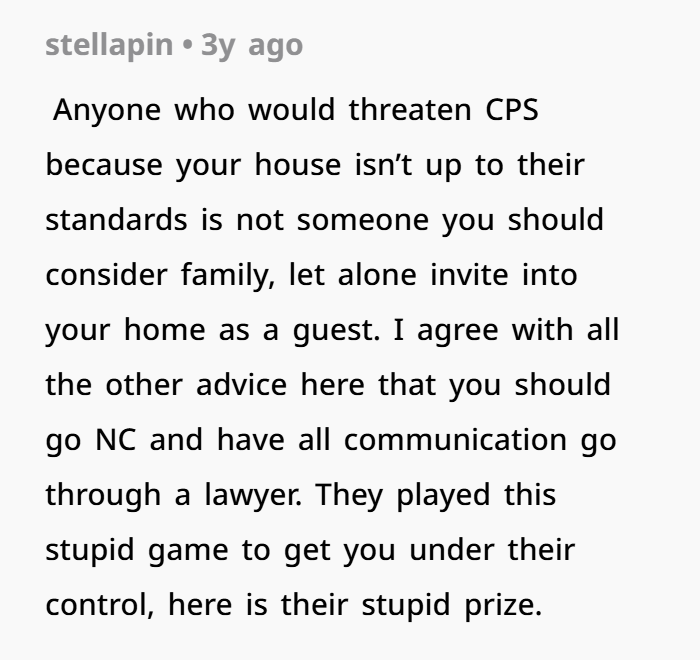
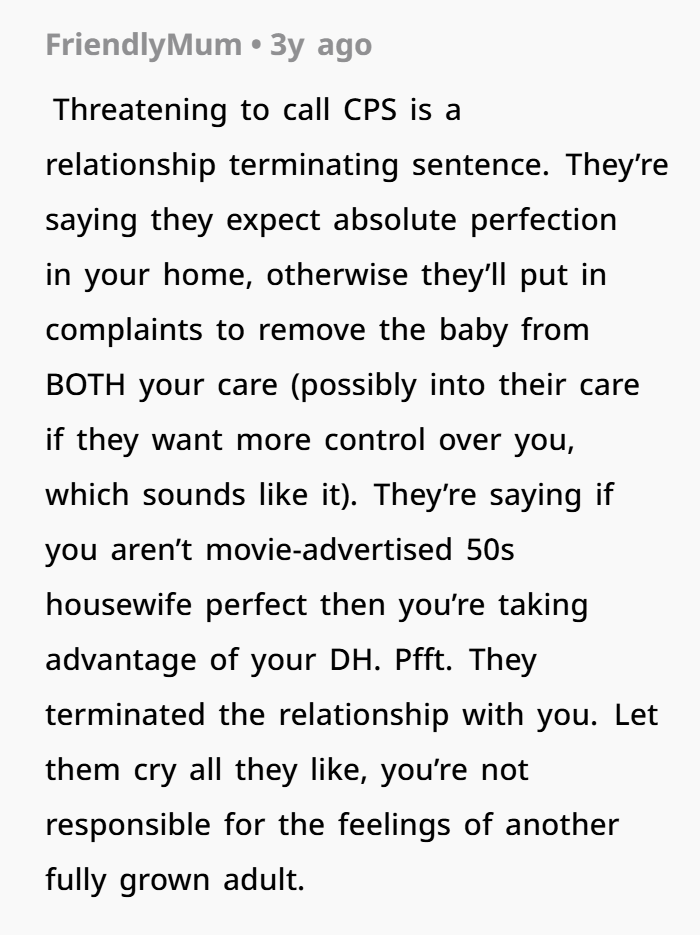
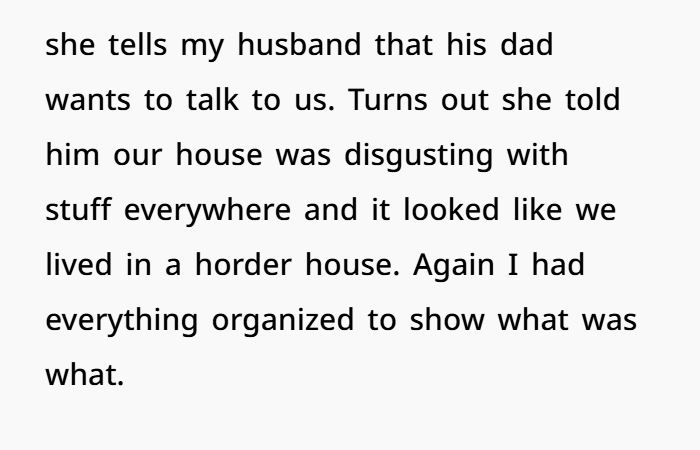
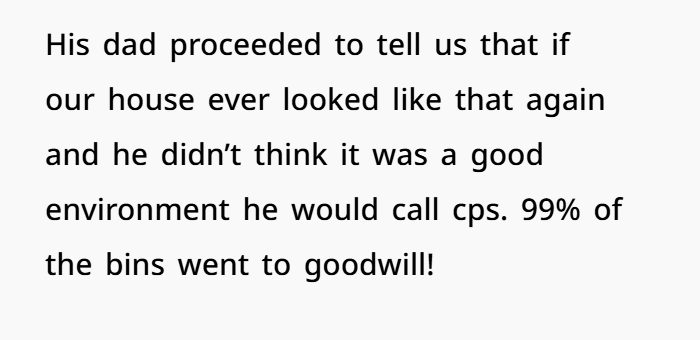
Unexpectedly, she became sick and had to go to the hospital. After coming home, she and her husband asked her mother-in-law for help. When the mother-in-law saw the unfinished organizing, she became very concerned and compared the home to a hoarding situation. She contacted her husband and warned that she might report the family to child protective services if the home ever looked that way again.
The couple felt extremely stressed by this threat. They removed many items from the house quickly, not because they believed there was a serious problem, but because they were afraid of being judged unfairly. The situation created fear and tension during an already difficult time.
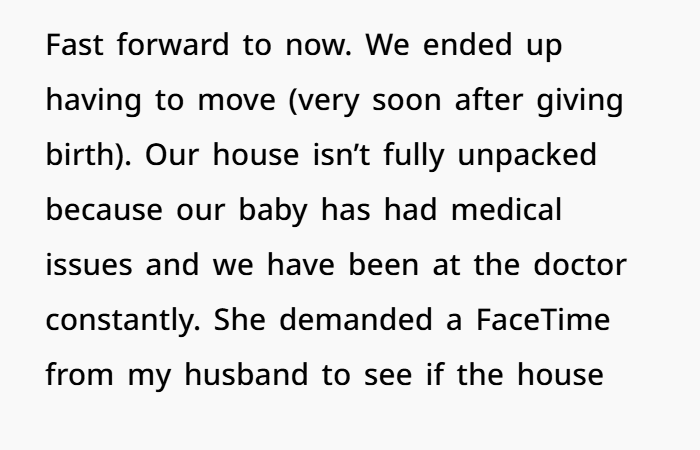
Later, they welcomed their baby and had to move into a new home. Their newborn also had medical needs, which meant frequent doctor appointments, paperwork, and extra responsibilities. Because of everything happening at once, the house was not completely unpacked.
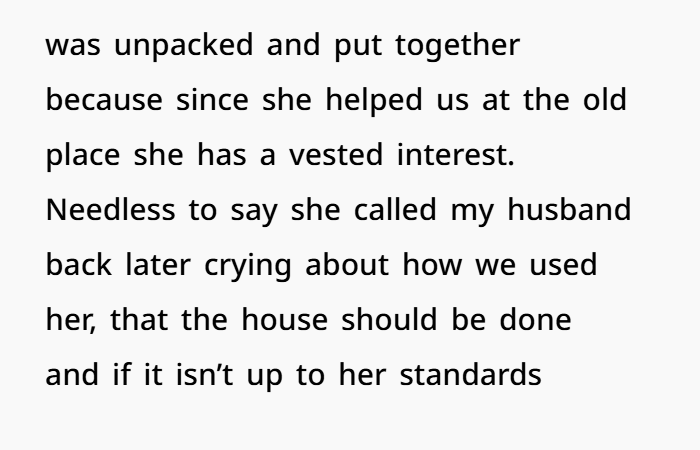
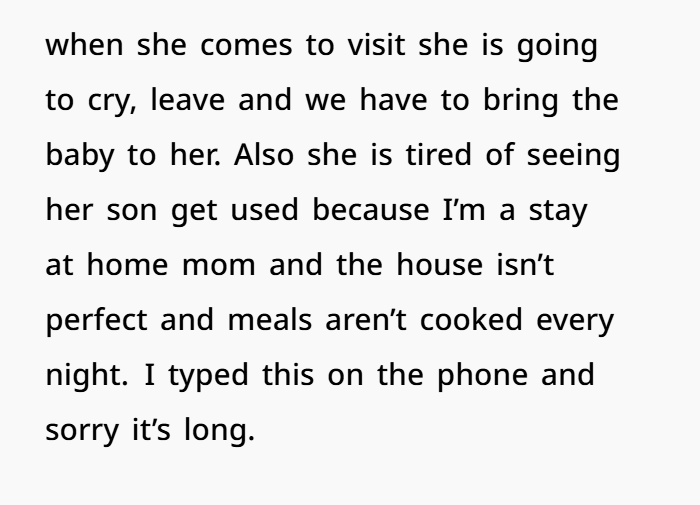
The mother-in-law then asked for a video tour of the home to see how things looked. The mother felt like she was being checked instead of supported. Later, her mother-in-law became upset and criticized her for being a stay-at-home mom and not always having everything perfectly done.
The earlier mention of child protective services continued to affect the family. The mother felt anxious that normal things like boxes or laundry could be judged unfairly. She was already exhausted from caring for a newborn and managing family stress.
This situation shows how important trust, support, and respectful communication are between family members. New parents often need understanding and help, not extra pressure, especially during challenging times.
The couple wondered whether the in-laws were right or straight-up manipulative
When Family Criticism Turns Into Control: Understanding Boundaries After Having a Baby
Having a new baby can be one of the biggest changes in a person’s life. Parents are already dealing with many challenges, including sleep problems, health concerns, emotional stress, and learning a new routine.
But what happens when family members add more pressure instead of support?
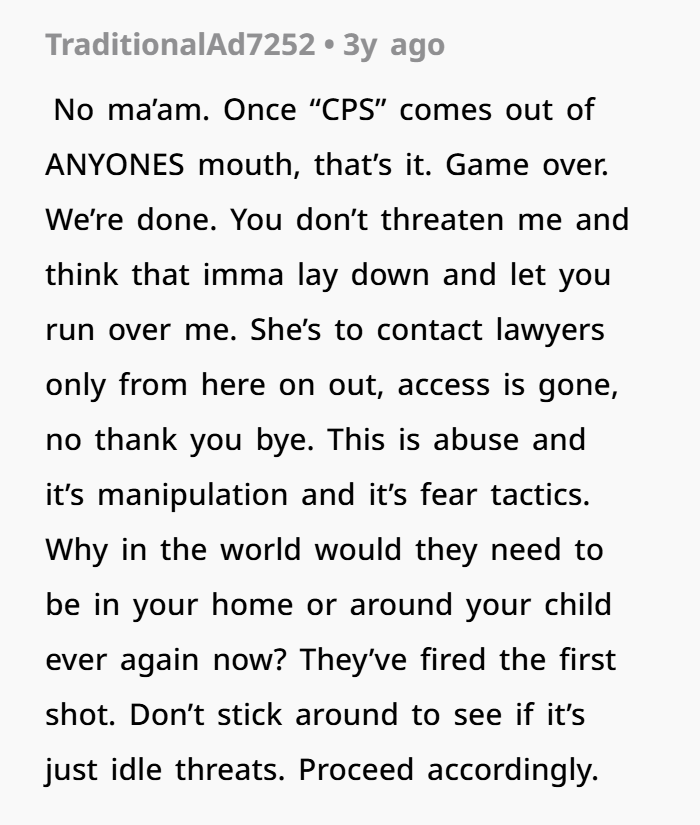
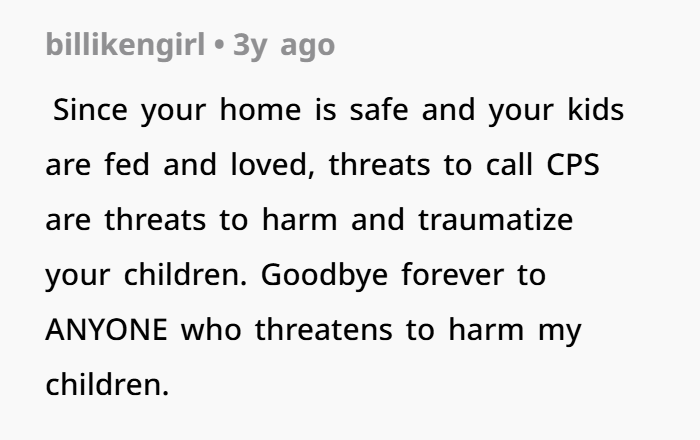
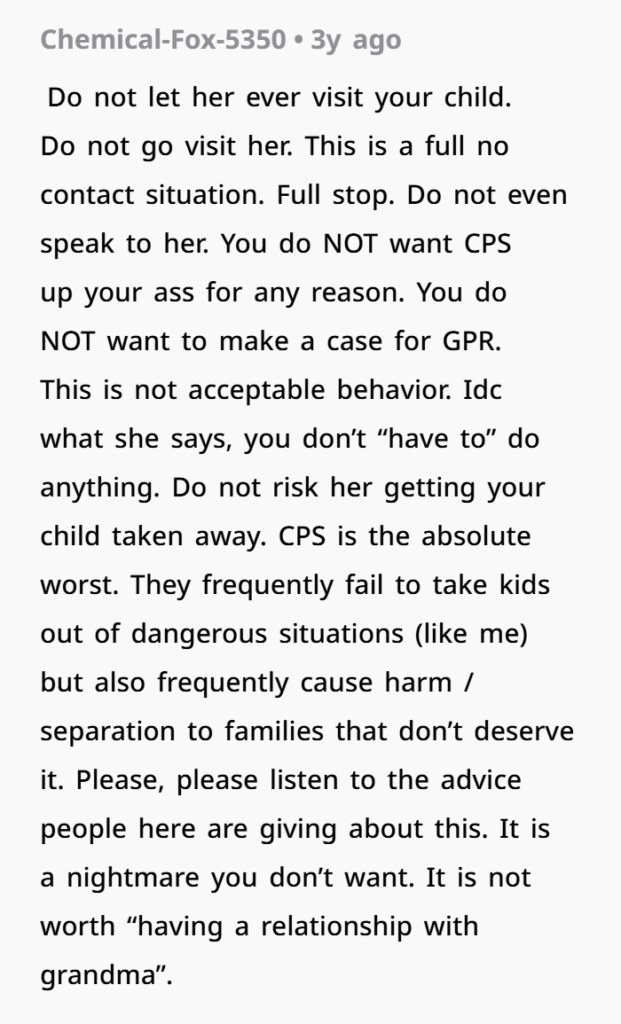
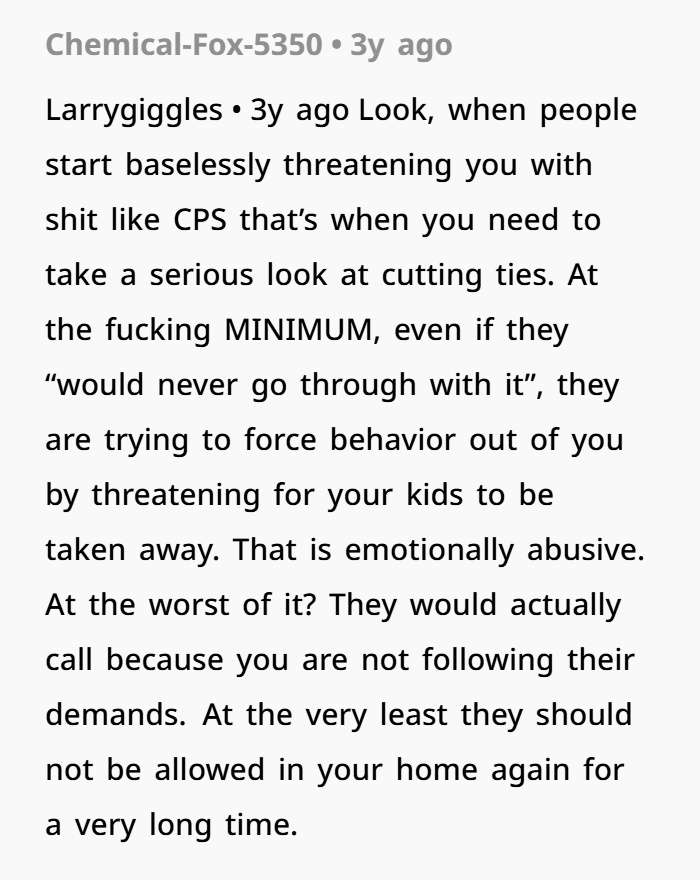
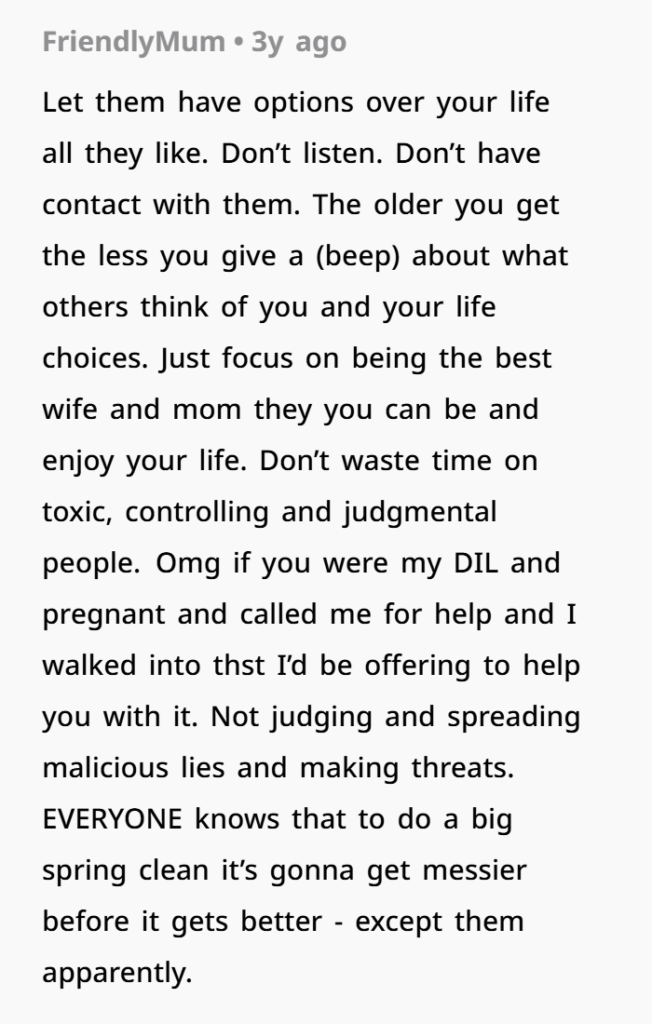
One new mother shared that her relationship with her mother-in-law became stressful after she had her baby. Instead of receiving encouragement, she felt judged and controlled. The situation became serious when her mother-in-law threatened to involve child protective services because she did not like how the home looked.
The question is: Was this about the baby’s safety, or was it about control?
Child Safety Concerns Are Different From Housekeeping Opinions
Child protective services (CPS) exists to protect children from serious situations such as abuse, neglect, or unsafe living conditions.
A messy home during a move, unpacked boxes, or a different cleaning style usually does not mean a child is unsafe.
When CPS receives a report, they generally look at important safety issues:
- Does the child have proper food and care?
- Is the home safe?
- Are there serious hazards?
- Are the parents meeting the child’s medical needs?
A home does not need to look perfect to be a safe home.
Many families go through periods where their house is not fully organized, especially after moving or bringing home a newborn.
Threatening CPS Can Damage Family Trust
Using CPS as a threat during family disagreements can create fear and stress.
Child protection systems are designed for serious concerns, not for settling arguments about parenting choices or household organization.
If someone makes a false report on purpose, some states have laws that may include penalties. However, proving that someone acted with bad intentions can be complicated.
The bigger issue is often the damage it causes to family relationships.
When a person threatens to report parents because they disagree with them, it can make communication and trust much harder.
New Parents Need Support, Not Pressure
The postpartum period can be challenging.
After giving birth, many mothers need time to recover physically and emotionally. Sleep changes, hormone shifts, medical concerns, and the responsibility of caring for a newborn can feel overwhelming.
Adding a home move or other major life changes can make things even harder.
During this time, expecting a perfect house and daily homemade meals may not be realistic.
New parents need understanding, patience, and practical support.
Being a Stay-at-Home Mom Is Real Work
Another issue in this situation was criticism about being a stay-at-home mother.
Some people wrongly believe staying home with children is not real work. In reality, caring for a child involves many responsibilities.
A stay-at-home parent may handle:
- Childcare
- Feeding and meal planning
- Cleaning
- Scheduling appointments
- Managing household tasks
- Supporting the family’s daily routine
While this work may not come with a traditional paycheck, it has real value.
Raising children and managing a home requires time, energy, and responsibility.
Helping Family Does Not Mean Giving Up Boundaries
The mother-in-law felt that because she had helped in the past, she had the right to check the home and make decisions.
However, helping someone does not automatically create control over their choices.
Healthy family relationships require boundaries.
Grandparents can offer love, advice, and support, but parents are responsible for making decisions about their own children.
Respecting parental authority is an important part of a healthy family dynamic.
Signs That a Relationship May Have Boundary Problems
Sometimes concern can turn into control.
Examples of possible boundary problems include:
- Demanding regular video tours of someone’s home
- Expecting approval over parenting choices
- Using guilt to get what they want
- Threatening consequences when they do not get their way
- Criticizing parents instead of offering support
There is a difference between saying, “I want to help” and saying, “You must do things my way.”
What Parents Can Do to Protect Their Peace
When family conflicts become stressful, clear communication is important.
Parents can focus on practical steps:
- Keep important medical records organized.
- Maintain basic home safety.
- Make sure the baby has proper care and supplies.
- Avoid unnecessary arguments.
- Set clear boundaries with family members.
Taking photos of a safe home or keeping records can also provide peace of mind if someone makes unfair claims.
The goal is not to prove something to critics. The goal is to feel confident as a parent.
The Role of the Spouse in Family Boundaries
When problems involve a spouse’s family, it often helps when the spouse takes the lead in setting boundaries.
For example, a husband might calmly explain:
“We appreciate your concern, but threatening CPS is not acceptable. Our home is safe, and we need our parenting choices to be respected.”
A simple and respectful message can be more effective than a long argument.
The Bigger Picture: Concern vs. Control
There is a big difference between caring about a child’s safety and trying to control another adult’s life.
A baby’s needs are important. But so are the parents’ emotional health and confidence.
A home with unpacked boxes is not automatically unsafe.
A new mother needing time to recover is not neglect.
A family asking for privacy is not a sign that they do not care.
New parents deserve support as they learn their new roles. Families are strongest when they offer help with kindness, respect, and understanding.
Sometimes the healthiest thing parents can do is create loving boundaries that protect their home, their child, and their peace.
The in-laws had a pattern of overstepping boundaries: “What they do isn’t okay”