Stage Kiss or Too Far? The Night a “Performance” Turned Personal


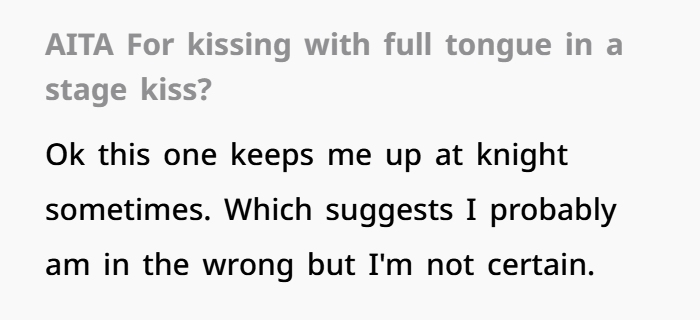
This story began with a simple university theatre project. Like many student performances, it was expected to be something people would move on from after graduation. However, this experience stayed with him because it involved a difficult situation around acting, personal boundaries, and communication.
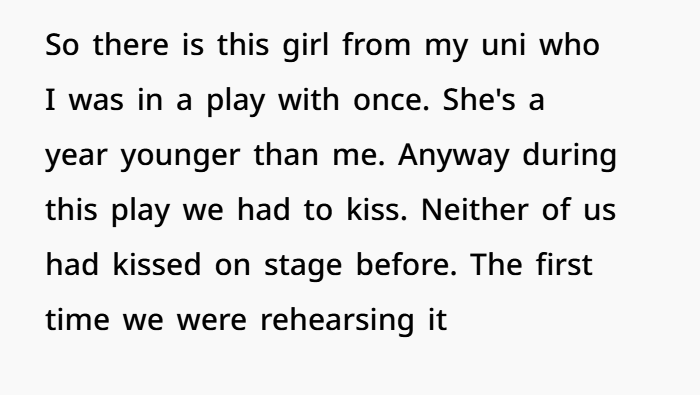
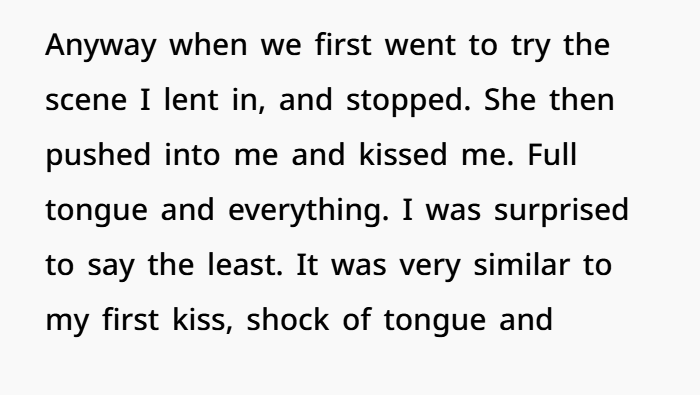
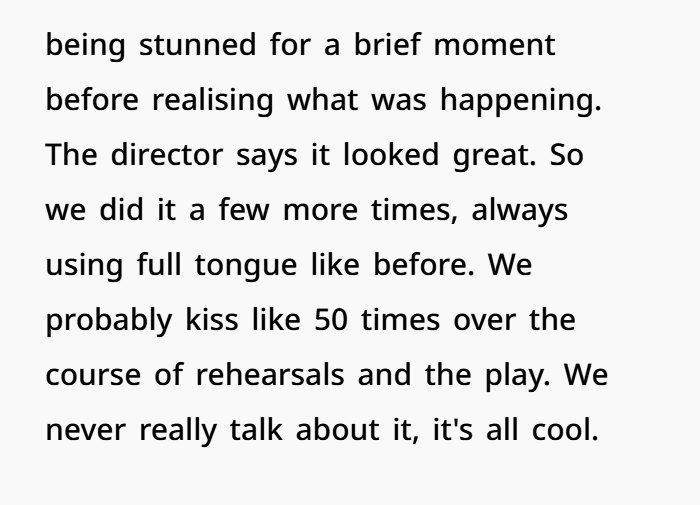
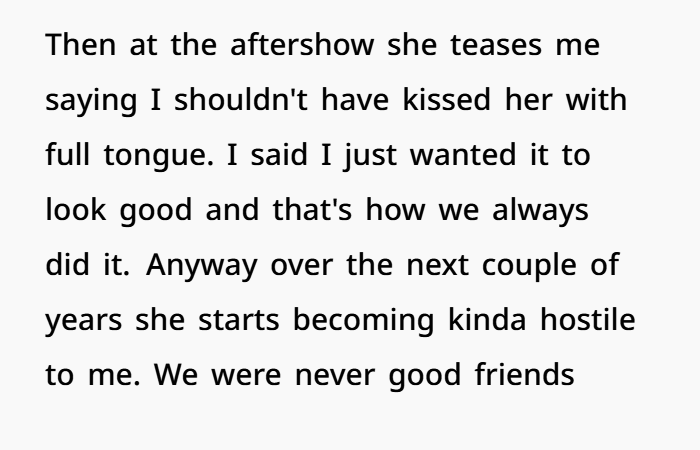
The role included a kissing scene, which is common in theatre and acting training. During the first rehearsal, he felt unsure because he did not have much experience with stage intimacy. He did not know how to handle the situation or what boundaries should be discussed. The other actor took the lead, and the scene became more intense than he expected. The director approved the scene, and after that, they continued performing it the same way during rehearsals and shows.
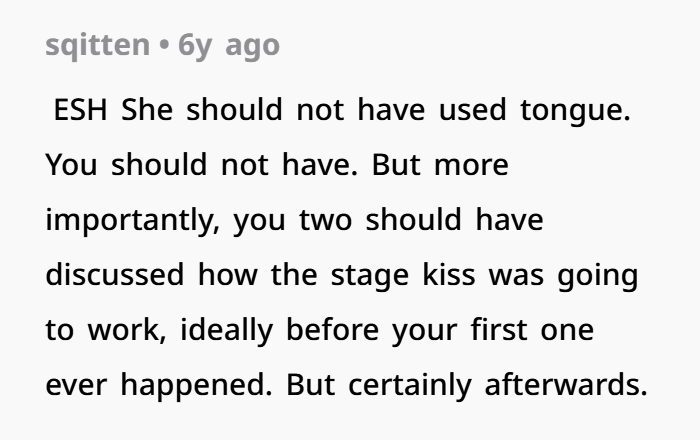
Over time, the scene became a normal part of the performance. However, they never had a clear conversation about comfort levels, personal boundaries, or how each person felt about the situation. Everyone treated it as part of the acting role, without discussing any concerns.
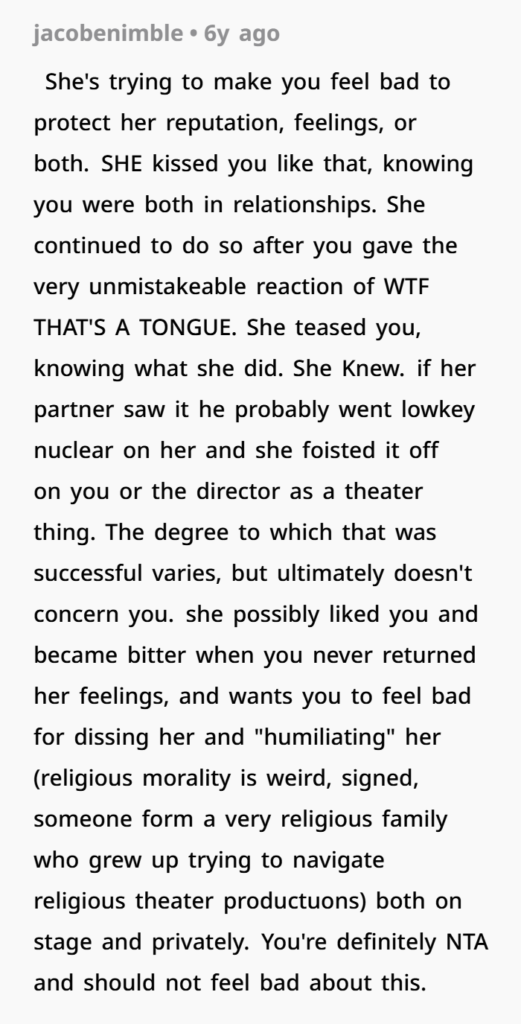
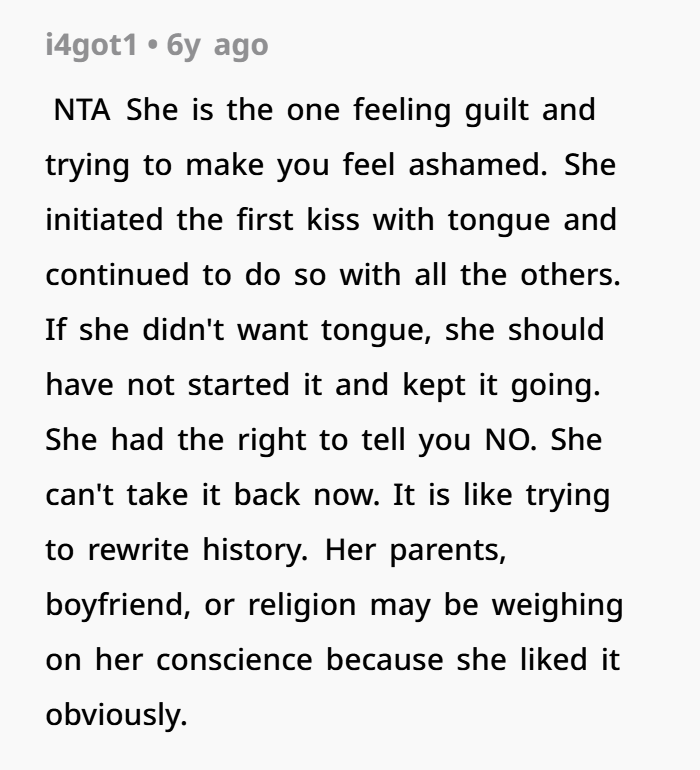
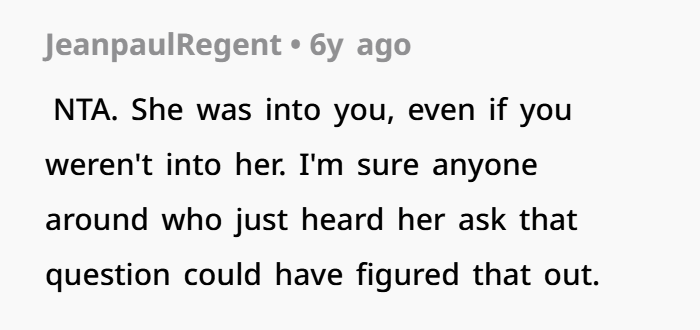
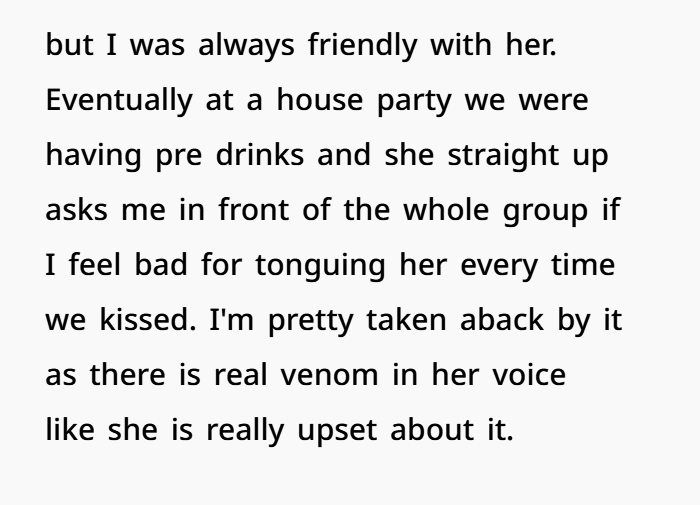
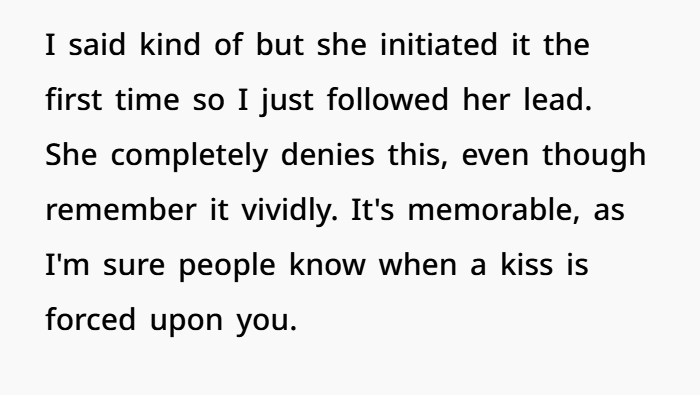
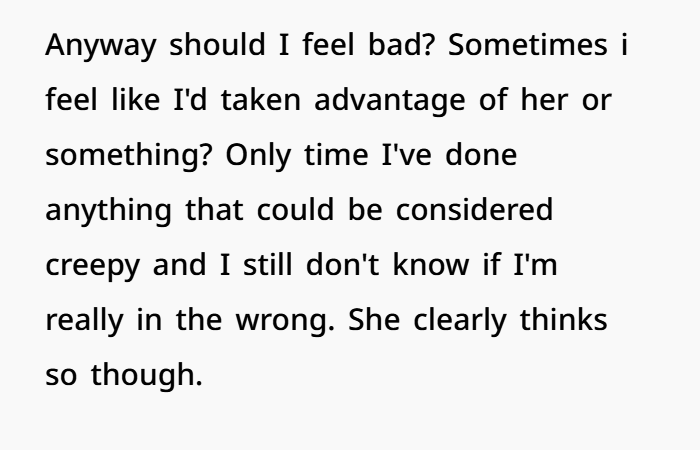
Years later, the situation became more complicated. At a social gathering, the other actor brought up the experience and suggested that she may not have been comfortable with how things happened. Later, she confronted him and said he had crossed a boundary. He was shocked because he remembered the situation differently and believed she had been the person who started the interaction.
Now he is trying to understand what happened and whether there was a misunderstanding. The situation shows how important clear communication, consent, and professional boundaries are, especially in creative environments like theatre and performance. Discussing comfort levels openly can help prevent confusion and protect everyone involved.

When Communication Breaks Down: Understanding Consent, Boundaries, and Misunderstandings
Some situations are difficult because there is no simple answer.
They are not always about someone being completely right or completely wrong. Sometimes they involve misunderstandings, unclear communication, different memories, and feelings that change over time.
This type of situation can stay in someone’s mind for years because people want a clear answer, but real-life experiences are often more complicated.
Why Context Matters
The situation described happened during a stage performance.
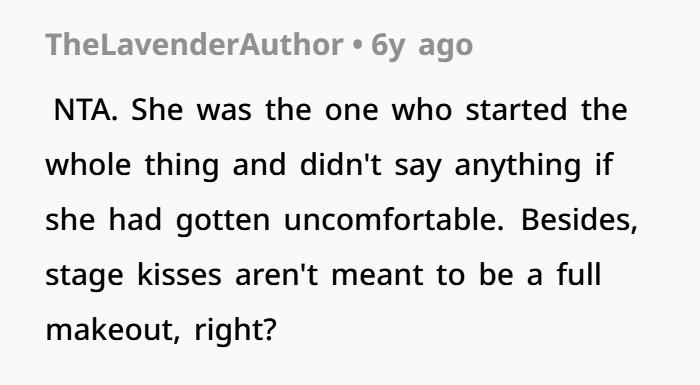
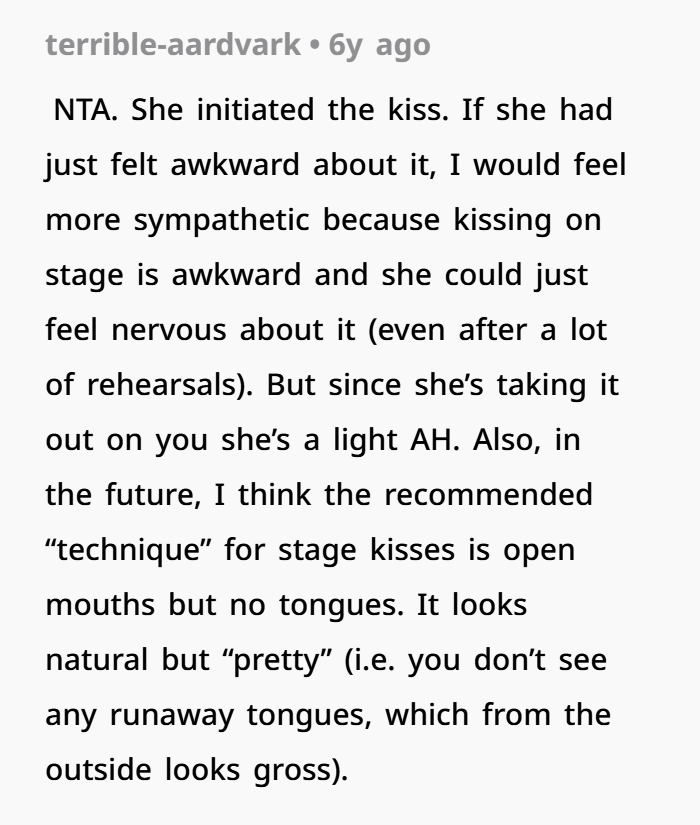
A stage kiss is different from a personal romantic situation. In acting, physical contact can be part of telling a story. Actors may need to perform emotional or romantic scenes as part of their role.
However, clear communication is still important.
Professional acting environments often have guidelines around physical scenes, including conversations about comfort levels and boundaries.
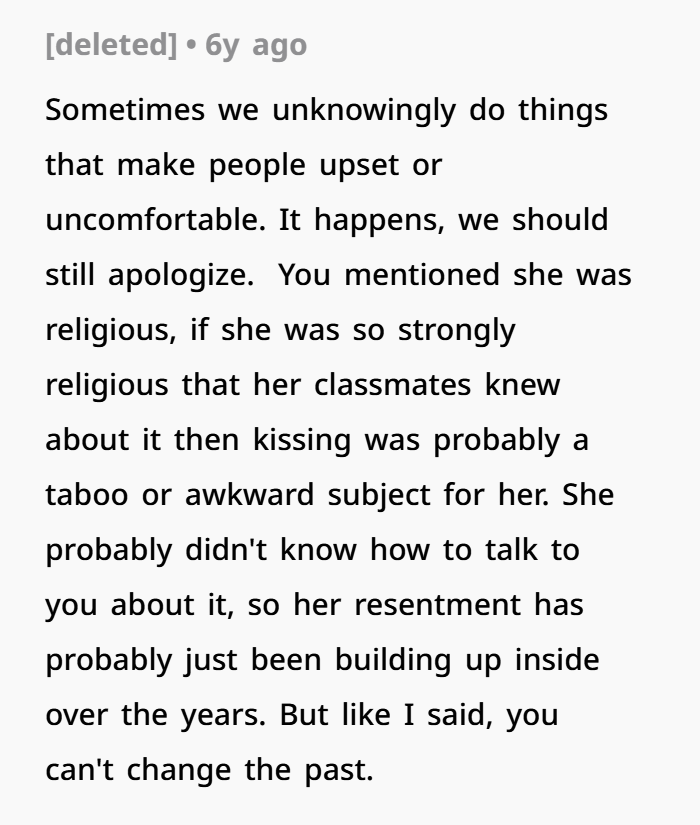
In less formal settings, especially student productions, people may not always have those systems in place. Sometimes people simply assume everyone is comfortable because no one says otherwise.
That is where misunderstandings can happen.
When People Make Assumptions
In this situation, one person hesitated at first because they wanted to be respectful.
That hesitation shows awareness and concern about boundaries.
When the other person continued and did not object, it was natural to believe that the behavior was acceptable. When the same pattern continued over time, that understanding became stronger.
This is a common way people respond in social situations.
People often use the reactions of others to understand what is acceptable. If someone does not express discomfort, others may assume everything is fine.
However, this does not mean communication is unnecessary.
Clear conversations are always the best way to avoid confusion.
Why Consent and Communication Matter
Consent is not only about saying yes or no.
It is also about feeling comfortable enough to communicate honestly.
Sometimes people stay quiet in the moment because they feel pressure. They may worry about making things awkward, stopping the activity, or disappointing others.
This can happen in many group situations, including performances, workplaces, or social settings.
That is why checking in with each other is important.
A simple conversation like:
“Are you comfortable with this scene?”
or
“Do you want to keep this more casual?”
can prevent many misunderstandings.
How Memory Can Change Over Time
Another complicated part of situations like this is memory.
Human memory does not work like a camera recording. People remember experiences through their emotions, thoughts, and feelings at the time.
Over the years, memories can become connected with new feelings or later experiences.
This does not mean someone is intentionally being dishonest.
Two people can remember the same event differently because they experienced it from different perspectives.
One person may remember it as a shared experience where both people participated.
Another person may remember feeling unsure or uncomfortable.
Understanding this difference is important when discussing sensitive situations.
Intent and Impact Are Both Important
A major part of healthy communication is understanding the difference between intention and impact.
A person may not have intended to make someone uncomfortable.
At the same time, another person’s feelings about the experience can still be real.
Both things can exist together.
Someone can say:
“I did not mean to cause discomfort.”
while also saying:
“I understand that your experience may have felt different.”
This type of communication helps people handle difficult conversations with maturity.
Was There Intentional Harm?
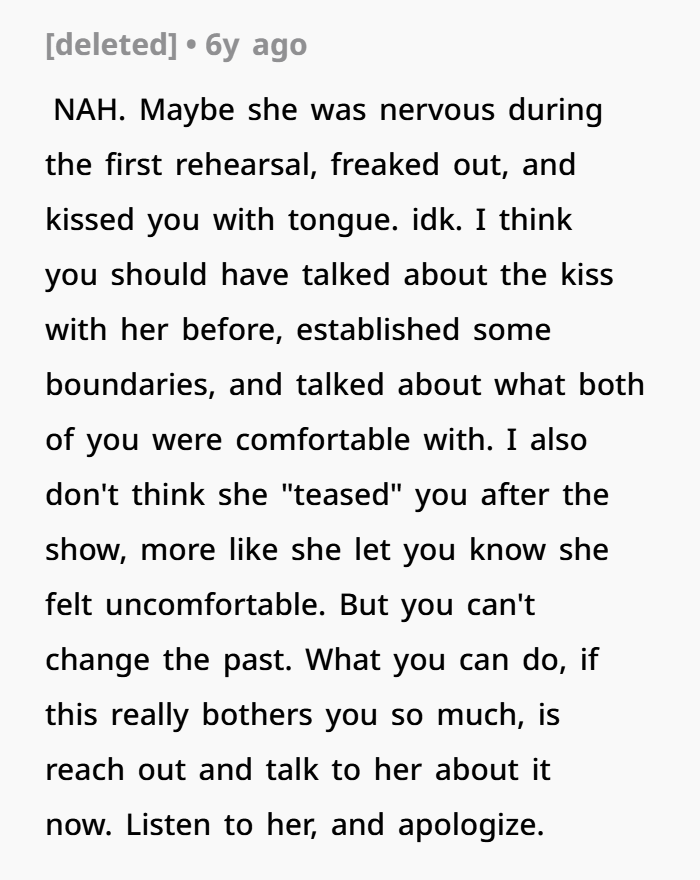
Based on the situation described, there does not appear to be clear evidence of intentional harm.
The interaction seems to have developed through repeated actions, assumptions, and a lack of direct communication.
Both people were involved in the situation.
Both people had opportunities to express their comfort level or concerns.
Healthy relationships and interactions require shared responsibility. Each person has a role in communicating boundaries.
Why Public Confrontation Can Make Things Worse
When a difficult issue is brought up publicly, emotions can become stronger.
Public discussions often create embarrassment, defensiveness, and misunderstanding.
A private conversation is usually a healthier way to address sensitive topics.
Good conflict resolution focuses on understanding, listening, and finding clarity instead of creating more tension.
What Could Have Been Done Differently?
The situation may have been easier to handle with a simple conversation at the beginning.
For example:
“Let’s talk about how we want to perform this scene.”
or
“Are we both comfortable with this level of physical contact?”
Small check-ins can create trust and prevent confusion.
Modern conversations about consent and healthy boundaries often focus on exactly this type of communication.
How to Move Forward
If this situation still causes stress or guilt, it is important not to jump to extreme conclusions about yourself.
Feeling concerned shows emotional awareness.
You can acknowledge another person’s feelings without taking responsibility for something you did not knowingly do.
A balanced response could be:
“I remember the situation differently, but I understand that your experience may have felt different. I never wanted you to feel uncomfortable.”
This allows space for both perspectives.
It shows empathy while also respecting your own memory and experience.
The Bigger Lesson
Many difficult situations are not caused by bad intentions.
Sometimes they happen because people do not communicate clearly enough.
Consent, boundaries, and respect all depend on honest conversations.
The goal is not always to decide who is the “bad person.”
Sometimes the goal is understanding what happened, learning from it, and creating healthier communication in the future.
Because the moments that stay with us the longest are often not the ones where everything was clearly right or wrong.
They are the moments where a simple conversation could have changed everything.
The Reactions Are In