I Found Out My Husband Slept With My Future SIL… At My Sister’s Wedding

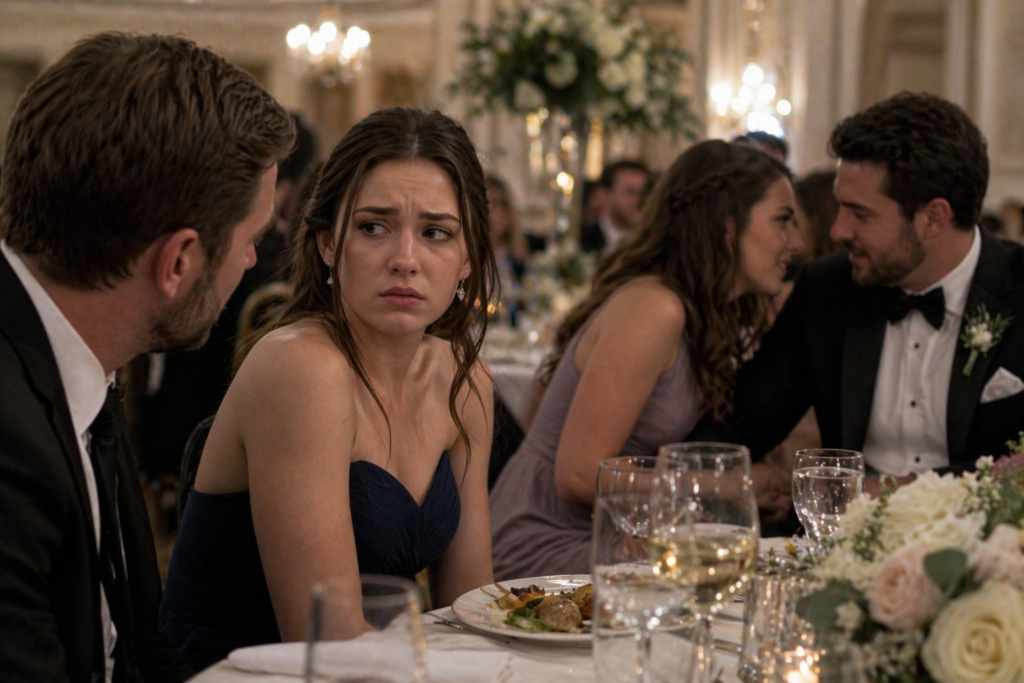
A 20-year-old woman shared a difficult experience that happened during her sister’s wedding. She arrived expecting a happy family event with photos, celebrations, and good memories. At first, everything seemed normal, but she soon noticed something that made her uncomfortable.
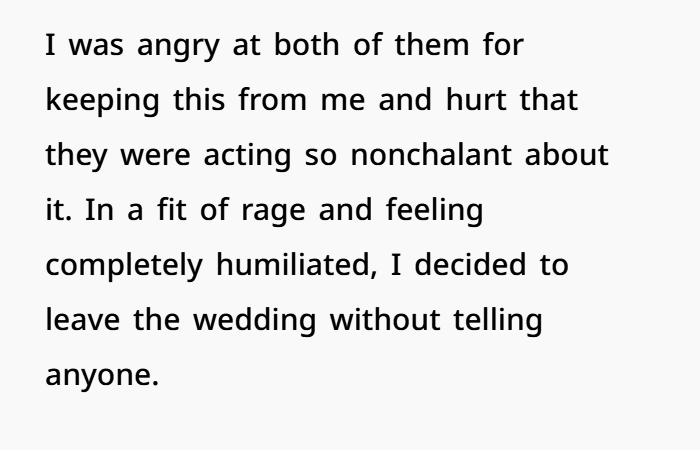
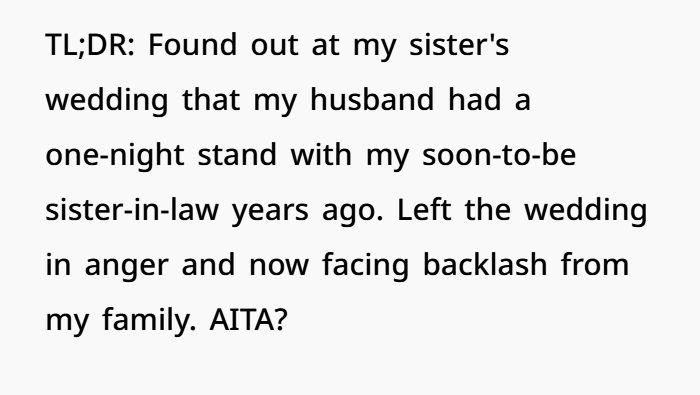
During the wedding, she noticed that her husband and her future sister-in-law seemed to exchange unusual looks. Later, she overheard a conversation where they mentioned a past experience they had shared. She realized that they had a romantic history before she and her husband were together.
When she asked her husband about it, he admitted that something had happened between them before their relationship began. He explained that it was part of his past and not something that happened during their marriage. However, she still felt hurt because neither of them had told her before, and the other woman was now becoming part of her family.
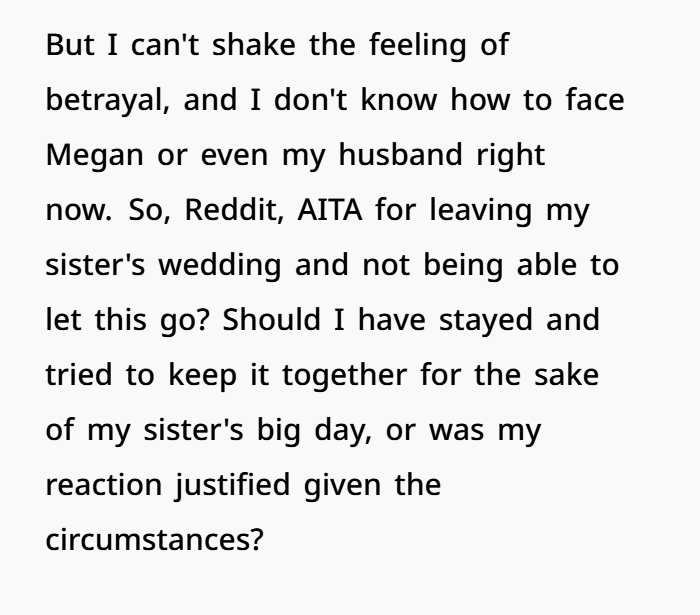
For her, the biggest issue was not only the past relationship. It was feeling surprised and left out of important information that could affect future family relationships. She decided to leave the wedding quietly because she felt overwhelmed and needed space.
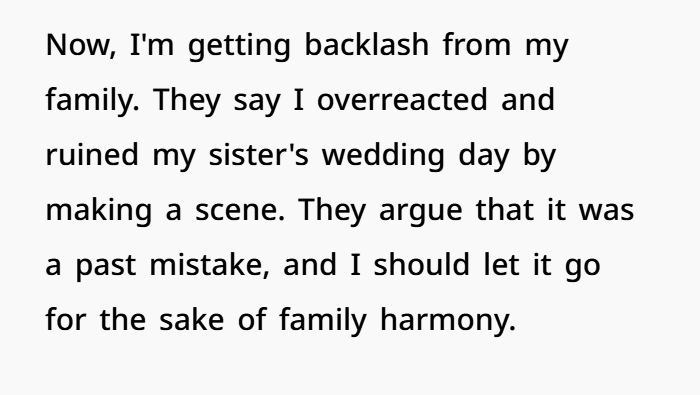
Afterward, some family members criticized her reaction and felt she had caused unnecessary tension. Others understood why she felt upset. The situation shows how important honesty, communication, and trust are in relationships, especially when past experiences become connected to family life.
When Your Partner’s Past Affects Your Present Relationship
At first, this situation may sound like something people should simply “forget about because it happened in the past.”
But emotions are not always that simple.
Many people struggle with questions like:
- “Why does my partner’s past bother me?”
- “How do I handle uncomfortable family situations?”
- “How do I rebuild trust in my marriage?”
This situation touches all of those issues.
The Past Was Not Cheating, But The Feelings Are Still Real
The first thing to understand is that your husband did not cheat on you.
The one-night stand happened before you were together. There was no marriage, no relationship commitment, and no broken promise at that time.
From a timeline point of view, it was part of his past.
But relationships are not only about facts. They are also about feelings.
The difficult part is not only what happened years ago. The difficult part is who it happened with.
This is not a person who disappeared from his life forever. This person is now your future sister-in-law. She will be around at family events, holidays, and gatherings.
That changes how the situation feels.
When someone from your partner’s past becomes part of your everyday life, it can make old events feel much more personal and harder to ignore.
The Real Problem Is The Lack Of Honesty
The biggest issue here may not be the past relationship itself.
It is the fact that you were not told.
Your husband and Megan both knew what happened. They remembered it. They understood there was history between them.
But they decided not to share it with you.
That can feel like a betrayal.
Honesty in a relationship is not only about avoiding cheating. It is also about sharing important information that could affect your partner’s comfort, trust, and emotional safety.
Of course, nobody needs to share every small detail about their past.
But when that past involves someone who will become part of your family, many people would expect more openness.
Finding this out later can make someone feel:
- Shocked
- Embarrassed
- Hurt
- Left out
- Unsure about what else they do not know
Those feelings are understandable.
Why The Wedding Moment Felt So Intense
Weddings are already emotional events.
People are dealing with:
- Stress
- Family expectations
- Big emotions
- Pressure to keep everything perfect
So when you learned something painful during the wedding, your emotions probably became much stronger.
Your brain was dealing with anger, surprise, and social pressure all at the same time.
Leaving the wedding was an emotional reaction.
Was it the best possible choice? Maybe not.
But was it understandable? Yes.
You were not planning to ruin the day. You were overwhelmed by a situation that suddenly felt too painful to handle.
At the same time, your family may also feel hurt because it was an important day for your sister.
Both things can be true:
- You were deeply hurt.
- Your sister’s wedding was also affected.
The Age Difference May Add Another Layer
You are 20 and your husband is 29.
An age gap does not automatically mean a relationship is unhealthy.
Many couples with age differences have happy marriages.
However, age differences can sometimes affect how people handle conflict, communication, and emotional situations.
At 20, you are still learning what boundaries feel right for you and how you want to handle difficult relationship situations.
Your husband may see this as something from long ago that no longer matters.
You may see it as something new because you just found out.
That difference in perspective can create conflict.
He may think:
“It happened before we met.”
You may think:
“But this person is now part of my family.”
Both viewpoints explain why you are seeing the situation differently.
Megan’s Role Also Matters
Megan also knew about the past and did not tell you.
Then she joked about it in front of you, possibly assuming you already knew or would not be bothered.
Even if she did not mean to hurt you, the impact still matters.
The situation is not only about jealousy.
It is about:
- Feeling excluded
- Feeling surprised
- Losing trust
- Wondering why people kept important information from you
Those are real relationship concerns.
Did You Overreact?
This is the question many people would ask.
The answer is complicated.
Your feelings were not unreasonable.
You discovered something personal and uncomfortable at a very emotional time.
However, leaving immediately may not have been the most helpful long-term solution.
The bigger question is not who was right or wrong.
The bigger question is:
“How do you handle this from now on?”
What Can Help Moving Forward?
1. Talk Honestly With Your Husband
The main conversation should not only be about the one-night stand.
The bigger issue is why he did not tell you.
Explain how the lack of honesty made you feel.
Try to focus on understanding, not attacking.
2. Create Boundaries With Megan
You do not have to become close friends with her.
You can be polite and respectful while still keeping some distance.
Healthy relationships allow people to have boundaries.
3. Work On Rebuilding Trust
The trust problem is not because of something that happened before you met.
It is because important information was hidden from you.
Trust can be rebuilt, but it requires:
- Honest conversations
- Openness
- Respect
- Consistent actions
4. Understand Your Own Feelings
Instead of judging yourself for being upset, try to understand what hurt the most.
Was it the past?
Was it the secrecy?
Was it feeling embarrassed at the wedding?
Knowing the real reason helps you handle the problem better.
5. Talk To Your Sister
Your sister’s wedding was an important moment in her life.
It may help to explain that your reaction was not about her or her happiness.
You can apologize for the impact without pretending your feelings were not real.
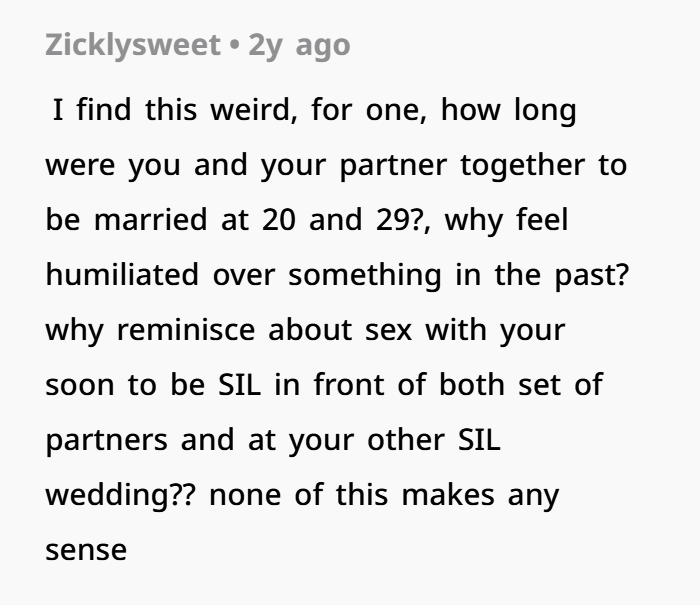
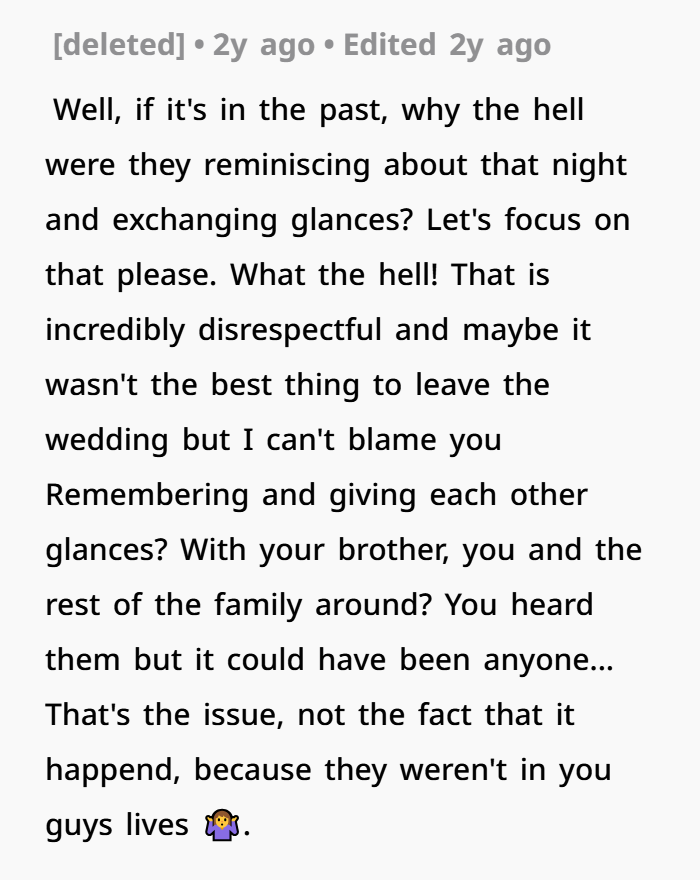
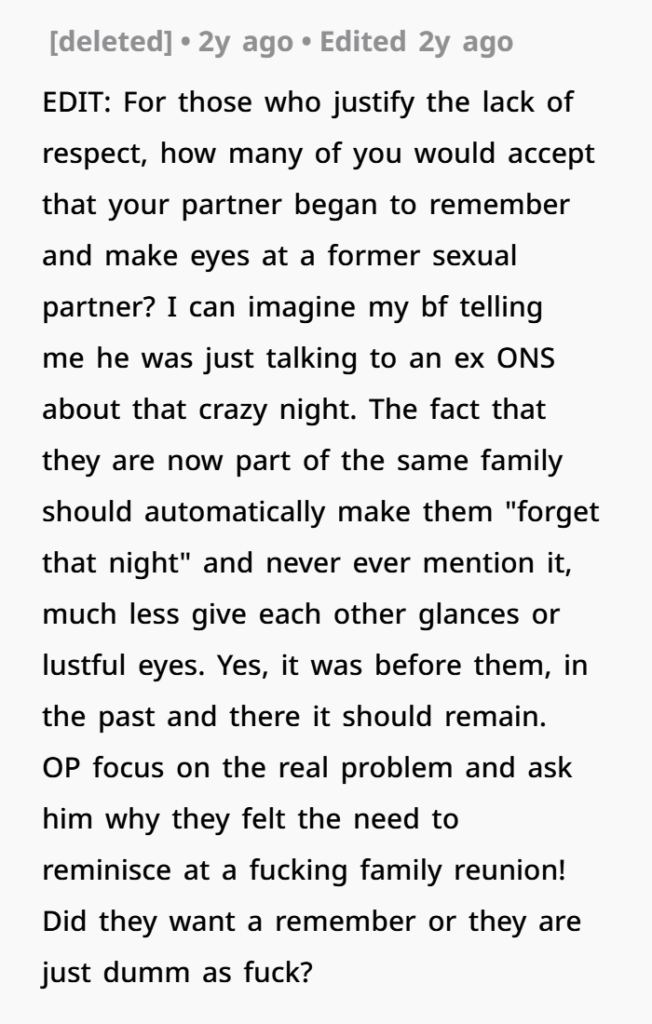
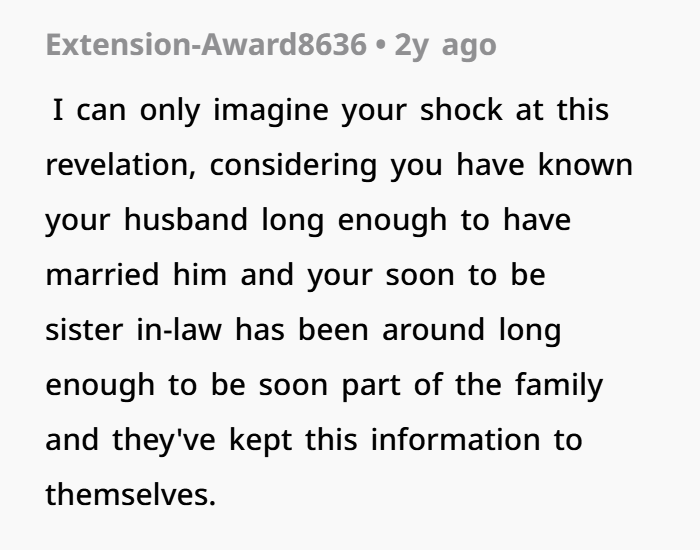
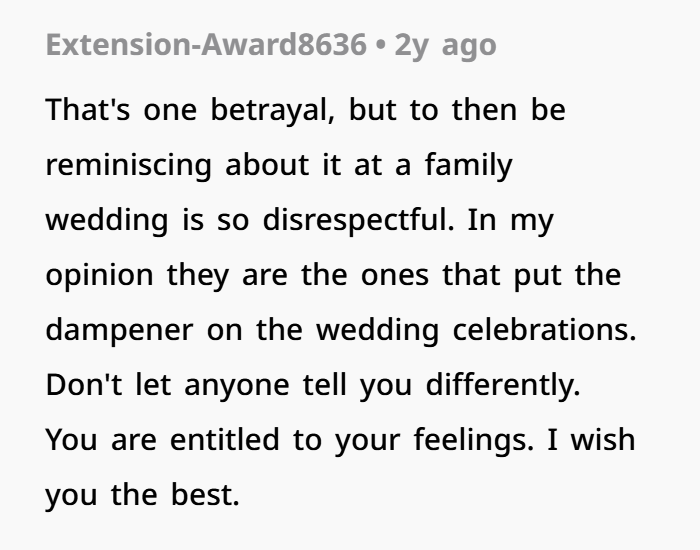
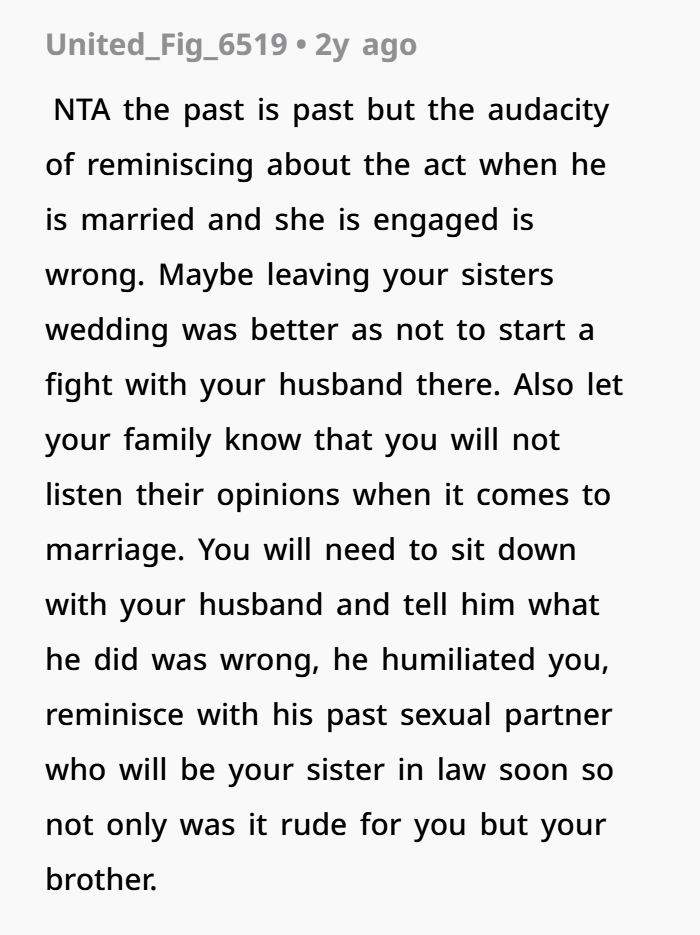
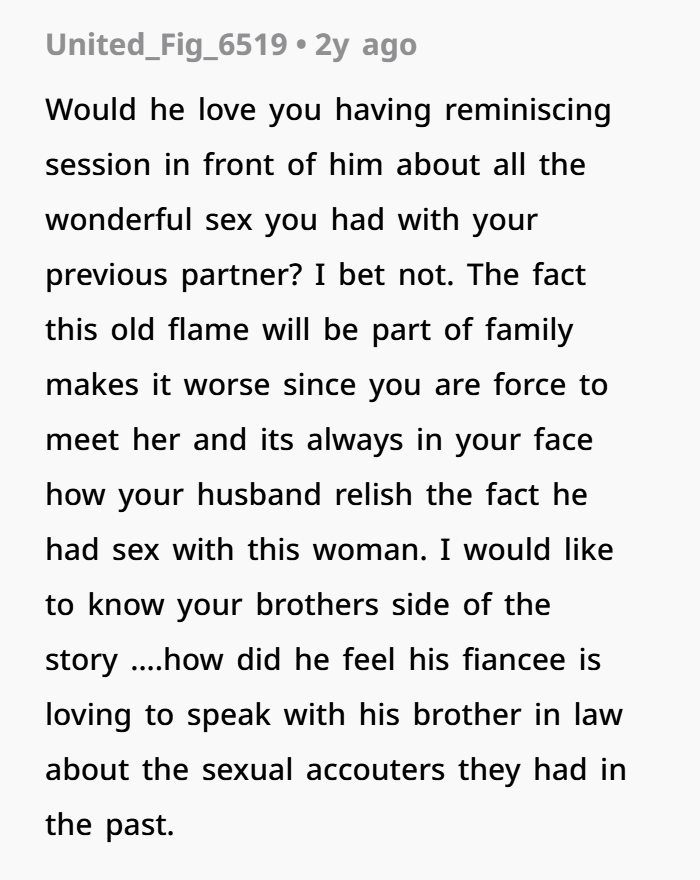
Top Comments From Readers
Final Thoughts
This situation is not simply about an old mistake.
It is about trust, honesty, family relationships, and emotional safety.
Your husband’s past happened before you were together, but the way it was handled affected your present relationship.
The goal now is not to decide who is the villain.
The goal is to have honest conversations, create healthy boundaries, and figure out whether trust can be rebuilt.
Because strong relationships are not built on having a perfect past.
They are built on honesty in the present.