I Refused to Dye My Hair for the Bride, Now She Says I’m “Fake”

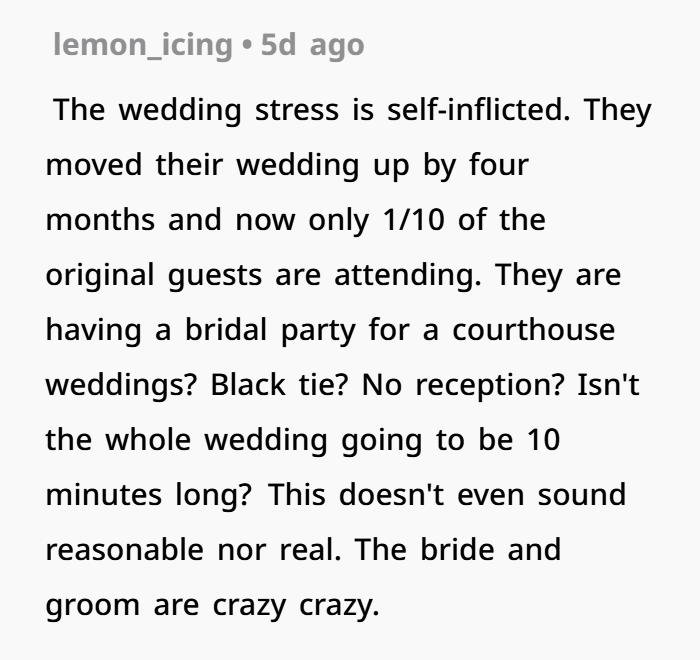
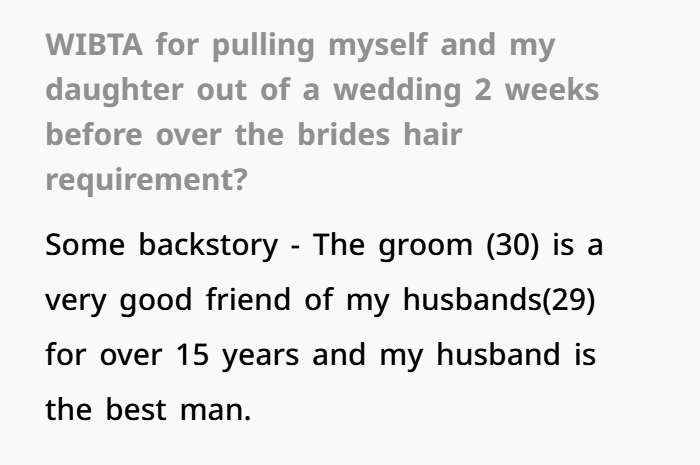
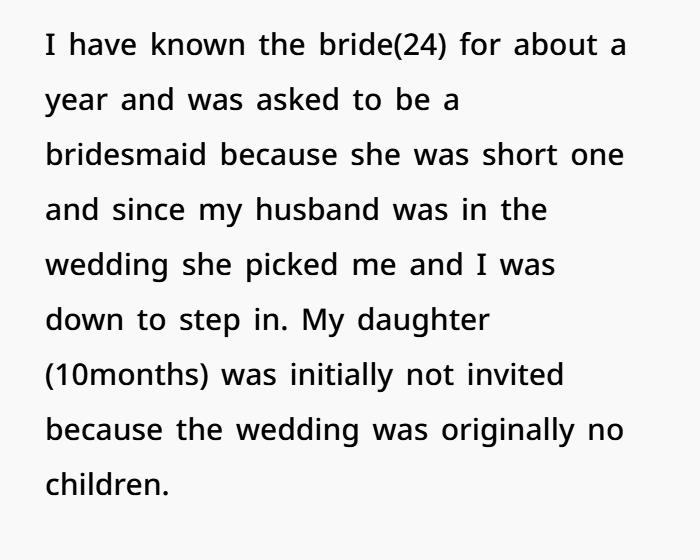
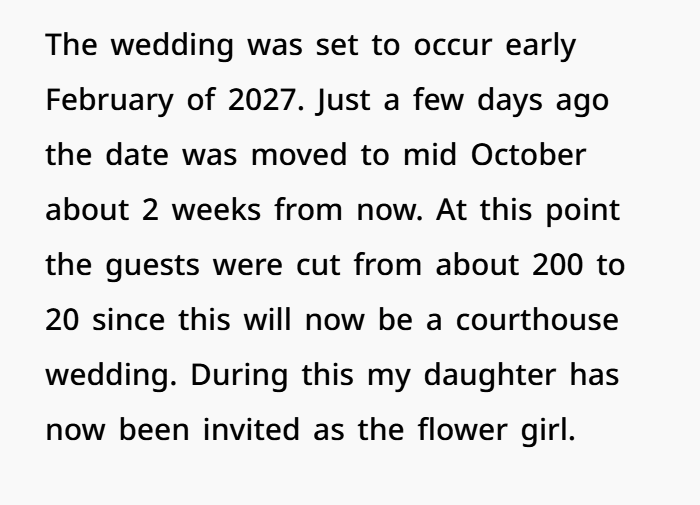
A wedding invitation has become much more complicated than one woman expected. She is not very close friends with the bride, but her husband has been close to the groom for over 15 years and is serving as best man. She agreed to become a bridesmaid, while their 10-month-old daughter was originally staying home because the February 2027 wedding was child-free. Suddenly, the couple changed almost everything. The wedding was moved to mid-October, only about two weeks away. The guest list dropped from around 200 to roughly 20, the venue became a courthouse, and the baby was invited to be the flower girl.
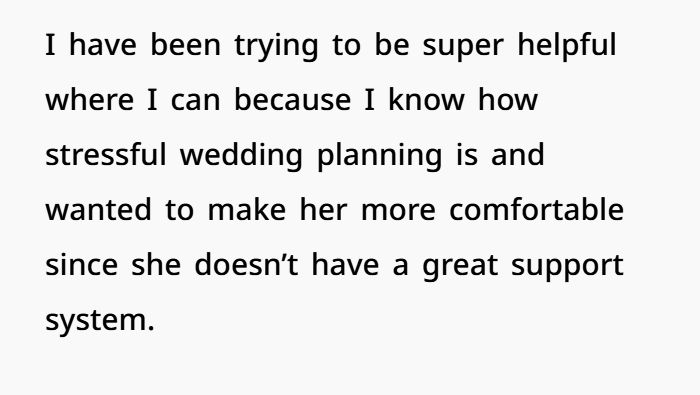
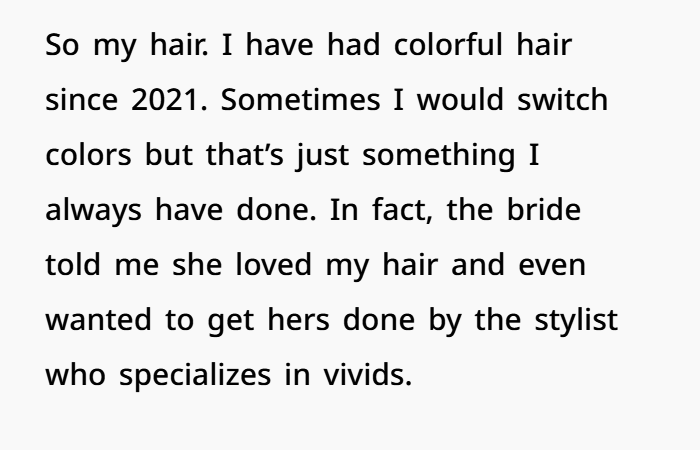
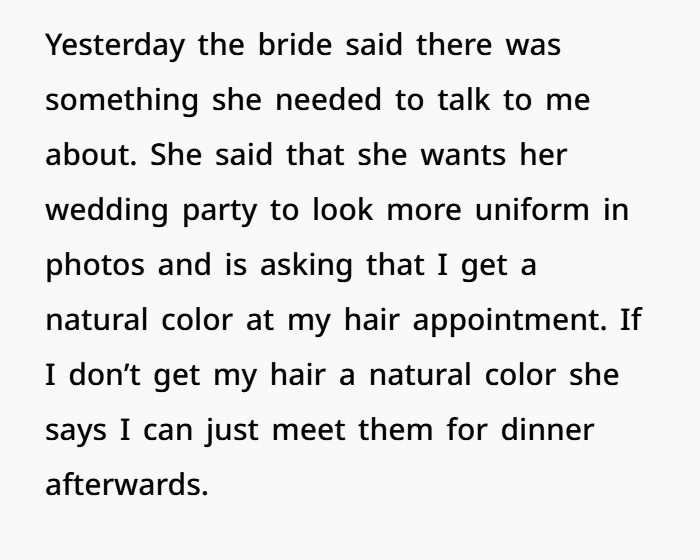
The woman continued trying to support the bride through the sudden changes. But then she received a surprising request about her appearance. She has had brightly colored hair since 2021, and it is a regular part of her personal style. The bride knew about the hair before asking her to become a bridesmaid and had even complimented it before. Still, she now wants the wedding party to look more uniform and asked the woman to dye her hair a natural color before the courthouse wedding.
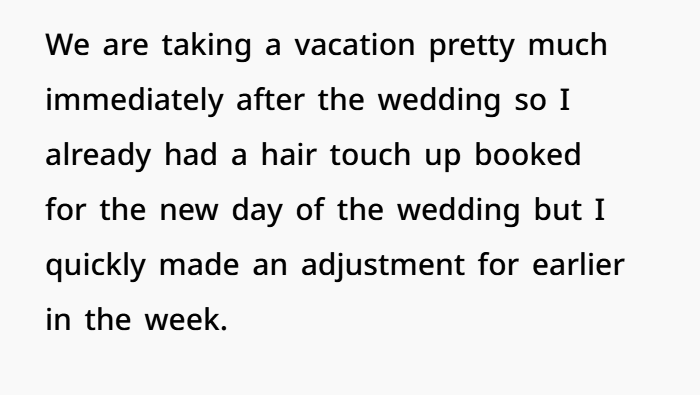
She said no. Changing years of carefully maintained hair could involve professional salon services, additional beauty costs, and ongoing hair care after the wedding. The bride responded by saying she could simply miss the ceremony and come to dinner later. The woman then explained that her breastfed daughter would stay with her, meaning the baby would no longer serve as flower girl. Her husband supports this choice and does not believe his wife should have to change her appearance for a wedding ceremony.
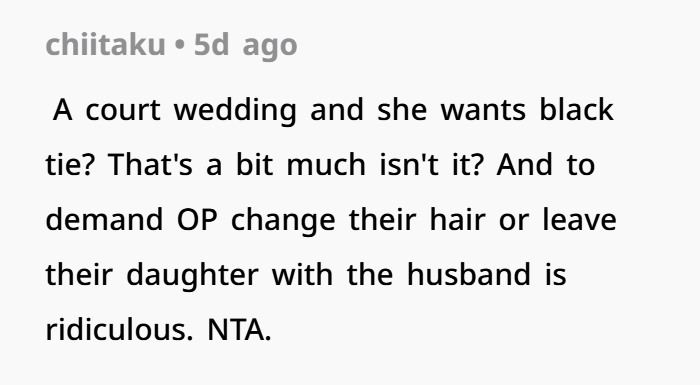
There are financial and practical concerns as well. The family would still need to purchase two formal outfits for the black-tie dress code, and the courthouse is more than an hour from their home. That means additional clothing, transportation, and other wedding expenses for an event that was changed with very little notice. Since there is no prepaid reception, the woman believes stepping away would not create a major financial problem for the couple. She is now leaning toward staying home with her daughter while her husband attends the wedding and completes his duties as best man.

When Does a Bride’s Appearance Request Become Too Much?
Being a bridesmaid usually comes with a few appearance rules.
The bride may choose the dress, color, shoes, jewelry, or hairstyle. She may also want everyone to follow the same level of formality.
That is a normal part of wedding planning.
But there is a big difference between wearing a certain dress for one day and changing something that has been part of your appearance for years.
That is the real issue in this story.
The Hair Color Wasn’t a Last-Minute Change
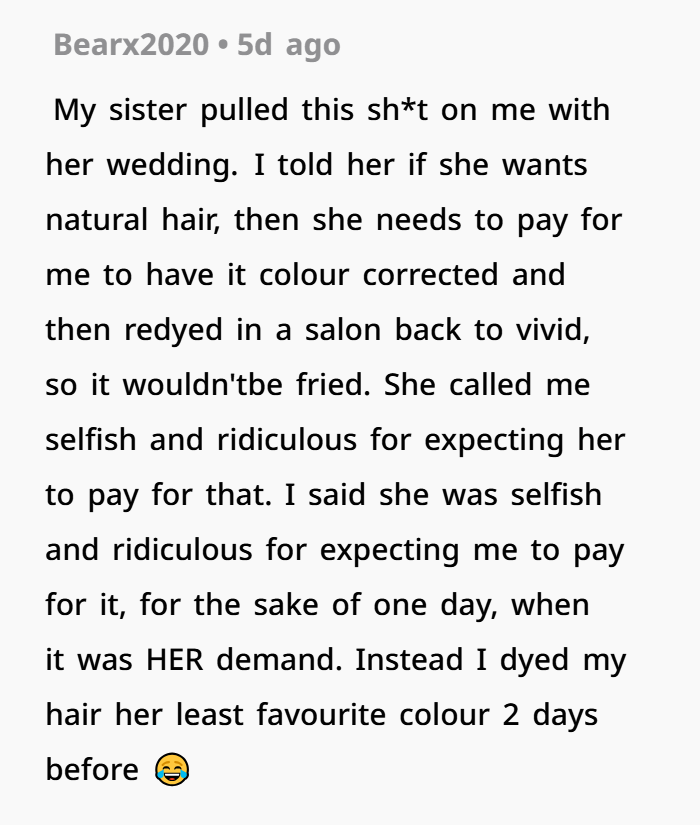
The narrator had bright, colorful hair long before she became a bridesmaid.
This was not something she suddenly did two days before the wedding.
The bride knew what she looked like when she invited her into the bridal party.
According to the story, the bride had even complimented her hair in the past.
Then, around two weeks before the newly rescheduled wedding, the bride said the narrator needed a natural hair color to participate.
That changes things.
The narrator did not suddenly change her appearance.
The bride changed the expectations.
A Dress Is Temporary, Hair Color May Not Be
Asking bridesmaids to wear matching dresses is normal.
The dress goes on before the wedding and comes off afterward.
Hair color can be much more complicated.
If someone has spent years maintaining vivid hair, changing it to a natural shade may take time and money.
Depending on the current color, professional hair color and salon services may be needed.
Then there is the cost of changing it back.
Returning to a bright color may require additional appointments, lightening, coloring, treatments, and regular hair care.
So this is not necessarily a small beauty request.
It could become an expensive and time-consuming process.
The Bride Can Have a Wedding Vision
The bride is not wrong for caring about how her wedding looks.
Many couples spend months choosing colors, flowers, dresses, decorations, and other details.
Professional wedding photography can also be a major part of a wedding budget.
Couples naturally want to love their wedding photos.
Wanting the bridal party to look coordinated is therefore understandable.
But coordinated does not have to mean identical.
The people in a wedding party are still individuals.
Wedding Photos Don’t Require Everyone to Look the Same
Bridesmaids can wear matching dresses while still looking like themselves.
People naturally have different hair colors, hair textures, body types, heights, tattoos, piercings, and personal styles.
Those differences do not automatically make wedding photos look bad.
In fact, they are part of what makes each person recognizable.
The bride already knew the narrator had colorful hair.
If natural hair was an important part of the wedding aesthetic, that expectation should ideally have been discussed before the narrator agreed to become a bridesmaid.
Bringing it up shortly before the ceremony puts the narrator in a difficult position.
A Hairstyle Request Would Be Different
There is also a big difference between changing hair color and changing a hairstyle.
For example, a bride might ask the bridesmaids to wear an updo, soft curls, or another coordinated style.
That is usually temporary.
After the wedding, everyone can simply take down their hair.
Changing a long-term hair color can be a much bigger commitment.
It may require professional beauty services, extra expense, several hours at a salon, and more work afterward to return to the original color.
That is why the narrator is allowed to say the request is too much for her.
The Bride Gave Her Two Choices
This part makes the situation fairly simple.
The bride reportedly gave the narrator two options.
Change the hair color or do not participate in the ceremony.
The narrator chose not to participate.
She did not demand that the bride change her wedding theme.
She did not insist on remaining a bridesmaid while ignoring the bride’s request.
She simply chose one of the options she was given.
That is not the same as suddenly abandoning the wedding.
Personal Boundaries Still Matter at Weddings
Being part of a bridal party involves some compromise.
A bridesmaid may wear a dress she would not normally choose. She may wear different shoes or follow a particular makeup style.
But every person has a limit.
The bride can make a request.
The bridesmaid can decide whether she is comfortable accepting it.
If the answer is no, stepping out of the bridal party may be the cleanest solution.
Sometimes two reasonable boundaries simply do not match.
What About the Baby Flower Girl?
The narrator’s 10-month-old daughter was also supposed to be part of the wedding.
At first, removing the baby from the ceremony might sound like a reaction to the argument.
But the practical details matter.
This flower girl is only 10 months old.
She is not an older child who has spent months practicing for the ceremony or talking excitedly about being a flower girl.
She is an infant.
Her role was also added recently after the wedding date changed.
That makes the situation much easier to adjust.
Childcare Is a Real Problem Here
The narrator also says her baby is breastfed.
That creates a practical childcare issue.
Her husband is the best man, which means he may have responsibilities before and during the ceremony.
He could be helping the groom, taking wedding photos, participating in the ceremony, or handling other best-man duties.
That makes it difficult for him to also be fully responsible for a 10-month-old baby throughout the event.
Babies need feeding, diaper changes, naps, comfort, and supervision.
Those needs do not stop because a parent is attending a wedding.
Family Travel Makes It More Complicated
The wedding is also more than an hour away.
Traveling with a baby requires extra planning.
Parents may need to think about feeding times, sleep schedules, clothing, diapers, transportation, and other essentials.
This is why family travel and childcare planning can become complicated during weddings and other large events.
If the narrator is no longer attending, taking the baby out of the wedding is a practical decision.
It does not automatically mean she is trying to punish the bride.
The Baby Was Added at the Last Minute Anyway
Another important detail is that the baby was not originally part of the wedding.
Her flower girl role was added after the wedding was moved forward by several months.
So this was already a recent change.
Removing her from the ceremony is very different from removing an older flower girl who had been preparing for the role for months.
The wedding can continue without the baby in the bridal party.
Social Media Is Making Everything More Difficult
The bride reportedly started posting messages about loyalty, real friends, and fake friends.
That is unlikely to solve anything.
Private disagreements usually become more stressful when they move to social media.
The bride is allowed to care about her wedding aesthetic.
She is also allowed to decide that natural-colored hair is important enough to change who participates in the ceremony.
But if that is her condition, she also has to accept that someone may decline.
The narrator cannot reasonably be expected to choose between changing her appearance and leaving the wedding party, then be criticized for choosing to leave.
Loyalty Doesn’t Mean Agreeing to Everything
Friendship does not mean saying yes to every request.
People can care about each other while still having different boundaries.
The relationship described here is also fairly new.
According to the story, the women have known each other for about a year. The narrator was also asked to join the bridal party partly because the bride needed another bridesmaid.
Her husband has the stronger long-term connection because he is close friends with the groom.
That does not mean the narrator should be disrespectful.
But it does mean that turning this into a major test of friendship or loyalty seems unnecessary.
A Simple Conversation Could End the Conflict
The narrator does not need to keep arguing about hair.
She also does not need to respond to every social media post.
A calm, clear message would be enough.
She can explain that she respects the bride’s right to decide how she wants her bridal party to look.
However, she is not comfortable changing her hair color.
Because the bride said she cannot participate without changing it, she will step out of the ceremony.
She can then explain that her baby will also not participate because she will not be attending and her husband will be busy with his best-man responsibilities.
That keeps the conversation focused on the actual problem.
Wedding Boundaries Work Both Ways
The bride has many decisions to make.
She can choose the venue, wedding dress, flowers, food, decorations, photography style, and overall theme.
She can also set reasonable expectations for her bridal party.
But bridesmaids still have personal boundaries.
Being invited into a wedding party does not mean someone gives up control over every part of their appearance.
The bride can make the request.
The bridesmaid can say no.
Sometimes that means the person no longer participates.
That may be disappointing, but it does not have to become a major conflict.
Final Verdict: NTA
The narrator is not wrong for refusing to change her hair color.
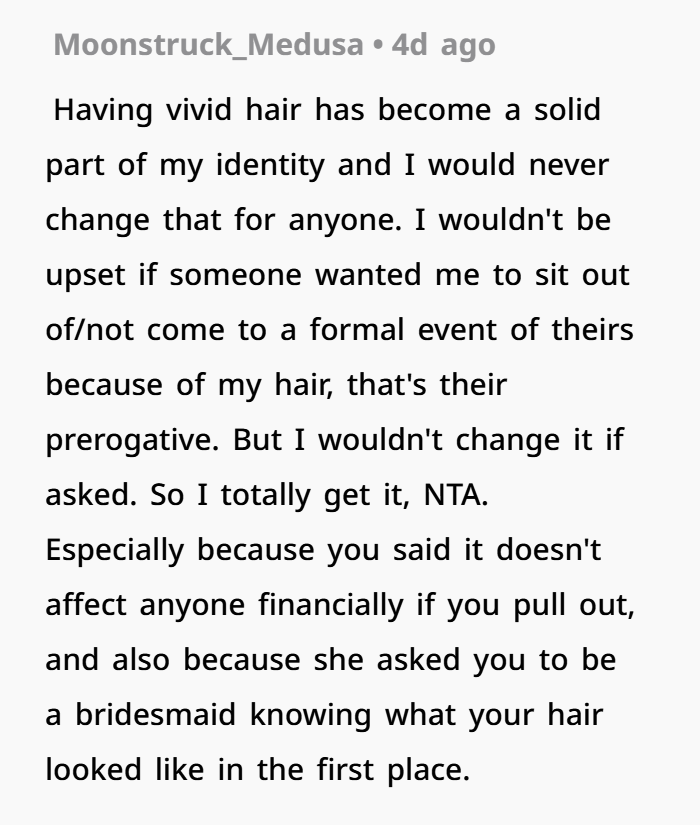
Her bright hair was already part of her appearance when the bride invited her to become a bridesmaid.
The bride knew about it.
Then, shortly before the rescheduled wedding, natural hair became a condition for participating.
The narrator chose not to accept that condition.
That is a reasonable personal boundary.
Removing her 10-month-old daughter from the flower girl role also makes sense because of breastfeeding, childcare needs, travel time, and her husband’s responsibilities as best man.
The bride is allowed to care about coordinated wedding photos.
The narrator is allowed to decide that changing her long-term appearance is more than she wants to do for those photos.
Wedding planning requires compromise, but compromise has limits.
In this case, the simplest solution is for both women to accept that their expectations do not match and move forward without turning one appearance request into a much bigger friendship problem.
Readers’ Comments Speak Out