I Banned My Sister-in-Law From My House After What She Did With Her Mom’s Money

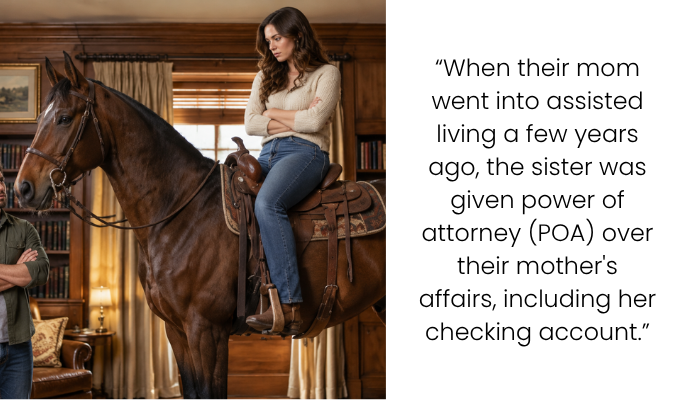
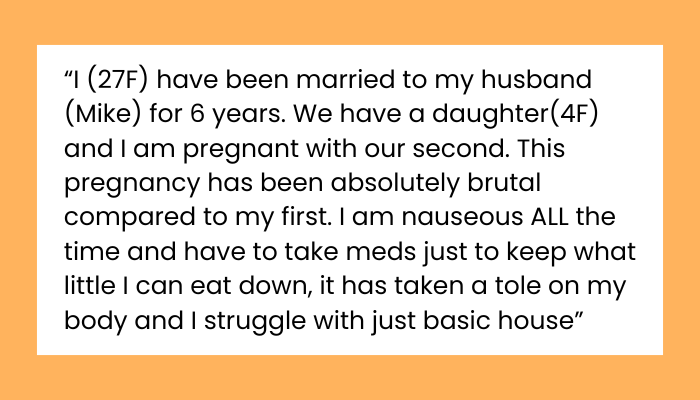
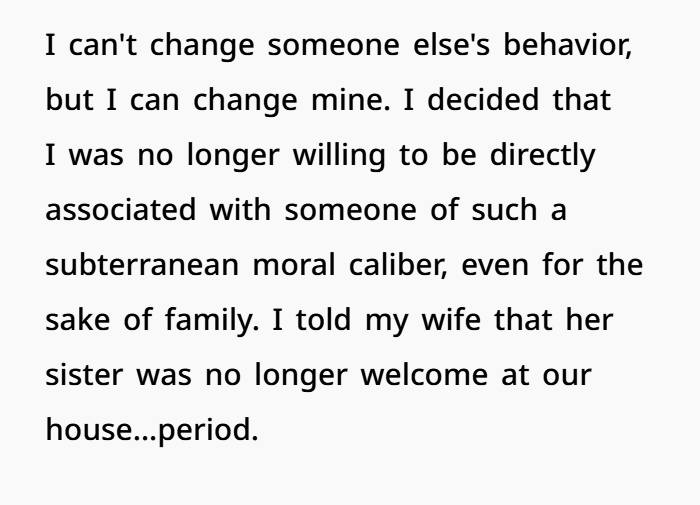
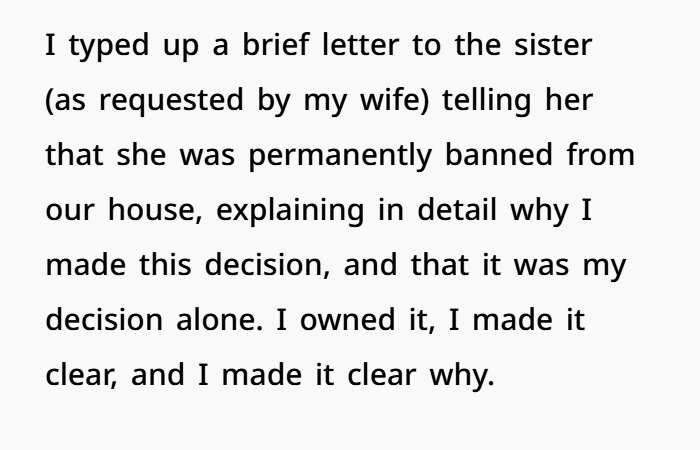
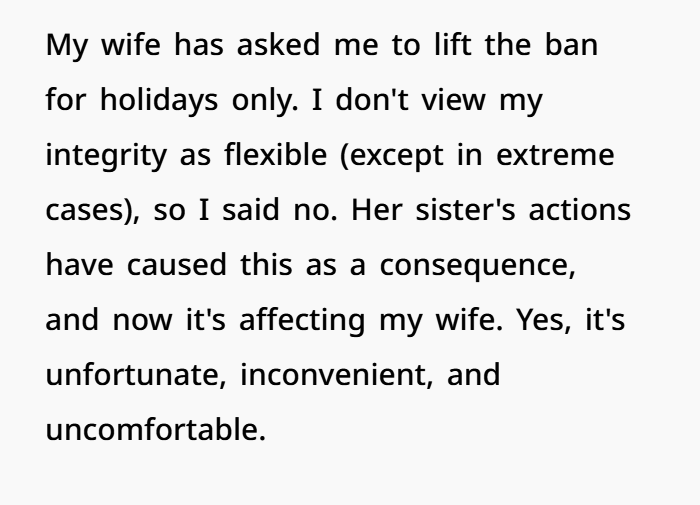
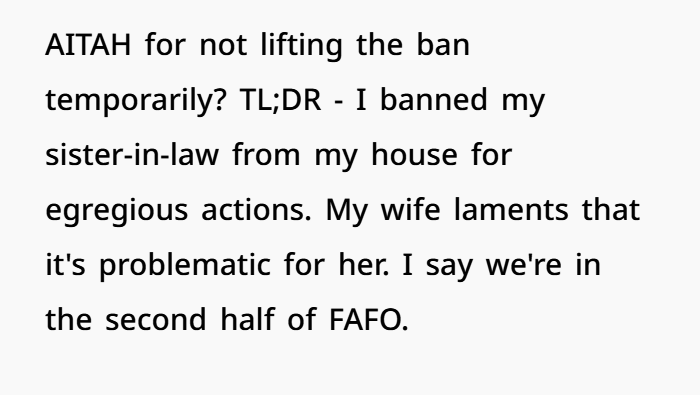
A husband shared the reason behind a difficult decision involving his family. He decided that his sister-in-law would no longer be allowed in his home after concerns about how she handled her mother’s money.
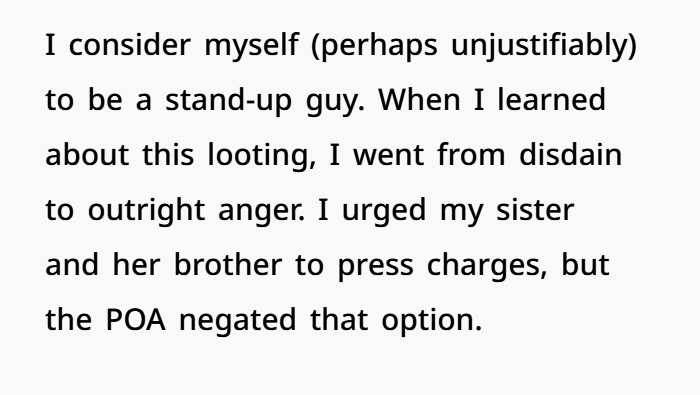
The problem became clear after their mother passed away. The sister-in-law had managed financial matters through power of attorney, but the family later found that some money was used for her own expenses. The husband felt this damaged trust and believed the issue needed to be addressed.
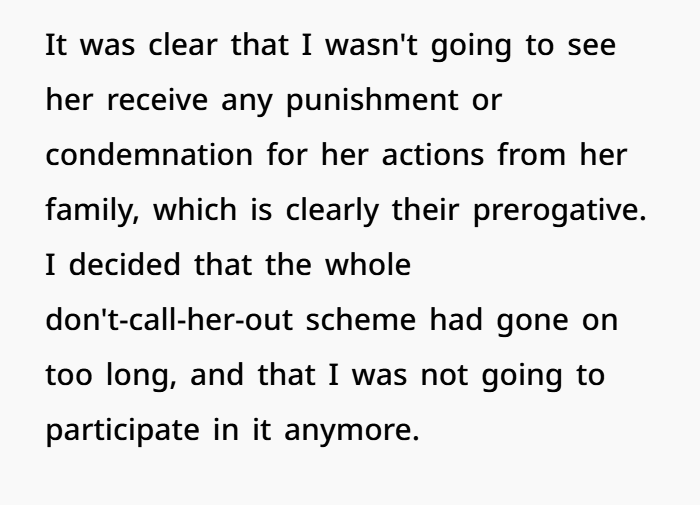
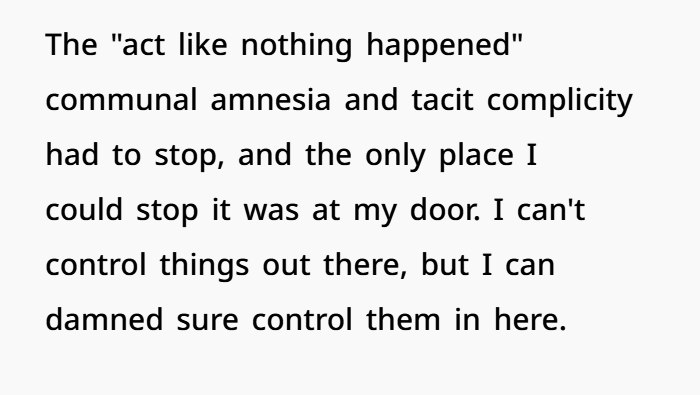
He explained that other family members did not want to confront the situation because they were worried about creating more problems. Instead, he chose to protect his own peace by creating a boundary in his home.
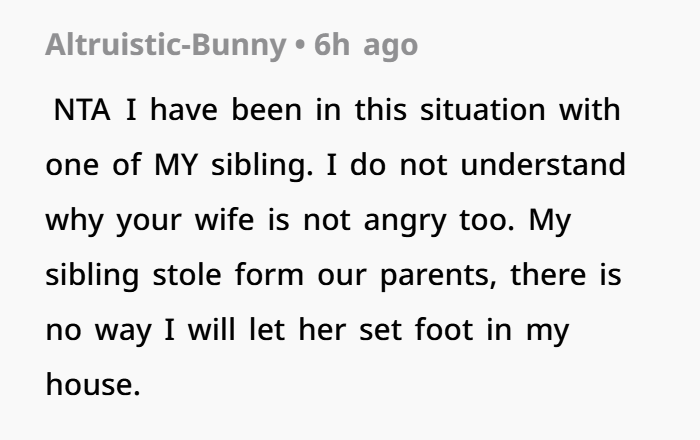
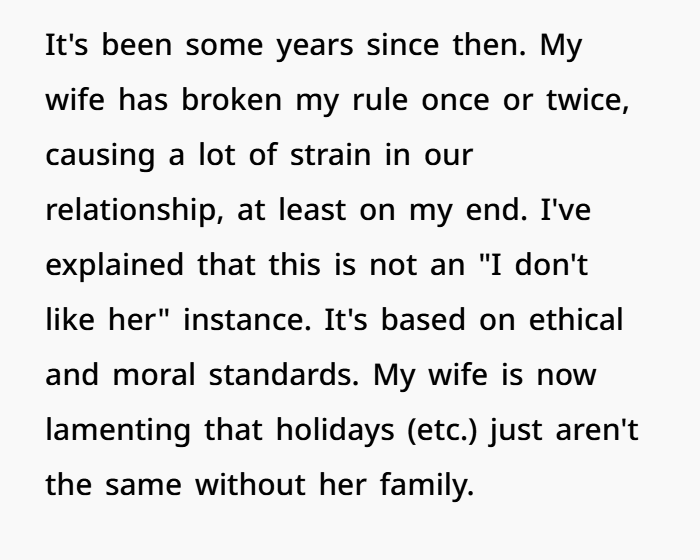
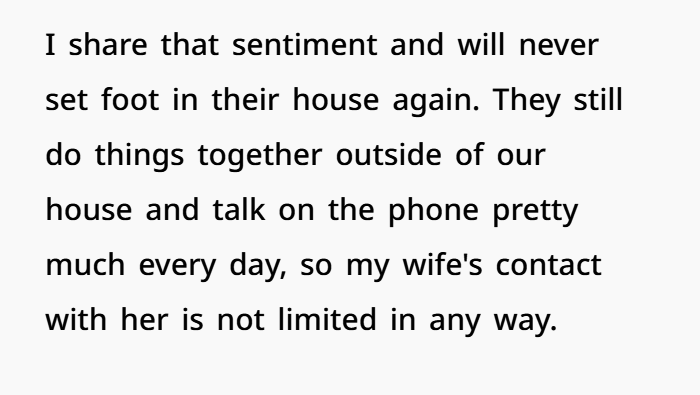
His wife still maintains contact with her sister, but family gatherings have become harder. The situation has started conversations about forgiveness, family loyalty, financial ethics, and how people can handle difficult relationships while respecting personal boundaries.

Family Boundaries, Money Problems, and Learning When to Forgive
Family problems are rarely caused by only one event.
Most family disagreements come from years of feelings, experiences, and unresolved issues.
In this situation, the problem is not only about money. It is about trust, responsibility, family relationships, and personal boundaries.
The husband feels that his sister-in-law made poor financial decisions and did not take responsibility for her actions. He also feels that other family members avoided the issue because they did not want conflict.
The situation became more serious when she was given responsibility to manage her mother’s finances through power of attorney. According to the husband’s view, she used some of those funds for personal expenses.
For him, this changed the situation completely.
It was no longer just a family disagreement. It became a question of trust and values.
Understanding Power of Attorney and Financial Responsibility
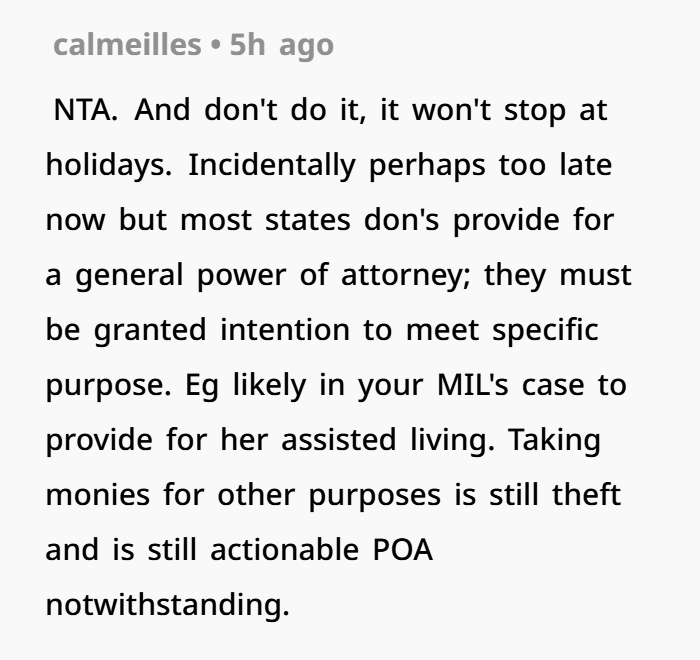
A power of attorney is a legal document that allows one person to make certain decisions for another person.
It is often used when someone is older, sick, or needs help managing important matters.
A person with power of attorney may help with things like:
- Paying bills
- Managing bank accounts
- Handling financial decisions
- Making medical choices
However, this responsibility comes with important duties.
A person managing someone else’s money is generally expected to act in that person’s best interest.
Using another person’s money for personal reasons can create serious financial and legal concerns. The exact rules can depend on local laws and the details of each situation.
In this case, the husband believes his sister-in-law used money that was meant for her mother’s care and needs.
Financial concerns involving elderly family members can be especially painful because they involve someone who may depend on others for support.
Why Families Sometimes Avoid Difficult Conversations
One important part of this situation is how the family handled conflict.
The husband feels that relatives stayed quiet because they did not want arguments or stress.
This happens in many families.
Sometimes one family member reacts strongly during disagreements. They may become angry, create tension, or make conversations difficult.
Over time, others may think:
“It is easier to avoid the problem.”
“It is not worth the fight.”
While avoiding conflict may seem easier, it does not always fix the issue.
Sometimes staying silent can make another family member feel ignored or unsupported.
The person who speaks up may feel like they are the only one trying to address the problem.
Personal Boundaries or Punishment?
When family relationships become difficult, many people wonder if setting limits is fair.
There is a difference between a boundary and a punishment.
A punishment is usually meant to make someone suffer consequences.
A boundary is a decision about what you are comfortable allowing in your own life.
For example:
“I do not want this person inside my home.”
This is a personal boundary.
But:
“You cannot have any relationship with this person.”
That would be trying to control someone else’s choices.
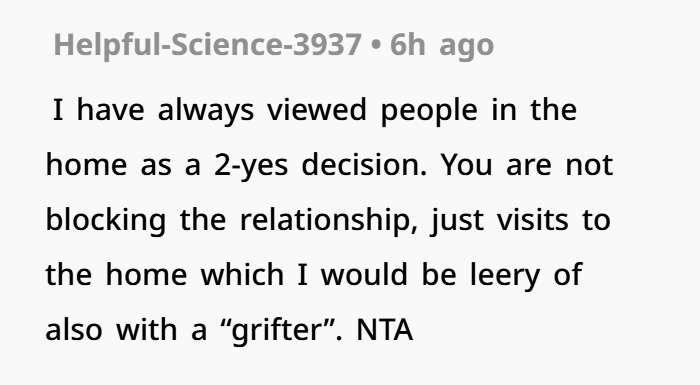
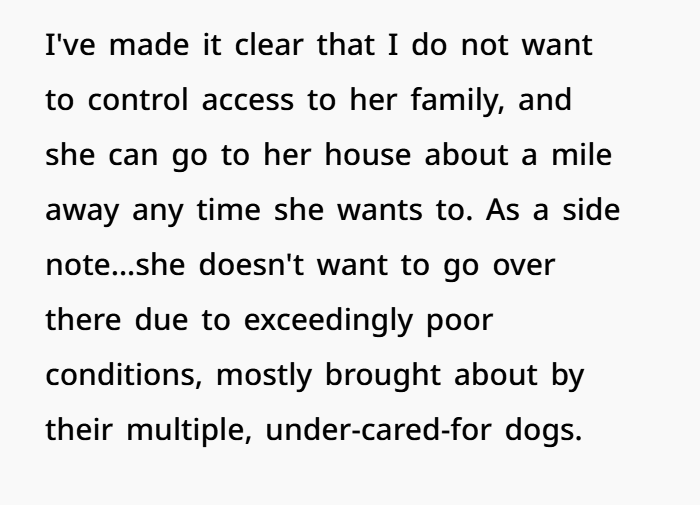
In this situation, the husband says his wife can still talk to her sister and spend time with her outside the home.
His boundary is only about his own living space.
Many people use boundaries to protect their peace after trust has been damaged.
However, boundaries can also affect other family members, which can make the situation difficult.
How Family Conflicts Affect Marriage
The biggest challenge is that this issue does not only involve the sister-in-law.
It also affects the husband and wife.
The wife may understand why her husband feels strongly, but she may also miss having her whole family together during holidays and special occasions.
This creates an emotional challenge for couples.
One person may think:
“I am protecting my values and my home.”
The other person may think:
“I am losing important family moments.”
Both feelings can exist at the same time.
Marriage often requires couples to balance personal boundaries with shared decisions.
When two people share a home, decisions about family visits and relationships can become more complicated.
Should Holidays Change the Rules?
Holidays often bring strong emotions.
Many families see birthdays, celebrations, and holidays as opportunities to reconnect and forgive.
Some people believe special occasions are a good time to put disagreements aside.
Others feel that important boundaries should remain in place until trust improves.
The husband may feel that allowing someone back into the home sends the message that the problem was not serious.
The wife may feel that family gatherings are important and should be protected.
The bigger questions are:
- What does forgiveness mean?
- Does forgiveness require rebuilding trust first?
- Can family members spend time together while still having boundaries?
These questions do not always have simple answers.
Can Trust Be Rebuilt?
When trust is damaged, repairing the relationship can take time.
Forgiveness usually happens through actions, not only words.
A person may rebuild trust by:
- Accepting responsibility
- Being honest about what happened
- Understanding how others were affected
- Showing changed behavior
A person who says:
“I understand why people were hurt, and I want to make things better.”
creates a different situation from someone who refuses to accept any responsibility.
Without accountability, some people may feel they need distance to protect themselves.
The Bigger Lesson About Family Loyalty
Family relationships can be complicated.
Many people feel pressure to forgive relatives because they believe family should always stay together.
Sometimes forgiveness helps families heal.
But family connections do not mean people must ignore behavior that damages trust.
Healthy family relationships often need:
- Respect
- Honest communication
- Clear boundaries
- Responsibility
This situation is not only about a sister-in-law.
It is also about different ideas of loyalty.
One person may believe loyalty means supporting family members through difficult times.
Another person may believe loyalty means protecting personal values and refusing to ignore serious concerns.
Both family connections and personal boundaries matter.
Final Thoughts on Family Boundaries
Family conflicts involving money, trust, and responsibility are rarely simple.
Every decision can affect someone.
Keeping a boundary may protect one person’s comfort but may create distance between relatives.
Removing a boundary may bring people together but may also make someone feel unheard.
The most important step is honest communication.
Families and couples often find better solutions when they focus less on proving who is right and more on understanding each other.
Trust takes time to build, and strong relationships require both forgiveness and accountability.
The Reactions Are In