My Friend Promised Strangers a Ride in My Car Without Asking — AITA for Saying No?


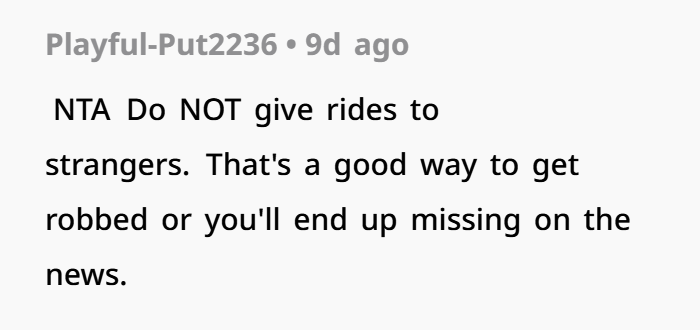
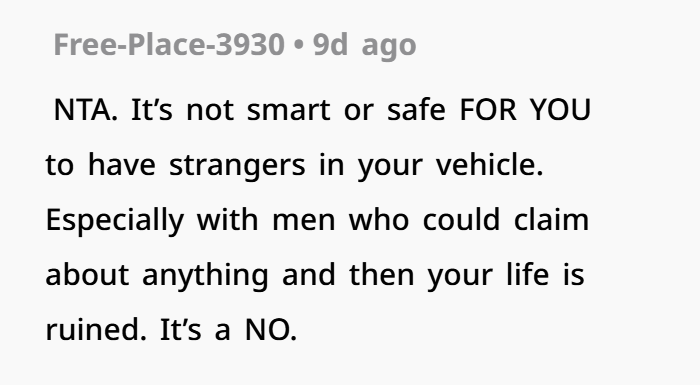
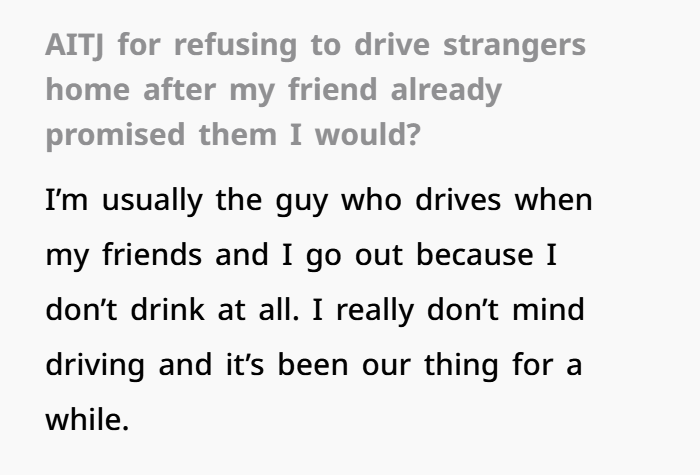
A person often helps their friends by driving because they choose not to drink. Giving friends a safe ride home became a normal part of their social routine. However, one friend started creating problems by offering rides to strangers without checking first.
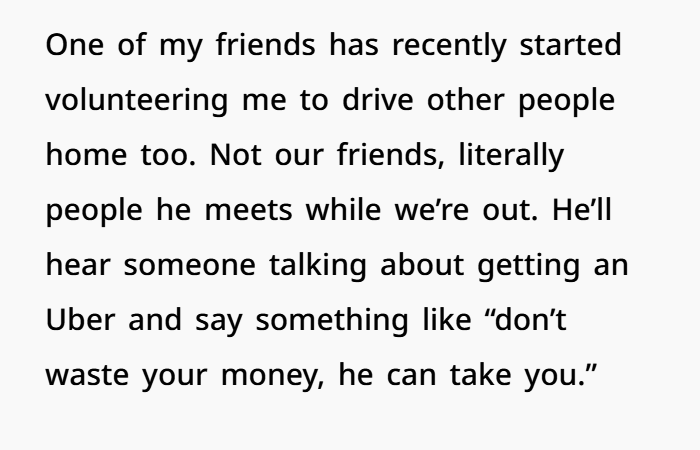
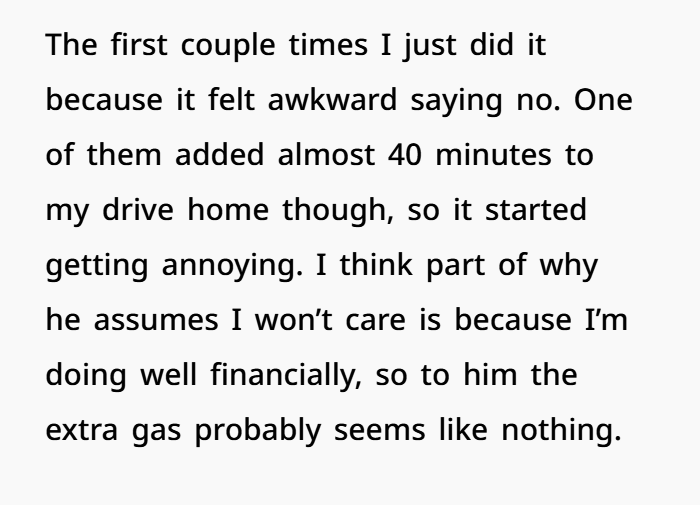
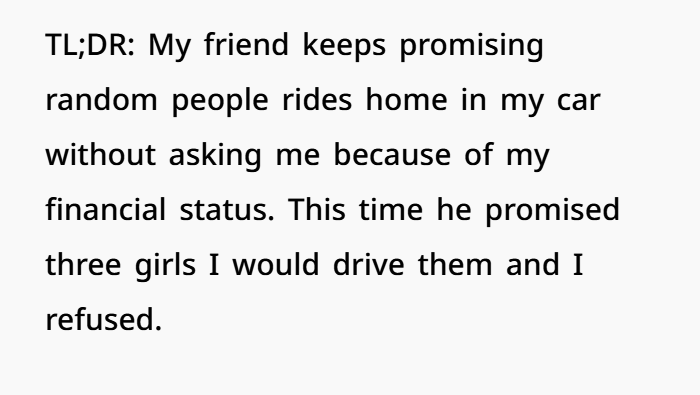
The friend would meet people while going out and tell them that the driver could take them home. The driver did not always feel comfortable saying no, so they helped at first. Over time, these unexpected rides became stressful because they added extra stops and made the journey longer.
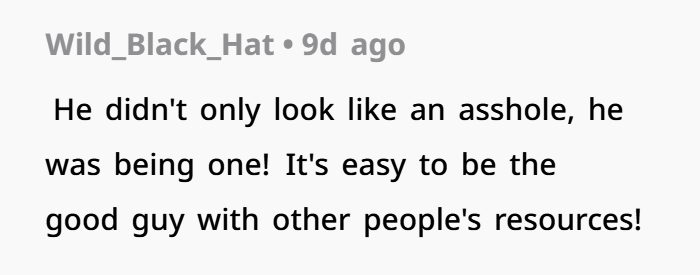
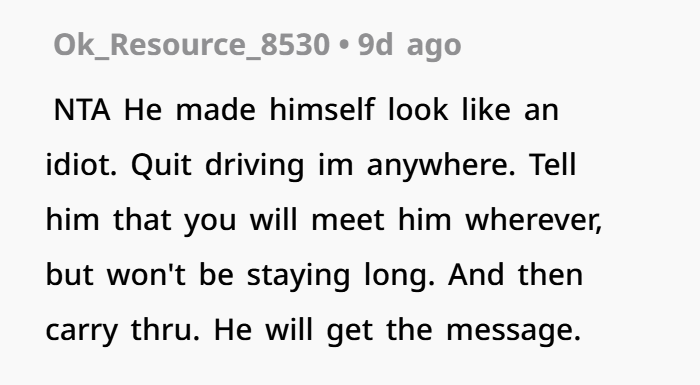
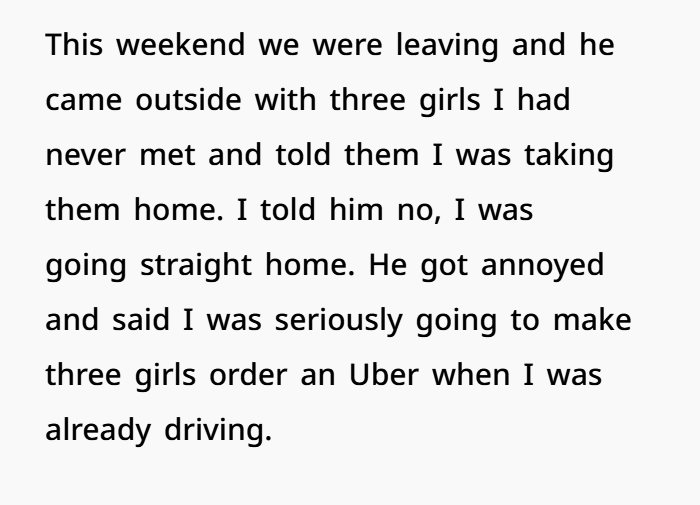
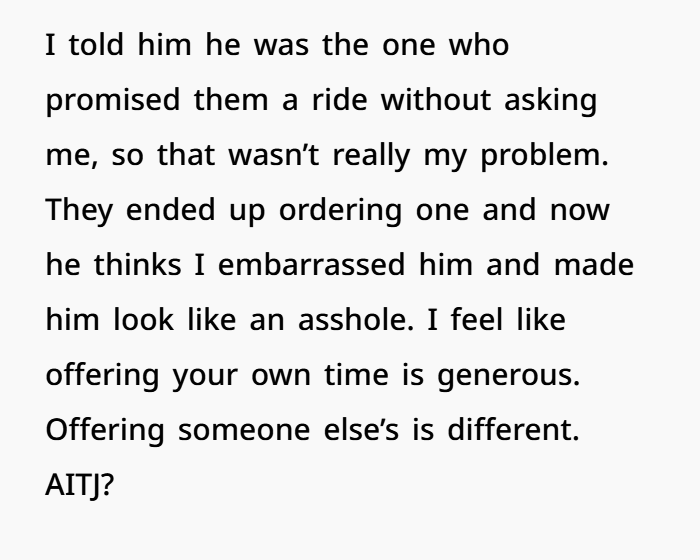
The issue reached a point where the friend introduced three strangers and said they already had transportation. The driver refused because they had not agreed to take anyone else. The friend believed this made him look bad, but the driver felt their decision was reasonable.
The situation showed the importance of clear communication and personal boundaries. Helping others is a choice, but one person should not make promises about another person’s time, vehicle, or availability without asking first.

Personal Boundaries, Consent, and Asking Before Offering Help
Helping others is usually a kind and thoughtful thing to do. Many friendships are built on people supporting each other when they need help.
For example, in a group of friends, one person may often offer rides home after events. Over time, that person may become known as the reliable friend who helps everyone get home safely.
However, there is an important difference between offering your own help and offering someone else’s help without asking.
Why Asking for Permission Matters
The main issue in situations like this is consent and personal boundaries.
A person who regularly gives friends rides may be happy to help people they know. But that does not always mean they are comfortable giving rides to strangers or changing their plans.
They may have limits about:
- Who they drive
- How far they travel
- Extra stops
- Fuel costs
- How late they stay out
- Their personal comfort and safety
Being generous does not mean someone is available for every request.
A Past Favor Does Not Create a Permanent Responsibility
Sometimes people make assumptions because someone has helped before.
For example, a friend may think:
“You are already driving, so giving a few more people a ride should be easy.”
But a favor is not only about money or distance.
Other things matter too, such as:
- Time
- Energy
- Privacy
- Personal plans
- Comfort level
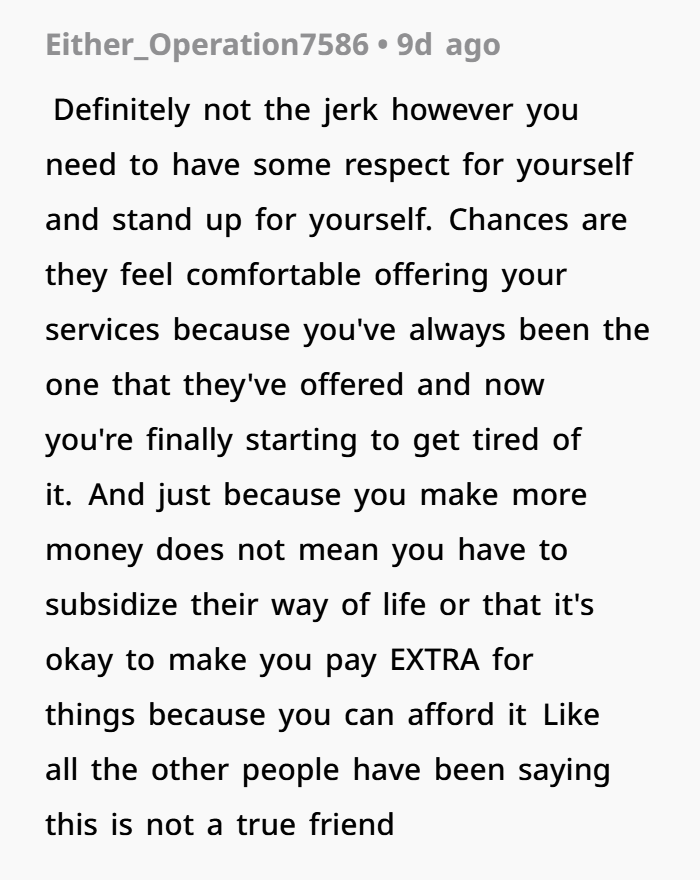
A person’s financial situation does not mean others can automatically use their time or resources.
When Kindness Becomes an Expectation
People who like helping others often say yes many times.
Over time, others may start expecting that help instead of asking for it.
This can create problems.
Someone who gives rides often may still want the choice to decide each time. Helping in the past does not mean they have agreed to help forever.
Healthy relationships require respect for each person’s choices.
Understanding Personal Boundaries
Personal boundaries are limits that help people feel comfortable and respected.
For example, someone may feel comfortable saying:
- “I can drive my friends home.”
- “I do not want to drive people I do not know.”
- “I need to leave after this event.”
These are reasonable boundaries.
Saying no does not make someone rude or unhelpful. It simply means they are being honest about what they are comfortable with.
Safety Is Also Important
Giving rides can involve safety decisions.
Many people have their own rules about driving others, especially at night or after social events.
A driver may think about:
- Who is entering their vehicle
- Whether they feel safe
- How long the trip will take
- Whether they are too tired to continue driving
Even when someone wants to help, they should always have the final choice.
The Right Way to Ask for Help
A simple question can prevent misunderstandings.
Instead of offering someone else’s help, a friend could ask:
“Would you be okay giving these people a ride, or are you ready to go home?”
This gives the driver the chance to say yes or no.
It also shows respect for their time, effort, and personal boundaries.
Respecting Someone’s Time and Effort
Friendships work best when kindness is appreciated, not expected.
A person who helps others is doing a favor. They are not taking on a permanent responsibility.
Good friendships include:
- Clear communication
- Mutual respect
- Understanding
- Support for each other’s choices
Final Thoughts
Helping friends is a positive thing, but everyone has limits.
A favor only works when the person offering it has the freedom to choose.
By respecting consent, personal boundaries, communication skills, and healthy relationships, people can support each other while also respecting individual comfort and choices.
The Comments Are In