My Future MIL Refuses to Attend Our Wedding Unless It’s “Prestigious Enough”


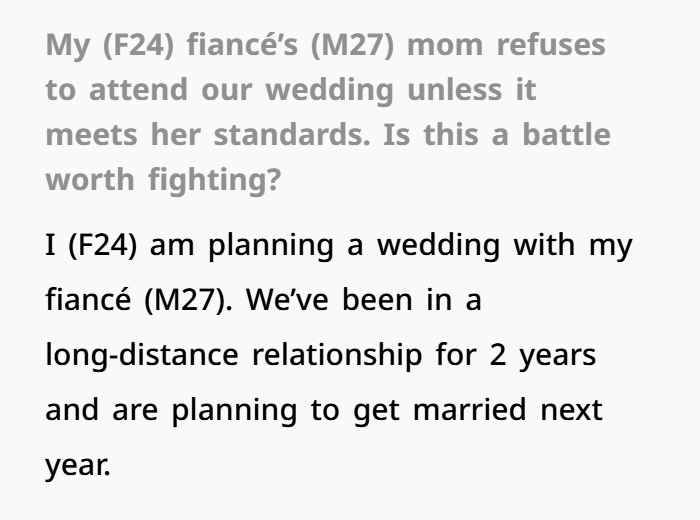
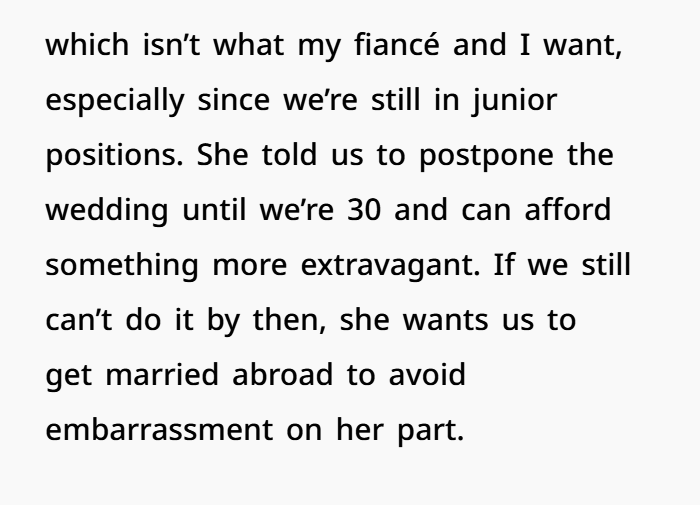
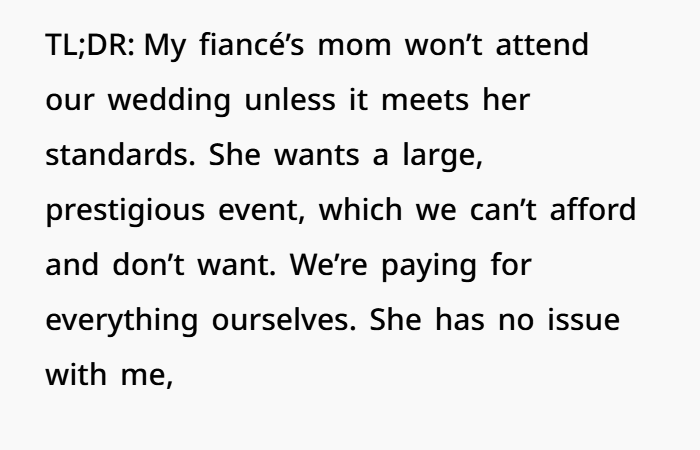
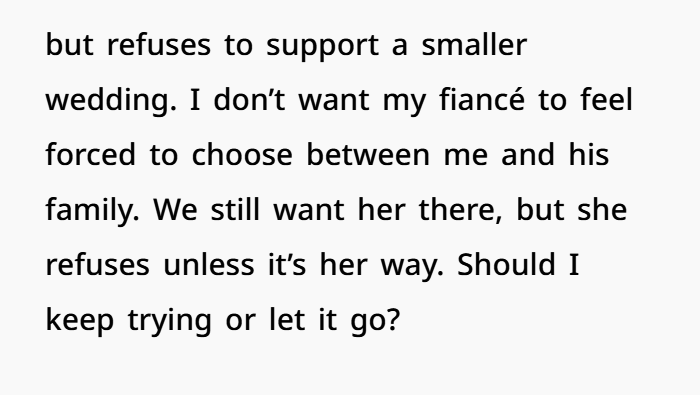
Planning a wedding can be exciting, but family expectations can sometimes make the process stressful. In this story, a couple in a long-distance relationship is trying to plan a wedding that matches their budget, lifestyle, and future plans. However, the groom’s mother wants a much bigger and more expensive wedding because she cares about making the event look impressive to family members and guests.
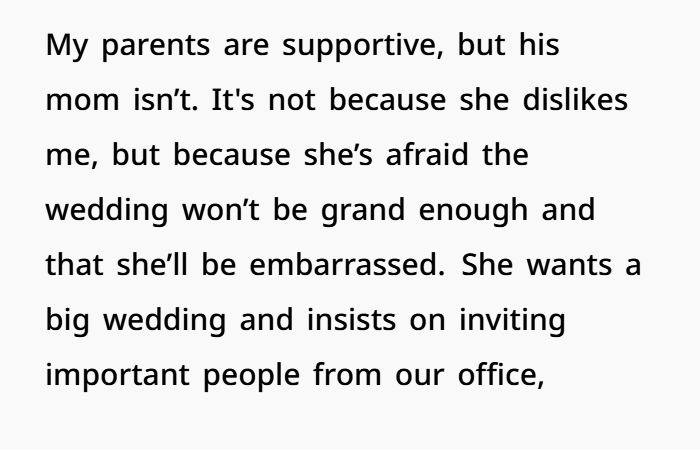
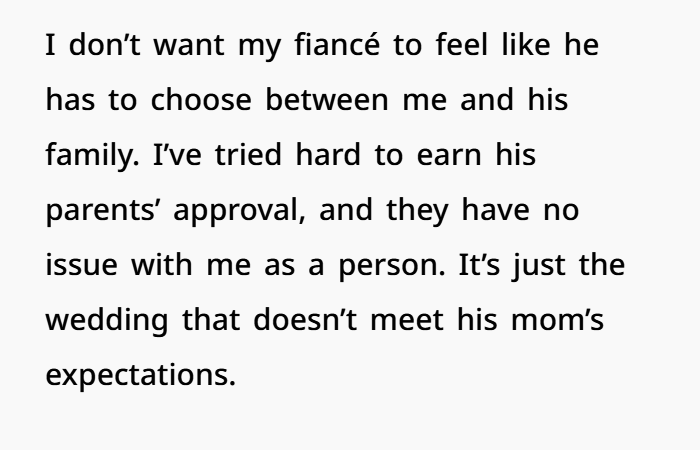
The couple does not believe the mother is against the bride personally. The main issue is that she has strong opinions about the wedding style, size, and social image. She wants a celebration that feels more luxurious and memorable, while the couple wants a wedding that feels comfortable and financially responsible.
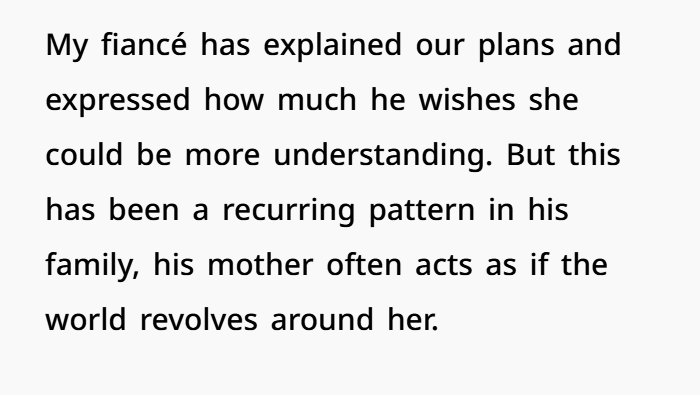
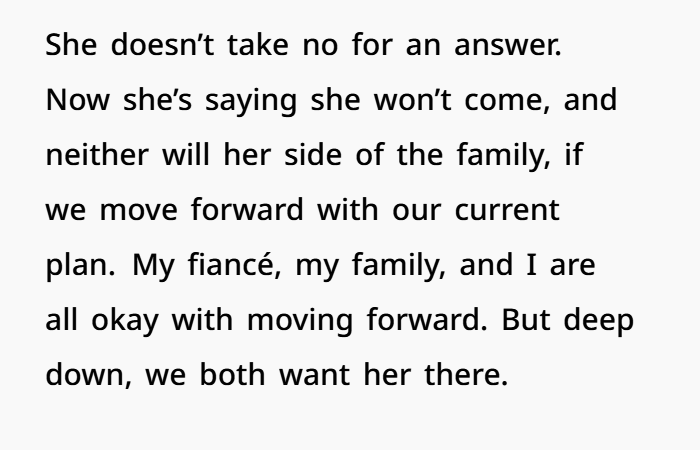
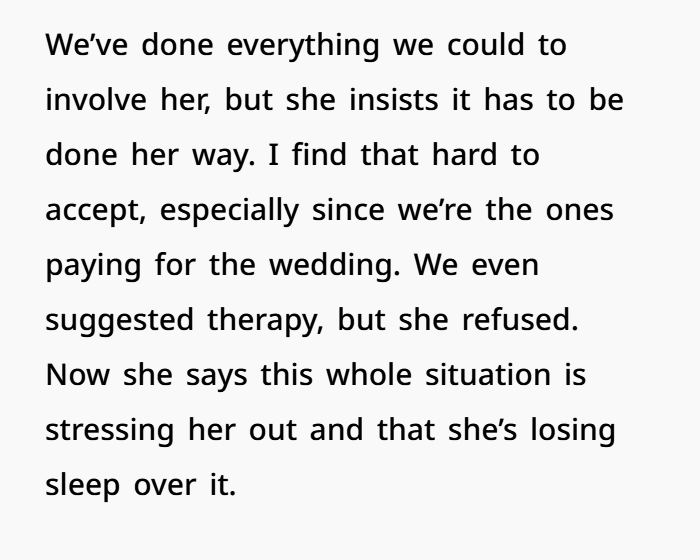
The couple has tried to include her in the planning process and listen to her ideas. They have discussed different options and looked for ways to compromise. However, many conversations continue to return to the same problem: the mother wants the wedding done her way and has even suggested that she may not attend if her expectations are not met.
The bride now feels stressed because she wants the wedding to focus on love, commitment, and starting a new life together. She does not want her fiancé to feel forced to choose between his family and his future spouse. The situation shows why clear communication, healthy boundaries, and realistic wedding planning are important when families are involved in major life events.

When Wedding Expectations Create Family Conflict: A Story About Love, Boundaries, and Communication
A wedding is supposed to be a happy celebration.
But sometimes wedding planning can reveal deeper family problems that have existed for years.
This story became popular because the conflict was not really about the wedding decorations, guest list, or budget.
The bigger issue was about family expectations, control, communication, and the challenge of creating healthy boundaries before marriage.
A Couple Trying to Build Their Own Future
One positive part of this situation is that the couple appeared to be on the same page.
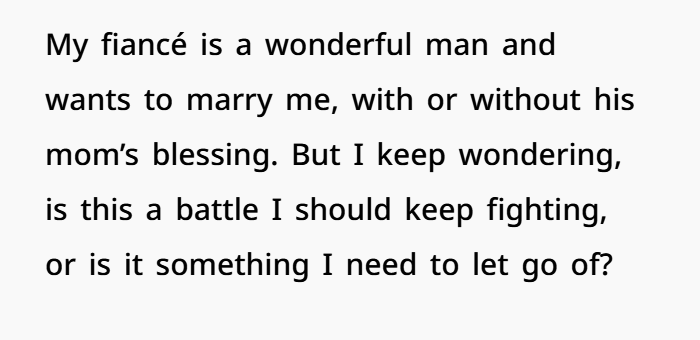
The fiancé supported his future wife and made it clear that he still wanted to marry her, even if his mother disagreed with their wedding choices.
This is important in relationships.
Before marriage, couples often need to learn how to make decisions as a team.
A strong marriage requires:
- Trust
- Respect
- Communication
- Shared goals
- Support during difficult moments
When couples cannot work together, outside family pressure can become much harder to manage.
Why Parents Sometimes Feel Strongly About Weddings
Many parents see weddings as important family events.
They may connect weddings with:
- Family reputation
- Social expectations
- Community image
- Traditions
- Cultural values
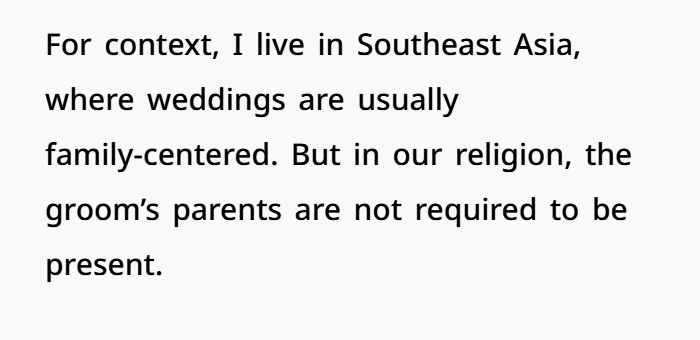
In many cultures, weddings are not only about two people. They can also involve extended family, relatives, and social relationships.
Because of this, some parents may have strong opinions about:
- The wedding venue
- Guest lists
- Decorations
- Budget
- Style of celebration
Wanting a special wedding is understandable.
However, problems can happen when parents’ expectations begin to replace the couple’s own choices.
Financial Independence Changes the Conversation
In this story, the couple was paying for their own wedding.
That detail matters.
When parents contribute money toward a wedding, they may naturally expect to have some input.
However, when the couple manages the wedding expenses themselves, they usually need more freedom to make decisions that fit their budget and priorities.
Financial independence is an important part of adult relationships.
It allows couples to create a wedding and a future based on their own values.
A Wedding Does Not Need to Be Expensive to Be Meaningful
Many people today feel pressure to create a perfect wedding.
Social media often shows:
- Luxury venues
- Designer outfits
- Large guest lists
- Expensive decorations
- Picture-perfect celebrations
But a beautiful wedding is not defined only by money.
A meaningful wedding can also be:
- Small
- Simple
- Personal
- Focused on close relationships
The success of a marriage depends on what happens after the wedding day.
Healthy marriages are built through:
- Emotional support
- Good communication
- Financial planning
- Teamwork
- Respect
An expensive wedding does not guarantee a happy marriage.
When Expectations Become Pressure
The difficult part of this situation was not that the mother had a different opinion.
Families often disagree.
The bigger problem was when disagreement turned into pressure.
When someone says they will only support an important life event if things happen their way, it can create emotional stress.
Support feels much better when it comes from love rather than conditions.
Healthy relationships allow people to have different opinions while still respecting each other.
The Importance of Family Boundaries
Setting boundaries with family members can be difficult.
Many people worry that saying no will create conflict.
However, healthy boundaries help protect relationships.
Examples include:
- Making decisions as a couple
- Respecting personal finances
- Choosing your own lifestyle
- Communicating expectations clearly
Boundaries do not mean someone does not care about family.
They simply create a healthier balance.
Why Counseling Can Help Families Communicate
When family conflicts become serious, counseling or therapy can sometimes help.
A neutral professional can help people:
- Express feelings clearly
- Understand different perspectives
- Improve communication
- Find healthier solutions
However, counseling only works when everyone is willing to participate.
People cannot force someone else to change if they do not want to.
The Challenge of Seeking Approval
One common mistake couples make before marriage is spending too much energy trying to make everyone happy.
They may think:
“If we explain it one more time, they will understand.”
Sometimes people do understand.
They simply have different expectations.
Learning to accept this can help couples make decisions with more confidence.
Protecting the Marriage Before It Begins
Wedding conflicts can reveal important lessons for the future.
Today the disagreement may be about:
- The wedding budget
- The guest list
- The venue
Tomorrow it could involve:
- Home decisions
- Financial choices
- Holidays
- Parenting decisions
Learning to create healthy boundaries early can protect the relationship later.
A Respectful Way Forward
The healthiest approach is often not trying to “win” the argument.
Instead, couples can communicate calmly:
“We love you and want you to be part of our special day. This wedding reflects our budget and the life we are building together. We hope you will celebrate with us.”
After that, each person must make their own choice.
Adults are responsible for their own decisions and emotions.
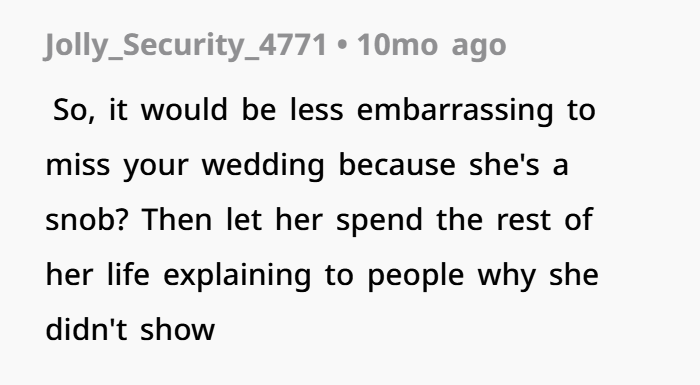
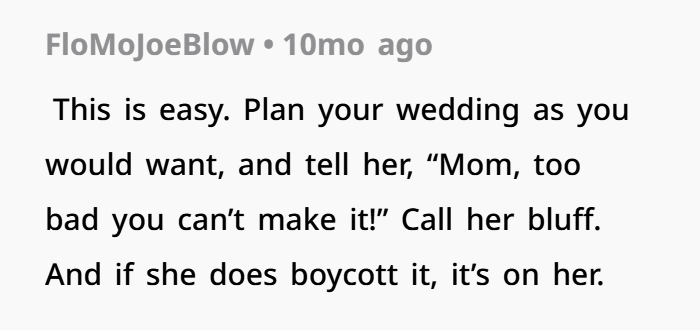
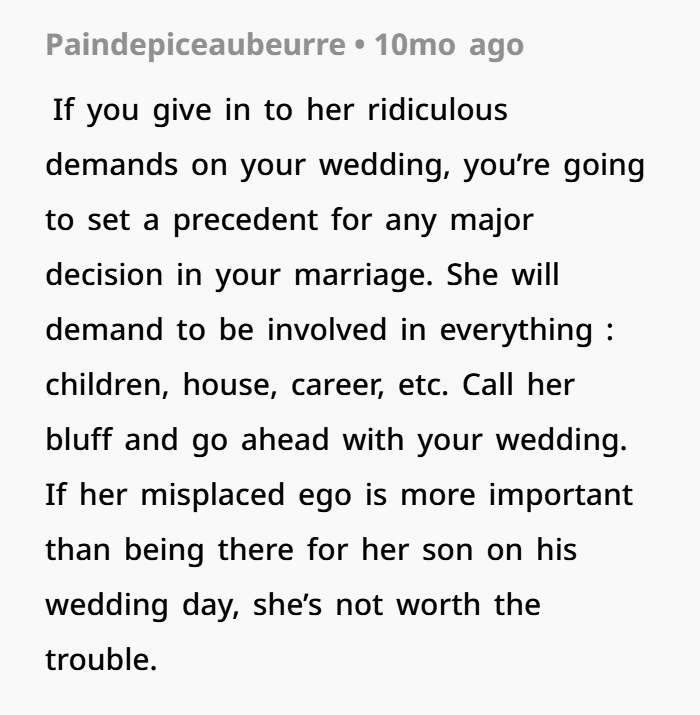
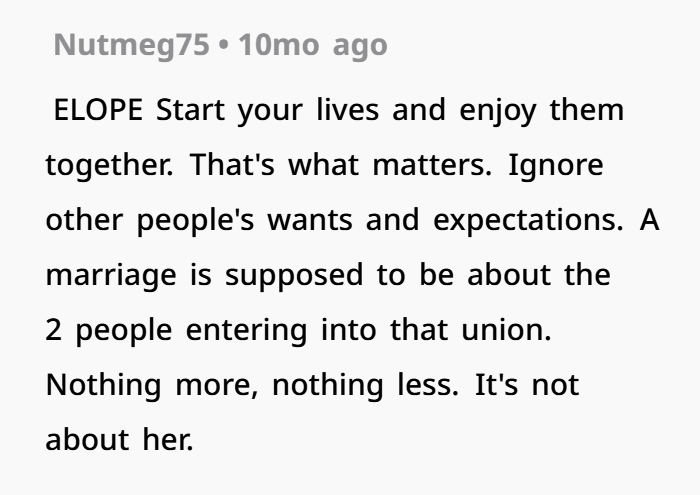
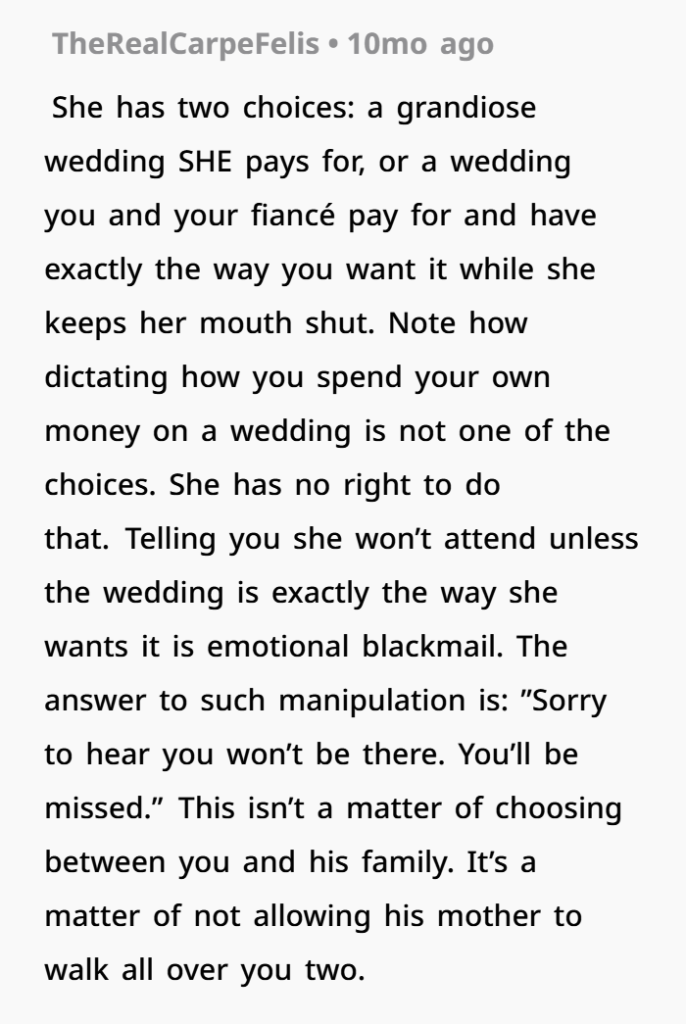
Readers had plenty to say, and the woman responded to some of them in the comments





Final Thoughts
This story was never only about a wedding.
It was about learning how to balance family love with personal choices.
Parents may have hopes and traditions they want to protect.
Couples also need the freedom to build their own future.
A wedding is one day.
A marriage is a lifetime.
The most important thing is not creating a perfect event for others to admire.
It is creating a strong relationship where both partners feel respected, supported, and loved.