
MIL Secretly Opened a Second Credit Card and Spent $10K in Revenge


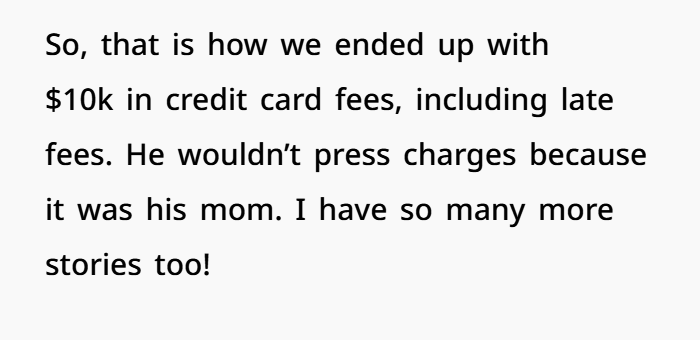
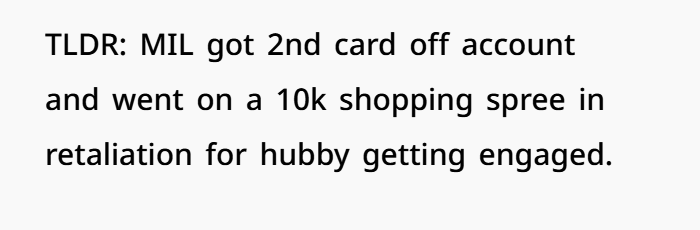
Money issues can create serious problems in families, especially when trust and personal finances are involved. In this story, a woman shared a difficult experience involving her future mother-in-law and unexpected credit card charges before her wedding. She claimed that her fiancé’s mother added herself to his credit card account and later made thousands of dollars in purchases without clear permission.
At the time, the couple was preparing for several important life changes. They were planning their wedding, expecting a baby, and working toward buying their first home. The fiancé had focused on paying off his credit card and building financial stability for their growing family.
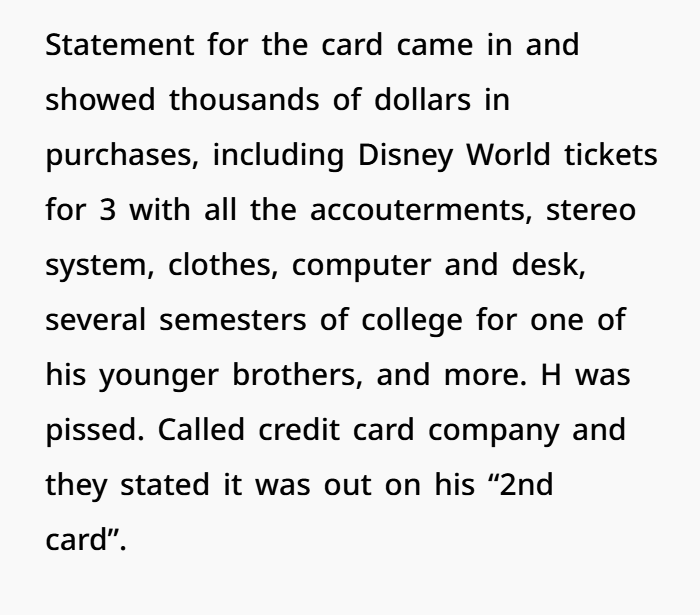
The couple became shocked when they received a credit card bill showing many purchases they did not recognize. According to the woman, the charges included things like vacations, shopping, electronics, and other personal expenses. She said the unexpected debt created major stress during a time when they were already managing many family and financial responsibilities.
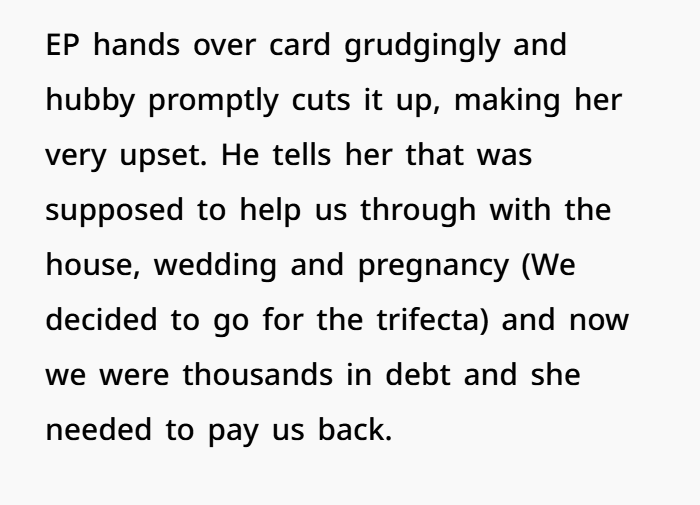
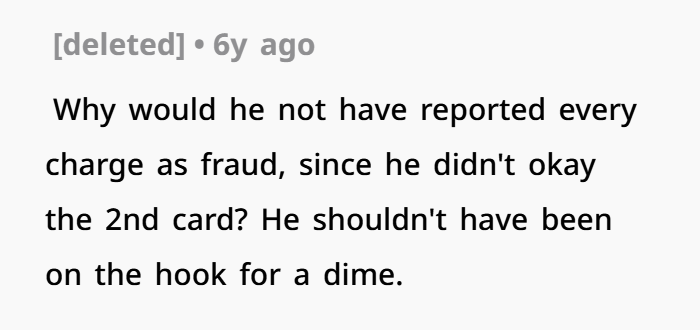
The couple later believed that the credit card information had been used without proper approval. The mother-in-law reportedly explained her actions by saying the card was meant to be a gift for her son. However, the couple felt that financial decisions should always involve honesty and permission.
The situation became a lesson about money management, credit card safety, and setting healthy family boundaries. Clear communication about finances can help prevent misunderstandings and protect relationships from long-term stress.











When Family Money Problems Cross Healthy Boundaries
Some family situations become difficult because money, emotions, and personal relationships become connected.
At first, a story like this may seem like it is only about financial problems. But the deeper issue is often about trust, independence, and the challenges that happen when family members struggle with changing roles.
When adult children build their own lives, parents and children sometimes need to adjust to a new relationship.
When Parents Depend Too Much on Their Children
Many families support each other financially during difficult times.
Helping parents, siblings, or relatives can be a positive thing when it happens through clear communication and mutual agreement.
However, problems can happen when financial support becomes an expectation instead of a choice.
An adult child may begin to feel responsible for:
- Paying family bills
- Solving financial problems
- Supporting relatives
- Managing emergencies
Over time, this can create stress and make it difficult for the person to focus on their own goals, such as marriage, housing, savings, or starting a family.
The Importance of Financial Boundaries
Healthy financial relationships require clear boundaries.
Family members should always respect each other’s money, accounts, and personal information.
Important financial boundaries include:
- Never accessing someone’s account without permission
- Discussing loans and financial help clearly
- Understanding who is responsible for payments
- Keeping personal financial information protected
Trust is a major part of family relationships. When financial boundaries are broken, rebuilding that trust can take a long time.
Protecting Yourself From Financial Abuse
Financial abuse can happen when money is used as a way to control, pressure, or harm someone.
Examples of unhealthy financial behavior may include:
- Taking money without permission
- Controlling another person’s income
- Creating financial pressure through guilt
- Using family relationships to avoid accountability
Everyone deserves financial safety and the ability to make decisions about their own money.
Learning about personal finance, credit monitoring, and identity protection can help people protect themselves.
Why Family Money Conflicts Can Be So Emotional
Money disagreements are rarely only about numbers.
They often involve feelings such as:
- Guilt
- Responsibility
- Anger
- Disappointment
- Fear of losing relationships
This is why financial conflicts inside families can feel much harder than conflicts with strangers.
Someone may understand that a situation is unhealthy but still struggle emotionally because family connections are complicated.
When Adult Children Feel Responsible for Everything
Some adults grow up feeling like they must always fix problems for their family.
They may become the person everyone turns to for:
- Financial help
- Advice
- Emergency support
- Problem-solving
While helping loved ones can be meaningful, adults also need space to build their own future.
A healthy family relationship allows people to support each other without creating unhealthy pressure.
Starting a New Family Can Change Relationships
Marriage, pregnancy, and buying a home are major life changes.
These moments often require people to create new priorities.
A person may need to focus more on:
- Their partner
- Their children
- Household expenses
- Long-term financial goals
This does not mean they no longer care about their parents or relatives.
It simply means relationships are changing.
Healthy families learn how to adapt to these changes with respect.
Why Communication Matters in Family Finances
Many financial problems become worse when people avoid honest conversations.
Families can prevent misunderstandings by discussing:
- Expectations around money
- Repayment plans
- Financial responsibilities
- Personal boundaries
Clear communication helps everyone understand what is fair and realistic.
The Challenge of Forgiving Family Members
When trust is damaged by money problems, forgiveness can be complicated.
Some people choose to rebuild relationships slowly. Others decide they need stronger boundaries.
There is no single solution that works for every family.
What matters is creating relationships based on:
- Respect
- Honesty
- Accountability
- Healthy communication
Building Financial Stability After Difficult Times
Recovering from financial stress takes time.
Helpful steps may include:
- Creating a household budget
- Reviewing credit reports
- Building emergency savings
- Setting financial goals
- Seeking professional financial advice when needed
Couples facing financial challenges often benefit from working together as a team.
See The Comments Below











The Bigger Lesson
Family relationships can be complicated when money is involved.
Helping loved ones is valuable, but support should come from kindness, not pressure or control.
Strong families respect each person’s independence while still offering care and support.
Financial security is not only about having money. It is also about trust, responsibility, and the freedom to make healthy choices for the future.