
Laid Off, Then Blamed When the System Crashed

Losing a job can be a very difficult experience, especially when someone feels their hard work was not appreciated. One senior software developer experienced this after working for almost four years at a logistics and supply chain company. He was responsible for creating, maintaining, and supporting the company’s internal tracking software. He says he worked extra hours, helped solve important technical problems, and repeatedly told management that the system needed better planning, documentation, and long-term support.
According to the developer, the company focused more on quick updates, new features, and reducing costs instead of improving the stability of the software system. During a company restructuring, his position was removed, and he was asked to leave. He felt disappointed because he believed his years of work and technical knowledge were not valued.
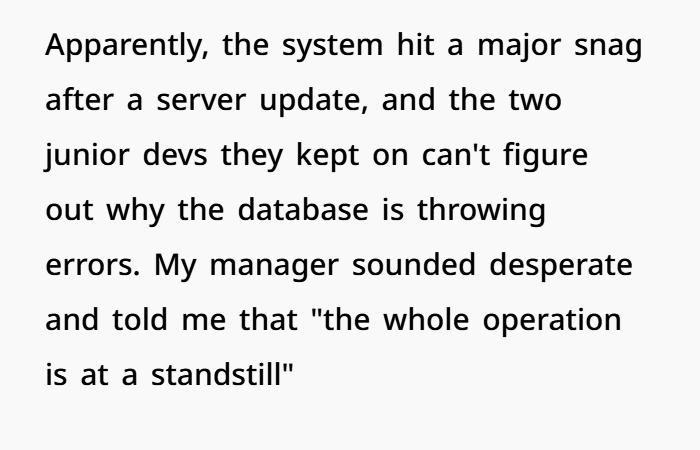
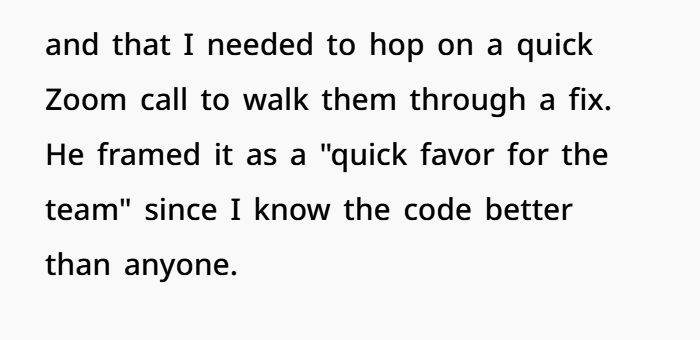
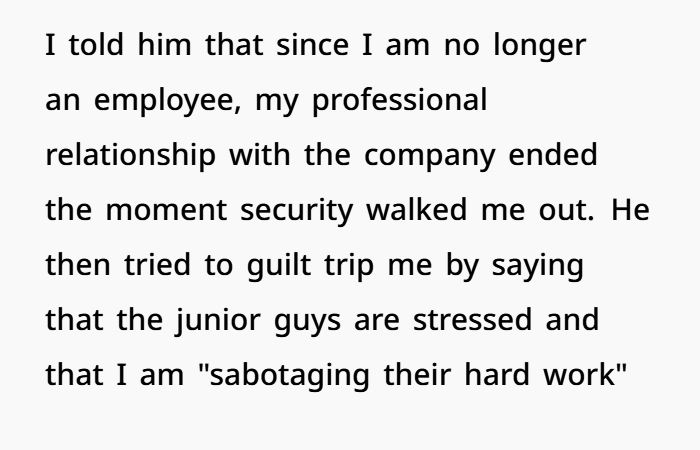
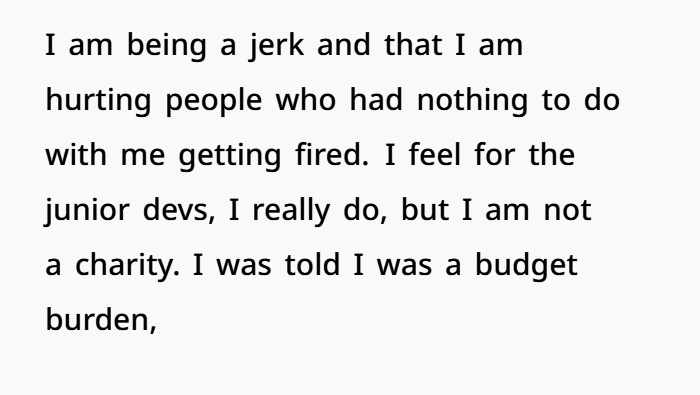
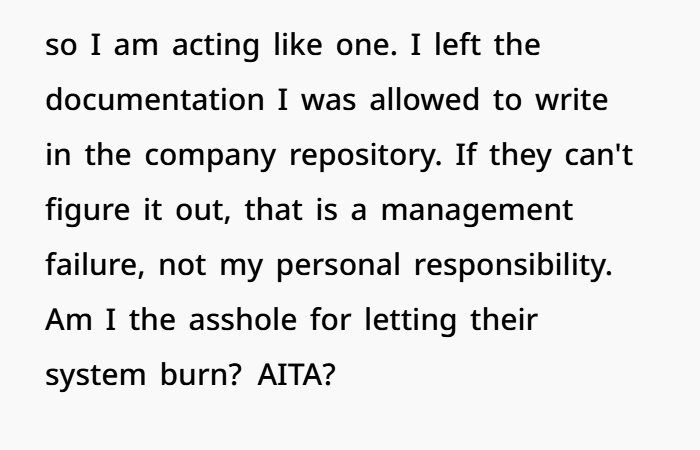
A few weeks later, the company experienced a major software problem during a server update. The team struggled to fix the issue because the former developer was the person who understood the system best. His previous manager contacted him and asked for help with solving the problem. Instead of providing free support, he offered professional IT consulting services with an hourly rate and a minimum number of working hours.
This decision created more disagreement. Some people believed he should have helped his former company, while others felt the company should have planned better and respected his expertise before letting him go. The situation shows why businesses need strong software management, proper documentation, and good communication between employees and leadership. It also highlights the importance of having fair workplace practices and professional boundaries after employment ends.


When Companies Lose Key Employees: The Hidden Cost of Poor Planning
Many people in the technology industry can understand why this story feels frustrating.
A company depends heavily on one experienced software engineer to manage important systems. The employee warns that better documentation and knowledge sharing are needed. The company delays those improvements. Then, after the employee leaves, problems suddenly appear.
At that point, the company may realize how important that person was.
This situation happens in many industries, but it is especially common in software engineering, IT management, and technology companies where one person may have years of experience with a complex system.
The Importance of Software Documentation
Good documentation is one of the most important parts of managing technology systems.
Software systems often become more complicated over time. They may include:
- Old code
- Business rules
- System updates
- Third-party tools
- Special fixes
- Internal processes
A developer who works on a system for years learns many details that are not always written down.
That knowledge is valuable.
When companies do not invest enough time in documentation, they create risks. If a key employee leaves, other team members may struggle to understand how everything works.
This is known as a knowledge-sharing problem.
The Bus Factor Problem in Technology
In software development, companies often talk about the “bus factor.”
The bus factor refers to how many people can leave before a company’s important systems become difficult to maintain.
If only one person understands a critical application, database, or infrastructure setup, the company has a major risk.
This is not only an employee issue.
It is also a leadership and business planning issue.
A strong technology team should have:
- Clear documentation
- Shared knowledge
- Training plans
- Backup ownership
- Proper onboarding processes
These practices help companies avoid depending on only one person.
Why Complex Software Systems Are Hard to Replace
Some people assume that any software engineer can quickly understand any system.
In reality, that is rarely true.
Large software systems are built over many years. Developers make changes based on business needs, customer requirements, security updates, and changing technology.
Even experienced engineers need time to understand:
- How the system works
- Why certain decisions were made
- What problems have already been solved
- Which areas are risky to change
Without proper documentation and training, replacing an experienced developer can become expensive and time-consuming.
When Management Problems Become Employee Blame
One of the most difficult parts of situations like this is when companies blame employees for problems caused by business decisions.
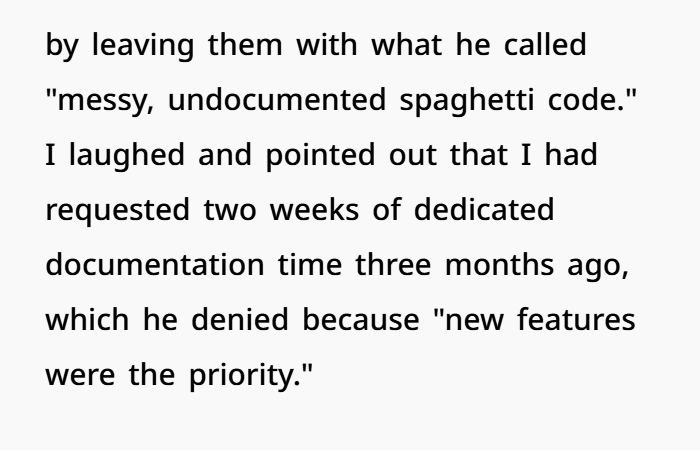
If an employee previously requested time for documentation and training, but those requests were ignored, leadership also shares responsibility.
Companies must balance short-term goals with long-term stability.
Saving time today by skipping documentation may create bigger costs later.
The same applies to reducing experienced staff without a proper transition plan.
Why Companies Need Knowledge Transfer
Knowledge transfer is a major part of successful IT management.
Before an important employee leaves, companies often create transition plans that include:
- System documentation
- Training sessions
- Process guides
- Technical reviews
- Team handoffs
These steps reduce operational risk.
Without them, companies may need emergency help from former employees or outside consultants.
Consulting After Employment Is a Business Decision
When someone leaves a company, their specialized knowledge becomes a professional service.
Many businesses hire consultants for technical support, software maintenance, cybersecurity reviews, cloud management, and system improvements.
If a former employee has unique knowledge of a company’s technology infrastructure, offering paid consulting can be a normal business arrangement.
It is different from refusing to help.
A professional consultant provides expertise, time, and problem-solving skills.
Why Emergency Technology Support Can Be Expensive
Emergency software support often costs more because companies need quick solutions.
A consultant may be called when:
- A critical system stops working
- Business operations are affected
- Customers are impacted
- Internal teams need expert guidance
The cost reflects experience, specialized knowledge, and urgency.
Companies often pay more for emergency support because preventing downtime is important for business operations.
The Pressure on Junior Developers
Another challenge in these situations is the pressure placed on junior software engineers.
After losing experienced employees, junior team members may suddenly be responsible for systems they have never fully managed before.
They may feel:
- Overwhelmed
- Unprepared
- Worried about mistakes
- Responsible for problems they did not create
Junior employees usually want to help, but they also need proper support, training, and realistic expectations.
A company’s staffing decisions are the responsibility of leadership.
Employee Loyalty and Workplace Culture
Many technology professionals spend years helping companies succeed.
They work extra hours, solve difficult problems, and build systems they are proud of.
Because of this, employees often develop a strong connection with their work.
However, companies and employees also have a professional relationship.
When a company decides that a position is no longer needed, it changes that relationship.
It is reasonable for former employees to set boundaries after leaving.
The Difference Between Refusing Help and Sabotage
Not providing free work after leaving a company is not the same as causing harm.
Sabotage would involve actions like intentionally damaging systems, deleting important information, or creating security problems.
A former employee choosing not to provide unpaid support is a business decision.
Companies can choose to hire consultants when they need specialized help.
The Real Lesson for Businesses
The biggest lesson from situations like this is that technology knowledge has real value.
Experienced software engineers do more than write code.
They understand:
- Company systems
- Technical decisions
- Business requirements
- Security concerns
- Long-term maintenance needs
Businesses that invest in documentation, employee development, and strong IT management create more stable systems.
The cost of losing experienced employees is not only the salary they were paid.
It can also include lost productivity, operational problems, and expensive emergency solutions.
Strong companies understand that technology success depends on both people and processes.