I Exposed My Sister at My Wedding After She Slept With My Fiancé… Now My Family Says I Went Too Far
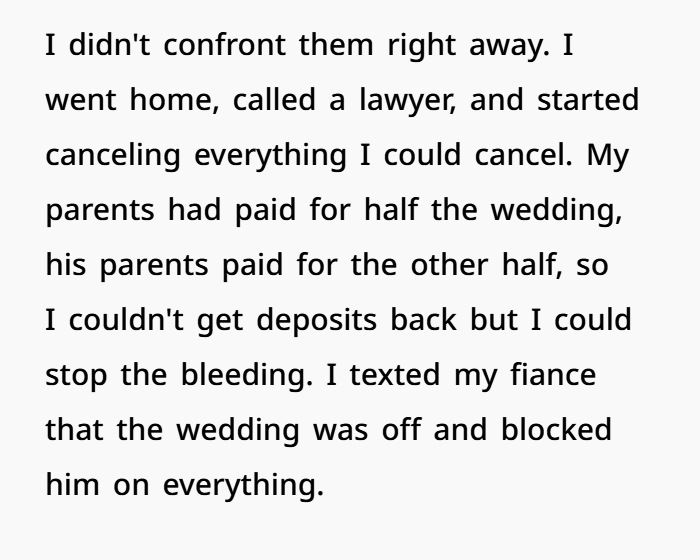
This story is crazy from beginning to end. It starts with a moment that doesn’t even feel real — she’s grocery shopping, gets a random phone call, and suddenly everything changes. Instead of a normal conversation, she hears her fiancé and her own sister together… clearly cheating. That level of betrayal isn’t just painful, it completely breaks trust in seconds. But what’s surprising is how she handles it. No yelling, no public drama. She cancels the wedding, cuts them off, and walks away quietly. A clean break, at least from the outside.
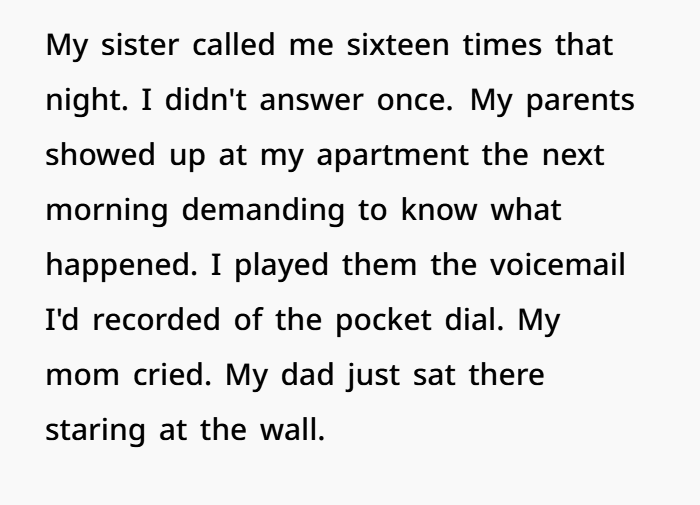
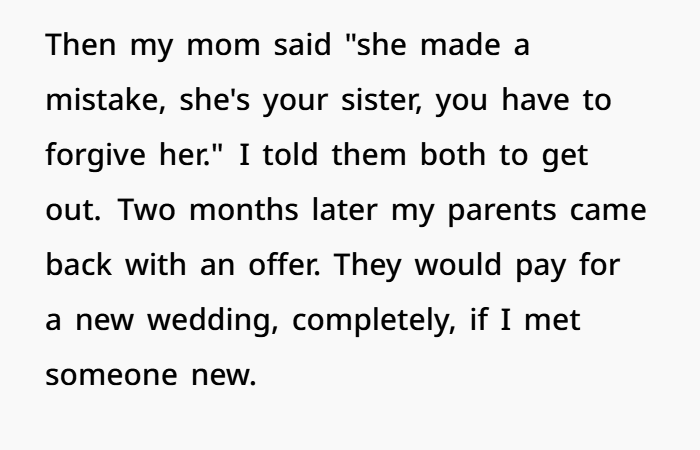
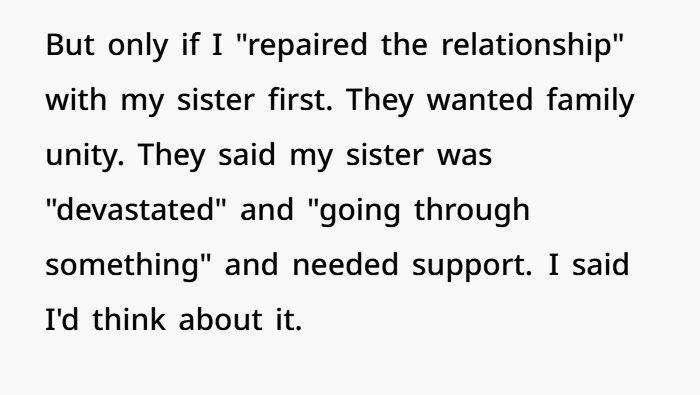
But then comes the bigger twist — her parents’ reaction. Instead of backing her fully, they pressure her to forgive. They even bring money into it, offering financial support for a future wedding only if she reconnects with her sister. That’s where things shift into emotional manipulation and family pressure. Months later, she moves on, finds someone better, and plans another wedding. But instead of keeping everything hidden, she chooses to reveal the truth. At her reception, in front of everyone, she exposes the cheating, the betrayal, and the pressure she faced. The result? Total chaos. Some guests leave, others stand by her. And now she’s stuck thinking — was this the right move, or did she take it too far?

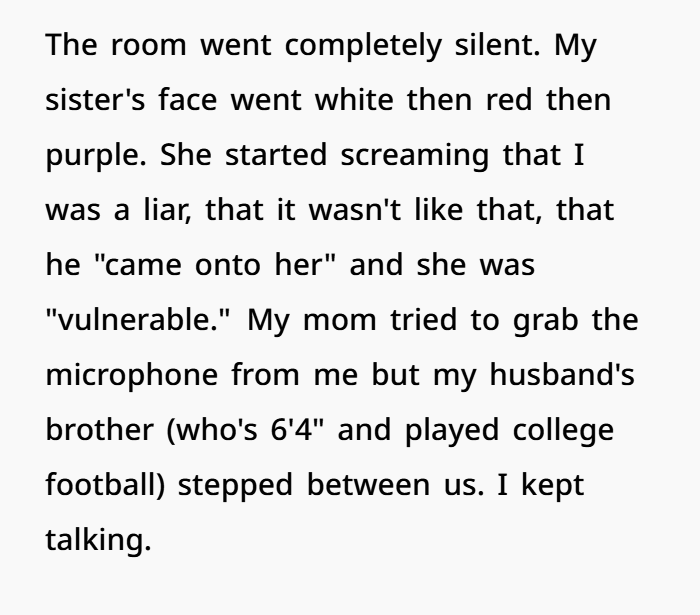
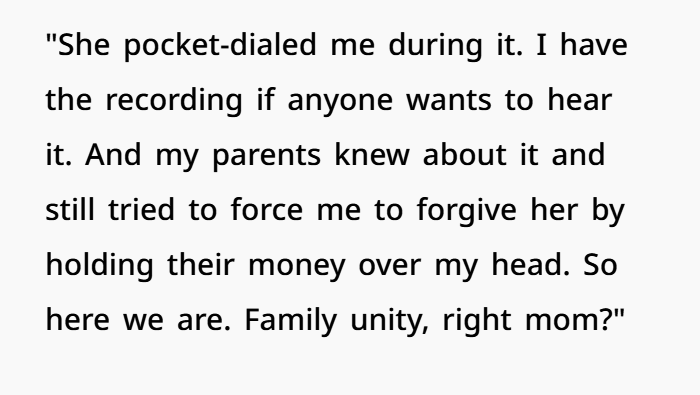
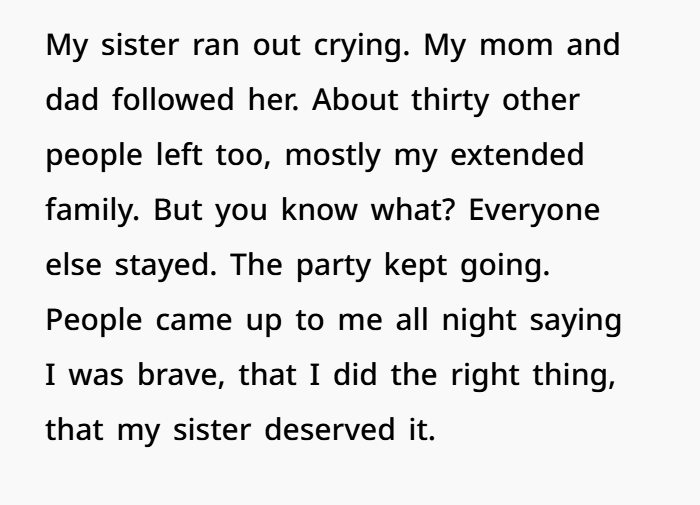
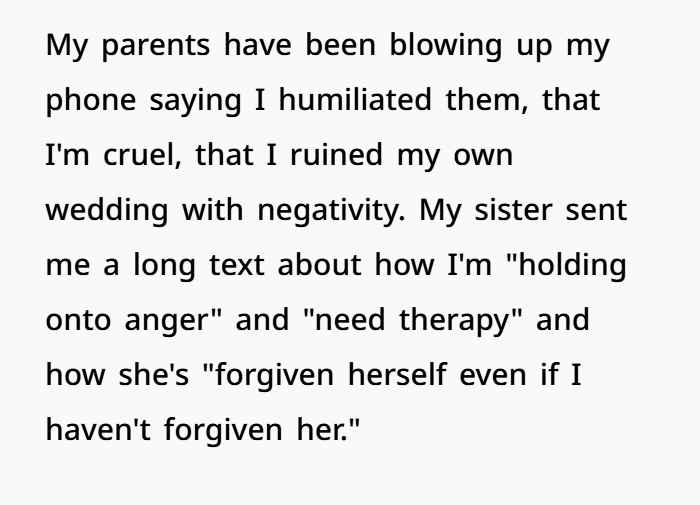
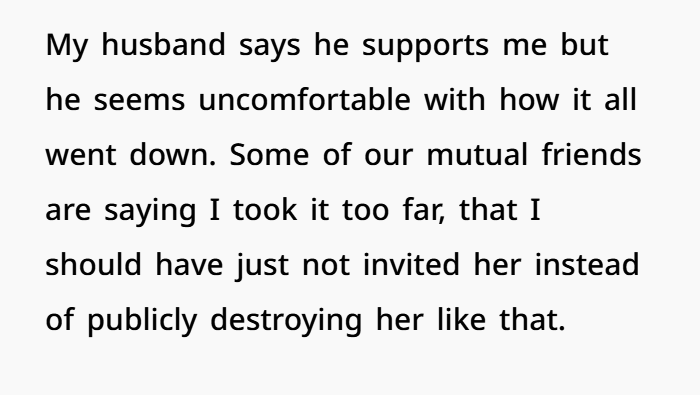
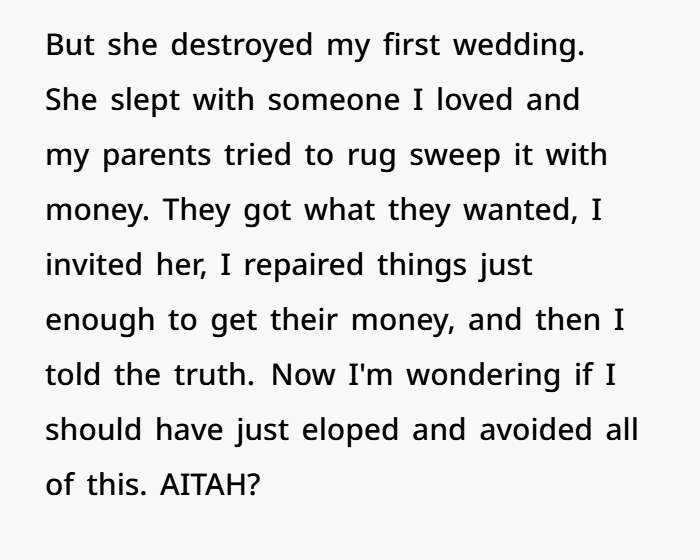
Alright, this situation needs a proper breakdown because there’s a lot happening here. On the surface, it looks like revenge — a public call-out, perfect timing, and emotional release. But underneath, there’s deeper layers: betrayal, suppressed emotions, family manipulation, and unresolved conflict. This isn’t just drama, it’s a mix of emotional trauma and delayed reaction.
Let’s start with the first betrayal — the cheating.
Cheating on its own is already emotionally damaging. But when your own sister is involved, it becomes something much heavier. This is what psychologists call dual betrayal trauma — trust being broken by two close people at the same time. It affects not just your relationship, but your entire sense of trust and emotional safety.
And how she found out made it even worse. There was no honesty, no apology, no explanation. Just a random moment that exposed everything. That kind of discovery stays in your head. It replays, over and over. That’s why moving on from situations like this is never easy, even if someone tries to act strong.
Now comes her reaction.
Instead of confronting them or reacting emotionally, she stayed quiet. Canceled everything and cut them off. From the outside, it looks like control and strength. But internally, it means the emotions were never processed. The anger didn’t leave — it was just pushed down. And buried emotions don’t disappear, they grow over time.
Now bring in the parents, because their role is important here.
Instead of focusing on her feelings, they focused on family image and unity. They treated the situation like a small mistake instead of a serious betrayal. And then they added financial pressure by offering to pay for a future wedding only if she reconnected with her sister.
That’s not support. That’s emotional pressure combined with financial leverage.
And this is what leads to the final situation at the wedding.
Because instead of real healing, she’s put in a position where forgiveness becomes a condition. Not something she truly feels, but something expected from her in exchange for support and peace.
That kind of situation builds resentment. Not loud, not obvious… but quiet and controlled. The kind that sits in the background and grows over time.
Now fast forward to her next relationship. She meets someone better — stable, supportive, emotionally secure. That part matters because it shows she didn’t stay stuck. She moved forward, built a new life, and stepped into a healthier relationship dynamic.
But at the same time… she never really processed what happened before.
So when the wedding day comes, and her sister is there acting normal — smiling, hugging, blending in like nothing ever happened — that becomes a trigger point.
Because from her side, there was no real accountability. No consequences. Just silence, avoidance, and forced forgiveness pushed by family pressure.
And that’s what leads to the speech.
Let’s be honest — this wasn’t accidental. It was planned. She chose the moment, the audience, and the emotional impact. This wasn’t just sharing the truth. This was public exposure as a form of emotional closure.
And this is where things get complicated.
On one side, her feelings are valid. Betrayal trauma like that doesn’t just disappear. And her family trying to ignore it only added more emotional stress. In that sense, speaking out looks like reclaiming control and finally being heard.
But on the other side… timing matters.
A wedding is supposed to be about a new beginning, a fresh relationship, a positive environment. Bringing past trauma into that space shifted the focus. Not just for her, but also for her partner and the overall atmosphere.
And that’s probably why her husband felt uncomfortable. Not because he disagreed with her, but because the moment turned into something heavier than it was supposed to be.
There’s also the public exposure factor.
Calling someone out privately is very different from doing it in front of a crowd. Public confrontation adds humiliation. It turns accountability into a public scene. Some people see that as justified, others see it as crossing emotional and social boundaries.
That’s why reactions were divided.
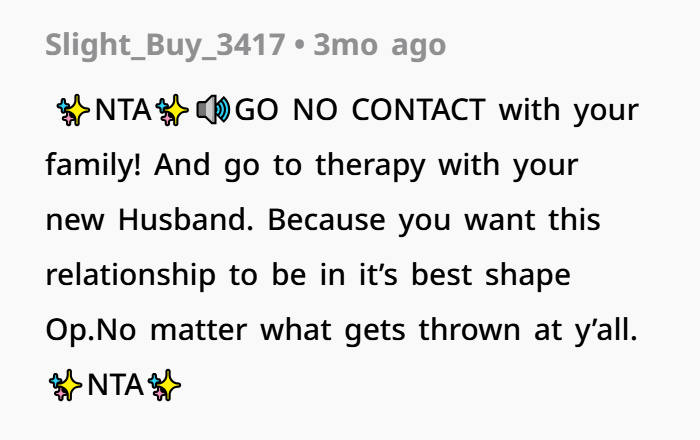
Some guests supported her — they saw honesty, truth, and emotional release.
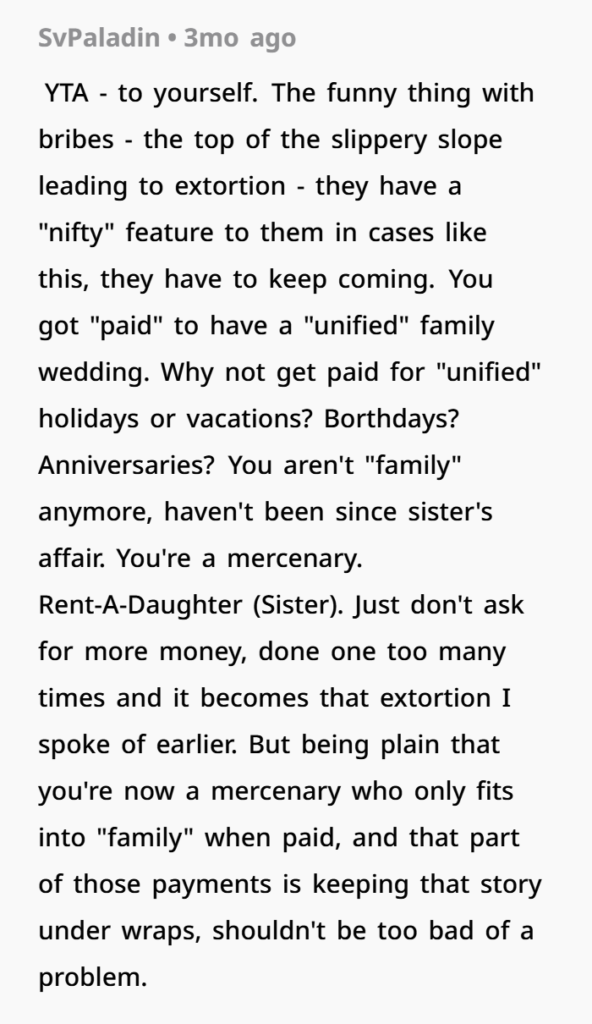
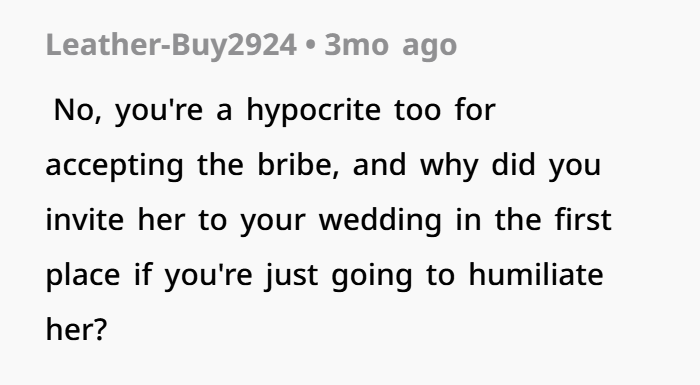
Others felt it was too much — because it turned a personal issue into a public conflict.
And honestly, both reactions can be valid at the same time.
Now looking at the sister’s response.
Denying, deflecting, and saying she was “vulnerable” is pretty common in these situations. It’s a way to reduce responsibility. Saying she’s “forgiven herself” without actually fixing the damage shows a lack of real accountability and emotional responsibility.
And yeah, that likely made everything worse over time.
Because when someone who hurt you acts like nothing happened and just moves on, it creates frustration. That kind of bottled-up emotion turns into resentment and emotional tension.
If you look at the bigger picture, this situation highlights something important: unresolved issues don’t go away, they just show up differently.
She never addressed it directly. Her parents didn’t manage it properly. Her sister didn’t take real responsibility. So the issue stayed there, just under the surface.
And it kept building.
Until it finally came out all at once.
And unfortunately, it happened at the worst timing — right at her wedding.
At the end, this isn’t a simple good or bad situation.
Her feelings were completely valid. Anyone in that situation would feel hurt, angry, and betrayed. That kind of emotional trauma is serious.
But the way she chose to express it? That’s where things get tricky.
Because yes, she told the truth.
But she also used that moment as a form of revenge and public exposure.
And both things can be true at the same time.
So the real question isn’t just about who’s right or wrong.
It’s about whether that moment actually helped her.
Did it give her closure and peace of mind, or did it create more emotional damage and complicated relationships going forward?
That’s something she’ll probably take time to fully understand.
See The Comments Below