He Cheated — And Now I’m Told I Don’t Get the Moral High Ground

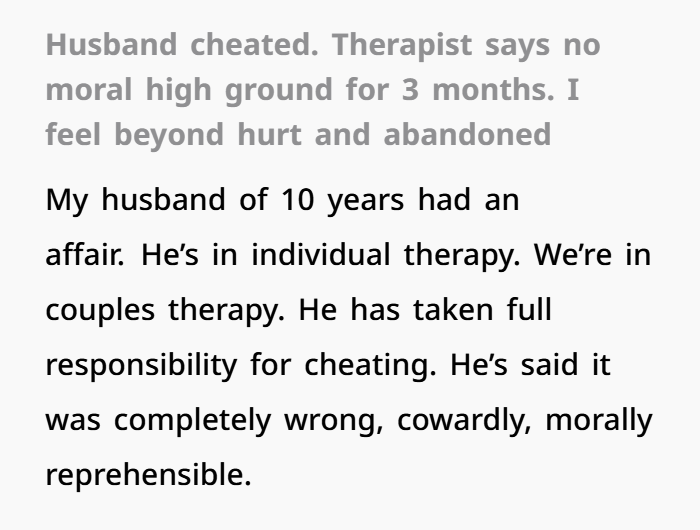
A woman is struggling after finding out that her husband was unfaithful during their 10-year marriage. She feels deeply hurt and overwhelmed by the situation. Her husband admits that he made a mistake and takes responsibility for his actions. He also talks about his mental health struggles and how he handled his emotions in an unhealthy way.
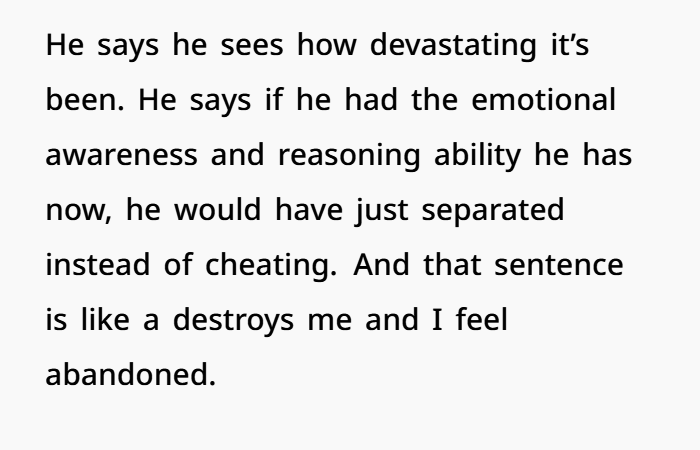
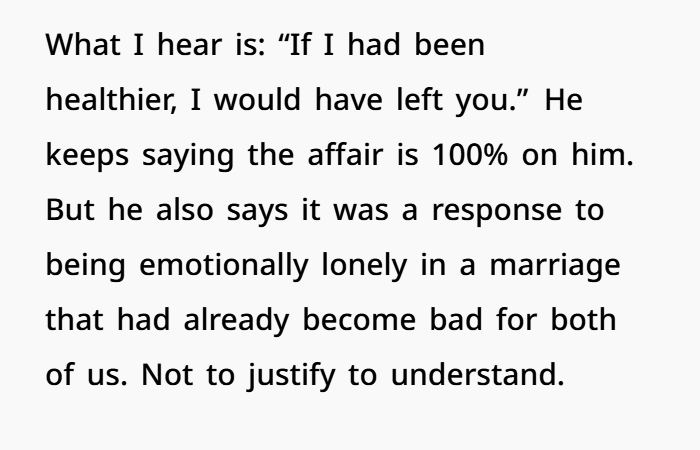
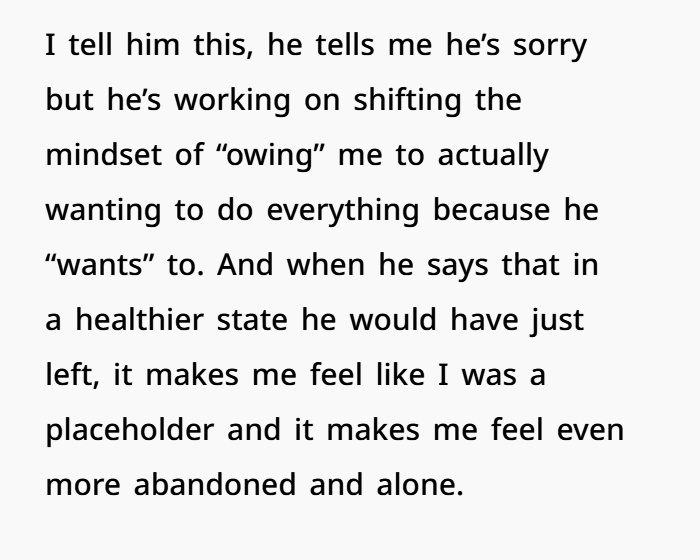
However, one thing he says hurts her even more. He explains that if he had been in a better emotional state, he may have chosen to leave the relationship instead of cheating. To him, it may be a reflection of his past choices, but to her, it feels like rejection and makes her question their entire marriage.
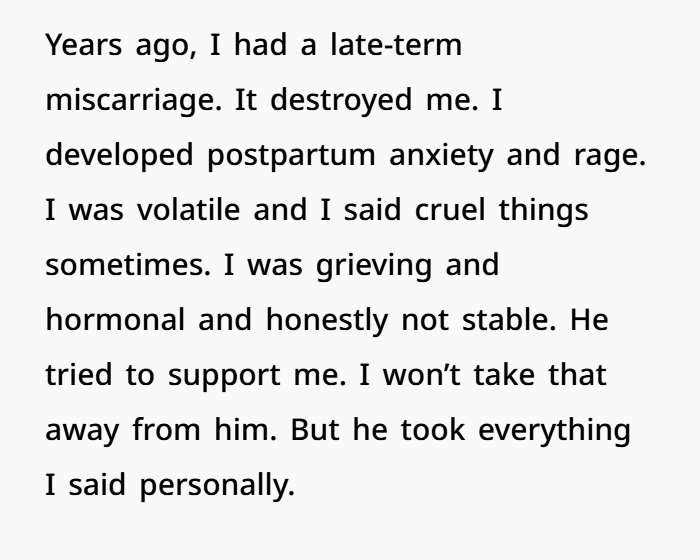
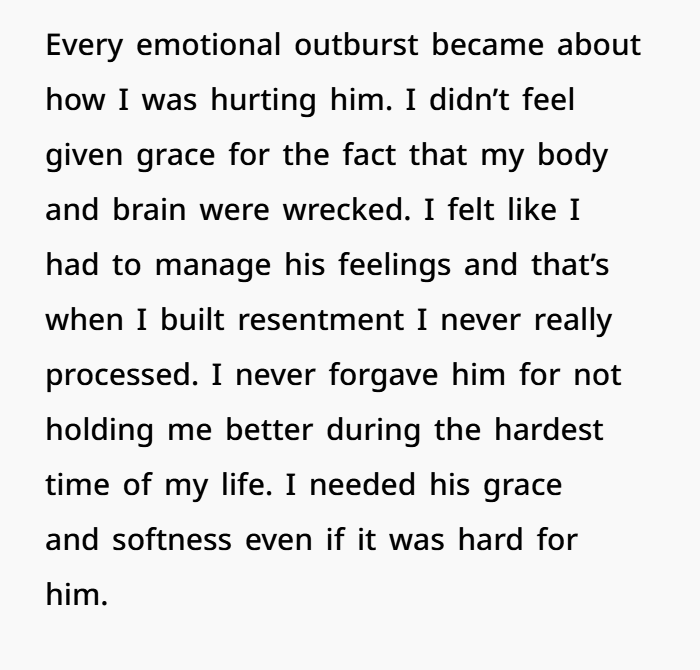
Their relationship had already faced difficult challenges before the affair happened. She experienced a late-term miscarriage, followed by postpartum anxiety, depression, and emotional struggles. During that time, she felt like she needed more support and understanding but often felt alone. Over time, those feelings created sadness and resentment.
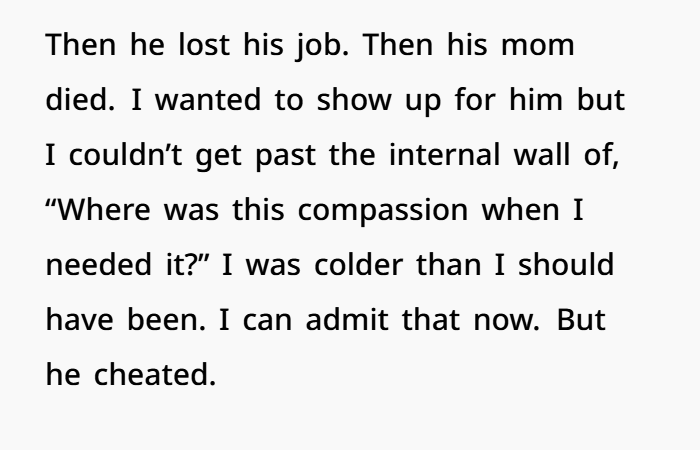
Later, her husband also went through major life challenges, including losing his job, grieving the loss of his mother, and dealing with financial stress. She feels that she was not able to support him in the way he needed during that period. Both of them experienced pain, but they handled their struggles differently.
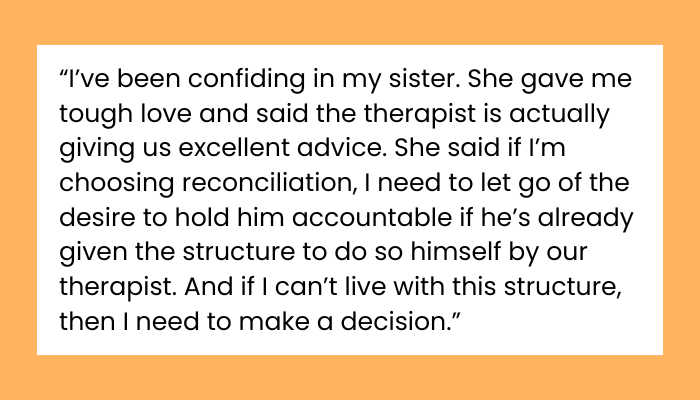
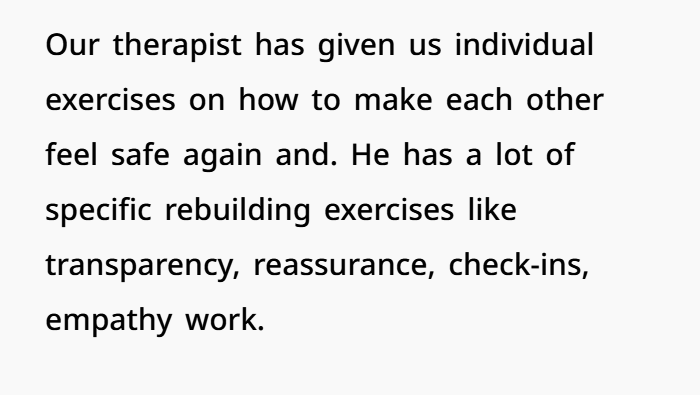
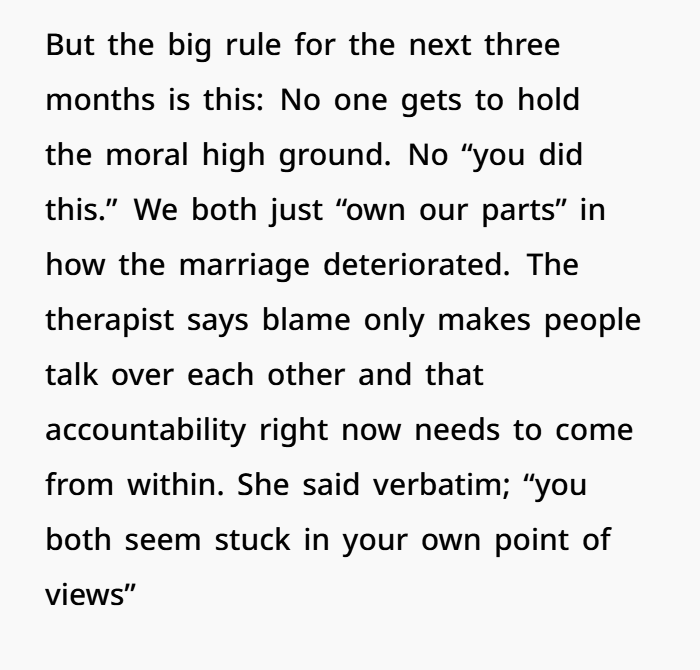
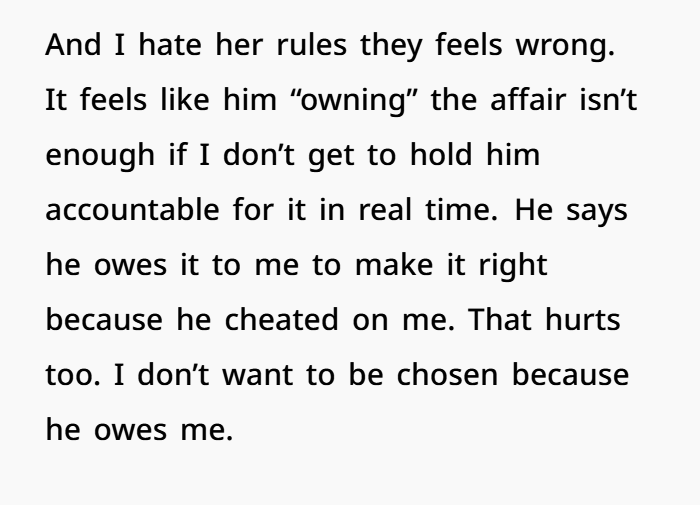
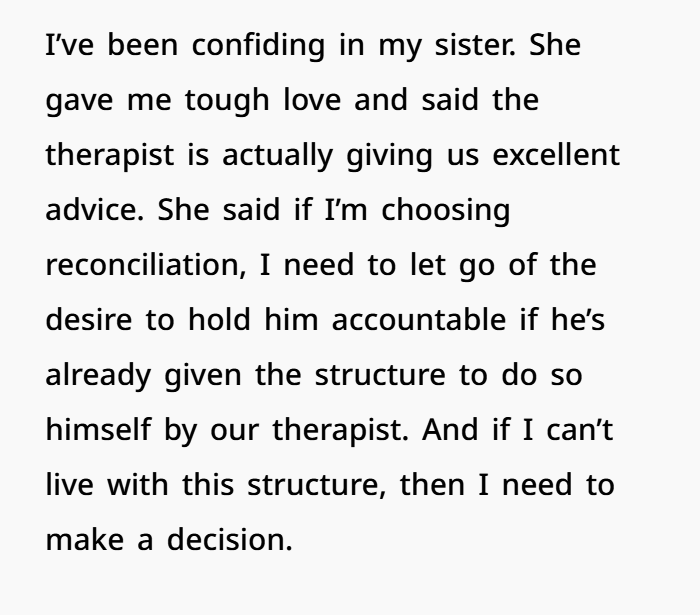
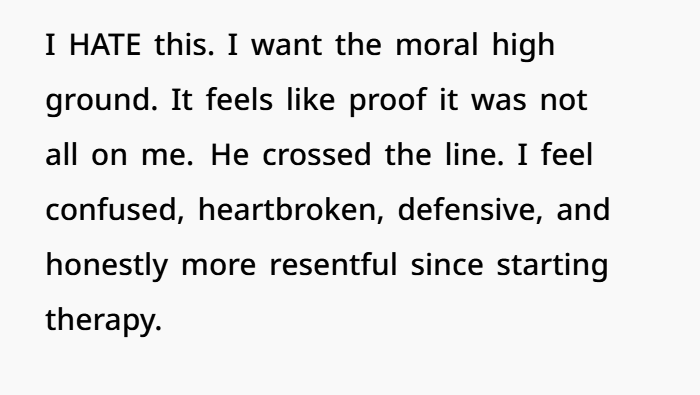
Now they are attending couples therapy and trying to repair their relationship through honesty and better communication. However, she is struggling with the idea that both partners’ pain is being compared equally. For her, the betrayal caused by cheating feels like a different kind of emotional wound that is difficult to heal.
Recovering from infidelity can take time and often requires trust-building, open communication, and professional relationship support. Each person may experience pain differently, and healing usually requires understanding, patience, and accountability from both partners.
Healing After Infidelity: Understanding Betrayal, Therapy, and Rebuilding Trust
Going through betrayal in a marriage can be one of the hardest emotional experiences a person faces.
It is not only about cheating.
It can involve broken trust, emotional pain, feelings of rejection, and questions about the future of the relationship.
Many people turn to marriage counseling, couples therapy, or emotional healing resources after infidelity because they are trying to understand what happened and how to move forward.
Why Cheating Can Feel So Painful
When someone discovers that their partner has been unfaithful, the pain can feel overwhelming.
Many people experience:
- Anger
- Sadness
- Confusion
- Anxiety
- Loss of confidence
- Difficulty trusting again
This reaction is understandable.
Betrayal affects more than the relationship itself. It can affect how a person sees their partner, their past memories, and even their own judgment.
Some mental health professionals describe this as betrayal trauma because the hurt comes from someone who was expected to provide love and safety.
The pain is not just about what happened.
It is also about losing the feeling of security that existed before.
Accountability and Validation Are Different
One important thing to understand is that accountability and emotional validation are not the same.
A partner who admits their mistake and takes responsibility is doing something important.
In relationship counseling, taking ownership without blaming the other person is often considered an important step toward rebuilding trust.
However, the hurt partner also needs emotional validation.
They need to feel that their pain is understood.
Wanting your suffering to be recognized does not mean you want control or revenge.
It means you want your experience to be acknowledged.
Why Therapy Can Sometimes Feel Difficult
Couples therapy often focuses on helping both people understand their relationship patterns.
Many approaches encourage couples to look at communication problems, emotional needs, and behaviors that may have damaged the relationship.
This can be helpful.
However, after infidelity, some people feel uncomfortable when therapy quickly focuses on both partners’ mistakes.
The reason is simple:
The relationship problems may have involved both people.
But the decision to cheat was still a personal choice made by one person.
These two things can exist together.
A marriage can have problems, and cheating can still be the wrong way to handle those problems.
The Importance of Recognizing Hurt
After betrayal, many people struggle with thoughts like:
“Was I not enough?”
“Would they have stayed if I had been different?”
These questions can be extremely painful.
Sometimes a partner says something like:
“If I had been healthier, I might have left.”
They may mean:
“I did not have the skills to handle relationship problems in a healthy way.”
But the other person may hear:
“You were not worth staying for.”
That difference matters.
Words can affect people differently depending on their emotional history.
When Past Pain Makes Current Pain Stronger
Previous difficult experiences can make betrayal feel even more painful.
For example, major life challenges, health struggles, pregnancy loss, or periods of emotional stress can leave lasting feelings.
During difficult times, many people need extra support and understanding from their partner.
If someone feels alone during those moments, that pain may remain unresolved.
Later, another painful event can bring those old feelings back.
The current hurt may feel connected to years of previous disappointment.
The Challenge of Rebuilding After Betrayal
Advice from family and friends can sometimes be helpful, but timing matters.
Some people may say:
“If you want to save the marriage, you need to forgive and move forward.”
That may eventually be true.
However, healing usually happens in stages.
Many people need to go through steps such as:
1. Creating Safety
The first step is feeling emotionally safe again.
This may include honesty, transparency, and patience.
2. Understanding What Happened
The next step is processing the pain and understanding how the betrayal affected the relationship.
3. Rebuilding Connection
Only after trust begins to return can couples focus on creating a stronger relationship.
Healing cannot always be rushed.
A person cannot skip over pain and immediately feel ready to reconnect.
“I Owe You” vs. “I Want To”
The words people use during recovery matter.
When someone says:
“I owe you this.”
It can sometimes make repair feel like an obligation.
When someone says:
“I want to do this.”
It can feel more meaningful because it shows personal commitment.
After betrayal, people often need reassurance that their partner is choosing the relationship, not simply staying because they feel guilty.
The Role of Anger in Healing
Anger after betrayal is normal.
It can help a person recognize that something important was taken from them.
Anger can protect boundaries and remind someone that their feelings matter.
However, staying only in anger for a long time can make healing harder.
The goal is not to pretend nothing happened.
The goal is to eventually reach a place where the pain no longer controls every part of life.
Finding the Right Question
After betrayal, people often ask:
“Who is right?”
But another important question is:
“What do I need to feel safe again?”
Every person’s healing process is different.
Some people need time.
Some need counseling.
Some need honest conversations and clear boundaries.
There is no single timeline for recovering from relationship trauma.
Moving Forward After Infidelity
Rebuilding after cheating is possible for some couples, but it requires effort from both people.
It usually involves:
- Honest communication
- Accountability
- Patience
- Respect
- Consistent actions
- Willingness to understand each other
The goal is not to erase the past.
The goal is to decide whether a healthier future can be created.
And if someone is not ready to forgive yet, that does not mean they are failing.
Healing takes time.
Feeling hurt after betrayal is a normal human response.
The important thing is finding a path that supports emotional well-being, self-respect, and a healthier future.
Readers’ Comments Speak Out