
She Cheated… Now Wants Me to Fund Her Dreams? AITA
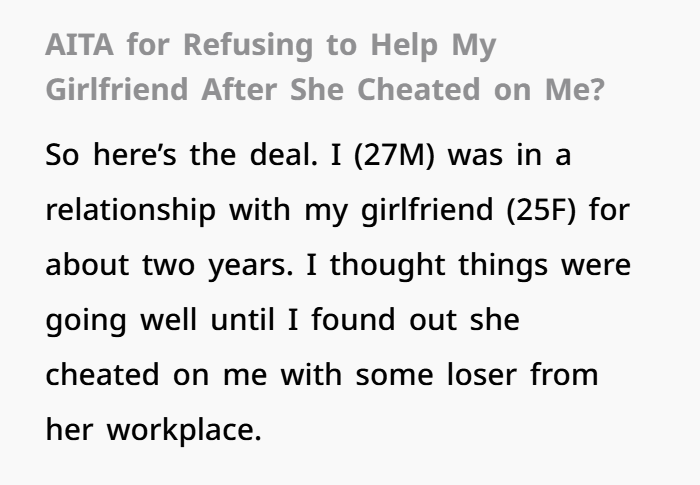
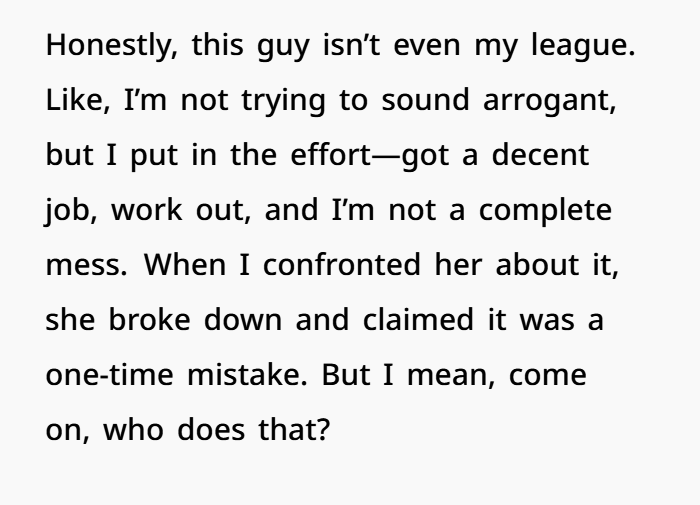
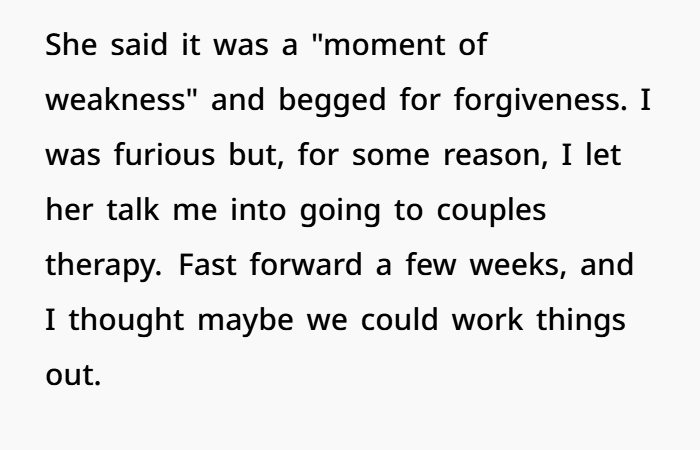
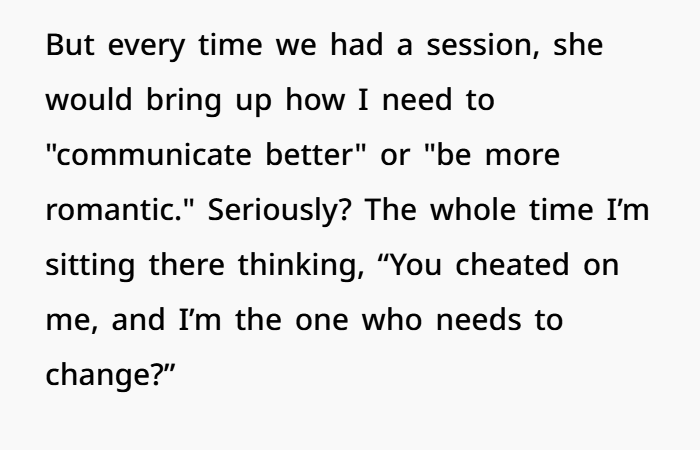
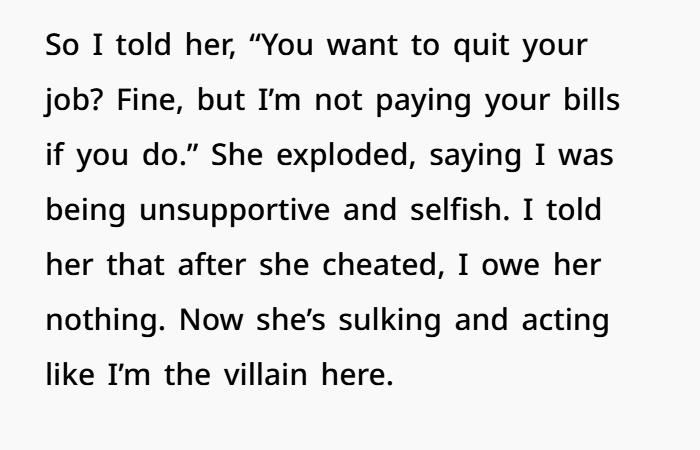
Honestly, this sounds like one of those complicated relationship problems where love, trust issues, and financial expectations all crash into each other. A 27-year-old guy finds out his girlfriend cheated with a coworker—big red flag, no doubt. That kind of betrayal can mess with your head, your confidence, everything. Most people would’ve ended it right there. But he didn’t. She apologized, cried, promised it was just a one-time thing, and convinced him to try couples counseling. So he stayed, thinking maybe relationship counseling could help rebuild trust. But instead of accountability, she started shifting blame—telling him to work on communication, be more romantic, like he’s the one needing a personal growth plan. That didn’t feel fair at all. Then comes another twist—she wants to quit her job and follow a dream of becoming an artist, with zero stable income. And yeah, she expects him to cover living expenses, basically full financial support. That’s where he said no. He made it clear—chase your dream, but don’t expect me to fund it. Now she’s upset, calling him selfish, and he’s left wondering… is he wrong here, or just protecting his money, mental peace, and setting real relationship boundaries?


Okay, let’s unpack this properly, because this isn’t just about cheating—it’s about trust issues, emotional damage, and even financial pressure. And honestly, this kind of situation shows up a lot more than people think. You’ll find similar stories all over relationship counseling blogs and mental health discussions about infidelity recovery.
Starting with the cheating—this is big. Whether it’s emotional or physical cheating, it breaks trust in a serious way. Studies in behavioral psychology say rebuilding trust after infidelity needs transparency, accountability, and real effort from the person who cheated. Not excuses. Not shifting blame. Definitely not making the other person feel responsible.
And that’s where things start going sideways.
Instead of owning her mistake, she starts focusing on his weaknesses—communication, romance, effort. And yeah, sure, nobody is perfect in a relationship. Self improvement always matters. But right after cheating? That’s not the moment to start giving your partner a performance review. The priority should be rebuilding trust, not redirecting blame. That’s where healthy relationship boundaries come in.
This behavior is often linked to defensive projection—a psychological pattern where someone avoids guilt by putting the blame on someone else. Basically, it’s easier to say “you didn’t meet my needs” than admit “I broke the relationship.” And that’s something you see a lot in toxic relationship cycles.
Now about couples therapy.
Relationship counseling can be helpful, no doubt—but only when both people are actually honest and willing to take responsibility. Otherwise, it just becomes stressful and one-sided. And let’s be real, therapy isn’t cheap. Couples therapy cost usually falls between $100 and $250 per session depending on the therapist and location. That’s a serious investment. So imagine paying that much and walking out feeling blamed, misunderstood, and emotionally drained—even though you’re the one dealing with cheating recovery. That’s enough to build resentment pretty fast.
And resentment? That’s relationship poison.
Now here’s where things take a sharper turn—the financial angle.
She wants to quit her job and pursue art. On its own, that’s not wrong. People change careers all the time. Following creative passions isn’t a bad thing. But context matters—a lot.
She’s asking for financial support right after breaking trust. That changes everything.
Money in a relationship is never just about money. It’s tied to trust, control, and long-term relationship stability. There’s a lot of discussion around financial dependency in relationships, and how it can shift the balance of power. If there’s no trust, it can quickly turn into obligation—or worse, financial manipulation.
And that’s exactly why this situation feels so intense.
From his point of view, this isn’t just about paying bills. It’s about what that support means. Giving financial support right now would mean backing someone who just betrayed him. That’s a big emotional investment, plus a financial one. And right now, the relationship doesn’t even feel secure.
Also, let’s be real—quitting a job to pursue art without a stable income plan comes with risk. It doesn’t mean she can’t succeed, but it does mean uncertainty. And expecting someone else to handle that risk—especially after breaking trust—is a lot to ask. It raises serious questions about financial responsibility in relationships.
Now look at his reaction.
He said no. Clear and direct.
“Do what you want, but I’m not funding it.”
That’s not being selfish. That’s creating healthy relationship boundaries.
A lot of people, after being cheated on, go the opposite way. They try harder, give more, ignore their own needs just to keep things together. But that often leads to resentment and emotional burnout.
What he’s doing is different. He’s protecting himself. He’s setting limits. And honestly, that’s something relationship counseling experts always talk about after infidelity—rebuild boundaries before anything else.
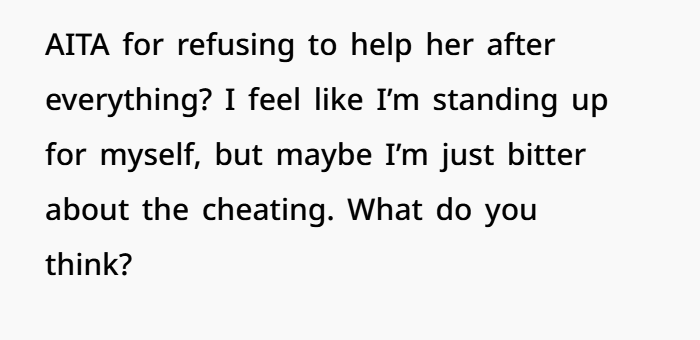
Now, is he bitter? Yeah, probably.
And that’s normal.
Betrayal doesn’t just disappear because you went to a few relationship counseling sessions. It stays in your mind. It changes how you trust, how you feel, even how you react to normal situations. Something as simple as her asking for financial help can feel way bigger because of the past. That’s how betrayal trauma and trust issues show up.
Now here’s where people get it wrong—setting boundaries isn’t the same as being bitter.
If he was bitter, he’d be attacking her, controlling her decisions, or trying to hold power over her. But that’s not happening here.
He’s not stopping her from leaving her job. He’s not shutting down her dream of becoming an artist. He’s just saying one thing—“I’m not going to fund it.”
That’s not control. That’s setting healthy financial boundaries.
Now her response.
She says he’s selfish. Not supportive.
But you can’t ignore the situation.
In a stable, trusting relationship, supporting your partner’s dreams is a positive thing. It builds connection. But after infidelity, things change. Support doesn’t come without limits anymore. Emotional support? Makes sense. Motivation? Sure. But financial support—that’s serious. That’s long-term commitment, and it requires trust that just isn’t fully rebuilt yet.
It’s not something you’re entitled to.
And that’s where her argument weakens.
Because she’s framing his boundary as selfishness, instead of recognizing it as a consequence of her actions.
Actions have consequences. Not always immediate, not always obvious—but they’re there.
Cheating doesn’t just hurt feelings. It affects trust, security, and future decisions. Including financial ones.
Now zooming out a bit—this situation also raises a bigger question: should they even still be together?
Because honestly, everything here points to unresolved issues.
He doesn’t trust her.
He feels blamed.
She feels unsupported.
She wants a lifestyle change that depends on him.
That’s not a stable foundation. That’s tension waiting to explode.
And this is where a lot of people get stuck—they try to fix a relationship that’s already emotionally fractured instead of asking whether it should continue at all.
Because sometimes, the real answer isn’t “who’s right?”
It’s “why are we still doing this?”
The Comments Are In

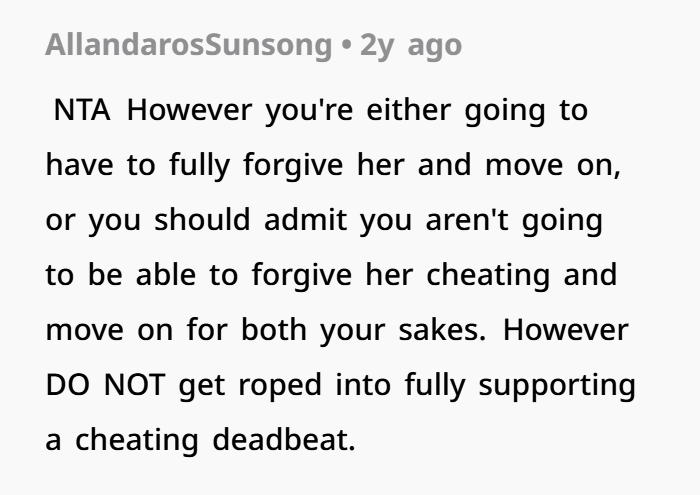


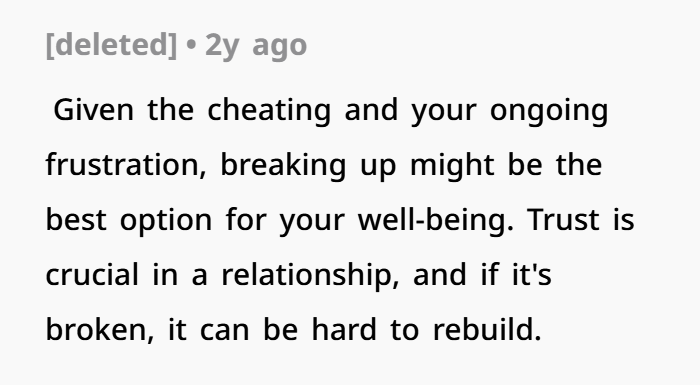
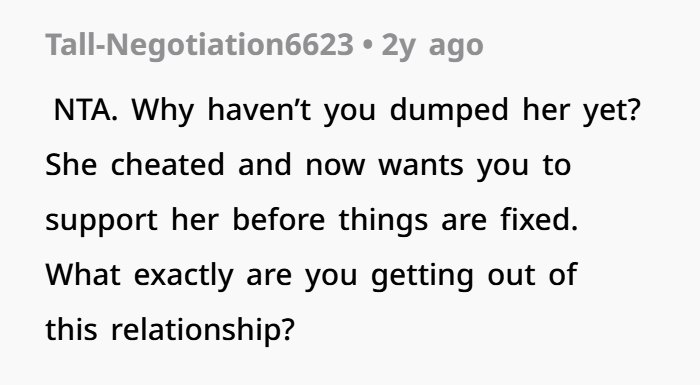


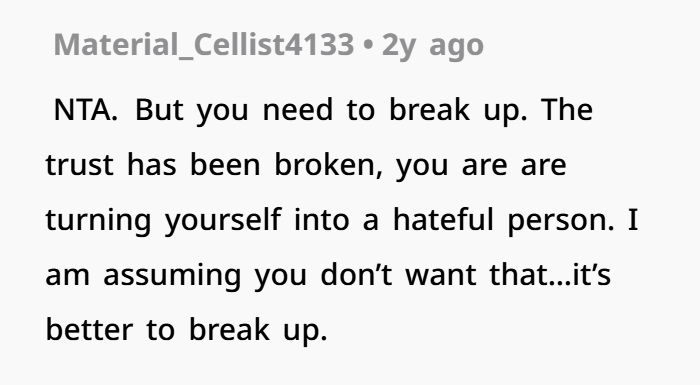

You’re not the asshole for refusing to support her financially.
You set a boundary after being betrayed. That’s fair.
But… the bigger issue? This relationship sounds like it’s already running on fumes. And no amount of therapy or compromise will fix it unless both sides are actually taking responsibility—and right now, that doesn’t seem to be happening.