Wife Angry After Seeing Son’s GF Kiss Him… Dad Says THIS
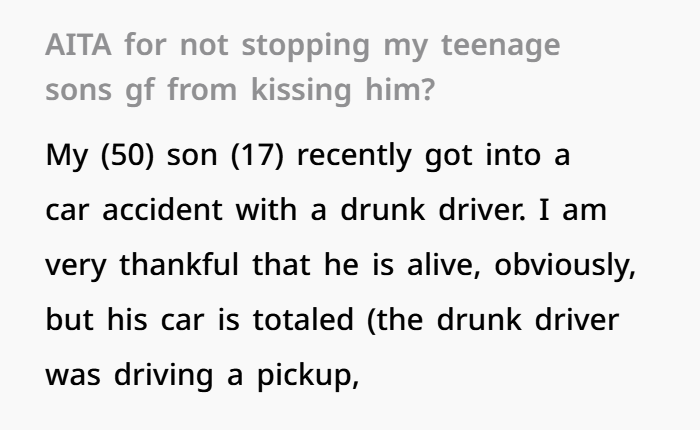
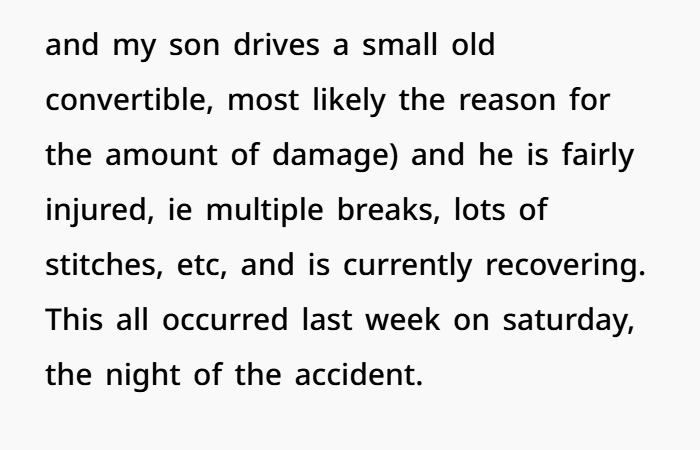
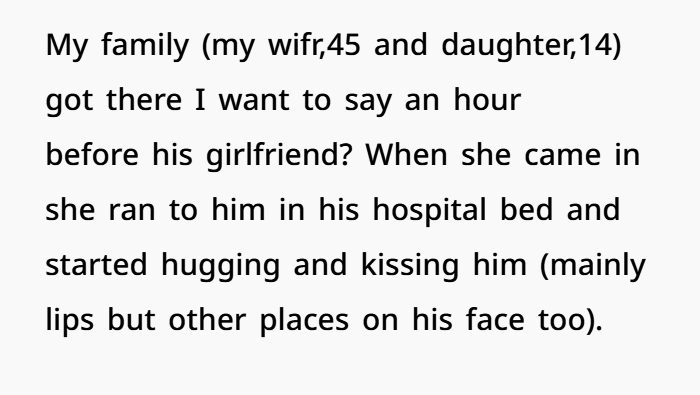
This story is about a dad dealing with a really tough moment. His 17-year-old son survives a serious car crash caused by a drunk driver. The injuries are bad—broken bones, stitches, the car completely wrecked—but he’s alive, and that’s what matters. The family is at the hospital, emotions all over the place, everyone just hoping for recovery. Then the girlfriend shows up. She’s shaken, scared, but you can tell she really cares. She goes straight to him, hugging and kissing him, trying to comfort him in that raw moment. To the father, it feels normal. Honestly, even reassuring. His son isn’t alone, he’s loved, supported during a crisis like this.
But later that night, things shift. On the drive home, the mother brings it up. She’s uncomfortable with what she saw. Especially the kissing. To her, it crossed a line, felt inappropriate in front of family. The father doesn’t see it that way. To him, it’s just emotional support during trauma, nothing more. Now they’re stuck in this tense disagreement—parenting boundaries, family values, what’s “acceptable” in a situation like this. The dad starts overthinking everything, wondering if he handled it right or if he should’ve stepped in. It’s one of those moments where love, stress, and different perspectives all collide—and yeah, it’s not easy to figure out what’s right.

Okay, let’s really unpack this, because this situation goes way deeper than just a kiss in a hospital. It’s touching on parenting boundaries, teenage dating psychology, emotional trauma support, and yeah—some real family conflict too.
Start with the main event. A 17-year-old survives a serious drunk driving accident. That’s a life-altering moment. In trauma recovery and mental health research, situations like this can cause shock, fear, and even long-term emotional stress. During times like this, having strong emotional support—family, friends, and even a boyfriend or girlfriend—becomes extremely important for healing.
Now about teen relationships. A lot of people brush them off as immature, but that’s not always accurate. According to adolescent development studies, by late teens, relationships carry real emotional depth. These bonds can act as a major support system. So when the girlfriend rushed in, didn’t care how she looked, and just wanted to be there for him—that’s actually a sign of real emotional investment, not just “teen drama.”
Looking at it from a psychological health perspective, her actions weren’t negative. If anything, they were helpful. Physical touch—like hugging or kissing—can release oxytocin, which helps with stress relief and emotional stability. In fact, in some healthcare and recovery studies, emotional connection is linked with faster healing and better outcomes. So the father allowing it? That actually lines up with what research suggests about comfort and recovery.
Now shifting to the mother’s side. Her reaction is valid too. This ties into social behavior norms and personal comfort zones. Hospitals are usually seen as serious, respectful spaces. For some people, public affection—especially with minors—can feel inappropriate in that setting, especially when family members are present.
And then there’s the generational difference. Parenting styles and beliefs about teen dating have changed a lot over time. Some parents grew up with strict rules about physical affection. So seeing their child in that kind of moment can feel uncomfortable or even shocking. It’s not always about right or wrong—it’s about what feels acceptable based on their own upbringing and values.
Now look at the family dynamic here. The mother’s reaction might not really be about the kiss itself. It’s about what’s behind it. Her son is changing. He’s growing up, building emotional ties outside the home. And that shift? It can feel uncomfortable. Almost like she’s losing her role a bit. In psychology and parenting research, this is known as parental role transition stress—the move from being in control to stepping back and letting go slowly.
The father’s choice to not interfere is interesting. From a modern parenting strategy point of view, this fits into autonomy-supportive parenting. That means letting teens make their own decisions while still being there if they need guidance. Studies in adolescent development show this approach helps with confidence, emotional growth, and long-term trust between parents and kids.
If he had stepped in, it could’ve made things worse. His son was already injured, stressed, and vulnerable. That comfort from his girlfriend probably meant a lot in that moment. Taking that away could’ve added more emotional pressure. Plus, it might’ve damaged trust. Teens can feel misunderstood really fast when parents control situations like this.
Also, timing is everything. A hospital setting right after a serious accident isn’t the ideal moment to enforce boundaries—unless something clearly inappropriate is happening. In crisis moments, emotional care takes priority. Rules and social expectations usually come second.
On the topic of consent, the son didn’t resist or seem uncomfortable. That matters. He accepted the affection, maybe even needed it. So this isn’t really about something being objectively wrong. It’s more about perception and personal comfort levels.
And yeah, the drunk driver factor adds another layer. Situations like this feel unfair, almost infuriating. When something like that happens, families naturally shift into support mode. Everyone focuses on the person who got hurt. The girlfriend stepping in emotionally fits right into that kind of environment.
From a relationship psychology angle, shared crisis moments can actually deepen connections fast. Emotional intensity goes up. Bonds get stronger. That’s probably why her reaction felt so strong. She wasn’t thinking about how it looked—she was just reacting with fear, love, and relief all mixed together.
So where does that leave the “AITA” question?
If we break it down logically:
- The son was in pain and recovering from trauma
- The girlfriend provided emotional comfort
- The behavior was consensual and not harmful
- The father prioritized his son’s well-being
- The mother felt discomfort based on personal and social boundaries
This isn’t really about right vs wrong. It’s about different value systems colliding under stress.
A better way to handle this going forward would be a calm, real conversation between the parents. Not blaming each other. Just trying to get on the same page. Maybe talk about healthy boundaries, what feels okay, what doesn’t—but also accept that in high-stress situations, things won’t always be perfect. Flexibility matters, especially when emotions are running high.
One thing worth noticing—the father didn’t completely shut his wife down. He just didn’t agree in that moment. That actually says a lot. In family counseling and parenting advice, disagreement isn’t the problem. It’s how you deal with it after. That’s what shapes a healthy family dynamic.
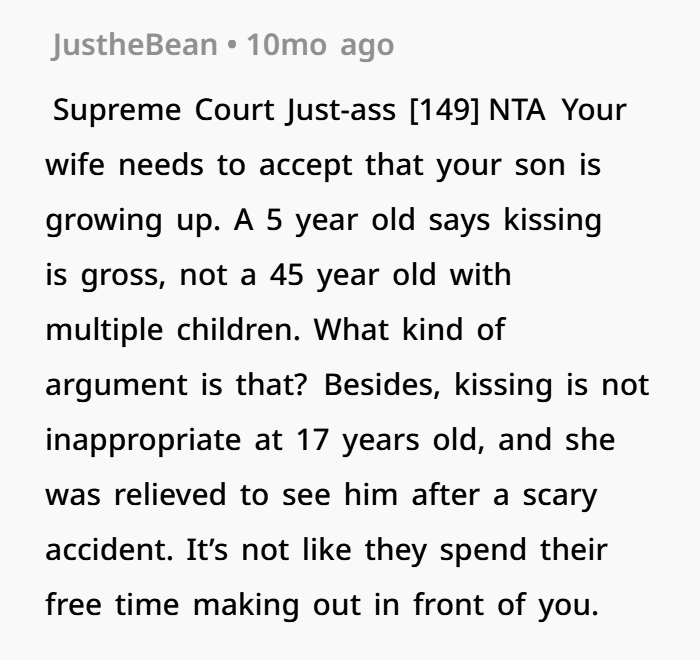
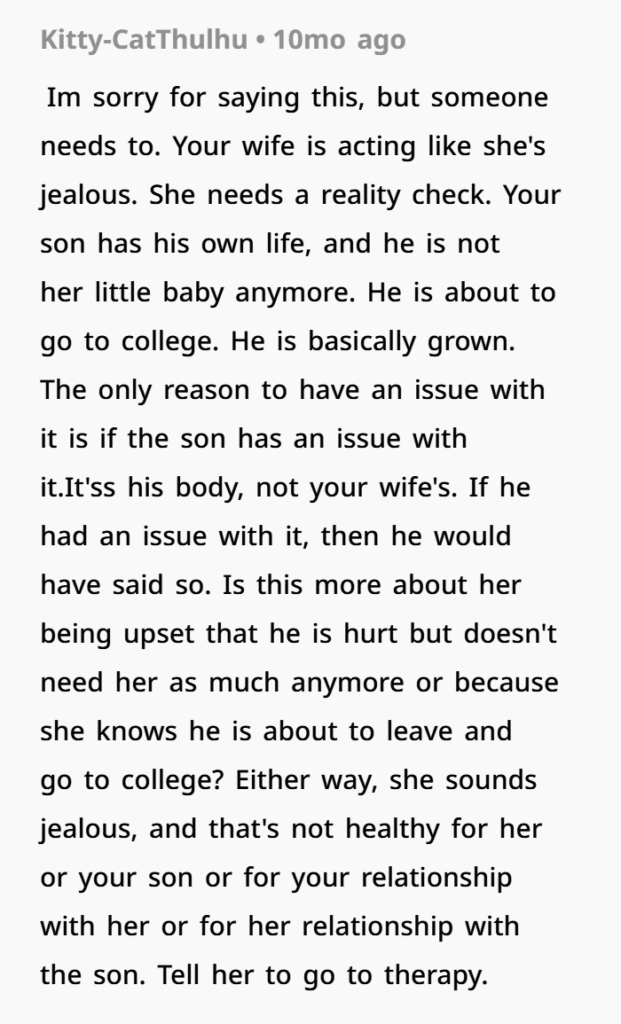
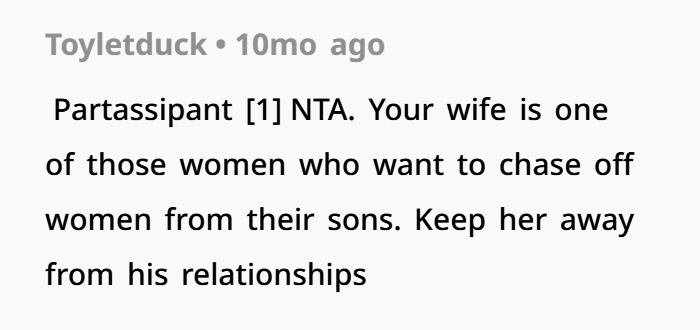
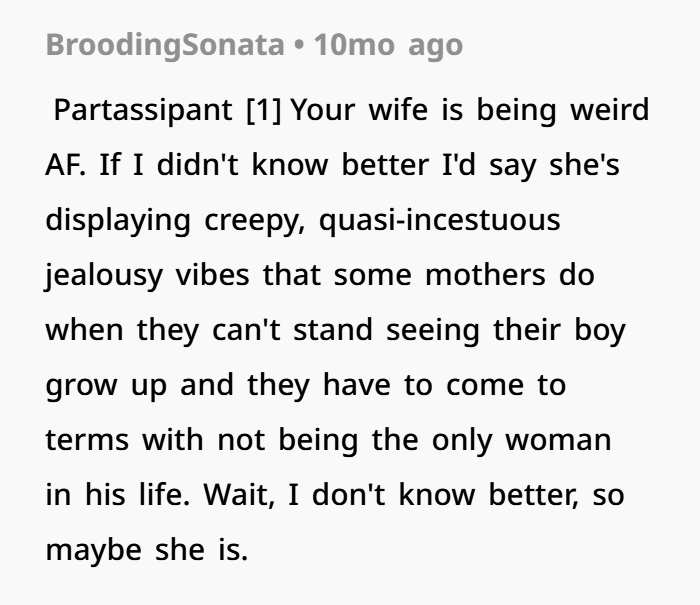
If you look at how people judge these situations online—like Reddit-style debates or parenting forums—it usually leans toward “Not the A-hole.” Why? Because intent matters. The father wasn’t ignoring boundaries or being careless. He was focused on emotional support and his son’s mental well-being during a crisis.
At the same time, the mother isn’t some villain here. Not at all. She’s reacting emotionally too. Could be discomfort, protectiveness, or even shock from the accident. In stress psychology, people respond differently under pressure. Some focus on comfort, others on control or structure.
At the end of the day, this isn’t really about a kiss. It’s about how families deal with change, trauma recovery, and kids growing up. That shift is never easy. And yeah, most parents go through it at some point—just maybe not in a hospital room right after a serious car accident.
Readers Shared Their Thoughts