“I’m Done Being the Default Caregiver” When Boundaries Are Your Only Way Out


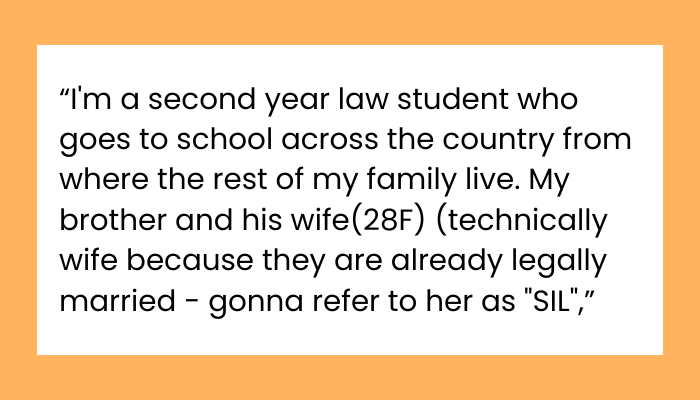
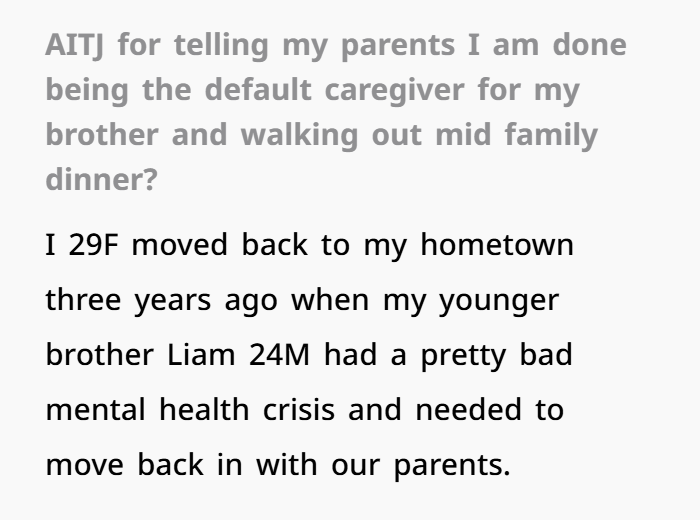
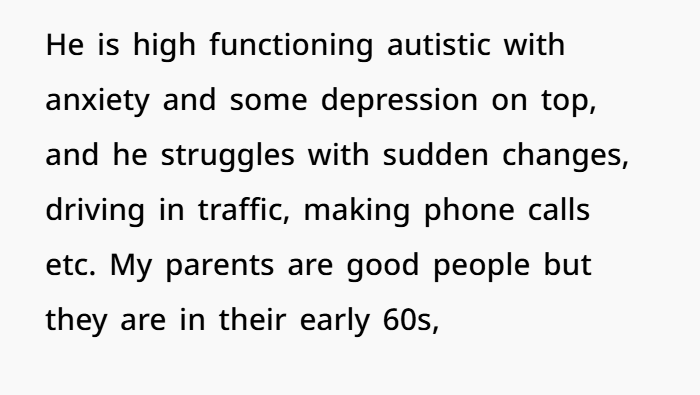
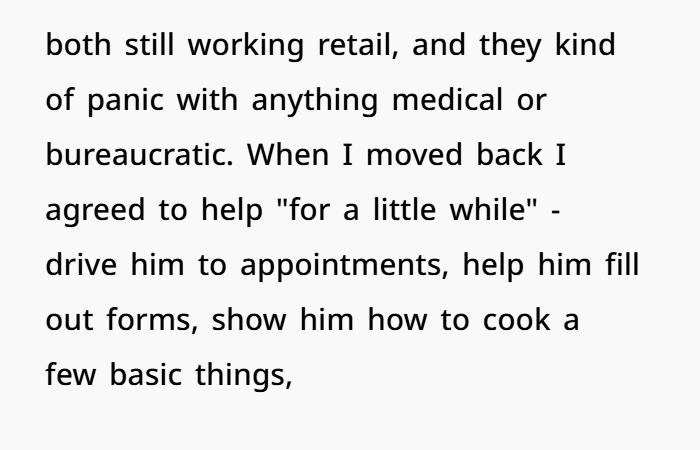
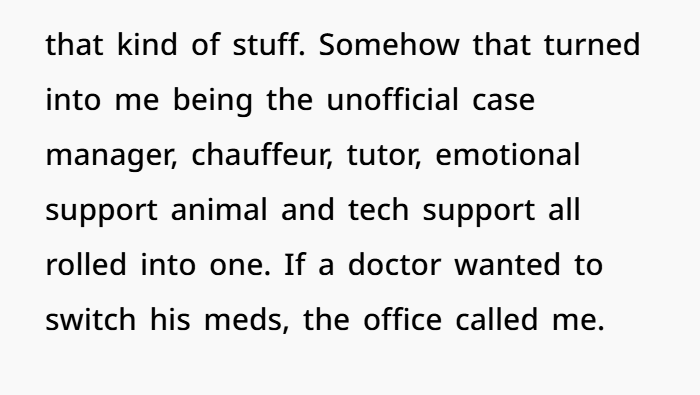
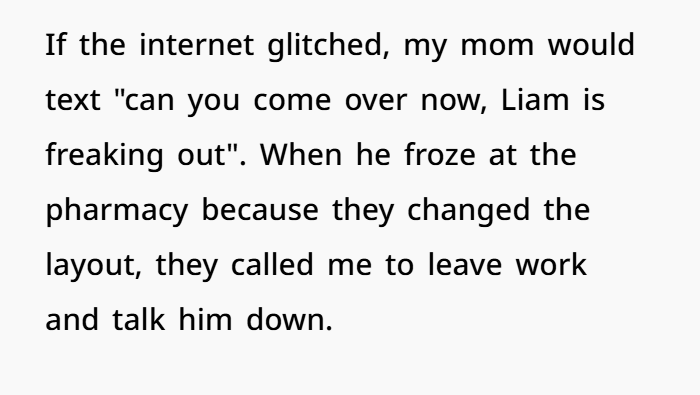
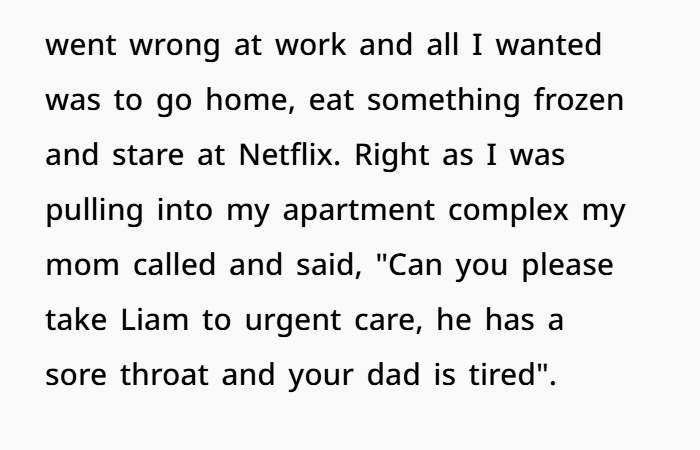
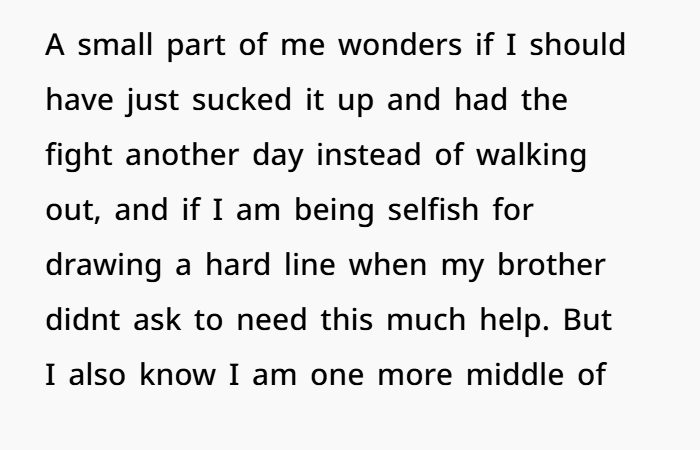
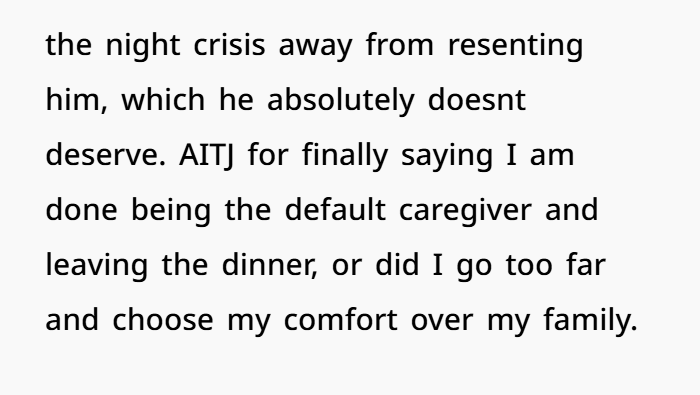
A 29-year-old woman shared how being her younger brother’s main caregiver for three years slowly changed her life. She spent years helping him with doctor appointments, pharmacy problems, emotional support, and everyday tasks. What started as temporary help became a full-time responsibility that began to affect her own goals and personal life.
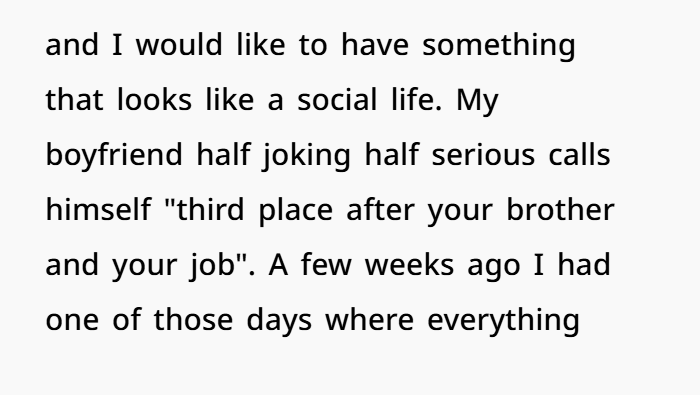
She cared about her brother and wanted to support her family, but over time she became exhausted. She was working full-time, trying to finish school, and hoping to have time for friendships, relationships, and her own future. However, she felt that her brother’s needs had taken over most of her free time.
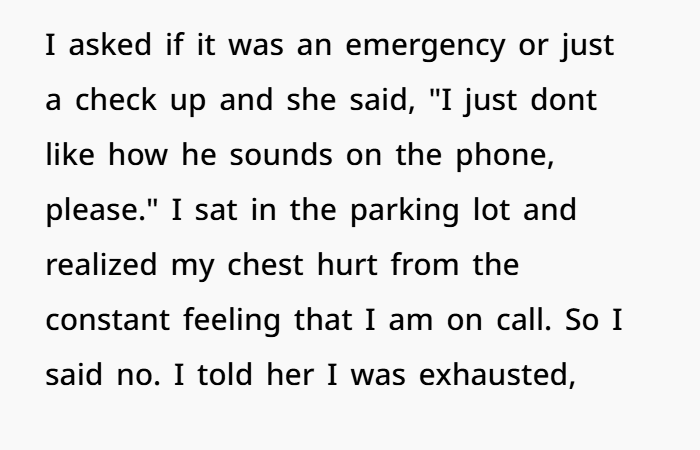
The woman also felt hurt because her family started treating her help as something expected instead of appreciating the effort she was making. She felt like she was always available and that no one understood how much pressure she was carrying.
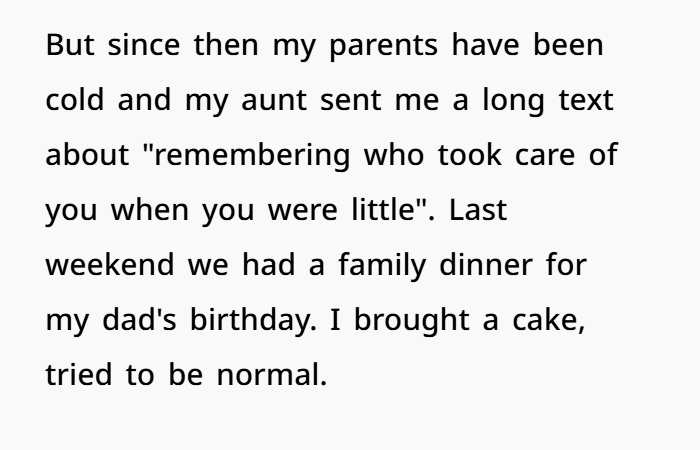
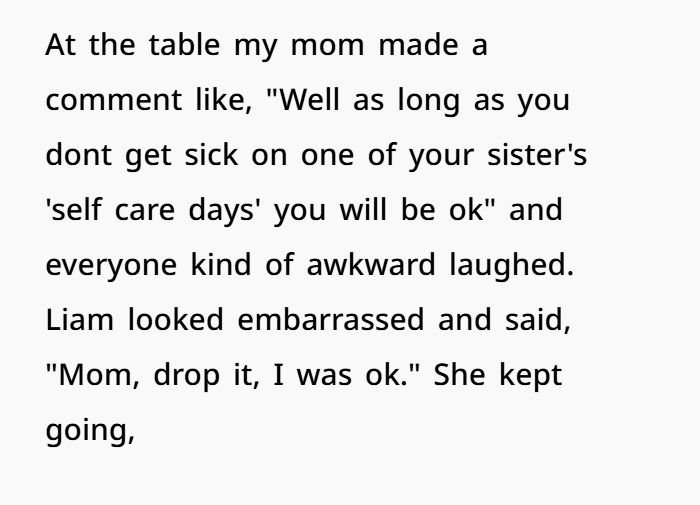
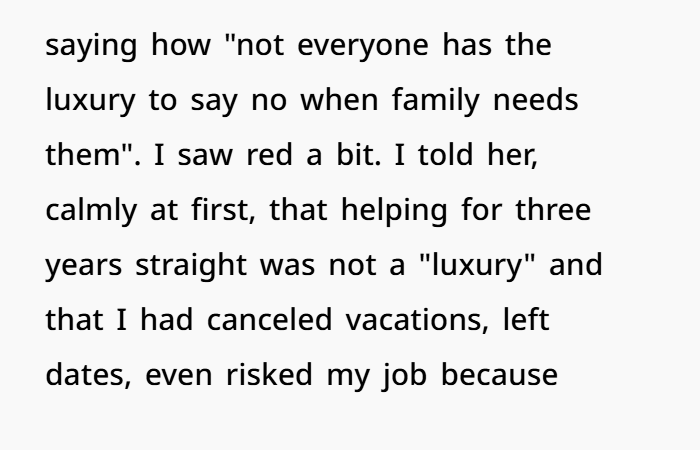
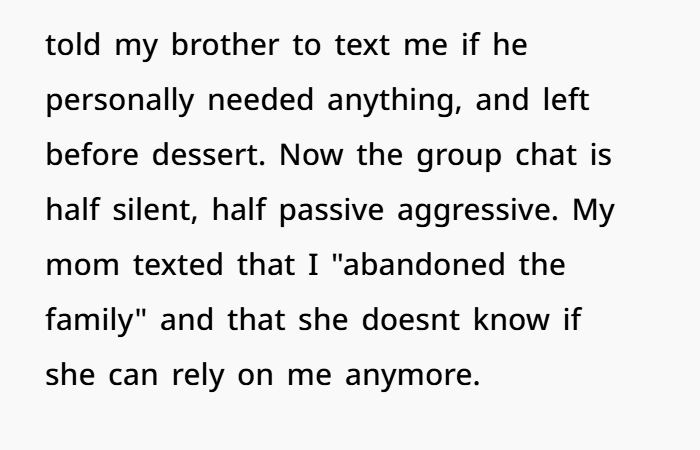
During her father’s birthday dinner, after feeling overwhelmed by family comments and stress, she finally said she could no longer be the only person responsible for her brother’s care. She explained that she would still help when possible but could not be available all the time. Now, she is dealing with family pressure and guilt while wondering if she was wrong for setting boundaries and protecting her own mental health.
One woman moved back home to take care of her autistic brother, not expecting to be saddled with full-time caregiver duty




Why Setting Boundaries as a Caregiver Is Important
Taking care of a family member, especially a sibling with autism or special needs, can be a loving and meaningful responsibility. But when one person becomes responsible for everything, it can become stressful and exhausting.
Caregiving requires patience, time, and emotional strength. Without healthy boundaries, caregivers may experience caregiver stress, emotional exhaustion, and burnout.
The Hidden Challenges of Being a Full-Time Caregiver
Many caregivers spend so much time helping others that they forget to take care of themselves. They may lose time for their own hobbies, friendships, career goals, and personal needs.
Over time, constant responsibility can lead to:
- Feeling tired and overwhelmed
- Increased stress and anxiety
- Trouble sleeping
- Feeling guilty for wanting a break
- Losing a sense of personal identity
These feelings do not mean someone does not care. They are common challenges faced by many family caregivers.
Saying, “I cannot do this every day anymore,” does not mean giving up. It means recognizing that the current situation is becoming too difficult to handle alone.
When Family Responsibilities Become Too Heavy
In many families, caregiving duties slowly fall on one person. It may happen because they are seen as the most responsible person or because others assume they can manage it.
At first, helping a sibling may feel temporary. But over time, that temporary help can become a daily expectation.
A person may start feeling like they are always available and cannot make plans for their own life.
However, being a sibling does not mean you must give up your entire future. Supporting a family member is important, but caregiving should not depend on only one person.
Families can work together by sharing responsibilities, asking other relatives for help, or exploring professional support services and community resources.
Why Healthy Boundaries Matter
Setting boundaries does not mean you do not love your family member. In fact, clear boundaries can create healthier relationships.
When caregivers set limits, they can:
- Protect their mental health
- Reduce stress and burnout
- Continue helping without feeling overwhelmed
- Create a fairer sharing of responsibilities
- Encourage families to find better long-term solutions
A caregiver who is completely exhausted may struggle to provide the best support. Taking care of yourself helps you continue caring for others in a healthier way.
Are You Wrong for Saying Enough?
No, you are not wrong for reaching your limit.
If you have spent years helping your sibling and have clearly explained that you cannot be available all the time, that is a reasonable decision.
You can love someone and still need personal space. You can support your family while also protecting your own mental health.
Sometimes family members may feel upset when boundaries change. They may need time to adjust. Their reaction does not always mean your decision is wrong.
Finding a Better Balance
If you want to reduce family tension while keeping your boundaries, consider these steps:
Have an Honest Family Conversation
Choose a calm time to discuss what everyone can realistically do. Explain that you are willing to help, but you cannot be the only person responsible.
Share Responsibilities
Caregiving can be divided between family members, relatives, support workers, or community programs. A strong support system benefits everyone.
Look for Professional Support
Many families find help through caregiver support groups, autism resources, respite care programs, and local community services.
Remember Your Own Needs
Your health, relationships, career, and personal goals also matter. Taking time for yourself is not selfish.
Final Thoughts
Caring for a loved one is an act of kindness, but it should not come at the cost of your own well-being.
Healthy boundaries allow caregivers to continue supporting their families without losing themselves. Asking for balance is not a sign of weakness — it is a step toward creating a healthier future for everyone involved.
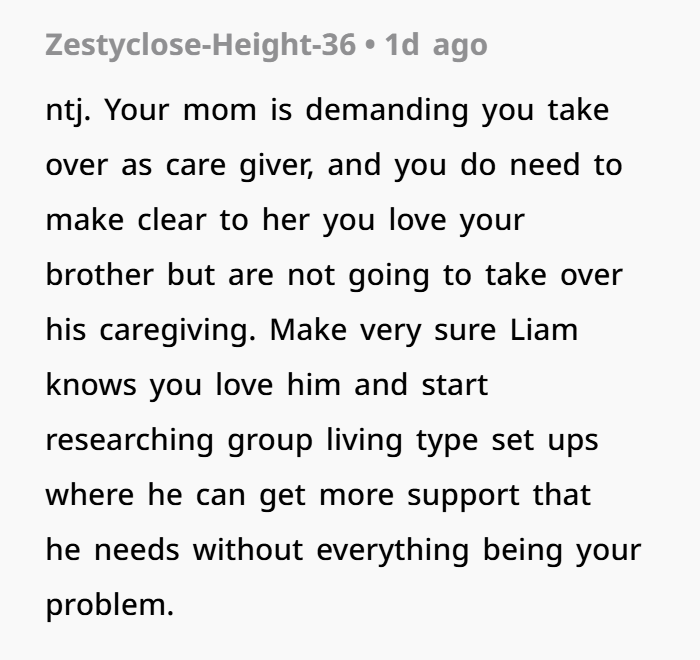
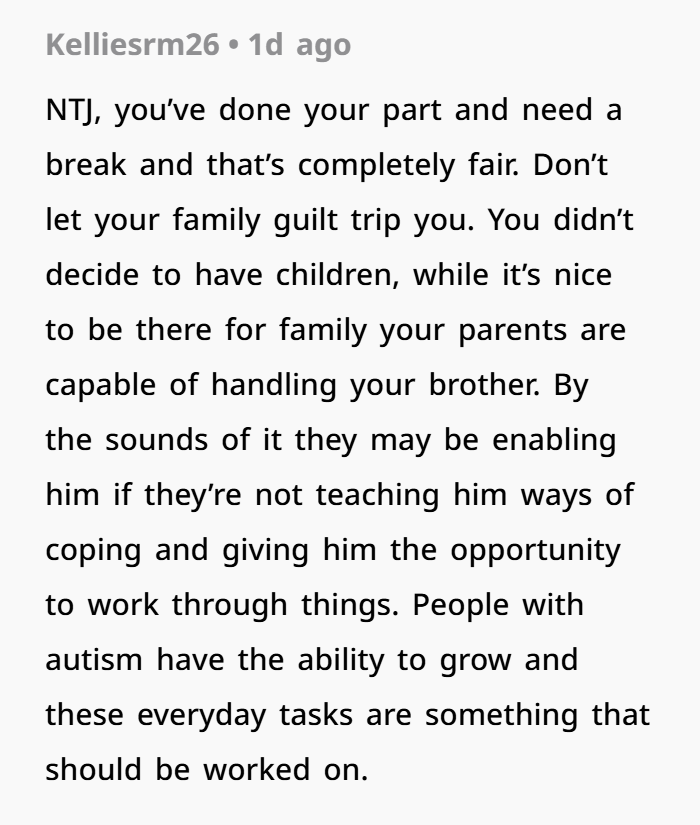
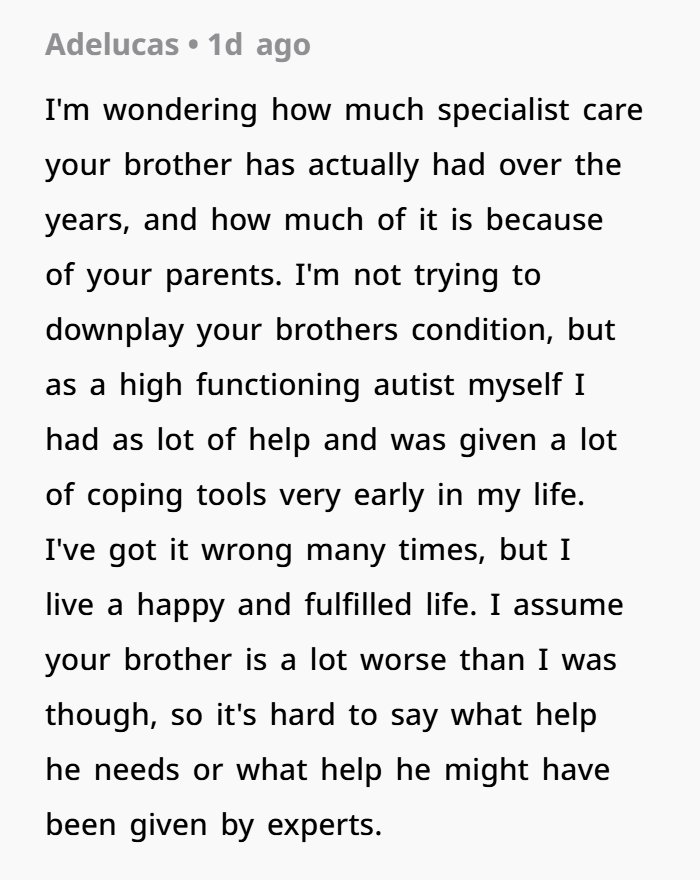
In the comments, readers all agreed that the woman was not the jerk in the whole mess and slammed her parents for being such slackers when it came to helping out