AITA for Cutting Off My MIL After She Crossed a Line With My Newborn?

A young couple faced a difficult family situation after becoming new parents. The 22-year-old mother and her 27-year-old husband were already dealing with stress because they became parents before marriage, and the husband’s mother did not react positively. From the beginning, there were disagreements and tension between them.
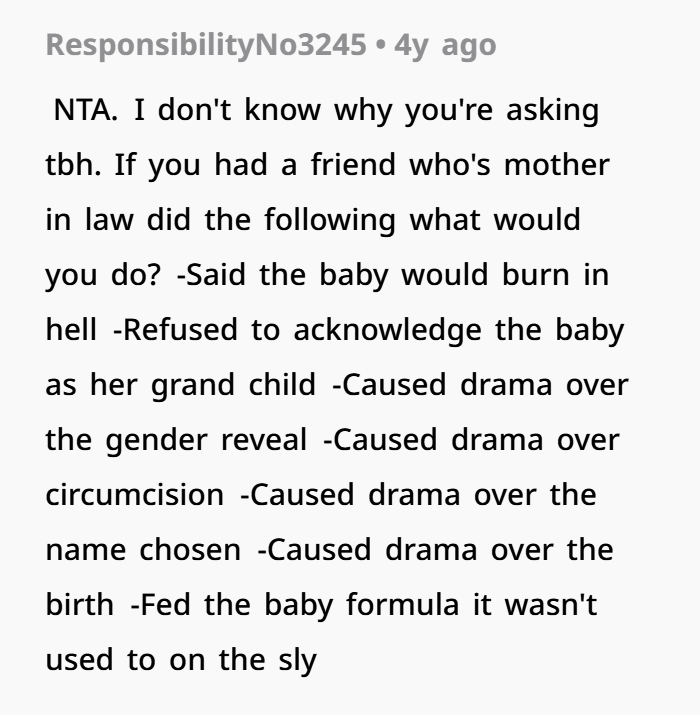
The mother-in-law started making strong demands about the baby, including how the birth should be announced and decisions about religious practices. The couple wanted a quieter experience during pregnancy and early parenthood, but they felt that every update led to more conflict and pressure. They tried to create some distance to protect their peace during a stressful time.
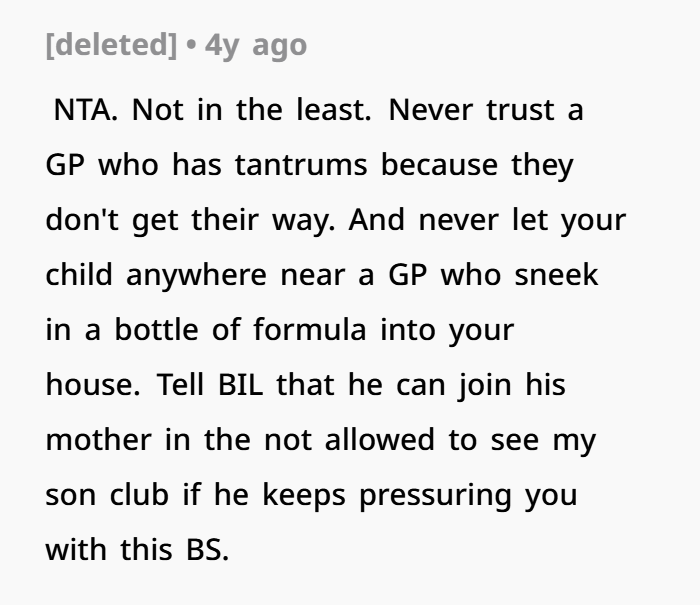
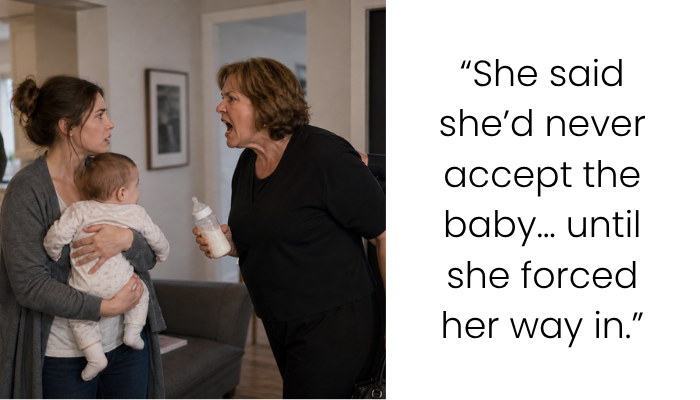
The situation became more serious after the baby was born early through an emergency C-section. The mother-in-law visited without asking and did not respect the parents’ wishes. The new mother was especially upset when she discovered that the baby had been given formula without her permission while she was trying to breastfeed. She felt that an important parenting decision had been ignored.
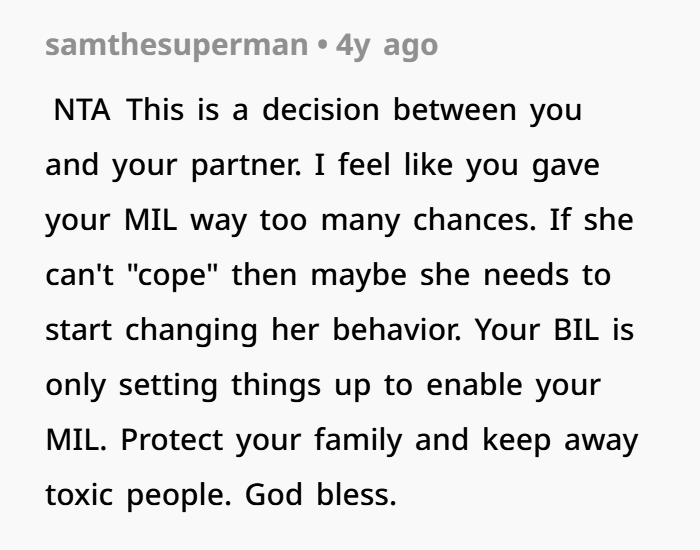
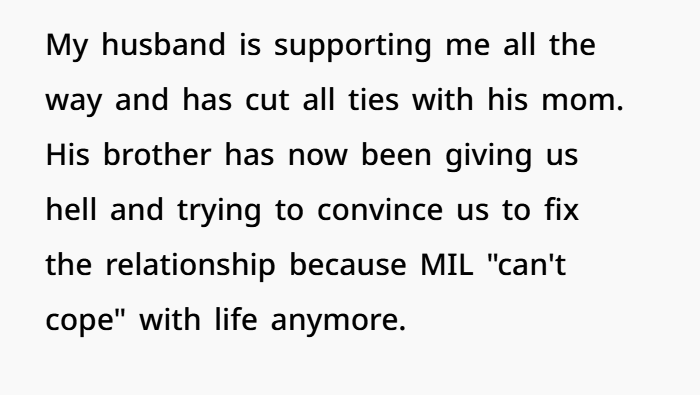
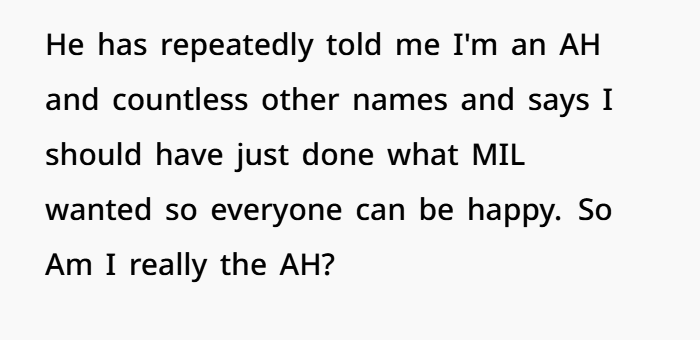
The mother asked her mother-in-law to leave, and her husband supported her decision. They decided to create stronger family boundaries, even though other relatives disagreed and asked them to reconsider. The situation shows why communication, respect, and clear boundaries are important for new parents when making decisions about their baby’s care and family relationships.



When Family Boundaries Are Crossed After a Baby Is Born
Some family conflicts are about more than a simple disagreement.
When a newborn is involved, emotions become stronger because parents are trying to protect their baby while also managing relationships with family members.
This type of situation often involves important topics like:
- Parenting choices
- Newborn care
- Family boundaries
- Trust
- Communication
Parents Have the Right to Make Decisions for Their Baby
When a baby is born, the parents are responsible for making decisions about their child’s care.
This includes choices about:
- Feeding
- Medical care
- Visitors
- Daily routines
- Safety
Grandparents and relatives may have opinions and may want to help, but the parents usually have the final say.
When someone makes important decisions about a baby without asking the parents first, it can create serious trust problems.
Why Feeding Choices Matter for Newborns
Feeding is a very personal decision for many families.
Some parents choose breastfeeding, some choose formula, and some use a combination based on their baby’s needs and advice from healthcare professionals.
Every baby is different.
This is especially important when a baby is born early or needs extra medical attention.
Parents often work with pediatricians and healthcare providers to create the best feeding plan for their child.
Changing that plan without discussing it with the parents can create stress and confusion.
The issue is not only about the food itself.
It is about respect, communication, and trusting the parents’ decisions.
When Helping Becomes Crossing a Boundary
Many family members believe they are helping when they become involved with a new baby.
They may think:
“I know what is best.”
“I am only trying to help.”
“I have experience.”
However, good intentions do not always mean an action is helpful.
Help should still include respect for the parents’ choices.
Examples of healthy support include:
- Asking before making changes
- Following the parents’ requests
- Respecting baby care routines
- Offering help instead of taking control
A family relationship becomes difficult when someone ignores boundaries repeatedly.
The Importance of Trust Between Parents and Relatives
Trust is especially important after a baby arrives.
New parents are often already dealing with:
- Lack of sleep
- Physical recovery
- Emotional changes
- New responsibilities
- Anxiety about doing things correctly
During this time, they need support and understanding.
When a relative ignores their wishes, it can make parents feel stressed and unsafe.
Different Generations Can Have Different Parenting Views
Many family conflicts happen because different generations have different ideas about raising children.
Older family members may rely on traditions or their own experiences.
New parents may focus more on current medical advice, research, and personal parenting choices.
Different opinions are normal.
The problem begins when someone refuses to respect another person’s role as the parent.
A healthy family relationship allows people to have different views while still respecting boundaries.
The Role of the Spouse During Family Conflict
One positive part of situations like this is when couples support each other.
Marriage experts often talk about the importance of partners working as a team.
When a couple agrees on parenting decisions and communicates clearly, they create a stronger foundation for their family.
A spouse does not have to choose between being respectful to relatives and supporting their partner.
Both can happen when healthy boundaries are in place.
Why “Keeping the Peace” Is Not Always the Answer
Sometimes family members encourage people to ignore problems just to avoid conflict.
They may say:
“Just let it go.”
“Do whatever keeps everyone happy.”
“Don’t create drama.”
While peace is important, avoiding every disagreement is not always healthy.
Sometimes keeping peace means one person has to give up their comfort, privacy, or personal boundaries.
Healthy relationships require honest conversations, not just avoiding difficult topics.
Postpartum Support and Family Stress
The period after childbirth can be emotionally challenging.
New mothers may experience:
- Physical recovery
- Hormonal changes
- Sleep challenges
- Emotional stress
- Postpartum anxiety
A calm and supportive environment can be very important during this time.
Family members can help by offering kindness, patience, and practical support.
Adding unnecessary stress during the postpartum period can make things harder for new parents.
Why Accountability Matters
Family relationships can recover after conflict, but rebuilding trust usually requires accountability.
This may include:
- Acknowledging what happened
- Understanding why it hurt someone
- Respecting new boundaries
- Making changes in behavior
Without accountability, it can be difficult for people to feel safe again.
The Bigger Lesson About Family Boundaries
This type of situation is not only about one disagreement.
It is about respecting the role of parents and understanding that love does not mean control.
Grandparents can have beautiful relationships with grandchildren.
Relatives can offer valuable support.
But parents still need the freedom to make decisions for their own children.
Strong family relationships are built through:
- Respect
- Communication
- Trust
- Understanding
A baby’s arrival should bring families closer.
The best way to support new parents is not by taking over.
It is by listening, respecting their choices, and being there when they truly need help.
What The Comments Reveal