My MIL Gave My 8-Year-Old a Smartwatch So They Could Talk “Privately”—Without Telling Us She Could Track Her Location


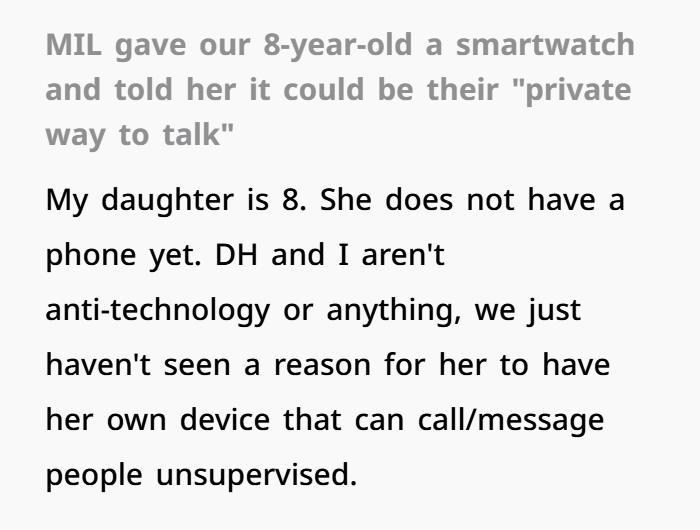
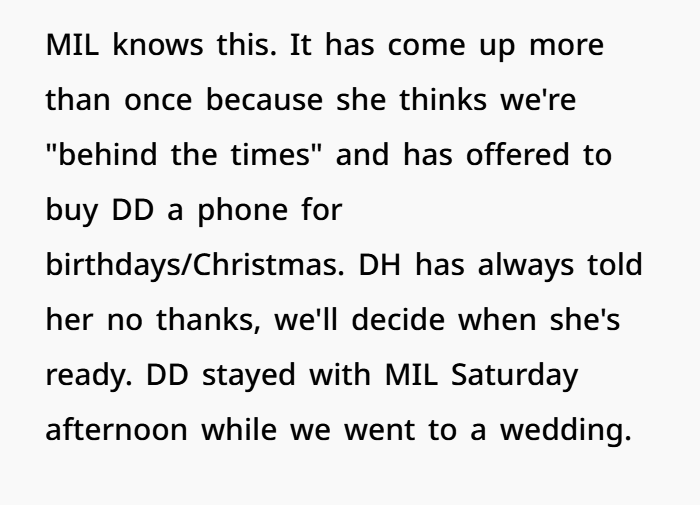
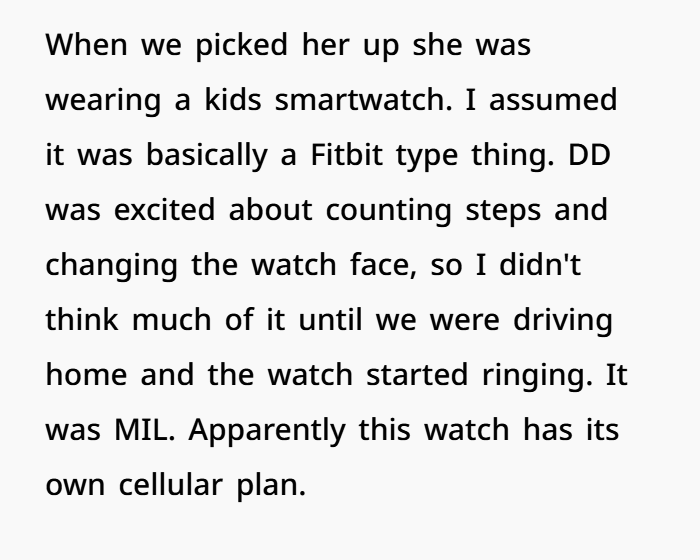
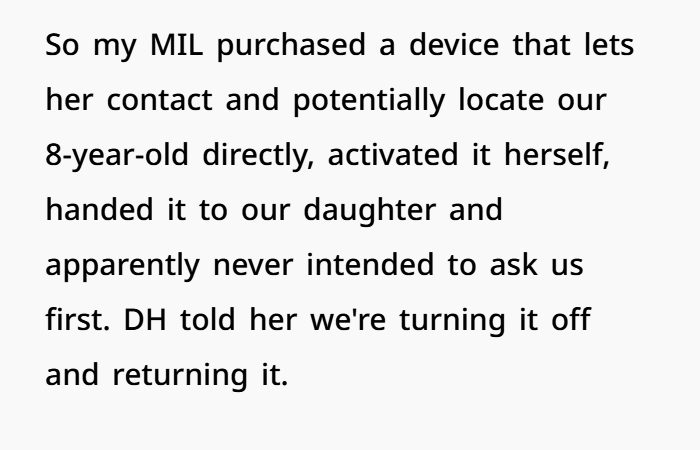
A grandmother thought she had found the perfect gift for her eight-year-old granddaughter, but the surprise quickly caused problems in the family. The girl’s parents had one clear rule: their daughter was not ready for a personal phone or a device that allowed private calls and messages. They wanted to introduce technology slowly and make sure she understood basic online safety first. Grandma disagreed and often said they were too old-fashioned. She had offered to buy the girl a phone several times, but the answer was always no. Then one day, the little girl came home wearing a new smartwatch. Her mother thought it was only a fitness tracker, so she did not worry about it. But during the drive home, the watch rang, and Grandma’s name appeared on the screen.
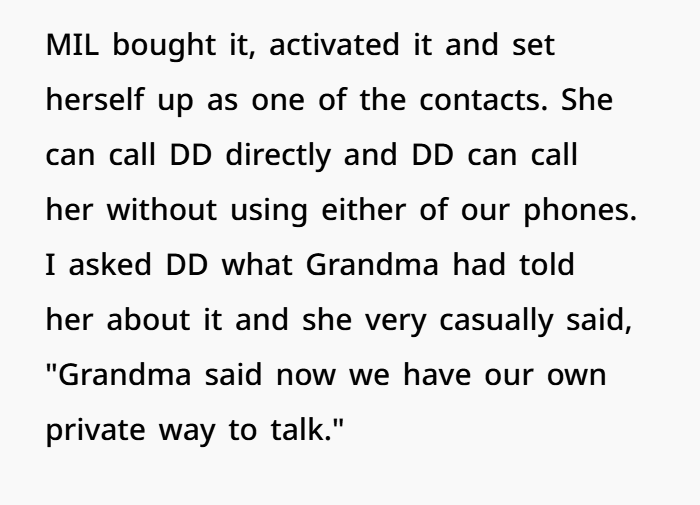
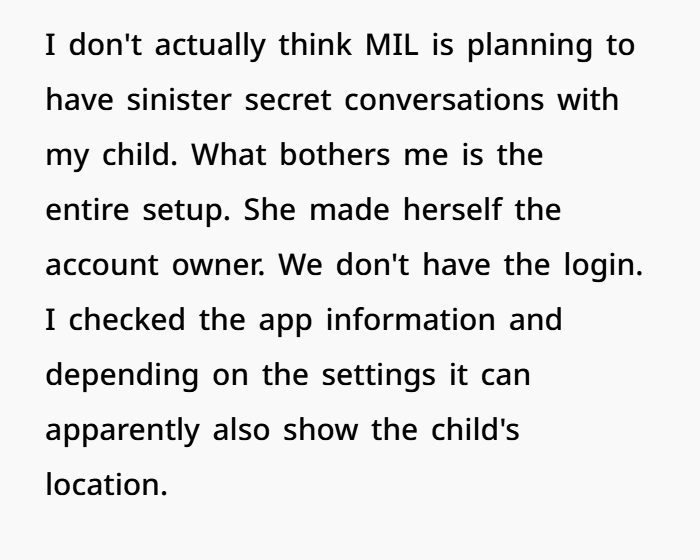
The parents were surprised to discover that the watch had its own phone service. Grandma had set everything up without telling them. She could call her granddaughter directly, and the child could call her back without using her parents’ phones. The little girl explained that Grandma had called it their own private way to stay in touch. Although Grandma had not asked her to keep the gift a secret, the parents still felt uncomfortable. They also learned that the smartwatch account belonged to Grandma. This meant she managed the device settings, while the parents had no access to the account. Depending on the settings, the smartwatch could also allow GPS location tracking, which raised more questions about their daughter’s digital privacy.
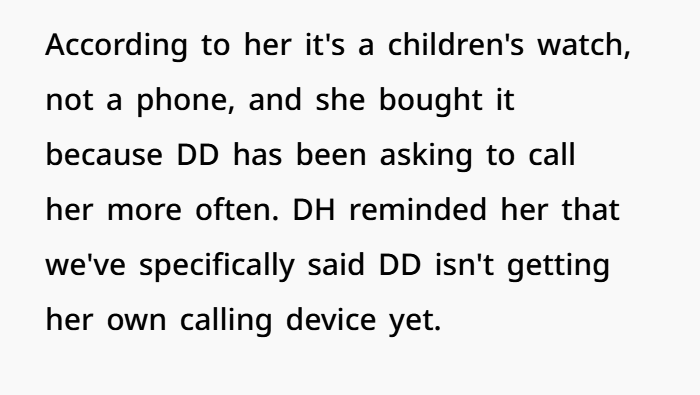
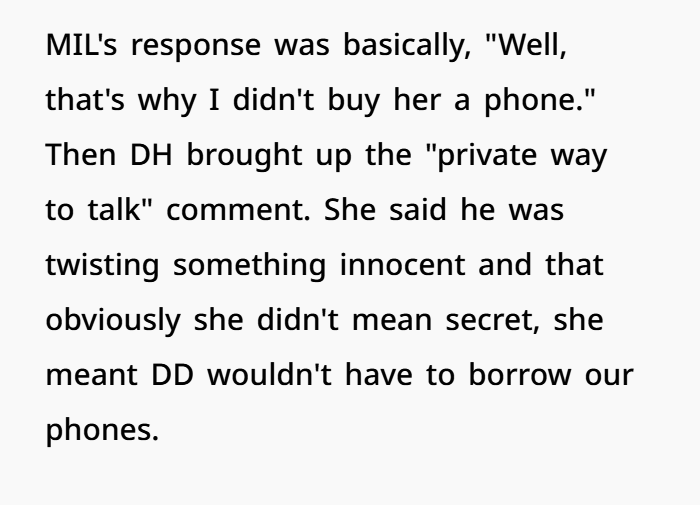
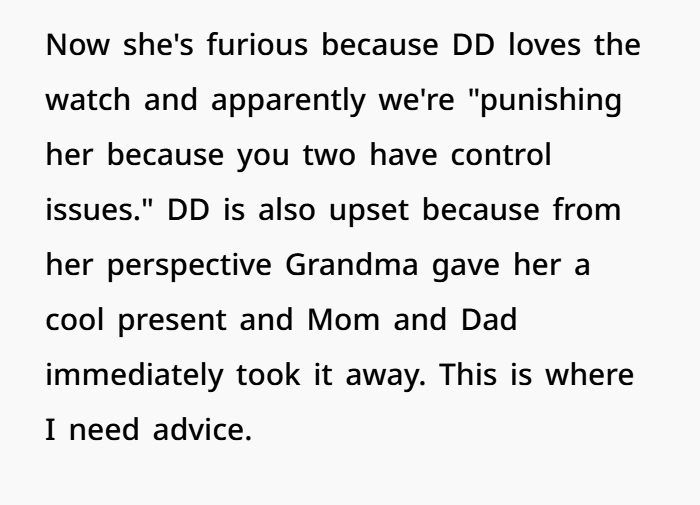
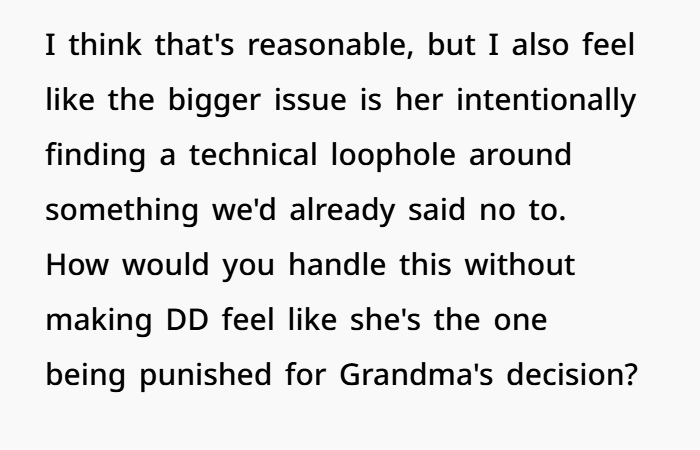
The girl’s father decided to speak with his mother about the gift. Grandma insisted she had only wanted to do something nice. She argued that the parents had said no to a phone, but they had never specifically banned a smartwatch. She also said private calls simply meant the girl would not need to borrow someone else’s phone. The parents did not agree with her explanation. They felt that Grandma understood their rule but chose to work around it anyway. After discussing their concerns, they decided the watch needed to be turned off and returned. Grandma became upset and accused them of making a simple gift into a much bigger problem.
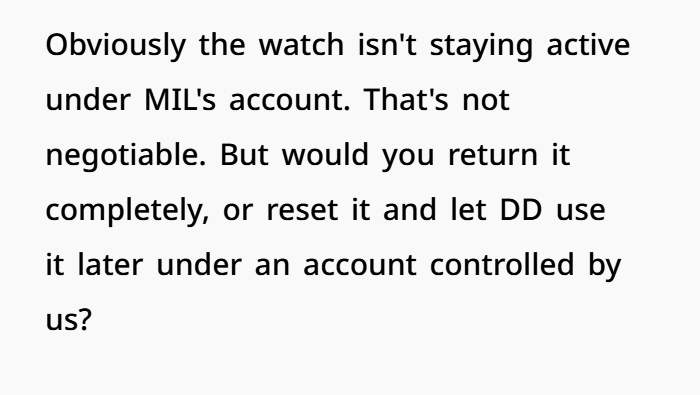
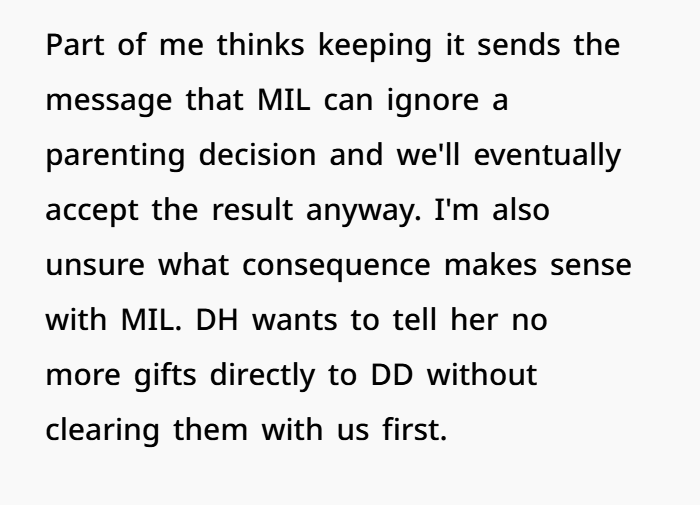
Now the mother is trying to decide what to do next. Her daughter loves the smartwatch and feels sad about losing it. The mother understands her disappointment but believes child safety and parental supervision should come first. She wonders if buying a different kids’ smartwatch with parental controls would be a better option in the future. She also wants to make sure that any GPS tracking, contact lists, and privacy settings are managed by her and her husband. But the bigger issue is her relationship with Grandma. She wants her daughter to enjoy a close bond with her grandmother while also making it clear that family members need to respect the parents’ decisions.


Why a Child’s Smartwatch Can Create Family Privacy and Safety Concerns
A smartwatch can be a wonderful gift for a child. It can help them stay in touch with family, make calls, and even share their location in an emergency.
But what if a grandparent buys one without asking the child’s parents?
That is what happened in this family story.
A grandmother reportedly gave her eight-year-old granddaughter a smartwatch, even though the girl’s parents had already decided she was not ready for a device that allowed private calls.
The grandmother also set up the watch using her own account.
This meant the parents could not easily check who had access to the watch or how its privacy settings worked.
What started as a gift soon became a disagreement about child safety, digital privacy, and family rules.
Why Kids’ Smartwatches Need Parental Controls
Children’s smartwatches are becoming a popular choice for families.
Many models offer features such as calling, messaging, GPS location sharing, and emergency contacts.
These features can be helpful when children are at school, visiting friends, or spending time away from home.
However, a smartwatch is not just a regular watch.
Depending on the model, it may collect personal information or allow other people to contact the child.
That is why kids’ smartwatch safety and parental controls matter.
Parents should understand how the device works before allowing their child to use it.
They should know who can call, whether location sharing is active, and who has permission to change the settings.
In this story, the grandmother reportedly managed the smartwatch account.
The parents did not have access to those controls.
Even if the grandmother meant well, the situation created understandable privacy concerns.
What Children’s Online Privacy Laws Say
In the United States, children’s personal information is protected by certain privacy laws.
One important law is the Children’s Online Privacy Protection Act, also called COPPA.
The Federal Trade Commission (FTC) explains that covered online services generally need to inform parents and obtain proper consent before collecting certain personal information from children under 13.
This can include precise location information.
Some smartwatches use GPS technology to share a child’s location with approved family members.
That can be useful during emergencies.
But parents should know who can see that information and when it is being shared.
In this story, the grandmother’s decision to register the watch under her own account does not automatically mean a privacy law was broken.
However, it does raise questions about children’s online privacy, GPS tracking, and personal data protection.
Parents need to understand how their child’s information is being handled.
Why the Smartwatch Account Is So Important
When someone buys a connected smartwatch, they usually need to create an account to use its features.
That account may control who can contact the child and what information can be shared.
Depending on the watch, the account holder may also be able to manage GPS tracking, approve contacts, or change security settings.
This makes account ownership an important part of smartwatch security and child device management.
In this family’s situation, the grandmother reportedly kept control of the account.
The parents were not given access.
The mother also had not confirmed whether location tracking was turned on.
So there is no proof that the grandmother was secretly monitoring her granddaughter.
Still, the parents had a reasonable reason to want control over the device.
Before a child uses a connected smartwatch, parents should be able to review its features and privacy settings.
What Parents Can Learn From Past Privacy Cases
The Federal Trade Commission has taken action against companies over concerns about children’s personal information.
In 2019, the FTC announced a settlement involving VTech Electronics over allegations related to children’s privacy and data security.
In 2023, the agency also took action involving Amazon over concerns about children’s voice recordings and data controls connected to Alexa.
These cases involved different products.
However, they show why protecting children’s information is important.
A connected device is not automatically unsafe.
The main concern is how information is collected, stored, and shared.
When comparing kids’ GPS smartwatches and child safety devices, parents should look at privacy policies and security features, not just the price.
Why the Grandmother’s Words Raised Questions
Another important part of the story was how the grandmother described the gift.
She reportedly told her granddaughter that the watch would allow them to talk privately without involving her parents.
Wanting to stay connected with a grandchild is completely normal.
Many grandparents enjoy calling their grandchildren and hearing about their day.
However, young children also need clear rules about communicating through personal devices.
The National Center for Missing & Exploited Children provides safety education through its KidSmartz program.
Its resources encourage children to talk openly with trusted adults when something makes them uncomfortable or confused.
In this case, there is no clear evidence that the grandmother told the girl to hide the smartwatch or keep their conversations secret.
That is an important difference.
Still, setting up a separate communication method after the parents had already said no could make it harder for the child to understand her family’s rules.
Why a Smartwatch Can Be Similar to a Phone
The grandmother reportedly argued that she had not broken the parents’ rule because she bought a smartwatch instead of a phone.
But the parents were not simply worried about the type of device.
Their concern was that their daughter would be able to make and receive calls without their supervision.
Some cellular smartwatches offer calling and messaging features similar to those found on basic phones.
So even though the gift was a watch, it still allowed the kind of communication the parents had decided to delay.
This is why parenting boundaries around technology are important.
The reason behind a family rule matters just as much as the wording.
Grandparents may have different opinions about when children should get their first connected device.
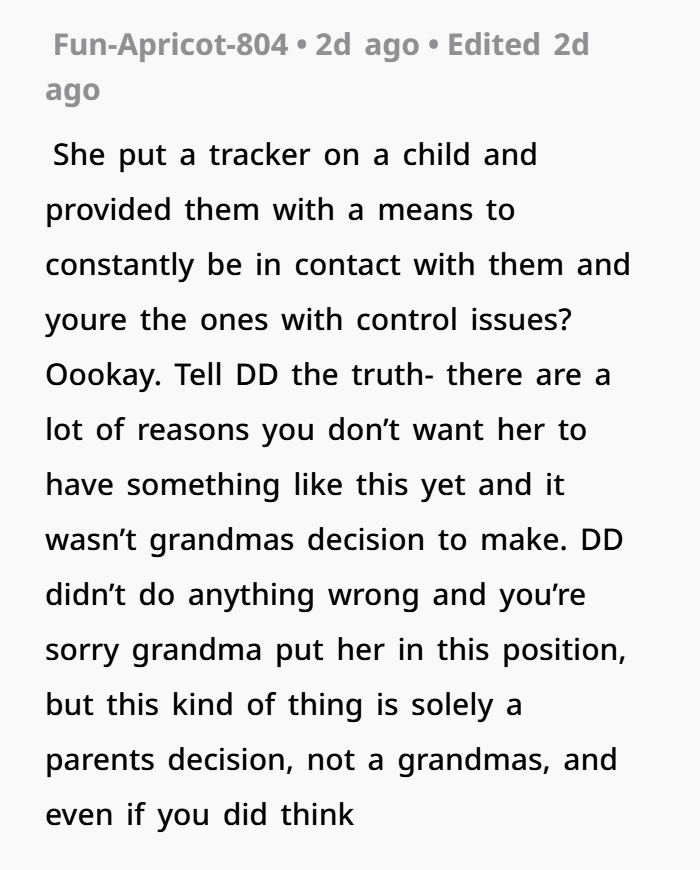
But the final decision belongs to the parents or legal guardians.
How Family Arguments Can Affect Children
One of the saddest parts of this situation is that the little girl ended up caught between the adults.
She received a new smartwatch from her grandmother.
Then her parents had to take it away.
For an eight-year-old, that could feel disappointing.
She did not choose the account settings or decide who should control the watch.
The adults made those decisions.
Psychiatrist Murray Bowen developed family systems theory, which looks at how relationships within a family affect one another.
One idea from this theory explains how disagreements between adults can sometimes involve other family members.
In this story, the daughter became part of a disagreement between her parents and grandmother.
That is why the adults need to handle the situation carefully.
The child should not feel that she did something wrong.
How Parents Can Explain the Decision to Their Child
Taking away a gift can be difficult, especially when a child is excited about it.
But parents can explain the situation in a kind and simple way.
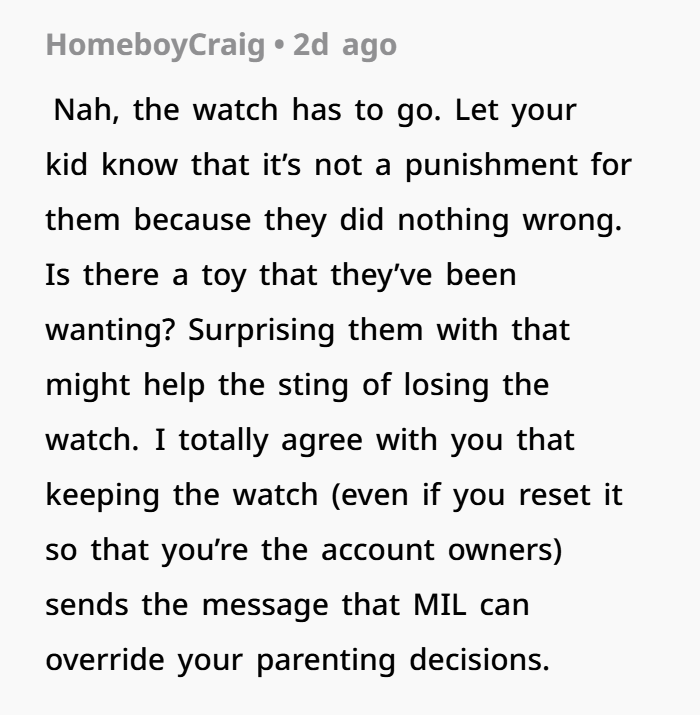
They might tell their daughter that the watch has calling features and privacy settings that adults need to check first.
They can also reassure her that she is not being punished.
The American Academy of Pediatrics encourages parents to make thoughtful decisions about children’s technology use.
Its family media guidance helps parents consider their child’s age, daily routine, and safety needs.
For this family, waiting until their daughter is older may be the best choice.
Another option would be to choose a smartwatch later that has parent-approved contacts, GPS controls, and family safety settings.
Either decision can be reasonable.
The important thing is that the parents choose what works for their child.
What to Look for When Buying a Kids’ Smartwatch
Not all children’s smartwatches work the same way.
Some are simple devices with basic games and timekeeping features.
Others offer calling, messaging, and location sharing.
Before buying one, parents should review the features carefully.
It helps to check whether the watch allows approved contacts, whether GPS tracking can be turned off, and who manages the account.
Parents should also look at the privacy policy.
Some smartwatches require a cellular subscription or monthly service plan.
Comparing kids’ GPS watches, family mobile plans, and parental control features can help families find an option that fits their needs and budget.
The most expensive watch is not always the best choice.
A device that is easy to manage and has clear privacy settings may be more useful.
Why Grandparents Should Respect Parenting Rules
Grandparents often love surprising their grandchildren with gifts.
A new toy, book, or special outing can create happy memories.
But connected devices are different because they may collect personal information and allow private communication.
That is why parents should be involved before these gifts are purchased.
In this story, the parents had already explained that they did not want their daughter to have a personal communication device.
The grandmother reportedly bought one anyway.
Even if her intentions were kind, she crossed a boundary the parents had clearly set.
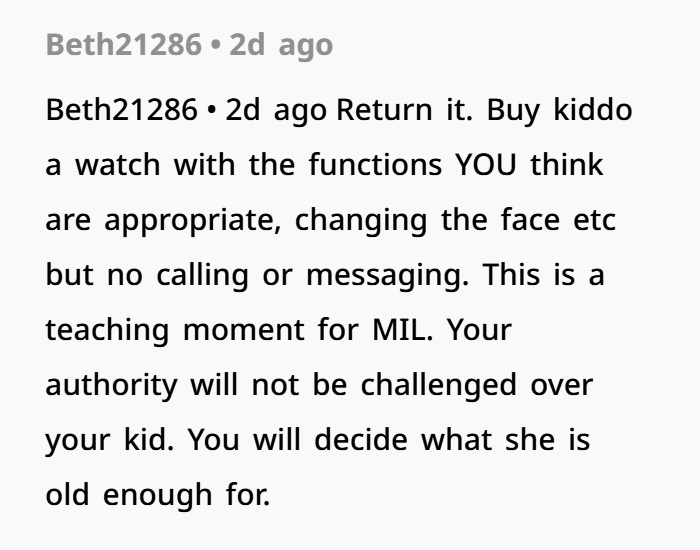
A reasonable solution would be to ask her to get permission before buying electronic devices in the future.
This does not mean she cannot give gifts.
It simply means technology-related decisions need parental approval.
Can the Family Rebuild Trust?
Family disagreements can be uncomfortable, but they do not always have to cause lasting problems.
Sometimes, an honest conversation can help everyone understand each other.
The parents could explain that they appreciate the grandmother’s wish to stay connected with her granddaughter.
However, they also need her to respect their decisions about technology.
They could explain why account access, privacy settings, and approved contacts are important.
The grandmother may still disagree with their rules.
But respecting those rules can help rebuild trust.
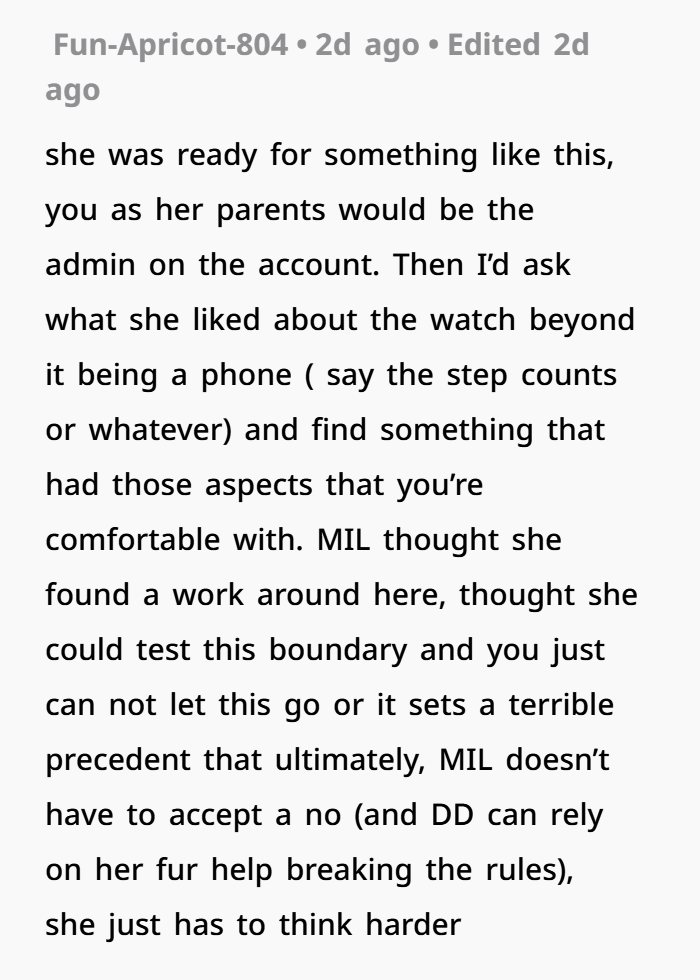
If the same problem happens again, the parents may need to set clearer limits around electronic gifts.
The goal should be to protect the child’s well-being while keeping family relationships respectful.
Final Thoughts
This story shows how a simple smartwatch can lead to a much bigger family disagreement.
Children’s smartwatches can be useful, especially when they include emergency calling and location-sharing features.
But they also come with responsibilities.
Parents need to know who can contact their children, what information is collected, and who controls the device.
The grandmother may have wanted to make her granddaughter happy.
However, buying a connected smartwatch without parental approval created a problem that could have been avoided.
The little girl should not be blamed for the disagreement.
Children’s digital safety, online privacy, and family boundaries should always come before the excitement of a new gadget.
A grandparent can be loving and generous while still making a mistake.
And parents can appreciate that love while making sure their child’s safety and privacy come first.
Readers’ Comments Speak Out